
World News
Saudi Aramco Shuts Ras Tanura After Iranian Drone Strike — and an Analyst Just Said the Quiet Part Out Loud: ‘Gulf States Now Closer to Joining…’
Oil hit $80 a barrel. Three tankers were attacked in the Strait of Hormuz. And one expert says this strike may have just done what months of diplomacy tried desperately to prevent.


There is a particular kind of dread that settles over energy markets when the words “Ras Tanura” and “drone strike” appear in the same sentence. On Sunday, the world got to feel that dread — and then watch crude prices spike in real time as the implications sank in.
Saudi Aramco — the world’s most valuable oil company and the backbone of global energy supply — has shut down its Ras Tanura refinery as a precautionary measure after the facility was struck by an Iranian drone. The shutdown is not a minor operational inconvenience. It is a signal flare over the entire Middle East energy infrastructure — and the markets responded accordingly, with Brent crude surging to $80 per barrel on the news.
What Actually Happened — The Facts So Far
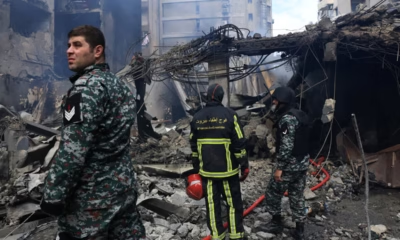
A spokesperson for the Saudi Defence Ministry confirmed on Al Arabiya TV that two drones were intercepted at the Ras Tanura facility. Debris from the interceptions caused a limited fire at the site. No injuries were reported.
ALSO READ : “She Never Made It Out…” Albany House Fire Claims Woman’s Life as Family Pleads for Help to Bring Her Home
That last detail — no casualties — is the one piece of genuinely good news in an otherwise alarming picture. Everything else about the incident points in a deeply worrying direction.
Aramco made the decision to shut the refinery down as a precautionary measure. That decision alone tells you something. When the world’s largest oil producer decides that its flagship refining hub needs to go offline — even temporarily, even out of caution rather than confirmed catastrophic damage — the risk calculus in the room has shifted fundamentally.
Ras Tanura is not a peripheral facility. It is one of the largest refineries in Saudi Arabia, processing hundreds of thousands of barrels per day and feeding supply chains that stretch from Asia to Europe to North America. Its absence from the market, even briefly, matters.
The Strait of Hormuz — Now Under Direct Attack
The refinery strike did not occur in a vacuum. It landed on top of an energy market already operating in crisis mode — and the situation in the Strait of Hormuz has made everything dramatically worse.
At least three tankers have been attacked in the strait — the narrow waterway that carries nearly one fifth of the world’s daily crude oil supply. The Strait of Hormuz is not just important to the Middle East. It is important to every economy on earth that runs on oil, which is to say, every economy on earth.
The attacks on tankers in the strait have effectively ground the waterway to a near-halt. Shipping companies are rerouting. Insurers are reassessing. Tanker captains are making calculations about whether any premium is worth the risk. The result is a de facto blockade — not announced, not formally declared, but functionally real — of one of the most critical energy corridors in the world.
When you combine a partially functioning Ras Tanura, a paralysed Strait of Hormuz, and ongoing military strikes across the region, the picture for global oil supply in the near term becomes genuinely alarming.
The Analyst Who Said What Everyone Is Thinking
Sometimes the most important thing said in a crisis is the thing that cuts through the diplomatic language and states the situation plainly. On Sunday, that came from Torbjorn Soltvedt, principal Middle East analyst at risk intelligence firm Verisk Maplecroft.
Speaking to Reuters, Soltvedt did not reach for reassuring language.
“The attack on Saudi Arabia’s Ras Tanura refinery marks a significant escalation, with Gulf energy infrastructure now squarely in Iran’s sights,” he said. Then came the line that will be quoted in foreign ministries across the region for days:
“The attack is also likely to move Saudi Arabia and neighbouring Gulf states closer to joining US and Israeli military operations against Iran.”
There it is. The scenario that Gulf states have spent years — decades, arguably — engineering their foreign policies to avoid. The scenario that Saudi Arabia specifically tried to pre-empt by publicly declaring its airspace and territory off-limits to U.S. and Israeli operations. Iran struck Saudi infrastructure anyway. And now, according to one of the most respected Middle East risk analysts working today, the kingdom and its neighbours may be moving toward active military involvement in a conflict they tried very hard not to join.
Why This Changes the Geometry of the Conflict
To appreciate what Soltvedt’s assessment means in practical terms, consider what Gulf state military involvement would add to an already complex conflict.
Saudi Arabia, the United Arab Emirates, Qatar — these are not small actors. They host major U.S. military installations. They operate sophisticated air defence systems. They have defence relationships with Washington that, if activated in the context of an Iranian conflict, would transform the current U.S.-Israeli operation from a bilateral strike campaign into something resembling a genuine coalition war.

That is not a small shift. That is a threshold crossing.
Iran, for its part, appears to have made a deliberate choice to strike Gulf neighbours despite their declared neutrality. Whether that reflects strategic calculation — an attempt to deter Gulf participation by demonstrating the cost of proximity to U.S. operations — or a more chaotic response from a regime under unprecedented pressure following the death of Supreme Leader Ali Khamenei, is not yet clear.
What is clear is that the strike on Ras Tanura has changed the conversation in Riyadh, Abu Dhabi, Doha, and every other Gulf capital in ways that phone calls and diplomatic notes cannot easily reverse.
$80 Oil — and the Consumer Cost Nobody Is Talking About Yet
While the geopolitical drama commands the headlines, there is a quieter story unfolding in the numbers — one that will eventually arrive at every petrol station, every supermarket shelf, and every household energy bill in the world.
Brent crude at $80 a barrel is the market’s initial response to Sunday’s developments. Analysts tracking the situation are not describing that number as a ceiling. They are describing it as a floor — a starting point for what could be a sustained upward move if the Strait of Hormuz remains functionally closed and Gulf refining capacity stays offline.
The inflationary arithmetic is not complicated. Less supply plus sustained or growing demand equals higher prices. Higher oil prices flow through into transportation costs, manufacturing costs, food costs, heating costs. Economies that spent the last two years celebrating the retreat of post-pandemic inflation are looking at the Gulf right now with something that resembles quiet dread.
President Donald Trump, who authorised the strikes on Iran that triggered this cascade of responses, will now face pressure — from allies, from markets, and from American consumers — to demonstrate that the operation’s strategic objectives justify what is rapidly becoming a very significant economic side effect.
A Refinery, a Strait, and a Region at the Tipping Point
The shutdown of Ras Tanura is, on one level, an operational energy story — a facility offline, a price spike, a supply chain disruption. On another level, it is something much larger: a data point in a rapidly accelerating regional crisis that is running out of natural stopping points.
Each Iranian strike on Gulf infrastructure makes Gulf state neutrality harder to maintain. Each tanker attack in the Strait of Hormuz raises the pressure on the global economy. Each escalation creates the conditions for the next escalation.
Saudi Aramco has not yet said when Ras Tanura will reopen. The Strait of Hormuz has not yet been cleared. The succession crisis in Tehran following Khamenei’s assassination remains unresolved. And the analysis coming out of firms like Verisk Maplecroft suggests the worst of the Gulf’s involvement in this conflict may not yet have arrived.
The drones have spoken. Now the question is who answers — and how loudly.




World News
Key Prosecutor Removed from John Brennan Probe… Doubts Over Case Strength Raise Big Questions
A senior Justice Department prosecutor steps away after reportedly questioning evidence against former CIA chief John Brennan.


In a development that could significantly impact a high-profile political investigation, a lead prosecutor has been removed from the probe involving former CIA Director John Brennan.
According to a source familiar with the matter, prosecutor Maria Medetis Long is no longer part of the investigation after expressing concerns about the legal strength of any potential criminal case against Brennan.
Doubts From Within the Justice Department
The revelation has raised eyebrows in legal and political circles.
Medetis Long, who leads the national security section at the U.S. Attorney’s Office for the Southern District of Florida, reportedly conveyed to Justice Department officials that there may not be sufficient evidence to support criminal charges.
Shortly afterward, she stepped away from the case.
While the U.S. Department of Justice confirmed that she is no longer involved, it downplayed the significance of the move, stating that reassigning attorneys is a “routine practice” to manage resources effectively.
Still, the timing of her departure has sparked speculation.
What Is the Brennan Investigation About?
The investigation centers on Brennan’s role in assessing alleged Russian interference in the 2016 United States presidential election.
Brennan, who served as CIA Director under Barack Obama, was a key figure when the intelligence community released findings about Russia’s involvement in the election.
The probe gained traction after Jim Jordan, chairman of the House Judiciary Committee, referred the matter to the Justice Department. He alleged that Brennan may have provided false testimony regarding how the intelligence assessment was prepared.
Brennan and his legal team have strongly denied these claims.
Political Undercurrents Intensify
The case has also been tied to long-standing grievances from Donald Trump, who has repeatedly criticized investigations into his 2016 campaign’s alleged ties to Russia.
In recent weeks, Trump reshuffled leadership within the Justice Department, replacing Attorney General Pam Bondi with her deputy Todd Blanche, citing frustration over the pace of investigations involving political opponents.
Blanche has publicly stated that a president has the authority to pursue investigations into individuals they have had “issues with,” a remark that has added fuel to the already heated debate over the independence of the Justice Department.

A Pattern of Legal Turbulence
This isn’t the first controversy surrounding politically sensitive prosecutions.
Last year, former acting U.S. attorney Erik Siebert was removed after declining to pursue charges against other Trump critics, including former FBI Director James Comey and New York Attorney General Letitia James.
A replacement prosecutor later secured indictments, but those cases were ultimately dismissed by a judge due to issues with the appointment process.
What Happens Next?
Despite the shake-up, the Brennan investigation is ongoing.
Investigators have reportedly issued multiple subpoenas and are preparing for additional interviews. However, it remains unclear whether the case will ultimately lead to criminal charges.
Medetis Long’s departure could have ripple effects—not only on the direction of the investigation but also on the willingness of witnesses to cooperate.
A Case at a Crossroads
At its core, this development highlights a deeper tension within the U.S. legal system—where law, politics, and public perception often collide.
Is this simply a routine reassignment, as officials claim?
Or does it signal deeper concerns about the viability of the case?
For now, the answers remain uncertain. But one thing is clear—the investigation into John Brennan has entered a critical and potentially निर्णायक phase.
World News
“Grave violation”: Israel’s Lebanon strikes threaten fragile U.S.-Iran ceasefire just days after Trump’s “whole civilization” threat secured deal
Israeli military operations against Hezbollah continue despite two-week pause between Washington and Tehran, raising questions about whether the Pakistan-brokered agreement can survive

The ink has barely dried on the fragile U.S.-Iran ceasefire agreement, and already it’s facing its first major test—one that could determine whether the two-week pause leads to lasting peace or simply delays the inevitable return to conflict.
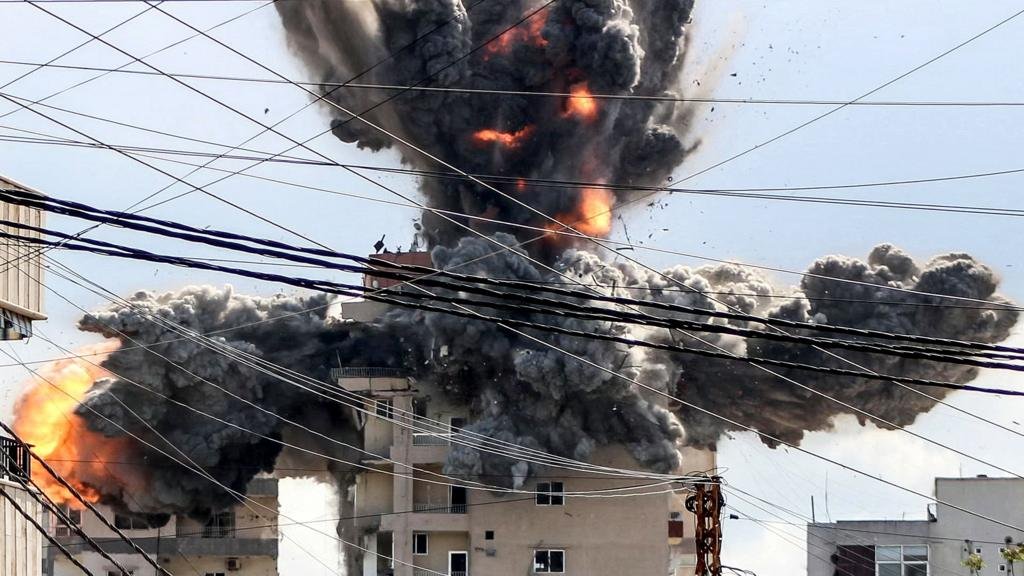
Israel has continued military strikes against Hezbollah targets in Lebanon, operations that critics are now calling a “grave violation” of the ceasefire that Pakistan brokered between Washington and Tehran just days ago.
The attacks have sparked international concern and raised a fundamental question: Can a ceasefire between the United States and Iran hold when Israel—America’s closest Middle East ally—continues combat operations against Iran’s most powerful regional proxy?
The Ceasefire Israel Never Agreed To
From the beginning, Israel made its position crystal clear: the U.S.-Iran ceasefire would not constrain Israeli military operations against Hezbollah, the Iranian-backed militant group that has been engaged in escalating clashes with Israeli forces along the Lebanese-Israeli border.
Israeli officials stated publicly, even before the ceasefire was announced, that their national security interests could not be put on hold simply because President Donald Trump and Iranian leadership had agreed to a temporary pause.
Israeli Prime Minister Benjamin Netanyahu has maintained that Hezbollah poses an existential threat to Israel, and that operations to degrade the group’s military capabilities would continue regardless of diplomatic developments between other parties.
“Israel was not a signatory to this agreement,” one Israeli Defense Forces (IDF) spokesperson said earlier this week. “We retain the right to defend our citizens and our borders from terrorist threats.”
What Constitutes a “Grave Violation”?
The phrase “grave violation” has been used by Iranian officials, regional observers, and some international diplomats who argue that Israel’s continued strikes undermine the spirit—if not the letter—of the U.S.-Iran agreement.
Iran’s position is straightforward: Hezbollah is part of the broader “axis of resistance” that Tehran supports across the Middle East. While Hezbollah operates independently in Lebanon, it receives significant military, financial, and political support from Iran. Strikes against Hezbollah are, in Tehran’s view, indirect strikes against Iranian interests.
Iranian Foreign Ministry officials have reportedly communicated to Pakistani mediators that Israel’s ongoing operations represent a violation of the ceasefire’s intent, which was to reduce regional tensions and create space for broader negotiations.
“How can we negotiate in good faith when Israel bombs our allies with impunity?” one Iranian diplomat was quoted as saying. “This makes a mockery of the ceasefire.”
The American Dilemma
The United States finds itself in an uncomfortable position, caught between its commitments to Iran under the ceasefire agreement and its longstanding alliance with Israel.
The White House has carefully avoided directly criticizing Israeli actions, instead offering generic statements about supporting Israel’s right to self-defense while also calling for “all parties to exercise restraint.”
This diplomatic balancing act satisfies no one. Iran sees it as evidence of American bad faith, while Israel views it as insufficient support for its security needs.
Behind the scenes, according to sources familiar with the discussions, Trump administration officials have been engaged in intense conversations with Israeli counterparts, urging them to at minimum scale back operations during the two-week ceasefire window.
Whether these private appeals will have any effect remains to be seen.
Hezbollah’s Role in the Broader Conflict
Understanding why Israel is so focused on Hezbollah requires understanding the group’s role in the regional power struggle between Israel and Iran.
Hezbollah, which translates to “Party of God,” is not just a militant group—it’s also a political party with significant representation in the Lebanese parliament and a vast social services network that provides healthcare, education, and other services to Lebanon’s Shia population.
Militarily, however, Hezbollah is formidable. The group is estimated to possess over 150,000 rockets and missiles, including precision-guided munitions that can reach anywhere in Israel. It has sophisticated tunnels along the border, well-trained fighters with combat experience from Syria, and significant military infrastructure embedded within civilian areas in southern Lebanon.
For Israel, Hezbollah represents the most immediate and dangerous threat on its borders—more pressing even than potential Iranian nuclear weapons, which remain a future concern rather than a present danger.
Recent Escalations
The Israeli strikes that have been labeled “grave violations” of the ceasefire include:
Airstrikes on Hezbollah weapons depots in southern Lebanon, which Israel claims were being prepared for potential attacks across the border.
Targeted assassinations of Hezbollah commanders, operations that Israel has conducted periodically for years but have continued despite the U.S.-Iran ceasefire.
Cross-border artillery exchanges following Hezbollah rocket fire into northern Israel, which displaced Israeli civilians and prompted military responses.
Israel maintains that these operations are defensive and necessary to protect Israeli citizens living in communities near the Lebanese border who have been under threat of Hezbollah attacks.
Hezbollah, for its part, has continued limited attacks across the border, claiming they are in retaliation for Israeli strikes and in solidarity with Palestinians in Gaza (if that conflict is still ongoing at this time).
Lebanon: The Forgotten Victim
Lost in the geopolitical maneuvering between Iran, the United States, and Israel is Lebanon itself—a country that has endured decades of conflict and currently faces catastrophic economic collapse.
Lebanese civilians in the south have been caught in the crossfire between Israeli strikes and Hezbollah operations, with thousands displaced and infrastructure destroyed. The Lebanese government, weak and divided, has little ability to constrain Hezbollah or protect civilians from Israeli strikes.
Lebanese Prime Minister officials have appealed to the international community for help, but with limited success. Lebanon has become a proxy battlefield where regional powers settle their disputes, with ordinary Lebanese paying the price.
Can the Ceasefire Survive?
The fundamental question now is whether the U.S.-Iran ceasefire can survive Israel’s continued operations in Lebanon, or whether these strikes will provide Iran with justification to abandon the agreement.
Several scenarios are possible:
Scenario 1: Status Quo Continues: Iran accepts that Israel will continue operations against Hezbollah but maintains the ceasefire with the U.S. anyway, viewing the two issues as separate. This allows negotiations to continue while regional tensions simmer.
Scenario 2: Iranian Escalation: Iran responds to Israeli strikes by resuming its own aggressive posture, potentially reopening the Strait of Hormuz blockade or conducting other operations that would effectively end the ceasefire.
Scenario 3: U.S. Pressure on Israel: The Trump administration applies significant pressure on Israel to halt operations during the ceasefire window, potentially offering security guarantees or other incentives in exchange for Israeli restraint.
Scenario 4: Complete Collapse: The ceasefire breaks down entirely within days, with all parties returning to pre-agreement positions and potentially escalating further.
The Pakistan Factor
Pakistan, which brokered the original ceasefire, has remained publicly silent on the Israeli strikes, but diplomatic sources suggest Pakistani officials are deeply concerned that their mediation efforts could unravel.
For Pakistani Prime Minister and foreign ministry officials, successfully mediating between the U.S. and Iran represented a significant diplomatic achievement. The collapse of the agreement due to Israeli actions would be seen as a failure of Pakistani diplomacy, even though Israel was never part of the negotiations.
Pakistani officials have reportedly been in contact with counterparts in Washington, Tehran, and Tel Aviv, urging all parties to show restraint and allow the two-week window to play out before making any final judgments.
The Two-Week Window Shrinks
With each passing day, the already-limited two-week ceasefire window grows shorter. What began as an opportunity for de-escalation and potential broader negotiations is now threatened by actions on the ground that neither the U.S. nor Iran may be able to fully control.
The reality is that Israel operates with significant independence from the United States, particularly when it believes its core security interests are at stake. While America provides crucial military aid and diplomatic support, Israeli governments—regardless of political leadership—have consistently demonstrated a willingness to act unilaterally when they judge it necessary.
This creates a situation where the U.S. has made commitments to Iran that it may not be able to enforce on its ally, potentially undermining American credibility in future negotiations.
International Response
The international community has responded to the Israeli strikes with a mix of concern and resignation.
United Nations officials have called for all parties to respect the ceasefire and avoid actions that could lead to broader regional conflict.
European nations have largely remained silent, unwilling to criticize Israel publicly while also concerned about regional stability.
Arab states have issued carefully worded statements calling for de-escalation, but most have limited influence over either Israeli or Iranian decision-making.
The Bigger Picture
The Israeli strikes on Lebanon highlight a fundamental challenge in Middle East diplomacy: conflicts in the region are deeply interconnected, and resolving one without addressing others may be impossible.
The U.S.-Iran ceasefire focused narrowly on direct confrontation between those two nations, particularly around the Strait of Hormuz and naval operations in the Persian Gulf. But it didn’t—and perhaps couldn’t—address the broader network of proxies, alliances, and conflicts that define regional dynamics.
Israel-Hezbollah tensions, the ongoing situation in Gaza, Syria‘s civil war, Yemen‘s humanitarian crisis, and other flashpoints all feed into the broader U.S.-Iran confrontation. Attempting to isolate one piece of this complex puzzle may prove impossible.
What Happens Next?
The coming days will be critical. If Israeli operations continue or escalate, Iran will face a decision: accept the strikes as separate from the U.S. ceasefire, or use them as justification to abandon the agreement.
If Iran chooses the latter, the brief window of de-escalation will close, potentially leading to renewed conflict that could be worse than what preceded it.
If Iran chooses the former, the ceasefire may survive, but the underlying tensions that make the region so volatile will remain unresolved.
The Bottom Line
Israel’s continued strikes on Hezbollah in Lebanon represent either a “grave violation” of the U.S.-Iran ceasefire or a separate issue entirely, depending on who you ask.
For Iran and its supporters, the strikes prove that America cannot or will not constrain its ally, making negotiations pointless.
For Israel and its supporters, the strikes are necessary self-defense against a terrorist organization that threatens Israeli civilians and has nothing to do with the U.S.-Iran agreement.
For the United States, the strikes create a diplomatic headache that threatens to undermine the ceasefire before it has a chance to lead to broader negotiations.
And for Lebanon, the strikes are just the latest chapter in decades of being caught in the middle of conflicts between more powerful regional actors.
The fragile two-week ceasefire that President Trump’s “whole civilization” threat helped secure is already being tested. Whether it survives may depend less on agreements between capitals and more on decisions made by commanders on the ground.
The clock is ticking. And in the Middle East, two weeks can be an eternity—or it can pass in the blink of an eye.
World News
“Abundantly clear” they’re winning: Democrats crush GOP in swing states despite losing MTG’s old seat—here’s why Republicans should be terrified…
Democratic candidate overperforms by 25 points in Marjorie Taylor Greene’s Georgia district while Wisconsin Supreme Court race delivers crushing 20-point victory—marking one of the best election nights of the Trump era

It’s become almost routine at this point: Democrats keep winning races they’re not supposed to win. But Tuesday night wasn’t just another good showing—it was a statement that should have Republicans deeply worried heading into the 2026 midterms.
Even by their recent elevated standards, Democrats delivered one of their strongest performances of the Trump era, notching historic overperformances in key swing states that suggest the political landscape may have fundamentally shifted beneath the GOP’s feet.
Georgia: Losing by Winning
The most-watched contest of the night was the special election in Georgia’s 14th Congressional District—the seat formerly held by controversial Representative Marjorie Taylor Greene, who has recently repositioned herself as a critic of President Donald Trump.
Republican Clay Fuller won the race, as expected. But the margin tells a very different story than the outcome.
President Trump carried this deeply red district by a staggering 37 points in 2024. On Tuesday night, Fuller won by less than 12 points.
Do the math: That’s a 25-point overperformance for Democratic candidate Shawn Harris—the largest Democratic overperformance in a special congressional election since Trump first took office in 2017, according to data compiled by CNN.
The previous record? A 23-point overperformance in Florida’s 1st District last year.
“While it’s difficult to isolate the causes, the results certainly weren’t encouraging for the GOP,” political analysts noted, with some pointing to the ongoing Iran conflict and Greene’s increasingly vocal Trump criticism as potential factors.
A Pattern, Not a Fluke
What makes Tuesday’s results even more significant is the broader pattern they reveal. Democrats’ recent track record in special elections is abundantly clear: they’ve been consistently overperforming, but now half of their top 10 best performances have come since the 2024 election alone.
Even more telling? Democrats actually improved from the first round of voting on March 10, which took place in the early days of the Iran war. Back then, Democratic candidates combined for nearly 40% of the vote; on Tuesday, Harris captured about 44%.
This improvement came even as national Republicans made the remarkable decision to actually spend money on the race—a sign they recognized the danger but couldn’t stop the bleeding.
Wisconsin: A 20-Point Earthquake
While Georgia grabbed headlines, the real came from Wisconsin—arguably the nation’s most important swing state.
Democratic-aligned candidate Chris Taylor didn’t just defeat Republican-aligned candidate Maria Lazar in the Wisconsin Supreme Court race. She crushed her by approximately 20 points.
Let that sink in: a 20-point victory in a state that has been decided by less than one percentage point in each of the last three presidential elections.
This marks the largest margin in a competitive Wisconsin Supreme Court race since 2000, and it shifts the court from a 4-3 liberal majority to a commanding 5-2 advantage.
Remembering the Elon Musk Disaster
Tuesday’s race stood in stark contrast to last year’s Wisconsin Supreme Court election, which featured Elon Musk heavily campaigning for the GOP-aligned candidate. That race marked “the beginning of the end for his time as a face of the Trump administration as well as the Department of Government Efficiency (DOGE)” when the GOP-aligned candidate lost by 10 points.
This year’s 20-point margin makes last year’s 10-point loss look like a competitive race by comparison.
Flipping Republican Strongholds
Perhaps most alarming for Republicans: Taylor managed to flip historically Republican counties that Trump carried comfortably just two years ago.
Jefferson County, an exurban area that Trump won by 16 points in 2024, flipped to Taylor. So did Ozaukee County in the Milwaukee suburbs, which Trump carried by 10 points.
When you’re losing suburban Milwaukee counties by double digits in a statewide race, you have a serious problem.
What’s Driving the Democratic Surge?
Multiple factors appear to be fueling Democratic success:
The Iran War Effect: The ongoing conflict with Iran has created uncertainty and anxiety among voters, potentially dampening enthusiasm for the administration’s foreign policy approach.
Trump Fatigue Redux: After nearly a decade of Trump-dominated politics, there are signs that even in Republican strongholds, voters are experiencing exhaustion with the constant chaos and controversy.
Supreme Court Backlash: Abortion rights and other court-related issues continue to drive Democratic turnout, particularly in states like Wisconsin where the state Supreme Court holds significant power.
Marjorie Taylor Greene Factor: Greene’s evolution from Trump loyalist to critic has created confusion and potential division within the Republican base, possibly suppressing turnout in her former district.
Elon Musk’s Declining Influence: After the DOGE debacle and last year’s failed Wisconsin intervention, Musk’s political capital appears significantly diminished.
Republicans Are Spending—And Still Losing
Perhaps the most concerning sign for the GOP is that they’re now spending money in races they should win easily—and still coming up short or dramatically underperforming.
The fact that national Republicans felt compelled to invest resources in a district Trump won by 37 points speaks volumes about their internal polling and the anxiety within the party.
The 2026 Warning Sign
Winning any statewide contest in a swing state by 20 points is “a pretty big statement,” as analysts noted. But it’s more than that—it’s a flashing red warning light for Republicans heading into the 2026 midterm elections.

If Democrats can overperform by 25 points in deep-red Georgia districts and win by 20 points in purple Wisconsin, what does that mean for genuinely competitive House and Senate races next year?
The Democratic Party has now established a clear pattern: they’re not just winning special elections and off-year contests—they’re winning them by margins that suggest a fundamental shift in voter sentiment.
Not Just Resistance—Dominance
For most of Trump’s first term, Democrats could point to special election overperformances as signs of “resistance.” But even by their recent standards, Tuesday represents something different: not just resistance, but dominance.
Half of their top 10 overperformances coming after the 2024 election suggests that whatever factors are driving Democratic success, they’re accelerating, not diminishing.
The Bottom Line
Republicans won Georgia’s 14th District on Tuesday. But if you’re looking at the actual numbers, they should be terrified.
Democrats are turning 37-point Trump districts into 12-point races. They’re winning 20-point landslides in the nation’s tightest swing state. They’re flipping suburban counties that have been Republican for generations.
The results are, to borrow a phrase, abundantly clear: something has shifted in American politics, and Republicans haven’t figured out how to stop it.
Tuesday wasn’t just one of Democrats’ best nights in recent memory. It might be a preview of what’s coming in 2026.
And for the GOP, that should be a nightmare-inducing thought.

Key Prosecutor Removed from John Brennan Probe… Doubts Over Case Strength Raise Big Questions

Sue Bird and Megan Rapinoe Break Up After 10 Years… Power Couple Ends Relationship but Leaves Fans With One Last Surprise

Natalie Portman Confirms Pregnancy with French Musician Boyfriend… Who Is Tanguy Destable aka ‘Tepr’?

Cher Moves to Control Son Elijah Allman’s Finances Again… ‘His Life Is Spiraling,’ Court Filing Claims

“Angels Icon Garret Anderson Dies at 53… The Silent Hero Behind 2002 World Series Glory Gone Too Soon”

1-Iran Issues Dire Warning to Israel and Defies Trump on Nukes: “We’re Ready to Strike Deep Inside”

Donald Trump’s net worth reveals the fortune behind the former US President and business mogul

“She Never Made It Out…” Albany House Fire Claims Woman’s Life as Family Pleads for Help to Bring Her Home

“Tomás Rodríguez Net Worth 2025: Panama’s Gold Cup Goal‑Machine’s Surprising Fortune Revealed”

Caitlin Clark Sidelined with Quad Strain, Set to Miss Two Weeks of WNBA Action

Miss Jamaica Suffers Terrifying Fall Off Miss Universe Stage; Rushed to Hospital on Stretcher in Viral Video

Moana Live-Action Teaser Sparks Outrage as Fans Call Disney’s Move a ‘Clear Money Grab’ — What Went Wrong?

Ryan Gosling’s Project Hail Mary Trailer Stuns Fans with a Mysterious Alien Ally and a Mission That Could Save Earth

Apple delays Jessica Chastain thriller The Savant about domestic extremism after recent US violence

Avatar 3, Fire and Ash trailer reveals Jake Sully’s family facing terrifying new Na’vi enemies with deadly fire powers
-

 Entertainment6 days ago
Dark Winds Season 4 Finale Just Solved the Big Case Then Dropped a Murder Bombshell in the Final Seconds That No One Saw Coming…
-

 Entertainment1 week ago
Noah Wyle Breaks Silence on The Pitt ICE Episode Edits… What HBO Changed and Why It Matters
-
 Entertainment1 week ago
Nick Cannon Just Called the Democratic Party ‘the Party of the KKK’ on Camera and What He Said About Trump Next Made It Even More Controversial…
-

 Entertainment6 days ago
Dan Levy Breaks Down in Tears Revealing He Was ‘Thinking About’ a Schitt’s Creek Sequel Until Catherine O’Hara’s Death Changed Everything…
-

 Entertainment1 week ago
The Oscar Ballot Nobody Was Meant to See Has Leaked And One Voter’s Confession About ‘Sentimental Value’ Is Turning Heads…
-

 Entertainment1 week ago
Hollywood Just Revealed Where the World Is Vacationing Next and the List Will Shock You…
-

 Entertainment1 week ago
Kanye West Literally Fell Asleep in Court While Testifying — And His Only Answer to Questions Was…
-

 Entertainment3 days ago
Phoebe Dynevor Battles Sharks While Giving Birth ‘Thrash’ Review Reveals Netflix’s Wildest Survival Drama Yet