
Entertainment
AMC Pulls the Plug on ‘Talamasca: The Secret Order’ After Just One Season — And Fans of Anne Rice’s Universe Are Not Taking It Well…
Another chapter in the Anne Rice television universe has been closed before it barely had a chance to begin. What went wrong — and what does this mean for the future of supernatural storytelling on AMC?

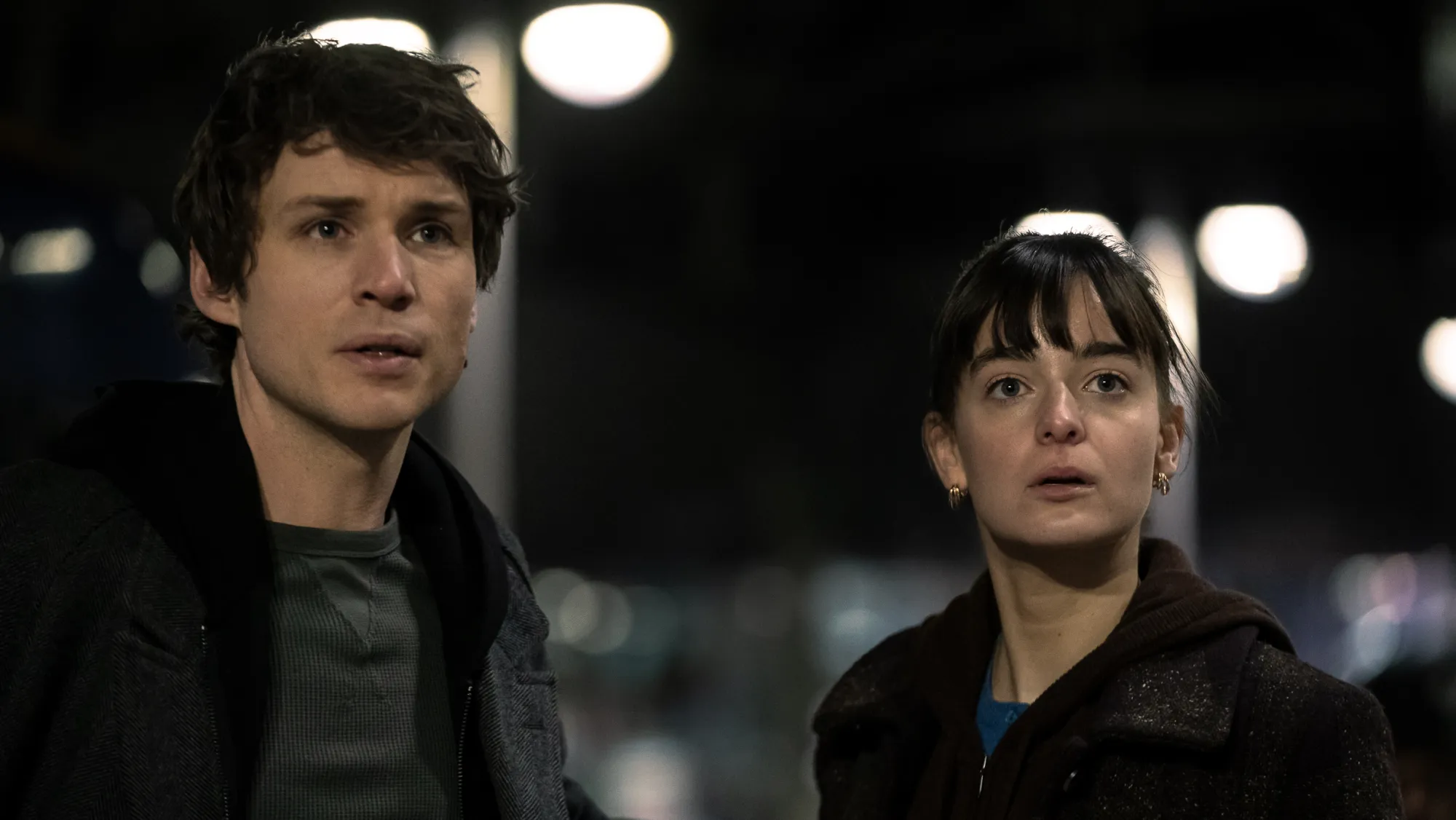
There is a particular kind of disappointment that comes with investing in a television show — learning its world, its characters, its mythology — only to find out the story is ending before it was ever really allowed to begin. Fans of Talamasca: The Secret Order are living through exactly that feeling this week, after AMC confirmed it has cancelled the series after just one season.
No second season. No resolution. No closure. Just silence — which, given the supernatural subject matter, feels grimly appropriate and deeply frustrating in equal measure.
The Secret Order’ After Just One Season — And Fans of Anne Rice’s Universe Are Not Taking It Well
For those who weren’t following the show, Talamasca: The Secret Order was part of AMC‘s ambitious — and at times troubled — effort to build a shared television universe around the work of the late, beloved author Anne Rice.
ALSO READ : “She Never Made It Out…” Albany House Fire Claims Woman’s Life as Family Pleads for Help to Bring Her Home
Anne Rice — who passed away in December 2021 — spent decades building one of the richest supernatural literary universes in American fiction. Her Vampire Chronicles series, beginning with Interview with the Vampire in 1976, created a world of immortal beings grappling with consciousness, desire, faith, and moral ambiguity in ways that transcended the horror genre entirely. Her Lives of the Mayfair Witches series added another layer of mythology — one deeply connected to the Talamasca, a secret organization of scholars devoted to studying the paranormal.
The Talamasca, as any devoted Rice reader will tell you, is one of the most intriguing institutions in her entire body of work. Patient, ancient, morally complex, operating in the shadows of history with their defining motto — “We watch. And we are always there.” — the organization threads through multiple Rice novels as a presence that is simultaneously protective and unsettling, benevolent and unknowable.
As a concept for a television series, it had genuine potential. The world was rich. The mythology was deep. The audience of devoted Anne Rice fans was real and passionate.
And yet here we are.
AMC’s Anne Rice Universe — A Story of Ambition and Struggle
To understand the cancellation of Talamasca, you have to understand the broader context of what AMC Networks has been attempting — and experiencing — with the Anne Rice franchise.
The network’s flagship Anne Rice adaptation, Interview with the Vampire, launched in 2022 and was, by most critical measures, a genuine success. The show — starring Jacob Anderson as Louis de Pointe du Lac and Sam Reid as the magnetic, terrifying Lestat de Lioncourt — was praised for its bold reimagining of Rice’s source material, its lush visual style, and its willingness to lean into the queer subtext that the novels had always carried. Critics responded warmly. The fanbase was engaged.
Then came Mayfair Witches, which had a considerably rougher reception. Viewers and critics were more divided, and the show struggled to translate the dense, sprawling mythology of Rice’s witch saga into a compelling season of television.
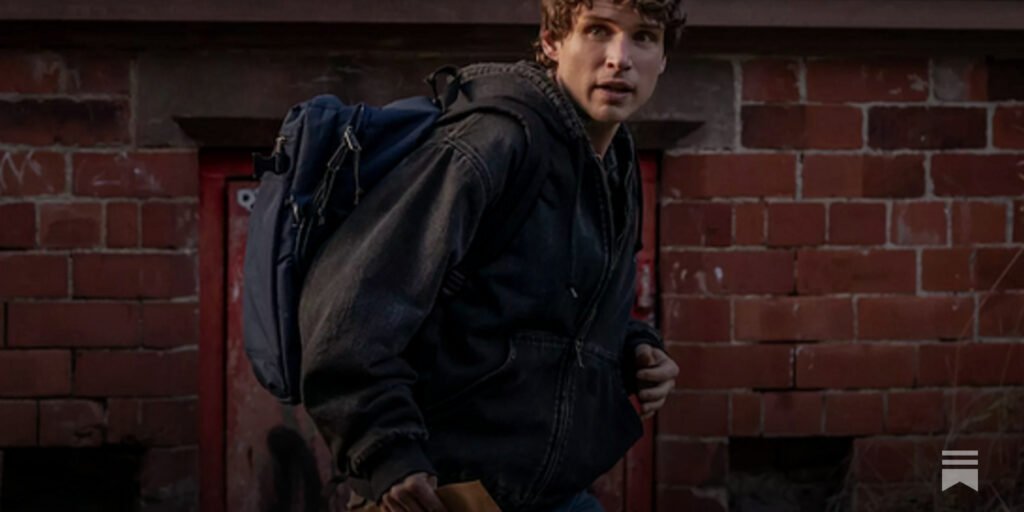
Talamasca: The Secret Order was meant to be another expansion of this universe — a chance to explore the shadowy organization from the inside, to make its members protagonists rather than peripheral observers. It was, in theory, exactly the kind of spin-off that could deepen a shared world rather than simply repeat it.
But television is unforgiving, and AMC — like every cable network navigating the brutal economics of the streaming era — is making increasingly hard choices about where to invest its resources.
The Business Behind the Decision
Let’s be honest about something that gets lost in the disappointment of a cancellation announcement: these decisions are almost never purely creative. They are financial, strategic, and tied to the brutal mathematics of viewership, subscription numbers, and return on investment.
AMC Networks has been navigating a genuinely difficult period. Cable television as a business model continues to erode. The network’s streaming platform, AMC+, is competing in an extraordinarily crowded marketplace against Netflix, HBO Max, Hulu, Apple TV+, and a dozen other platforms all fighting for the same finite pool of subscriber attention and dollars.
In that environment, a show that doesn’t immediately demonstrate strong viewership numbers and subscriber conversion — regardless of its creative quality or franchise potential — is at serious risk. Talamasca apparently did not hit the thresholds AMC needed to justify continued investment.
Whether that reflects the show’s actual quality, its marketing, its scheduling, or simply the brutal reality of launching a niche genre series in an overcrowded streaming landscape is a question worth asking — even if the answer doesn’t change the outcome.
What the Fans Are Saying
The online reaction to the cancellation has been, predictably, a mixture of genuine grief and pointed frustration. Anne Rice‘s fanbase is not a casual one. These are readers who spent years — in many cases, decades — inhabiting her fictional universe, who felt deeply proprietary about seeing it brought to screen with the care it deserved.
Many of those fans had already weathered the mixed results of Mayfair Witches and were invested in seeing the broader universe find its footing. The cancellation of Talamasca feels, to many of them, like another stumble in a journey that has never quite achieved the sustained greatness they were hoping for.
Social media has been vocal. The consensus in fan communities is some version of: this world deserved better, and it still does.
What This Means for the Anne Rice Universe on AMC
The cancellation of Talamasca raises an uncomfortable question about the future of the Anne Rice television universe as a whole. Interview with the Vampire remains the crown jewel — and has been renewed, giving the network’s most critically successful Rice adaptation a chance to continue. But the broader shared-universe ambition that AMC announced with considerable fanfare now looks considerably more fragile.
Building a shared television universe is hard. Marvel Studios spent years and billions of dollars making it look achievable — and even they have struggled to maintain quality and cohesion across dozens of interconnected projects. For a cable network with significantly more limited resources, the challenge is exponentially greater.
What AMC does next with the Anne Rice IP — whether they double down on Interview with the Vampire, quietly let the broader universe concept fade, or attempt yet another spin-off — will say a great deal about how seriously they still believe in the franchise they licensed.
Anne Rice Deserved More
Here is the thing that sits underneath all of this, and that deserves to be said plainly. Anne Rice was a genuinely extraordinary writer. Her novels — dense, passionate, philosophically ambitious, achingly human despite being populated with immortal monsters — created a world that millions of readers loved with a depth of feeling that is rare in popular fiction.
She deserved a television universe that matched that ambition. One that honored the richness of what she built and gave it the time, resources, and creative vision to truly flourish on screen.
Talamasca: The Secret Order is gone after one season. Whether the universe she built gets the sustained, worthy adaptation it deserves — or whether it slowly contracts back to the single bright light of Interview with the Vampire — remains to be seen.
The Talamasca’s motto was: we watch, and we are always there.
Right now, they’re watching the credits roll. And hoping someone at AMC is paying attention.


Entertainment
Andrew Scott on ‘Busy Boy’ Role, Sparring With Brendan Fraser and the Scene That ‘Almost Broke Him’…
From emotional intensity to comedic chaos, Andrew Scott opens up about working with Brendan Fraser, revisiting The Comeback universe, and facing what he calls the toughest acting challenge of his career.

Acclaimed Irish actor Andrew Scott is once again in the spotlight after offering a candid reflection on his latest creative phase, where he jokingly refers to himself as a “Busy Boy” navigating some of the most demanding roles of his career.
Speaking about his recent work and behind-the-scenes experiences, Scott highlighted an unexpected creative sparring dynamic with Oscar-winning actor Brendan Fraser, describing their on-set interactions as both intense and unexpectedly playful. According to Scott, working opposite Fraser pushed him into a performance zone where emotional precision and spontaneity had to exist side by side.
What has particularly caught industry attention is Scott’s reference to “crashing The Comeback,” a nod to his involvement in revisiting or engaging with the world of the cult-favorite series The Comeback, originally led by Lisa Kudrow. While details remain closely guarded, Scott hinted that stepping into that comedic-uncomfortable universe required a completely different rhythm compared to his more dramatic roles.
ALSO READ : Sen. Elizabeth Warren Calls It a ‘Cesspool of Corruption’ — Here’s Why Senators Are Now Fighting Back Against the DOJ’s Live Nation Deal That Left Every Fan Betrayed…
He described the experience as “the greatest acting challenge of his career,” emphasizing that the difficulty did not come from memorizing lines or technical execution—but from balancing tone. “Comedy that hurts a little and drama that makes you laugh at the wrong time,” he reportedly reflected, pointing to the emotional tightrope the project demanded.
Scott, widely known for his versatility across stage and screen, has built a reputation for immersing himself deeply into psychologically layered characters. This latest phase of his career, however, appears to be testing him in new ways—especially when paired with performers like Fraser, whose physicality and emotional openness bring a contrasting energy to the set.

Industry observers note that Scott’s willingness to move between genres—from intense drama to surreal comedy—reflects a broader shift among elite actors who are increasingly rejecting typecasting. His collaboration with Fraser, in particular, has been described by insiders as “chemistry-driven chaos,” where improvisation and instinct often outweigh rigid structure.
While neither Scott nor Fraser have revealed full project details yet, anticipation continues to build around what appears to be a creatively ambitious production blending tonal experimentation with character-driven storytelling.
For now, Scott’s “Busy Boy” comment may sound lighthearted, but it underscores a serious reality: even the most accomplished actors are still searching for roles that challenge their limits—and occasionally redefine them entirely.
Entertainment
Spotify Executive Sulinna Ong Leaves Company in Surprise Move to Join U2’s Management Circle
Industry shake-up sees a key Spotify leader stepping away to work closely with legendary rock band U2, signaling a notable crossover between streaming and artist management.

In a notable development within the global music industry, senior Spotify executive Sulinna Ong has reportedly stepped down from her role at the streaming giant to join the management ecosystem surrounding iconic rock band U2. The move has sparked discussion across both the streaming and artist management sectors, as it highlights the increasingly blurred lines between digital platforms and direct artist representation.
At Spotify, Ong was widely regarded as one of the influential figures helping shape editorial strategy and artist development initiatives. Her work contributed to strengthening relationships between artists and global audiences, especially as streaming became the dominant form of music consumption worldwide. While Spotify has not issued an extensive public statement on her departure, industry insiders suggest the transition was amicable and strategically timed.
ALSO READ : Sen. Elizabeth Warren Calls It a ‘Cesspool of Corruption’ — Here’s Why Senators Are Now Fighting Back Against the DOJ’s Live Nation Deal That Left Every Fan Betrayed…
Her decision to move into artist management, particularly with a legacy act like U2, reflects a growing trend in the music industry where experienced executives are shifting from platform-side roles to artist-centric ecosystems. U2, known for its decades-long global influence and innovation in live performances and music distribution, continues to evolve its management structure as it adapts to the modern digital landscape.

Industry observers note that this move could also signal a deeper collaboration model between streaming expertise and artist branding. With executives like Ong bringing platform-level insights into audience behavior, release strategies, and global music trends, artists such as U2 may gain a stronger competitive edge in an increasingly data-driven industry.
While details about her exact responsibilities in the U2 management setup remain limited, the transition underscores a broader narrative: the music industry is no longer divided strictly between platforms and performers. Instead, it is becoming a hybrid ecosystem where expertise flows both ways.
As the news circulates, many in the industry will be watching closely to see whether this marks a one-off transition or the beginning of a wider trend of senior streaming executives moving into direct artist representation roles.
Entertainment
‘Madame’: A Quiet Storm Inside a Saudi Royal Household Told Through a French Worker’s Eyes
A sharp and emotionally layered debut film unpacks class, privilege, and secrecy through an unlikely relationship inside luxury and isolation.

The new film “Madame” has begun drawing attention for its quietly powerful storytelling—one that places a working-class French woman at the center of a world built on wealth, secrecy, and emotional restraint.
At its heart, the story follows a French domestic worker whose life takes an unexpected turn when she is assigned to care for the mistress of a Saudi prince. What unfolds is not just a tale of service, but a layered exploration of class boundaries, emotional dependency, and the invisible rules that govern elite households.
While the film is a debut feature, critics have noted its surprisingly mature direction and restraint. Instead of leaning into melodrama, “Madame” builds tension through silence, observation, and the slow unfolding of relationships behind closed doors.
ALSO READ : Sen. Elizabeth Warren Calls It a ‘Cesspool of Corruption’ — Here’s Why Senators Are Now Fighting Back Against the DOJ’s Live Nation Deal That Left Every Fan Betrayed…
The narrative places strong emphasis on the contrast between worlds. On one side is the modest, practical life of the French caretaker; on the other, the secluded and highly controlled environment of a woman tied to royalty and wealth in the Middle East. The emotional gap between the two becomes the film’s central tension.
The mistress of the Saudi prince is portrayed not simply as a symbol of luxury or scandal, but as a deeply isolated individual—caught in a life where privilege comes at the cost of freedom. This dynamic allows the film to explore emotional vulnerability in spaces often assumed to be powerful and untouchable.
Film analysts have compared the tone of “Madame” to earlier socially conscious European cinema that examines class divides with subtlety rather than spectacle. The debut direction has been praised for its focus on human behavior over political commentary, allowing audiences to interpret meaning through gesture and atmosphere.
The film also reflects broader conversations about domestic labor, migration, and invisible emotional work performed by caregivers across the world. In many ways, the unnamed French caretaker becomes a mirror for audiences—someone navigating moral complexity while simply trying to do her job.

Similar thematic depth has been seen in works by filmmakers such as Sofia Coppola, known for exploring isolation within elite spaces, and Asghar Farhadi, whose films often focus on moral ambiguity and human conflict.
While “Madame” does not rely on dramatic twists or political statements, its strength lies in its emotional precision. Every interaction carries weight, every silence suggests something unspoken, and every decision reflects the fragile balance between duty and empathy.
Early reactions suggest that the film could find a strong audience in international festivals, where nuanced storytelling and character-driven narratives are often celebrated. Its debut marks a promising entry for a filmmaker willing to explore difficult emotional terrain without sensationalism.
In a cinematic landscape often driven by noise and scale, “Madame” stands out for doing something far rarer—it listens.

Andrew Scott on ‘Busy Boy’ Role, Sparring With Brendan Fraser and the Scene That ‘Almost Broke Him’…

Spotify Executive Sulinna Ong Leaves Company in Surprise Move to Join U2’s Management Circle

‘Madame’: A Quiet Storm Inside a Saudi Royal Household Told Through a French Worker’s Eyes

Behind Palace Walls and Hidden Lives: ‘Madame’ Explores the Quiet Storm of a French Working-Class Woman Serving a Saudi Royal Secret

‘Weak Figure’ Remark Sparks Chaos at Summer House Reunion: Ciara Confronts Amanda as West Romance Timeline Finally Unfolds

1-Iran Issues Dire Warning to Israel and Defies Trump on Nukes: “We’re Ready to Strike Deep Inside”

Donald Trump’s net worth reveals the fortune behind the former US President and business mogul

“She Never Made It Out…” Albany House Fire Claims Woman’s Life as Family Pleads for Help to Bring Her Home

“Tomás Rodríguez Net Worth 2025: Panama’s Gold Cup Goal‑Machine’s Surprising Fortune Revealed”

Younghoe Koo Explains Botched Field Goal After Slip: “The Ball Was Moving So I Pulled Up”

Miss Jamaica Suffers Terrifying Fall Off Miss Universe Stage; Rushed to Hospital on Stretcher in Viral Video

Moana Live-Action Teaser Sparks Outrage as Fans Call Disney’s Move a ‘Clear Money Grab’ — What Went Wrong?

Ryan Gosling’s Project Hail Mary Trailer Stuns Fans with a Mysterious Alien Ally and a Mission That Could Save Earth

Apple delays Jessica Chastain thriller The Savant about domestic extremism after recent US violence

Avatar 3, Fire and Ash trailer reveals Jake Sully’s family facing terrifying new Na’vi enemies with deadly fire powers
-

 Entertainment6 days ago
NBC Finally Reclaims TV’s Biggest Crown After 22 Years and Hollywood Didn’t See This Ratings Comeback Coming
-

 Entertainment4 days ago
Michael Jackson’s Upcoming Biopic Reportedly Avoids His Darkest Controversies but Netflix’s New Docuseries Refuses to Stay Silent
-

 Entertainment1 week ago
Amazon’s ‘Off Campus’ Tries to Deliver the Next Big Hockey Romance… But Fans Say One Thing Is Missing
-

 Entertainment3 days ago
Netflix’s ‘The Boroughs’ Tries to Become the Next ‘Stranger Things’… But Alfred Molina’s Brilliant Performance Can’t Hide the Chaos
-

 Entertainment6 days ago
A New Godfather Book Is Officially Coming and Fans Already Think Hollywood Is Preparing Another Mafia Masterpiece
-
 Entertainment6 days ago
Spencer Pratt Says He Can ‘Fix Los Angeles’ as His Mayoral Dream Starts Looking Like a Reality TV Plot Twist
-

 Entertainment1 week ago
Dua Lipa’s $15 Million Legal Fight Against Samsung Revealed… Pop Star Says Her Image Was Used Without Consent
-

 Entertainment1 week ago
Billy Bob Thornton Explains Why He Avoids Political Debates: “I’m Not an Expert…” And Fans Are Divided