
Entertainment
BAFTA Games 2025: The Nominations Are Out and a Small French Studio Just Made Every AAA Publisher Very Uncomfortable…
Clair Obscur: Expedition 33 leads the 2025 BAFTA Games Awards with a dominant 12 nominations, while Aaron Paul, Charlie Cox, and Jeffrey Wright earn first-ever performance nods in a year that proves indie studios are done playing second fiddle.


Nobody saw this coming. Or at least, not quite like this.
When the BAFTA Games Awards unveiled its 2025 nominations in London on Thursday, the room — and the internet shortly after — had one name on its lips: Clair Obscur: Expedition 33. The ambitious French role-playing game from independent studio Sandfall Interactive, published by Kepler Interactive, stormed the nominations with a staggering 12 nods — the most of any title this year, and a number that puts it firmly in the conversation as the game to beat when winners are announced on April 17.
To put that in context: Indiana Jones and the Great Circle, one of the most anticipated and widely praised releases of the past year from MachineGames and Bethesda, earned six nominations. Impressive by any measure — and yet it finds itself looking up at a game that, a year ago, most casual gamers hadn’t even heard of. That is the kind of story the British Academy of Film and Television Arts loves to tell, and this year it’s telling it loudly.
ALSO READ : Younghoe Koo Explains Botched Field Goal After Slip: “The Ball Was Moving So I Pulled Up”
The Full Picture at the Top
The nominations span 17 categories across 42 games, selected by more than 1,700 BAFTA members from a considered pool of 255 titles — all released between November 16, 2024 and November 14, 2025. The longlists had already been revealed back in December, but Thursday’s official shortlist confirmation has crystallised exactly where the race stands.
Behind Clair Obscur‘s 12 nominations sits Dispatch from AdHoc Studio with nine nods — another independent title punching well above its weight. Ghost of Yōtei from Sucker Punch Productions and Sony Interactive Entertainment follows with eight, while Hideo Kojima‘s Death Stranding 2: On the Beach — the sequel nobody thought would be possible and everyone needed — earned seven nominations, including nods in Animation, Artistic Achievement, and Audio Achievement. Indiana Jones rounds out the top five with its six nominations, including a well-deserved recognition in Audio Achievement.
Hollywood Comes to the Games Stage
Perhaps the most headline-grabbing element of this year’s nominations — beyond the domination of Clair Obscur — is the performance category, which this year features some genuinely recognisable faces from film and television making their BAFTA Games debut.
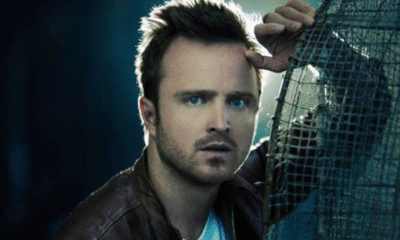
Aaron Paul, best known to the world as Jesse Pinkman in Breaking Bad, receives his first-ever BAFTA Games performance nomination. So does Charlie Cox, the British actor who won hearts worldwide as Matt Murdock in Daredevil. And joining them is Jeffrey Wright — the endlessly versatile actor known for Westworld, The Batman, and American Fiction — who also earns his first nomination in the games space.
Their inclusion is significant. It speaks to a growing reality in the video game industry: the craft of performance capture and voice acting has reached a level of sophistication that demands the same recognition previously reserved for film and television. The lines between mediums are blurring fast, and BAFTA is paying attention.
Indie Studios Are No Longer the Underdogs
One theme that runs unmistakably through this year’s nominations is the rise — and perhaps the full arrival — of independent development. Tara Saunders, chair of BAFTA’s Games committee, put it plainly in her statement: “This year’s nominations reflect an industry reshaping itself — with a vibrant mix of established studios standing alongside a wide range of independent studios and a number of development teams earning nominations for the first time.”

She’s right. Supergiant Games earns a nomination for Hades II in Animation — a title that has been in Early Access and yet is already being talked about in the same breath as fully finished AAA releases. Team Cherry‘s long-awaited Hollow Knight: Silksong appears in both Animation and Artistic Achievement — nominations that carry real weight for a fanbase that has been waiting years for any news about the game’s progress. The fact that BAFTA members are recognising it now suggests the wait, whenever it ends, will have been worth something.
Compulsion Games and Xbox Game Studios earn an Artistic Achievement nomination for South of Midnight, the folklore-drenched action-adventure that has been building quiet but passionate anticipation since its announcement.
Meanwhile, Embark Studios earns multiple nominations for Arc Raiders, including in Audio Achievement and Best Game — cementing the Swedish developer’s arrival as a serious force in the industry.
What Happens on April 17
The winners will be revealed at the BAFTA Games Awards ceremony on April 17, and if the nominations are any guide, it is going to be a fascinating night. Clair Obscur: Expedition 33‘s 12-nomination haul makes it the statistical favourite, but awards nights have a habit of distributing wins in ways that defy the numbers. Dispatch‘s nine nods signal genuine industry respect for AdHoc Studio’s work. Ghost of Yōtei and Death Stranding 2 represent the prestige end of the AAA spectrum. And somewhere in that mix, three Hollywood actors are about to find out whether their games work earns them a BAFTA.
The BAFTA Games Awards, founded in 2004, have always prided themselves on celebrating “creative excellence in video games and the people who make them.” This year’s nominations suggest that creative excellence is being found in more places, by more kinds of studios, than ever before.
That is not a bad problem to have.








Entertainment
Samara Weaving Barely Gets One Cigarette Break Before the Killing Starts Again in ‘Ready or Not 2’ But Is Sarah Michelle Gellar Enough to Save It…
Ready or Not 2: Here I Come picks up minutes after the bloody 2019 original, bringing back Samara Weaving alongside Sarah Michelle Gellar, Elijah Wood, and Kathryn Newton — but the dark magic that made the first film so wickedly good is proving harder to conjure a second time.

There is an unwritten rule in Hollywood horror that nobody talks about at parties but everybody knows: surviving the first film is often the worst thing that can happen to a final girl. Because survival means a sequel. And sequels, more often than not, mean diminishing returns dressed up in the same costume.
Ready or Not 2: Here I Come knows this. It might even be self-aware enough to wink at it. But knowing the trap and avoiding it are two very different things, and this follow-up to the genuinely brilliant 2019 original finds itself caught somewhere between a loving tribute to what came before and a film that hasn’t quite figured out why the first one worked so well in the first place.
Where We Left Grace — And Where She Ends Up
When Ready or Not ended in 2019, Samara Weaving‘s Grace had done the impossible. She had survived a wedding night that turned into a blood-soaked hunt, outlasted an entire murderous aristocratic family, and emerged from the wreckage — wedding dress destroyed, dignity intact, cigarette in hand — as one of the most electrifying horror heroines in recent memory. It was a perfect ending. Cathartic, darkly funny, earned.
ALSO READ : Younghoe Koo Explains Botched Field Goal After Slip: “The Ball Was Moving So I Pulled Up”
Ready or Not 2: Here I Come picks up almost literally in that same moment. Grace barely gets a drag of her cigarette before the universe decides she has not suffered nearly enough, and throws her headfirst into yet another most dangerous game. The film’s cheeky decision to resume with essentially no breathing room is both its most audacious choice and, arguably, part of its problem. There is something narratively exhausting about denying your protagonist — and your audience — even a moment of peace before the carnage resumes.
But exhausting can also be exhilarating, and for stretches of Ready or Not 2, it genuinely is.
The New Blood: Gellar, Wood, Newton and More
The film’s biggest swing is its cast expansion, and on paper it reads like a genre fan’s wish list come true. Sarah Michelle Gellar — forever and permanently Buffy Summers to anyone who grew up in the late nineties, and one of the most naturally charismatic screen presences in horror-adjacent entertainment — joins the cast in a role that the film wisely leans into. Gellar has spent decades proving she can do this kind of material in her sleep, and her presence here is an immediate energy injection every time she appears on screen.
Elijah Wood, who built an entire second career in genre film and television after Frodo Baggins put him on the map, brings his particular brand of wide-eyed intensity to a supporting role that the film uses with reasonable intelligence. He is not wasted here, which is more than can be said for some sequel supporting casts.
Kathryn Newton, fresh off establishing herself as a genuine franchise player through the Marvel universe and Freaky, adds another horror credit to a filmography that suggests she is quietly becoming one of her generation’s most reliable genre performers. And Shawn Hatosy, best known to television audiences from Animal Kingdom, rounds out a supporting ensemble that genuinely has no weak links in terms of performance.

The problem is not the cast. The problem is what the film does — and doesn’t do — with them.
More of Everything, Less of Something
The original Ready or Not worked because it was precise. It had a single, contained premise — one woman, one house, one night, one family — and it executed that premise with the confidence of a film that knew exactly what it was. The horror was funny. The comedy was horrifying. The class commentary was sharp without being preachy. And Weaving at the centre of it was a revelation — physically committed, emotionally raw, and wickedly entertaining in equal measure.
Ready or Not 2 doubles down on everything. More action. More characters. More set pieces. More escalation. And in the doubling down, something gets diluted. The action-horror-comedy balance that the first film held so beautifully tips slightly too far toward action this time, and some of the darkly intimate tension that made the original so unnerving gets lost in the larger scale.
Weaving remains magnificent. That is not up for debate. She throws herself into Grace’s continued ordeal with the same total physical commitment she brought in 2019, and there are moments — particularly in her scenes alongside Gellar — where the film fully earns its existence as a sequel. These two women sharing a frame in a horror-comedy context is, frankly, a gift that the genre did not know it needed, and when the film lets them simply bounce off each other, it crackles.
But those moments are punctuated by sequences that feel obligatory rather than inspired — the kind of escalation that sequels feel compelled to include because they believe bigger equals better. It rarely does.
The Verdict: Good Enough, But You’ll Miss the Original
Ready or Not 2: Here I Come is, by any reasonable measure, a good time. It is well-made, well-acted, occasionally very funny, and never boring. For fans of the first film, it delivers enough of what they loved to justify the watch. For newcomers — and it is hard to imagine anyone coming to this sequel without having seen the original — it will likely land as a perfectly enjoyable genre film with a stellar cast doing solid work.
But “good enough” is a long way from what the first Ready or Not was, which was genuinely great. Sequels are, as we noted at the top, a particular kind of curse. And Here I Come is proof that even the most talented people, working with the best intentions and an excellent cast, cannot always outrun the shadow of something that was near-perfect the first time around.
Grace survived the original. The magic of the original, though, is a little harder to bring back from the dead.
Entertainment
A Chinese Filmmaker Followed Three Girls Through One of Life’s Most Private Moments and the Result at CPH:DOX Is Being Called ‘a Dream Running Parallel to Reality’…
Director Dongnan Chen’s Whispers in May blends documentary and improvisation into a tender, magical portrait of girlhood on the edge of womanhood — and it may be the most quietly powerful film premiering in Copenhagen this week.

There are films that announce themselves with noise — trailers, campaigns, controversy, spectacle. And then there are films that arrive the way a secret does: softly, unexpectedly, and with the kind of emotional weight that takes a moment to fully register.
Whispers in May is very much the second kind of film.
Premiering at CPH:DOX — the Copenhagen International Documentary Film Festival, whose 23rd edition runs through March 22 — the film is the second feature from Dongnan Chen, a Chinese filmmaker whose approach to storytelling refuses to sit comfortably in any single category. Part documentary, part improvisation, part something that resists easy classification altogether, Whispers in May follows three girls in China through a passage of time that is both entirely ordinary and, for one of them, quietly monumental.
ALSO READ : Younghoe Koo Explains Botched Field Goal After Slip: “The Ball Was Moving So I Pulled Up”
One of the three girls has just had her first menstruation.
That is the film’s emotional anchor — not a dramatic event, not a crisis, not a conflict in the conventional cinematic sense, but a threshold. The kind of moment that happens privately, that is rarely spoken about openly, and that marks a before and an after in a girl’s understanding of herself and her body. Chen has chosen to build an entire film around that threshold, and in doing so has made something that feels genuinely rare: a work of cinema that treats the inner life of young girls as worthy of the same serious, beautiful, unhurried attention usually reserved for subjects the world considers more important.
A Form as Fluid as Its Subject
What makes Whispers in May particularly fascinating — beyond its subject matter — is the way it was made. Chen works at the intersection of documentary and improvisation, a space where the boundaries between what is real and what is performed become productively blurry. The three girls at the centre of the film are not reading from a script, but neither are they simply being observed in the manner of traditional documentary filmmaking. They are collaborators in a process that Chen has described in terms that are almost philosophical.
“I think of the film as a dream running parallel to reality,” Chen has said — and that framing is key to understanding what Whispers in May is trying to do. Dreams are not fictional, exactly. They are generated by real minds, real emotions, real experiences. But they follow their own logic, their own rhythm, their own rules about what can appear next to what. Chen is reaching for that quality in her filmmaking: the feeling of something emotionally true that nevertheless moves with the freedom of imagination rather than the constraint of documentation.
The result, by all accounts, is a film that feels simultaneously grounded and suspended — rooted in the specific texture of these three girls’ lives in contemporary China, but drifting, dreamily, through the larger territory of what it means to grow up female, to inhabit a body that is changing, and to navigate the gap between the girl you were yesterday and the woman the world has already started to expect you to become.
Why Improv and Documentary Together?
The combination of documentary and improvisation is not new to cinema — filmmakers from John Cassavetes to Andrea Arnold to Sean Baker have worked in the fertile space between scripted and unscripted. But the particular challenge of applying that approach to a film about young girls navigating something as intimate as puberty requires a very specific kind of directorial sensitivity.
Chen appears to have that sensitivity in abundance. Rather than imposing a narrative structure onto her subjects, she seems to have created conditions in which the film’s emotional truths could emerge organically — through play, through conversation, through the kind of unguarded moments that only occur when the camera has been present long enough to become part of the furniture. The improvised elements give the film a quality of spontaneity and genuine feeling that purely scripted coming-of-age films rarely achieve. The documentary instincts keep it honest.

Together, they produce something that CPH:DOX has recognised by placing the film in its programme — a festival that has built its reputation over 23 years on identifying exactly this kind of formally adventurous, humanly essential cinema.
The Landscape of Girlhood in Chinese Cinema
It is also worth noting the cultural context in which Whispers in May arrives. Stories about female adolescence in Chinese cinema — particularly stories that centre on bodily experience, on the quiet psychological upheaval of puberty, on the internal lives of girls who exist outside urban centres and away from the dominant narratives of Chinese modernity — remain relatively rare in work that reaches international festival circuits.
Chen’s decision to tell this story, and to tell it in this particular way, is quietly political as well as deeply personal. To say: these girls exist, their experiences matter, their transition deserves forty minutes or ninety minutes or however long it takes of your full and undivided attention — that is a statement, whether or not it is framed as one.
The film sits in a lineage that includes works like Céline Sciamma‘s Girlhood and Lucie Borleteau‘s quietly observed portraits of female experience — films that approach their subjects without sentimentality or sensationalism, trusting the material to carry its own weight. Whispers in May sounds like it belongs in that company.
A Second Feature Worth Watching
For Dongnan Chen, this is only her second feature — a fact worth pausing on, because Whispers in May sounds like the work of a filmmaker who has already found her voice with unusual clarity. Second features are often where directors prove whether their debut was a lucky accident or the beginning of something real. Everything about Whispers in May suggests the latter.
The film premieres at a festival that attracts programmers, distributors, and critics from across the world, and its placement in the CPH:DOX lineup means it will not remain a secret for long. Somewhere between the documentary footage and the improvised moments, between the three girls and the dream running alongside their reality, Dongnan Chen has made something that the world’s film community is about to discover.
Pay attention to this one. It whispers, but it says a great deal.
Entertainment
Dakota Fanning and Jake Johnson Have Undeniable Chemistry in Alaska So Why Does ‘The Sun Never Sets’ Feel Like It Can’t Quite Make Up Its Mind…
Joe Swanberg’s latest romantic dramedy debuts at SXSW with two charming leads, a beautiful Alaskan backdrop, and a story about an ex you probably shouldn’t call — but the film itself seems just as conflicted as its protagonist.

There is a particular kind of romantic film that lives and dies entirely on the question of whether you believe the two people at its centre could actually fall for each other. Not whether the plot makes sense, not whether the dialogue sparkles on every page, not even whether the ending satisfies — just that one fundamental thing: do these two people feel real together?
By that measure, The Sun Never Sets has something genuinely valuable going for it. Dakota Fanning and Jake Johnson are warm, lived-in, and quietly compelling together in a way that makes you wish the film around them were a little more sure of itself. Because the chemistry is real. The film, unfortunately, is still working out what it wants to be.
Debuting at SXSW — the South by Southwest Film Festival in Austin, Texas, which remains one of the best places in the world to catch a romantic dramedy before it finds its audience — The Sun Never Sets is the latest feature from director Joe Swanberg, the Chicago-based filmmaker who built his reputation on exactly this kind of intimate, naturalistic, relationship-first storytelling. His Drinking Buddies remains a small masterpiece of the genre — a film about attraction and ambivalence and the particular torture of wanting something you are not quite sure you should have. Fans of that film will find a lot that is familiar here. Whether familiar is enough this time is a more complicated question.
ALSO READ : Younghoe Koo Explains Botched Field Goal After Slip: “The Ball Was Moving So I Pulled Up”
The Setup: A Break, an Ex, and Alaska
The film centres on a young woman — played by Fanning — who is on a break from a long-term relationship and finds herself in Alaska, that vast and quietly cinematic state that has become shorthand in American film for a certain kind of emotional wilderness. The frozen distances. The light that refuses to disappear in summer. The feeling of being very far from the life you normally inhabit and the decisions you would normally make.
It is in Alaska that she reconnects with her ex, played by Johnson. And from that premise — simple, recognisable, emotionally loaded — Swanberg builds a film that is at its best when it simply lets its two leads exist together in the same space and trusts the audience to feel the pull between them.
The “on a break” framing is doing real narrative work here. It is not quite the same as being single, which means every conversation, every shared meal, every moment of accidental closeness carries a weight that neither character can fully ignore. She is not free, exactly. But she is not entirely committed either. And her ex — warm, funny, carrying his own complicated feelings with the kind of studied casualness that Jake Johnson has essentially trademarked at this point — is right there, being exactly the person she remembered, which is both the problem and the point.
Why Fanning and Johnson Work
Dakota Fanning has been in the public eye since she was a child — one of those rare performers who transitioned from precocious child star to credible adult actress without losing the essential quality that made audiences respond to her in the first place. That quality is a kind of interior richness — the sense that her characters are always thinking something they are not quite saying, always feeling something slightly more complicated than the surface suggests. In The Sun Never Sets, that quality is exactly what the role needs. Her character is a woman caught between two versions of her life, and Fanning plays that in-between state with real nuance and without the melodrama that a lesser performance might have reached for.

Jake Johnson has built an entire career on playing exactly this kind of man — the ex who is too charming for his own good, emotionally intelligent enough to be dangerous, self-aware enough to know he is probably not helping the situation and yet unable to quite remove himself from it. It is a type he has played before, most notably in New Girl as Nick Miller, and he plays it with the ease of someone who has spent a long time understanding what makes these men both frustrating and irresistible. The difference here is that Johnson brings something slightly sadder to the role — a sense of a man who has genuinely not moved on, and knows it, and is not entirely sure what to do with that knowledge.
Together, they are the reason to watch The Sun Never Sets. Full stop.
The Film’s Central Problem: Commitment
Here is where the honest part of this review has to arrive. Joe Swanberg is one of American independent cinema’s most authentic voices when it comes to the messy, unresolved, fundamentally human experience of romantic ambivalence. But ambivalence in a film’s characters is very different from ambivalence in a film’s storytelling — and The Sun Never Sets sometimes struggles to distinguish between the two.
The film is deliberately, almost programmatically, wishy-washy — a word that sounds like a criticism but is actually, in the right hands, a description of something Swanberg does intentionally and well. Life is wishy-washy. Relationships are wishy-washy. The Drinking Buddies formula works precisely because it refuses to resolve its tensions cleanly and trusts the audience to sit with discomfort.
The problem here is that The Sun Never Sets occasionally mistakes vagueness for depth and drift for atmosphere. There are stretches of the film where the lack of narrative momentum stops feeling like a deliberate artistic choice and starts feeling like the film is waiting for something to happen that never quite does. The Alaskan setting — which should be doing enormous atmospheric work, all that impossible light and quiet immensity — sometimes feels like a backdrop rather than a character, which is a missed opportunity given how much location has historically done for films in this genre.
The SXSW Context
Premiering at SXSW places The Sun Never Sets in exactly the right company. This is a festival that has historically embraced precisely the kind of small, character-driven, adult romantic drama that has been steadily crowded out of mainstream cinema by franchise entertainment. The audience here will be predisposed to give it the patience it asks for, and in that context, the film’s quieter qualities will likely land better than they might in a wider release environment.
For Swanberg, this represents a return to the territory where he is most comfortable and most himself. For Fanning, it is another demonstration that she is one of her generation’s most interesting screen presences when given material that trusts her. For Johnson, it is confirmation — as if any were needed — that he is one of the most naturally watchable actors currently working in American independent film.
Whether The Sun Never Sets ultimately lands as a minor gem or a near-miss will probably depend on how much patience any individual viewer brings to a film that is generous with mood and sparing with resolution. One thing is certain: when Fanning and Johnson are on screen together, the sun, metaphorically speaking, is very much still up.

Samara Weaving Barely Gets One Cigarette Break Before the Killing Starts Again in ‘Ready or Not 2’ But Is Sarah Michelle Gellar Enough to Save It…

A Chinese Filmmaker Followed Three Girls Through One of Life’s Most Private Moments and the Result at CPH:DOX Is Being Called ‘a Dream Running Parallel to Reality’…

Dakota Fanning and Jake Johnson Have Undeniable Chemistry in Alaska So Why Does ‘The Sun Never Sets’ Feel Like It Can’t Quite Make Up Its Mind…
Samara Weaving Survived the Wedding From Hell — Now She’s Back and Someone Forgot to Tell Her the Sequel Rules Have Changed…

BAFTA Games 2025: The Nominations Are Out and a Small French Studio Just Made Every AAA Publisher Very Uncomfortable…

1-Iran Issues Dire Warning to Israel and Defies Trump on Nukes: “We’re Ready to Strike Deep Inside”

Donald Trump’s net worth reveals the fortune behind the former US President and business mogul

“She Never Made It Out…” Albany House Fire Claims Woman’s Life as Family Pleads for Help to Bring Her Home

“Tomás Rodríguez Net Worth 2025: Panama’s Gold Cup Goal‑Machine’s Surprising Fortune Revealed”

Caitlin Clark Sidelined with Quad Strain, Set to Miss Two Weeks of WNBA Action

Miss Jamaica Suffers Terrifying Fall Off Miss Universe Stage; Rushed to Hospital on Stretcher in Viral Video

Moana Live-Action Teaser Sparks Outrage as Fans Call Disney’s Move a ‘Clear Money Grab’ — What Went Wrong?

Ryan Gosling’s Project Hail Mary Trailer Stuns Fans with a Mysterious Alien Ally and a Mission That Could Save Earth

Apple delays Jessica Chastain thriller The Savant about domestic extremism after recent US violence

Avatar 3, Fire and Ash trailer reveals Jake Sully’s family facing terrifying new Na’vi enemies with deadly fire powers
-
 Entertainment1 week ago
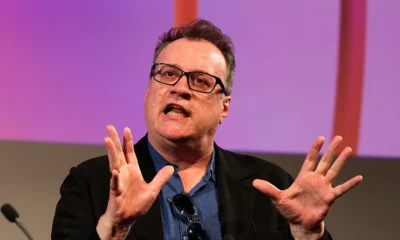
Russell T Davies Says ‘You’re Queer in 2026, You’re a Political Act’ — and His New Show ‘Tip Toe’ Is His Most Furious, Personal Work Yet…
-

 Entertainment1 week ago
Broadway Shake-Up: Samira Wiley Steps Away From ‘Proof’… Kara Young Steps In at the Last Moment
-

 Entertainment1 week ago
A Shocking Shift for ‘Dune 3’: Villeneuve Promises a “Thriller”… With Zendaya & Pattinson at the Center
-
 Sports1 week ago
NBA Top Shot Lawsuit Settlements Are Hitting Venmo Accounts — And the League Just Set a $165M Salary Cap for Next Season
-

 Entertainment1 week ago
Cardi B vs Slow Sales: Rap Star Warns Canadian Fans Over Threat to Her Perfect Record
-

 Entertainment1 week ago
Cardi B Fires Warning to Canadian Fans… “Don’t Mess With My Sold-Out Record” as Ticket Sales Lag
-

 Entertainment1 week ago
Sean Penn Won His Third Oscar on Sunday — Then Vanished. Now We Think We Know Exactly Where He Was and Who He Was With…
-

 Automobile1 week ago
Tom Selleck’s Legendary ‘Magnum P.I.’ Ferrari Heads to Auction… and It’s the One Everyone Dreamed Of