
Tech
BNB public company in the works? Binance founder backs $63B token with bold Wall Street move…
Changpeng Zhao’s family office is backing a new firm to hold massive amounts of BNB — with plans to take it public in the U.S. as BNB hits $670.


Changpeng Zhao, the billionaire founder of Binance, is once again shaking up the crypto world — this time by backing a new company that will buy and hold large amounts of BNB with plans to go public on a major U.S. exchange.
The move, led by Zhao’s family office through YZi Labs, will support 10X Capital in launching what is being called the “BNB Treasury Company.” This firm will allow traditional investors to gain exposure to BNB, formerly known as Binance Coin, without needing to directly interact with crypto exchanges.
“BNB Chain is one of the most widely adopted blockchain ecosystems,” said Ella Zhang, head of YZi Labs. “We believe expanding its institutional access can deliver meaningful benefits to the broader public.”
Appointed to lead the new treasury firm is David Namdar, a senior partner at 10X Capital and co-founder of Galaxy Digital. He will oversee the strategy as 10X Capital acts as the asset manager for the BNB-holding entity.
BNB, launched by Binance in 2017, is currently trading above $670, up 1.3% in the last 24 hours according to CoinGecko. It powers applications on the BNB Chain, offers fee discounts on Binance, and serves as a critical part of the exchange’s ecosystem — though Binance claims it no longer actively develops the token.
“The BNB Chain is one of the largest, highest performing digital assets ecosystems globally,” said Hans Thomas, CEO of 10X Capital. “But U.S. investors have limited access to it.”
Zhao Still Tied to BNB — Despite Binance Exit
Despite stepping down from Binance leadership as part of a U.S. plea deal involving money laundering charges, Zhao remains deeply tied to BNB. In February, he revealed that 98.5% of his crypto portfolio is in BNB. According to Forbes, Zhao personally owns 94 million BNB, currently worth nearly $63 billion, accounting for over 64% of BNB’s circulating supply.
Combined with Binance’s 31.5% stake, Zhao and the company control nearly 96% of all BNB in circulation — a figure that raises both fascination and concerns about centralization.
On X, Zhao recently posted, “There are over 30+ teams that want to do a BNB treasury public company.”
A Broader Trend in Crypto Treasury Firms
The planned IPO comes amid a growing trend of companies buying up large volumes of crypto tokens and offering traditional equity investors a way to tap into Web3 assets.
Nano Labs, a Nasdaq-listed Chinese chip designer, announced plans to buy up to $1 billion in BNB, already purchasing $50 million earlier this month.- Trident Digital in Singapore and Webus, a Chinese auto firm, have also pledged hundreds of millions into holding XRP, showing that it’s not just Bitcoin getting Wall Street’s attention anymore.
BNB’s rise is emblematic of the shifting momentum toward altcoin treasury holdings and institutional-grade crypto access — a space once dominated by Bitcoin ETFs and large-cap coins.
As the BNB Treasury Company prepares for its U.S. listing and closes its financing round “in the coming weeks,” it could signal the start of a new era of crypto-public hybrids — where blockchain-native tokens and Wall Street capital collide in unprecedented ways.










Tech
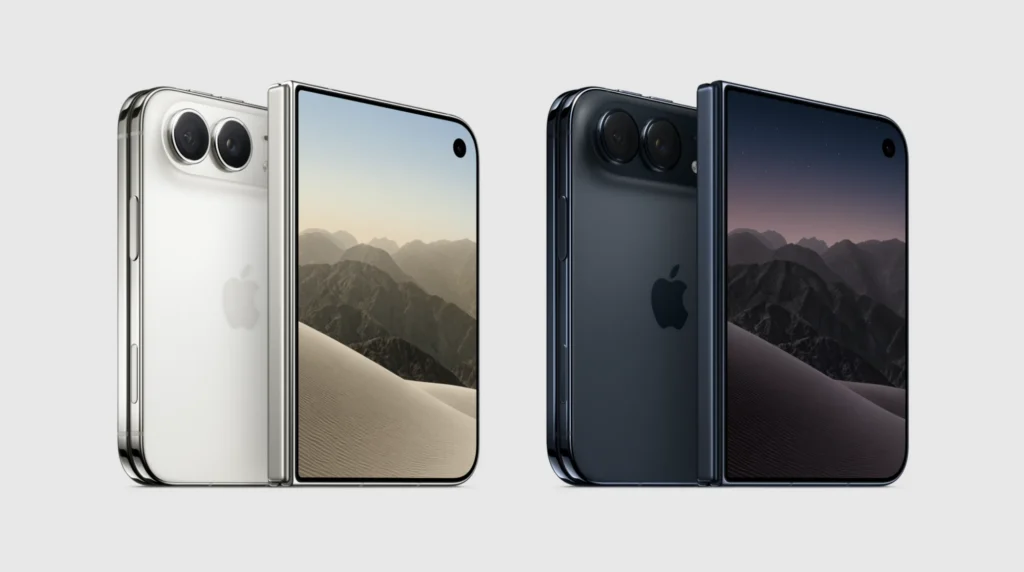
Apple unveils its first foldable iPhone Duo: A 7.6-inch display, A20 Pro power and a design that changes everything…
Apple has officially entered the foldable smartphone era with the iPhone Duo, combining two displays, a precision-engineered hinge, the powerful A20 Pro chip and a completely reimagined iOS experience.


Apple has finally made its move into the foldable smartphone market.
The technology giant has unveiled the iPhone Duo, its first-ever foldable iPhone, bringing one of the biggest design changes to the iconic smartphone lineup in years.
The new device is designed to offer two very different experiences in one product. When closed, it works as a compact smartphone with a 5.4-inch display. Open it up, however, and the iPhone Duo transforms into a much larger device with a 7.6-inch inner display built for entertainment, gaming and multitasking.
According to Apple, the iPhone Duo represents a major new chapter for the iPhone.
“iPhone Duo is the most transformational change to iPhone since the original,” said John Ternus, CEO of Apple.
Two displays, one completely different iPhone experience
The most striking feature of the iPhone Duo is, naturally, its foldable design.
When folded, users get a 5.4-inch Super Retina XDR outer display, offering a compact experience designed for everyday tasks. Once unfolded, the phone reveals a massive 7.6-inch Super Retina XDR display, creating Apple’s largest screen ever on an iPhone.
The larger display is designed to make multitasking more practical, while also providing a more immersive experience for watching videos, playing games and browsing the web.
Both displays feature ProMotion, Always-On functionality and up to 3,000 nits of peak outdoor brightness.
Apple has also introduced a nano-texture finish designed to reduce glare and reflections while making the display more comfortable to use in bright environments.
Later this year, the company says the iPhone Duo will also support the Apple Pencil with USB-C, allowing users to take notes, sketch and annotate documents directly on either display.
Apple bets heavily on durability with a new hinge
Foldable smartphones have always raised one major question among buyers: how durable is the folding mechanism?
Apple appears to have made durability one of the central focuses of the iPhone Duo.
The device is constructed using grade 5 titanium, while its hinge contains more than 100 components designed to provide a controlled and smooth folding experience.
The iPhone Duo also features Ceramic Shield protection, with Ceramic Shield 2 on the front offering improved scratch resistance.
Apple says the phone carries an IP68 rating for resistance against water and dust.
Inside the folding display, the company has used multiple layers designed to reduce stress created by repeated opening and closing. A custom polymer cover layer and reinforced internal structure are intended to make the large flexible screen more durable for everyday use.
A20 Pro brings flagship-level performance
Under the hood, the iPhone Duo is powered by Apple’s new A20 Pro processor, the same chip used in the iPhone 18 Pro models.
The chip is paired with a custom vapor chamber for improved thermal management, something that should become particularly useful when users are gaming, multitasking or running demanding AI features.
According to Apple, the A20 Pro delivers significant improvements over the previous generation, including:
- Up to 20 percent faster CPU performance
- Up to 40 percent faster and more efficient GPU performance
- A new Dual 16-core Neural Engine
- Up to two times more computing power for on-device AI
- Built using advanced 2-nanometer technology
Apple says the new architecture also improves sustained performance, making the iPhone Duo better suited to demanding workloads over longer periods.
The foldable design creates new camera possibilities
The iPhone Duo features a powerful camera system built around a 48MP Fusion Main camera.
Users can capture full-resolution photographs, while the main camera also provides a 2x optical-quality Telephoto option.
The phone additionally includes a 48MP Fusion Ultra Wide camera, supporting wide-angle photography and macro shots.
But the most interesting part of the camera experience comes from the folding design itself.
Because the iPhone Duo has displays on both sides, Apple has introduced several new ways to capture photographs.
Smart Take and Duo Preview
With Smart Take, on-device AI can analyse a scene and automatically capture photographs when subjects are ready.
Duo Preview, meanwhile, allows people being photographed to see themselves on the outer display while the photographer uses the main camera.
Users can also take selfies using the higher-resolution rear cameras and preview the shot on the external screen.
Another playful feature called Kid Cue displays animations to help capture the attention of children during photographs.
The folding design also introduces Duo FaceTime, allowing people physically sitting with the user to participate more comfortably in a video call.
iOS 27 has been redesigned for the folding screen
The arrival of the iPhone Duo has also pushed Apple to rethink how iOS 27 works.
The operating system dynamically adapts as the phone is opened, folded, rotated or flipped.
The larger inner display supports new productivity features, including Split View, allowing users to run two apps side by side on an iPhone for the first time.
Users can also open multiple windows of supported apps, quickly switch between applications and save app combinations for later use.
Major third-party platforms, including Netflix, Zoom and Slack, are already adapting their applications to take advantage of the larger foldable display.
For users who want a smartphone that can occasionally behave more like a compact tablet, this could be one of the iPhone Duo’s biggest advantages.
Apple Intelligence and Siri AI take centre stage
Artificial intelligence is another major part of the iPhone Duo experience.
The device supports Apple Intelligence and the newly introduced Siri AI, designed to make Apple’s digital assistant more conversational and context-aware.
Siri AI can use personal context to help users locate information across messages, emails and photographs, while also understanding what is currently displayed on the screen.
The new system can potentially take actions based on onscreen content and help users complete tasks without constantly switching between applications.
Apple says its AI approach continues to focus heavily on privacy through a combination of on-device processing and Private Cloud Compute.
Other AI-powered features include improved photo editing tools, upgraded Clean Up functionality, Spatial Reframing and enhanced creative tools inside Image Playground.
Battery life looks impressive on paper
Apple has adopted a dual-battery architecture inside the iPhone Duo, using battery cells on both sides of the device.
The company says its energy-management system allows the two batteries to operate together efficiently.
Apple claims the device can offer:
- Up to 31 hours of video playback using the inner display
- Up to 44 hours of video playback using the outer display
- Up to 24 hours of mixed everyday use
The phone also supports fast charging, with Apple claiming it can reach 50 percent charge in around 20 minutes with a compatible wired charger.
Wireless charging is also supported through MagSafe and Qi2 technology.
An eSIM-only future
The iPhone Duo adopts an eSIM-only design worldwide, removing the traditional physical SIM card tray.
Apple says this approach helps free up valuable internal space while offering greater flexibility and improved security.
The device supports Wi-Fi 7, Bluetooth 6 and Thread connectivity through Apple’s new N1 wireless networking chip.
Apple has also introduced its next-generation C2 cellular modem system, which brings additional improvements to mobile connectivity and reliability.
Colours, availability and launch dates
The iPhone Duo will be available in two colours:
- Star White
- Night Sky
Pre-orders for Apple’s first foldable iPhone will begin on Friday, October 16, with official availability starting on Friday, October 23.
Apple’s boldest iPhone experiment yet?
The iPhone Duo is more than simply another annual iPhone upgrade.
It represents Apple’s entry into a completely new product category and signals that the company believes foldable devices are finally ready for mainstream consumers.
With its massive 7.6-inch inner display, compact outer screen, titanium construction, advanced cameras, powerful A20 Pro processor and AI-focused software, the device brings together many of Apple’s biggest technologies in one ambitious product.
Whether the iPhone Duo becomes the next defining chapter in the history of the iPhone remains to be seen.
But one thing is already clear: Apple is no longer watching the foldable smartphone market from the sidelines.
With the arrival of the iPhone Duo, the foldable iPhone era has officially begun.
Tech
iPhone 18 Price, iPhone 18 Pro Price and iPhone 18 Pro Max Price: Here’s What Apple Has Revealed
Apple has confirmed the Indian prices of the iPhone 18 Pro and iPhone 18 Pro Max, but buyers waiting for the standard iPhone 18 have been left with an unexpected answer.

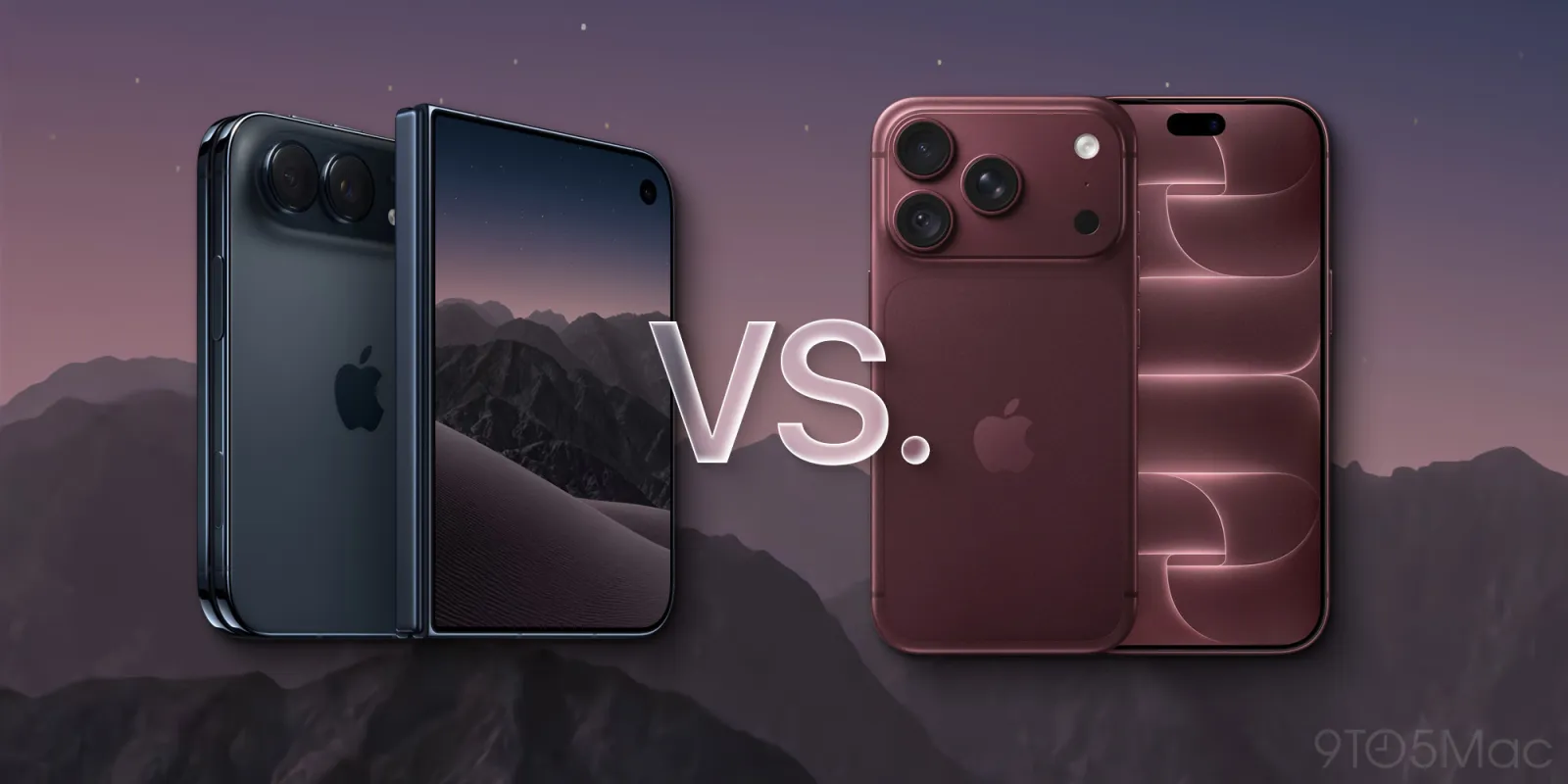
NEW DELHI: Apple has officially revealed the prices of its new iPhone 18 Pro and iPhone 18 Pro Max in India. The premium smartphones bring major camera, performance and battery upgrades, but their higher starting prices could force many buyers to think carefully before upgrading.
There is another surprise hidden in Apple’s latest announcement: the company has not launched a standard iPhone 18 alongside the two Pro models. As a result, there is currently no official iPhone 18 price or confirmed availability date.
Instead, Apple’s new smartphone lineup is led by the iPhone 18 Pro series and the company’s first foldable handset, the iPhone Duo.
ALSO READ : Apple unveils iPhone 18 Pro series with a camera upgrade users have waited years for: Here’s what changed
iPhone 18, iPhone 18 Pro and Pro Max prices
The iPhone 18 Pro begins at 1,64,900 for the 256GB variant. Buyers choosing the larger iPhone 18 Pro Max will need to spend at least 1,79,900.
Here is the complete pricing structure announced by Apple:
| Model | Storage | Price in India |
|---|---|---|
| iPhone 18 | Not announced | Price not revealed |
| iPhone 18 Pro | 256GB | ₹1,64,900 |
| iPhone 18 Pro | 512GB | ₹1,89,900 |
| iPhone 18 Pro | 1TB | ₹2,39,900 |
| iPhone 18 Pro | 2TB | ₹3,14,900 |
| iPhone 18 Pro Max | 256GB | ₹1,79,900 |
| iPhone 18 Pro Max | 512GB | ₹2,04,900 |
| iPhone 18 Pro Max | 1TB | ₹2,54,900 |
| iPhone 18 Pro Max | 2TB | ₹3,29,900 |
In the United States, the iPhone 18 Pro starts at $1,199, while the iPhone 18 Pro Max carries a starting price of $1,299. Both base configurations now include 256GB of storage.
What happened to the standard iPhone 18?
Apple’s decision not to introduce the regular iPhone 18 is likely to raise questions among buyers who want a new-generation iPhone without paying Pro-level prices.
The company has not announced the standard model’s price, specifications or release date. Apple’s current Indian lineup continues to include the iPhone 17, which now starts at 99,900, along with the iPhone 17e and iPhone Air.
Reports have suggested that Apple could be moving towards a split-launch strategy, with the standard iPhone 18 arriving separately from the premium models. Until Apple makes an official announcement, however, its price and launch timeline should be treated as unconfirmed.
For now, customers searching for an “iPhone 18 price in India” should note that only the Pro and Pro Max models have been launched under the iPhone 18 branding.
Why are the Pro models so expensive?
The new prices reflect Apple’s increasingly premium approach to its Pro lineup. Both phones are powered by the A20 Pro chip and feature a redesigned cooling system for improved performance during demanding tasks.
The biggest hardware upgrade is a 48MP Fusion Main camera with variable aperture. The lens can adjust the amount of light entering the camera, helping users capture brighter low-light photographs and control depth of field more naturally.
Apple has also added three 48MP rear cameras, manual Pro camera controls and up to 8x optical-quality zoom. The system is aimed at both everyday users and professional creators who shoot photographs and videos on their phones.
The iPhone 18 Pro features a 6.3-inch Super Retina XDR display, while the Pro Max has a larger 6.9-inch panel. Both support ProMotion technology, an Always-On display and a redesigned Dynamic Island.
Battery life could be the Pro Max’s strongest advantage
The iPhone 18 Pro Max offers Apple’s longest battery life on an iPhone. The Indian version is rated for up to 43 hours of video playback, while the standard Pro model offers a smaller display and battery.

Faster wired charging is included as well. Apple says the phones can reach approximately 50 per cent charge in around 15 minutes when used with a compatible power adapter.
The combination of a larger battery, improved thermal management and the efficiency of the A20 Pro chip could make the Pro Max particularly attractive to gamers, travellers and content creators.
Siri AI becomes part of the package
Both phones run iOS 27 and support Apple Intelligence and Siri AI. Apple’s upgraded assistant is designed to understand personal context, recognise information displayed on the screen and perform actions across supported applications.
Many AI tasks can be processed directly on the device, allowing Apple to continue positioning privacy as a major difference between its intelligence features and competing cloud-based services.
Pre-order and sale dates in India
Pre-orders for the iPhone 18 Pro and iPhone 18 Pro Max will begin in India at 5:30 pm IST on September 12. Both models will become available through Apple’s online store, physical stores and authorised retailers from September 18.
The phones are offered in four finishes: black, silver, glacier and burgundy.
Apple is also advertising up to six months of no-cost EMI and instant cashback of up to ₹7,000 on selected models when customers use eligible cards. The final benefit will depend on the model, payment method and offer conditions.
For buyers, the choice is unusually clear this year: pay at least ₹1.65 lakh for the latest Pro experience, consider the existing iPhone 17, or wait to discover what Apple has planned for the still-missing standard iPhone 18.
Tech
Apple unveils iPhone 18 Pro series with a camera upgrade users have waited years for: Here’s what changed
The iPhone 18 Pro and iPhone 18 Pro Max introduce a 48MP variable-aperture camera, A20 Pro performance, longer battery life, a redesigned Dynamic Island and the more personal Siri AI.

CUPERTINO, CALIFORNIA: Apple has officially unveiled the iPhone 18 Pro and iPhone 18 Pro Max, placing professional photography, artificial intelligence and sustained performance at the heart of its latest flagship smartphones.
The headline upgrade is a new 48MP Fusion Main camera with variable aperture—a feature that gives users greater control over light, focus and depth of field. Apple has also equipped the phones with its new A20 Pro chip, a next-generation vapour chamber, improved battery life and a smaller, more functional Dynamic Island.
Both models will run iOS 27 and bring together Apple Intelligence and Siri AI, turning the new Pro models into more context-aware personal devices while keeping privacy and on-device processing central to the experience.
The biggest camera change is hidden inside the lens
The most interesting addition to the iPhone 18 Pro lineup is its variable-aperture system. Instead of relying on a single fixed aperture, the 48MP Fusion Main camera can adjust the amount of light entering the lens and change how much of a scene remains in focus.
ALSO READ : PayPal Breach Shock: Six Months of Undetected Access—Refunds Issued, Passwords Reset… What Really Happened?
The camera supports f/1.48, f/1.8, f/2.8 and f/4.0 aperture settings. A wider aperture can help produce brighter images in difficult lighting, while narrower settings allow photographers to retain more detail across a scene.
Apple says the system can adjust automatically, but experienced users will also be able to take manual control through the Camera app. New Pro controls include settings for aperture, shutter speed, white balance and histogram monitoring.
For most people, that technical change should translate into a simple benefit: better photographs in challenging situations without having to carry a dedicated camera. For professional creators, however, it opens the door to more deliberate image-making directly from a phone.
The rear camera system also includes a 48MP Fusion Ultra Wide camera and a 48MP Fusion Telephoto camera, with up to 8x optical-quality zoom. Photographic Styles have been upgraded as well, allowing users to customise elements such as texture and grain alongside colour and tone.
Apple is giving video creators more control
The iPhone’s reputation among mobile filmmakers remains an important part of Apple’s Pro strategy. The new models support tools including ProRes RAW, Apple Log 2, genlock and 4K Dolby Vision recording at up to 120fps.
Users can also apply Cinematic mode effects after recording regular video. An improved Audio Mix feature is designed to separate voices or music from distracting background noise, while Dual Capture can record through the front and rear cameras simultaneously.
These additions suggest Apple is no longer treating the iPhone camera merely as a convenient everyday shooter. The company is increasingly positioning it as a compact production tool for filmmakers, journalists, musicians and online creators.
A20 Pro promises power without losing its cool
At the centre of both phones is the new A20 Pro chip, which Apple describes as its most powerful and efficient iPhone processor so far.
It works alongside a next-generation vapour chamber with three times the surface area of the previous cooling solution. According to Apple, the combination provides up to 40 per cent better sustained performance than the iPhone 17 Pro, which could make a noticeable difference during gaming, long video shoots and demanding AI tasks.
The chip also introduces a Dual 16-core Neural Engine and higher memory bandwidth for faster on-device intelligence. This additional processing capacity will be especially important as Apple expands AI features across photography, writing, communication and system-wide assistance.
Siri AI becomes a more personal assistant
With Siri AI, Apple is attempting to move its digital assistant beyond basic commands and reminders. The upgraded assistant can use personal context to provide more relevant responses and help users complete tasks across compatible apps.
Apple says privacy and security remain at the core of the experience. Many requests are processed directly on the device, reducing the amount of personal information that needs to leave the phone.
This deeper integration could become one of the most significant changes in everyday use, although its real value will depend on how reliably Siri AI understands requests and performs multi-step tasks. Apple says the feature is beginning its rollout in English.
iPhone 18 Pro Max sets a new battery benchmark
Battery life receives another major upgrade, particularly on the larger model. Apple claims the iPhone 18 Pro Max can deliver up to 45 hours of video playback and as much as 30 hours of mixed use on one charge.
Faster wired charging can take the battery to around 50 per cent in approximately 15 minutes when a compatible power adapter is used.
The improvement comes from a combination of a larger battery, the efficiency of A20 Pro and changes to the phone’s internal design. For buyers who regularly travel, record videos or play graphics-intensive games, the extra endurance may be just as important as the new camera.
Smaller Dynamic Island, four new finishes
Apple has redesigned the Dynamic Island to occupy less display space while presenting more useful information. It can show as many as three Live Activities simultaneously, including navigation directions, music controls and live sports updates.
The iPhone 18 Pro has a 6.3-inch display, while the iPhone 18 Pro Max uses a 6.9-inch panel. Both feature Super Retina XDR technology and ProMotion refresh rates of up to 120Hz.
The phones are built around an aluminium unibody and are available in black, silver, glacier and a new burgundy finish. Ceramic Shield protection is included on the front and back.
Greg Joswiak, Apple’s senior vice-president of Worldwide Marketing, described the devices as the “best Pro iPhone we’ve ever made,” highlighting the company’s focus on camera, performance, battery life and intelligence.
Pre-orders for the iPhone 18 Pro and iPhone 18 Pro Max will begin on Saturday, September 12, with general availability starting Friday, September 18.
With variable aperture offering meaningful photographic flexibility and Siri AI becoming more deeply integrated into the operating system, Apple’s latest Pro phones appear focused on something beyond routine annual upgrades: giving users more control over what the iPhone can see, understand and create.

Sean ‘Diddy’ Combs Gets Another Earlier Release Date as Legal Battle Over Conviction Intensifies

Australia held Brazil to a draw after Nestory Irankunda’s stunning free kick — then Rayan struck at the very end…

Packers booed at Lambeau after Falcons blowout: Green Bay’s home opener turns into a nightmare…

Jesse Eisenberg Looks to Europe for Creative Freedom as U.S. Film Landscape Shifts

Sky’s $2.13 Billion ITV Deal: What’s Next for ITV Studios?

1-Iran Issues Dire Warning to Israel and Defies Trump on Nukes: “We’re Ready to Strike Deep Inside”

Sen. Elizabeth Warren Calls It a ‘Cesspool of Corruption’ — Here’s Why Senators Are Now Fighting Back Against the DOJ’s Live Nation Deal That Left Every Fan Betrayed…

Donald Trump’s net worth reveals the fortune behind the former US President and business mogul

“Tomás Rodríguez Net Worth 2025: Panama’s Gold Cup Goal‑Machine’s Surprising Fortune Revealed”

“She Never Made It Out…” Albany House Fire Claims Woman’s Life as Family Pleads for Help to Bring Her Home

Miss Jamaica Suffers Terrifying Fall Off Miss Universe Stage; Rushed to Hospital on Stretcher in Viral Video

Moana Live-Action Teaser Sparks Outrage as Fans Call Disney’s Move a ‘Clear Money Grab’ — What Went Wrong?

Ryan Gosling’s Project Hail Mary Trailer Stuns Fans with a Mysterious Alien Ally and a Mission That Could Save Earth

Apple delays Jessica Chastain thriller The Savant about domestic extremism after recent US violence

Avatar 3, Fire and Ash trailer reveals Jake Sully’s family facing terrifying new Na’vi enemies with deadly fire powers
-

 Entertainment4 days ago
Cynthia Nixon’s Support Draws Attention as Christine Marinoni Secures NYC Education Post
-

 Entertainment1 week ago
‘They’re Still Telling People Not to Hire Me’: Susan Sarandon Opens Up About Hollywood Backlash
-

 Entertainment1 week ago
‘Freddy the 13th’ Is Bringing Horror and Laughs Together… Dan Trachtenberg’s Animated Surprise Finally Gets a 2028 Release Window
-

 Entertainment1 week ago
Susan Sarandon Says Hollywood Is Still Shutting Her Out: ‘I’ve Had Movies Taken Away…’
-

 Entertainment1 week ago
‘Summer House’ Cast Left Speechless by Emmy Nomination… “It Feels Surreal” After a Decade of Reality TV
-

 Entertainment1 week ago
Sky’s $2.1 Billion ITV Deal Could Redraw European TV… Is the ‘Get Big or Get Left Behind’ Era Finally Here?
-

 Entertainment1 week ago
‘Obsession’ Made Her a Star… Now Inde Navarrette Reveals Why Marvel and ‘Heat 2’ Could Be Her Next Big Leap
-

 Entertainment1 week ago
Christopher Nolan Praises ‘Obsession’ and ‘Backrooms,’ Says Young Audiences Are Moving Beyond “AI Slop”