
science
Draconid Meteor Shower Peaks This Week — But the Moon Might Steal the Show
The Draconid meteor shower, born from comet 21P/Giacobini-Zinner, will light up the skies this week — but stargazers may have to fight moonlight to catch the action.

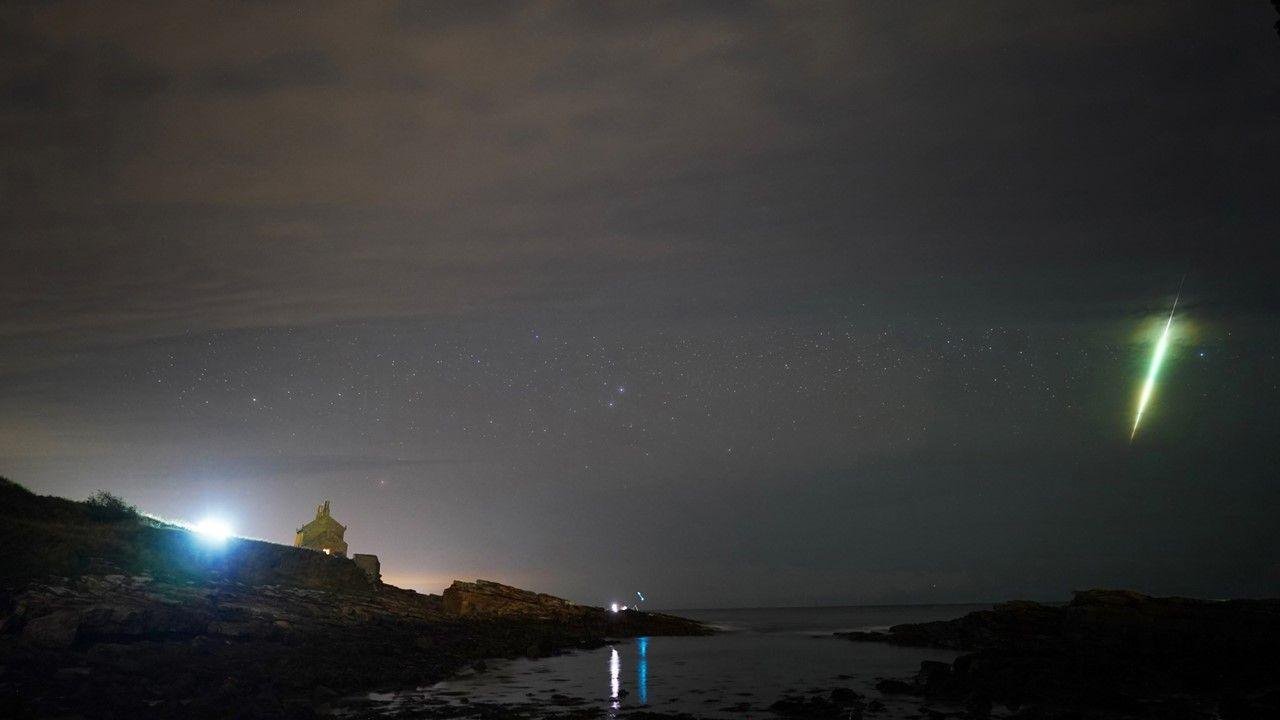
Skywatchers, mark your calendars — one of October’s most fleeting celestial events is here. The Draconid meteor shower is expected to reach its peak this week, offering a brief but dazzling performance for those lucky enough to catch it. However, this year’s show comes with a hitch — a bright post-supermoon sky that could drown out much of the spectacle.
According to EarthSky, the Draconids will peak around 3 p.m. ET on Wednesday, meaning the best time to watch in most regions will be right after sunset. Unlike many other meteor showers that favor the pre-dawn hours, the Draconids make their appearance in the early evening — a quirk that gives night owls and families a chance to enjoy them before midnight.
“The Draconids are a very quick shower,” said Robert Lunsford, fireball report coordinator for the American Meteor Society. “We on Earth pass through debris from comet 21P/Giacobini-Zinner in just a few days, and the main maximum actually only lasts a few hours. So it’s here and gone just like that.”
Why the Draconids Are So Special
The Draconid meteor shower is named after the constellation Draco, the dragon, from which its meteors appear to radiate. As Lunsford explains, “They’ll be shooting from the head of Draco, which lies high in the northern sky after sunset before circling down toward the northwestern horizon as the night progresses.”
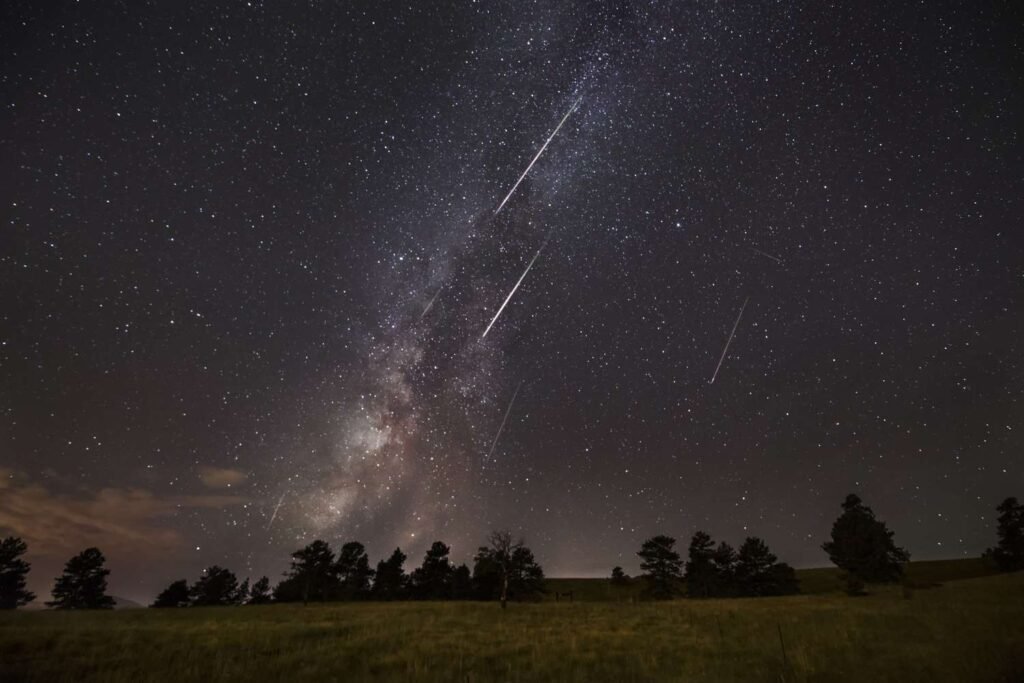
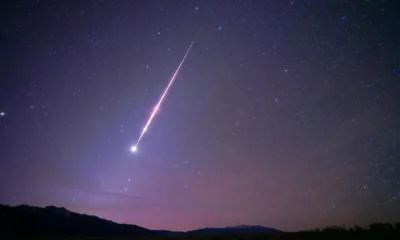
While it’s typically a mild event — often producing only one or two visible meteors per hour — the Draconids are infamous for their unpredictability. They’ve occasionally erupted into full-blown meteor storms, with thousands of shooting stars lighting up the night sky.
The most famous Draconid storm occurred in 1933, when observers in Europe reported seeing over 1,000 meteors per hour, and another strong outburst came in 1946. More recently, smaller storms have been recorded in the 1990s and early 2000s, peaking at around 400 meteors an hour.
“It’s one of those showers that can surprise you,” Lunsford added. “Most years it’s quiet — and then suddenly, it’s spectacular.”
Moonlight Trouble: What to Expect This Year
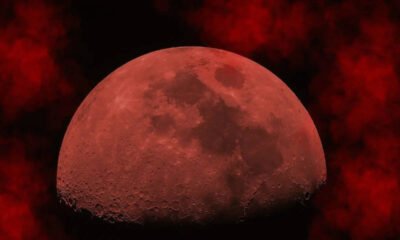
This year’s viewing conditions aren’t ideal. The Draconid peak comes just days after October’s supermoon, which means the night sky will still be brightly illuminated. That glare could wash out many of the fainter meteors, leaving only the brightest ones visible.
Still, for dedicated skywatchers, patience might pay off. Experts suggest heading to a dark, open area away from city lights and looking toward the northern sky right after dusk.
“If you’re looking toward the north and see a slow-moving meteor overhead, chances are it’s a Draconid,” Lunsford said. “But even on moonless nights, you might only see one per hour at the peak. With the moonlight this year, it could be even fewer.”
A Preview of What’s Next: The Orionids
If the Draconids disappoint this week, don’t pack up your stargazing gear just yet. The Orionid meteor shower — which peaks later this month — promises a more rewarding experience. The Orionids, originating from debris left by Halley’s Comet, typically produce 10 to 20 meteors per hour, and this year’s peak conveniently aligns with a new moon, ensuring darker skies for optimal viewing.
“The Orionids are a more reliable show,” said Lunsford. “They’re fast, bright, and this year’s new moon means near-perfect conditions.”
Why Meteor Showers Matter
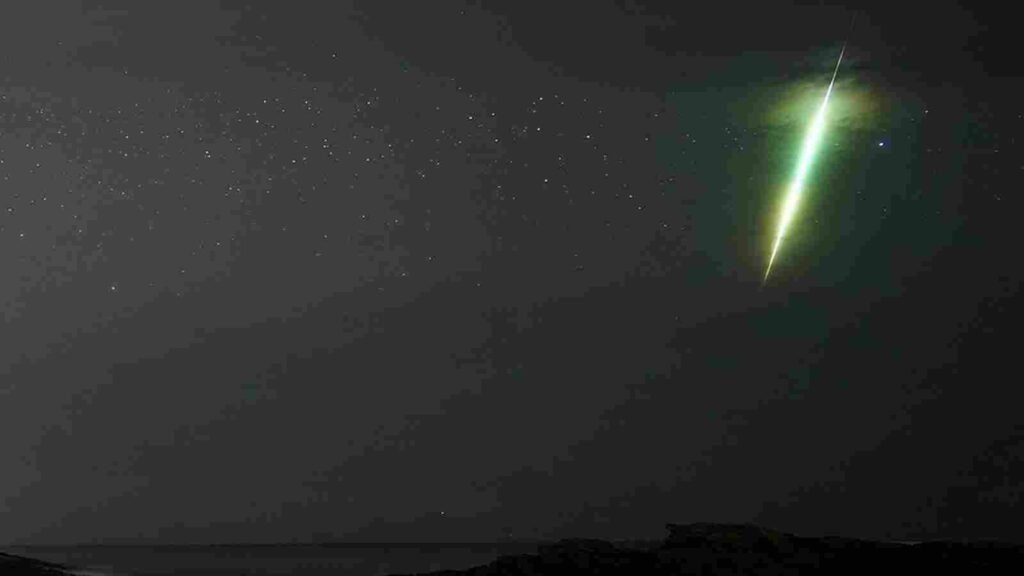
Beyond their beauty, meteor showers like the Draconids are reminders of Earth’s ongoing journey through space. Each streak of light is a tiny fragment of a comet burning up in our atmosphere — a cosmic connection stretching across millennia.
As the Earth crosses paths with the 21P/Giacobini-Zinner comet’s orbit, the debris it left behind becomes the Draconids — a celestial signature of the universe’s ongoing motion.
So, while this year’s show might be dimmed by the moon’s glow, it’s still worth stepping outside and looking up. Because even one meteor flashing across the sky can remind us just how vast, and yet connected, our place in the cosmos truly is.
For more Update http://www.dailyglobaldiary.com






science
Northern Lights Could Light Up the Sky Across 10 U.S. States Tonight — Here’s Exactly Where to Look and What Time to…
NOAA forecasters say a minor geomagnetic storm may push the aurora borealis low across the northern horizon — and you might not even need to leave your state to see it.


If you’ve always dreamed of seeing the northern lights without booking a flight to Iceland, tonight might be your night.
NOAA space-weather forecasters are calling for the aurora borealis to potentially shimmer across the northern skies of the United States late Friday, April 10, stretching into the early hours of Saturday, April 11 — and you won’t want to miss it.
The cause? A surge of faster solar wind overtaking slower streams of charged particles in a phenomenon scientists call a co-rotating interaction region. When these energized particles slam into gases in Earth’s upper atmosphere, they release those iconic bursts of glowing green — and sometimes purple, pink, and red — light that have made the northern lights one of the most breathtaking natural spectacles on the planet.
Forecasters say geomagnetic conditions could hit G1 (minor) storm levels, with a Kp index around 5.33 — just strong enough to push the aurora low along the northern horizon in parts of the U.S.
Where Can You Actually See It Tonight?
If the forecast holds and skies stay clear, residents across these 10 states stand the best chance of spotting the glow:
Washington, Idaho, Montana, North Dakota, South Dakota, Minnesota, Wisconsin, Michigan, Maine, and Alaska.
Your best bet sits closest to the Canadian border, where the auroral oval dips furthest south. However, if geomagnetic activity unexpectedly strengthens, the display could bleed further south into states like Oregon, Wyoming, Nebraska, Iowa, Illinois, Indiana, Ohio, New York, Vermont, and New Hampshire.
When Should You Step Outside?
The prime viewing window kicks off late Friday night and runs through the early morning hours of Saturday. Wait until full darkness has settled in — the darker the sky, the more vivid the colors. The hours just after midnight tend to offer the clearest views, when the sky is at its deepest and solar particles are actively dancing with Earth’s magnetic field.
How to Maximize Your Chances
This is not a sit-on-your-porch kind of event. To give yourself the best shot:

Get as far away from city lights as possible. Light pollution is the number one enemy of aurora-watching. Find an open field, a hilltop, or a lakeside spot with a wide, unobstructed view of the northern horizon. Let your eyes adjust to the darkness for at least 15–20 minutes before you decide nothing is happening.
Keep a live eye on conditions using NOAA’s 30-minute aurora forecast and space-weather tracking apps. Geomagnetic activity can shift fast — what looks quiet at 10 p.m. could ignite by midnight.
Want to Photograph It?
Your smartphone camera is more capable than you think. Switch to night mode or manual mode, set a long exposure of at least 10–15 seconds, prop your phone against something steady, and point it north. The camera often picks up colors the naked eye misses entirely — you might be stunned by what shows up on your screen even when the sky looks faintly lit to your eye.
The aurora borealis is one of those rare natural events that reminds you the universe is still putting on a show — whether or not we’re paying attention. Tonight, at least across the northern United States, it might just be asking you to look up.
science
“Humans Are Finally Going Back Near the Moon…”: Inside NASA’s Artemis 2 Mission Set to Rewrite Space History
After more than 50 years, a crewed lunar journey returns—here’s how Artemis 2 could change the future of space exploration forever

For the first time in over half a century, humanity is preparing to journey back toward the Moon—and this time, it’s not just about revisiting history, but redefining the future.
At the heart of this historic moment is NASA’s ambitious Artemis 2 mission, a bold step in its long-term plan to establish a sustained human presence beyond Earth.
A Mission Decades in the Making
Since the final days of the Apollo program in 1972, no human has traveled close to the Moon. While robotic missions have continued to explore the lunar surface, the human connection to our celestial neighbor has remained distant—until now.
Artemis 2 is set to change that. Scheduled for launch on April 1, 2026, the mission will send four astronauts on a 10-day journey around the Moon—without landing—but with a purpose far greater than a simple flyby.
Meet the Crew Making History
The mission brings together a diverse and groundbreaking team. Led by commander Reid Wiseman, the crew includes pilot Victor Glover, mission specialist Christina Koch, and Canadian astronaut Jeremy Hansen.
This mission is historic not just for its destination—but for who is onboard. Glover is set to become the first Black astronaut to travel near the Moon, Koch the first woman, and Hansen the first Canadian to reach lunar proximity.
It’s a powerful signal that space exploration is entering a new, more inclusive era.
The Technology Powering Artemis 2
At liftoff, the astronauts will ride aboard the towering Space Launch System (SLS)—the most powerful rocket ever built by NASA. Developed with contributions from Boeing and Northrop Grumman, the rocket generates a staggering 8.8 million pounds of thrust.
Perched atop the rocket is the Orion capsule, built by Lockheed Martin. This advanced spacecraft will carry the crew safely through deep space, offering protection from radiation and delivering views of Earth and the Moon unlike anything seen before.
At its farthest point, the crew will travel nearly a quarter-million miles from Earth—farther than any human has ever gone.
A Journey That Mirrors History—But Goes Beyond It
Many experts compare Artemis 2 to Apollo 8, the first mission to send humans into lunar orbit. But while Apollo 8 proved it could be done, Artemis 2 aims to pave the way for something bigger—returning humans to the Moon’s surface and eventually pushing onward to Mars.
Interestingly, astronauts on Artemis 2 will witness parts of the Moon’s far side that even Apollo-era astronauts never saw—a reminder that even familiar territory still holds mysteries.
Why the Moon Matters Again
NASA’s long-term Artemis vision isn’t just about symbolic milestones. The goal is to establish a permanent human presence on the Moon, particularly at its south pole—where water ice is believed to exist.
This ice could be converted into drinking water, breathable oxygen, and even rocket fuel—making the Moon a potential launchpad for future missions to Mars.
Private players are also playing a crucial role. Companies like SpaceX and Blue Origin are developing lunar landers that will eventually carry astronauts to the surface in upcoming missions like Artemis 3 and 4.

Launch Site and What Lies Ahead
All Artemis missions will lift off from the iconic Kennedy Space Center—the same site that launched the Apollo missions. Artemis 2, however, will depart from Launch Complex 39B, marking a new chapter at a historic location.
If all goes as planned, this mission will set the stage for a human lunar landing as early as 2027–2028, bringing astronauts back to the Moon for the first time in decades.
A Defining Moment for a New Generation
Artemis 2 is more than just a mission—it’s a statement. It signals that humanity is once again ready to push boundaries, explore the unknown, and take the next giant leap into deep space.
As the countdown begins, one thing is certain: the world will be watching. And for the first time in generations, the Moon won’t feel so far away.
For More Update – DAILY GLOBAL DIARY
science
“America Will Never Give Up the Moon…”: NASA’s Bold Artemis Reset Signals New Space Race Reality
Under new leadership, NASA rethinks its Moon-base ambitions as competition with China intensifies and timelines face renewed scrutiny.

The Moon is back at the center of global ambition—and this time, it’s not just about planting a flag. It’s about staying.
In a striking internal message that has now captured global attention, NASA Administrator Jared Isaacman declared, “The United States will never again give up the Moon.” It wasn’t just a motivational line—it was a signal that America’s entire lunar strategy is being recalibrated.
A Program Under Pressure
For years, NASA’s flagship lunar initiative, the Artemis program, has promised a return to the Moon with astronauts landing on its surface. But delays, rising costs, and growing complexity have cast doubts on whether the agency can meet its ambitious timeline of sending humans back by 2028.
The reality, as insiders quietly acknowledge, is far more uncertain.
The Artemis program—built around the powerful Space Launch System rocket and the Orion spacecraft—has faced repeated setbacks. What was once envisioned as a straightforward return mission has evolved into a sprawling, multi-layered operation involving international partners and private companies.
The China Factor
Behind the urgency lies a familiar but intensifying rivalry.
China has been rapidly advancing its own lunar ambitions, with a more streamlined and arguably more efficient approach. Beijing’s space agency is aiming to land astronauts on the Moon before the end of the decade—potentially beating the United States if Artemis slips again.
This possibility has triggered concern within Washington and the broader space community. The Moon, once a symbol of Cold War triumph, is once again becoming a stage for geopolitical competition.
A Shift Toward Realism
Since taking charge in late 2025, Isaacman has taken a noticeably pragmatic tone. Rather than overpromising, he is emphasizing achievable milestones, tighter execution, and a clearer long-term vision.
The biggest shift? Moving beyond short-term missions to focus on a sustained human presence—a Moon base.
NASA’s evolving strategy now prioritizes building infrastructure that can support repeated missions, scientific research, and eventually, as some hope, a stepping stone to Mars.
This marks a significant departure from earlier approaches that were more about symbolic landings than permanent presence.
Why the Moon Matters Again
The renewed focus on the Moon isn’t just about prestige. Scientists and policymakers see it as critical for multiple reasons:
- Scientific discovery: The Moon’s surface holds clues about the early solar system.
- Resource potential: Elements like helium-3 and water ice could support future missions.
- Strategic positioning: Establishing a foothold on the Moon could shape future space governance.
In short, the Moon is no longer just a destination—it’s an asset.

Challenges Still Loom Large
Despite the renewed vision, significant hurdles remain.
The Artemis program is still grappling with technical complexities, budget constraints, and coordination across multiple stakeholders. Critics argue that the program’s structure makes it slower compared to more agile competitors.
Even supporters admit that the 2028 target for human landing is far from guaranteed.
There’s also the question of sustainability—building and maintaining a Moon base will require continuous funding and political will, both of which can shift with changing administrations.
A New Era of Space Exploration
What makes this moment different from the past is the broader ecosystem surrounding space exploration.
Private players, international collaborations, and emerging technologies are reshaping how missions are designed and executed. NASA is no longer operating in isolation—it’s part of a global and commercial network pushing the boundaries of what’s possible.
And at the heart of it all is a simple but powerful idea: this time, humanity isn’t just visiting the Moon—we’re planning to stay.
The Road Ahead
Whether NASA meets its deadlines or not, one thing is clear: the stakes have never been higher.
Isaacman’s message wasn’t just about ambition—it was about commitment. A declaration that the United States intends to remain a dominant force in space, even as competition grows fiercer.
The race to the Moon is no longer about who gets there first. It’s about who builds the future once they arrive.
For More Update- DAILY GLOBAL DIARY

Freedom 250 Celebration Marred by Heatwave as Multiple Fairgoers Are Hospitalized

Cynthia Nixon’s Support Draws Attention as Christine Marinoni Secures NYC Education Post

Mark Hamill Congratulates Taylor Swift and Travis Kelce, Hilariously Jokes About Missing Their Wedding

Jennifer Garner’s ‘The Five-Star Weekend’ Looks Like the Perfect Summer Escape… So Why Does Something Feel Missing?

Disney’s Live-Action ‘Moana’ Wins Early Praise After Premiere: Is This the Studio’s Best Remake Yet? Fans Say ‘It Captures the Magic…’

1-Iran Issues Dire Warning to Israel and Defies Trump on Nukes: “We’re Ready to Strike Deep Inside”

Sen. Elizabeth Warren Calls It a ‘Cesspool of Corruption’ — Here’s Why Senators Are Now Fighting Back Against the DOJ’s Live Nation Deal That Left Every Fan Betrayed…

Donald Trump’s net worth reveals the fortune behind the former US President and business mogul

“Tomás Rodríguez Net Worth 2025: Panama’s Gold Cup Goal‑Machine’s Surprising Fortune Revealed”

“She Never Made It Out…” Albany House Fire Claims Woman’s Life as Family Pleads for Help to Bring Her Home

Miss Jamaica Suffers Terrifying Fall Off Miss Universe Stage; Rushed to Hospital on Stretcher in Viral Video

Moana Live-Action Teaser Sparks Outrage as Fans Call Disney’s Move a ‘Clear Money Grab’ — What Went Wrong?

Ryan Gosling’s Project Hail Mary Trailer Stuns Fans with a Mysterious Alien Ally and a Mission That Could Save Earth

Apple delays Jessica Chastain thriller The Savant about domestic extremism after recent US violence

Avatar 3, Fire and Ash trailer reveals Jake Sully’s family facing terrifying new Na’vi enemies with deadly fire powers
-

 Entertainment1 week ago
Telluride’s Mystery Screening Revealed as Nathan Fielder’s Elizabeth Holmes Documentary
-

 Entertainment1 week ago
Netflix Q2 Earnings: Can Advertising Save the Streaming Giant, or Is a Bigger Challenge About to Surface…?
-

 Entertainment7 days ago
‘They’re Still Telling People Not to Hire Me’: Susan Sarandon Opens Up About Hollywood Backlash
-

 Entertainment1 week ago
Telluride Surprise: Nathan Fielder Unveils Secret Elizabeth Holmes Documentary
-

 Entertainment1 week ago
‘Love Island USA’ Continues Streaming Dominance as Week Two Viewership Soars
-

 Entertainment7 days ago
‘Freddy the 13th’ Is Bringing Horror and Laughs Together… Dan Trachtenberg’s Animated Surprise Finally Gets a 2028 Release Window
-

 Entertainment1 week ago
Jon Bernthal Opens Up About Hollywood Struggles and His Spider-Man Return
-

 Entertainment7 days ago
Susan Sarandon Says Hollywood Is Still Shutting Her Out: ‘I’ve Had Movies Taken Away…’