
Cricket
Ex-Pak Cricketer Rashid Latif Predicts Shock: ‘India Have No Chance, England Will Win Semifinal…’
Former Pakistan wicketkeeper Rashid Latif backs England to beat India at Wankhede Stadium in T20 World Cup 2026 semifinal, citing middle-order strength and resilience.


Former Pakistan cricket team wicketkeeper Rashid Latif has made a striking prediction ahead of the T20 World Cup 2026 semifinal between India cricket team and England cricket team at Wankhede Stadium. Speaking on a Pakistani news channel, Latif confidently stated:
“England will win the semifinals. They are coming from difficult conditions, and 2-3 batters have succeeded. That’s what they need and their middle order is strong.”
England’s Form and Resilience
Latif highlighted England’s ability to adapt under pressure, noting their unbeaten record against tough opponents in the Super 8 stage, including victories over New Zealand cricket team and Pakistan cricket team.
“Even if just one England player performs, that will be enough for India to lose,” Latif added, emphasizing England’s match-winning depth.
England captain Harry Brook also spoke on his team’s resilience, saying:
“We’ve won tight games, which in World Cups prove to be very important, and we’ve got a lot of confidence going into the deeper parts of the game… It’s just the unity that we’ve had to be able to get across the line, the belief that everybody’s shown throughout the games, and the calmness that we’ve had when the bowlers have stood at the top of the mark.”
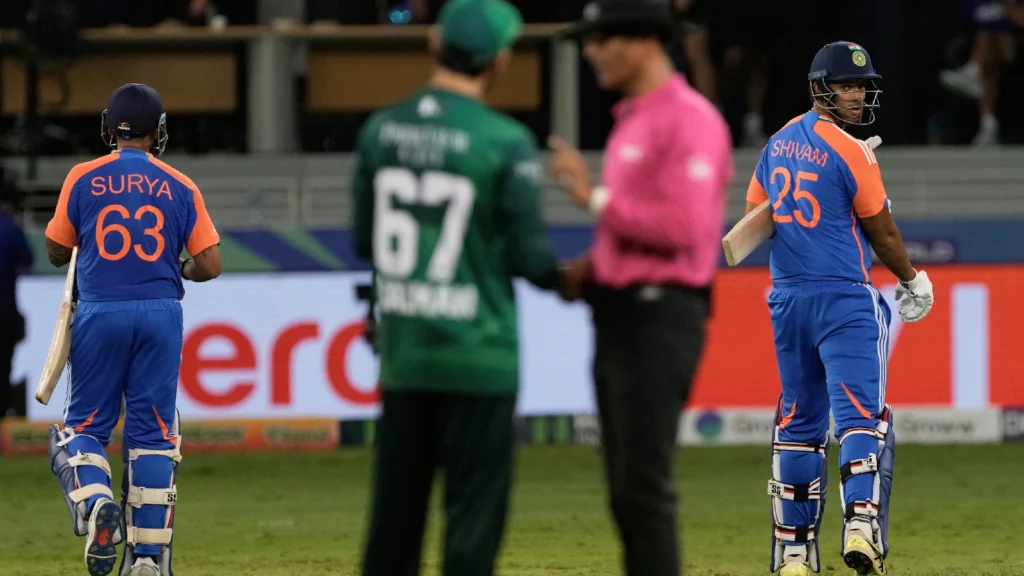
India vs England T20 World Cup History
Historically, India cricket team hold a slight edge with a 3-2 record over England cricket team in T20 World Cups. Highlights include:
- 2007 inaugural edition – India won by 18 runs; Yuvraj Singh famously hit six sixes in an over.
- 2009 edition – England defeated India by three runs.
- 2012 edition – India defeated England by 90 runs.
- 2022 edition – England beat India to reach the final, but India later avenged the loss under Rohit Sharma.
Despite this history, Latif believes England’s current form and ability to handle challenging conditions give them the upper hand.
Semifinal Stakes
The winner of Thursday’s semifinal will face New Zealand cricket team, who defeated South Africa cricket team in their semi-final. With both teams showing contrasting strengths – India’s balanced lineup versus England’s explosive middle order – analysts expect a high-stakes, closely-fought encounter.
Latif’s prediction adds to the narrative of tension and uncertainty surrounding India’s semifinal prospects: can the defending champions withstand England’s momentum at Wankhede Stadium, or will history repeat itself with a surprise upset?










Cricket
Kevin Pietersen Is Flying Between Delhi, Bengaluru and Kolkata on Consecutive Days for IPL 2026 — and His Reaction to ‘Don’t You Get Tired?’ Is Pure KP…
The former England superstar swapped his Delhi Capitals mentor role for the commentary box this season — and he’s loving every chaotic, city-hopping, stadium-buzzing second of it.
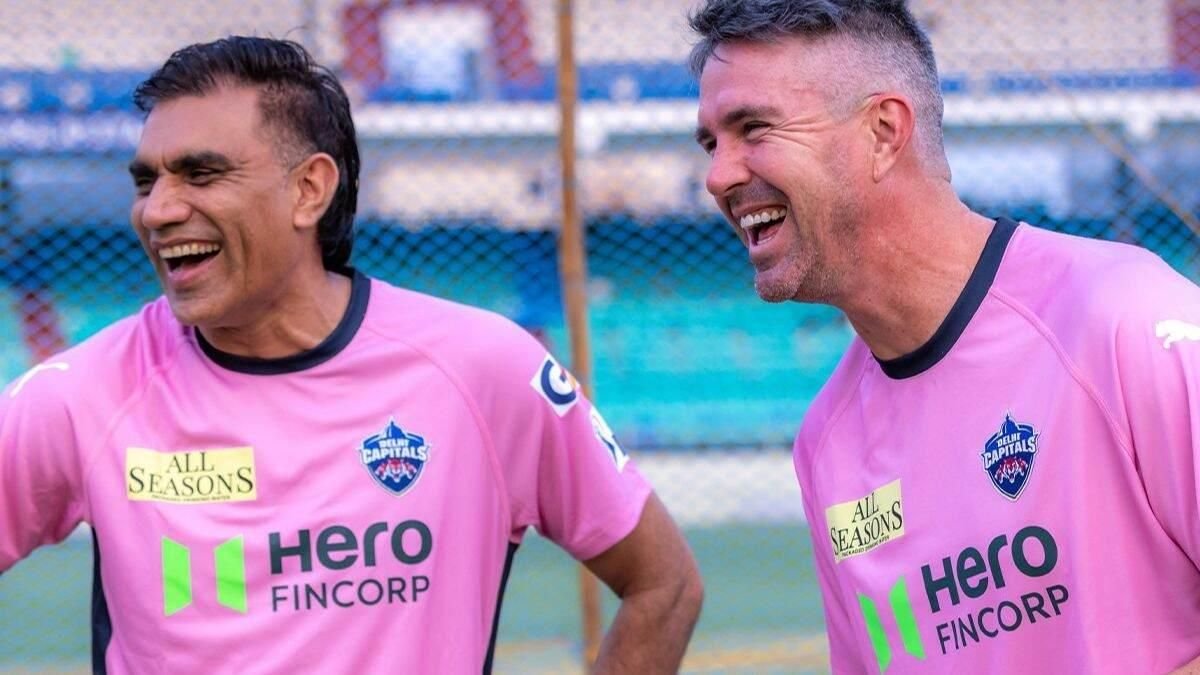
Only Kevin Pietersen could make a schedule that would exhaust most people sound like the best thing that has ever happened to him.
The former England batting superstar — known as KP to fans across the cricket world — is currently one of the most enthusiastic voices in the IPL 2026 commentary box. And on Saturday, he gave everyone a glimpse into exactly what his life looks like right now — and why he wouldn’t trade it for anything.
Delhi to Bengaluru to Kolkata — Three Days, Three Cities
In a post on X, Pietersen laid out his schedule with the kind of energy that makes you wonder if the man ever actually sleeps.
“Delhi, Bangalore, and Kolkata — today, tomorrow, and Monday. Lots of people ask, how do you manage all this? Answer — this is IPL and being in the stadium during these matches is like nothing else in the sports world when it comes to the atmosphere! I love it so much!”
Today he is in Delhi — at the Arun Jaitley Stadium — for the Delhi Capitals clash against Mumbai Indians, the five-time champions. Tomorrow he heads to Bengaluru for what promises to be a blockbuster — RCB versus CSK. And the very next day? He’s back on the road to Kolkata for KKR versus PBKS.
Three matches. Three cities. Three days. That’s the IPL life.
From Mentor to Microphone — KP’s New Role
What makes Pietersen’s presence in this IPL season particularly interesting is the backstory. Heading into the 19th season, the 45-year-old made a deliberate decision to step away from his mentoring role with Delhi Capitals and pick up the commentary microphone instead.
It’s a role that suits him in ways that are hard to ignore. KP has never been short of opinions — on batting, on tactics, on the state of the game — and the commentary box gives him a platform to express every single one of them to a global audience.
There’s also a personal connection to Delhi that makes his presence at the Arun Jaitley Stadium today feel particularly fitting. Long before the franchise was known as Delhi Capitals, it was called the Delhi Daredevils — and a younger, swashbuckling KP was one of the fan favourites who wore that jersey. The city has history with him, and he with it.
‘How Do You Manage All This?’ — KP Has a Simple Answer
It is one of the most common questions thrown at commentators, broadcasters, and support staff who follow the IPL from city to city across its gruelling two-month schedule. Doesn’t the constant travel wear you down? Don’t the long days blur into each other eventually?
For most people — yes. But Pietersen’s answer is essentially: have you been to an IPL match?

And he has a point. The atmosphere inside an IPL stadium on match night is genuinely unlike almost anything else in world sport. The noise, the colour, the sheer density of passion packed into those stands — it creates an energy that is difficult to describe to someone who hasn’t experienced it firsthand.
For someone like KP, who spent his playing career performing on the biggest stages in world cricket, that kind of environment doesn’t drain him — it feeds him.
The Best Gig in Post-Retirement Cricket?
Let’s also be honest about something else — because Pietersen certainly would be. The IPL commentary circuit is one of the most lucrative positions available to any former cricketer in the world. The combination of a global broadcast audience, a premium product, and the unique spectacle of the tournament makes it a genuinely exceptional place to build a post-playing career.
KP is doing what he does best — talking cricket, offering sharp analysis, and being unmistakably himself on camera. The travel is relentless, the schedule is unforgiving, and the IPL can feel overwhelming even to those who have been doing it for years.
But for Kevin Pietersen in 2026? It sounds like the time of his life.
Cricket
“Jadeja Won the Battle Today” — Michael Hussey Tips His Hat as Ravindra Jadeja Haunts CSK on His Return
Chennai Super Kings’ batting coach Michael Hussey admitted early wickets derailed their plans completely, while crediting Jadeja’s craft — but backed Shivam Dube to come back stronger next time

There is something poetic about a player coming back to haunt his former team on the very first outing. Ravindra Jadeja did exactly that on Saturday — and even Chennai Super Kings‘ own batting coach had nothing but respect for the veteran all-rounder.
A Night to Forget for CSK
The Barsapara Cricket Stadium in Guwahati was the setting, but it was anything but a happy occasion for the five-time IPL champions. Chennai Super Kings were bundled out for a meagre 127 and lost the match with a whopping 7.5 overs to spare — a crushing defeat that set an unwanted tone for their IPL 2026 campaign.
This comes after an already painful 2025 season where CSK finished at the very bottom of the table. Coming into this year with renewed hope, the team had made significant squad changes — most notably the high-profile trade that brought Sanju Samson to Chennai, while sending Ravindra Jadeja and Sam Curran to Rajasthan Royals. But on Saturday, the new-look batting lineup simply never got going.
Jadeja Returns — And How
If CSK were hoping Jadeja would go quietly in his first game against his former employers, they were in for a rude awakening. The veteran all-rounder was sharp, smart, and utterly relentless — picking up two crucial wickets, including the prized scalp of Shivam Dube, and finishing it off with a fiery send-off that left no doubt about his motivation on the night.
For Jadeja, this was personal — in the best possible way.
Hussey’s Honest Assessment
Michael Hussey, CSK’s batting coach, did not shy away from giving credit where it was due. Speaking at the post-match presentation, the former Australia batter acknowledged that losing early wickets completely upended CSK’s gameplan — and that Jadeja was simply too good on the night.
Hussey explained the reasoning behind holding Dube back in the batting order:
“Ideally speaking, we’d love him to come in through those middle overs when we’ve set a good platform, the spinners are on, because we know how damaging he can be against the spinners. When we lost those early wickets against the pace bowlers, it was a good opportunity for Kartik to go in. He’s a fine young player and I think he’s going to be a star of the future.”
But when it came to Jadeja’s dismissal of Dube, Hussey was gracious in defeat:

“Jadeja is a wily character. He’s been around a long time, and it was a clever piece of bowling. Unfortunately, Jadeja won the battle today — but hopefully Dube can win it next time.”
The Dube Factor — A Plan That Backfired
The thinking behind CSK’s batting order made sense on paper. Shivam Dube is notoriously destructive against spin bowling — and with Jadeja in the opposition, the match-up was always going to be one of the most watched battles of the evening.
CSK’s strategy was to preserve Dube for the spin-heavy middle overs and allow him to do maximum damage. But early wickets against the pacers forced a reshuffle, and by the time Dube walked in, the pressure was already immense. Jadeja, the seasoned campaigner that he is, read the situation perfectly and struck at the right moment.
With MS Dhoni absent from the lineup, the middle order had even less of a safety net. When plans fell apart at the top, there was no one to steady the ship below.
A Reality Check for CSK
This defeat is a sobering reminder that reshuffling a squad does not automatically guarantee results. CSK have the experience, the names, and the pedigree — but translating that on the field, especially when the powerplay goes wrong, remains a challenge.
Hussey, however, backed the younger players to step up as the tournament progresses. There is still a long road ahead in IPL 2026, and CSK have shown in the past that they are capable of turning things around dramatically.
As for Jadeja — he has made his point. Loudly, clearly, and with a send-off to remember.
Cricket
Fakhar Zaman’s Ball Tampering Is No Accident — Pakistan’s Dark Secret Behind Their ‘Superior’ Head-to-Head Record Against India Finally Exposed…
From Aamer Sohail’s shocking confession to the Gaddafi Stadium scandal — the thread connecting Pakistan’s decades-long ball-tampering habit runs straight through their proudest cricketing records.

Let’s talk about something Pakistan’s cricketing pundits never want to discuss when they’re busy boasting about their head-to-head record against India.
Every time Pakistan loses to India in an ICC event these days, you can set your clock by it — within hours, a former Pakistani great will appear on some channel waving the head-to-head record like a victory flag. Mohammad Yousuf. Saqlain Mushtaq. Shoaib Akhtar. The names change, the talking point doesn’t.
And yes, the numbers are real. As of today, Pakistan lead India 12-9 in Tests and 78-58 in ODIs. Impressive, on paper.
But here’s the question nobody in Lahore or Karachi wants answered: how much of that lead was built legitimately?
The Incident That Opened the Old Wound
Sunday night’s PSL 2026 clash at Gaddafi Stadium should have been a comfortable Lahore Qalandars win. Instead, Fakhar Zaman — a senior international cricketer who absolutely knows better — was caught on camera doing something to the ball before the final over, right under the nose of on-field umpire Faisal Afridi. Five penalty runs followed. The ball was changed. Karachi Kings won.
The PCB has since charged Fakhar with a Level 3 offence. He has denied it. A verdict from match referee Roshan Mahanama is expected within 48 hours.
But more than the incident itself, it’s what it reminds us of that matters most.
‘When We Had to Win by Ball Tampering, We Just Did That’
There is a quote that deserves to be repeated far more often than it is. Aamer Sohail, a former Pakistan opener who played through the glory years of the 1990s, said it out loud on Geo News without a flicker of shame:
“When we had to win by ball tampering, we just had to do that. The ball used to swing. There were no meetings at all. Our technical aspect was absolutely zero.”
Read that again. A former Pakistan international casually admitting that ball tampering was simply a tool his team reached for when they needed to win. No technical strategy, no elaborate plan — just rough up the ball, get the reverse swing going, and watch the wickets tumble.
This wasn’t a rogue comment. It was a window into an era.
The Era When Cameras Weren’t Watching
The late 1980s and the 1990s were Pakistan cricket’s most dominant period. Imran Khan led them to a World Cup. Wasim Akram and Waqar Younis were genuinely terrifying. The pitches of Sharjah — Pakistan’s adopted home ground — were dry, abrasive, and perfect for reverse swing. And there were barely any cameras.
Pakistan’s bowlers could rough up one side of the ball at will. Former players from that era have spoken — sometimes laughingly — about how the ball was treated like a piece of equipment to be shaped, scratched and bent to their advantage.
It wasn’t just talk, either. Waqar Younis became the first player in history to be fined and suspended for ball tampering when the ICC came down on him in 2000. Shahid Afridi was caught biting the ball during a match in 2010 and received a two-match ban. Shoaib Akhtar and Azhar Mahmood also faced penalties at various stages of their careers.
The pattern wasn’t incidental. It was institutional.
Sandpapergate Put the World on Notice

In 2018, the world finally understood how seriously ball tampering needed to be taken when Cricket Australia came down hard on Steve Smith, David Warner and Cameron Bancroft over the Cape Town sandpaper scandal. Smith and Warner each received 12-month bans. Bancroft got nine months. Warner was told he would never captain Australia again.
The point was clear: ball tampering is cheating. Full stop. No grey areas, no benefit of the doubt.
Pakistan’s players from the 1990s largely got away with it because the ICC wasn’t watching closely enough, the cameras weren’t everywhere, and frankly, the sport hadn’t yet treated it as the integrity violation it clearly was.
India’s Real Story — and Pakistan’s Fading Lead
Here’s the irony at the heart of this debate. For the bulk of the 21st century, India have been the far superior cricket team. They’ve dominated world rankings, won ICC tournaments, and produced a generation of players that Pakistan simply hasn’t been able to match.
Yet Pakistan still trail behind the fiction of their all-time head-to-head lead — a lead largely accumulated in an era when the rules were looser, the cameras fewer, and the ball was considered fair game.
Meanwhile, India have quietly been dismantling that lead in T20Is — 13 wins against just 3 losses — and the gap is closing fast. It won’t be long before the numbers tell a different, more honest story.
The Leopard and Its Spots
Fakhar Zaman is 35 years old. He’s a seasoned international cricketer. He knows every rule in the book — and exactly where the cameras are positioned.
And yet, on Sunday night, in the final over of a PSL match, the instinct apparently kicked in anyway.
Old habits, as they say, die hard. Pakistan cricket has talent — genuine, undeniable talent. But until it completely separates itself from a culture where ball tampering was once just another match-winning “technique,” every incident like this will keep pulling the curtain back.
The Fakhar Zaman case isn’t just a disciplinary footnote. It’s a reminder — loud, clear, and caught on camera — of a habit that shaped an era, inflated a record, and refuses to quietly disappear.

‘Abbott Elementary’ and ‘Shrinking’ Dominate AAFCA TV Honors… But Two New Categories Are Stealing Attention

‘I Will Not Watch It’: Tomi Adeyemi Distances Herself From ‘Children of Blood and Bone’ Film… Why the Bestselling Author Is ‘Officially Separating’ Her Name

Uwe Boll Breaks Silence on Armie Hammer Film, Challenges Critics with Bold Message

‘Resident Evil’ Review: Zach Cregger Brings Fresh Terror to a Tired Franchise

Hayden Panettiere’s Cause of Death Revealed: Coroner Details What Led to the ‘Heroes’ Star’s Tragic Passing

1-Iran Issues Dire Warning to Israel and Defies Trump on Nukes: “We’re Ready to Strike Deep Inside”

Sen. Elizabeth Warren Calls It a ‘Cesspool of Corruption’ — Here’s Why Senators Are Now Fighting Back Against the DOJ’s Live Nation Deal That Left Every Fan Betrayed…

Donald Trump’s net worth reveals the fortune behind the former US President and business mogul

Gucci bets on Demna to revive fading glamour as Milan fashion week opens with bold film surprise

“Tomás Rodríguez Net Worth 2025: Panama’s Gold Cup Goal‑Machine’s Surprising Fortune Revealed”

Miss Jamaica Suffers Terrifying Fall Off Miss Universe Stage; Rushed to Hospital on Stretcher in Viral Video

Moana Live-Action Teaser Sparks Outrage as Fans Call Disney’s Move a ‘Clear Money Grab’ — What Went Wrong?

Ryan Gosling’s Project Hail Mary Trailer Stuns Fans with a Mysterious Alien Ally and a Mission That Could Save Earth

Apple delays Jessica Chastain thriller The Savant about domestic extremism after recent US violence

Avatar 3, Fire and Ash trailer reveals Jake Sully’s family facing terrifying new Na’vi enemies with deadly fire powers
-

 Entertainment1 week ago
‘Spider-Man: Brand New Day’ Swings to No. 1 at the Domestic Box Office
-

 Entertainment1 week ago
Venice Falls for ‘Possible Love’ as Lee Chang-dong Makes a Powerful Comeback
-

 Entertainment1 week ago
TIFF Debut of ‘Musk’ Comes With a Defiant Message
-

 Entertainment1 week ago
The star discusses the bold choices behind the film’s closing moments and what they mean for his character’s journey.
-

 Entertainment1 week ago
Can Disney’s Live-Action Moana Win Over Audiences? Dwayne Johnson Returns as Maui
-

 Entertainment1 week ago
Harvey Weinstein Gets 15 Years in Prison After New York Retrial
-

 Entertainment7 days ago
Mariska Hargitay Lands the 2026 Emmy Hosting Gig… and Her Historic Selection Is Already Turning Heads
-

 Entertainment1 week ago
Kennedy Center Closure Sparks Fresh Legal Battle