
Breaking New
Dog the Bounty Hunter’s Stepson Gregory Zecca Shoots His Own Son in Tragic Accident That Leaves Family Devastated
Gregory Zecca accidentally kills his 13-year-old son in a Florida apartment shooting while working with Dog the Bounty Hunter’s team, leaving the Chapman family shattered

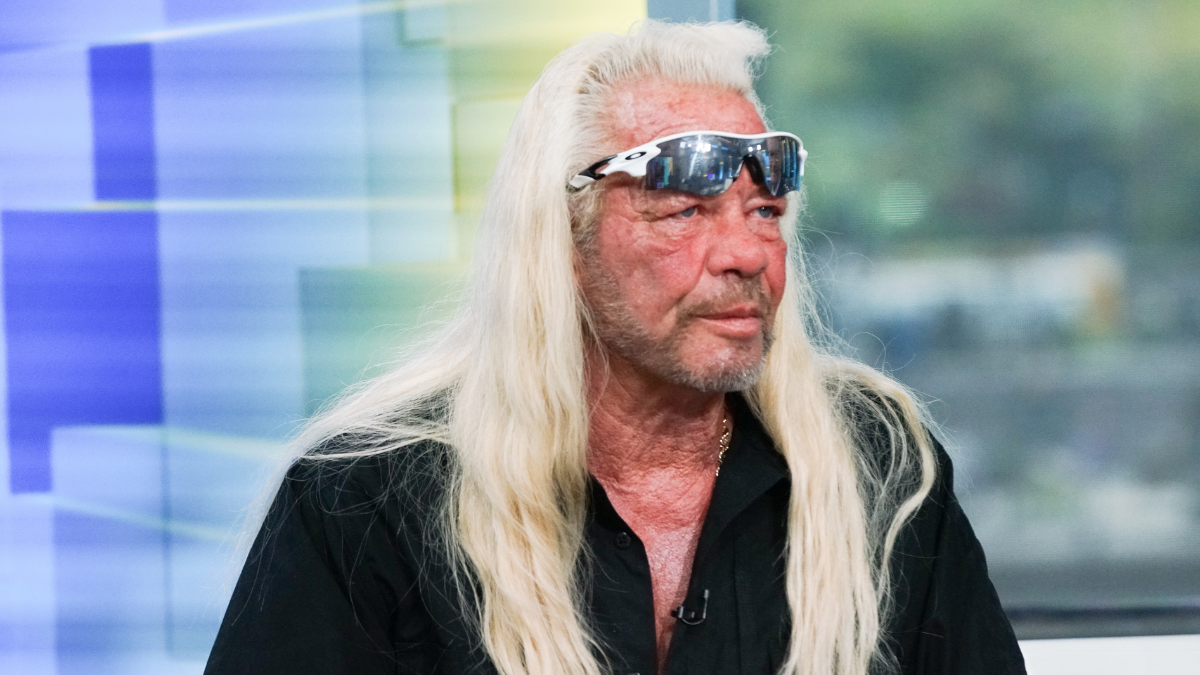
The Chapman family is reeling from a heartbreaking and unimaginable tragedy involving Gregory Zecca, the stepson of famed reality star Duane “Dog” Chapman. On the evening of July 19, Zecca accidentally shot and killed his 13-year-old son, Anthony, at a Florida apartment in what authorities have called a “tragic accident.”
This horrifying incident occurred in Naples, Florida, where local authorities responded to a shooting call around 8 p.m. Though the details are still under investigation, no arrests have been made, and police continue to treat it as an “isolated incident.”
Gregory Zecca, who works closely with Dog on his bounty hunting operations, was reportedly with his son when the firearm discharged, fatally wounding the young boy. The grief is palpable within the family, as Dog and his wife Francie Chapman, Zecca’s mother, issued a public statement asking for privacy and prayers during what they described as an “incomprehensible” loss.
“We are grieving as a family over this incomprehensible, tragic accident and would ask for continued prayers as we grieve the loss of our beloved grandson, Anthony,” the couple said via their representative.
The reality TV world is no stranger to tragedies, especially surrounding Dog the Bounty Hunter’s extended family. Still, the news that Gregory Zecca accidentally killed his son has sent shockwaves through fans, friends, and supporters of the Chapman clan.
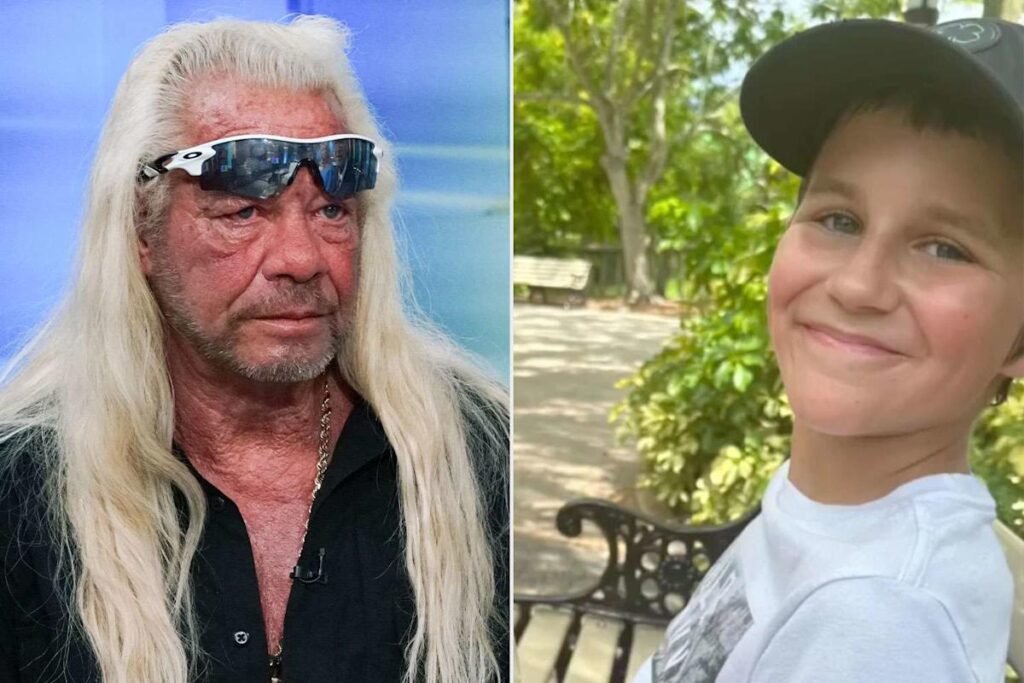
The Tragic Accident Involving Gregory Zecca
While the full report from the Collier County Sheriff’s Office is still pending, preliminary reports suggest that Gregory Zecca was handling a firearm inside the residence when it discharged, striking Anthony fatally. The weapon was believed to be legally owned, and initial investigations indicate there was no intent or malice involved — only a horrific mistake.
This event marks one of the darkest days in Dog the Bounty Hunter’s already tragedy-riddled journey.
Read More : Coldplay CEO Scandal Shocks Tech World as Viral Jumbotron Clip Forces Astronomer Chief on Leave and Sparks 7 Unbelievable Reactions
Who Is Gregory Zecca?
Gregory Zecca, a relatively lesser-known member of the Chapman family, is Francie Chapman’s son from a previous relationship. When Francie married Dog in 2021, Zecca became part of the extended bounty hunting family.
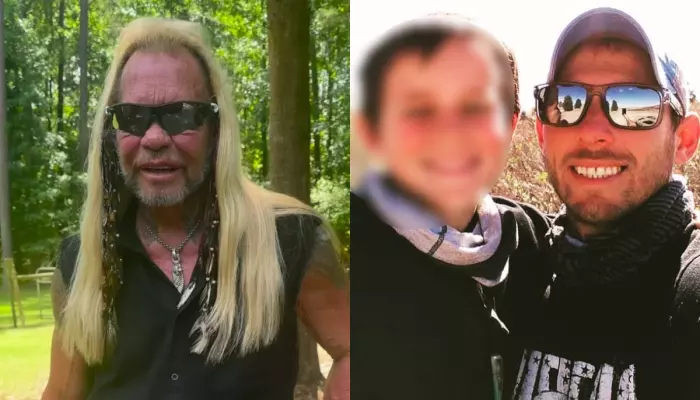
According to TMZ, Zecca had been working with Dog as part of his bounty hunting team, often staying behind the scenes but contributing to the Chapman family’s relentless pursuit of justice.
This incident has now made Gregory Zecca a name no longer in the shadows — but for the most tragic of reasons.
Dog and Francie: A Bond Formed by Grief
Dog the Bounty Hunter has long been a figure shaped by loss and resilience. In 2019, he lost his wife Beth Chapman to cancer, a devastating event that unfolded publicly and with the world watching. Francie Chapman, who also lost her husband around the same time, found a kindred spirit in Dog, and the two married in 2021.
Their union was built on mutual understanding and shared pain, and now, together, they face a different kind of sorrow — the loss of a grandson and the devastation of a son’s irreversible mistake.

Dog the Bounty Hunter’s Expansive and Complex Family
The Chapman family tree is vast. Dog is a father of 13 known children:
- With Debbie White: Christopher
- With ex-wife Fonda Sue Darnell: Duane Lee II and Leland
- With Anne Tegnell: Wesley, James Robert, and the late Zebadiah
- With Lyssa Rae Brittain: Tucker, Lyssa, and the late Barbara
- With Beth Chapman: Bonnie, Cecily, and Garry
- Recently revealed in 2023: a son named Jon
With such a large family, the Chapmans have faced a fair share of public scrutiny, personal battles, and profound loss. Still, nothing could prepare them — or anyone — for the loss of a child in this way.
A Family Asking for Space
In a heartfelt request, Dog and Francie have asked the public and the media for respect and privacy. They are reportedly spending time together in mourning, with no plans to make further public appearances or comments.
This devastating chapter has paused the public-facing roles of the Chapmans, and rightfully so. It’s a moment of family-first — a time when celebrity takes a backseat to grief.
Legal Standpoint: Will Gregory Zecca Face Charges?
At the time of this article’s publication, no criminal charges have been filed against Gregory Zecca. Police have not yet ruled out future legal consequences, but they emphasized that it appears to be a tragic accident rather than a criminal act.
Firearms laws in Florida are strict regarding child endangerment and gun safety, and investigators will determine whether negligence played a role. If so, Zecca could potentially face charges related to unsafe storage or handling of a firearm.
However, many legal experts believe prosecutors may decide that the emotional toll alone may be punishment enough for a father who accidentally took his own son’s life.
A Devastated Community Reacts
Online and in real life, the tragedy has sparked an outpouring of condolences. Fans of Dog the Bounty Hunter, fellow bounty hunters, and even celebrities have expressed sympathy, with hashtags like #JusticeForAnthony and #PrayForTheChapmans trending across social platforms.
Dog, who has over 695K followers on X (formerly Twitter) and a large fan base worldwide, has not yet commented personally but is expected to do so once the family is ready.
Tragedy in the Public Eye
This incident is a stark reminder of how quickly life can change. The Gregory Zecca tragedy is not just a private family nightmare — it’s now a public cautionary tale about gun safety, parental responsibility, and the fragility of life.
While the Chapman family navigates unimaginable grief, the rest of the world watches — not with judgment, but with shared sorrow.


Breaking New
Claude Code Leak Explained How Anthropic Accidentally Exposed Its AI Secrets
A debugging file mistake revealed core architecture of Claude Code, raising major security and IP concerns

In what could be one of the most significant AI-related leaks in recent times, Anthropic has accidentally exposed sensitive internal details of its AI tool, Claude Code. The incident has sparked serious discussions across the tech community, not just about security lapses—but also about how advanced AI systems are actually built behind the scenes.
What Exactly Happened?
The leak occurred when a debugging file—specifically a JavaScript source map (.map file)—was mistakenly included in a public release of the Claude Code package on npm.
This file, part of version 2.1.88 of the @anthropic-ai/claude-code package, was never meant for public access. Yet, once published, it opened the door to a massive amount of internal code becoming visible.
What followed was a rapid chain reaction.
How the Leak Spread So Fast
The issue was first spotted by Chaofan Shou, an intern at Solayer Labs, who shared the discovery on X (formerly Twitter). Within hours, developers across the world downloaded and mirrored the file.
The leak included a staggering 512,000 lines of TypeScript code—effectively giving outsiders a deep look into how Claude Code operates internally.
For a company like Anthropic, reportedly running at a $19 billion annualized revenue rate, this is more than just a technical slip—it’s a major intellectual property exposure.
The Most Important Discovery: “Self-Healing Memory”
One of the most fascinating insights from the leak revolves around how Claude Code handles long conversations without getting confused—a common problem in AI known as context loss or “context entropy.”
The leaked files revealed a sophisticated three-layer system often referred to as a “Self-Healing Memory” architecture:
- A central index file (MEMORY.md) that always stays active
- This file doesn’t store actual data but instead points to where data is stored
- Real information is saved in separate files and loaded only when needed
Instead of reloading entire conversations, the system uses keyword-based retrieval—making it faster and more efficient.
Even more interesting is its “Strict Write Discipline,” meaning the system only updates memory after successful operations. This reduces the chances of storing incorrect or corrupted data.
Another standout feature is that the AI treats its own memory as a “hint,” not a fact. It verifies information before using it—an approach that adds an extra layer of reliability.
Why This Matters for the AI Industry
This leak provides rare insight into how modern AI systems are evolving. Companies like OpenAI and Google are also working on similar challenges, but such internal approaches are usually kept highly confidential.
Now, developers and competitors alike have a glimpse into one of the solutions being used at scale.

Security Concerns Are Rising
While the technical revelations are fascinating, the leak also raises serious security questions.
With internal architecture now exposed, malicious actors could potentially look for vulnerabilities. The timing makes things worse—a separate supply-chain issue involving the axios npm package was reported around the same period, increasing the risk for developers who updated packages on March 31, 2026.
What Should Users Do Now?
In response to the situation, Anthropic has advised users to:
- Avoid using the affected npm version
- Switch to its official/native installer
- Follow a zero-trust security approach
- Rotate API keys and review system access
These steps are crucial to minimize any potential fallout from the leak.
A Costly Mistake or a Learning Moment?
For Anthropic, this incident is both a reputational and strategic challenge. While the leak exposes valuable technical innovation, it also highlights how even the most advanced AI companies are not immune to simple deployment errors.
At the same time, the broader tech community now has unprecedented insight into the inner workings of a cutting-edge AI system.
Whether this turns into a long-term setback or a learning moment for the industry remains to be seen—but one thing is certain: the Claude Code leak has changed the conversation around AI transparency, security, and competition.
Breaking New
Trump’s Dramatic U-Turn on Strait of Hormuz: From ‘It Will Open Itself’ to Quietly Admitting Iran Is ‘Doing It a Little Bit’…
Shipping traffic has collapsed by up to 95%, oil prices are surging, and US officials privately admit ‘there’s not an obvious fix’ — here’s how Iran turned a narrow waterway into its most powerful weapon

There is a phrase that keeps echoing from the early weeks of the US-Iran conflict — confident, dismissive, quintessentially Trump: the Strait of Hormuz would “open itself.”
It hasn’t. And now, President Donald Trump is saying something very different.
From Ultimatums to Acknowledgment
In the opening weeks of the conflict, Trump repeatedly threatened Iran with a forceful military response if oil flows through the Strait of Hormuz were blocked. The message was clear — cross this line and face devastating consequences. The strait, he implied, was a problem that would resolve itself under American pressure.
But the reality on the ground told a different story entirely. And recently, as reported by Yahoo Finance, Trump acknowledged publicly what US officials had been quietly admitting in private — that Iran is already influencing traffic through the strait and has even begun charging transit fees to vessels attempting to pass.
“They shouldn’t be able to, but they’re doing it a little bit,” Trump said.
It is a remarkable shift for a president whose foreign policy posture rarely accommodates acknowledgment of an adversary’s leverage. He also noted that Iran had allowed “a small number of oil tankers to pass” during limited diplomatic contacts — a concession that itself reveals how dramatically the situation has changed.
The Numbers Tell the Real Story
Before the conflict began, the Strait of Hormuz was one of the busiest and most critical shipping lanes on earth — with more than 100 vessels passing through daily, carrying roughly one-fifth of the world’s oil and gas supplies.
Today, that traffic has collapsed. According to analytics firm Kpler and shipping journal Lloyd’s List, traffic through the strait has dropped by as much as 90 to 95% since early March — a near-total shutdown driven by attacks, mines, and security threats that have made the route commercially unviable for most shipping companies.
Many vessels are avoiding the route altogether. Others are allowed through selectively — on Iran’s terms. The Islamic Revolutionary Guard Corps (IRGC) has gone further, claiming “complete control” over the waterway.
Why the US Can’t Simply Fix This
Behind closed doors, the picture being painted by American officials is far less confident than the public messaging suggests. According to CNN, US officials have privately admitted that reopening the strait is far more complicated than they anticipated.
One intelligence official put it bluntly:
“One of the core conundrums of this conflict is the Iranians have real leverage… and there’s not an obvious fix.”
The reason is geography and tactics combined. The Strait of Hormuz stretches nearly 100 miles, giving Iran dozens of points along its coastline to deploy mines, missiles, drones, and small fast-attack boats. These are low-cost, hard-to-detect, and extremely difficult to neutralise comprehensively — even with the full weight of US and Israeli military strikes targeting Iranian capabilities.
Tehran doesn’t need aircraft carriers or advanced warships to choke this waterway. It just needs patience and the tools it already has.
The Economic Ripple Effect
The consequences are being felt far beyond the Persian Gulf. Oil prices have surged sharply, with some forecasts warning they could climb significantly higher if the crisis persists. Shipping and insurance costs have also spiked, further tightening already strained global supply chains.

For countries that depend on Hormuz for energy — across Asia, Europe, and beyond — this isn’t a geopolitical abstraction. It is fuel shortages, rising prices, and economic pain that is landing on ordinary people every single day.
Iran’s Unexpected Leverage
What the past weeks have revealed is something that quietly unsettles Washington’s strategic calculus — Iran entered this conflict holding a card that is extraordinarily difficult to counter. Control over the Strait of Hormuz has given Tehran leverage that no amount of airstrikes has been able to fully neutralise.
US officials acknowledge that restoring normal shipping will depend partly on negotiations and de-escalation — not just military pressure. That is a significant admission from a administration that began this conflict with overwhelming confidence in its military superiority.
Trump said it would open itself. Instead, Iran tightened its grip. And with the April 6 deadline now looming, the world is watching to see whether diplomacy can achieve what force so far has not.
Breaking New
Indian-Origin Man Sital Singh Sentenced to 4 Years for Scamming Elderly Americans Out of Millions — ‘They Lost Everything They Saved…’
A federal court in St. Louis has unravelled a chilling gold bar fraud that preyed on elderly Americans across the country — and the details are far darker than anyone expected.

A US federal court has sentenced Sital Singh, 43, to four years in prison after he was found guilty of running a sophisticated scam that drained millions of dollars from elderly victims across the United States — convincing them to hand over gold bars and coins to protect their life savings from a threat that never existed.
The sentence was handed down by US District Judge Matthew T. Schelp in St. Louis, Missouri, who also ordered Singh to pay a staggering $6.6 million in restitution to the victims whose lives were turned upside down by the scheme.
How the Scam Worked — And Why Elderly People Never Saw It Coming
The operation was as calculated as it was cruel. Overseas scammers — still at large — would cold-call elderly Americans, posing as tech support representatives or financial officials, warning them that their savings and retirement accounts had been compromised.
The solution? Buy gold bars or coins immediately to “secure” their funds — and hand them over to a courier who would come right to their door.
It was a lie. Every word of it.
But for victims — many of them in their 70s, 80s, and 90s — the fear of losing a lifetime of savings was enough. The overseas network alone collected an estimated $9.3 million from victims across the country.
The Roles: Handlers, Couriers, and a Paper Trail That Led to Court
Singh pleaded guilty to one count of conspiracy to commit wire fraud, along with four co-accused:
- Dariona Lambert, 24 — courier
- Zhamoniq Stevens, 24 — courier
- Chintankumar Parekh, 52 — handler
- Mehulkumar Darji, 42 — handler
According to prosecutors, Lambert and Stevens physically collected the gold from victims’ homes, while Singh, Parekh, and Darji coordinated the pickups behind the scenes and paid couriers in cash — keeping their hands clean while victims handed over everything they had.
Singh ran pickup operations in Collierville, Tennessee; Universal City, Texas; and Greendale, Wisconsin. Parekh coordinated collections across Arizona, California, Florida, North Carolina, and Pennsylvania. Darji handled gold in Scottsdale, Arizona; Largo, Florida; and La Jolla, California.
The Case That Broke It Open: An 82-Year-Old Woman and $250,000 in Gold
Court documents detail one case that lays bare the human cost of the operation.
An 82-year-old woman in St. Louis received a call from someone pretending to be a computer support agent. She was told her financial accounts had been hacked and was instructed to purchase approximately $250,000 worth of gold bars to safeguard her money.
She did exactly that.
In May 2024, Lambert flew from Gainesville, Florida to St. Louis to collect the gold. Parekh rented a car and drove her close to the victim’s home, after which Lambert took a rideshare to complete the pickup. FBI agents were waiting. Lambert was intercepted at the residence. Parekh, upon learning she had been caught, immediately fled to Pittsburgh.
It was the thread that unravelled the entire network.

‘They Lost the Money Saved for Their Disabled Child’
FBI St. Louis Special Agent in Charge Chris Crocker didn’t mince words when condemning the scheme.
He revealed that in one particularly heartbreaking case, a couple in their 90s lost the money they had spent decades saving — funds specifically set aside to care for their disabled adult child for the rest of his life.
Gone. In a phone call.
Two Defendants Face Deportation After Prison
Beyond the prison sentences, the case has an immigration dimension. Federal authorities confirmed that both Parekh and Darji are living in the United States unlawfully and will be deported after completing their sentences.
Parekh had overstayed his work visa. Darji had previously been removed from the country back in 2014 — and had returned.
Their sentences: both received four years in prison. Lambert was sentenced to two years, while Stevens received 18 months. All five defendants were ordered to pay restitution.
What You Should Know to Stay Safe
The FBI and Homeland Security Investigations — which jointly investigated this case, prosecuted by Assistant US Attorney Gwen Carroll — are urging anyone who has been targeted by cyber scams to report incidents through the FBI’s Internet Crime Complaint Center (IC3).
The message from authorities is simple: no legitimate government agency, bank, or tech company will ever ask you to buy gold to protect your money. If someone does — hang up.

Cubs Cruise Past Diamondbacks 7-0 as Conforto and Kelly Go Back-to-Back: Gausman Delivers a Statement Start

Cal Raleigh Explodes for 3 Home Runs as Mariners Crush Phillies 9-2: ‘Hard to Fathom’ Night in Seattle

NBC4 Anchor Joseph Olmo Announces Exit After Nearly a Decade: “I’ve Got Just One More Story for You”

Taylor Swift Looks Back at Her Country Roots: “I Want to Honor Them More and More”

Target Apologizes and Pulls Halloween Costume After Backlash: “We Know We Got This Wrong”

1-Iran Issues Dire Warning to Israel and Defies Trump on Nukes: “We’re Ready to Strike Deep Inside”

Sen. Elizabeth Warren Calls It a ‘Cesspool of Corruption’ — Here’s Why Senators Are Now Fighting Back Against the DOJ’s Live Nation Deal That Left Every Fan Betrayed…

Donald Trump’s net worth reveals the fortune behind the former US President and business mogul

“Tomás Rodríguez Net Worth 2025: Panama’s Gold Cup Goal‑Machine’s Surprising Fortune Revealed”

“She Never Made It Out…” Albany House Fire Claims Woman’s Life as Family Pleads for Help to Bring Her Home

Miss Jamaica Suffers Terrifying Fall Off Miss Universe Stage; Rushed to Hospital on Stretcher in Viral Video

Moana Live-Action Teaser Sparks Outrage as Fans Call Disney’s Move a ‘Clear Money Grab’ — What Went Wrong?

Ryan Gosling’s Project Hail Mary Trailer Stuns Fans with a Mysterious Alien Ally and a Mission That Could Save Earth

Apple delays Jessica Chastain thriller The Savant about domestic extremism after recent US violence

Avatar 3, Fire and Ash trailer reveals Jake Sully’s family facing terrifying new Na’vi enemies with deadly fire powers
-

 Entertainment1 week ago
‘Reacher’ Star Alan Ritchson Sparks Debate With Bold Remarks on Epstein Files Controversy
-

 Entertainment1 week ago
Disney+ Officially Orders ‘Afterlife With Archie’ Series From ‘Riverdale’ Creators
-

 Entertainment1 week ago
Michael J. Fox Confirms ‘Shrinking’ Return, Says Acting “Prolonged My Life” Amid Parkinson’s Battle
-

 Entertainment5 days ago
Ben Folds Says Trump-Era Kennedy Center Changes Led to His Exit
-

 Entertainment1 week ago
Apple TV+ One Tony Away From Historic EGOT Achievement With Schmigadoon!
-

 Entertainment1 week ago
Locarno to Honor James Gray With Career Leopard: Why the Festival Calls Him ‘The Last Great Novelist of American Cinema’…
-

 Entertainment1 week ago
‘It’s Become a Tradition’: Kevin Feige Reveals Adam Driver Has Turned Down Multiple Marvel Roles…
-

 Entertainment5 days ago
Jennifer Aniston Joins Peter Dinklage in Olivia Wilde’s ‘Naughty’… Universal’s Unconventional Santa Movie Already Has Hollywood Talking