
Technology
iOS 26 Release Brings 9 Stunning Liquid Glass Updates That Change Everything
Apple rolls out iOS 26, watchOS 26, iPadOS 26, and macOS 26 Tahoe with a futuristic Liquid Glass design and smarter features.


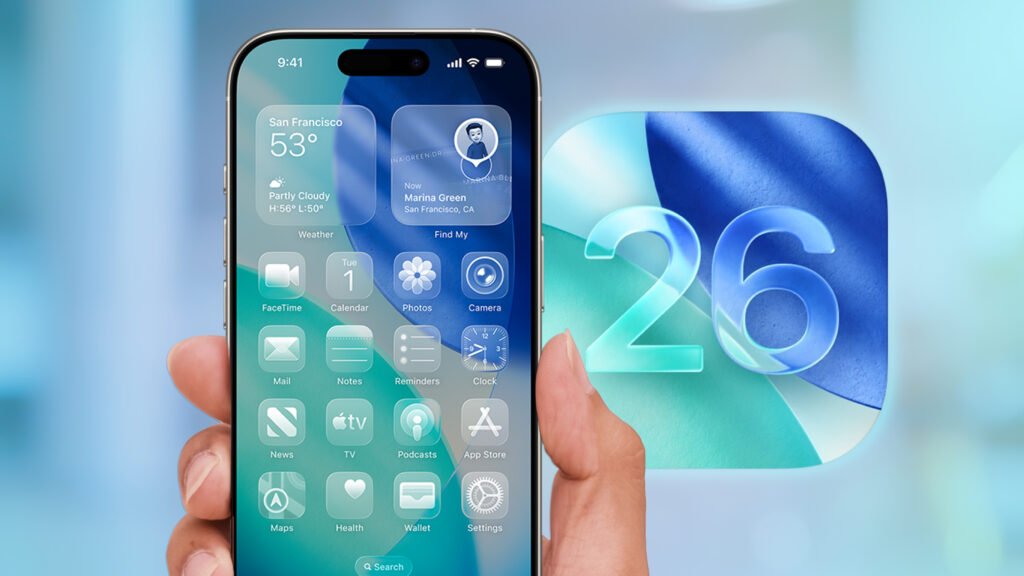
On September 15, 2025, Apple Inc. officially rolled out its biggest software refresh in years. The highly anticipated iOS 26, iPadOS 26, watchOS 26, and macOS 26 Tahoe are now available for millions of users worldwide. What sets this release apart is Apple’s bold new Liquid Glass design, a semi-transparent, rounded look that adds depth and fluidity across devices.
For many, this is the most radical iOS redesign since the introduction of iOS 7 back in 2013. Apple isn’t just updating icons—it’s reshaping the way users experience the iPhone, iPad, Mac, and even the Apple Watch.
When and How to Get iOS 26
Apple confirmed that downloads for iOS 26 began at 6 PM UK time (1 PM New York, 3 AM Sydney). Unlike many competitors such as Samsung Electronics, Apple makes updates available to all eligible devices at once, avoiding frustrating staggered rollouts.
To install, simply open Settings > General > Software Update on your iPhone or iPad. For Macs, navigate to System Settings > General > Software Update. Apple Watch users need an iPhone 11 or newer running iOS 26 before updating via the Watch app.
As always, Apple’s updates are free. If you’re being asked to pay for iOS 26, it’s a scam.
Which Devices Support iOS 26?
- iPhone: All models from the iPhone 11 (2019) or newer.
- iPad: iPad Pro (2018), iPad Air (2019), iPad Mini 5th gen, iPad 8th gen, and newer.
- Apple Watch: Series 6 (2020) or later.
- Macs: MacBook Air (2020), MacBook Pro 16-inch (2019), MacBook Pro 13-inch (2020), Mac mini (2020), iMac (2020), Mac Studio (2022), and Mac Pro (2019 onward).
The Liquid Glass Revolution
The Liquid Glass design makes icons, menus, and notifications look like frosted, floating bubbles. Inspired by the Apple Vision Pro interface, this change unifies the look across all Apple devices. Icons can now be tinted, turned translucent, or switched to dark mode. Notifications bounce into view, and the lock screen clock dynamically adjusts in size depending on alerts.
It’s a divisive look—some call it futuristic, others find it distracting—but it undoubtedly makes the iPhone feel new again.
Key Features in iOS 26
- Dynamic Buttons – Navigation elements like Safari’s address bar shrink into small icons as you scroll, maximizing screen space.
- Camera Simplification – Extra camera modes now hide behind sliders or pop-up menus, making the Camera app cleaner.
- Advanced Spam Filtering – The Phone app automatically screens unknown calls, asks callers to identify themselves, and filters spam texts into separate inboxes.
- Live Translation – Built directly into Phone, Messages, and FaceTime, enabling real-time communication across languages.
- New Games App – Replaces Game Center with a hub for achievements, multiplayer, and what friends are playing.

iPadOS 26: The Mac in Disguise
Apple finally gave iPad users what they’ve been asking for: true window management. iPadOS 26 introduces a Mac-like menu bar, full window resizing, and overlapping multitasking. You can tile windows side-by-side, snap them to screen edges, or enter full screen with a flick.
The Files app has also been revamped, letting you set default apps for file types, while Preview (a longtime macOS app) is now on iPad, supporting PDFs, images, and markups with the Apple Pencil.
watchOS 26: Fitness Meets AI
On the Apple Watch, Liquid Glass appears as floating notifications and softer app icons. But the real innovation is Workout Buddy, a new AI-driven fitness assistant. Similar to a Fitness+ coach, it talks to you during workouts, tracks pace, and even celebrates milestones.
Other highlights:
- Sleep Scores – Daily sleep quality ratings.
- Blood Pressure Alerts – For Series 9 and Ultra 2, early hypertension detection.
- Wrist Flick Gesture – Dismiss notifications with a twist of your wrist.
- New Watch Faces – Flow, Exactograph, and Waypoint, with dynamic Liquid Glass animations.
macOS 26 Tahoe: More Than Just Glass
On the Mac, Liquid Glass translates to rounded corners and frosted UI elements. But the standout feature is the Phone app, which lets you make and receive calls directly on your Mac with Wi-Fi calling.
Other updates include:
- Live Activities – Sports scores and delivery updates in the menu bar.
- Upgraded Spotlight – Now supports actions like sending messages, creating notes, and searching third-party cloud storage.
Why Apple Jumped to iOS 26
You might be wondering: what happened to iOS 19 through 25? Apple adopted a year-based naming format. Just like sports seasons, iOS 26 represents the 2025–2026 cycle, aligning iPadOS, watchOS, and macOS releases.
Final Thoughts
Apple’s iOS 26 release is more than a cosmetic overhaul. With Liquid Glass, AI-driven features, and tighter integration across platforms, it shows Apple’s determination to stay ahead in design and usability.
Whether you’re a casual user excited about translucent icons or a pro who wants multitasking on iPad, this update has something for everyone. And with free updates across devices, it’s another reminder of why Apple’s ecosystem keeps millions loyal.
Stay connected with Daily Global Diary for expert coverage, in-depth guides, and real-time Apple updates.









Technology
Global Shockwave: Countries Rush to Ban Kids From Social Media… But Experts Ask “Will It Really Work or Just Backfire?”
With Britain, Canada, and Australia pushing under-16 social media restrictions, experts warn enforcement may be harder than lawmakers expect.


A growing global debate over children’s safety online has reached a new turning point, as several countries move swiftly to restrict or outright ban social media access for users under the age of 16. The movement, led by nations like Australia, is now being closely followed by United Kingdom and Canada — sparking both praise and serious concerns from digital rights experts.
The proposed policies aim to protect minors from harmful content, cyberbullying, addictive algorithms, and mental health pressures linked to platforms such as Instagram, TikTok, and Snapchat. Lawmakers argue that children are increasingly exposed to risks they are not emotionally equipped to handle.
However, the big question dominating global tech discussions is simple — will it actually work?
Experts warn that while the intention behind the bans is clear, enforcement could become a major challenge. Teenagers are already known for bypassing age restrictions using fake accounts, VPNs, and borrowed devices. Critics argue that without strong verification systems, the rules could remain more symbolic than practical.
ALSO READ : Sen. Elizabeth Warren Calls It a ‘Cesspool of Corruption’ — Here’s Why Senators Are Now Fighting Back Against the DOJ’s Live Nation Deal That Left Every Fan Betrayed…
Digital policy analyst Dr. Laura Bennett commented that “we are trying to regulate a borderless digital world using national laws — and that gap is where enforcement breaks down.”
Tech giants like Meta, which owns Instagram and Facebook, and ByteDance, the parent company of TikTok, are expected to face increasing pressure to implement stricter age verification tools. Some companies have already started testing AI-based age detection systems, but their accuracy remains under scrutiny.

At the same time, child protection advocates argue that governments have delayed action for too long. Rising concerns over mental health issues among teenagers, excessive screen time, and online exploitation have pushed policymakers to act more aggressively than ever before.
Yet, critics also warn of unintended consequences. Some fear that banning access entirely may push young users toward less regulated platforms, making it even harder to monitor harmful behavior.
As the global debate intensifies, one thing is clear — the world is entering a new phase of internet regulation, where governments are no longer just asking how social media is used, but who should be allowed to use it at all.
Whether this sweeping movement becomes a model for digital safety or a lesson in enforcement failure will likely depend on what happens next in courts, classrooms, and on every teenager’s smartphone.
Technology
YouTube says ‘enough is enough’… Faceless AI Channels lose reach as algorithm shift hits ‘AI slop’ wave
Once-rising faceless creators who thrived on automated content are now seeing sudden drops in views as YouTube tightens its ranking system to prioritize originality and human-driven storytelling.

For the last few years, a quiet revolution was unfolding on YouTube. Entire channels were being built without faces, voices, or even traditional storytelling. Instead, they relied on AI-generated scripts, synthetic voiceovers, stock visuals, and mass-upload strategies.
These so-called “faceless creators” were everywhere—posting motivational videos, celebrity summaries, financial advice clips, and bizarrely repetitive “Top 10” lists. And for a while, it worked. Some channels were pulling millions of views, turning automation into a full-time income machine.
But that era is now facing a sharp correction.
The Algorithm Shift That Changed Everything
Over the past few months, YouTube has quietly adjusted its recommendation system. The platform, owned by Google under parent company Alphabet Inc., has been under increasing pressure to clean up what many creators and viewers have called “AI slop”—low-effort, mass-produced content that prioritizes volume over value.
The result? A noticeable drop in reach for channels heavily dependent on automated content pipelines.
Many creators are reporting sudden dips in impressions and watch time, even when upload frequency remains unchanged. Some channels that once gained traction overnight are now struggling to break into recommendations.
ALSO READ : Sen. Elizabeth Warren Calls It a ‘Cesspool of Corruption’ — Here’s Why Senators Are Now Fighting Back Against the DOJ’s Live Nation Deal That Left Every Fan Betrayed…
As one creator bluntly put it in community discussions, “It feels like the floor just disappeared under us.”
What Exactly Is “AI Slop”?
The term “AI slop” has become a catch-all phrase for content that is:
- Mass-produced using AI tools
- Lacking original commentary or human perspective
- Repetitive in structure and storytelling
- Designed primarily to game recommendation algorithms
While AI tools like OpenAI have enabled faster content creation, they have also lowered the barrier to entry so much that entire content farms have emerged.
These farms often publish dozens—or even hundreds—of videos per day, targeting trending keywords rather than meaningful narratives.
Faceless Creators Caught in the Crossfire
Not all faceless creators are the same. Some channels use animation, research, and editorial voiceovers to produce high-quality content without ever showing a face.
However, the algorithm update appears to be less forgiving toward patterns associated with bulk automation.
That means even legitimate creators who never relied on low-quality AI output are experiencing collateral damage.
Industry analysts suggest the platform is now prioritizing:

Watch time consistency over click spikes- Audience retention over volume
- Original narration over synthetic voice duplication
- Channel authenticity signals
The Bigger Shift: YouTube Wants “Human Again”
This change reflects a broader industry concern: audiences are getting tired of content that feels machine-generated.
Even Sundar Pichai, CEO of Alphabet, has previously emphasized the importance of responsible AI use in content ecosystems, warning that technology must enhance—not replace—human creativity.
YouTube’s direction now appears aligned with that philosophy: reduce spam-like automation and reward creators who bring personality, storytelling, and originality back into the platform.
Creators Are Adapting… or Exiting
Across creator forums, two reactions are emerging:
Some are pivoting—adding real voiceovers, personal commentary, and longer-form storytelling. Others are abandoning faceless formats altogether, saying the economics no longer work.
A few are even migrating to alternative platforms such as TikTok or Instagram Reels, hoping for more favorable algorithm behavior.
But experts warn that this is likely not a temporary trend reversal. Instead, it may signal a long-term restructuring of how algorithmic content discovery works across social media.
What Happens Next?
The crackdown on “AI slop” may only be the beginning.
Platforms like YouTube are increasingly being forced to balance three competing forces:
- Creator growth
- Viewer satisfaction
- AI-generated content explosion
The outcome will likely define the next era of digital media.
For now, one thing is clear: the days of effortless faceless content scaling through automation alone may be coming to an end.
And in its place, a new rule is emerging—if you want attention on YouTube, you may need to sound, think, and feel more human than ever before.
Technology
Hollywood Is Panicking About AI Stealing Jobs But This One Startup Says It Has the Answer Nobody Saw Coming…
As writers, directors, and visual effects artists scramble to figure out whether artificial intelligence will rescue or ruin their careers, an online film school called Curious Refuge is quietly becoming the most important classroom in the entertainment industry.

There is a particular kind of dread spreading through Hollywood right now — and it has nothing to do with a writers’ strike, a box office slump, or a streaming platform pulling the plug on a beloved show. It’s quieter than all of that. More existential. It shows up in late-night group chats between editors, in the hushed conversations at studio lots, in the anxious questions asked at industry panels that nobody fully knows how to answer.
The question is always some version of the same thing: Is AI coming for my job?
And for a growing number of film and television professionals, the honest answer is: maybe. But one company believes the more important question isn’t whether AI will change Hollywood — it’s whether you’ll know how to use it when it does.
ALSO READ : “She Never Made It Out…” Albany House Fire Claims Woman’s Life as Family Pleads for Help to Bring Her Home
Meet the Startup Rewriting the Rules
Curious Refuge is an online film school, but calling it that almost undersells what it has quietly become. Founded with the mission of teaching creative professionals how to harness the latest artificial intelligence tools for filmmaking, it has found itself at the absolute center of one of the most disorienting moments in Hollywood’s modern history.
The platform offers courses, tutorials, and hands-on training specifically designed for industry professionals — not hobbyists or tech enthusiasts, but working directors, cinematographers, visual effects artists, editors, and producers who are realizing, often with a jolt of alarm, that the tools reshaping their industry are evolving faster than any traditional film school could ever track.
In a town built on storytelling, Curious Refuge is telling a very specific story: that AI isn’t simply a threat to be feared — it’s a skill to be learned. And the window to learn it, they argue, is narrowing fast.
The Fear Is Real — And So Are the Layoffs
To understand why a platform like Curious Refuge is resonating so deeply, you have to understand the scale of anxiety currently running through the entertainment industry.
Hollywood has already watched AI disrupt visual effects pipelines in ways that would have seemed like science fiction just three years ago. Tools built by companies like Runway, Adobe, OpenAI, and Google DeepMind are now capable of generating footage, de-aging actors, creating digital environments, and even drafting screenplay structure — tasks that once required entire departments of skilled human workers.
The Writers Guild of America fought hard during the 2023 strike to establish protections around AI use in scripted television and film. The SAG-AFTRA strike that same year put the question of digital actor likenesses and AI-generated performances front and center in labor negotiations. Those fights produced agreements — but agreements that many in the industry privately admit feel temporary, like a sandbag wall against a rising tide.
Because the technology didn’t wait for the ink to dry. It kept advancing.
‘Scrambling to Learn’ Is an Understatement
What Curious Refuge has tapped into is something very human beneath all the technical noise: the fear of being left behind.

Industry professionals who spent years — sometimes decades — mastering their craft are now looking at AI-generated reels on social media and feeling something they’re not used to feeling. Vulnerable. Replaceable. Behind.
A veteran visual effects supervisor who has worked on major studio tentpoles doesn’t want to go back to school. A working screenwriter with multiple produced credits isn’t looking to pivot into tech. But both of them are quietly, urgently trying to understand tools they were never trained to use — because they can see, with their own eyes, what those tools are capable of.
This is exactly the gap Curious Refuge is filling. And they are filling it not by replacing the human element of filmmaking, but by arguing that the most dangerous place to be right now is on the sidelines.
The Uncomfortable Truth Hollywood Doesn’t Want to Say Out Loud
Here is the tension that sits at the heart of this entire conversation, and it’s one that even the most thoughtful voices in the industry tend to dance around: AI is not going to stop.
The studios know this. The streaming platforms know this. Netflix, Amazon, Disney, Warner Bros. — all of them are either already investing in AI tools for production or actively exploring partnerships with companies developing them. The economics are simply too compelling to ignore. AI can reduce certain production costs dramatically. For a studio trying to greenlight more content with tighter margins, that is not an abstract benefit.
What that means for the below-the-line workers — the crew members, the background artists, the entry-level assistants who are the backbone of how films and television shows actually get made — is a question the industry has not yet fully reckoned with.
Curious Refuge isn’t solving that structural problem. No single startup can. But what it is doing is giving individual professionals a fighting chance to stay relevant in a landscape that is shifting beneath their feet in real time.
Learning the Tool That Might Take Your Job
There is something almost poignant about the situation Curious Refuge finds itself in. It is teaching people how to use the very technology that some of them fear will eventually make them unnecessary. The courses aren’t cheap — and the students aren’t casual hobbyists. They’re professionals with mortgages and careers and reputations, trying to figure out whether mastering generative AI tools makes them more valuable to studios or simply more complicit in their own industry’s transformation.
It’s a genuinely complicated ethical position. And to their credit, the people behind Curious Refuge don’t pretend it isn’t.
What they argue — persuasively, given the current evidence — is that the professionals who adapt will have a place in whatever Hollywood becomes next. And the ones who wait, hoping this all blows over, are taking the bigger risk.
What Comes Next
Nobody in Hollywood — not the executives, not the labor unions, not the most optimistic tech evangelists — really knows exactly what the entertainment industry looks like in five years. The pace of AI development has made confident predictions feel almost embarrassing in retrospect.
What is clear is that the transition is happening now, not eventually. Films are already being made with significant AI components. Sora, Runway, Midjourney, and a growing ecosystem of production-specific AI platforms are moving from experimental curiosities to genuine production tools at remarkable speed.
Curious Refuge is betting that the most valuable people in that future Hollywood won’t be the ones who fought AI the hardest — they’ll be the ones who understood it the best.
Whether that bet pays off for the industry’s most vulnerable workers, or simply helps the most adaptive ones land safely while others are left behind, is a story Hollywood is only just beginning to tell.
And unlike most of its productions, this one doesn’t have a guaranteed happy ending.

Justin Baldoni Opens Up About Blake Lively Lawsuit: ‘The Last Two Years Have Been Incredibly Painful’

‘Adults’ Star Malik Elassal Breaks Down That Surprise Finale Hookup

Fandango Eyes Streaming Shake-Up to Rival Tubi and Pluto TV

Paul Verhoeven Criticizes Space Force’s Sci-Fi-Inspired Uniforms

Prosecutors Rule Out Death Penalty for Nick Reiner

1-Iran Issues Dire Warning to Israel and Defies Trump on Nukes: “We’re Ready to Strike Deep Inside”

Sen. Elizabeth Warren Calls It a ‘Cesspool of Corruption’ — Here’s Why Senators Are Now Fighting Back Against the DOJ’s Live Nation Deal That Left Every Fan Betrayed…

Donald Trump’s net worth reveals the fortune behind the former US President and business mogul

“Tomás Rodríguez Net Worth 2025: Panama’s Gold Cup Goal‑Machine’s Surprising Fortune Revealed”

“She Never Made It Out…” Albany House Fire Claims Woman’s Life as Family Pleads for Help to Bring Her Home

Miss Jamaica Suffers Terrifying Fall Off Miss Universe Stage; Rushed to Hospital on Stretcher in Viral Video

Moana Live-Action Teaser Sparks Outrage as Fans Call Disney’s Move a ‘Clear Money Grab’ — What Went Wrong?

Ryan Gosling’s Project Hail Mary Trailer Stuns Fans with a Mysterious Alien Ally and a Mission That Could Save Earth

Apple delays Jessica Chastain thriller The Savant about domestic extremism after recent US violence

Avatar 3, Fire and Ash trailer reveals Jake Sully’s family facing terrifying new Na’vi enemies with deadly fire powers
-

 Entertainment6 days ago
Summer House Cast Celebrates First Emmy Nomination, Calls It Surreal
-

 Entertainment1 week ago
Creative Arts Emmys Night Two Winners: ‘Widow’s Bay’ Dominates, but Rob Reiner’s Emotional Victory Steals the Spotlight
-

 Tech1 week ago
Apple unveils iPhone 18 Pro series with a camera upgrade users have waited years for: Here’s what changed
-

 Entertainment6 days ago
Beyoncé Ends Two-Year Music Hiatus With ‘Morning Dew’… Fans Wonder If a Bigger Announcement Is Coming
-

 Entertainment6 days ago
‘The Gentlemen’ Season 2 Ending Explained by Theo James
-

 Entertainment6 days ago
Why Is America Turning 9/25 Into Dolly Parton Day? The Touching Meaning Behind the Date Revealed
-

 Entertainment6 days ago
Emmy Awards 2026 Predictions: First Post-Nominations Forecast Spotlights the Early Favorites
-

 Entertainment6 days ago
Stephen Colbert vs Jimmy Kimmel at the Emmys 2026… Late-Night Giants Face Off in a Battle for TV’s Top Honor