
World News
Hungarian Novelist László Krasznahorkai Wins 2025 Nobel Prize in Literature — ‘A Master of the Apocalypse’
The Nobel Committee hailed László Krasznahorkai for his “compelling and visionary oeuvre” that explores human despair and resilience amid apocalyptic terror.

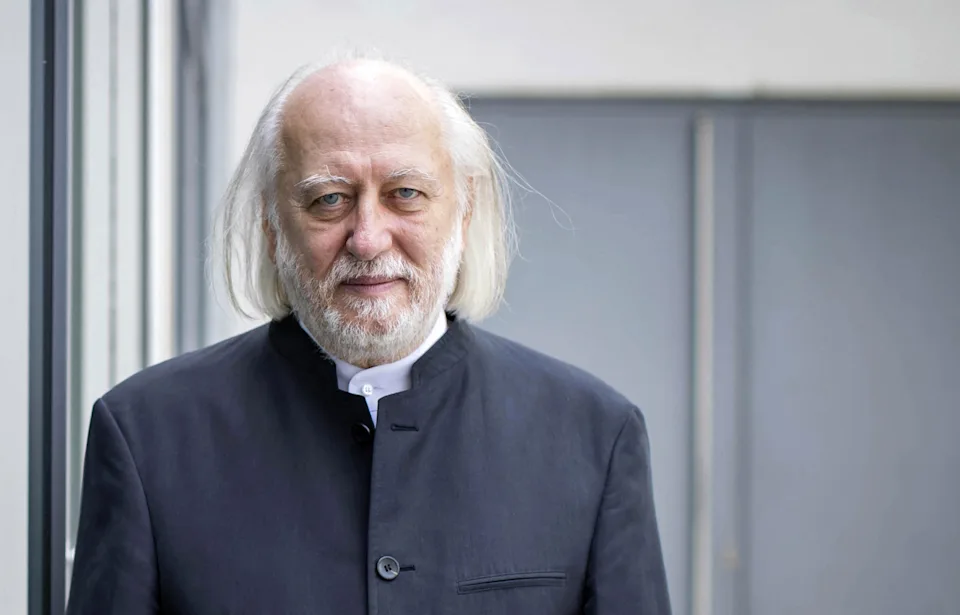
The 2025 Nobel Prize in Literature has been awarded to László Krasznahorkai, the acclaimed Hungarian novelist whose hauntingly complex prose delves deep into humanity’s struggle with chaos, meaning, and survival.
Announced in Stockholm, Sweden, on Thursday, the Nobel Committee praised Krasznahorkai for his “compelling and visionary oeuvre that, in the midst of apocalyptic terror, reaffirms the power of art.”
Born in Gyula, Hungary in 1954 — just two years before the Hungarian Revolution crushed by Soviet forces — Krasznahorkai grew up in a country marked by repression and disillusionment. His work reflects that bleakness, often portraying societies teetering between hope and annihilation.
“I examine reality to the point of madness,” Krasznahorkai once said, a statement that perfectly encapsulates his dark literary universe.
A Visionary of Absurdism and Despair
Known for his sprawling, labyrinthine sentences and unflinching portrayal of human despair, Krasznahorkai’s novels have long been celebrated among literary circles. The late Susan Sontag once dubbed him “the contemporary master of the apocalypse.”
His novels, often set in remote, decaying Central European towns, explore how ordinary people search for meaning in a godless world. Critics have called his prose “a slow lava-flow of narrative” — an apt description by his longtime translator George Szirtes, who helped bring Krasznahorkai’s work to English-speaking readers.
When only a handful of his books were available in English, literary critic James Wood famously wrote that Krasznahorkai’s works were “passed around like rare currency.” That has since changed, as his influence has grown worldwide.
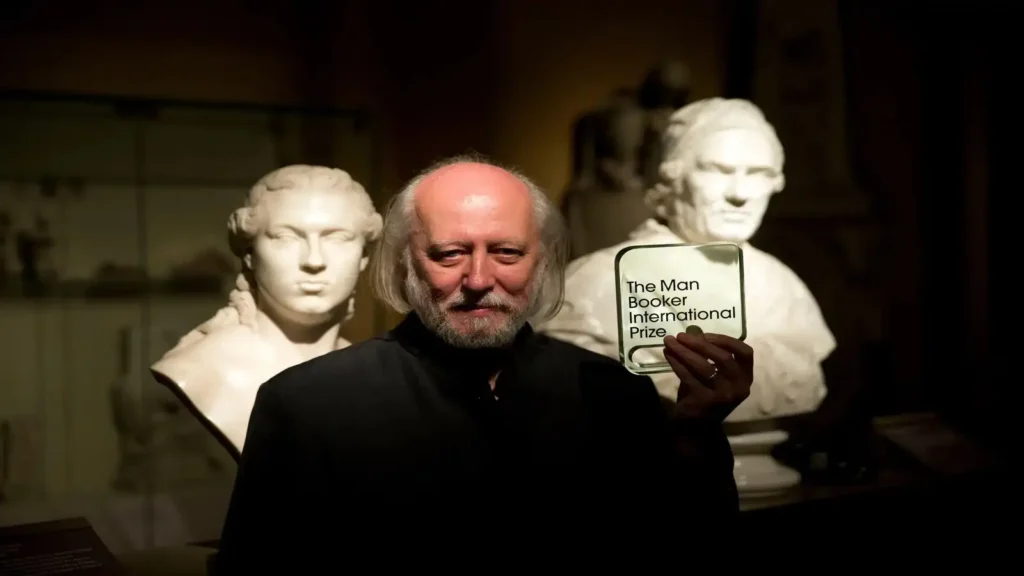
The World of Krasznahorkai: Chaos, Faith, and Power
Krasznahorkai’s breakthrough novel, “The Melancholy of Resistance” (1989), exemplifies his signature themes. The story begins when a mysterious circus arrives in a small Hungarian town, bringing only the carcass of a massive whale. As curiosity turns to paranoia, the villagers spiral into violence and authoritarianism — a chilling allegory for how societies descend into tyranny.
The Nobel Committee highlighted how “the mysterious and menacing spectacle sets extreme forces in motion,” with one character, Mrs. Eszter, exploiting the chaos to seize control. Within two weeks, she transforms the town into her own oppressive regime — a reflection, perhaps, of Europe’s cyclical descent into authoritarianism.
Yet Krasznahorkai resists simple moral lessons. In interviews, he has described art as humanity’s “extraordinary response to the sense of lostness that is our fate.”
Sentences That Stretch to Infinity
Krasznahorkai’s style is unmistakable: sentences that stretch for pages, bending and looping in rhythm, capturing thought as it unfolds. He once remarked that “the period doesn’t belong to human beings — it belongs to God.”
His debut novel, “Sátántangó” (1985), begins in a desolate Hungarian village where residents pin their hopes on a mysterious figure named Irimiás. The book’s description of a sunrise — nearly a page long — is among the most celebrated passages in modern literature.
“The darkness still in flight at the edge of things,” he writes, “where its countless terrors vanish one by one like a desperate, confused, defeated army.”
From Page to Screen: The Béla Tarr Collaborations
Krasznahorkai’s partnership with renowned Hungarian filmmaker Béla Tarr produced some of cinema’s most striking works. Their 1994 film adaptation of “Sátántangó” runs for over seven hours, yet it is revered as a masterpiece of slow cinema.
Susan Sontag called it “enthralling for every minute.” The pair later collaborated on “The Turin Horse” (2011), which won the Silver Bear Grand Jury Prize at the Berlin International Film Festival.
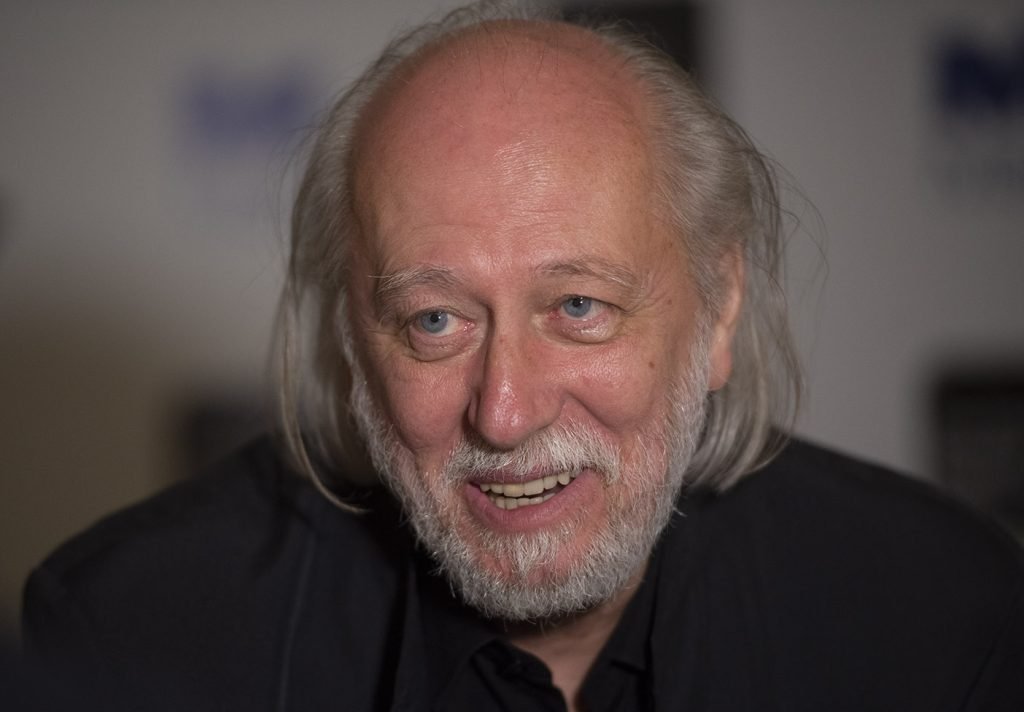
A Literary Lineage of the Lost
Krasznahorkai joins a lineage of Nobel laureates who confront existential despair through art. The 2024 prize went to Han Kang, the South Korean author of “The Vegetarian”, recognized for her poetic prose exploring historical trauma.
In 2023, Norwegian writer Jon Fosse received the Nobel for his minimalist style that expresses profound human emotion through simplicity.
Now, with Krasznahorkai’s win, the Nobel Committee continues its trend of honoring voices that probe the fragility and absurdity of existence.
“His work reaffirms the power of art amid apocalyptic terror,” said Anders Olsson, chair of the Nobel Committee for Literature, calling Krasznahorkai’s writing “a testament to literature’s ability to find light within the void.”
The Legacy of a Reluctant Prophet
Though often labeled a pessimist, Krasznahorkai sees himself as an observer of the human condition — a chronicler of decay and persistence. His novels, dense and unsettling, invite readers to confront their own spiritual unease.
His Nobel Prize, which comes with 11 million Swedish kronor (approximately $1 million), is not merely a personal triumph but a recognition of literature’s power to mirror chaos with clarity.
In a brief statement, the author said, “I never wrote for recognition — only to survive through words.”
For readers worldwide, his victory is a reminder that even in the bleakest narratives, art remains humanity’s last act of resistance.
For more Update http://www.dailyglobaldiary.com


World News
Delta Pilot Falls Ill Mid-Flight: “I Need to Go to the Hospital” as Boeing 757 Diverts to Detroit
Delta Flight 437 was heading from Los Angeles to Boston when its captain became ill over the Midwest, forcing the aircraft to make a safe diversion to Detroit.

A routine cross-country journey took an unexpected turn Tuesday when the captain of Delta Air Lines Flight 437 became ill while flying from Los Angeles to Boston.
The Boeing 757 was carrying 147 passengers when the crew declared an emergency while flying over the Lake Michigan region. The medical emergency did not involve a passenger. Instead, it was the captain who needed urgent medical attention.
The aircraft was diverted safely to Detroit Metropolitan Airport, with the first officer taking control of the aircraft.
Captain reveals he was the one experiencing the medical emergency
Flight 437 had departed Los Angeles International Airport for Boston, a route that typically takes between five and five-and-a-half hours.
The aircraft was cruising at approximately 39,000 feet when the situation developed. The cockpit crew contacted air traffic control and declared an emergency before changing course toward Detroit.
Initially, the communication referred to a medical episode involving someone aboard the aircraft. The unusual nature of the situation became clear when the captain explained that he was the person who had fallen ill.
Diverting to Detroit allowed the crew to get the captain medical assistance while ensuring the aircraft and passengers could reach the ground safely.
“I’m the one that’s ill”
As the aircraft approached Detroit, the captain communicated with the airport tower and explained what had happened.
“This is the captain,” he told air traffic control. “I’m the one that’s ill. I’m going to taxi the jet to the gate, and then I need to go to the hospital.”
Despite experiencing the medical problem, the captain remained involved in the final stages of the flight. The first officer had taken control during the diversion, allowing the aircraft to make its way safely toward the Detroit hub.
The exchange offered a rare glimpse into how a medical emergency involving a flight crew member can unfold in real time.
The aircraft landed safely in Detroit
Flight 437 arrived safely at Detroit Metropolitan Airport, where the captain could receive medical attention.
According to Delta Air Lines, the flight was subsequently completed by another crew.
The airline has not disclosed the captain’s specific medical condition.
There were no reports in the supplied information of passenger injuries or an aircraft-related problem.

Why having two pilots matters
The incident also highlights one of the fundamental safety features of commercial aviation: having multiple qualified pilots on the flight deck.
When one pilot becomes unable to continue operating the aircraft, the other can assume control, communicate with air traffic control and divert to an appropriate airport.
That is precisely what happened aboard Flight 437.
Rather than continuing the long journey to Boston, the crew chose to divert to Detroit, giving the captain access to medical care while minimizing the risk to everyone aboard.
Passengers ultimately continued their journey
For the 147 passengers aboard the Delta flight, the emergency meant an unexpected stop in Detroit before the journey could continue.
Another crew took over the aircraft after the diversion, allowing the flight to proceed toward Boston.
While medical emergencies involving pilots are rare, aviation procedures are designed to ensure that an unexpected situation does not automatically become a catastrophe.
In this case, the aircraft reached the ground safely, the captain was able to seek medical care and the passengers’ journey continued.
What began as an ordinary flight across the United States ended with an extraordinary cockpit emergency—and a quiet reminder of just how important preparation and teamwork are in commercial aviation.
World News
Colorado’s Moon Is About to Turn Red: Near-Total Lunar Eclipse Could Paint the Night Sky in Blood-Red
The celestial show will be visible across Colorado on Thursday night, with the eclipse expected to reach its peak between 9:45 p.m. and 10:45 p.m.

A dramatic celestial spectacle is set to unfold over Colorado on Thursday night as the Moon takes on a deep reddish tint during a near-total lunar eclipse.
Unlike a normal full Moon, this celestial event will see the Moon move deep into Earth’s shadow, creating the striking red or copper-colored appearance commonly associated with a “blood moon.” The event will be visible to the naked eye across much of the state, provided clouds stay away.
According to Chris Bianchi, a senior meteorologist at 9News, viewing conditions along Colorado’s Front Range are expected to be largely favorable. He estimated that many areas could have a 70% to 80% chance of clear skies around the eclipse’s peak.
However, skywatchers farther south may have a tougher time.
When will the lunar eclipse be visible?
The Moon is expected to begin developing its reddish appearance at around 8:30 p.m. The eclipse will continue for several hours, with the overall event lasting until approximately 1 a.m.
The most impressive phase is expected between 9:45 p.m. and 10:45 p.m., when roughly 92% to 95% of the Moon could be covered by Earth’s shadow over Colorado.
That means the state will come remarkably close to experiencing a total lunar eclipse, even though it will not technically reach totality.
The red color happens because sunlight passing through Earth’s atmosphere is bent toward the Moon. Shorter blue wavelengths are scattered more easily, while longer red and orange wavelengths make their way through the atmosphere and illuminate the lunar surface.

Why Colorado’s viewing conditions could vary
For residents along the Front Range, particularly around the Denver area, the forecast currently looks encouraging. But the farther south viewers travel, the greater the possibility of clouds.
Areas around Colorado Springs, south of the Palmer Divide, as well as La Junta and Lamar, could see more unsettled viewing conditions.
That could make the eclipse a bit of a race against the clouds.
For people determined to get the best possible view, Chris Bianchi recommends moving away from bright city lights. Areas east of Denver International Airport could provide darker skies and a better opportunity to appreciate the Moon as it approaches its deepest stage of the eclipse.
There is one catch: cloud cover could also be more likely in some of those eastern areas.
In other words, eclipse watchers may need to be flexible.
You don’t need a telescope to see it
The good news is that this isn’t an event reserved for professional astronomers.
A telescope or pair of binoculars can make the details on the Moon easier to see, but neither is essential. Anyone standing under a reasonably clear, dark sky should be able to watch the Moon gradually change color.
Unlike a solar eclipse, a lunar eclipse can also be viewed safely with the naked eye.
For the best experience, viewers should find a location away from heavy light pollution, give their eyes time to adjust to the darkness and keep an eye on the clouds.
A nearly red Moon could make for a memorable night
The eclipse may not technically reach totality in Colorado, but with as much as 95% of the lunar surface expected to fall under Earth’s shadow, the difference could be difficult to notice for casual observers.
As the Moon darkens and takes on its reddish glow, the sky could offer one of the most striking natural displays of the night.
For Colorado residents, the message is simple: look up around 9:45 p.m. — and keep the clouds in mind.
World News
Lindsay Clancy Trial: Could Postpartum Psychosis Lead to an Insanity Verdict? ‘This Case Is About This Defendant’
The Massachusetts murder trial has placed postpartum psychosis, criminal responsibility and the limits of the mental health system at the centre of a deeply emotional courtroom battle.
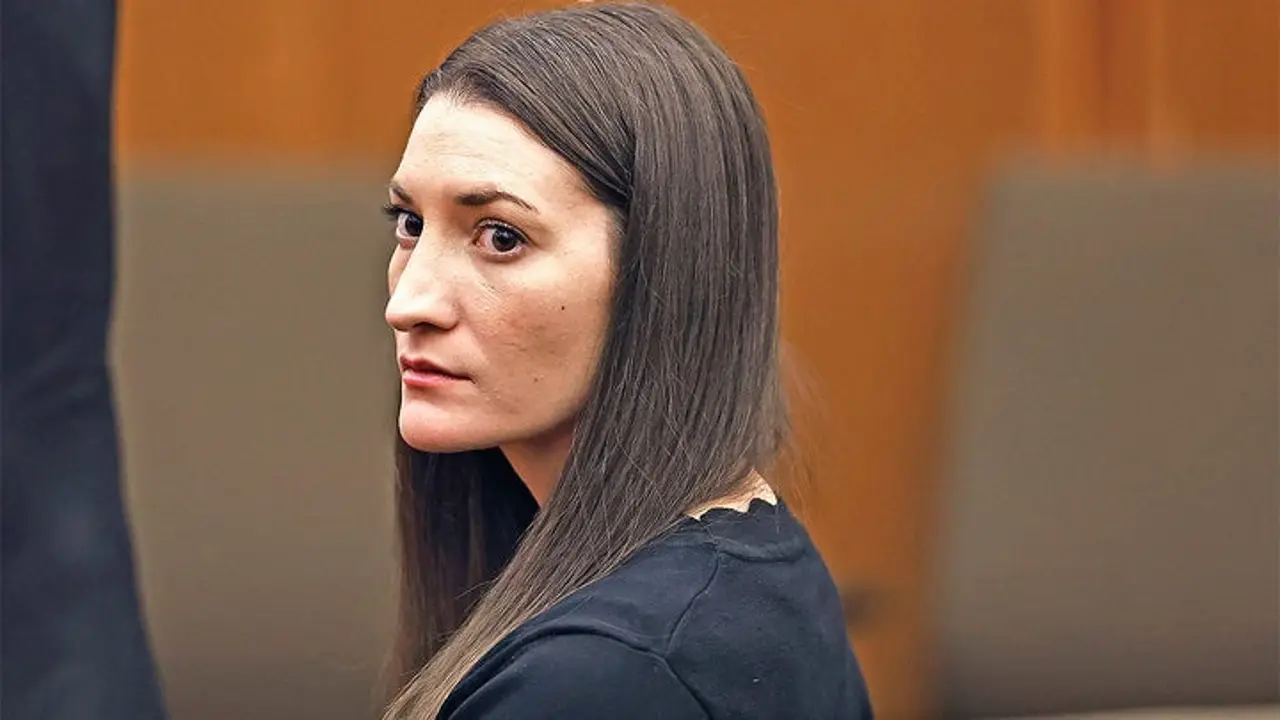
The trial of Lindsay Clancy has brought one of the most difficult questions in criminal law into sharp focus: when a person suffering from a severe mental illness commits a violent act, how should the justice system determine whether they are criminally responsible?
The case has drawn intense attention because both sides agree on the basic facts surrounding the deaths of Clancy’s three children. The dispute is over what was happening inside her mind at the time—and whether her mental state means she should be held legally responsible.
Clancy’s defence argues that she was suffering from postpartum psychosis, a rare and serious psychiatric condition that can develop after childbirth. Prosecutors, however, contend that she acted intentionally and remains criminally responsible for her actions.
The trial is therefore expected to centre heavily on psychiatric evidence, the events leading up to the killings and the question of whether Clancy understood the nature and consequences of what she was doing.

A family tragedy at the heart of the trial
According to testimony presented in court, Clancy’s mental health deteriorated significantly after the birth of her third child.
Her former husband, Patrick Clancy, testified that she began experiencing intrusive thoughts about harming her children and thoughts of suicide. He described the situation as confusing because her behaviour could appear normal one moment and deeply troubling the next.
Patrick told jurors that he never saw his wife physically harm the children before the killings.
The testimony also described a lengthy effort to obtain psychiatric care. Clancy reportedly sought treatment from specialists, was prescribed several medications and eventually spent time in a psychiatric hospital.
Her defence maintains that these interventions failed to prevent her condition from worsening.
Nineteen days after leaving the hospital, Clancy killed her three children at the family’s Massachusetts home, according to the prosecution’s case.
She then attempted to take her own life by jumping from a second-storey window. She survived but remains paralysed from the waist down.
Defence says postpartum psychosis changed everything
Clancy’s attorney Kevin Reddington has argued that his client was suffering from postpartum psychosis and bipolar disorder.
The defence has also claimed that certain medications prescribed after the birth of her third child may have aggravated her mental condition.
According to the defence, Clancy experienced hallucinations and heard voices instructing her to kill her children before taking her own life.
Reddington told jurors that Clancy loved her children and that her actions must be understood in the context of a severe psychiatric illness.
The defence’s central argument is not that the children were not killed. Rather, it is that Clancy’s mental state meant she should not be considered criminally responsible for their deaths.
Prosecutors strongly reject the insanity argument
The prosecution has offered a sharply different interpretation.
Prosecutor Shanan Buckingham argued that Clancy acted deliberately and with full criminal responsibility.
Buckingham told the jury that this was not a case involving a woman actively experiencing psychosis but instead a case about the actions of the defendant herself.
The prosecution’s position will be crucial as jurors consider whether Clancy’s mental illness reached the legal threshold required for a verdict of not guilty by reason of insanity.
If convicted of murder, Clancy could face life imprisonment without parole. If she is found not guilty because she lacked criminal responsibility due to mental illness, she would instead be committed to a state mental health facility.
The emotional testimony of a grieving father
Patrick Clancy’s testimony has provided jurors with a deeply personal account of the family’s final days together.
The children—Cora, 5, Dawson, 3, and eight-month-old Callan—were described through their personalities and interests.
Cora loved princesses. Dawson was fascinated by fire trucks and Paw Patrol. Callan, still a baby, was remembered by his father as a happy child.
Patrick told the court that the family attempted to return to normal life after Lindsay’s discharge from psychiatric care.
They celebrated Cora’s birthday and visited attractions together. Jurors were also shown video of Lindsay playing with the children.
Patrick said he believed her condition had improved.
On the day of the killings, he described Clancy as appearing to be in a particularly good mood. She took Cora to a medical appointment while he stayed home with the younger children.
The couple exchanged photographs of their children during the day. Later, Clancy reportedly spent time with the children, including building a snowman and working on art projects.
Then Patrick left the house to run errands.
What happened afterward became the central tragedy at the heart of the trial.
What is postpartum psychosis?
Postpartum psychosis is an uncommon but extremely serious psychiatric condition that can occur following childbirth.
Unlike the much more common postpartum depression, postpartum psychosis can involve hallucinations, delusions, paranoia and a severe break from reality.
Medical experts cited in the case have said it affects an estimated one to two women per 1,000 births.
Importantly, the overwhelming majority of women experiencing postpartum psychosis do not harm themselves or their children.
However, experts say that in severe cases, a person may develop beliefs that are completely disconnected from reality.
Dr. Nicole Cirino of Baylor College of Medicine has explained that some women experiencing postpartum psychosis may genuinely believe they are protecting or saving their children.
That medical perspective could become highly relevant as jurors examine the defence’s argument.
The case of Andrea Yates
One of the most widely known cases involving postpartum psychosis is that of Andrea Yates, who killed her five children in Texas in 2001.
Yates’ lawyers argued that she suffered from postpartum psychosis and believed that killing her children would save them from eternal punishment.
Her original murder conviction was later overturned. During a subsequent trial, she was found not guilty by reason of insanity and committed to a state mental health facility.
The case became a landmark in discussions surrounding maternal mental health and the criminal justice system.
The Clancy trial has inevitably drawn comparisons with Yates, although the legal circumstances and evidence in the two cases are not identical.
A wider conversation about maternal mental health
Beyond the courtroom, the case has renewed discussion about how society recognises and treats severe mental health conditions following childbirth.
Mental health advocates have argued that postpartum psychosis remains poorly understood and that early diagnosis and intervention can be critical.
The case also raises difficult questions about the relationship between medical treatment and criminal law.
At what point does a serious mental illness affect a person’s ability to understand reality? And when does that condition meet the legal standard for a finding of insanity?
Those questions will ultimately be for the jury to consider based on the evidence presented during the trial.
For the families involved, however, the legal arguments cannot erase the enormous human tragedy.
As the courtroom proceedings continue, the Lindsay Clancy case is likely to remain a closely watched examination of mental illness, criminal responsibility and the devastating consequences that can occur when severe psychiatric disorders go untreated or inadequately managed.

Juliette Binoche Reflects on Her Oscar Surprise and the Ambition She’s Ready to Pursue

Jake Shears Takes on a Powerful New Role… ‘Tinderbox’ Will Bring a Tragic 1973 LGBTQ Story to the Big Screen

Casey Wasserman Nears Deal as Providence Equity Partners Eyes Buyout of Wasserman

The gripping series has climbed to No. 1 as its suspenseful storyline keeps viewers hooked.

Jon Bernthal Opens Up About Hollywood Struggles and His Spider-Man Return

1-Iran Issues Dire Warning to Israel and Defies Trump on Nukes: “We’re Ready to Strike Deep Inside”

Sen. Elizabeth Warren Calls It a ‘Cesspool of Corruption’ — Here’s Why Senators Are Now Fighting Back Against the DOJ’s Live Nation Deal That Left Every Fan Betrayed…

Donald Trump’s net worth reveals the fortune behind the former US President and business mogul

“Tomás Rodríguez Net Worth 2025: Panama’s Gold Cup Goal‑Machine’s Surprising Fortune Revealed”

“She Never Made It Out…” Albany House Fire Claims Woman’s Life as Family Pleads for Help to Bring Her Home

Miss Jamaica Suffers Terrifying Fall Off Miss Universe Stage; Rushed to Hospital on Stretcher in Viral Video

Moana Live-Action Teaser Sparks Outrage as Fans Call Disney’s Move a ‘Clear Money Grab’ — What Went Wrong?

Ryan Gosling’s Project Hail Mary Trailer Stuns Fans with a Mysterious Alien Ally and a Mission That Could Save Earth

Apple delays Jessica Chastain thriller The Savant about domestic extremism after recent US violence

Avatar 3, Fire and Ash trailer reveals Jake Sully’s family facing terrifying new Na’vi enemies with deadly fire powers
-

 Entertainment1 week ago
Chris Hansen Praises Robert Pattinson’s ‘Primetime’ Portrayal, Calls It ‘Overly Dramatic’
-

 Entertainment1 week ago
Hollywood’s New Box-Office Saviours Revealed: How Curry Barker Joined Guillermo del Toro’s Elite Circle
-

 Entertainment1 week ago
Inside Christopher Nolan’s Ambitious ‘The Odyssey’ Shoot: 20 Actors and One Giant Trojan Horse
-

 Entertainment5 days ago
Creative Arts Emmys Night Two Winners: ‘Widow’s Bay’ Dominates, but Rob Reiner’s Emotional Victory Steals the Spotlight
-

 Entertainment1 week ago
‘The Gentlemen’ Goes Dark: Theo James Unpacks Season 2’s Shocking End
-

 Entertainment1 week ago
America Honors a Country Music Icon With Dolly Parton Day on September 25
-

 Entertainment1 week ago
Why Is America Celebrating Dolly Parton Day on 9/25? The Sweet Meaning Revealed
-

 Entertainment1 week ago
Hunter Biden vs Nick Fuentes: Behind the Scenes of the Interview That Almost Turned Into a Physical Confrontation…