
USA
Tonight Could Be Magical as Northern Lights Dance Across These 13 US States
A rare geomagnetic storm could light up the skies across much of the northern US tonight—here’s how, when, and where to catch the aurora borealis spectacle.

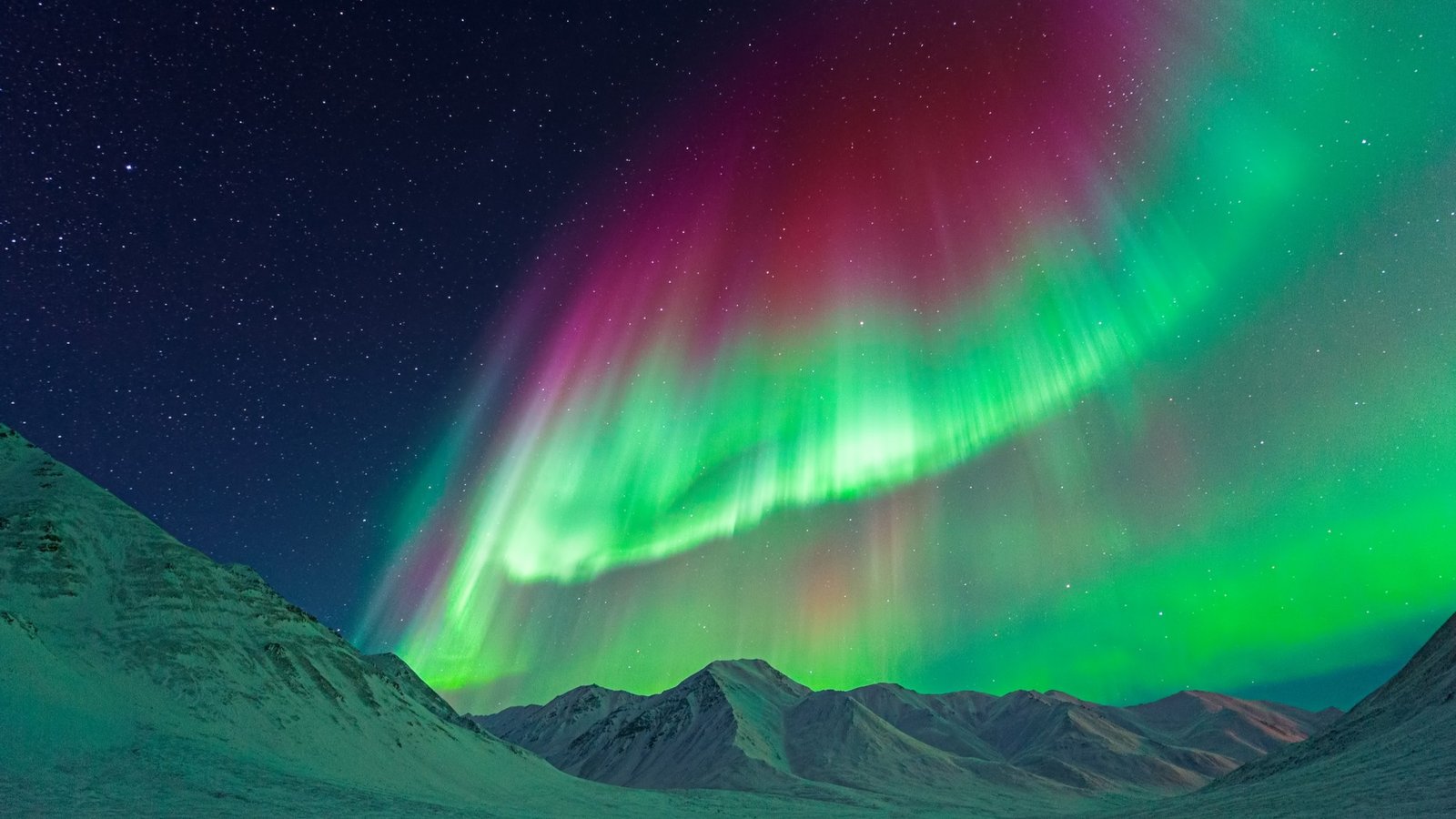
Tonight might just be one for the books. According to a fresh update from NOAA‘s Space Weather Prediction Center, parts of the United States could be treated to a breathtaking display of the aurora borealis—better known as the northern lights. A geomagnetic disturbance triggered by a recent solar flare and dual coronal mass ejections is expected to push the auroral oval deep into North America, making it possible for 13 states to witness the celestial show.
The Kp index, which measures geomagnetic activity on a scale from 0 to 9, is projected to reach 4.67, with an outside chance of hitting G3-level storms. While Monday night witnessed some of the most intense solar activity in recent times, forecasters say tonight—Tuesday, June 4th—still holds strong potential, albeit with slightly reduced intensity. Space weather experts, including those from the U.K. Met Office, speculate that minor to moderate activity could still push the lights into view for millions across the northern United States.
Where Will the Northern Lights Be Visible Tonight?
If you’re lucky enough to live in Alaska, Minnesota, North Dakota, Montana, Wisconsin, or the Upper Peninsula of Michigan, you’re in prime territory. Other states like South Dakota, Maine, Vermont, New Hampshire, Idaho, Washington, and Oregon are also listed as likely candidates for visibility, depending on how strong the geomagnetic activity turns out to be.
On Monday, the view line extended unusually far south—as low as southern Nebraska and northern Missouri, with even states like Illinois, Indiana, Ohio, and Massachusetts catching glimpses. While tonight’s projection isn’t expected to dip quite as low, experts advise remaining alert, as auroras are notoriously unpredictable.
Best Time and Tips for Viewing the Aurora
The ideal window for viewing is between 10 PM and 2 AM local time, when the skies are darkest. For the clearest sightlines, head to elevated locations away from city lights and look north. Apps like “My Aurora Forecast & Alerts” and “Space Weather Live” can provide real-time updates based on your GPS location.
Capturing the Magic
To photograph the northern lights, NASA recommends night mode, long exposure, and using a tripod for your smartphone. DSLR users should opt for a wide-angle lens, a low F-stop (≤ f/4), and a steady mount. Even if your eyes can’t catch the full detail, your camera lens might surprise you.
Why Now? A Surge in Solar Activity
This year marks a significant moment in the sun’s 11-year solar cycle, known as the solar maximum, which began ramping up in 2024 and is expected to peak through early 2026. These solar flares and ejections release charged particles that interact with Earth’s magnetic field, sparking auroras. With this heightened solar activity, these luminous shows may become more frequent and more visible across the United States in the coming months.
So whether you’re a seasoned skywatcher or a curious first-timer, tonight could be your golden opportunity to experience the awe-inspiring phenomenon that many travel halfway across the world to witness. Don’t miss it—look up, and let the sky surprise you.


USA
Why Is America Sliding Toward Recession Again? Experts Reveal What’s Really Happening
Rising interest rates, job market shocks, and global tension in America — what’s dragging the US economy into recession now?

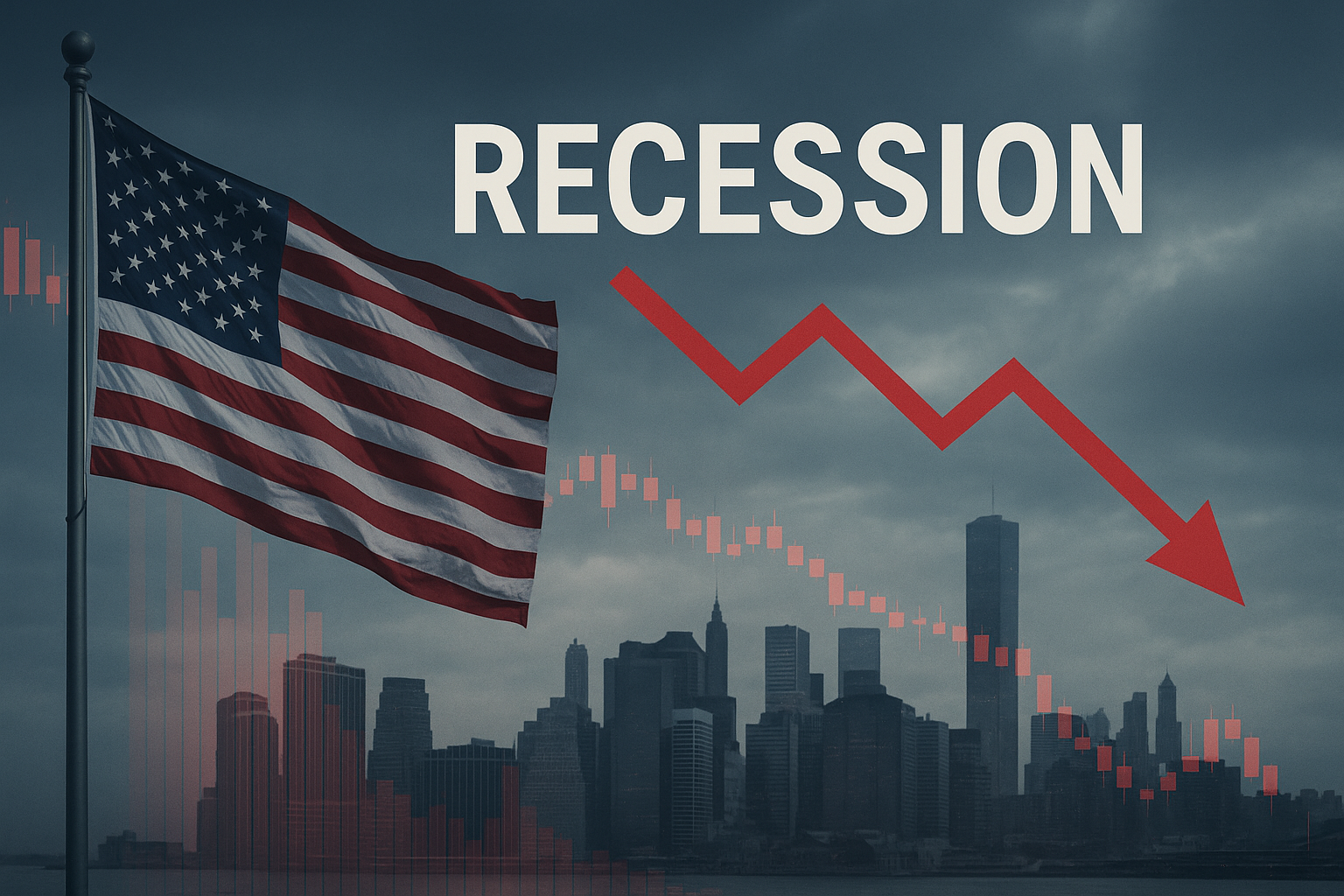
Rising interest rates, job market shocks, and global tension — what’s dragging the US economy into recession now?

The word recession is back in headlines in America — and for good reason. From Wall Street to Washington, fears are rising that the United States may be on the brink of an economic downturn once again in 2025. But what’s really driving this potential collapse? And more importantly — how did we get here?
Here’s a breakdown of why America is facing recession and what this means for everyday citizens.
1. Aggressive Interest Rate Hikes by the Federal Reserve
The Federal Reserve, led by Chair Jerome Powell (Wikipedia), has been increasing interest rates since 2022 in a bid to tame runaway inflation. But in doing so, they’ve made borrowing costlier — for everything from homes and cars to business loans.

- Mortgage rates have topped 7%, pricing many buyers out of the housing market.
- Credit card interest is now above 20% for most Americans.
- Small businesses are pausing expansion due to high lending costs.
While the Fed’s intent was to slow inflation, the collateral damage may be a full-blown economic slowdown.
2. The Housing Market Is Cooling Fast
After the post-pandemic housing boom, the market is starting to freeze. Home sales have dropped, new construction is slowing, and foreclosures are on the rise.
According to the National Association of Realtors, pending home sales are at a 10-year low.
For many middle-class families, a weak housing market affects both net worth and consumer confidence — two key drivers of recessionary behavior.
3. Job Market Is Starting to Crack
Though the U.S. unemployment rate still appears low on the surface (~3.9% as of July 2025), cracks are forming:
- Tech layoffs have returned, with companies like Google, Meta, and Salesforce slashing thousands of roles.
- Retail and logistics are cutting seasonal jobs amid weak demand.
- Gig workers and part-timers report lower earnings month-over-month.\

Wages have also stagnated while inflation eats into purchasing power — a toxic combo that hurts lower-income households the most.
4. Global Uncertainty and Trade Tensions
The global stage isn’t helping either. The Ukraine war rages on. Tensions between the U.S. and China remain high over Taiwan and trade tariffs. Oil prices are spiking again due to instability in the Middle East.
A report by Bloomberg Economics estimates global trade has contracted by nearly 6% compared to last year.
As a result, American exporters are hurting, and global supply chains remain fragile. The U.S. is deeply linked to international trade, and global unrest always echoes back at home.
5. Consumers Are Finally Pulling Back
For months, U.S. consumers were propping up the economy with spending — but that might be ending. Americans are now:
- Slashing discretionary purchases
- Using up their pandemic-era savings
- Relying more on Buy Now, Pay Later schemes and credit cards
- Delaying travel, upgrades, and luxury buys
When consumer confidence dips, recessions become self-fulfilling prophecies. And right now, surveys show optimism is at a 3-year low.
6. Corporate Earnings Are Missing Targets
Big companies like Walmart, Apple, and Amazon are warning shareholders of lower-than-expected profits. That’s a big sign of shrinking economic momentum.
- S&P 500 earnings growth has turned negative for the last two quarters.
- Companies are freezing hiring, bonuses, and travel budgets.
- Stock market volatility is rising, making investors nervous.
If corporate America is nervous — we all should be.
7. Yield Curve Inversion — A Classic Recession Signal
One of the most reliable predictors of a U.S. recession is a phenomenon known as yield curve inversion — when long-term interest rates fall below short-term ones. This has now occurred and stayed inverted for over 12 months, something not seen since just before the 2008 financial crash.
Historically, when this happens, a recession follows within 12–18 months.
So… Is America Already in a Recession?
That depends on who you ask.
The government has not officially declared a recession, as GDP remains positive — barely. But to millions of families living paycheck-to-paycheck, it already feels like one.
Prices are high. Bills are mounting. Layoffs are creeping in. Confidence is falling.
“Whether or not the NBER calls it, this is a rolling recession — different sectors are falling one by one,” says economist Diane Swonk.
Read More: Daily Global Diary
Personality
Barack Obama’s Net Worth in 2025 Will Surprise You More Than Any Speech
From professor to president to memoir mogul—how Barack Obama built a $70 million fortune beyond the White House


Barack Obama is the 44th President of the United States, Nobel Peace Prize laureate, author, and film producer whose journey from community organizer to global icon is unparalleled. As of 2025, Barack Obama’s estimated net worth is around $70 million, accumulated through book royalties, public speaking, production deals, and real estate investments.
His post-presidential legacy goes beyond politics—it’s a story of building a media and cultural empire that continues to shape his public persona.

Early Life and Background
Born on August 4, 1961, in Honolulu, Hawaii, Obama grew up between Hawaii and Indonesia. He graduated from Columbia University and earned a law degree from Harvard Law School, where he became the first Black president of the Harvard Law Review. Returning to Chicago, he worked as a community organizer and law professor before entering politics.
Career Highlights
- 2004 DNC Speech: His keynote address launched him onto the national stage and boosted sales of Dreams from My Father.
- U.S. Senate & Presidency: Elected to the Senate in 2004, became president in 2009, and served two terms with an annual salary of $400,000 .
- Bestselling Memoirs: Between 2009–2017, he earned $15.6 million in royalties, with a blockbuster $65 million Penguin Random House deal for A Promised Land.
- Higher Ground Productions: Co-founded with Michelle Obama in 2018, winning Oscars and Emmys, and securing multi-million-dollar deals with Netflix and Audible.
Sources of Income
- Book Deals & Royalties – Major earnings from memoirs like Dreams from My Father, The Audacity of Hope, and A Promised Land.
- Speaking Engagements – Post-presidency, paid top-dollar fees for speaking at events.
- Production Company – Higher Ground’s success in Hollywood adds ongoing revenue.
- Real Estate Portfolio – Homes in Washington D.C., Chicago, and Martha’s Vineyard round out his assets.
Net Worth Growth Over the Years
- 2008 (entering White House): ~$1.3 M
- 2017 (leaving office): Royalty-fueled increase, net worth ~ $12 M
- 2024–2025: Stabilized around $70 million
Assets and Lifestyle
The Obamas live comfortably in D.C. and maintain private properties in Chicago and Martha’s Vineyard. Their real estate, combined with book and media earnings, forms the backbone of their financial success.
Is Barack Obama a billionaire?
What is his biggest money source?
USA
Trump announces foreign tourists will pay more to visit Yellowstone and sparks global travel debate
President Trump’s new order raises park fees for international visitors to fund maintenance, but critics say it could deter tourism and politicize public lands.

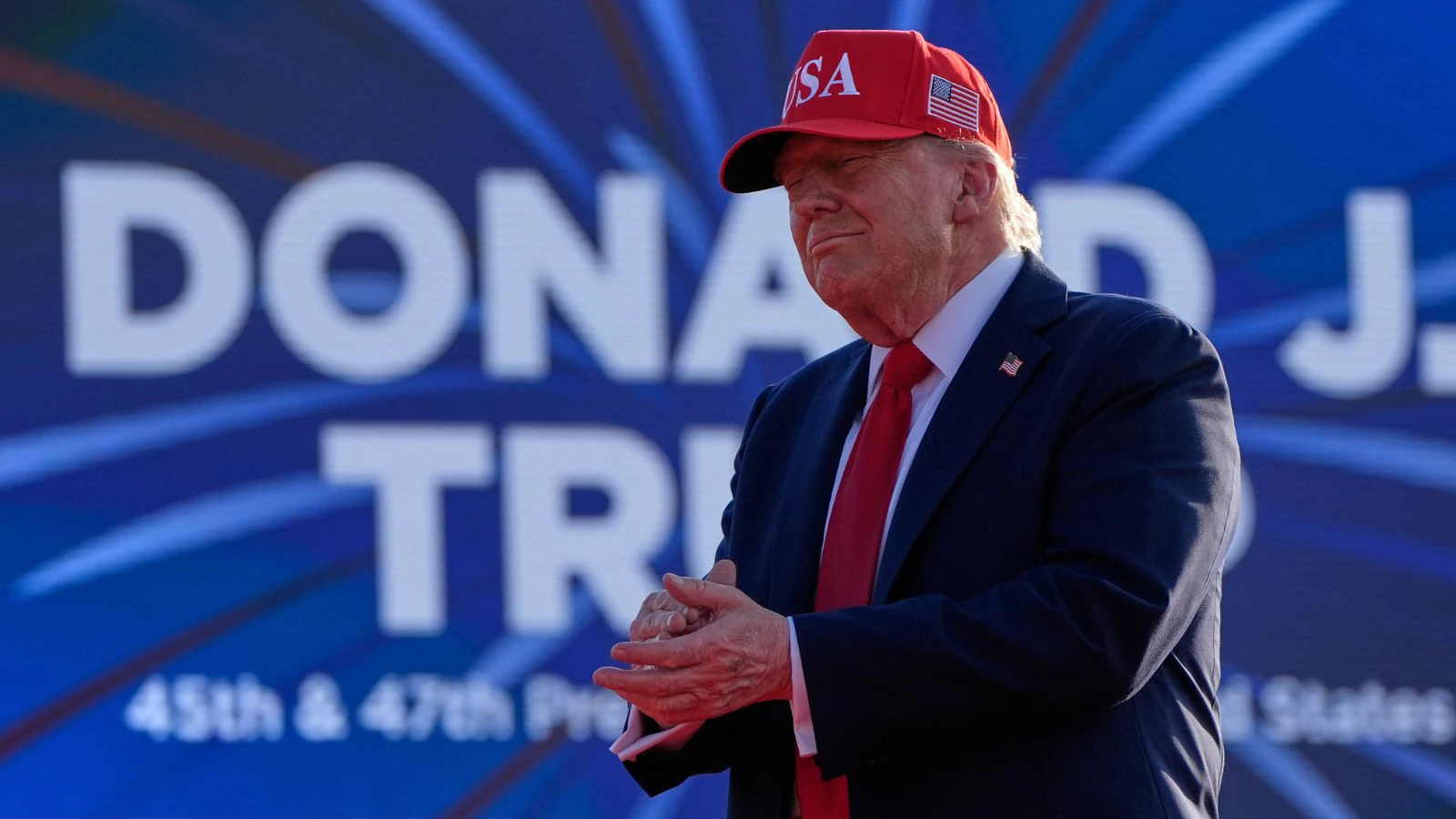
In a sweeping new directive just ahead of Independence Day, President Donald Trump announced that foreign tourists will soon pay higher fees to access U.S. national parks, including iconic sites like Yellowstone National Park — a move aimed at addressing the National Park Service’s $23 billion maintenance backlog.
Trump’s July 3 executive order instructed Interior Secretary Doug Burgum to implement surcharges on international visitors entering national parks and recreation areas. The revenues, Trump said, would go directly toward improving park infrastructure and enhancing access for American citizens. It’s part of a broader push to “Make America Beautiful Again,” a slogan behind a second order creating a conservation-focused commission led by the Interior Department.
“Foreign guests who enjoy our country’s natural beauty should help maintain it,” Trump reportedly said behind closed doors. “Americans deserve pristine parks — without footing the whole bill.”
But not everyone is applauding the move.
Will Higher Fees Hurt Tourism?
The Bozeman-based Property and Environment Research Center (PERC) — which promotes free market environmentalism — released a study titled “The Economics of Awe” suggesting that a $100 surcharge for foreign visitors to Yellowstone could generate $55 million annually, covering its $43 million yearly maintenance needs with room to spare.
According to PERC, the surcharge would deter only about 57,000 out of 660,000 annual international visitors to Yellowstone — a number it deems “insignificant.”
Tate Watkins, lead author of the study and a PERC fellow, told Mountain Journal, “Fees are a sound way to generate revenue without depending solely on Congress. Visitors should help offset the impact they create — from worn trails to overflowing trash cans.”
But Emily Douce from the National Parks Conservation Association warned that such policies risk pricing people out of public spaces. “Entrance and recreation fees are vital,” she said, “but they should never replace the federal government’s duty to fund national parks for all.”
Douce emphasized that while charging foreigners more is common globally, policies must be “designed thoughtfully.” She pointed to global models like Nairobi National Park in Kenya, which charges tourists far more than locals — a practice the U.S. could mirror by using driver’s licenses or IDs for fee classification.
More Than Just Yellowstone at Stake
Trump’s order isn’t limited to entry fees. It revokes a Barack Obama-era memorandum promoting diversity and inclusion on public lands and directs Burgum to review and roll back restrictions from the Biden administration.
While Trump’s supporters hailed the move as fiscally responsible, critics say it injects partisanship into conservation policy. Former Interior Secretary Ryan Zinke, now a Congressman from Montana, previously attempted a fee hike in 2017 that was met with widespread backlash and ultimately withdrawn.
Still, the urgency is real. Yellowstone alone faces billions in damage from past flooding and years of disrepair. The 2022 flood around the park’s North Entrance caused $1 billion in damages, prompting emergency federal relief and exposing the fragility of America’s natural treasures.
The National Park Service’s own 2026 budget brief estimates that a foreign visitor surcharge could generate over $90 million in revenue system-wide. But with proposed federal spending cuts on the horizon — including a $1 billion reduction in general park operations — new funding mechanisms are no longer optional, some argue.
A Global Question with Local Consequences
The new order has stirred conversation internationally. Some travelers worry that increasing fees could deter long-distance visits and hurt local economies that depend on tourism. But Watkins believes Yellowstone’s appeal is “inelastic” — meaning people will come no matter the price.
“They’re not skipping a once-in-a-lifetime trip over $100,” he said.
Ultimately, Trump’s order opens a national debate: Should America’s parks be funded by the people who use them — or protected as a public good for all? As the policy rolls out in 2026, Americans and international visitors alike will be watching closely.

Liverpool vs Brighton, Chelsea vs Everton and More — Live Football Action as Premier League Drama Unfolds

Bryant Haines Set to Become One of College Football’s Highest-Paid Assistants After Indiana’s Dream Season

Sherrone Moore Fired and Arrested — Why Michigan Athletics Is Facing Its Biggest Culture Crisis Yet

League of Legends 2026 Swiftplay Gets a Massive Overhaul With Faster Games and Shocking Jungle Changes

Olivia Rodrigo Leaves Her Idol ‘Mind Blown’ With Stunning A Cappella Christmas Cover

1-Iran Issues Dire Warning to Israel and Defies Trump on Nukes: “We’re Ready to Strike Deep Inside”

Donald Trump’s net worth reveals the fortune behind the former US President and business mogul

Caitlin Clark Sidelined with Quad Strain, Set to Miss Two Weeks of WNBA Action

Elon Musk Breaks Ranks with Trump Over ‘Big, Beautiful’ Tax Bill

Golden Glory: Team USA Wins First Standalone Ice Hockey World Championship in 91 Years

Miss Jamaica Suffers Terrifying Fall Off Miss Universe Stage; Rushed to Hospital on Stretcher in Viral Video

Moana Live-Action Teaser Sparks Outrage as Fans Call Disney’s Move a ‘Clear Money Grab’ — What Went Wrong?

Ryan Gosling’s Project Hail Mary Trailer Stuns Fans with a Mysterious Alien Ally and a Mission That Could Save Earth

Apple delays Jessica Chastain thriller The Savant about domestic extremism after recent US violence

Avatar 3, Fire and Ash trailer reveals Jake Sully’s family facing terrifying new Na’vi enemies with deadly fire powers
-

 US News7 days ago
“She Never Made It Out…” Albany House Fire Claims Woman’s Life as Family Pleads for Help to Bring Her Home
-

 Entertainment1 week ago
“Detective, Psychologist, Anthropologist?” — Inside the Secret World of Casting Directors Behind ‘F1,’ ‘The Smashing Machine’ and ‘Marty Supreme’
-

 Entertainment6 days ago
XG Star Cocona Shares a Brave Truth at 20 — “I Was Born Female, But That Label Never Represented Who I Truly Am…”
-
 Entertainment6 days ago
Samba Schutte Reveals the Surprise Cameo in Pluribus That “Nobody Saw Coming”… and Why John Cena Was Perfect for the Role
-

 Entertainment1 week ago
Legendary Guitarist Steve Cropper Dies at 84… Tributes Pour In for the Soul Icon Behind ‘Green Onions’ and ‘Soul Man’
-
 Entertainment7 days ago
Nika & Madison stuns global audiences as director Eva Thomas reveals why “resilience, not fear, drives Indigenous women on the run”
-

 Politics5 days ago
“Billions and Billions Have Watched Them…” Trump Makes History Hosting Kennedy Center Honors and Praising Stallone, Kiss, and More
-
 Sports1 week ago
Cowboys refuse to fold after tough loss to Lions, say setback will fuel stronger playoff push