
Entertainment
Park Chan-wook breaks silence on Golden Globe surprise… ‘It feels like being redefined as a director’ — and why ‘No Other Choice’ took 20 years
Korean auteur Park Chan-wook reacts to his first major U.S. awards recognition, the AI themes in his long-awaited film No Other Choice, and why actor Lee Byung-hun’s nomination means more to him than his own.

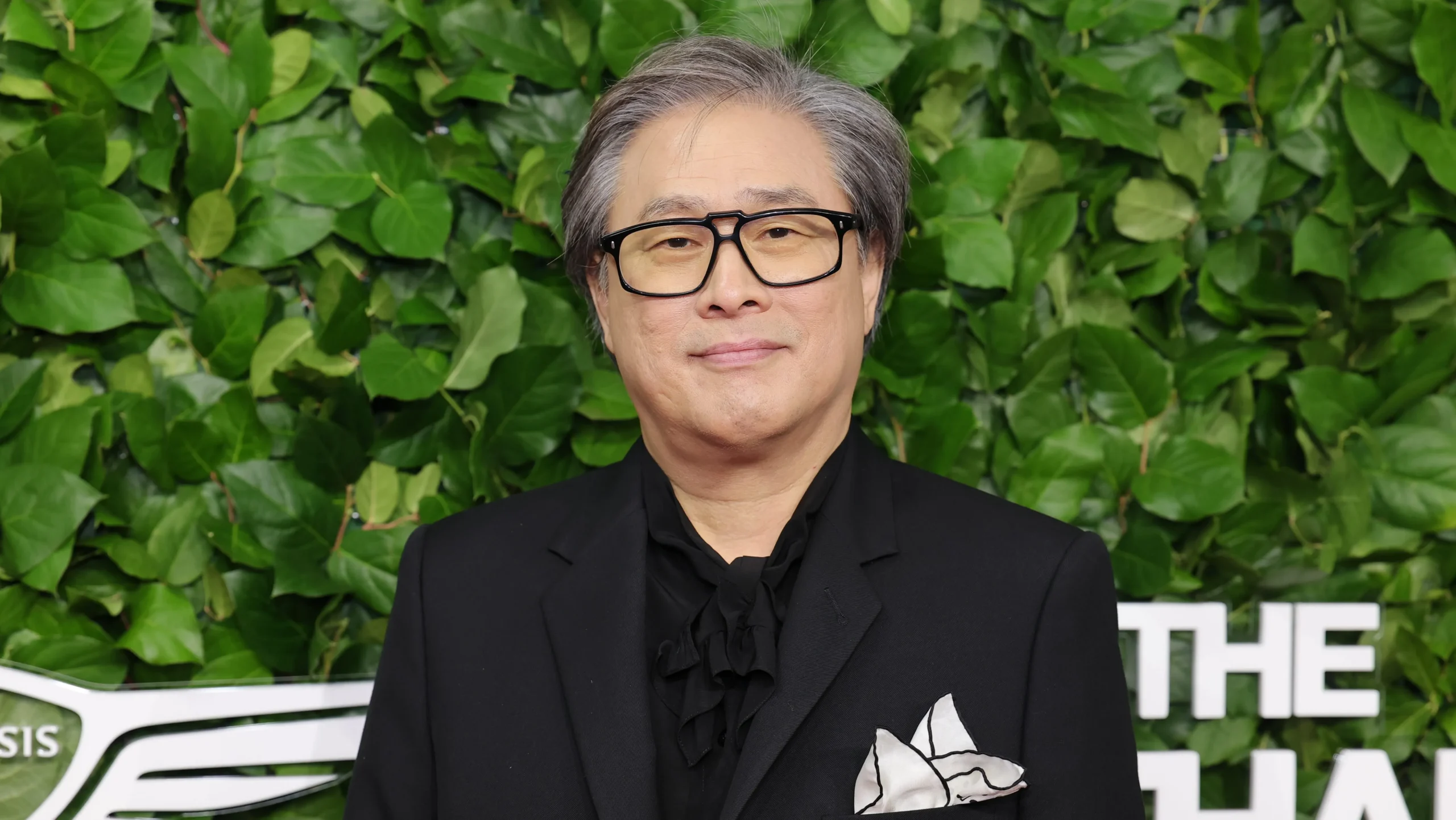
For more than two decades, legendary Korean filmmaker Park Chan-wook has been celebrated as a master of cinema — revered for films that blend beauty with brutality, philosophy with provocation. Yet despite international acclaim, global box office success, and his iconic status among cinephiles, Park had never received a major U.S. awards nomination… until now.
His latest film, No Other Choice, stunned the industry on Monday morning when it landed three Golden Globe nominations:
- Best Picture – Musical or Comedy
- Best Picture – Non-English Language
- Best Actor – Musical or Comedy for Lee Byung-hun
For Park, the moment felt surreal — and deeply personal.
“I’ve waited 20 years for this film”
Speaking to The Hollywood Reporter over Zoom, Park revealed that No Other Choice has been quietly evolving inside him for more than two decades.
“I always kept this story as a strong candidate for my next film,” he said. “It just took 20 years for the circumstances to align.”
ALSO READ : Younghoe Koo Explains Botched Field Goal After Slip: “The Ball Was Moving So I Pulled Up”
Surprisingly, Park originally envisioned the movie as an American production, but everything changed when he shifted the project back to Korea — a decision that unlocked storytelling freedom he hadn’t expected.
“It wasn’t intentional timing,” he admitted. “But by developing it recently, I was able to include commentary about AI, which became essential to the film. I’m glad it happened this way.”
That subtle twist — merging long-held ideas with modern anxieties — is exactly the kind of narrative craftsmanship that made Park an international icon.
A career built on darkness… now celebrated for comedy
Park’s body of work — from Oldboy to The Handmaiden and Decision to Leave — has often been labeled violent, erotic, or psychologically intense. Few expected the director to break into the comedy/musical category at the Golden Globes.
That irony wasn’t lost on him.
“To be nominated in the comedy, musical category this year was very fun for me,” he laughed. “It felt as if I’m being redefined as a director. The truth is I’ve always believed my movies contained dark humor.”
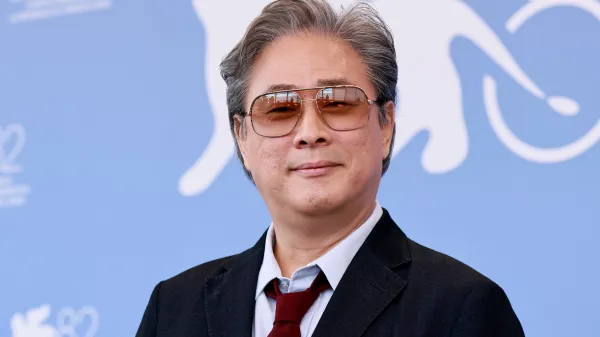
For global audiences who know him as the master of stylish, unsettling cinema, this nomination may be a reintroduction — one that highlights a layer of his artistry that has always been hiding in plain sight.
“If I could choose just one nomination…”
While Park is thrilled for his film, he insists his greatest joy comes from the recognition of his lead actor, Lee Byung-hun, one of Korea’s most respected stars.
“If I had the choice to choose one nomination for the film,” Park said, “I would have definitely chosen Byung-hun. He is very much qualified for that.”
It’s a statement that reflects Park’s longstanding reputation: a filmmaker who pushes actors to new heights but always shares the spotlight.
A milestone for the Korean film industry
Park’s nomination isn’t just a personal victory — it marks another milestone in the global rise of the Korean entertainment industry, which in recent years has surged thanks to successes like Parasite, Squid Game, and Decision to Leave.
As the industry expands, Park remains one of its most influential voices — a filmmaker whose perfectionism, thematic daring, and emotional intelligence continue to shape Korean cinema’s global image.
With No Other Choice, Park Chan-wook seems not just to have completed a long-held dream, but to have opened a new chapter — one where the world finally embraces the full range of his vision.



Entertainment
One Battle After Another” Swept Six Oscars But What Michael B. Jordan Did for Sinners Left Everyone Speechless…
The 98th Academy Awards belonged to Paul Thomas Anderson’s epic, but Ryan Coogler’s vampire masterpiece stole hearts — and a few records along the way.

Hollywood had its grandest night of the year on Sunday, March 15, and by the time Conan O’Brien wrapped up his hosting duties at the Dolby Theatre in Los Angeles, the film world had a new champion. Paul Thomas Anderson‘s One Battle After Another took home six Oscars, including Best Picture and Best Director The Hollywood Reporter — a sweep that cemented the Warner Bros. drama as the defining film of its year. But the night was far from a one-film show.
Paul Thomas Anderson’s Long-Awaited Crown
For anyone who has followed awards season long enough, Sunday felt like a reckoning. Anderson took the statuette for Best Directing after winning earlier for Best Adapted Screenplay for One Battle After Another — his first Academy Awards after 11 previous nominations dating back to 1998. Deadline That’s nearly three decades of “almost.” He became just the ninth person in history to win Best Picture, Directing, and Screenplay Oscars on the same night. Deadline
The ceremony also marked the debut of a brand-new category — Best Achievement in Casting — with One Battle After Another taking home the inaugural award. ABC News Best Casting is the first new category at the Academy Awards in 25 years. CBS News Casting director Cassandra Kulukundis made history as the first-ever winner of that prize.
ALSO READ : “She Never Made It Out…” Albany House Fire Claims Woman’s Life as Family Pleads for Help to Bring Her Home
One Battle After Another‘s Sean Penn won Best Supporting Actor, following up his win at the Actor Awards this month. It’s his third career Oscar, but his first in the Supporting Actor category. Deadline Penn, notably, was not present at the ceremony to accept the award in person.
Michael B. Jordan and the Sinners Wave
If One Battle After Another was the evening’s crown jewel, Ryan Coogler‘s Sinners was its most electric story. Sinners scooped up four Oscars, including Best Actor for Michael B. Jordan The Hollywood Reporter, who delivered a tour-de-force dual performance as twin brothers Smoke and Stack in the film’s vampire-infused Depression-era setting.
Ryan Coogler won his first Oscar for Best Original Screenplay NPR, a deeply personal project years in the making. Sinners also nabbed the award for Best Original Score for Ludwig Göransson and Best Cinematography for Autumn Durald Arkapaw, who became the first woman to ever win the award. The Hollywood Reporter That last win was historic, quietly revolutionary, and deserved every standing ovation it got.
Sinners had the most nominations of any movie ever with 16. CBS News Sixteen. It walked away with four. The math may sting, but those four wins were seismic.
Jessie Buckley, Amy Madigan, and the Women Who Won
Jessie Buckley received the Best Actress Oscar for her role in Hamnet, while Amy Madigan secured the Oscar for Best Supporting Actress for her role in Weapons. ABC News Both wins came as genuine crowd pleasers. Buckley’s portrayal in the Shakespeare-inspired drama had been building buzz since its festival debut, and Madigan’s win — in a stacked supporting category — felt like a long-overdue recognition of one of American cinema’s most underappreciated talents.

Frankenstein’s Craft Sweep and Netflix’s Strong Night
Netflix‘s Frankenstein took three wins for craft awards, including Best Makeup & Hairstyling, Best Costume Design, and Production Design. Deadline The film, directed by Guillermo del Toro, had long been considered a strong contender in the technical categories, and it delivered precisely there. Amid the studio’s $110 billion acquisition by Paramount Skydance, Warner Bros. led all distributors with 11 statuettes. Netflix was next with seven, including three for Frankenstein. Deadline
K-Pop Makes Oscar History
In one of the night’s most unexpected moments, KPop Demon Hunters won the Oscar for Best Animated Feature, while the film’s song “Golden” became the first K-pop song to ever win an Oscar, for Best Original Song. The Hollywood Reporter The win sent shockwaves across social media and beyond, marking a genuine cultural watershed moment for the Korean music industry and its global fanbase.
Moments Beyond the Movies
The 98th Oscars weren’t without their political undertones. Javier Bardem, while presenting the award for Best International Feature Film, said on stage, “No to war and free Palestine.” NPR David Borenstein, co-director of winning documentary Mr. Nobody Against Putin, spoke about how a country is lost through “countless small, little acts of complicity.” NPR
The ceremony also featured a rare tie in the Live Action Short Film category. NPR The last Oscar tie was back in 2013.
In the In Memoriam segment, Billy Crystal began the tribute with a remembrance of his “best friend” Rob Reiner, and Barbra Streisand paid heartfelt tribute to her late The Way We Were co-star Robert Redford. Deadline
The Big Picture
The 98th Academy Awards were, by almost every measure, a great night for cinema. One Battle After Another rewarded a filmmaker who had waited a lifetime for recognition. Sinners shattered records and broke barriers. Hamnet gave us a best actress winner to remember. And K-pop got its first Oscar. Whatever you thought was going to happen walking into Sunday night — Hollywood found a way to surprise you anyway.
Entertainment
Conan O’Brien Called Himself ‘The Last Human Host’ at the Oscars and What He Said About Timothée Chalamet Had the Whole Room Talking…
From roasting Netflix’s Ted Sarandos to going after Sean Penn and the Epstein files, O’Brien’s Oscars monologue was sharper, weirder, and far more political than anyone expected.

Nobody walking into the Dolby Theatre on Sunday night quite knew what version of Conan O’Brien they were going to get. The late-night legend had publicly downplayed the political edge of his planned monologue in pre-show interviews — and then proceeded to absolutely ignore that promise the moment the spotlight hit him.
In what many are already calling one of the most memorable Oscars openings in years, O’Brien delivered a rapid-fire, surprisingly barbed monologue at the 98th Academy Awards that bounced between absurdist comedy, Hollywood industry shots, and genuine political nerve. He dished out jokes ranging from mocking Timothée Chalamet‘s ballet and opera controversy, making cracks about Sean Penn and Ted Sarandos, and taking aim at the lack of arrests over the Jeffrey Epstein files. The Hollywood Reporter Not exactly light dinner-party conversation — but then again, this was never going to be that kind of night.
“The Last Human Host” Opens With a Warning
O’Brien opened by declaring, “I’m Conan O’Brien and I’m honored to be the last human host of the Academy Awards. Next year it’s going to be a Waymo in a tux.” The Hollywood Reporter It was a sharp, self-aware jab at the AI conversation consuming Hollywood, and it set the tone perfectly — this was a host who had done his homework, knew exactly where the landmines were, and was going to step on every single one of them.
ALSO READ : “She Never Made It Out…” Albany House Fire Claims Woman’s Life as Family Pleads for Help to Bring Her Home
He also noted that “Last year, when I hosted, Los Angeles was on fire. But this year, everything’s going great!” The Hollywood Reporter — delivered with the kind of deadpan that only someone who has survived decades in late-night television truly masters.
The Chalamet Ballet Bomb
If there was one joke the internet had been waiting for all week, it was this one. Referencing Best Actor nominee Timothée Chalamet’s recent controversial comments about ballet and opera, O’Brien joked that organisers had been warned about potential outrage from arts communities. “I’m told there’s concern about attacks from both the opera and ballet communities,” he said. “They’re just mad you left out jazz.” The Nightly
The cameras quickly cut to a smiling, white-suited Chalamet in the audience. Deadline He took it graciously, which honestly may have been the most impressive performance of his entire awards season.
Nominated for Best Actor for his lead performance in ping-pong pic Marty Supreme, Chalamet has been Topic #1 on chat boards, late night comedy shows, and daytime talkers since his podcast comment that nobody cared anymore about ballet and opera. Deadline O’Brien, naturally, was never going to let that one go.
Ted Sarandos Gets the Theater Treatment
Noting that Netflix boss Ted Sarandos was in the audience, O’Brien said: “Netflix CEO Ted Sarandos is here. And this is exciting: It’s his first time in a theater!” The Nightly He then slipped into character, imagining Sarandos’s internal monologue: “Why are they all together enjoying themselves? They should be home alone, where I can monetize it.” Variety
Sarandos, laughing in the audience, seemed to take the ribbing well. Deadline Which is either a sign of a good sport — or a man who knows that Netflix just won seven Oscars and can afford to laugh.
Sean Penn, Film Jokes, and Going After Everything
O’Brien didn’t stop at the soft targets. He took clear aim at the films themselves with the kind of jokes that walk a very fine line. On Sinners director Ryan Coogler, who declined to become a voting member of the Academy, O’Brien said: “But the rest of you pricks seem to love it.” Boston.com The room’s reaction was half-shocked, half-delighted — which is pretty much the sweet spot for any good Oscars joke.

He also riffed that “Between Hamnet and Bugonia it’s been a big year for movies that sound like off-brand lunch meat.” Boston.com On Jessie Buckley‘s Hamnet, where Shakespeare‘s wife gives birth alone in the woods: “Or as we call that here in America, affordable healthcare.”
He also wasn’t going to let the political elephant in the room go unacknowledged. On the possibility of things getting too political: “I should warn you: Tonight could get political. Okay? And if that makes you uncomfortable, there’s an alternate Oscars being hosted by Kid Rock. It’s at the Dave & Buster’s down the street.” Variety
The Sketch That Started It All
Before a single joke was spoken at the podium, O’Brien had already set the tone with a pre-recorded opening sketch. He opened the show by cosplaying as Aunt Gladys, the viral witch from Weapons played by nominee Amy Madigan, during a pretaped sketch. While being chased by children, he ran through the sets of many of this year’s Oscar-nominated films. Gold Derby It was chaotic, funny, and exactly the kind of commitment to a bit that has always made O’Brien stand apart from the average awards show host.
A Serious Note to Close
For all the laughs — and there were plenty — O’Brien also knew when to put the jokes down. Towards the end of his monologue, O’Brien said: “Tonight’s Oscars are being watched by more than a billion people around the world. Tonight is an international event. If I can be serious for just a moment, everyone watching right now around the world is all too aware that these are very chaotic, frightening times. It’s at moments like these that I believe that the Oscars are particularly resonant.”
He went on to note that 31 countries across six continents were represented at the awards show, saying, “Every film we salute is the product of thousands of people speaking different languages, working hard to make something of beauty.”
It was a genuine moment — the kind that reminded you why a good host is irreplaceable. Whatever a Waymo in a tux may do next year, it’s going to have a very hard time following this.
Entertainment
Jessie Buckley Channelled Grace Kelly, Zendaya Arrived Fashionably Late, and Chase Infiniti Stole the Whole Oscars Red Carpet Here’s What You Missed…
From princess gowns to peacock feathers to a mother-daughter moment nobody saw coming, the 2026 Oscars red carpet was a fashion night for the ages.

Before a single Oscar was handed out inside the Dolby Theatre on Sunday, Hollywood had already given the world something to talk about. The red carpet for the 98th Annual Academy Awards was, by any measure, one of the most visually stunning in recent memory — a sprawling parade of couture, diamonds, feathers, and a few deliberate fashion Easter eggs that only true cinema lovers would catch.
Here is a walk through the night’s most memorable arrivals, one stunning look at a time.
Jessie Buckley: The Grace Kelly Tribute Nobody Expected
Jessie Buckley, up for Best Actress for her star turn in Hamnet, continued her Chanel streak in a custom pink bustier chiffon dress with a red satin leather stole that was inspired by a look Grace Kelly wore to the Oscars in the 1950s. W Magazine It was the kind of fashion reference that rewards the people paying attention — and Buckley, who went on to win Best Actress that night, looked every inch the legend she was paying homage to.
Chase Infiniti: A Debut That Felt Like a Coronation
It’s easy to forget that Chase Infiniti isn’t just making her Oscars red-carpet debut this year — One Battle After Another is her first movie, period. Marie Claire She made her Oscars debut early in a custom lavender Louis Vuitton floor-length ruffle dress and a diamond De Beers London choker. Dazed For a first-ever red carpet appearance, it was impossibly composed — the kind of arrival that veterans spend years trying to master.
ALSO READ : “She Never Made It Out…” Albany House Fire Claims Woman’s Life as Family Pleads for Help to Bring Her Home
Rose Byrne: Pure Elegance in Dior
Nominee Rose Byrne donned a black Dior dress that dipped halfway down her back, echoing themes from designer Jonathan Anderson‘s sophomore collection shown earlier this month, with beaded flowers that evoked a stroll through the Tuileries. W Magazine Byrne had told press ahead of the season that the one feeling she’s always chasing on the red carpet is “elegance.” Consider it delivered.
Teyana Taylor: Chanel Reimagined
Teyana Taylor has levelled up her red carpet style with every stop on the One Battle After Another awards circuit. In her first red carpet dress by Chanel creative director Matthieu Blazy, Taylor proved that the codes of even the most traditional fashion houses can be remixed in the name of Hollywood’s biggest night. A Tiffany & Co. necklace featuring more than 18 carats of diamonds added almost more sparkle than the step-and-repeat could handle. Marie Claire Pre-show, she had told Variety, “Oh, my God, it’s going to be good.” She was not wrong.
Elle Fanning: A Real-Life Disney Princess Moment
Elle Fanning was the picture of a princess in a Givenchy by Sarah Burton gown, fitted with a strapless bodice, tulle ball skirt, and hand-stitched lavender-tinted wisteria petals. Marie Claire Fanning revealed on the carpet that Burton is a “dear friend” and that her team personally sewed every single petal onto the gown. First-ever Oscar nomination, first unforgettable red carpet moment — not a bad night for the Sentimental Value star.

Anne Hathaway’s Devil Wears Prada Wink
This one was for the fans. Anne Hathaway cleverly nodded to her Devil Wears Prada character Andy Sachs in an all-over floral gown by Valentino Marie Claire — a reference to one of that film’s most iconic lines. Anna Wintour declined to comment on Hathaway’s dress when they presented the Best Costume Design award side by side. CNN The irony was absolutely not lost on anyone in the room.
Timothée Chalamet Keeps It Classic
Timothée Chalamet arrived in a white shirt, white silk tie, and off-white tuxedo jacket, all by Givenchy. CNN Understated, clean, and quietly effective — the perfect outfit for a man who knew he was already the most-talked-about person at the ceremony before he’d even stepped out of the car. His partner Kylie Jenner, who has been dating the Marty Supreme star for three years, arrived in a show-stopping Schiaparelli gown that became one of the night’s most-photographed looks.
Goldie Hawn and Kate Hudson: The Arrival Everyone Needed
Mother-daughter duo Kate Hudson and Goldie Hawn arrived arm-in-arm at the Oscars. Marie Claire Hudson wore Giorgio Armani and the two shared a laugh before the cameras. CNN In a night full of carefully constructed solo moments, this one felt genuinely warm and unscripted — and the internet responded accordingly.
Zendaya: The Most Fashionably Late Arrival of the Night
Most years, Kylie Jenner is the only celebrity sneaking into the Oscars late. But for the 98th Annual Academy Awards, the title of most fashionably late arrival went to Zendaya. After stylist Law Roach teased her arrival, Zendaya joined The Drama co-star Robert Pattinson to present the award for Best Director in a custom Louis Vuitton gown — a chocolate brown minimalist dress featuring a slanted single shoulder and draping along the hips. Marie Claire Late and still the best dressed in the room. Some people just have that gift.
Michael B. Jordan, Demi Moore, and More
Michael B. Jordan adjusted his Louis Vuitton suit on the carpet before heading inside to win Best Actor. CNN Demi Moore arrived in what can only be described as peacock realness — a custom Gucci feathered number. Dazed Priyanka Chopra Jonas also made her presence felt CNN among the night’s star-studded arrivals, turning the step-and-repeat into what felt less like a photo call and more like a declaration.
The Bigger Picture
With plenty of gothic feathers and Glinda-style dresses, the looks this year were polarised between princess-core and avian-chic. Dazed It was a carpet that somehow managed to feel both timeless and completely of this moment — fashion that said something, worn by people who knew exactly what they were saying. The awards inside the Dolby Theatre were remarkable. But out here, under the lights and flashbulbs on a Sunday evening in Hollywood? The real show had already begun.

Storms, Flash Floods and Hail Batter UAE as Rare Intense Weather System Hits — Roads Turn Into Rivers, Bus Services Suspended

UN Diplomat Quits in Protest, Drops Bombshell: ‘UN Is Preparing for Nuclear Weapon Use, A Lobby Is Protecting US and Israel’

Volkswagen’s Plan to Build Parts for Israel’s Iron Dome Sparks ‘Nazi Past’ Irony Storm Online

Iran-Linked Hackers Breach FBI Director Kash Patel’s Personal Emails, Publish His Resume Online

Pete Hegseth Blocked 2 Black and 2 Female Officers From Army Promotions — Here’s What’s Really Going On Inside the Pentagon

1-Iran Issues Dire Warning to Israel and Defies Trump on Nukes: “We’re Ready to Strike Deep Inside”

Donald Trump’s net worth reveals the fortune behind the former US President and business mogul

“She Never Made It Out…” Albany House Fire Claims Woman’s Life as Family Pleads for Help to Bring Her Home

“Tomás Rodríguez Net Worth 2025: Panama’s Gold Cup Goal‑Machine’s Surprising Fortune Revealed”

Caitlin Clark Sidelined with Quad Strain, Set to Miss Two Weeks of WNBA Action

Miss Jamaica Suffers Terrifying Fall Off Miss Universe Stage; Rushed to Hospital on Stretcher in Viral Video

Moana Live-Action Teaser Sparks Outrage as Fans Call Disney’s Move a ‘Clear Money Grab’ — What Went Wrong?

Ryan Gosling’s Project Hail Mary Trailer Stuns Fans with a Mysterious Alien Ally and a Mission That Could Save Earth

Apple delays Jessica Chastain thriller The Savant about domestic extremism after recent US violence

Avatar 3, Fire and Ash trailer reveals Jake Sully’s family facing terrifying new Na’vi enemies with deadly fire powers
-
 Entertainment1 week ago
Cannes 2026 Hasn’t Announced a Single Film Yet — But the Whisper Network Is Already Pointing to These Names and It’s Exciting…
-

 Entertainment1 week ago
Almodóvar, Lars von Trier, Joel Coen and More — The Films That Could Own Cannes 2026 Are Already Generating Serious Buzz and the List Is…
-

 Entertainment5 days ago
Broadway Shake-Up: Samira Wiley Steps Away From ‘Proof’… Kara Young Steps In at the Last Moment
-

 Entertainment1 week ago
Lollapalooza 2026 Just Dropped Its Most Surprising Lineup Yet — and the One Historic Thing Nobody Is Talking About Is the Real Story…
-

 games1 week ago
Crimson Desert on PS5 Pro Looks “Unbelievably Real”… But Is It Finally the Console Breakthrough Gamers Were Waiting For?
-

 Entertainment5 days ago
Broadway Surprise: Samira Wiley Drops Out of ‘Proof’… Kara Young Takes Center Stage
-
 Entertainment1 week ago
She Signed at 12, Stayed for 17 Years Now Lorde Has Finally Said Goodbye to Universal, and What She Said Next Will Give You Chills…
-

 Entertainment5 days ago
Cardi B Fires Warning to Canadian Fans… “Don’t Mess With My Sold-Out Record” as Ticket Sales Lag