
Sports
Paul Tagliabue, the Man Who Brought Peace and Power to the NFL, Dies at 84 — ‘A True Steward of the Game,’ Says Roger Goodell
Former NFL Commissioner Paul Tagliabue, who guided the league through 17 years of prosperity and transformation, passes away at 84 in Maryland after battling Parkinson’s disease and heart failure.

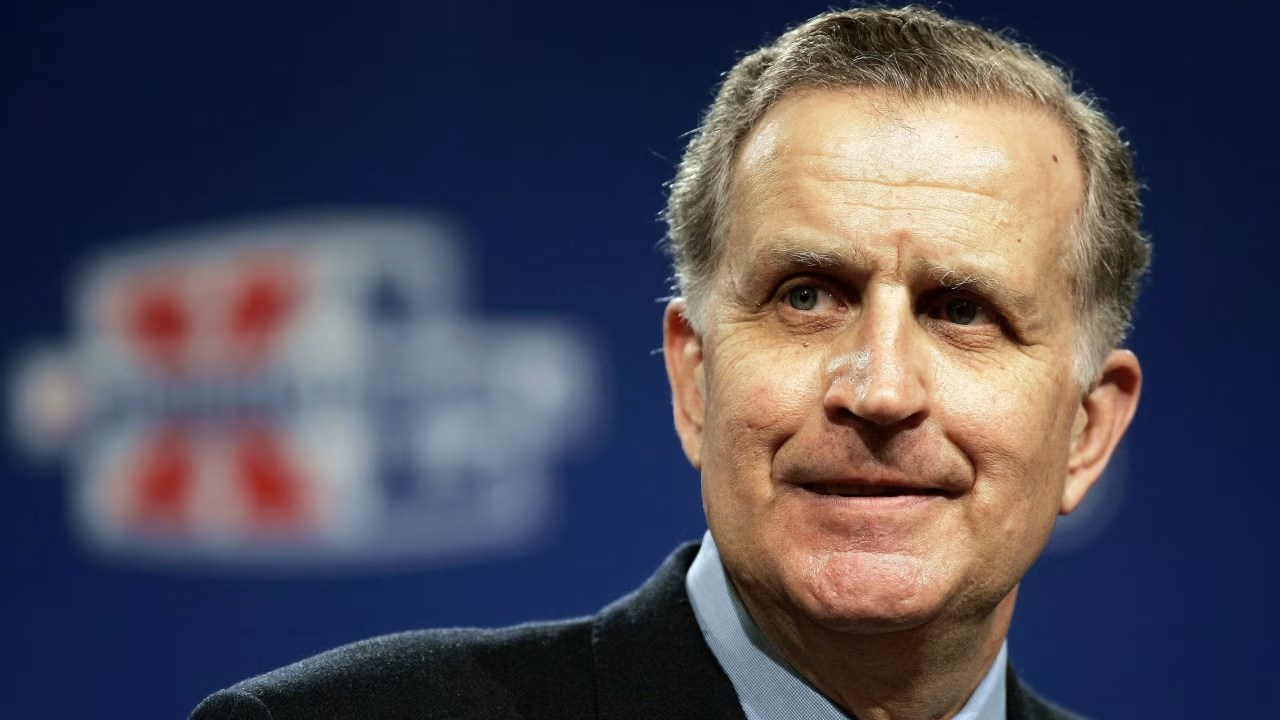
The National Football League (NFL) has lost one of its most influential figures. Paul Tagliabue, who served as commissioner from 1989 to 2006, passed away on Sunday at the age of 84 in Chevy Chase, Maryland. According to NFL spokesman Brian McCarthy, Tagliabue’s family confirmed that he died of heart failure after a long battle with Parkinson’s disease.
Tagliabue succeeded Pete Rozelle and led the league during one of its most stable and prosperous eras. His leadership was marked by 17 years of labor peace, record-breaking television deals, and an era of unprecedented growth for the NFL — a transformation that turned American football into a global entertainment powerhouse.
“He was the ultimate steward of the game — tall in stature, humble in presence, and decisive in his loyalty to the NFL,” said current commissioner Roger Goodell in a heartfelt statement. “I am forever grateful and proud to have Paul as my friend and mentor. I cherished the innumerable hours we spent together where he helped shape me not just as an executive, but as a man, husband, and father.”
ALSO READ : Wall Street Ends Mixed as Hopes Rise for U.S. Shutdown Deal — “Investors Breathe Cautious Relief Amid Economic Jitters”
A Legacy of Growth and Inclusion
Under Tagliabue’s watch, the NFL transformed into a multibillion-dollar empire. He negotiated landmark television contracts that funneled billions into the league’s coffers and oversaw the construction of numerous state-of-the-art stadiums across the country.
Perhaps one of his most defining contributions was the introduction of the Rooney Rule — a policy requiring all teams with head coaching vacancies to interview minority candidates. Initially designed to diversify leadership positions in football, the rule later expanded to include executive and front-office roles.
When Tagliabue took office in 1989, the NFL had just appointed its first Black head coach of the modern era. By 2006, that number had grown to seven — a milestone that reshaped the narrative around diversity in professional sports management.

Difficult Decisions and Defining Moments
Tagliabue’s tenure was not without its challenges. One of his most widely respected decisions came in the aftermath of the September 11, 2001 terrorist attacks, when he made the bold call to postpone NFL games scheduled for that weekend. The move drew praise and compassion from fans and players alike, especially when compared to Pete Rozelle’s controversial decision to proceed with games following President John F. Kennedy’s assassination in 1963.
At the time, Tagliabue said the choice was about honoring national grief — an action that demonstrated his empathy and moral clarity.
The Concussion Controversy
Despite his achievements, Tagliabue’s career also drew criticism, particularly regarding the NFL’s slow response to the growing concussion crisis. Early in his tenure, he downplayed concerns about the long-term impact of head injuries, once calling it “one of those pack-journalism issues.”
Years later, in 2017, Tagliabue publicly apologized for his remarks. “Looking back, it was not sensible language to use to express my thoughts at the time,” he admitted during an interview with Talk of Fame Network. “My intention was to highlight the need for better data — but my words caused misunderstanding. I regret that deeply.”
His admission came as the league faced increasing scrutiny over the handling of player safety, and his willingness to acknowledge past errors added a layer of humility to his complex legacy.
A Lasting Influence on the NFL
Beyond policies and profits, Tagliabue’s era was defined by an unwavering sense of balance between business and humanity. He implemented one of the strictest substance abuse policies in all major sports, championed community initiatives, and kept the league unified during periods that could have easily spiraled into chaos.
After retiring in 2006, he continued serving as an advisor and mentor to NFL executives and was inducted into the Pro Football Hall of Fame in 2020 as part of a special centennial class.
Goodell’s tribute summed up the sentiment shared across the league: “Paul Tagliabue didn’t just lead the NFL — he shaped it.”
His influence will continue to echo across stadiums, locker rooms, and boardrooms for decades to come.





Sports
Seahawks survive quarterback scare to beat Patriots 13-10: Drake Maye throws three picks in a dramatic fourth quarter…
The defending champion Seattle Seahawks overcame an early injury to quarterback Sam Darnold and a 10-point deficit as their defence produced three crucial fourth-quarter interceptions against Drake Maye.

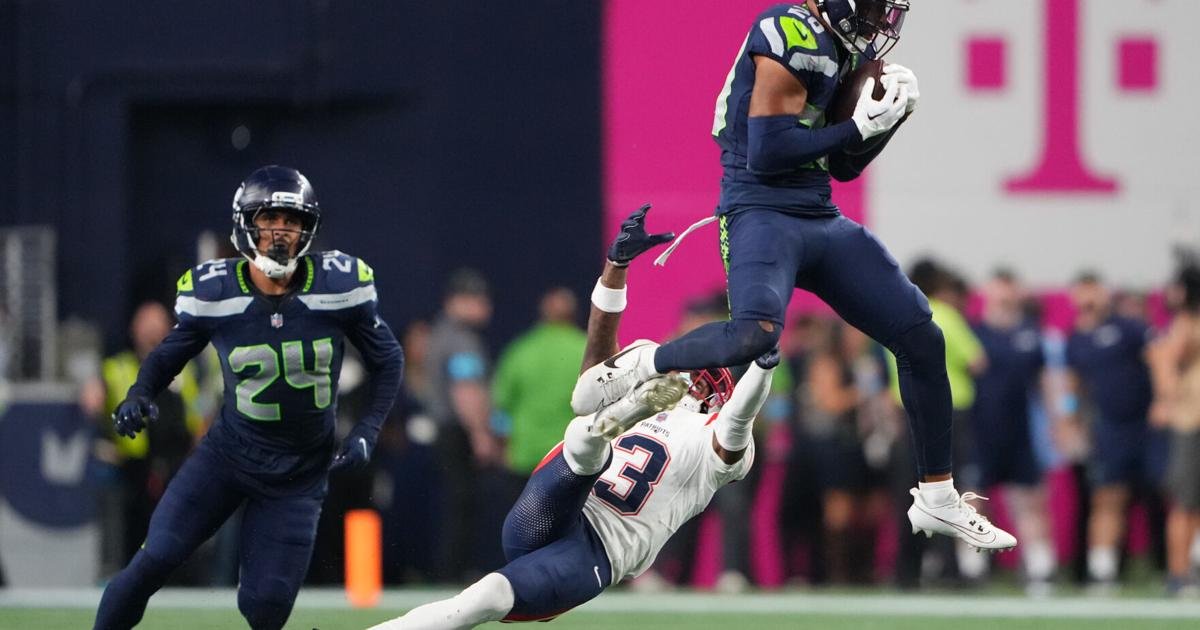
The Seattle Seahawks opened their title defence with a reminder that championship teams do not always need perfect performances to find a way to win.
In a tense opening-night clash against the New England Patriots, Seattle recovered from an early 10-0 deficit and the loss of starting quarterback Sam Darnold to secure a gritty 13-10 victory.
The game quickly turned into a test of resilience for the defending champions. Seattle’s offence struggled for long stretches, but a determined defensive performance and a late game-winning field goal ensured the Seahawks began the 2026 regular season with a victory.
And for Patriots quarterback Drake Maye, the final quarter became one he will want to forget.
Sam Darnold exits early as Seahawks face immediate adversity
Seattle’s night took an unexpected turn almost immediately when starting quarterback Sam Darnold was forced out after the team’s first offensive series.
The Seahawks suddenly had to turn to backup quarterback Drew Lock, putting additional pressure on an offence that was already struggling to find rhythm.
For much of the first half, Seattle could not generate consistent momentum. The Seahawks either punted or saw the half end on each of their first six possessions, allowing New England to build a 10-0 advantage.
But the defending champions refused to panic.
Drew Lock finds Jaxon Smith-Njigba as Seattle fights back
The breakthrough finally came in the second half.
Backup quarterback Drew Lock connected with reigning Offensive Player of the Year Jaxon Smith-Njigba for a touchdown that brought the Seahawks back into the contest.
Smith-Njigba was the clear standout for Seattle’s offence, finishing the game with eight receptions for 122 yards and a touchdown.
His contribution was particularly important considering how quiet the rest of Seattle’s receiving group was. The remaining Seahawks pass catchers combined for just nine receptions and 78 yards.
Rookie running back Jadarian Price also provided useful support on the ground, rushing for 52 yards on 10 carries.
Seattle finished with only 285 total offensive yards, but on a difficult night, efficiency in the biggest moments proved more valuable than spectacular numbers.
Jason Myers delivers the decisive kick
With the game hanging in the balance, veteran kicker Jason Myers delivered when Seattle needed him most.
Myers converted two field goals during the contest, including the decisive kick with 5:50 remaining, giving the Seahawks the lead they would ultimately protect.
From that point, the pressure shifted completely onto the Patriots and their young quarterback.
And Seattle’s defence took over.
Three fourth-quarter interceptions change everything
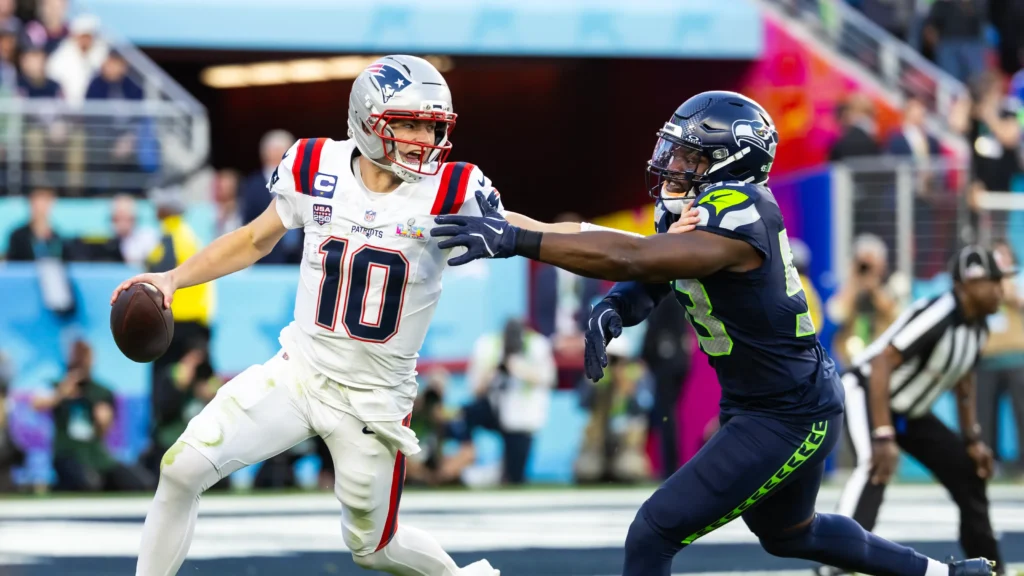
The Patriots still had opportunities to win the game, but Drake Maye endured a disastrous fourth quarter.
Seattle intercepted him on three consecutive possessions, completely changing the complexion of the closing stages.
The final turnover was the most dramatic.
With New England threatening to produce a late winning drive, Josh Jobe intercepted Maye in the end zone with just 21 seconds remaining.
That play effectively sealed the victory and sent Seattle into Week 2 with a hard-earned win.
The Seahawks’ defensive statistics told the story of the night: three interceptions, three sacks, nine tackles for loss and six pass breakups.
It was a championship-level response from a defence that repeatedly stepped up when the game was on the line.
Seattle’s defence makes an early statement
The Seahawks may not have produced their most impressive offensive performance, but their defence showed why the team remains one of the sides to watch this season.
Holding the New England Patriots to 277 total yards while forcing three crucial turnovers in the final quarter was no small achievement.
More importantly, Seattle demonstrated that it can survive adversity.
Losing a starting quarterback early in the game could have easily derailed the defending champions’ opening night. Instead, the Seahawks relied on their backup quarterback, their star receiver, their kicker and, above all, their defence.
That combination was enough.
What comes next for the Seahawks?
The victory gives the Seattle Seahawks an early advantage as they begin another campaign with championship expectations.
Seattle will next face the Arizona Cardinals in Week 2, where the team will hope for more clarity regarding the condition of Sam Darnold.
For now, though, the defending champions have made their first statement of the season.
It was not pretty. It was not easy.
But when the fourth quarter demanded big plays, Seattle’s defence delivered three of them.
And that was enough to turn a difficult opening night into a 13-10 victory.
Sports
“I’m Tired of Letting the Team Down”: Jacob Webb’s Painful Admission After Cubs Blow Another Late Lead
The Chicago Cubs suffered another heartbreaking defeat against the Milwaukee Brewers as Jackson Chourio’s dramatic ninth-inning home run exposed a growing bullpen problem at the worst possible time.

The Chicago Cubs are facing an uncomfortable question as the postseason race heats up: who can they trust to protect a late lead?
For the second consecutive game, Chicago’s bullpen failed to shut the door against its NL Central rival, the Milwaukee Brewers. This time, the Cubs suffered a painful 4-3 defeat in 10 innings, after a dramatic late collapse turned another winnable game into a frustrating loss.
At the centre of the disappointment was Jacob Webb, who surrendered a game-tying home run to Brewers star Jackson Chourio with two outs in the ninth inning.
And after the game, Webb did not hide his emotions.
“I’m tired of letting the team down, to be completely honest.”
It was a brutally honest moment from a pitcher who has suddenly found himself under enormous pressure.
Jackson Chourio Changes the Game in One Swing
The Cubs were just one out away from victory when Chourio stepped up and delivered the moment Milwaukee needed.
The Brewers outfielder connected against Webb to tie the game late, sending the contest into extra innings and shifting all the momentum toward the home side.
Milwaukee eventually completed the comeback in the 10th inning when Luis Lara delivered an RBI single to secure the 4-3 victory.
For the Brewers, it was another example of their ability to fight until the final out. For Chicago, however, it was another painful reminder that their bullpen problems are becoming impossible to ignore.
Jacob Webb Faces a Difficult Stretch
Webb has been handed an increasingly important role in the Cubs bullpen this season. Originally signed on a one-year deal worth $1.5 million, he was expected to provide valuable depth in the middle innings.
Instead, circumstances pushed him into closing games.
For much of the season, he handled the responsibility well. Recently, though, things have changed dramatically.
Webb has now allowed three late-inning home runs across his last six appearances, and Chicago has lost each of those games.
The frustration was clear after the latest defeat, with Webb describing his recent performances in particularly harsh terms.
Still, despite the disappointment, the pitcher insisted that he has not lost faith in himself or the team.
“I think we’re going to get back on track. I have confidence in myself. I have confidence in this team, this bullpen.”
The problem for the Cubs is that confidence alone will not solve the issue as October approaches.
Cubs Bullpen Numbers Raise Serious Concerns
Chicago’s relief pitching has struggled collectively since mid-August.
The Cubs bullpen ranks 23rd in MLB in ERA during that period and has allowed 16 home runs, among the highest totals in baseball over the same stretch.
The situation has been made even more difficult by injuries to key relievers.
Former closer Daniel Palencia is still attempting to regain his rhythm after an extended arm injury, while trade acquisition Ryan Zeferjahn has also struggled since arriving from the Los Angeles Angels.
The result is a constantly changing bullpen picture that has left manager Craig Counsell searching for reliable answers.
“We have eight guys down there,” Counsell said after the loss. “Those are the guys we’re going to rely on. We have to figure it out.”
That statement perfectly captures Chicago’s current situation.
The Cubs do not have the luxury of waiting for a completely new solution. The pitchers already in the clubhouse must find a way to perform.

Craig Counsell Faces a Tough October Decision
The biggest concern may be the closer role.
Webb had been doing enough earlier in the season to earn important late-game opportunities. But his recent struggles have raised doubts about whether he can remain the Cubs’ trusted option when the pressure reaches another level in postseason baseball.
Counsell has also experimented with different approaches.
In the previous game, he left starter Matthew Boyd in for the eighth inning rather than immediately turning to the bullpen. That decision also failed to produce the desired result.
“It hurts when it happens,” Counsell admitted. “It hurts when it happens consecutively.”
For a team fighting for playoff positioning, consecutive bullpen collapses can quickly become much more than ordinary regular-season losses.
Brewers Continue Their Historic Season
While the Cubs were left dealing with another late-game nightmare, the Brewers celebrated another remarkable comeback.
Milwaukee recorded its 90th win of the season, becoming the fastest team in franchise history to reach that milestone.
The Brewers have now won four games this season after trailing by two or more runs in the ninth inning or later — an impressive figure considering the franchise had managed only three such victories across the previous three seasons combined.
Chourio, whose ninth-inning blast completely changed the game, said the intensity of the moment helped elevate his performance.
The Brewers could now secure a playoff berth as early as Wednesday, adding another milestone to what has already been an outstanding season.
Cubs’ Playoff Race Gets Even Tighter
For Chicago, the timing of these struggles could hardly be worse.
The Cubs missed an opportunity to move ahead of the Philadelphia Phillies for the top National League Wild Card position.
Meanwhile, victories for the San Diego Padres and Arizona Diamondbacks tightened the race for the available playoff places.
What once looked like a relatively comfortable postseason push could quickly turn into a fierce battle if Chicago continues to surrender late leads.
The Cubs still have enough talent to reach October. Their starting pitching has delivered important performances, and the lineup remains capable of winning difficult games.
But baseball’s biggest games are often decided in the final innings.
And right now, that is exactly where the Cubs appear most vulnerable.
For Jacob Webb and the rest of the bullpen, the message is simple: the margin for error is disappearing fast.
The next few weeks could determine whether Chicago enters the postseason ready to compete — or spends the winter wondering how so many late leads slipped away.
Sports
Michigan State Beats Toledo 30-20, But Special Teams Steal the Spotlight in Spartans’ Season Opener
The Spartans controlled the clock for more than 43 minutes and showed flashes of promise on offense, but injuries and inconsistency made it clear that there is still plenty of work ahead.
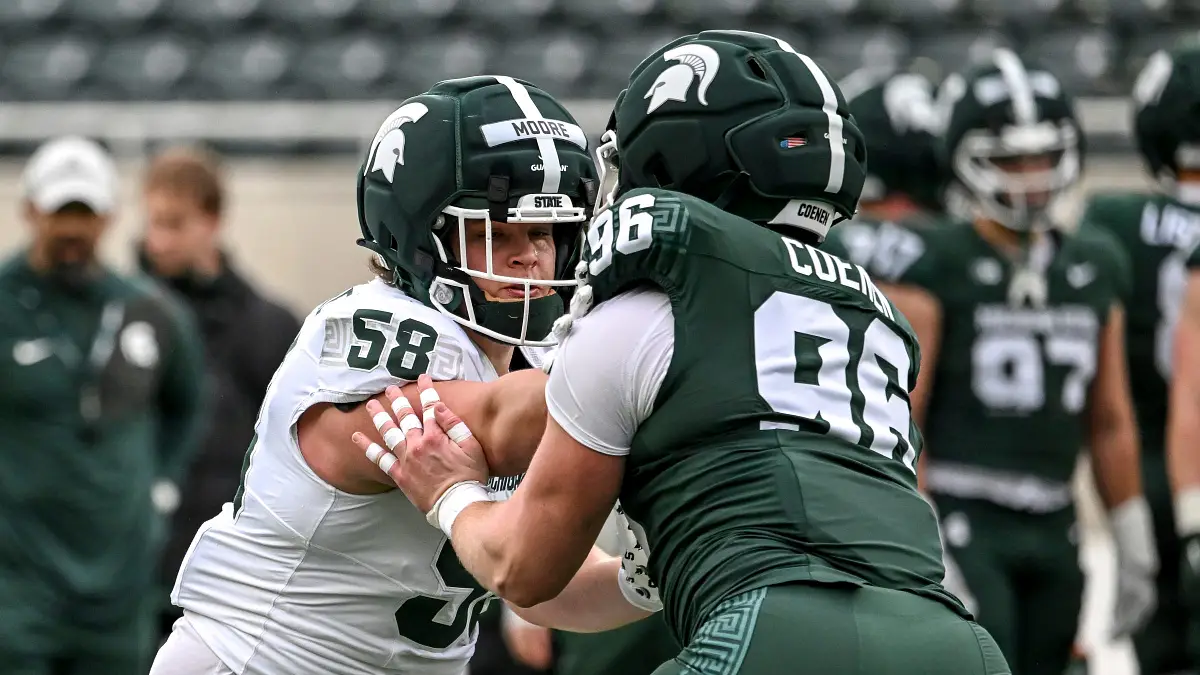
Michigan State Spartans football opened its campaign with a 30-20 victory over the Toledo Rockets at Spartan Stadium on Friday night, but the final score does not tell the entire story.
The Spartans got the win, and that is ultimately what matters. However, the performance revealed a team that still looks very much like a work in progress.
There were encouraging moments on offense, particularly in the running game. There were also frustrating stretches, injuries and signs that Michigan State still has plenty to clean up as the season moves forward.
One area, however, proved particularly important in helping the Spartans get across the finish line.
Special teams delivered when Michigan State needed it most.
Michigan State controls the clock but offense remains a work in progress
The most striking statistic from the game may have been Michigan State’s dominance in time of possession.
The Spartans held the football for an incredible 43 minutes and 16 seconds, giving their offense plenty of opportunities to control the rhythm of the game.
At times, the unit looked capable of dominating.
The running game, in particular, showed noticeable improvement early in the contest.
Cam Edwards, the transfer running back from UConn, quickly demonstrated why he could become an important weapon for the Spartans.
Edwards displayed power, vision and the ability to make sharp cuts behind an offensive line that has undergone significant changes.
A strong start for the rebuilt offensive line
Michigan State’s offensive front gave fans plenty to watch during the opening quarter.
The revamped line featured players including Ben Murawski at left tackle, Conner Moore at left guard and Trent Fraley at center.
Together, the group helped Michigan State establish momentum on the ground.
The Spartans piled up 66 rushing yards and a touchdown in the first quarter, offering an encouraging glimpse of what the offense could become.
For a team looking to improve its physicality and consistency, the early success was an important positive.
But then the game began to change.
Injuries interrupt Michigan State’s momentum
Just as the Spartans appeared to be finding their rhythm, injuries started creating problems.
Murawski left the game.
Then backup running back Marvis Parrish exited.
And then Edwards also went off injured.
The disruption had a visible impact on Michigan State’s rushing attack.
After gaining 66 yards on the ground during the opening quarter, the Spartans managed only 84 rushing yards over the final three quarters.
Edwards eventually returned late in the game and helped Michigan State protect its advantage and close out the victory.
Still, the sequence served as a reminder of how quickly momentum can disappear in college football.

Special teams become the difference-maker
While Michigan State’s offense showed both promise and inconsistency, the special teams unit emerged as one of the biggest reasons the Spartans were able to secure the win.
The 30-20 result may have looked comfortable by the final whistle, but Toledo provided enough resistance to keep Michigan State from completely relaxing.
That made the contributions outside the traditional offense and defense even more valuable.
Special teams often receive little attention until something goes wrong.
On Friday night, Michigan State’s work in that area helped make sure the Spartans had enough control to finish the job.
It was the kind of performance that may not always dominate the highlight reels—but it can absolutely decide football games.
A win is a win, but bigger tests are coming
The victory gives Michigan State a positive start, but the Spartans will know that improvement is still necessary.
Controlling the football for more than 43 minutes is impressive. The early success of the running game is encouraging. The rebuilt offensive line also provided reasons for optimism.
But injuries exposed the importance of depth, while the offense’s inability to maintain its early rushing momentum showed that consistency remains a major challenge.
For now, though, Michigan State can take the result.
A 30-20 victory over Toledo is in the books, and the Spartans have started the season with a win.
The offense showed potential.
The running game flashed improvement.
And when the game demanded important contributions, Michigan State’s special teams stepped up to save the day.
That may not be the perfect formula for a championship contender just yet—but for a team still finding its identity, it was enough to begin the season on the right side of the scoreboard.

‘Summer House’ Cast Left Speechless by Emmy Nomination… “It Feels Surreal” After a Decade of Reality TV

Annette Bening Breaks Silence on ‘Yellowstone’ Finale: “Don’t Call Her the Dutton Ranch Villain…” Here’s Why Fans May Have Misjudged Her

HBO Chief Reacts to ‘Heated Rivalry’ Emmy Snub While Celebrating Network’s Major Wins

‘Supergirl’ Singer Surprised by Viral Response to Jimmy Eat World’s ‘The Middle’ Cover

Sky’s $2.1 Billion ITV Deal Could Redraw European TV… Is the ‘Get Big or Get Left Behind’ Era Finally Here?

1-Iran Issues Dire Warning to Israel and Defies Trump on Nukes: “We’re Ready to Strike Deep Inside”

Sen. Elizabeth Warren Calls It a ‘Cesspool of Corruption’ — Here’s Why Senators Are Now Fighting Back Against the DOJ’s Live Nation Deal That Left Every Fan Betrayed…

Donald Trump’s net worth reveals the fortune behind the former US President and business mogul

“Tomás Rodríguez Net Worth 2025: Panama’s Gold Cup Goal‑Machine’s Surprising Fortune Revealed”

“She Never Made It Out…” Albany House Fire Claims Woman’s Life as Family Pleads for Help to Bring Her Home

Miss Jamaica Suffers Terrifying Fall Off Miss Universe Stage; Rushed to Hospital on Stretcher in Viral Video

Moana Live-Action Teaser Sparks Outrage as Fans Call Disney’s Move a ‘Clear Money Grab’ — What Went Wrong?

Ryan Gosling’s Project Hail Mary Trailer Stuns Fans with a Mysterious Alien Ally and a Mission That Could Save Earth

Apple delays Jessica Chastain thriller The Savant about domestic extremism after recent US violence

Avatar 3, Fire and Ash trailer reveals Jake Sully’s family facing terrifying new Na’vi enemies with deadly fire powers
-

 Entertainment1 week ago
Hollywood’s New Box-Office Saviours Revealed: How Curry Barker Joined Guillermo del Toro’s Elite Circle
-

 Entertainment1 week ago
Why Is America Celebrating Dolly Parton Day on 9/25? The Sweet Meaning Revealed
-

 Entertainment4 days ago
Summer House Cast Celebrates First Emmy Nomination, Calls It Surreal
-

 Entertainment1 week ago
Creative Arts Emmys Night Two Winners: ‘Widow’s Bay’ Dominates, but Rob Reiner’s Emotional Victory Steals the Spotlight
-

 Tech6 days ago
Apple unveils iPhone 18 Pro series with a camera upgrade users have waited years for: Here’s what changed
-

 Entertainment4 days ago
‘The Gentlemen’ Season 2 Ending Explained by Theo James
-

 Entertainment4 days ago
Beyoncé Ends Two-Year Music Hiatus With ‘Morning Dew’… Fans Wonder If a Bigger Announcement Is Coming
-

 Entertainment4 days ago
Why Is America Turning 9/25 Into Dolly Parton Day? The Touching Meaning Behind the Date Revealed