
Entertainment
Susan Sarandon Reveals She Was Told ‘Not to Be Hired’ Even Recently After Gaza Stance: ‘It Became Impossible for Me to Even Be on Television…’
The Oscar-winning star of Thelma & Louise says Hollywood shut its doors after she called for a Gaza ceasefire — and reveals the surprising place she found work when America wouldn’t have her.

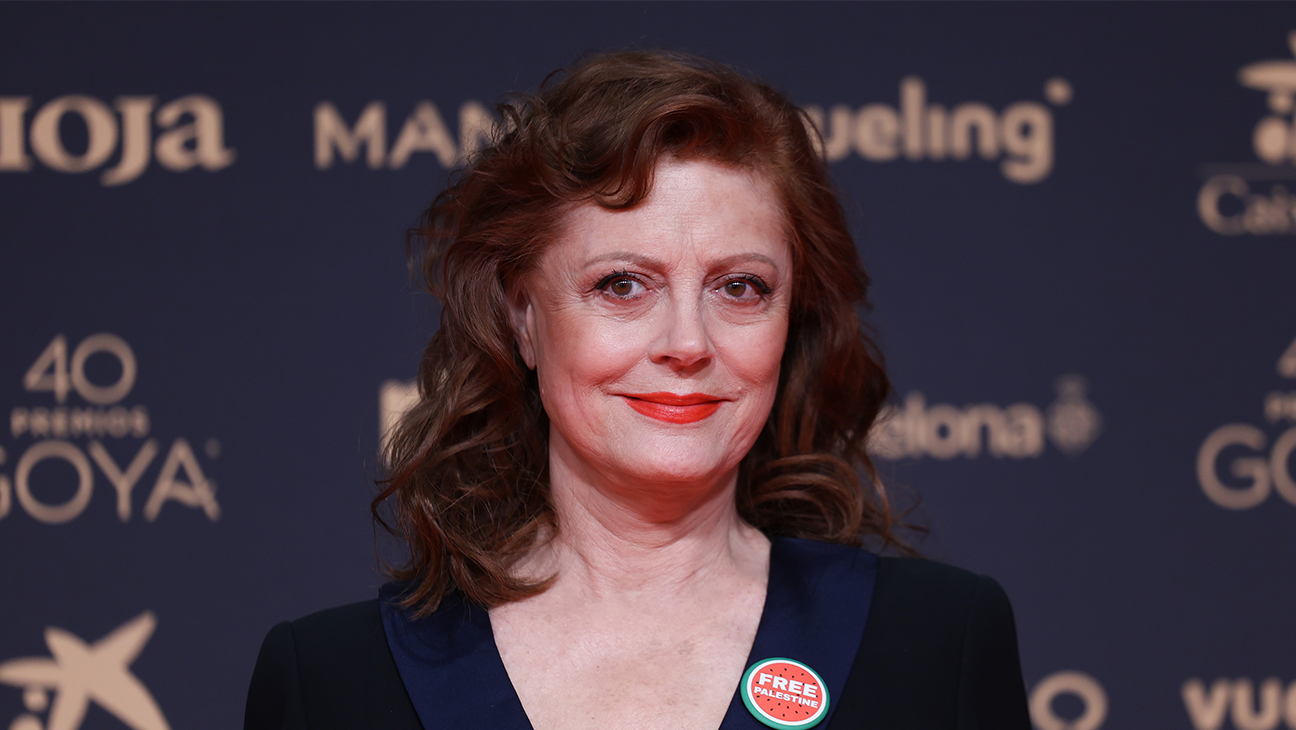
There’s a version of this story where Susan Sarandon simply fades quietly into the margins of Hollywood — too controversial, too outspoken, too much. But Sarandon has never been that kind of woman. And so instead, she walked into a room in Barcelona, accepted an international honour, and told the truth about what speaking up actually cost her.
The cost, it turns out, was steep.
The Agency Firing That Started It All
In November 2023, Sarandon was dropped by United Talent Agency (UTA) — one of Hollywood’s most powerful talent firms — following remarks she made about the Israel-Gaza war, in which she called for a ceasefire. The move sent a chilling signal through the entertainment industry: that even an Academy Award-winning actress with five decades of credits was not immune to professional consequences for political speech.
At the time, the industry largely moved on. Sarandon didn’t.
On February 27, ahead of receiving the prestigious International Goya Award at the Spanish Film Academy‘s Goya Awards ceremony in Barcelona, she sat down for a discussion — and for the first time in extended public remarks, laid out exactly what the fallout looked like from the inside.
ALSO READ : “She Never Made It Out…” Albany House Fire Claims Woman’s Life as Family Pleads for Help to Bring Her Home
“I was fired by my agency, specifically for marching and speaking out about Gaza, for asking for a ceasefire,” she said. “It became impossible for me to even be on television. I don’t know lately if it’s changed. I couldn’t do any major film or anything connected with Hollywood.”
Let that land for a moment. One of the most recognisable actresses in American cinema — the woman who gave us Thelma & Louise, who won an Oscar for Dead Man Walking — couldn’t get on television. Couldn’t get a Hollywood film. Because she asked for a ceasefire.
Where She Found Work — and Who Was Warned Away From Her
What Sarandon shared next was both quietly triumphant and deeply troubling in equal measure.
“I found agents ultimately in England and in Italy, and I work there. I just did a film in Italy, and I did a play at the Old Vic for a number of months,” she said.
The Old Vic — one of the most storied theatres in the English-speaking world, in London — gave her a stage when Hollywood wouldn’t. An unnamed Italian director cast her in a film. But even that came with a shadow.
“I know this Italian director that just hired me — he was told not to hire me, so that’s still recently. He didn’t listen, but they had that conversation.”
Read that again. Someone, somewhere, was making calls. An Italian director, working outside the American studio system, was still being advised against casting Susan Sarandon. She didn’t name who made that call. She didn’t need to. The implication was clear enough.
“Right now, I kind of specialize in tiny films with directors who have never directed, in independent films,” she added — with the wry pragmatism of someone who has made peace with a situation she never asked for.
The Moment She Got Emotional
The discussion shifted in tone when Sarandon began speaking about Spain — and the emotion she had clearly been carrying for some time began to surface.
She praised Spanish Prime Minister Pedro Sánchez and Ireland’s leadership for their vocal support of Gaza at a time when the American political and media landscape, in her view, has remained largely silent or complicit.
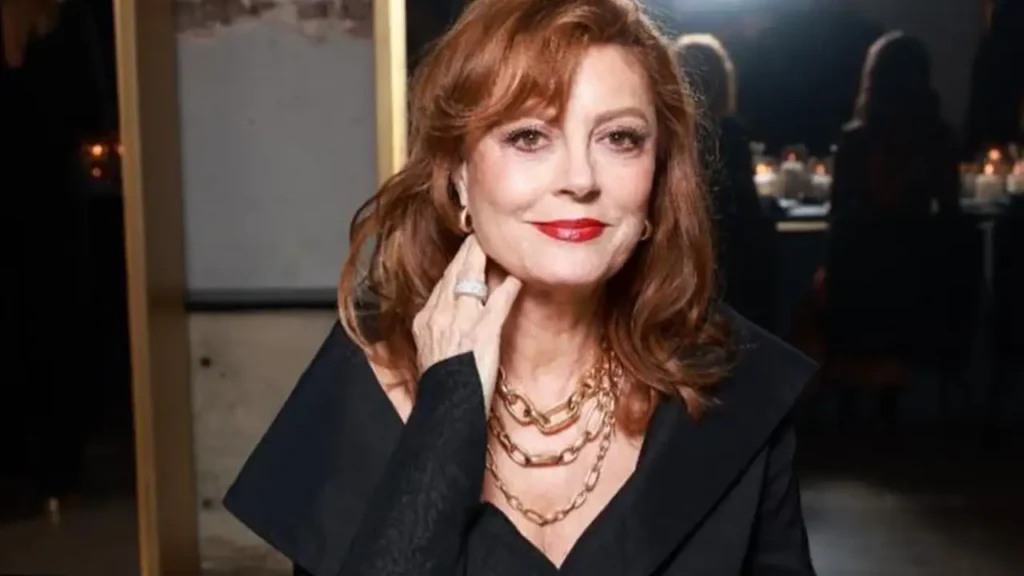
She also singled out Javier Bardem — the Oscar-winning Spanish actor and outspoken advocate — by name.
“In a place where you feel repression and censorship, to see Spain and to see the president and what he says and the support that he’s giving about Gaza, and to have actors like Javier Bardem come forward with such a strong voice, is so important to us in the United States,” she said.
Then came the line that perhaps best captures the isolation she — and many others in the American creative community — have quietly felt:
“When you turn on the TV and you see how strong Spain is and how clear that you are morally about these issues, it makes you feel less alone and it makes you feel that there is hope because of you all and the fact that you just don’t hear that on television in the United States. You don’t know that that exists.”
It was not the speech of someone bitter. It was the speech of someone exhausted — and genuinely moved to be in a room where her views were not treated as career-ending.
A Bigger Question Hollywood Hasn’t Answered
Sarandon’s experience sits at the centre of an uncomfortable conversation the American entertainment industry has largely refused to have publicly: who decides which political opinions are acceptable, and who enforces those decisions?
She is far from alone. Several artists — actors, writers, directors — have spoken privately about self-censorship and professional fear in the wake of the Gaza conflict. Sarandon is simply the most prominent, and one of the very few, to say it openly and on the record.
UTA has not publicly addressed the specifics of her remarks. Hollywood, as an institution, has offered no reckoning.
Meanwhile, Sarandon — Academy Award winner, activist, and now recipient of the International Goya Award — is making independent films with first-time directors in Europe.
She doesn’t sound broken by it. If anything, she sounds like someone who has found a way to keep making art in spite of the walls built around her. But the walls are real. And the fact that they exist, for her, for what she said, is something the industry would rather you forget.
She’d rather you didn’t.




Entertainment
Hollywood Stars or Dancing Chaos? Marek Eben Opens Up on Hosting KVIFF Ceremonies: ‘Which One Is More Stressful… I Still Can’t Decide’
Ahead of Karlovy Vary’s landmark edition, Czech TV icon Marek Eben reflects on decades of hosting, celebrity encounters, and unforgettable festival moments.

As the Karlovy Vary International Film Festival prepares for its highly anticipated 60th edition, Czech television presenter, musician, and long-time host Marek Eben has opened up about his unique journey inside one of Europe’s most prestigious film events.
Known for his calm stage presence and sharp wit, Eben has become the face of KVIFF ceremonies — welcoming Hollywood legends, global filmmakers, and international guests year after year. But when asked about the most stressful part of his career, his answer comes with a smile and a surprising comparison.
Between hosting glamorous red-carpet ceremonies and presenting the popular Czech show “Dancing With the Stars”, Eben admits the stress levels are not as predictable as one might think.
ALSO READ : Sen. Elizabeth Warren Calls It a ‘Cesspool of Corruption’ — Here’s Why Senators Are Now Fighting Back Against the DOJ’s Live Nation Deal That Left Every Fan Betrayed…
“HOLLYWOOD LEGENDS OR LIVE TELEVISION CHAOS?”
Reflecting on his long career, Eben recalled how he once had the chance to meet legendary actor Gregory Peck during the festival’s earlier years — a moment he still describes as surreal.
Over time, KVIFF has hosted some of the biggest names in global cinema, turning Karlovy Vary into a summer hub for film lovers, critics, and A-list talent.
Yet despite the glamour, Eben suggests that live television may still hold the edge when it comes to pressure. Hosting unpredictable performances, live audiences, and tight production timing often creates a different kind of intensity compared to film festival ceremonies.
A FESTIVAL WITH GLOBAL REACH
The Karlovy Vary festival has grown significantly over the decades, evolving into a cultural landmark that bridges Eastern European cinema with Hollywood and international filmmaking.

This year’s edition marks a milestone — 60 editions across 80 years — reinforcing its legacy as one of Europe’s most respected film festivals.
Eben’s role as host has helped maintain the festival’s identity, balancing sophistication with warmth and humor.
DREAM INTERVIEWS AND UNFULFILLED WISHES
Looking ahead, Eben also shared that there are still a few names he would love to interview — though he keeps them closely guarded. His curiosity reflects the spirit of the festival itself, where unexpected conversations often become the most memorable moments.
From red carpets to live television chaos, Eben’s career highlights the unpredictable nature of entertainment — where elegance and stress often coexist behind the scenes.
As Karlovy Vary prepares for another star-studded year, one thing remains clear: whether it’s Hollywood icons or live dance floors, Marek Eben continues to navigate both worlds with remarkable ease.
Entertainment
‘A Lion at My Back’: Teenage Asylum Seeker & Cypriot Woman Form Unlikely Bond in Karlovy Vary Drama That’s Turning Heads…
Tonia Mishiali’s new film explores how family can emerge in unexpected places as it premieres in the Crystal Globe competition at Karlovy Vary Film Festival.

A deeply emotional and quietly powerful story is set to take center stage at this year’s Karlovy Vary International Film Festival, where Cypriot filmmaker Tonia Mishiali returns with her second feature film, “The Lion at My Back.”
Premiering in the prestigious Crystal Globe competition, the film has already begun drawing attention for its sensitive portrayal of an unexpected relationship between a teenage asylum seeker and a Cypriot woman in her 40s.
At its heart, the film explores how emotional bonds can form in the most unlikely circumstances — challenging traditional definitions of family, belonging, and survival.
A STORY ROOTED IN HUMAN CONNECTION
“The Lion at My Back” follows two individuals from vastly different worlds: a young asylum seeker navigating uncertainty and displacement, and a middle-aged Cypriot woman grappling with her own personal struggles.
Despite their differences, the two characters slowly build a fragile but meaningful connection, discovering shared vulnerabilities that transcend language, nationality, and age.
ALSO READ : Sen. Elizabeth Warren Calls It a ‘Cesspool of Corruption’ — Here’s Why Senators Are Now Fighting Back Against the DOJ’s Live Nation Deal That Left Every Fan Betrayed…
The film’s premise highlights a growing theme in contemporary European cinema — the intersection of migration, identity, and human empathy.
MISHIALI’S CINEMATIC VOICE
Director Tonia Mishiali has been steadily gaining recognition for her intimate storytelling style, often focusing on emotional realism and socially relevant narratives.
Her latest work continues that trajectory, offering a grounded yet poetic examination of human relationships formed under pressure. The film’s narrative suggests that even in moments of displacement and isolation, connection can emerge in unexpected ways.
Festival programmers at Karlovy Vary have praised the film’s emotional depth and its ability to balance social commentary with personal storytelling.

A FESTIVAL KNOWN FOR RISK-TAKING CINEMA
The Karlovy Vary International Film Festival, one of Europe’s most respected film events, has long been a platform for bold, independent voices in global cinema. The inclusion of Mishiali’s film in the Crystal Globe competition underscores its artistic ambition and thematic relevance.
Early reactions from festival insiders suggest that the film resonates strongly with contemporary global issues — particularly migration and human resilience.
FAMILY BEYOND BLOODLINES
At its core, “The Lion at My Back” suggests that family is not always defined by biology or tradition. Instead, it can emerge through shared experience, empathy, and survival.
As the film prepares for its world premiere, it stands as a reminder of cinema’s unique ability to reflect human complexity — and to find tenderness in unlikely places.
For audiences at Karlovy Vary, it may be one of the festival’s most quietly powerful entries.
Entertainment
Virginie Efira to Be Honoured at Locarno… ‘Bold Yet Thoughtful’ Star Set for Prestigious Leopard Club Award
The Locarno Film Festival celebrates the acclaimed Belgian-French actress for her evolving cinematic voice, calling her “instinctive yet ironic” in a glowing tribute.

Acclaimed actress Virginie Efira is set to receive one of European cinema’s most respected honours — the Leopard Club Award at the prestigious Locarno Film Festival in Switzerland.
The announcement has been met with widespread appreciation across the film industry, with festival organizers praising Efira for her distinctive artistic presence and evolving contribution to contemporary cinema.
Describing her body of work, the festival highlighted her as “bold yet thoughtful, instinctive yet ironic,” noting that she brings a fresh and constantly evolving perspective to modern filmmaking.
A CAREER DEFINED BY RANGE AND RISK
Over the years, Efira has built a reputation for choosing complex and emotionally layered roles, moving seamlessly between drama, romance, and psychological storytelling. Her performances have often been noted for their emotional authenticity and understated intensity.
ALSO READ : Sen. Elizabeth Warren Calls It a ‘Cesspool of Corruption’ — Here’s Why Senators Are Now Fighting Back Against the DOJ’s Live Nation Deal That Left Every Fan Betrayed…
From independent European films to internationally recognized productions, she has become one of the most versatile voices in modern French-language cinema.
Her work has also contributed to strengthening the global visibility of European storytelling, particularly through collaborations with acclaimed directors across France and Belgium.
LOCARNO’S TRIBUTE TO CINEMATIC EVOLUTION
The Locarno Film Festival, known for celebrating auteur-driven cinema and artistic experimentation, has a long tradition of honoring performers who redefine screen language.
This year’s Leopard Club Award selection reflects that tradition, with Efira recognized not just for her performances, but for her influence on contemporary cinematic expression.

Festival curators emphasized that her presence on screen continues to “reinvent itself,” adapting to new storytelling styles while maintaining a strong emotional core.
EUROPEAN CINEMA’S CONTINUING GLOBAL INFLUENCE
Efira’s recognition comes at a time when European cinema is experiencing renewed global attention, particularly through streaming platforms and international co-productions.
Her award underscores how actors outside Hollywood continue to shape global film culture through originality and artistic risk-taking.
As anticipation builds for the ceremony, the honour places Virginie Efira among a select group of performers whose work transcends borders — both geographically and creatively.
For Locarno, it is not just an award. It is a celebration of an artist whose career continues to evolve with quiet power and striking consistency.

Hollywood Stars or Dancing Chaos? Marek Eben Opens Up on Hosting KVIFF Ceremonies: ‘Which One Is More Stressful… I Still Can’t Decide’

‘A Lion at My Back’: Teenage Asylum Seeker & Cypriot Woman Form Unlikely Bond in Karlovy Vary Drama That’s Turning Heads…

Virginie Efira to Be Honoured at Locarno… ‘Bold Yet Thoughtful’ Star Set for Prestigious Leopard Club Award

‘I’m Done With the GOP’: Tucker Carlson’s Explosive Split With Trump Era Republicans Sends Shockwaves Through MAGA Base…

UFC Fighter Josh Hokit Defends ‘Michelle Obama Comment’: ‘It Was Meant as a Compliment… Freedom of Speech Is the Point’

1-Iran Issues Dire Warning to Israel and Defies Trump on Nukes: “We’re Ready to Strike Deep Inside”

Donald Trump’s net worth reveals the fortune behind the former US President and business mogul

“She Never Made It Out…” Albany House Fire Claims Woman’s Life as Family Pleads for Help to Bring Her Home

“Tomás Rodríguez Net Worth 2025: Panama’s Gold Cup Goal‑Machine’s Surprising Fortune Revealed”

Younghoe Koo Explains Botched Field Goal After Slip: “The Ball Was Moving So I Pulled Up”

Miss Jamaica Suffers Terrifying Fall Off Miss Universe Stage; Rushed to Hospital on Stretcher in Viral Video

Moana Live-Action Teaser Sparks Outrage as Fans Call Disney’s Move a ‘Clear Money Grab’ — What Went Wrong?

Ryan Gosling’s Project Hail Mary Trailer Stuns Fans with a Mysterious Alien Ally and a Mission That Could Save Earth

Apple delays Jessica Chastain thriller The Savant about domestic extremism after recent US violence

Avatar 3, Fire and Ash trailer reveals Jake Sully’s family facing terrifying new Na’vi enemies with deadly fire powers
-

 Entertainment1 week ago
BIFAN Unveils Its Most Unpredictable Lineup Yet: Why ‘Obsession’ and ‘Teenage Sex and Death at Camp Miasma’ Are Already Turning Heads…
-

 Technology1 week ago
YouTube says ‘enough is enough’… Faceless AI Channels lose reach as algorithm shift hits ‘AI slop’ wave
-

 Entertainment1 week ago
Why Did Vasana Montgomery Leave ‘Love Island USA’? Her First Public Statement Reveals More…
-
 Entertainment1 week ago
Will BTS Reunite on Stage? Ariana Grande, Bad Bunny, Olivia Rodrigo and The Weeknd Fuel 2026’s Most Anticipated Concert Tour Race…
-

 Entertainment1 week ago
‘There’s No Secret Formula’: Gail Simmons Opens Up About How ‘Top Chef’ Winners Are Really Chosen… and Why Fans Often Get It Wrong
-

 Entertainment1 week ago
“After ‘Backrooms’ Shocked Hollywood… These YouTubers Could Be the Next Box Office Goldmine”
-

 Sports1 week ago
New York Knicks Set for Special ‘Tonight Show’ Episode… Jalen Brunson, Karl-Anthony Towns & Stars Join Jimmy Fallon in Surprise NBA Crossover
-

 Entertainment1 week ago
A New Door for Writers? Roadmap Writers and Aevitas Launch Program That Could Change How Emerging Authors Break Into Publishing