
Business
Elon Musk’s $1 Trillion Gamble Approved… Tesla Investors Say ‘Yes’ to the Most Expensive Bet in Corporate History

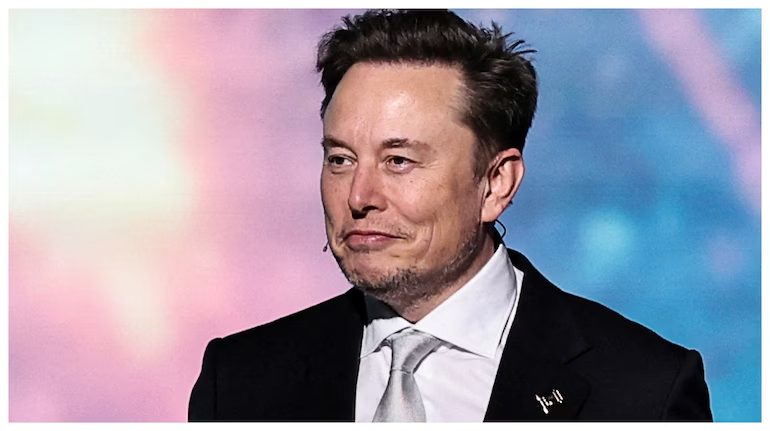
In a move that cements Elon Musk’s status as both the most powerful and polarizing CEO in modern history, Tesla, Inc. shareholders have overwhelmingly approved his nearly $1 trillion compensation plan, giving him control over up to 25% of Tesla’s shares if the company hits a list of unprecedented performance milestones.
Announced at Tesla’s annual meeting in Austin, Texas, on Thursday, the vote saw over 75% of participating shareholders support the plan — defying warnings from major proxy advisors Glass Lewis and Institutional Shareholder Services (ISS), both of which urged investors to vote “no.”
Brandon Ehrhart, Tesla’s General Counsel, confirmed the outcome, describing it as “a resounding endorsement of Musk’s vision.”
The Biggest Pay Plan Ever — And the Boldest Targets
The newly approved package will grant Musk 12 tranches of stock options tied to Tesla’s performance over the next decade.
To unlock each portion, Tesla must meet massive market-cap and operational goals, including:
ALSO READ : Anthony Hopkins and Charlotte Rampling Unite as Charles and Emma Darwin in The Species — A Tale of Science, Faith, and Love Beyond Death
- A market capitalization of up to $8.5 trillion, from the current $1.54 trillion.
- 20 million vehicles delivered annually (compared to roughly 8 million to date).
- 10 million Full Self-Driving (FSD) subscriptions.
- 1 million humanoid robots (Optimus) delivered.
- 1 million robotaxis operating commercially worldwide.
Tesla has paired these market-cap targets with earnings milestones, beginning at $50 billion in annual adjusted profit and climbing to $400 billion.
The first tranche activates if Tesla reaches a $2 trillion valuation — an increase of nearly 30% from its current market value. Each subsequent tranche is tied to $500 billion increments until $6.5 trillion, followed by two final leaps of $1 trillion each.
A Billionaire’s Vision of the Future
Speaking on stage beside two prototype robots, Musk predicted that Tesla’s Optimus humanoid robots would “eliminate poverty,” deliver “amazing medical care for all,” and ultimately become “bigger than cell phones, bigger than anything.”
He even suggested the robots could one day “follow criminals around” to prevent future crimes.
Though Tesla has yet to commercially release the Optimus robot — and no official timeline exists — Musk framed it as humanity’s next great leap.
“This is not just a company; it’s civilization’s next chapter,” he told shareholders.
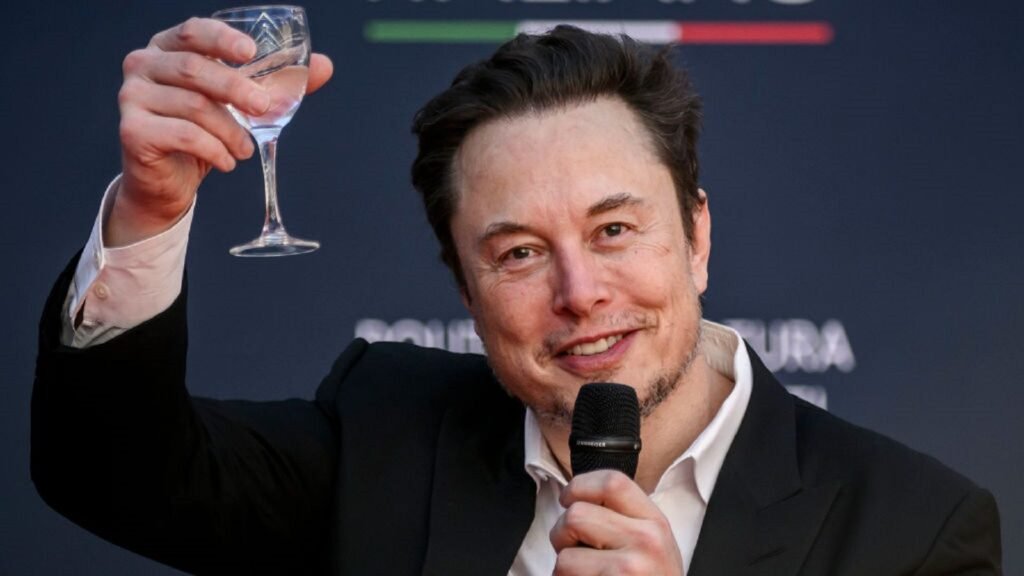
ROME, ITALY – DECEMBER 15: Elon Musk, chief executive officer of Tesla Inc and X (formerly Twitter) Ceo speaks at the Atreju political convention organized by Fratelli d’Italia (Brothers of Italy), on December 15, 2023 in Rome, Italy. Italian Prime Minister Giorgia Meloni’s right-wing political party organised a four-day political festival in the Italian capital. (Photo by Antonio Masiello/Getty Images)
A Vote Divided — But a Victory for Musk
Despite skepticism from governance experts, Tesla’s board, led by Robyn Denholm, urged investors to approve the plan.
“This package is designed to keep Elon’s time, energy, and extraordinary talents focused on Tesla for the long haul,” the board said in its proposal.
The result shows Musk’s influence remains unmatched. He has turned his near-cult-like following — spanning from retail investors to Silicon Valley billionaires — into a decisive force.
Many supporters rallied on X (formerly Twitter), arguing Musk deserves the pay only if he delivers results. “He gets nothing if he fails,” one user posted, echoing Musk’s own defense that his reward depends entirely on Tesla’s success.
The xAI Connection
One of the more surprising moments at the meeting came from Stephen Hawk, a small Tesla investor, who proposed allowing Tesla to invest in Musk’s artificial intelligence startup xAI — a company founded in March 2023 to rival OpenAI.
Ehrhart said the proposal received “more votes in favor than against,” though many abstained. Tesla’s board is now reviewing its next steps.
xAI recently merged with Musk’s social media platform X, integrating AI features and competing directly with ChatGPT and Anthropic.
The Fine Print: Loopholes and “Covered Events”
Critics, however, point out that Musk could still earn billions even without achieving every milestone. According to Reuters, Tesla’s board included a list of “covered events” — such as natural disasters, wars, pandemics, or regulatory changes — that could still trigger partial payouts.
This means that in certain global crises, Musk could receive shares even if Tesla misses performance goals.
Legal Cloud from Delaware
This new plan comes just months after the Delaware Court of Chancery struck down Musk’s 2018 $56 billion pay package, calling it “improperly granted.”
Musk has appealed that ruling to the Delaware Supreme Court. Tesla’s latest package attempts to fix some of those procedural issues — but legal experts warn it could face similar challenges.
“You can’t just repackage the same problem with bigger numbers,” said a corporate-law professor from Harvard Business School.
Political Storm and Public Backlash
The National Bureau of Economic Research recently estimated that Tesla’s U.S. sales could have been 67% to 83% higher from late 2022 through 2025 if not for Musk’s “polarizing political actions.”
The billionaire has aligned himself with Donald Trump and currently heads the Department of Government Efficiency, a program aimed at reducing federal spending during Trump’s second term.
Despite this, Tesla’s board made no mention of limiting Musk’s political activity — or requiring him to dedicate a specific number of hours to Tesla.
The Musk Empire Expands
Beyond Tesla, Musk leads a growing constellation of companies:
- SpaceX — his rocket and space-exploration firm.
- Starlink — a global satellite internet service.
- Neuralink — developing brain-computer interfaces.
- The Boring Company — tunneling and urban transport infrastructure.
- xAI — Musk’s AI company competing with OpenAI.
Each venture, Musk insists, serves one mission: “to make the future exciting and multi-planetary.”
What Comes Next
For Tesla investors, this vote wasn’t just about compensation — it was a referendum on faith. Faith in Musk’s vision, faith in the company’s potential, and faith that the man who built rockets, cars, and social media empires can now lead the AI revolution.
Whether this trillion-dollar gamble turns Tesla into the world’s most valuable company — or exposes the limits of one man’s ambition — remains to be seen.
For now, Elon Musk has once again rewritten the rules of corporate America.
And, as he told shareholders with a grin, “This is just the beginning.”







Business
Trump’s Netflix bombshell… Why he says the NFL must “give up” football after $72 billion Warner Bros deal
As Netflix
moves to buy Warner Bros. Discovery
in a mega $72 billion media shake-up, Donald Trump
weighs in on everything from what we should call “football” to whether the blockbuster deal should even go through – all while markets watch the Federal Reserve
ahead of a crucial December rate decision.


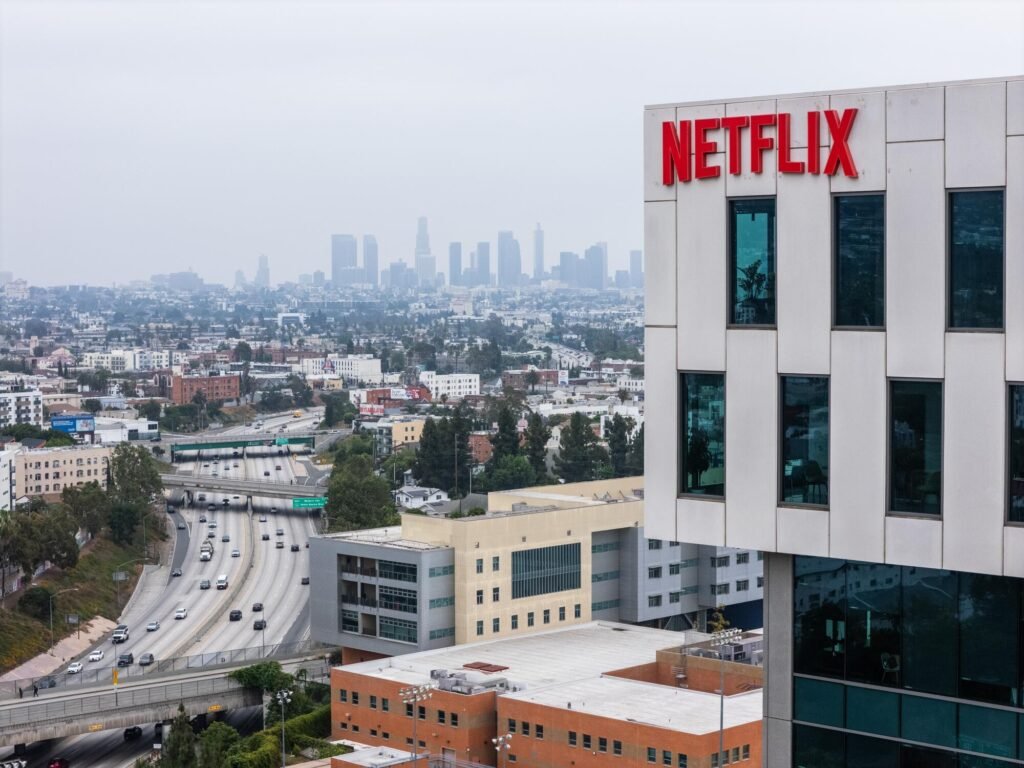
Streaming giant Netflix has never been shy about rewriting the rules of entertainment. But this time, it’s not just a new series or an algorithm tweak – it’s a move that could redraw the entire Hollywood map.
The company has agreed to acquire the film studio and streaming businesses of Warner Bros. Discovery in a deal valued at about $72 billion in equity, with an enterprise value north of $80 billion. Wikipedia
If completed, the transaction would bring iconic brands like Warner Bros., HBO (via HBO Max), DC Studios and TNT Sports under the Netflix umbrella – and give the streamer one of the largest film and TV libraries on the planet.
Wall Street’s reaction, however, was split:
- Netflix shares slipped as investors digested the sheer scale and cost of the deal. Yahoo Finance
- Warner Bros. Discovery stock jumped, as shareholders eyed a potential payday and fresh start. Yahoo Finance
As one analyst quoted by CNBC put it, the math “is going to hurt Netflix for a while” – but it could also cement the company as the undisputed superpower of streaming if the integration works.
Trump steps into the frame – and questions the deal
Just when the industry was still catching its breath, Donald Trump added his own twist.
According to Reuters and CNBC, the U.S. President said he would be “involved” in reviewing the Netflix–Warner Bros. transaction, after senior administration officials signalled “heavy scepticism” about the merger. Reuters+1
That means the deal isn’t just a boardroom and Wall Street story anymore – it’s now a political and regulatory drama as well:
- Antitrust regulators at the U.S. Department of Justice and possibly the Federal Trade Commission will scrutinise whether the combination gives Netflix too much power over what the world watches. Wikipedia
- Lawmakers like Elizabeth Warren have already raised alarms about an “anti-monopoly nightmare” in the making, warning of fewer choices and higher prices for consumers if one platform controls such a huge slice of streaming. Wikipedia
For now, the deal remains proposed and pending, with months – if not longer – of regulatory review ahead. But the political tone suggests this could be one of the toughest tests yet for Big Media consolidation in the streaming era.
From FIFA Peace Prize… to renaming “football”?
The Trump twist doesn’t stop at antitrust. In a separate, very on-brand moment, Donald Trump used the stage of the 2026 FIFA World Cup draw in Washington, D.C. to float an idea that instantly lit up social media:
Maybe, he suggested, soccer should officially take the name “football” in the United States – and the NFL should find something else to call its version.
In his remarks at the draw, where he also received the first-ever FIFA Peace Prize from Gianni Infantino and FIFA, Trump joked that it “really doesn’t make sense” that the sport the rest of the world calls football goes by a different name in America.
It was classic Trump: part showman, part culture-war commentary, and perfectly timed as the United States prepares to co-host the 2026 FIFA World Cup with Canada and Mexico. Reuters
A rebrand of the National Football League is, of course, wildly unlikely – but the comment underscores just how intertwined sports, politics, media rights and streaming have become. After all, the World Cup is one of the main prizes that platforms like Netflix, Amazon, Apple and traditional broadcasters all covet.
Markets keep one eye on Netflix – and the other on the Fed
While the entertainment world obsessed over Netflix’s mega-move, investors were tracking a second storyline: the state of global markets and the coming decision from the Federal Reserve.
On Friday:
- The S&P 500 logged its ninth winning session in ten, continuing a strong late-year run. Reuters
- Gains were modest, but the broader tone remained cautiously optimistic as traders weighed the odds of one more interest-rate cut before year-end.
Tools like the CME FedWatch – which tracks rate expectations using futures markets – have swung back toward seeing a December cut as more likely, after weeks of hawkish talk from Fed officials had briefly pushed expectations below 50%. Reuters
Around the world, the ripple effects are already visible:
- In Asia-Pacific, markets traded mixed, with Japan’s Nikkei 225 inching up even as fresh data showed the Japanese economy shrinking faster than expected in the third quarter. Reuters
- In China, exports for November surprised to the upside, rising 5.9% year-on-year in U.S. dollar terms – but shipments to the United States plunged almost 29%, underscoring how geopolitical and trade tensions still hang over the recovery.
Put simply: the Netflix–Warner Bros. news may grab the headlines, but the cost of money, set in Washington by the Fed, still writes the script for global risk appetite.
A world watching deals… and waiting for peace
The CNBC Daily Open also highlighted another big story that risks being lost in the noise: a Ukraine peace deal may be “really close”, according to Keith Kellogg, the U.S. special envoy for Ukraine.
Two major sticking points remain:
- The future status of the Donbas region
- Control of the Zaporizhzhia Nuclear Power Plant
If talks advance, the outcome will shape energy markets, defence spending, and Europe’s economic outlook – all of which feed directly into the same global investment story that traders are watching through the lens of the S&P 500 and the Federal Reserve.
What this all means for viewers, investors and voters
Taken together, the past few days feel like a snapshot of how tangled our world has become:
- A single streaming deal could alter how billions of people watch dramas, sports and news – and concentrate more power in the hands of Netflix.
- A U.S. President who can joke about renaming “football” is the same leader whose administration could approve or block that mega-merger.
- Central bankers at the Federal Reserve will decide, within days, how expensive it is for companies like Netflix and Warner Bros. Discovery to borrow the money they need to make these bold bets.
- And in the background, diplomats are trying to move from war to peace in Ukraine – a change that could shift commodity prices and global growth more than any single corporate deal.
For now, viewers just see a headline: Netflix wants to own more of the stories we watch. But for investors and policymakers, it’s a reminder that in 2025, entertainment, economics and geopolitics are all part of the same sprawling, binge-worthy series.
For more Update – DAILY GLOBAL DIARY
Business
US Banker Leaves JPMorgan for MrBeast With a 50% Pay Cut, Says 100-Hour Workweeks Weren’t Worth It
27-year-old Bart Dziedzic left a high-paying Wall Street job for YouTube star MrBeast, choosing autonomy, creativity, and long-term growth over money.


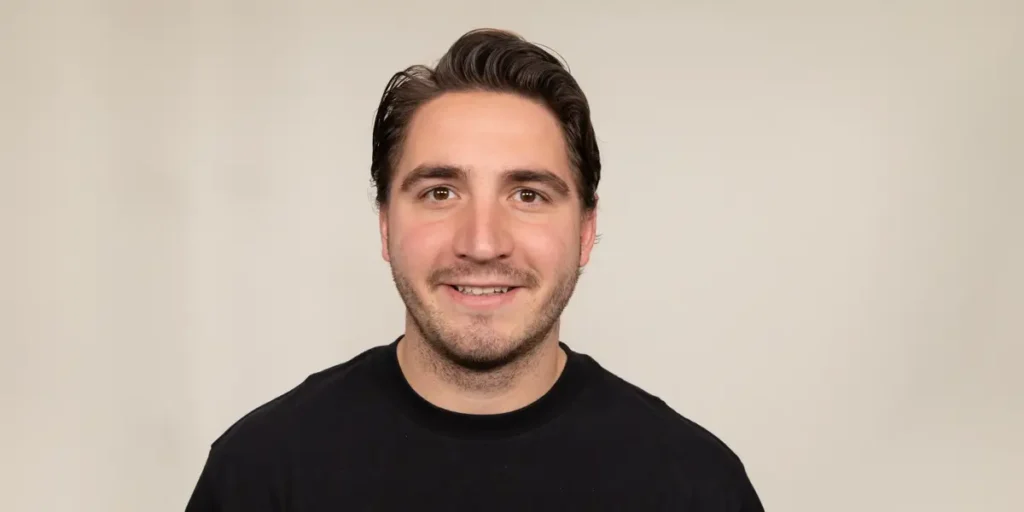
In a story reflecting a growing shift among young professionals, Bart Dziedzic, a 27-year-old former investment banker, has revealed why he walked away from JPMorgan Chase, taking a 50% pay cut to join the creative empire of YouTube megastar MrBeast.
Dziedzic told Business Insider that while his job on Wall Street was financially rewarding, it left him exhausted, uninspired, and longing for a more meaningful career path.
From Wall Street Prestige to Creator Economy
Raised in Darien, Connecticut, Dziedzic grew up admiring entrepreneurs like Steve Jobs and Elon Musk. After graduating from Fordham University, he secured a job at JPMorgan — a dream for many young finance professionals.
“It was prestigious, and the money was good,” he said.
But behind the prestige was a demanding schedule: 80-to-100-hour workweeks, long nights, and a relentless Manhattan pace.
“If you break it down to the hourly rate, it’s not a ton of money. And the noise of the city was starting to wear on me,” he added.
Despite climbing the ranks, he felt the corporate structure left little room for innovation or personal growth.
Enter MrBeast: A Different Kind of Opportunity
Dziedzic learned through a VC partner that MrBeast was looking for “smart, obsessive, athletic people” to join his rapidly expanding team. The YouTuber, known for massive-scale productions and philanthropic stunts, runs one of the biggest creator businesses in the world.
The opportunity came with major lifestyle changes:
- A 50% salary cut
- Relocating from New York to Greenville, North Carolina
- Leaving friends and family
- Taking a leap into an industry he had never worked in
Yet, he believed the risk was worth taking at his age.
“I don’t have a family or mortgage. Everyone knows the MrBeast name. I saw the chance to learn, add value, and be part of a brand growing very rapidly,” Dziedzic said.
He joined the team in February 2024.
First Taste of the Creator World
His introduction to the creator economy came through an enormous MrBeast shoot involving contestants aged 1 to 100 — a production worth millions.
The scale shocked him.
The pace thrilled him.
Soon after, Dziedzic was handed one of his biggest challenges:
planning and executing a MrBeast theme park in Riyadh, Saudi Arabia.
He negotiated deals, designed attractions, managed operations, and compared the experience to helping his father with construction projects in his childhood.
The theme park opened ahead of schedule, drawing 7,000 visitors on the first day.
Back to New York — But With a New Mindset
Now working as Manager of Strategy and Operations for MrBeast’s holding company, Dziedzic has moved back to New York — this time on his own terms.
The transition reinforced a belief he now shares with other young professionals:
“Do something exciting, risky, with a good leadership team. Learn as much as you can early on. The further you get into your career, the harder it is to pivot.”
His journey mirrors a broader trend:
talented young workers increasingly leaving rigid corporate cultures for the flexibility and creativity of the creator economy.
And for Dziedzic, trading a prestigious bank for YouTube’s biggest creator may have been the best investment of his career.
Business
A 15-Year Era Ends: Why Thomas Rabe’s Exit Leaves Bertelsmann at a Crossroads… and Who Will Take Charge Next
Thomas Coesfeld and Clément Schwebig step into two of Europe’s most powerful media roles as longtime CEO Thomas Rabe prepares to depart in 2027.
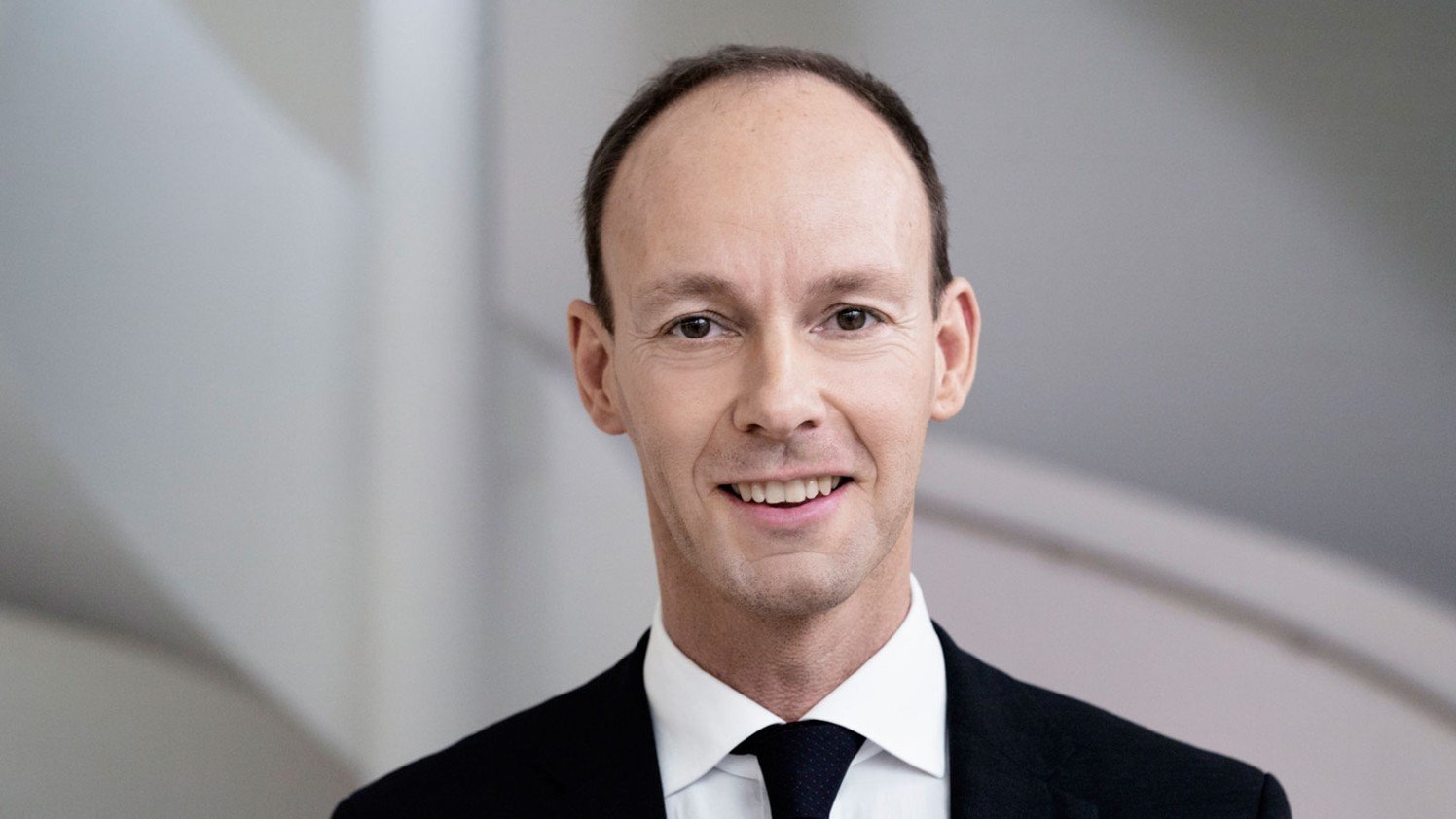
In a landmark leadership shift within European media, Thomas Rabe — one of the longest-serving executives in Germany’s entertainment industry — will step down as CEO of Bertelsmann and RTL Group at the end of 2026, bringing a 15-year tenure to a close.
The announcement marks the beginning of a carefully orchestrated succession plan that places two rising leaders at the helm of the media giant.
Beginning January 1, 2027, Thomas Coesfeld will become Chairman and CEO of Bertelsmann, while Clément Schwebig will take over as CEO of RTL Group — a pivotal realignment for the company behind RTL+, Fremantle, and multiple European broadcasting networks.
“Leadership will be in excellent hands”—Rabe praises successors
Rabe, who guided Bertelsmann through a massive digital transformation and global expansion, expressed confidence in the new leadership team.
“We have worked closely and with great trust for many years,” Rabe said, praising Coesfeld’s readiness to take over the top job.
He added that Schwebig “knows RTL Group well… and brings valuable insights into the growth markets of Asia.”
ALSO READ : UpGrad in talks to acquire Unacademy at $300–400 million, marking major edtech shake-up
This transition is not abrupt — it’s the result of deliberate grooming of internal talent.
Who is Thomas Coesfeld? The fast-rising insider taking Bertelsmann’s top seat
Coesfeld joined Bertelsmann in 2018, first stepping into the Bertelsmann Printing Group, before moving into its music division BMG in 2020. In 2023, he became BMG’s CEO.
The surprising twist?
Coesfeld will continue leading BMG while also serving as CEO of Bertelsmann, holding an unusually powerful dual role — a signal of how deeply the company prizes continuity.
His ascension also underscores a generational shift: Coesfeld represents a younger leadership profile, with experience rooted in digital music, rights management, and new-age content monetization.
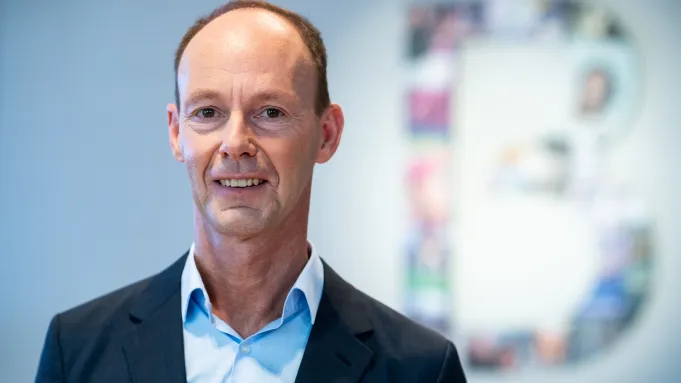
Who is Clément Schwebig? The global strategist returning home
Schwebig’s appointment as CEO of RTL Group represents a homecoming.
The French executive spent more than a decade at RTL in senior positions across Asia and Europe before joining Warner Bros. Discovery, where he rose to President and Managing Director for Western Europe and Africa.
His experience leading complex media territories and strengthening regional markets gives him a vantage point the company sees as vital for RTL’s future.
Rabe described him as“A leader with deep RTL roots and crucial insights into Asia, where Bertelsmann seeks further expansion.”
The legacy Rabe leaves behind
Rabe’s imprint on Bertelsmann is impossible to ignore. Under his leadership, the company shifted from traditional media into a diversified powerhouse, investing heavily in:
- Fremantle, producer of Idol, Got Talent, and the Oscar-winning Poor Things
- RTL+, the streaming service that recently surpassed 7 million paying subscribers
- Global content production pipelines across Europe, the U.S., and Asia
He pushed Bertelsmann to embrace digital content, international expansion, and a multi-format entertainment ecosystem — making the company more global than ever.
A turning point for European media
The 2027 transition doesn’t just mark a leadership change — it signals a shift in direction during a time of intense industry disruption.
Streaming wars are tightening.
Traditional broadcasters are fighting for relevance.
Content production is reshaping itself around data, rights, and artificial intelligence.
Coesfeld and Schwebig will inherit a company sitting at the crossroads of all three.
For Bertelsmann, the question now is simple:
Will the successors protect Rabe’s legacy — or redefine it?
If early reactions from inside the company are any indication, both executives appear ready for the challenge.

Liverpool vs Brighton, Chelsea vs Everton and More — Live Football Action as Premier League Drama Unfolds

Bryant Haines Set to Become One of College Football’s Highest-Paid Assistants After Indiana’s Dream Season

Sherrone Moore Fired and Arrested — Why Michigan Athletics Is Facing Its Biggest Culture Crisis Yet

League of Legends 2026 Swiftplay Gets a Massive Overhaul With Faster Games and Shocking Jungle Changes

Olivia Rodrigo Leaves Her Idol ‘Mind Blown’ With Stunning A Cappella Christmas Cover

1-Iran Issues Dire Warning to Israel and Defies Trump on Nukes: “We’re Ready to Strike Deep Inside”

Donald Trump’s net worth reveals the fortune behind the former US President and business mogul

Caitlin Clark Sidelined with Quad Strain, Set to Miss Two Weeks of WNBA Action

Elon Musk Breaks Ranks with Trump Over ‘Big, Beautiful’ Tax Bill

Golden Glory: Team USA Wins First Standalone Ice Hockey World Championship in 91 Years

Miss Jamaica Suffers Terrifying Fall Off Miss Universe Stage; Rushed to Hospital on Stretcher in Viral Video

Moana Live-Action Teaser Sparks Outrage as Fans Call Disney’s Move a ‘Clear Money Grab’ — What Went Wrong?

Ryan Gosling’s Project Hail Mary Trailer Stuns Fans with a Mysterious Alien Ally and a Mission That Could Save Earth

Apple delays Jessica Chastain thriller The Savant about domestic extremism after recent US violence

Avatar 3, Fire and Ash trailer reveals Jake Sully’s family facing terrifying new Na’vi enemies with deadly fire powers
-

 US News1 week ago
“She Never Made It Out…” Albany House Fire Claims Woman’s Life as Family Pleads for Help to Bring Her Home
-

 Entertainment6 days ago
XG Star Cocona Shares a Brave Truth at 20 — “I Was Born Female, But That Label Never Represented Who I Truly Am…”
-
 Entertainment6 days ago
Samba Schutte Reveals the Surprise Cameo in Pluribus That “Nobody Saw Coming”… and Why John Cena Was Perfect for the Role
-
 Entertainment1 week ago
Nika & Madison stuns global audiences as director Eva Thomas reveals why “resilience, not fear, drives Indigenous women on the run”
-

 Tech1 week ago
After Losing Over $70 Billion, Mark Zuckerberg Finally Admits His Biggest Bet Is “Not Working” – Meta Plans Massive Cuts to Metaverse Budget
-

 Sports5 days ago
Dodgers Stun MLB With Blockbuster Move, Sign Elite Closer Edwin Díaz to Three-Year, $69 Million Deal
-

 Entertainment4 days ago
Teyana Taylor wakes up to a Golden Globe call at 5 a.m.… ‘Am I dreaming right now?’ — and why she’s already begging Paul Thomas Anderson for more
-

 Politics5 days ago
“Billions and Billions Have Watched Them…” Trump Makes History Hosting Kennedy Center Honors and Praising Stallone, Kiss, and More