
Films
Thunderbolts Goes Digital But Here’s When You Can Expect It on Disney Plus
Marvel’s antihero team-up is now available to buy or rent online—but fans waiting to stream it on Disney+ won’t have to wait too long.


Marvel Studios’ Thunderbolts is now officially available to own or rent digitally, just in time for that long July weekend movie binge. But while fans rush to grab their copy on Amazon Prime, Apple TV, and Fandango At Home, the buzz around when the explosive antihero team-up will land on Disney+ is reaching a fever pitch.
Directed by Jake Schreier (Paper Towns), and penned by writers Eric Pearson (Black Widow) and Joanna Calo (The Bear), Thunderbolts rounds out Phase Five of the Marvel Cinematic Universe, with a gritty blend of reluctant alliances, dark missions, and damaged heroes.
Florence Pugh returns as Yelena Belova, leading a squad of Marvel misfits—Bucky Barnes (played by Sebastian Stan), John Walker (Wyatt Russell), Taskmaster (Olga Kurylenko), and Red Guardian (David Harbour)—on a dangerous redemption mission. Also starring are Lewis Pullman, Geraldine Viswanathan, Hannah John-Kamen, and the ever-brilliant Julia Louis-Dreyfus.
The movie has already grossed a solid $381.5 million globally—not Marvel’s biggest box office win, but still more than double its production cost. Now, digital sales and rentals are expected to push profits even higher.
You can now purchase Thunderbolts digitally for $29.99 or rent it for $24.99 on platforms like Amazon, Apple TV, and Fandango. A 4K Ultra HD, Blu-ray, and DVD release is set for July 29, and will come packed with deleted scenes, gag reels, cast interviews, and behind-the-scenes featurettes—plus commentary by director Jake Schreier.
But when can we stream it?
While Marvel hasn’t officially confirmed the Disney+ streaming date, industry watchers predict that Thunderbolts will debut on the platform by mid-to-late August 2025. This estimate follows the pattern of other Marvel releases like Captain America: Brave New World, which landed on Disney+ just over three months after its theatrical release.
Disney’s usual streaming timeline places new releases on Disney+ about 4 to 6 months after their big-screen debut. Given that Thunderbolts hit theaters in early May, an August streaming premiere makes perfect sense.
In the meantime, Marvel fans have several Disney+ subscription options to choose from:
- $9.99/month with ads
- $15.99/month ad-free
- $159.99/year ad-free
- Bundled options with Hulu and Max starting at $10.99/month
For those eager to stream and save, the Disney+, Hulu, and ESPN+ bundle remains one of the best deals in the streaming world.
So while you could drop $30 on a digital copy today (no judgment), if you’re patient, you’ll likely be watching Thunderbolts from your Disney+ queue within the next six weeks.
Either way, whether you’re Team Rent, Team Buy, or Team Wait-for-Streaming, one thing’s clear—Marvel’s misfits are finally getting their moment.



Films
J. C. Chandor’s 3 Greatest Films That Silently Shook Hollywood No One Saw This Coming
From financial meltdowns to lost-at-sea survival, J. C. Chandor has crafted slow-burning masterpieces that critics can’t stop analyzing.

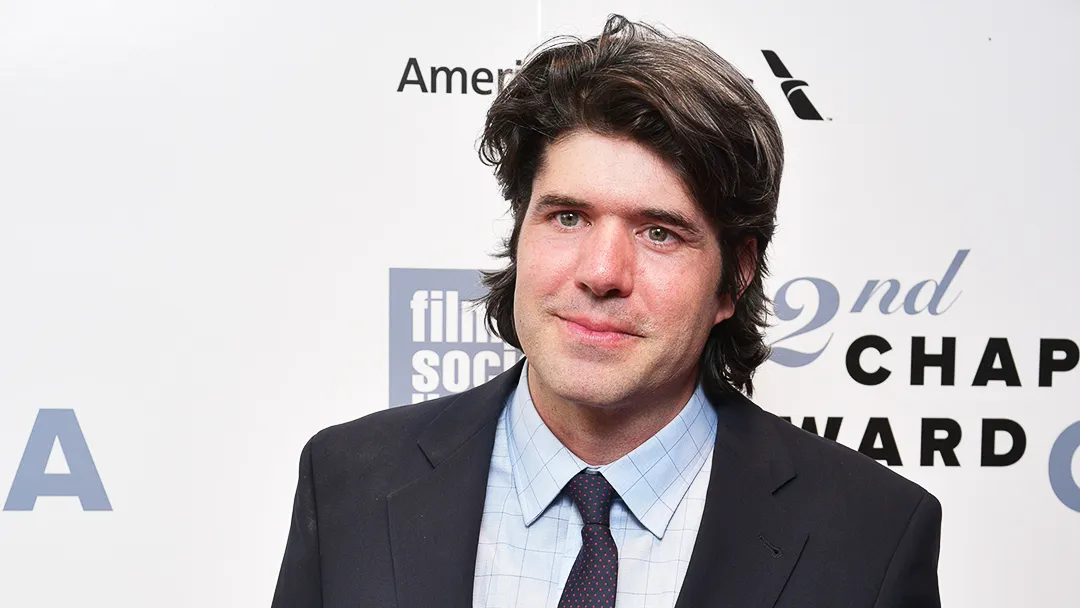
J. C. Chandor, born Jeffrey McDonald Chandor, is one of the most intriguing modern-day filmmakers. Known for his restrained storytelling, minimalistic dialogue, and haunting visual style, Chandor has quietly built a reputation as a thinking man’s director. Though his name may not dominate red carpets, his films consistently earn the admiration of cinephiles, critics, and the Academy of Motion Picture Arts and Sciences.
Here are the Top 3 films by J. C. Chandor that didn’t just impress—but lingered long after the credits rolled.
1. Margin Call (2011)

“This is it. I’m telling you—this is it.”
Margin Call was Chandor’s directorial debut, but it hit like a veteran’s strike. Set over a tense 24-hour period during the initial stages of the 2008 financial crisis, the film dives into the morally murky waters of Wall Street. Featuring a stellar cast including Kevin Spacey, Jeremy Irons, and Stanley Tucci, the film avoids flashy drama for quiet, bone-chilling tension.
The script, written by Chandor himself, earned an Academy Award nomination for Best Original Screenplay, and the film became a cult favorite among those fascinated by the psychology of power and collapse.
2. All Is Lost (2013)

“I’m sorry.“
This almost silent survival drama starring only Robert Redford is one of the most daring cinematic experiments of the decade. All Is Lost follows a man stranded at sea, fighting for survival with no dialogue, no backstory, and no support—just water, storms, and silence.
Critics hailed the film as a “masterclass in minimalist storytelling,” and Redford’s performance, guided with Chandor’s precision, earned him a Golden Globe nomination. The film’s sound design, sparse script, and claustrophobic cinematography leave viewers gasping alongside its protagonist. Chandor proved he could grip audiences with nothing but visual tension and human fragility.
3. A Most Violent Year (2014)

“When it feels scary to jump, that’s exactly when you jump.”
Set in 1981—statistically New York City’s most violent year—this slow-burn crime drama is as much a character study as it is a thriller. A Most Violent Year stars Oscar Isaac and Jessica Chastain as an ambitious immigrant couple trying to grow their heating oil business while crime and corruption eat away at their ethics.
The film’s tone is cold and clinical, yet eerily gripping. It was widely praised for its script, performances, and moral ambiguity—earning comparisons to classic works of Sidney Lumet.
Why These Films Matter
J. C. Chandor doesn’t bombard audiences with explosions or overblown monologues. He deals in subtlety, psychological complexity, and the kind of existential tension that creeps under your skin. These top 3 films reveal the depth of human vulnerability—in boardrooms, at sea, or in the shadowy alleys of capitalism.
Films
Jessica Chastain’s Top 3 Films That Shocked Hollywood Fans I Never Thought I Could Go That Far
From a CIA operative to a grief-stricken mother, Jessica Chastain has delivered powerhouse performances that left critics stunned and audiences in awe.

Jessica Chastain, the American actress known for her fiery presence and emotionally charged performances, has consistently chosen roles that push boundaries. A graduate of the prestigious Juilliard School and now one of Hollywood’s most respected names, Chastain has built a filmography filled with range, depth, and purpose. With multiple Academy Award nominations and a well-earned win, she’s not just a movie star—she’s a force of nature.
Here are the Top 3 films that defined her career and turned her into a global phenomenon.
1. Zero Dark Thirty (2012)

“I gave everything I had to Maya,” Chastain said about the role that changed her life.
In Zero Dark Thirty, directed by Kathryn Bigelow, Chastain took on the role of Maya, a CIA analyst obsessively hunting Osama bin Laden. The film is an intense, gritty dive into the world of intelligence and terrorism—and Chastain carried the weight of it with stunning poise.
Her performance was hailed as “riveting” and “fearless,” earning her a Best Actress nomination at the Oscars. Many critics consider this role a turning point that launched her into the upper echelon of serious actors.
2. The Eyes of Tammy Faye (2021)

“I saw the humanity in her—and I wanted the world to see it too.”
Transforming completely for the role of Tammy Faye Bakker, Chastain gave a haunting yet compassionate portrayal of the controversial televangelist. In The Eyes of Tammy Faye, she immersed herself in the role with prosthetics, vocal training, and years of preparation.
Her dedication paid off—Chastain won the Academy Award for Best Actress, cementing her legacy as one of the finest talents of her generation. The performance was described as “transformative” and “beyond biopic brilliance.”
3. Molly’s Game (2017)

“Molly taught me what it means to fight with intelligence and grace.”
In Molly’s Game, directed by Aaron Sorkin, Chastain portrays Molly Bloom, a former Olympic-class skier who ran the world’s most exclusive high-stakes poker game. The role required speed, wit, and control—all of which Chastain delivered with surgical precision.
Critics applauded her dynamic performance, calling her the “perfect Sorkin heroine.” The film not only showcased her verbal agility but also her emotional nuance, particularly in scenes opposite Idris Elba and Kevin Costner.
Why These Films Matter
Each of these performances represents a different side of Jessica Chastain: the determined warrior, the misunderstood woman, and the defiant survivor. Together, they tell the story of an actress who never settles, always transforms, and continually chooses roles that matter.
Whether it’s politics, religion, or personal grit—Chastain delivers with unmatched emotional depth and technical mastery.
Films
“Dune: Part Three” Gets Official Name and Imax Treatment — But Denis Villeneuve Says It’s Not a Trilogy
Timothée Chalamet, Zendaya, and Jason Momoa return as Villeneuve teases a bold new vision for the Dune saga — shot partially with Imax cameras and landing in 2026.

Denis Villeneuve is heading back to Arrakis, and this time, it’s official. The director’s highly anticipated next chapter in the Dune universe now has a name: “Dune: Part Three.”
While early reports speculated the title might mirror Frank Herbert’s 1969 novel Dune Messiah, Warner Bros. and Legendary Entertainment have confirmed the simpler moniker. Listed as Dune: Part Three on Rentrak, the film will adapt the storyline of Dune Messiah, following Paul Atreides, now emperor, as he faces the cost of power and the complex consequences of his rise.
But fans hoping for a continuation of a “trilogy” might want to temper expectations—Villeneuve himself doesn’t see this as a traditional third chapter.
“If I do a third one, which is in the writing process, it’s not like a trilogy,” Villeneuve told reporters last year. “It’s to do something that feels different and has its own identity.”
Villeneuve Breaks from the Trilogy Mold
While Dune (2021) and Dune: Part Two (2024) were designed as a cohesive cinematic pair, adapting the first Dune novel in two parts, Villeneuve views Part Three as a separate creative journey.
“It was really a diptych,” Villeneuve explained. “That’s done and that’s finished.”
This new chapter, based on Herbert’s Dune Messiah, promises a darker, more introspective look at Muad’Dib’s imperial rule, navigating rebellion, prophecy, and personal sacrifice.
Imax Cameras Confirmed… But Not for the Entire Film
Adding to the excitement, Dune: Part Three will be partially shot with Imax cameras, following the visual grandeur Villeneuve is known for. However, despite comments made by Imax CEO Richard Gelfond on CNBC suggesting otherwise, the film will not be shot entirely using Imax’s proprietary format—unlike Christopher Nolan’s upcoming project The Odyssey.
“He’s making the next Dune — with Imax cameras, he’s filming the whole thing,” Gelfond said, though industry insiders now suggest this was likely a slip of the tongue.
Imax’s Bruce Markoe, head of post-production, clarified the distinction between “shot with Imax” and “Filmed for Imax”, noting the unique collaboration involved when using their film equipment on set.
Star Power Returns, With a Surprising Face
Timothée Chalamet and Zendaya are both set to reprise their roles, and fans of Jason Momoa will be thrilled to learn that his character Duncan Idaho, absent from Part Two, is also confirmed to return.
While exact plot details are under wraps, the return of these central characters promises a continuation of the saga’s emotional and political intensity.
A December 2026 Release and Big Screen Expectations
With filming expected to begin soon, Dune: Part Three is scheduled for a December 2026 theatrical release. As Dune: Part Two became a global success both critically and commercially, expectations for the third film are soaring.
Villeneuve’s meticulous approach, combined with the immersive power of Imax, makes this a must-watch cinematic event in the making.
“The public is really demanding it,” said Gelfond, referencing the impressive Imax box office share from recent blockbusters like F1 and Mission: Impossible – The Final Reckoning.
Whether or not Dune: Part Three concludes the story remains to be seen. But one thing is clear: Denis Villeneuve isn’t just expanding a universe—he’s redefining what it means to make a sci-fi epic on the big screen.

How ‘Avengers: Endgame’ Returned to Cinemas and Reclaimed Box Office Glory

Tom Cruise’s ‘Digger’ Faces a Tough Opening: Could ‘Verity’ Take the Lead?

‘Verity’ Could Outopen ‘Digger’: Why Tom Cruise Faces a Tough Contest

‘Endgame’ Returns to No. 1 ‘Avatar’ Loses Its Box Office Throne

Mark Zuckerberg Faces a New Hollywood Reckoning Why Aaron Sorkin’s Film Hits Closer to Home

1-Iran Issues Dire Warning to Israel and Defies Trump on Nukes: “We’re Ready to Strike Deep Inside”

Sen. Elizabeth Warren Calls It a ‘Cesspool of Corruption’ — Here’s Why Senators Are Now Fighting Back Against the DOJ’s Live Nation Deal That Left Every Fan Betrayed…

Gucci bets on Demna to revive fading glamour as Milan fashion week opens with bold film surprise

Donald Trump’s net worth reveals the fortune behind the former US President and business mogul

“Tomás Rodríguez Net Worth 2025: Panama’s Gold Cup Goal‑Machine’s Surprising Fortune Revealed”

Miss Jamaica Suffers Terrifying Fall Off Miss Universe Stage; Rushed to Hospital on Stretcher in Viral Video

Moana Live-Action Teaser Sparks Outrage as Fans Call Disney’s Move a ‘Clear Money Grab’ — What Went Wrong?

Ryan Gosling’s Project Hail Mary Trailer Stuns Fans with a Mysterious Alien Ally and a Mission That Could Save Earth

Apple delays Jessica Chastain thriller The Savant about domestic extremism after recent US violence
