
Entertainment
Discover the directors whose original ideas and fearless storytelling are keeping the big-screen experience alive.
From breakout horror sensations to established masters, genre filmmakers are giving Hollywood fresh momentum.


The traditional Hollywood blockbuster may still command enormous budgets, but some of the industry’s most exciting work is currently happening in darker, stranger and far less predictable corners of cinema.
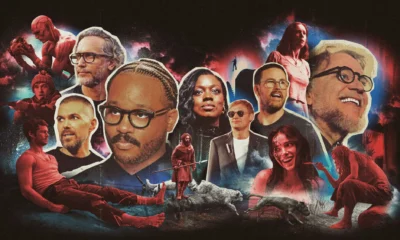
A new feature published by The Hollywood Reporter has spotlighted 30 filmmakers helping to keep movie theatres relevant in 2026. The selection stretches from emerging internet-era directors such as Curry Barker to celebrated cinematic visionary Guillermo del Toro.
It is a fascinating mix of generations, budgets and filmmaking backgrounds. What connects these directors is their understanding that audiences will still leave home for a movie—provided it offers an experience that feels bold, distinctive and impossible to reproduce on a television screen.
Curry Barker’s astonishing leap from YouTube to Hollywood
Few filmmakers represent the changing face of genre cinema more clearly than Curry Barker.
Barker initially attracted attention through online comedy and independently produced horror. His microbudget film Milk & Serial, reportedly made for just $800 and released for free on YouTube, demonstrated how an inventive concept could travel without a conventional studio campaign.
ALSO READ : Sen. Elizabeth Warren Calls It a ‘Cesspool of Corruption’ — Here’s Why Senators Are Now Fighting Back Against the DOJ’s Live Nation Deal That Left Every Fan Betrayed…
His feature film Obsession transformed that early promise into a remarkable theatrical success. Produced for approximately $750,000, the twisted horror story became one of 2026’s biggest box-office surprises. Its success established Barker as an important Gen Z filmmaking voice and showed studios that online creators can make a convincing transition to cinemas.
Barker’s rapid ascent is not merely a story about viral popularity. It also reflects a wider shift in Hollywood, where executives are searching beyond film schools and traditional studio pipelines for directors who already understand how younger audiences discover and discuss entertainment.
Guillermo del Toro remains the master of beautiful monsters
At the opposite end of the career spectrum stands Oscar-winning Mexican filmmaker Guillermo del Toro.
The director behind Pan’s Labyrinth, The Shape of Water and Frankenstein has spent decades transforming monsters into emotionally complex characters. His films frequently blend horror, fantasy, tragedy and romance, giving supernatural creatures the humanity that conventional stories often deny them.
Del Toro’s inclusion alongside much younger filmmakers is significant. It suggests that genre cinema is not being revived by one age group or creative movement. Instead, established auteurs and first-time directors are feeding the same renewed appetite for imaginative filmmaking.
While Barker represents the speed and accessibility of the digital era, del Toro represents craftsmanship built over an entire career. Both approaches can bring viewers into theatres.
Lee Cronin and the return of uncompromising studio horror
Irish filmmaker Lee Cronin has also emerged as a major force in contemporary horror.
After earning attention with The Hole in the Ground, Cronin reached a much larger audience through Evil Dead Rise. Rather than softening the franchise for mainstream viewers, he embraced its brutality and claustrophobic atmosphere.
Cronin subsequently brought that same unsettling sensibility to Lee Cronin’s The Mummy. The project demonstrated why studios increasingly want filmmakers with a strong personal style behind familiar properties. A recognisable title may attract initial interest, but a director’s creative identity can prevent a revival from feeling like another routine reboot.
Michael Chaves understands the machinery of a franchise
Michael Chaves represents another valuable kind of genre filmmaker: a director capable of operating confidently inside a large cinematic universe.
Through films connected to The Conjuring Universe, including The Curse of La Llorona, The Conjuring: The Devil Made Me Do It, The Nun II and The Conjuring: Last Rites, Chaves developed an instinct for delivering carefully timed scares without losing sight of the characters.

Franchise filmmaking can easily become mechanical, especially when audiences know the formula. Chaves’ work illustrates the importance of directors who can respect an established world while still finding fresh visual and emotional tension within it.
Rob Savage turned digital anxiety into cinematic fear
British director Rob Savage became internationally recognised after making Host, the inventive lockdown-era horror film presented through a video call.
Its premise could have been dismissed as a temporary novelty. Instead, Savage used the format to capture something painfully familiar: the fear that technology connecting people can also leave them exposed and powerless.
He later expanded into studio filmmaking with The Boogeyman and continued his horror journey with Other Mommy. Savage’s rise demonstrates that technical limitations can become creative advantages when a filmmaker understands exactly what frightens a contemporary audience.
Na Hong-jin proves genre cinema has no borders
The list’s international reach is equally important. South Korean filmmaker Na Hong-jin built a global following through The Chaser, The Yellow Sea and The Wailing, films that resist simple categorisation.
His 2026 science-fiction thriller Hope pushed that ambition further, combining large-scale spectacle with horror, action and dark humour. Na’s work reinforces the fact that some of the most adventurous genre filmmaking is now coming from outside Hollywood.
Audiences have become increasingly comfortable watching international stories that move between languages, cultures and tones. For theatres searching for genuine event films, that global appetite offers an opportunity that extends well beyond traditional American franchises.
Scott Derrickson keeps returning to character-driven fear
Scott Derrickson has long understood that supernatural horror works best when its characters feel vulnerable before anything frightening appears.
From The Exorcism of Emily Rose and Sinister to The Black Phone films, Derrickson has repeatedly combined accessible storytelling with disturbing imagery. Even when working with familiar horror ingredients, his films remain grounded in emotional stakes, particularly childhood trauma, family relationships and survival.
That combination makes his work commercially attractive without stripping it of personality—an increasingly valuable balance in a risk-conscious studio system.
Why genre filmmakers matter more than ever
The renewed importance of these directors arrives at a difficult moment for cinemas. Streaming has changed viewing habits, production costs remain high and audiences are increasingly selective about which films deserve a theatrical ticket.
Genre movies offer a practical answer. Horror can generate enormous interest without a superhero-sized budget. Science fiction and fantasy can provide the visual scale audiences expect from theatres. Most importantly, these categories give filmmakers permission to take creative risks that conventional dramas may struggle to accommodate.
They are also producing intense competition behind the scenes. Original genre scripts with strong concepts can now trigger bidding wars because studios recognise how quickly an unexpected horror or science-fiction success can become a cultural event—and potentially launch a franchise.
The most encouraging part of 2026’s genre boom is that there is no single formula behind it. Barker’s scrappy online beginnings, del Toro’s handcrafted dark fantasy, Cronin’s brutal studio horror and Na Hong-jin’s international spectacle all offer different routes to the same destination.
Hollywood has spent years asking what might persuade audiences to return to cinemas. These filmmakers appear to have found an answer: give viewers something daring enough to make staying home feel like missing out.









Entertainment
The Story Behind ‘Artificial’: Amazon’s Withdrawal and Neon’s Rescue
Andrew Garfield and Luca Guadagnino discuss the ambitious Sam Altman film and its unexpected journey from Amazon to Neon.

A film about powerful technology executives became caught up in the business relationships surrounding them.
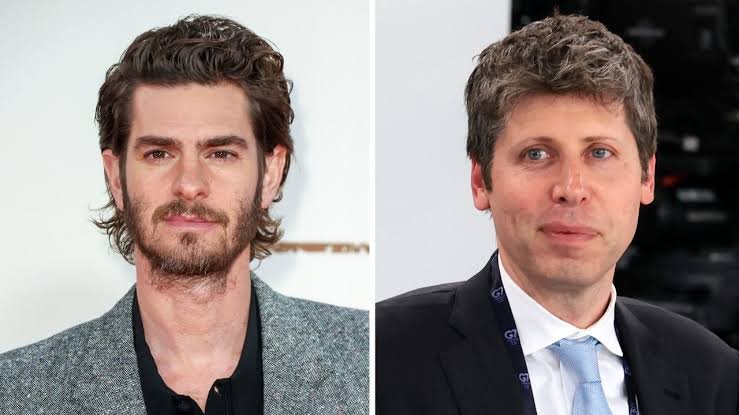
Luca Guadagnino’s Artificial, starring Andrew Garfield as Sam Altman, was developed at Amazon MGM Studios. But when the studio decided against releasing it, the filmmakers faced an uncertain future. Neon eventually acquired worldwide theatrical distribution rights, giving the project a route to audiences.
The move attracted scrutiny because of Amazon’s financial relationship with OpenAI. TheWrap reported that Amazon’s withdrawal followed a $50 billion investment in the AI company through a cloud computing partnership.
That timing prompted questions about conflicting commercial interests. It does not, however, establish the reason for the studio’s decision. Amazon’s public explanation was that the film would benefit from another distributor, while expressing support for Guadagnino and helping the production find a new home.
ALSO READ : Emmy Nominations Announcement Gets a Star Twist… Liza Colón-Zayas & Jeff Hiller Set to Reveal 2026 TV Nominees
The people behind the technology
Artificial explores the relationship between Altman and OpenAI co-founder Ilya Sutskever, played by Yura Borisov. Its dramatic territory is the collision between idealism, ambition and the consequences of building increasingly powerful technology.
According to Vulture’s account, screenwriter Simon Rich developed the project with urgency, and filming took place largely in northern Italy. The production’s emphasis on personal relationships gives its technological subject a recognisably human centre: people making decisions whose consequences extend far beyond themselves.
Garfield’s transformation went beyond appearances
In an interview with The Hollywood Reporter, Guadagnino described abandoning elaborate facial prosthetics after early tests. Garfield instead worked with Altman’s movements, posture and walk, supported by restrained makeup.
The director also chose to shoot on 35mm film, placing live performances at the centre of a story about artificial intelligence. Producer Jennifer Fox told the publication that the film’s assertions underwent extensive vetting. That remains the production’s account of its research process, rather than an independent endorsement of every dramatised scene.
A new home, and an unresolved question
Garfield welcomed the fact that Amazon allowed the film to move elsewhere. Fox, meanwhile, described the withdrawal as surprising after a collaborative production relationship.
Neon’s involvement resolved the immediate distribution problem. The wider question remains open: how freely can filmmakers examine influential companies when those companies also help finance and distribute entertainment? Artificial’s journey has made that question part of the conversation before audiences even enter the cinema.
Entertainment
Meet David Ellison’s Leadership Picks for Hollywood’s New Giant
The leadership announcement offers a first look at who will oversee the next chapter of Paramount–Warner Bros.

The next chapter for Paramount and Warner Bros. Discovery now has a leadership roster — and several familiar names will be taking on considerably bigger responsibilities.
David Ellison and Ynon Kreiz announced their senior executive team on October 5, ahead of the anticipated completion of Paramount’s acquisition of Warner Bros. Discovery. The combined company will be called Skydance, with executives from both businesses overseeing its film, television, streaming and news operations. The appointments are contingent on the transaction closing.
The approximately $110 billion deal is expected to close on October 6, according to TheWrap. The announcement offers a clearer picture of how Ellison intends to run the enlarged business: retain established creative leaders while placing them within a new corporate structure.
ALSO READ : Emmy Nominations Announcement Gets a Star Twist… Liza Colón-Zayas & Jeff Hiller Set to Reveal 2026 TV Nominees
Bigger responsibilities for film and streaming chiefs
Dana Goldberg and Josh Greenstein will become co-chairs of the Skydance Motion Picture Group, overseeing a film portfolio that brings together Paramount Pictures and Warner Bros..
Meanwhile, Casey Bloys will serve as co-chair and chief content officer of Skydance’s direct-to-consumer division. George Cheeks will hold the corresponding creative leadership position at Skydance TV.
JB Perrette will span both divisions as co-chair and chief business officer, pairing the content leaders with an executive responsible for the commercial side of television and streaming.
For audiences, these appointments matter because the executives will help shape what gets commissioned, produced and distributed. The announcement itself does not establish changes to subscription prices, release schedules or individual programmes.
CNN and CBS News keep separate leadership
One closely watched decision concerns the company’s newsrooms.
Mark Thompson will remain chairman and editor-in-chief of CNN Worldwide, while Bari Weiss stays editor-in-chief of CBS News. Both will report directly to Ellison and Kreiz.

Reuters reported that the arrangement addresses concerns about Weiss potentially overseeing CNN. Thompson also told employees that he expected to retain his existing editorial responsibilities. Questions remain about how the news operations will function within the combined business, including the practical authority of an editorial independence board agreed under an antitrust settlement.
DC leadership stays in place
For DC Studios, the announcement preserves the partnership of James Gunn and Peter Safran as co-chairmen.
At the corporate level, Ellison will concentrate on long-term strategy, creative direction and investment decisions. Kreiz will handle day-to-day management and integration, with Andy Gordon serving as president. Paramount said a fuller executive leadership list would follow after closing.
The roster provides continuity at several prominent brands. The harder work begins when those leaders must turn a combined organisation into a functioning business — balancing creative ambitions with the demands of integration.
Entertainment
Aaron Sorkin Takes On Mark Zuckerberg Again in ‘The Social Reckoning’
The film’s critique reaches beyond one executive to examine the wider implications of the business he built.
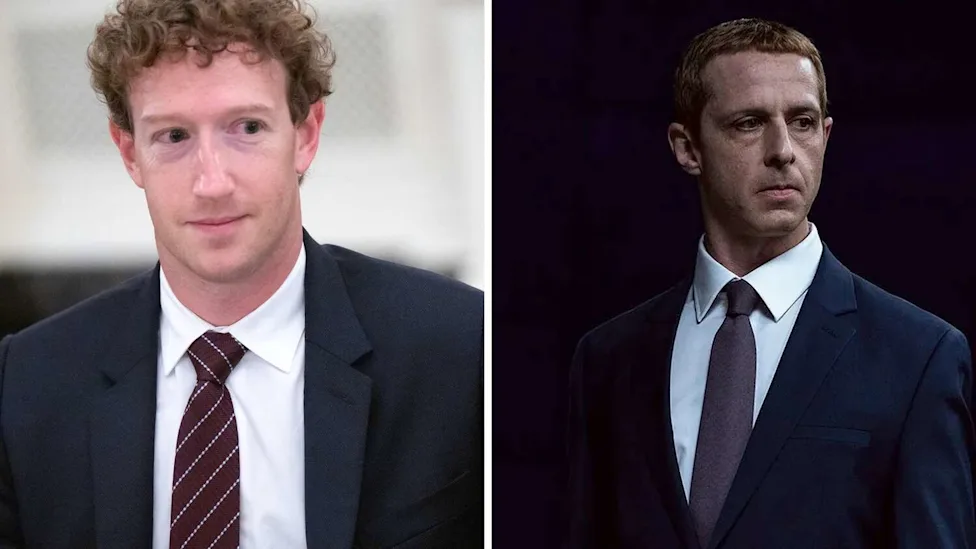
Sixteen years after The Social Network turned Facebook’s beginnings into gripping cinema, Aaron Sorkin is returning to the company with a different question: what happened after it became so powerful?
His new film, The Social Reckoning, centres on whistleblower Frances Haugen and journalist Jeff Horwitz. Sony Pictures describes it as a companion piece to the 2010 film, with a story built around an employee’s decision to expose closely guarded corporate information.
Jeremy Strong takes over the role of Mark Zuckerberg. The Hollywood Reporter characterises his portrayal as sharply villainous, particularly in its treatment of profit and responsibility.
ALSO READ : Emmy Nominations Announcement Gets a Star Twist… Liza Colón-Zayas & Jeff Hiller Set to Reveal 2026 TV Nominees
From Facebook’s beginnings to its public consequences
The film draws inspiration from The Facebook Files, the 2021 Wall Street Journal investigation based on internal documents disclosed by Haugen.
In an interview with Vanity Fair, Sorkin explained the distinction between his two films: “The Social Network was about how Facebook was invented, and The Social Reckoning is what it’s become.”
Mikey Madison plays Haugen, while Jeremy Allen White portrays Horwitz. Their characters bring the story’s attention to the people challenging the institution, rather than solely to the man who built it.
That change gives the premise its tension. An employee has information she believes the public should see. A reporter must investigate it. Across from them stands a company with the resources to defend itself.
A pointed screening location
The film’s first public preview also carried a striking connection to its predecessor.
The San Francisco Chronicle reported that Sorkin presented The Social Reckoning at the Cinemark Century Mountain View 16 on September 16, less than 10 miles from Meta’s headquarters. Current and former Facebook employees were among the audience.
It was the same theatre Zuckerberg had booked to watch The Social Network with friends and employees in 2010. The location brought Sorkin’s return to Facebook unusually close to the people and company behind the story.
A drama about the people who speak up
Sorkin both writes and directs the new film. Alongside its central trio, the cast includes Wunmi Mosaku, Betty Gilpin, Billy Magnussen and Bill Burr.
Sony’s synopsis places Haugen and Horwitz at the heart of a risky effort to reveal the social network’s secrets. It is a dramatisation inspired by real events; its characterisations should be understood as the filmmakers’ interpretation.
The premise makes accountability personal: who decides to speak, who listens, and what happens when challenging an employer becomes a public confrontation?
The Social Reckoning is scheduled to open in US theatres on October 9, 2026, according to Sony.

The Story Behind ‘Artificial’: Amazon’s Withdrawal and Neon’s Rescue

Meet David Ellison’s Leadership Picks for Hollywood’s New Giant

Aaron Sorkin Takes On Mark Zuckerberg Again in ‘The Social Reckoning’

Olivia Rodrigo’s Happiest Chapter Is Becoming Her Biggest Story

Years after ‘The Social Network,’ Zuckerberg’s story offers Hollywood a different set of questions about power.

1-Iran Issues Dire Warning to Israel and Defies Trump on Nukes: “We’re Ready to Strike Deep Inside”

Sen. Elizabeth Warren Calls It a ‘Cesspool of Corruption’ — Here’s Why Senators Are Now Fighting Back Against the DOJ’s Live Nation Deal That Left Every Fan Betrayed…

Gucci bets on Demna to revive fading glamour as Milan fashion week opens with bold film surprise

Donald Trump’s net worth reveals the fortune behind the former US President and business mogul

“Tomás Rodríguez Net Worth 2025: Panama’s Gold Cup Goal‑Machine’s Surprising Fortune Revealed”

Miss Jamaica Suffers Terrifying Fall Off Miss Universe Stage; Rushed to Hospital on Stretcher in Viral Video

Moana Live-Action Teaser Sparks Outrage as Fans Call Disney’s Move a ‘Clear Money Grab’ — What Went Wrong?

Ryan Gosling’s Project Hail Mary Trailer Stuns Fans with a Mysterious Alien Ally and a Mission That Could Save Earth

Apple delays Jessica Chastain thriller The Savant about domestic extremism after recent US violence

Avatar 3, Fire and Ash trailer reveals Jake Sully’s family facing terrifying new Na’vi enemies with deadly fire powers
-

 Entertainment1 week ago
One Big Win for Taylor Swift, Seven for Madonna: Inside the 2026 VMAs
-
 Entertainment1 week ago
Beyoncé Ends Two-Year Music Silence With ‘Morning Dew’ Is a New Album Next?
-

 Entertainment1 week ago
‘Spider-Man: Brand New Day’ Breaks All-Time Domestic Box Office Record
-

 Entertainment1 week ago
Rosalía Turned the Kia Forum Into a Movie Set… Inside the Stunning ‘Lux’ Tour Performance That Left Los Angeles Spellbound
-
 Entertainment1 week ago
From Amazon to Neon: The Fight to Bring ‘Artificial’ to Audiences
-
 Entertainment1 week ago
Ella Hunt’s Breakout Year: How the Rising Star Is Conquering TV and Music
-

 Entertainment1 week ago
Tom Cruise’s ‘Digger’ Has Awards Ambitions—But Can It Deliver at the Box Office?
-
 Entertainment1 week ago
‘The Social Reckoning’ takes aim at an influential tech mogul, entering territory Hollywood rarely explores so directly.