
Politics
“Trump’s Approval Ratings Shift — Which States Are Embracing Him and Which Are Rejecting His National Guard Move?”
“Trump’s Approval Ratings Shift — Which States Are Embracing Him and Which Are Rejecting His National Guard Move?”


President Donald Trump’s approval rating continues to fluctuate as his administration faces growing controversy surrounding the deployment of the National Guard. What began in Washington, D.C., has now expanded to include California, Illinois, Tennessee, and Oregon. While Tennessee’s Governor Bill Lee welcomed the move, most other governors, particularly in liberal states, have raised legal challenges. This escalating tension is reflective of a broader national divide that shows up clearly in state-level approval ratings for Trump.
According to a recent Reuters/Ipsos poll released on October 8, a significant 58% of Americans believe the president should only deploy armed troops when facing external threats, not domestic issues. This reflects growing unease among citizens regarding the militarization of civilian affairs, particularly in traditionally liberal states.
ALSO READ : White House Outraged After Nobel Committee “Snubs” Donald Trump Again — “They Chose Politics Over Peace
The National Guard deployment saga coincides with redistricting battles that are intensifying across the country, especially in California. Voters in the Golden State will decide on a new Congressional map measure this November 4, which is designed to counteract the Republican-led redistricting in Texas aimed at increasing GOP seats in the 2026 midterms. Missouri, too, has approved a new map with a clear Republican tilt.
As the political landscape continues to shift, Trump’s approval ratings vary significantly across states, especially among registered voters. Morning Consult, which tracks approval ratings over three months, reported an update on October 14 that reveals an interesting trend. While Trump enjoys a net positive approval rating in 24 states, there have been notable shifts since the previous poll in September. For example, Georgia and Arizona, which had previously shown net positive or evenly split approval ratings, have now flipped to net negative territory.
Which States Give Trump the Highest Approval Ratings?
Some states continue to show strong support for Trump’s policies, with 24 states still maintaining a net positive approval rating for the former president. Morning Consult’s polling results reflect that Trump retains significant backing in conservative-leaning states such as Florida, Texas, and Ohio — areas that are pivotal for his potential 2024 re-election bid.
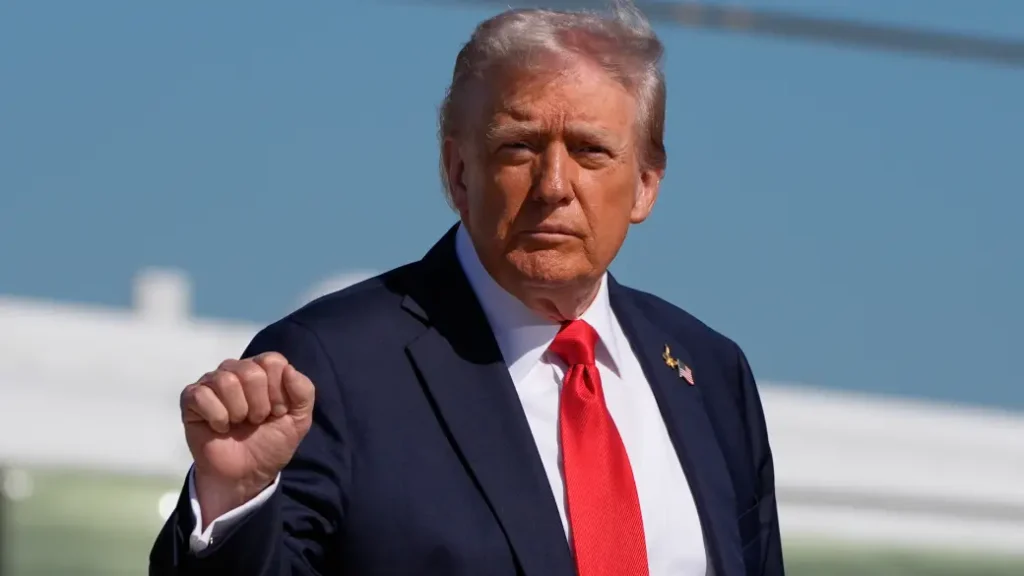
However, the shifting political sands have left Georgia and Arizona in a precarious position. Both states, once firmly in Trump’s corner, have now shown signs of opposition, with Georgia in particular flipping to a net negative approval. This development is especially noteworthy given Trump’s historic victory in the state during the 2016 election.
Why the Flip?
Trump’s controversial decisions, including his National Guard deployment, have played a role in shifting public perception, especially in states with Democratic governors who oppose his national security strategies. The president’s actions in California, Illinois, and Oregon — states with large urban populations and politically active Democratic governors — have provoked legal challenges that show the growing division between state-level and federal authority.
In a state like California, where Governor Gavin Newsom has led vocal opposition against Trump, the governor’s legal challenges and public disapproval have reverberated through public sentiment, dampening Trump’s approval ratings in the state.
Meanwhile, Tennessee, where Governor Bill Lee has publicly supported the deployment, remains an outlier in this growing dispute. It is one of the few states where Trump still holds a strong approval rating.
What Does This Mean for 2026?
With the 2026 midterm elections on the horizon, these state-level approval ratings could have far-reaching implications. States like Georgia and Arizona, which have flipped in their approval ratings, could play a crucial role in the balance of power in the House and Senate. As Trump continues to rally his base, his contentious relationship with certain state governors could impact key congressional races in battleground states.
The question remains: Will Trump’s loyalists continue to rally behind him in the face of mounting legal battles, or will these growing state-level divides push him into a corner?
As we head into a pivotal election season, Trump’s ability to maintain his support in states where he once had a strong grip — like Georgia and Arizona — will be closely watched. His next moves could determine not only his political future but the shape of the upcoming 2026 midterm elections.





Politics
Trump’s Surprise Phone Call to Tiger Woods From ‘Recovery’ Sparks Buzz… While Melania’s ‘SNL’ Epstein Comment Adds Fuel to Political Storm
Two separate but explosive moments involving Donald Trump and Melania Trump dominate headlines as celebrity politics and pop culture collide again

In a week already packed with political chatter and entertainment crossovers, former U.S. President Donald Trump has once again found himself at the center of media attention—this time over a reported phone call to golf legend Tiger Woods during what sources describe as a period of recovery.
According to emerging reports and social media discussions, Trump reached out to Woods in what appeared to be a personal gesture of support. While details of the conversation remain private, the timing of the call has sparked widespread curiosity among fans of both sports and politics. Woods, widely regarded as one of the greatest golfers in history, has faced multiple injury setbacks in recent years, making any public interaction closely followed by his supporters.
The conversation quickly became a trending topic, not only because of the two high-profile names involved but also due to the long-standing public friendship between Trump and Woods. Both figures have previously been seen together at golf events and private gatherings, reinforcing their shared interest in the sport and elite social circles.
ALSO READ : Sen. Elizabeth Warren Calls It a ‘Cesspool of Corruption’ — Here’s Why Senators Are Now Fighting Back Against the DOJ’s Live Nation Deal That Left Every Fan Betrayed…
At the same time, attention shifted sharply toward Trump’s family after Melania Trump reportedly addressed renewed public interest surrounding past Epstein-related questions during a satirical segment linked to Saturday Night Live.
The discussion, which surfaced online following commentary tied to the show’s cultural influence, has reignited debates across social media platforms. However, no official statement has been released confirming any new developments, and much of the reaction remains based on public interpretation and online discourse rather than verified legal or political updates.
Still, the timing of both stories has created a media storm—one involving a private phone call between two global figures, and the other tied to long-running public scrutiny and political symbolism.

Political analysts note that Donald Trump continues to dominate both news cycles and digital conversations, often simultaneously across multiple domains—politics, celebrity culture, and sports. His ability to remain a focal point of public discussion, even through indirect events like personal calls or family statements, reflects his enduring media presence.
On the other hand, Tiger Woods’ name entering the political-news space once again highlights how deeply interconnected modern celebrity ecosystems have become. Once confined to sports pages, Woods now frequently appears in broader cultural and political narratives.
As for Melania Trump’s reported remarks, the reaction underscores how sensitive topics tied to public figures can quickly escalate online, especially when linked with entertainment platforms like Saturday Night Live, known for its political satire and cultural commentary.
For now, neither Trump’s team nor Woods’ representatives have issued further clarification regarding the phone call, and discussions around Melania Trump’s comments continue to circulate primarily on social media.
What remains clear is that in today’s fast-moving news cycle, even a private phone call or a brief media mention can evolve into a global headline within hours.
Politics
Inside the ‘Honoring Trump’ Dinner Party Hosted by David Ellison… What Did the Former President Speak for an Hour About?
Hollywood power circles and political influence overlapped as David Ellison reportedly hosted an intimate dinner where Donald Trump delivered extended remarks, drawing attention across media and entertainment industries.

A private dinner gathering in elite Hollywood and political circles has sparked widespread discussion after reports emerged that film producer David Ellison hosted an evening “honoring” former U.S. President Donald Trump, during which Trump reportedly delivered an hour-long address to guests.
The dinner, described by attendees as an exclusive, invitation-only affair, is said to have brought together influential figures from the entertainment industry, business world, and political orbit. Ellison, who leads Skydance Media, has long been considered one of Hollywood’s most influential modern studio executives, known for his growing footprint in global film and streaming production.
A Hollywood-Politics Crossover Moment
According to accounts circulating within industry circles, the evening was framed as a “private honoring dinner,” though no formal public details were released by the host or guests. What stood out most was Trump’s extended remarks, which reportedly lasted close to an hour and covered a range of topics including leadership, media, and global affairs.
ALSO READ : Younghoe Koo Explains Botched Field Goal After Slip: “The Ball Was Moving So I Pulled Up”
While such gatherings between entertainment executives and political figures are not entirely unusual in Los Angeles and Washington networking ecosystems, the scale and tone of this particular event have drawn heightened attention.
Trump’s Continued Presence in Elite Circles
Donald Trump, whose political and public profile remains one of the most polarizing in modern American history, continues to maintain strong visibility across business, media, and political landscapes. His appearances at private events, especially within influential industry groups, often generate public curiosity and debate.
Supporters often view such engagements as a continuation of his strong ties with high-profile business leaders, while critics question the blending of entertainment influence with political messaging in private settings.
David Ellison’s Expanding Industry Influence
For David Ellison, son of Oracle co-founder Larry Ellison, this dinner adds another layer to his growing reputation as a key connector between Hollywood, technology, and global finance. Under his leadership, Skydance Media has become a major production force behind several high-budget films and franchise projects.

Industry observers note that Ellison’s network increasingly spans both entertainment and geopolitical spheres, reflecting a broader trend in Hollywood where media executives engage with political figures more directly than in previous decades.
A Private Dinner, Public Curiosity
Although the dinner itself was private, its implications are anything but. In today’s hyper-connected media environment, even closed-door gatherings between influential figures quickly become subjects of public speculation.
The combination of Hollywood leadership and a former U.S. president in the same room—especially one reportedly centered around extended political remarks—has naturally fueled discussion across media platforms.
As of now, neither Ellison nor Trump has issued detailed public statements about the nature of the dinner or the topics discussed. However, the event underscores the increasingly blurred lines between entertainment power structures and political influence.
Politics
‘Trump Is Killing the Climate’? Al Gore Says He Isn’t Worried… “Public Opinion Will Force the Solution”
Two decades after An Inconvenient Truth, former U.S. Vice President Al Gore remains confident that climate action is inevitable—despite political resistance and renewed global tensions over environmental policy.

Former U.S. Vice President Al Gore has once again ignited global discussion on climate change—this time with a bold message of optimism, even as political debates intensify in Washington.
In a recent reflection tied to the legacy of his landmark documentary An Inconvenient Truth, Gore made it clear that he is not alarmed by political setbacks, including the climate policy direction associated with former President Donald Trump.
“The fact that public opinion is so strongly on the side of doing something makes it inevitable that we will solve the climate crisis,” Gore stated, reinforcing his long-held belief that public pressure—not political cycles—will ultimately drive global environmental action.
ALSO READ : Younghoe Koo Explains Botched Field Goal After Slip: “The Ball Was Moving So I Pulled Up”
A 20-Year Legacy Still Shaping Climate Debate
When An Inconvenient Truth was released nearly two decades ago, it transformed Gore from a former presidential candidate into one of the world’s most visible climate advocates. The film played a major role in bringing global warming into mainstream political and public discourse.
Even today, environmental analysts credit the documentary for influencing climate education, corporate sustainability efforts, and international climate agreements.
Political Resistance vs Public Momentum
Despite Gore’s optimism, climate policy in the United States has remained deeply divided along political lines. The environmental rollback policies associated with the Trump administration continue to be a point of debate among scientists, policymakers, and activists.
However, Gore argues that this political friction does not reflect the broader direction of society. Instead, he believes public awareness has reached a tipping point that will eventually override political hesitation.
The Climate Debate in a New Era
Global climate discussions are now shaped by more than just government policy. Corporate commitments, youth-led climate movements, and international agreements have significantly increased pressure on governments to act.

Organizations like the United Nations have repeatedly warned that the window to limit global warming is narrowing, adding urgency to the conversation Gore helped popularize years ago.
Why Gore’s Confidence Matters Now
What makes Gore’s latest remarks notable is not just their optimism, but the timing. As extreme weather events intensify worldwide—from heatwaves to floods—public attention on climate issues has surged again.
Environmental experts suggest that while political leadership fluctuates, long-term public sentiment tends to move steadily toward sustainability and environmental protection.
Gore’s core argument remains unchanged: even if political resistance slows progress temporarily, societal demand will ultimately push climate solutions forward.
A Message of Long-Term Inevitability
Rather than framing climate action as dependent on any single administration, Gore continues to emphasize inevitability driven by collective awareness.
His position is clear: the climate crisis will not be solved overnight, but it will be solved because people increasingly demand action.
And in that belief, Gore sees not despair—but direction.

‘Euphoria’ Without Labrinth? Fans Think HBO Almost Lost the Soul of the Show… and the Internet Agrees

Why Kevin Hart’s Roast Turned Into Netflix’s Wildest Night Yet… From Katt Williams Peace Talks to Brutal Height Jokes

Why Is ‘Wuthering Heights’ Bringing Back VistaVision? DP Linus Sandgren Hints at an IMAX Future That Could Change Cinema Again…

Why Is ‘Wuthering Heights’ Bringing Back VistaVision? DP Linus Sandgren Hints at an IMAX Future That Could Change Cinema Again…

Why Is Renée Zellweger Returning With ‘A Woman in the Sun’? The Cast Behind the Mystery Has Hollywood Talking…

1-Iran Issues Dire Warning to Israel and Defies Trump on Nukes: “We’re Ready to Strike Deep Inside”

Donald Trump’s net worth reveals the fortune behind the former US President and business mogul

“She Never Made It Out…” Albany House Fire Claims Woman’s Life as Family Pleads for Help to Bring Her Home

“Tomás Rodríguez Net Worth 2025: Panama’s Gold Cup Goal‑Machine’s Surprising Fortune Revealed”

Caitlin Clark Sidelined with Quad Strain, Set to Miss Two Weeks of WNBA Action

Miss Jamaica Suffers Terrifying Fall Off Miss Universe Stage; Rushed to Hospital on Stretcher in Viral Video

Moana Live-Action Teaser Sparks Outrage as Fans Call Disney’s Move a ‘Clear Money Grab’ — What Went Wrong?

Ryan Gosling’s Project Hail Mary Trailer Stuns Fans with a Mysterious Alien Ally and a Mission That Could Save Earth

Apple delays Jessica Chastain thriller The Savant about domestic extremism after recent US violence

Avatar 3, Fire and Ash trailer reveals Jake Sully’s family facing terrifying new Na’vi enemies with deadly fire powers
-
 Entertainment1 week ago
Failure’s ‘Location Lost’ Might Be Their Last “Are the ’90s Alt-Rock Pioneers Saying Goodbye…?”
-

 World News1 week ago
Orbs Launching Orbs and a Strange Moon Landing Sighting? Pentagon UFO Files Spark Fresh Alien Debate
-

 Entertainment3 days ago
Why Are Theaters Backing Nate Bargatze’s “Cheap Tickets” Idea for ‘The Breadwinner’? The Answer Could Change Hollywood…
-
 Entertainment2 days ago
‘Euphoria’ Without Labrinth? Fans Think HBO Almost Lost the Soul of the Show… and the Internet Agrees
-

 Entertainment1 week ago
Kanye West Was in Court to Fight for His $35M Mansion But Witnesses Say He Could Barely Keep His Eyes Open While Testifying, and the Reason Why Is…
-

 Entertainment1 week ago
When Wonder Woman Gave Primetime a Shockwave… The Superhero Who Quietly Changed TV History
-

 Entertainment1 week ago
“Be Good to the Roxy!” How Ryan Murphy’s ‘Love Story’ Recreates the Magic of ’90s New York… and Why Fans Are Obsessed
-
 Sports1 week ago
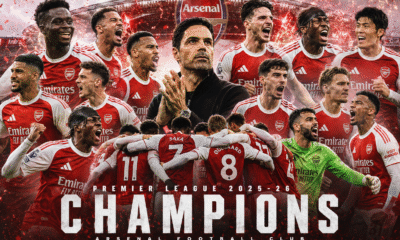
Arsenal End 22 Year Premier League Curse as Man City Slip Up and Arteta Finally Delivers Glory