
Automobile
EV sales skyrocket in the U.S. as buyers race against Sept. 30 tax credit deadline
With federal incentives of up to $7,500 set to expire, Americans rushed to dealerships, sparking a historic surge in electric vehicle sales.


The electric vehicle market in the United States just witnessed a surge unlike anything in recent memory. With federal tax credits for EVs — worth up to $7,500 on new cars and $4,000 on used ones — set to expire on September 30, buyers across the country rushed to secure deals before the clock ran out.
The Republican tax and spending package, passed in July, abruptly brought forward the deadline, creating what analysts have dubbed “the great EV sprint.” To qualify, buyers simply needed a binding contract signed before the deadline, even if delivery of the vehicle was scheduled for later.
“The past couple of weeks — even in the past several days — EV sales just exploded,” said Matt Jones, senior director of industry relations at TrueCar (LinkedIn). “It’s been bonkers.”
Tesla’s countdown and the power of urgency
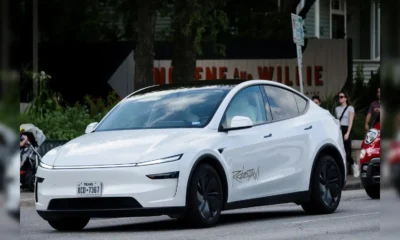
Some automakers wasted no time amplifying the urgency. Tesla (Wikipedia) prominently featured a ticking countdown clock on its website, reminding buyers of the exact second they had left to lock in their purchase. Other dealers ramped up ad campaigns, targeting consumers who were previously unaware of the tax incentive.
The strategy worked. According to Cox Automotive EV sales in Q3 jumped 21.1% year-over-year, and were 30% higher than in spring 2025. J.D. Power reported that EVs made up over 11% of all U.S. auto sales in August, a figure matched only once before — in December 2024, when buyers rushed to close deals before Donald Trump began his second presidential term.

Used EVs: the hottest ticket under $25k
The frenzy wasn’t limited to new vehicles. Used EVs under $25,000 — the price band eligible for the used tax credit — became the fastest sellers in the market, according to Cars Commerce , parent company of Cars.com.
The surge was so significant that analysts believe it boosted the entire U.S. auto market, with Edmunds forecasting the strongest Q3 new vehicle sales since before the COVID-19 pandemic in 2020.
But will there be an “EV hangover”?
Not everyone is celebrating. Analysts warn that the spike could be followed by a slowdown. “The end of the tax credit created a rush in September, but it could also trigger an EV hangover in the months ahead,” cautioned Ivan Drury of Edmunds.
In other words, consumers who rushed to buy an EV before the deadline likely won’t be shopping again this year, leaving dealerships with fewer potential buyers in the short term.
The Rhodium Group estimates that the early end of the credits could reduce EV sales by 16% to 38% compared to projected growth.
Long-term growth still intact
Despite the uncertainty, long-term EV adoption appears stable. J.D. Power surveys show more than half of new-vehicle shoppers remain interested in going electric within the next year, suggesting that consumer appetite isn’t just tied to government incentives.
Automakers like General Motors and Ford are still heavily investing in EV technology to compete with China’s rapidly expanding market, while also grappling with tariffs and supply chain costs.
The real test, experts say, will be whether automakers can bring down EV prices enough to maintain momentum without federal subsidies. For now, September’s sales boom has shown one thing clearly: when incentives are on the line, American buyers will move fast.
For more Update http://www.dailyglobaldiary.com








Automobile
“VW Makes a Bold U-Turn… Why the Iconic Scout Is Returning as Hybrids, Not EVs”
In a surprising industry shift, Volkswagen revives its legendary Scout brand with hybrid powertrains — as U.S. consumers turn away from fully electric cars.

For the last several years, major automakers have been racing toward an all-electric future. But in a twist few insiders saw coming, Volkswagen (VW) — one of the world’s largest carmakers — is rewriting its own EV playbook.
The company has decided to revive its classic Scout line not as futuristic electric vehicles, but as rugged, long-range gas-electric hybrids. And if early demand is any measure, the American market is applauding the move louder than anyone expected.
A Comeback Rooted in Consumer Truth
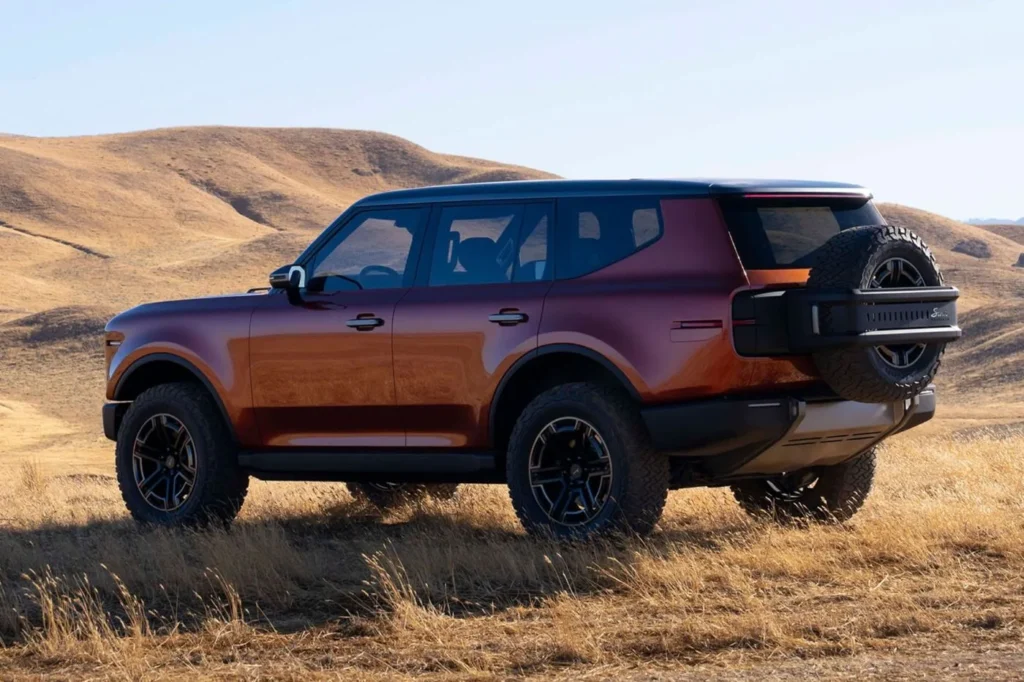
According to Scott Keogh — the CEO of Scout Motors — more than eight out of ten reservation holders chose the plug-in hybrid or extended-range versions instead of pure EVs.
“The market clearly has spoken,” Keogh said during an interview, adding that the hybrid can deliver up to 500 miles on a tank while eliminating typical “EV drama” such as range anxiety or charger shortages.
Keogh, whose professional profile appears on , emphasizes that these buyers don’t want to abandon electrification — they simply want a version that fits American road realities.
Why VW Pivoted Away from Pure EVs
VW acquired Scout when it bought Navistar (the successor to International Harvester, Scout’s original parent) back in 2021. The revival was initially planned as a fully electric rebirth — inspired in part by Ford’s successful comeback with the Bronco SUV.
But with EV demand dipping sharply in the United States — especially after former U.S. President Donald Trump vowed to eliminate the $7,500 EV tax credit, calling it the “EV mandate” — the landscape shifted fast.
Meanwhile, sales of large gasoline SUVs surged, and automakers like General Motors, Stellantis, and Ford scaled back ambitious electric truck plans. Even Tesla’s Cybertruck, despite global hype, has struggled to attract mainstream pickup buyers due to towing-range concerns.
By late 2024, VW realized the writing was on the wall: the Scout revival needed to match the American market’s real sentiment, not its projected one.
What the New Scout Lineup Looks Like
Scout plans to launch two flagship models in 2027:
- Scout Traveler (SUV)
- Scout Terra (pickup truck)
Both are expected to start at around $60,000 — and Keogh insists that the company will not slash this price, even without the EV tax credit.
“We’re not dropping $7,500 off the price,” he said confidently. “We don’t need to.”
The strategy appears to be working: Scout has already received more than 130,000 non-binding reservations, with 73% preferring the SUV.
Could the Pickup Truck Be Canceled?
Interestingly, Keogh didn’t rule out cancelling the Terra pickup if the hybrid truck segment weakens further — a move similar to what Ford is reportedly considering with the F-150 Lightning, as reported by The Wall Street Journal.
“That’s something we could look at,” he admitted. “But not now.”
Audi May Join the Story
The upcoming $2 billion Scout factory in South Carolina may eventually produce vehicles for Audi, VW’s luxury brand. Audi’s CEO has hinted at a U.S.-centric SUV — with reports suggesting it might share the Scout platform.

Keogh neither confirmed nor denied this:
“We’re capable of building for other brands… but Audi would have to answer that.”
Trump’s ‘America First’ Strategy Accidentally Boosted Scout
Ironically, while Trump’s policy shift is hurting other EV makers, it may strengthen Scout’s “Made in America” narrative.
Scout recently announced a $300 million supplier park in South Carolina, reinforcing its Americana identity. Keogh says the tax credit loss only affects Scout for four years and cannot determine the company’s “50-year decision.”
“You don’t build a brand based on money that may or may not exist,” he said.
A Return to Its Roots
Scout hasn’t rolled off an assembly line since 1980. With its revival set for 2027 — this time as a hybrid symbol of American outdoor culture — VW is hoping nostalgia, practicality, and a changing political environment will fuel one of its biggest U.S. comebacks.
Whether consumers embrace the new Scout the way they once cherished the original remains to be seen — but the early numbers suggest VW is finally speaking the language the American market wants to hear.
For more Update ; DALIY GLOBAL DIARY
Automobile
Elon Musk’s $1 Trillion Tesla Pay Deal Sparks Outrage: “He Has the Board Wrapped Around His Finger…”
As Tesla’s record-breaking compensation plan for Elon Musk stirs global debate, critics call it a “corporate capture” while supporters hail it as visionary reward for unmatched innovation.

It was anything but a typical corporate meeting.
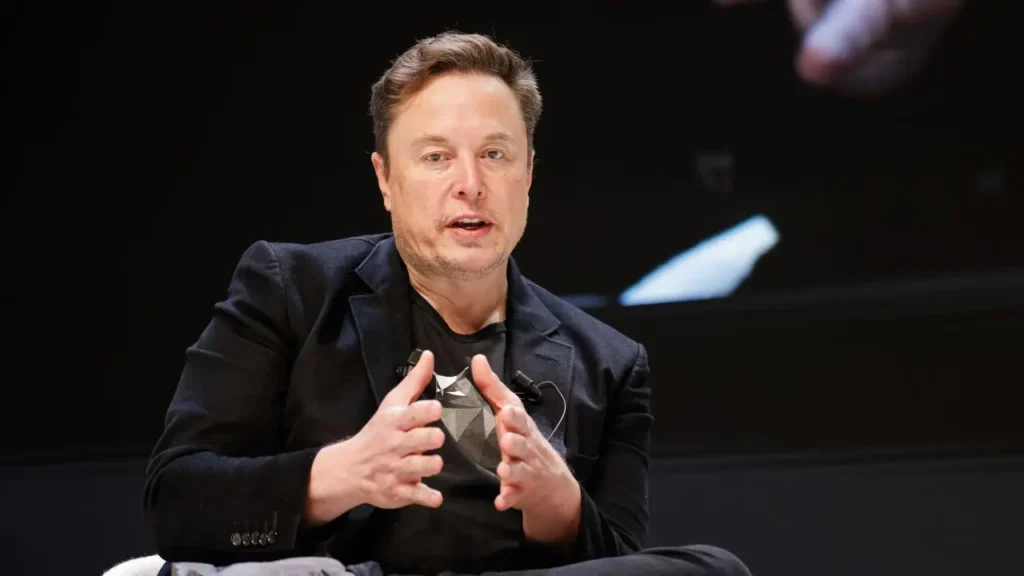
On November 6, Elon Musk — the larger-than-life CEO of Tesla, SpaceX, and X — stormed the stage to a funk soundtrack, dancing beside one of Tesla’s Optimus humanoid robots. “Most shareholder meetings are snooze fests,” Musk quipped, “but ours are bangers.”
Behind the theatrics, however, lies a corporate controversy shaking Wall Street: Tesla’s $1 trillion pay deal for Musk — the largest compensation package ever proposed to a CEO in modern history.
A Billion-Dollar Question: Reward or Power Play?
The plan, initially approved years ago and now revived in new form, ties Musk’s earnings to Tesla’s market performance and profitability. In theory, it aligns his incentives with shareholders. In practice, critics argue it demonstrates something far more troubling — what governance experts are calling “corporate capture.”
According to financial analysts, Tesla’s board — composed largely of Musk loyalists and long-time associates — has effectively surrendered oversight to its chief. A report by The Financial Times described the dynamic bluntly:

“Tesla’s board no longer checks Musk’s power — it amplifies it.”
Even The Economist noted that Musk now wields “near-monarchical control” over a publicly traded company, with little resistance to his personal decisions, tweets, or strategic whims.
Investors Divided Over the ‘Musk Empire’
To Musk’s fans, this trillion-dollar pay plan is simply the cost of brilliance. Under his leadership, Tesla became the world’s most valuable automaker, revolutionized electric mobility, and forced legacy carmakers like Ford and General Motors to follow suit.
“Elon Musk has created industries where none existed,” said one venture capitalist on LinkedIn, arguing that such vision deserves an equally extraordinary reward.
But others see it as reckless hero-worship. Corporate watchdogs warn that Tesla’s governance structure risks becoming a “cult of personality” rather than a responsibly managed enterprise. “Tesla is now more Elon than company,” wrote governance expert Lucian Bebchuk from Harvard Law School. “That’s dangerous for shareholders and for capitalism itself.”
Dancing with Robots, Dodging Oversight
Musk’s flair for spectacle — whether launching rockets, trolling competitors on X, or performing at shareholder events — often blurs the line between leadership and showmanship. His latest performance with a robot wasn’t just viral marketing; it was a symbolic reminder of who controls the stage, both literally and figuratively.
Behind the applause, however, investors and regulators are quietly asking: At what point does innovation turn into unchecked dominance?
The Bigger Picture: Corporate Power in the 21st Century
The Musk pay saga isn’t just about one man’s paycheck. It represents a broader trend in modern capitalism — where founders and tech visionaries command immense influence over boards meant to hold them accountable.
As Jeff Bezos, Mark Zuckerberg, and Tim Cook steer trillion-dollar corporations, the balance between innovation and oversight continues to erode. Musk’s trillion-dollar deal, critics say, is simply the most extreme example yet.
The Verdict: “A Banger” or a Boardroom Warning?
For now, Musk remains unfazed. “The shareholders voted. The people have spoken,” he declared with a grin, as applause filled the hall. Yet, beyond the cheers and flashing cameras, the unease lingers.
Is Elon Musk a genius pushing humanity forward — or a corporate emperor rewriting the rules of accountability?
Only time, and Tesla’s next earnings report, will tell.
For more Update http://www.dailyglobaldiary.com
Automobile
The 2026 Cadillac Celestiq Just Got Even Pricier — Here’s Why It Costs Over $400,000 Now
General Motors’ ultra-luxury electric sedan, the Cadillac Celestiq, is getting a massive $60,000 price hike for 2026, with new features and exclusive updates meant to cement its status as America’s answer to Rolls-Royce.

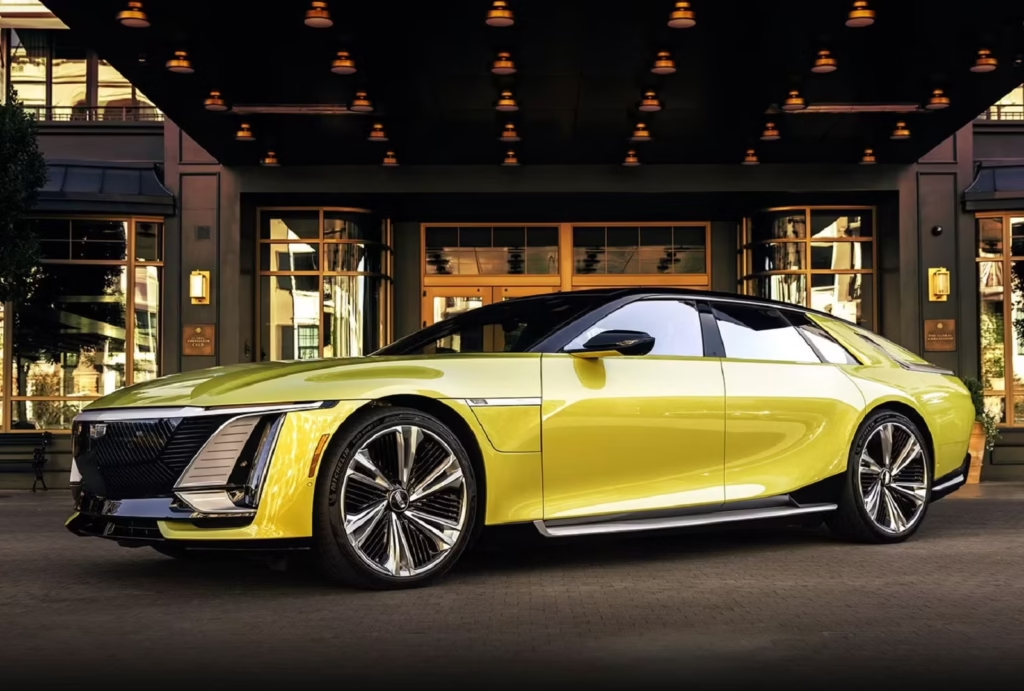
The Cadillac Celestiq, the most luxurious and hand-built model ever produced by General Motors (GM), is about to become even more exclusive. As per a report by Automotive News, the 2026 edition of the Celestiq will now start in the low $400,000 range, marking a steep $60,000 increase over the 2025 version’s $340,000 base price.
A Price Tag That Matches Its Ambition
Cadillac says the price hike reflects the inclusion of the smart glass panoramic roof as standard, along with eight years of connected services. These updates aim to position the Celestiq not just as a car, but as a rolling expression of design, technology, and craftsmanship.
While the figure might sound staggering, Cadillac insists this EV isn’t just transportation — it’s a statement of what American engineering can achieve. “No two Celestiqs will ever be alike,” said a GM executive, referencing the bespoke personalization process that lets buyers hand-pick every inch of the car’s design — from custom paint finishes to hand-stitched interiors and even 3D-printed components.

The Most Technologically Advanced Cadillac Ever
Under its sculpted body, the Celestiq rides on GM’s Ultium Platform — the same electric foundation used in vehicles like the GMC Hummer EV. Its dual-motor setup delivers a staggering 655 horsepower and 640 lb-ft of torque, allowing it to hit 0–60 mph in just 3.7 seconds in Velocity Max mode.
The sedan also features Magnetic Ride Control 4.0, adaptive air suspension, four-wheel steering, and Super Cruise, GM’s semi-autonomous driving system. Inside, you’ll find a pillar-to-pillar HD display, a 38-speaker AKG Studio Reference audio system, and even heated armrests — because why shouldn’t your elbows be as comfortable as the rest of you?
Exclusivity at Its Core
The 2026 Celestiq will continue to be built at the GM Global Technical Center in Warren, Michigan, in extremely limited quantities. Cadillac confirmed that all 25 units of the 2025 model have already been sold, and production for 2026 will remain just as restricted.
Unlike mass-market EVs from Tesla, the Celestiq isn’t meant to dominate sales charts. Instead, it serves as a halo product, showcasing Cadillac’s ultimate potential in electric luxury — a handcrafted rival to the Rolls-Royce Spectre and Bentley Flying Spur.
What Makes It Worth the Money
Every Celestiq undergoes a meticulous artisan-led build process that takes hundreds of hours per unit. Each car can be customized to reflect its owner’s personality — a reflection of Cadillac’s renewed philosophy of “Artful Obsession”.
Owners also receive a dedicated concierge from Cadillac’s bespoke division, ensuring a seamless design-to-delivery experience — something usually reserved for ultra-high-end European marques.
The Bigger Picture
The Celestiq’s steep new pricing signals Cadillac’s confidence in its luxury EV direction. While Mary Barra, GM’s CEO, continues to emphasize an “all-electric future,” the Celestiq stands as a symbol that sustainability and opulence can indeed coexist — at a price, of course.
IMAGE CAPTION:
The 2026 Cadillac Celestiq – GM’s handcrafted luxury EV masterpiece, now starting above $400,000, combines technology, elegance, and exclusivity.
For more Update http://www.dailyglobaldiary.com

Liverpool vs Brighton, Chelsea vs Everton and More — Live Football Action as Premier League Drama Unfolds

Bryant Haines Set to Become One of College Football’s Highest-Paid Assistants After Indiana’s Dream Season

Sherrone Moore Fired and Arrested — Why Michigan Athletics Is Facing Its Biggest Culture Crisis Yet

League of Legends 2026 Swiftplay Gets a Massive Overhaul With Faster Games and Shocking Jungle Changes

Olivia Rodrigo Leaves Her Idol ‘Mind Blown’ With Stunning A Cappella Christmas Cover

1-Iran Issues Dire Warning to Israel and Defies Trump on Nukes: “We’re Ready to Strike Deep Inside”

Donald Trump’s net worth reveals the fortune behind the former US President and business mogul

Caitlin Clark Sidelined with Quad Strain, Set to Miss Two Weeks of WNBA Action

Elon Musk Breaks Ranks with Trump Over ‘Big, Beautiful’ Tax Bill

Golden Glory: Team USA Wins First Standalone Ice Hockey World Championship in 91 Years

Miss Jamaica Suffers Terrifying Fall Off Miss Universe Stage; Rushed to Hospital on Stretcher in Viral Video

Moana Live-Action Teaser Sparks Outrage as Fans Call Disney’s Move a ‘Clear Money Grab’ — What Went Wrong?

Ryan Gosling’s Project Hail Mary Trailer Stuns Fans with a Mysterious Alien Ally and a Mission That Could Save Earth

Apple delays Jessica Chastain thriller The Savant about domestic extremism after recent US violence

Avatar 3, Fire and Ash trailer reveals Jake Sully’s family facing terrifying new Na’vi enemies with deadly fire powers
-

 US News1 week ago
“She Never Made It Out…” Albany House Fire Claims Woman’s Life as Family Pleads for Help to Bring Her Home
-

 Entertainment6 days ago
XG Star Cocona Shares a Brave Truth at 20 — “I Was Born Female, But That Label Never Represented Who I Truly Am…”
-

 Entertainment6 days ago
Samba Schutte Reveals the Surprise Cameo in Pluribus That “Nobody Saw Coming”… and Why John Cena Was Perfect for the Role
-

 Entertainment1 week ago
Nika & Madison stuns global audiences as director Eva Thomas reveals why “resilience, not fear, drives Indigenous women on the run”
-

 Tech1 week ago
After Losing Over $70 Billion, Mark Zuckerberg Finally Admits His Biggest Bet Is “Not Working” – Meta Plans Massive Cuts to Metaverse Budget
-

 Entertainment5 days ago
“America Under a Dictatorship?” New ‘The Boys’ Trailer Teases a Terrifying Final Season… and Billy Butcher’s Last Stand
-

 Entertainment1 week ago
Guillermo del Toro earns Britain’s highest film honor: BFI Fellowship announced… the director says “This is the honor of a lifetime”
-

 Entertainment1 week ago
New York Film Critics Circle 2025 winners shock Hollywood: ‘One Battle After Another’ crowned Best Film… but the real surprises came elsewhere