
World News
From Colombo to Kathmandu 7 Furious Youth Movements Shaking South Asia’s Old Elites
Gen Z protests in Nepal ignite a regional firestorm, echoing revolutions in Sri Lanka, Bangladesh, and beyond. From Colombo to Kathmandu 7 Furious Youth Movements Shaking South Asia’s Old Elites


From Colombo to Kathmandu 7 Furious Youth Movements Shaking South Asia’s Old Elites, The acrid stench of smoke still lingers across Kathmandu. The once-majestic Singha Durbar palace, home to Nepal’s parliament, now stands in ruins, its iconic white columns scorched black. The residence of former prime minister K. P. Sharma Oli—a leader who only days ago seemed untouchable—has been reduced to rubble. Oli himself remains in hiding, his whereabouts shrouded in mystery.
These ruins are not just buildings; they are monuments to the power of a youth-led uprising. In an extraordinary week, Nepal’s political order was upended by an organic, leaderless movement that branded itself simply as the Gen Zs—young citizens aged between 13 and 28.
By Friday evening, the nation had dissolved its old parliament, Oli had vanished under army protection, and history was made as Sushila Karki, Nepal’s first female prime minister and a celebrated anti-corruption crusader, took oath to lead an interim government. For six months, before elections in March, she will govern without the entrenched political parties that dominated for decades but lost legitimacy in the eyes of an entire generation.
Her message was clear: “An end of corruption, good governance, and economic equality.”
A Regional Wave of Anger
Nepal’s uprising doesn’t exist in isolation. It mirrors youth-led revolts across South Asia that have already toppled political titans. In Sri Lanka, mass protests drove out strongman Gotabaya Rajapaksa in 2022. In Bangladesh, long-time leader Sheikh Hasina fled Dhaka in 2024 amid relentless student-led demonstrations. And in Indonesia, mass rallies by students and workers have erupted over economic inequality and political elitism.
Each case is unique, but the undercurrents are the same: a frustrated youth majority unwilling to tolerate corruption, nepotism, and economic stagnation. Almost 40% of South Asia’s population is under 18, yet their futures feel increasingly uncertain.

The Power of Social Media
What gave these movements their strength was not just numbers on the streets but the reach of social media. In Nepal, hashtags like #NepoBaby and #NepoKids flooded TikTok, X (formerly Twitter), Facebook, and Instagram. Viral posts contrasted the lavish lives of elite politicians’ children—posing with Louis Vuitton handbags, sipping champagne in luxury resorts, and driving imported cars—with the harsh economic realities of everyday Nepali youth.
For millions grappling with inflation, joblessness, and exploitative labor migration to the Gulf countries, these images were not just offensive—they were proof that the system was broken.
The final spark came when Oli’s government clumsily imposed a ban on almost all social media, including YouTube and WhatsApp. For protesters like 26-year-old Raksha Bam, it was the last straw: “They shut down the civic space of our generation. That is why Gen Z gathered in one place.”
Echoes Across Borders
Experts say these movements are linked by more than coincidence. Ashish Pradhan, a Nepal specialist at the International Crisis Group, observed: “There was chatter online about taking inspiration from the Bangladeshis, from the Sri Lankans, from what’s happening in Indonesia. People were posting images of Sheikh Hasina fleeing and saying: ‘This could be us—Nepal should be next.’”
Chietigj Bajpaee, a South Asia fellow at Chatham House, added: “These youth-led movements reflect structural challenges—governments failing to respond to young populations, economic distress, and demographic pressures. Social media has become both a catalyst for change and, at times, instability.”

A Generation Demands Change
With a median age of just 25, Nepal’s population embodies the region’s “youth dividend.” But this potential remains untapped, squandered by poor education systems, underemployment, and corruption scandals. Nepal has cycled through 14 prime ministers in 16 years, a dizzying instability that alienated its youngest citizens.
Protester Tanuja Pandey, 26, put it bluntly: “The wealth of those in power grew enormously while others continued to suffer. Our generation is bearing the cost, and that’s what forced us onto the streets.”
The Road Ahead
The appointment of Sushila Karki offers hope, but uncertainty looms. Nepal’s young people may have toppled one government, but sustaining a democratic system free of corruption will be a monumental challenge. The parallels with Colombo and Dhaka are undeniable: revolutions are intoxicating, but rebuilding is painstaking.
Still, for many in South Asia, these movements represent a turning point. A new generation, armed with smartphones and fueled by frustration, is rewriting the political script. The message to entrenched elites is clear: the age of unchecked privilege is over.
Stay tuned to Daily Global Diary for continuing coverage on South Asia’s youth revolutions and their global impact.




World News
Delta Pilot Falls Ill Mid-Flight: “I Need to Go to the Hospital” as Boeing 757 Diverts to Detroit
Delta Flight 437 was heading from Los Angeles to Boston when its captain became ill over the Midwest, forcing the aircraft to make a safe diversion to Detroit.


A routine cross-country journey took an unexpected turn Tuesday when the captain of Delta Air Lines Flight 437 became ill while flying from Los Angeles to Boston.
The Boeing 757 was carrying 147 passengers when the crew declared an emergency while flying over the Lake Michigan region. The medical emergency did not involve a passenger. Instead, it was the captain who needed urgent medical attention.
The aircraft was diverted safely to Detroit Metropolitan Airport, with the first officer taking control of the aircraft.
Captain reveals he was the one experiencing the medical emergency
Flight 437 had departed Los Angeles International Airport for Boston, a route that typically takes between five and five-and-a-half hours.
The aircraft was cruising at approximately 39,000 feet when the situation developed. The cockpit crew contacted air traffic control and declared an emergency before changing course toward Detroit.
Initially, the communication referred to a medical episode involving someone aboard the aircraft. The unusual nature of the situation became clear when the captain explained that he was the person who had fallen ill.
Diverting to Detroit allowed the crew to get the captain medical assistance while ensuring the aircraft and passengers could reach the ground safely.
“I’m the one that’s ill”
As the aircraft approached Detroit, the captain communicated with the airport tower and explained what had happened.
“This is the captain,” he told air traffic control. “I’m the one that’s ill. I’m going to taxi the jet to the gate, and then I need to go to the hospital.”
Despite experiencing the medical problem, the captain remained involved in the final stages of the flight. The first officer had taken control during the diversion, allowing the aircraft to make its way safely toward the Detroit hub.
The exchange offered a rare glimpse into how a medical emergency involving a flight crew member can unfold in real time.
The aircraft landed safely in Detroit
Flight 437 arrived safely at Detroit Metropolitan Airport, where the captain could receive medical attention.
According to Delta Air Lines, the flight was subsequently completed by another crew.
The airline has not disclosed the captain’s specific medical condition.
There were no reports in the supplied information of passenger injuries or an aircraft-related problem.

Why having two pilots matters
The incident also highlights one of the fundamental safety features of commercial aviation: having multiple qualified pilots on the flight deck.
When one pilot becomes unable to continue operating the aircraft, the other can assume control, communicate with air traffic control and divert to an appropriate airport.
That is precisely what happened aboard Flight 437.
Rather than continuing the long journey to Boston, the crew chose to divert to Detroit, giving the captain access to medical care while minimizing the risk to everyone aboard.
Passengers ultimately continued their journey
For the 147 passengers aboard the Delta flight, the emergency meant an unexpected stop in Detroit before the journey could continue.
Another crew took over the aircraft after the diversion, allowing the flight to proceed toward Boston.
While medical emergencies involving pilots are rare, aviation procedures are designed to ensure that an unexpected situation does not automatically become a catastrophe.
In this case, the aircraft reached the ground safely, the captain was able to seek medical care and the passengers’ journey continued.
What began as an ordinary flight across the United States ended with an extraordinary cockpit emergency—and a quiet reminder of just how important preparation and teamwork are in commercial aviation.
World News
Colorado’s Moon Is About to Turn Red: Near-Total Lunar Eclipse Could Paint the Night Sky in Blood-Red
The celestial show will be visible across Colorado on Thursday night, with the eclipse expected to reach its peak between 9:45 p.m. and 10:45 p.m.

A dramatic celestial spectacle is set to unfold over Colorado on Thursday night as the Moon takes on a deep reddish tint during a near-total lunar eclipse.
Unlike a normal full Moon, this celestial event will see the Moon move deep into Earth’s shadow, creating the striking red or copper-colored appearance commonly associated with a “blood moon.” The event will be visible to the naked eye across much of the state, provided clouds stay away.
According to Chris Bianchi, a senior meteorologist at 9News, viewing conditions along Colorado’s Front Range are expected to be largely favorable. He estimated that many areas could have a 70% to 80% chance of clear skies around the eclipse’s peak.
However, skywatchers farther south may have a tougher time.
When will the lunar eclipse be visible?
The Moon is expected to begin developing its reddish appearance at around 8:30 p.m. The eclipse will continue for several hours, with the overall event lasting until approximately 1 a.m.
The most impressive phase is expected between 9:45 p.m. and 10:45 p.m., when roughly 92% to 95% of the Moon could be covered by Earth’s shadow over Colorado.
That means the state will come remarkably close to experiencing a total lunar eclipse, even though it will not technically reach totality.
The red color happens because sunlight passing through Earth’s atmosphere is bent toward the Moon. Shorter blue wavelengths are scattered more easily, while longer red and orange wavelengths make their way through the atmosphere and illuminate the lunar surface.

Why Colorado’s viewing conditions could vary
For residents along the Front Range, particularly around the Denver area, the forecast currently looks encouraging. But the farther south viewers travel, the greater the possibility of clouds.
Areas around Colorado Springs, south of the Palmer Divide, as well as La Junta and Lamar, could see more unsettled viewing conditions.
That could make the eclipse a bit of a race against the clouds.
For people determined to get the best possible view, Chris Bianchi recommends moving away from bright city lights. Areas east of Denver International Airport could provide darker skies and a better opportunity to appreciate the Moon as it approaches its deepest stage of the eclipse.
There is one catch: cloud cover could also be more likely in some of those eastern areas.
In other words, eclipse watchers may need to be flexible.
You don’t need a telescope to see it
The good news is that this isn’t an event reserved for professional astronomers.
A telescope or pair of binoculars can make the details on the Moon easier to see, but neither is essential. Anyone standing under a reasonably clear, dark sky should be able to watch the Moon gradually change color.
Unlike a solar eclipse, a lunar eclipse can also be viewed safely with the naked eye.
For the best experience, viewers should find a location away from heavy light pollution, give their eyes time to adjust to the darkness and keep an eye on the clouds.
A nearly red Moon could make for a memorable night
The eclipse may not technically reach totality in Colorado, but with as much as 95% of the lunar surface expected to fall under Earth’s shadow, the difference could be difficult to notice for casual observers.
As the Moon darkens and takes on its reddish glow, the sky could offer one of the most striking natural displays of the night.
For Colorado residents, the message is simple: look up around 9:45 p.m. — and keep the clouds in mind.
World News
Lindsay Clancy Trial: Could Postpartum Psychosis Lead to an Insanity Verdict? ‘This Case Is About This Defendant’
The Massachusetts murder trial has placed postpartum psychosis, criminal responsibility and the limits of the mental health system at the centre of a deeply emotional courtroom battle.
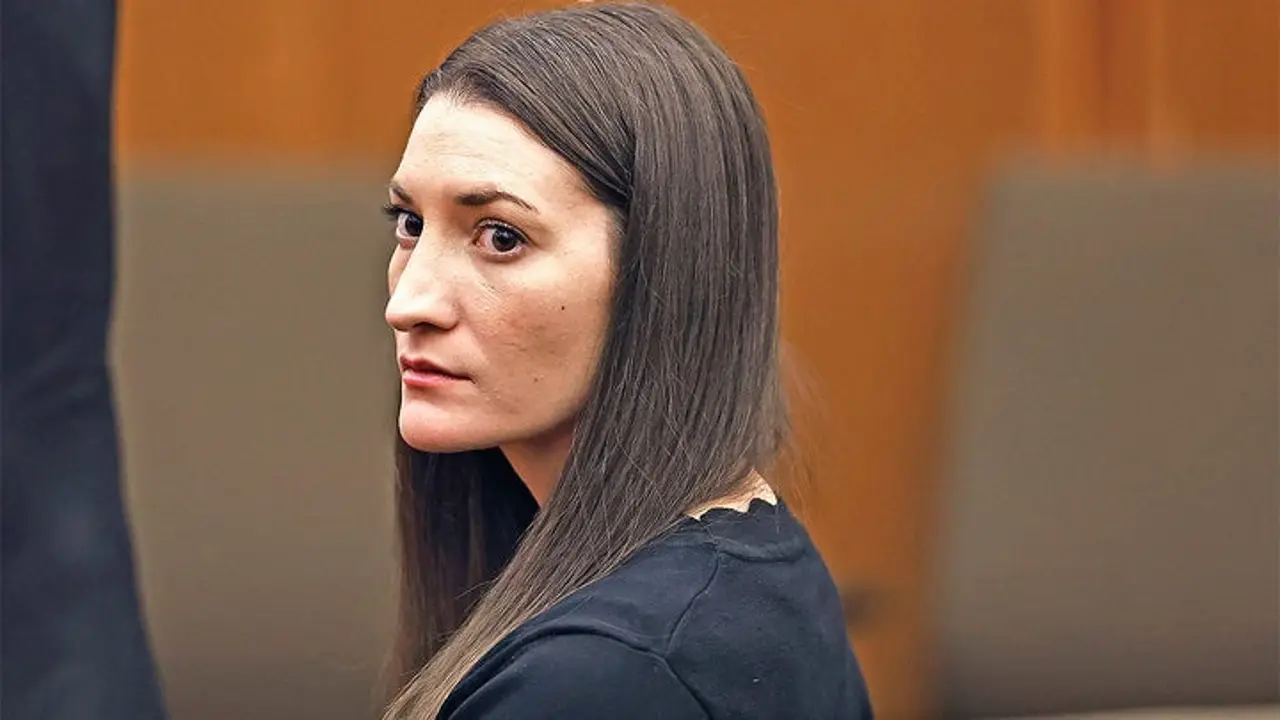
The trial of Lindsay Clancy has brought one of the most difficult questions in criminal law into sharp focus: when a person suffering from a severe mental illness commits a violent act, how should the justice system determine whether they are criminally responsible?
The case has drawn intense attention because both sides agree on the basic facts surrounding the deaths of Clancy’s three children. The dispute is over what was happening inside her mind at the time—and whether her mental state means she should be held legally responsible.
Clancy’s defence argues that she was suffering from postpartum psychosis, a rare and serious psychiatric condition that can develop after childbirth. Prosecutors, however, contend that she acted intentionally and remains criminally responsible for her actions.
The trial is therefore expected to centre heavily on psychiatric evidence, the events leading up to the killings and the question of whether Clancy understood the nature and consequences of what she was doing.

A family tragedy at the heart of the trial
According to testimony presented in court, Clancy’s mental health deteriorated significantly after the birth of her third child.
Her former husband, Patrick Clancy, testified that she began experiencing intrusive thoughts about harming her children and thoughts of suicide. He described the situation as confusing because her behaviour could appear normal one moment and deeply troubling the next.
Patrick told jurors that he never saw his wife physically harm the children before the killings.
The testimony also described a lengthy effort to obtain psychiatric care. Clancy reportedly sought treatment from specialists, was prescribed several medications and eventually spent time in a psychiatric hospital.
Her defence maintains that these interventions failed to prevent her condition from worsening.
Nineteen days after leaving the hospital, Clancy killed her three children at the family’s Massachusetts home, according to the prosecution’s case.
She then attempted to take her own life by jumping from a second-storey window. She survived but remains paralysed from the waist down.
Defence says postpartum psychosis changed everything
Clancy’s attorney Kevin Reddington has argued that his client was suffering from postpartum psychosis and bipolar disorder.
The defence has also claimed that certain medications prescribed after the birth of her third child may have aggravated her mental condition.
According to the defence, Clancy experienced hallucinations and heard voices instructing her to kill her children before taking her own life.
Reddington told jurors that Clancy loved her children and that her actions must be understood in the context of a severe psychiatric illness.
The defence’s central argument is not that the children were not killed. Rather, it is that Clancy’s mental state meant she should not be considered criminally responsible for their deaths.
Prosecutors strongly reject the insanity argument
The prosecution has offered a sharply different interpretation.
Prosecutor Shanan Buckingham argued that Clancy acted deliberately and with full criminal responsibility.
Buckingham told the jury that this was not a case involving a woman actively experiencing psychosis but instead a case about the actions of the defendant herself.
The prosecution’s position will be crucial as jurors consider whether Clancy’s mental illness reached the legal threshold required for a verdict of not guilty by reason of insanity.
If convicted of murder, Clancy could face life imprisonment without parole. If she is found not guilty because she lacked criminal responsibility due to mental illness, she would instead be committed to a state mental health facility.
The emotional testimony of a grieving father
Patrick Clancy’s testimony has provided jurors with a deeply personal account of the family’s final days together.
The children—Cora, 5, Dawson, 3, and eight-month-old Callan—were described through their personalities and interests.
Cora loved princesses. Dawson was fascinated by fire trucks and Paw Patrol. Callan, still a baby, was remembered by his father as a happy child.
Patrick told the court that the family attempted to return to normal life after Lindsay’s discharge from psychiatric care.
They celebrated Cora’s birthday and visited attractions together. Jurors were also shown video of Lindsay playing with the children.
Patrick said he believed her condition had improved.
On the day of the killings, he described Clancy as appearing to be in a particularly good mood. She took Cora to a medical appointment while he stayed home with the younger children.
The couple exchanged photographs of their children during the day. Later, Clancy reportedly spent time with the children, including building a snowman and working on art projects.
Then Patrick left the house to run errands.
What happened afterward became the central tragedy at the heart of the trial.
What is postpartum psychosis?
Postpartum psychosis is an uncommon but extremely serious psychiatric condition that can occur following childbirth.
Unlike the much more common postpartum depression, postpartum psychosis can involve hallucinations, delusions, paranoia and a severe break from reality.
Medical experts cited in the case have said it affects an estimated one to two women per 1,000 births.
Importantly, the overwhelming majority of women experiencing postpartum psychosis do not harm themselves or their children.
However, experts say that in severe cases, a person may develop beliefs that are completely disconnected from reality.
Dr. Nicole Cirino of Baylor College of Medicine has explained that some women experiencing postpartum psychosis may genuinely believe they are protecting or saving their children.
That medical perspective could become highly relevant as jurors examine the defence’s argument.
The case of Andrea Yates
One of the most widely known cases involving postpartum psychosis is that of Andrea Yates, who killed her five children in Texas in 2001.
Yates’ lawyers argued that she suffered from postpartum psychosis and believed that killing her children would save them from eternal punishment.
Her original murder conviction was later overturned. During a subsequent trial, she was found not guilty by reason of insanity and committed to a state mental health facility.
The case became a landmark in discussions surrounding maternal mental health and the criminal justice system.
The Clancy trial has inevitably drawn comparisons with Yates, although the legal circumstances and evidence in the two cases are not identical.
A wider conversation about maternal mental health
Beyond the courtroom, the case has renewed discussion about how society recognises and treats severe mental health conditions following childbirth.
Mental health advocates have argued that postpartum psychosis remains poorly understood and that early diagnosis and intervention can be critical.
The case also raises difficult questions about the relationship between medical treatment and criminal law.
At what point does a serious mental illness affect a person’s ability to understand reality? And when does that condition meet the legal standard for a finding of insanity?
Those questions will ultimately be for the jury to consider based on the evidence presented during the trial.
For the families involved, however, the legal arguments cannot erase the enormous human tragedy.
As the courtroom proceedings continue, the Lindsay Clancy case is likely to remain a closely watched examination of mental illness, criminal responsibility and the devastating consequences that can occur when severe psychiatric disorders go untreated or inadequately managed.

Summer House Cast Celebrates First Emmy Nomination, Calls It Surreal

Beyoncé Ends Two-Year Music Hiatus With ‘Morning Dew’… Fans Wonder If a Bigger Announcement Is Coming

Stephen Colbert vs Jimmy Kimmel at the Emmys 2026… Late-Night Giants Face Off in a Battle for TV’s Top Honor

Emmy Awards 2026 Predictions: First Post-Nominations Forecast Spotlights the Early Favorites

Lorde Pushes Back Against Spotify’s AI Features

1-Iran Issues Dire Warning to Israel and Defies Trump on Nukes: “We’re Ready to Strike Deep Inside”

Sen. Elizabeth Warren Calls It a ‘Cesspool of Corruption’ — Here’s Why Senators Are Now Fighting Back Against the DOJ’s Live Nation Deal That Left Every Fan Betrayed…

Donald Trump’s net worth reveals the fortune behind the former US President and business mogul

“Tomás Rodríguez Net Worth 2025: Panama’s Gold Cup Goal‑Machine’s Surprising Fortune Revealed”

“She Never Made It Out…” Albany House Fire Claims Woman’s Life as Family Pleads for Help to Bring Her Home

Miss Jamaica Suffers Terrifying Fall Off Miss Universe Stage; Rushed to Hospital on Stretcher in Viral Video

Moana Live-Action Teaser Sparks Outrage as Fans Call Disney’s Move a ‘Clear Money Grab’ — What Went Wrong?

Ryan Gosling’s Project Hail Mary Trailer Stuns Fans with a Mysterious Alien Ally and a Mission That Could Save Earth

Apple delays Jessica Chastain thriller The Savant about domestic extremism after recent US violence

Avatar 3, Fire and Ash trailer reveals Jake Sully’s family facing terrifying new Na’vi enemies with deadly fire powers
-

 Entertainment1 week ago
Chris Hansen Praises Robert Pattinson’s ‘Primetime’ Portrayal, Calls It ‘Overly Dramatic’
-

 Entertainment6 days ago
Hollywood’s New Box-Office Saviours Revealed: How Curry Barker Joined Guillermo del Toro’s Elite Circle
-

 Entertainment1 week ago
Inside Christopher Nolan’s Ambitious ‘The Odyssey’ Shoot: 20 Actors and One Giant Trojan Horse
-

 Entertainment4 days ago
Creative Arts Emmys Night Two Winners: ‘Widow’s Bay’ Dominates, but Rob Reiner’s Emotional Victory Steals the Spotlight
-

 Entertainment1 week ago
‘The Gentlemen’ Goes Dark: Theo James Unpacks Season 2’s Shocking End
-

 Entertainment1 week ago
America Honors a Country Music Icon With Dolly Parton Day on September 25
-

 Entertainment1 week ago
Hunter Biden vs Nick Fuentes: Behind the Scenes of the Interview That Almost Turned Into a Physical Confrontation…
-

 Entertainment6 days ago
Why Is America Celebrating Dolly Parton Day on 9/25? The Sweet Meaning Revealed