
Entertainment
Miguel Warns of “Totalitarian Shift” in America, Calls Trump’s Immigration Crackdown “A Twilight Zone of Division”
R&B artist Miguel opens up about the “scary” state of U.S. politics, his new album Caos, and why the Trump administration’s immigration policies pushed him to embrace his Mexican heritage and speak out through music.


In a moment of striking honesty and cultural reflection, Grammy-winning singer Miguel Jontel Pimentel, better known simply as Miguel, is sounding the alarm about what he calls a “shift toward totalitarianism” in the United States. The Sure Thing and Adorn hitmaker has returned to the spotlight with his new Spanish-infused album, Caos, but he’s also using his platform to voice deep concern over the current political climate under Donald Trump’s second term.
Speaking to reporters while promoting Caos, Miguel described his fears about rising social division, echoing the sentiment of many artists and activists disturbed by the Trump administration’s immigration crackdown and the expanding power of U.S. Immigration and Customs Enforcement (ICE).
“It was like a Twilight Zone,” Miguel said, recalling Trump’s first presidency. “It was an execution of divisiveness on a stage like the presidency — it inspired people to express the ugliest parts of themselves about their fellow citizens and those of other ethnicities or religions.”
ALSO READ : Rockets Guard Fred VanVleet Tears ACL and Likely to Miss 2025-26 Season
Now, nearly a decade later, the singer says the situation feels even darker.
“Eight years later, to see a more tangible execution of a sentiment that really touches on totalitarianism and control — it’s scary,” Miguel admitted. “It’s not just affecting non-citizens anymore. It’s affecting actual citizens.”
Caos — A Reflection of Culture and Resistance
Miguel’s latest album, Caos — which translates to “Chaos” in English — is more than just a musical experiment. It’s a statement. The record blends English and Spanish lyrics, exploring his Mexican roots, identity, and frustration with political injustice.
“Writing in Spanish felt like coming home,” he told Vogue earlier this month. “I wanted to honor where I come from, especially when I see my people being treated like they don’t belong here.”
Songs like “Sombras” and “Nadie Más” merge smooth R&B with Latin influences, reflecting both celebration and defiance. For Miguel, Caos is an artistic rebellion — one rooted in love and resistance.
“Music has always been my way to process pain and find hope,” he said. “When the world feels chaotic, I turn to rhythm and language to create balance.”
A “Scary Time” for Citizens and Artists
Miguel’s comments come amid intensifying debate over the Trump administration’s immigration policies, which have sparked protests across Los Angeles, New York, and Chicago in recent months. Reports from Reuters indicate that ICE detention centers have expanded nationwide, leading to mass deportations and controversial raids targeting immigrant families.
In Los Angeles — Miguel’s hometown — activists have taken to the streets, decrying what they call “the weaponization of citizenship.”
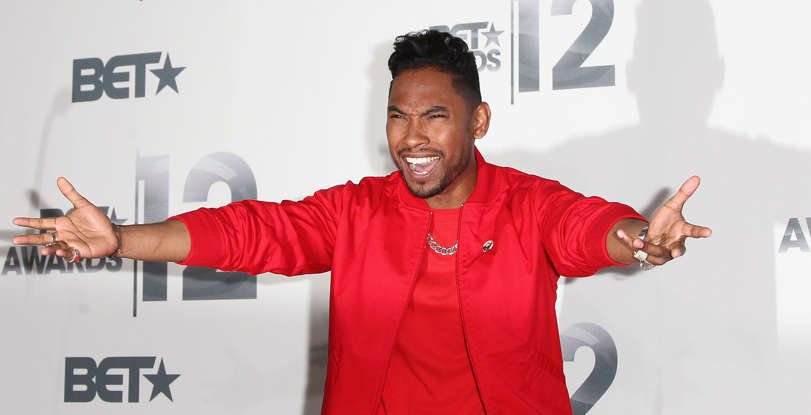
Miguel, who grew up in a multicultural household with a Mexican father and an African American mother, said the current atmosphere has reignited his passion for advocacy.
“What’s terrifying is not just the policies, but how normalized they’ve become,” he explained. “You start to realize that control can take many forms — and that silence helps it spread.”
The singer’s message echoes those of other artists who’ve recently spoken up about immigration and democracy, including Bad Bunny, Halsey, and John Legend — all of whom have used their platforms to criticize government overreach and xenophobia.
From Art to Activism
Miguel isn’t new to political commentary. During Trump’s first presidency, he publicly supported the “Families Belong Together” campaign, performing at rallies that called for an end to family separations at the U.S.-Mexico border.
But in 2025, his activism has become more personal — and more urgent.
On Instagram, Miguel recently shared a black-and-white video clip of himself performing “Caos” in front of a mural depicting immigrants marching with the Mexican flag. The caption read:
“Art must speak when leaders stay silent. This is my protest.”
His post quickly gained traction, with fellow musicians and fans flooding the comments in solidarity. “Miguel isn’t just making music,” one fan wrote. “He’s documenting history.”
The Artist’s Role in a Fractured America
While many celebrities prefer to stay neutral, Miguel believes silence is complicity. He urges fellow artists to use their voices for truth, even when it feels uncomfortable.
“It’s scary to speak out when you see what happens to people who do,” he said. “But art has always been the first line of resistance. If we don’t reflect what’s happening, who will?”
Industry analysts note that Caos represents not just a creative evolution but a cultural reckoning. In an era of censorship and political polarization, Miguel’s work feels like both a rebellion and a healing force.
Cultural critic Touré described Caos as “an album that bridges art, ancestry, and activism — a mirror to the times we live in.
A Voice That Won’t Be Silenced
As the protests continue in major U.S. cities, Miguel remains steadfast in his belief that love and empathy can overcome fear and division — but only if people stay awake.
“It’s easy to turn away,” he said. “But this is our country, too. My family, my culture, my people — we’re not guests here. We’re part of America’s story.”
In an age of political chaos, Miguel’s Caos feels like a necessary reminder: when democracy feels fragile, sometimes the most powerful weapon is a song.





Entertainment
Everyone Is Watching 2026—and the Movie Lineup Explains Why
New chapters of blockbuster franchises, long-awaited nostalgic sequels, and bold originals from Christopher Nolan, Greta Gerwig, and Alejandro G. Iñárritu are turning 2026 into a cinematic event fans can’t stop talking about…

Every few years, Hollywood aligns its stars just right. Big franchises return, iconic stories resurface, and visionary filmmakers step forward with projects that feel risky, personal, and impossible to ignore. 2026 looks set to be one of those rare years — the kind movie lovers mark in their calendars long before tickets go on sale.
From the next chapter of Dune to a fresh Spider-Man adventure, from fashion-fuelled nostalgia to spellbinding witchy sequels, the year ahead promises a cinematic mix that feels both comforting and thrillingly new.
A Return to Arrakis and the Power of Epic Storytelling
Few modern franchises have reshaped blockbuster expectations like Dune. With Denis Villeneuve’s adaptation earning critical acclaim and box office muscle, anticipation for the next instalment has reached fever pitch. The sprawling universe, complex politics, and emotional depth have drawn in audiences far beyond traditional sci-fi fans.
What makes the upcoming chapter so intriguing is its confidence. This isn’t spectacle for spectacle’s sake — it’s slow-burn world-building at a scale rarely attempted today. For many critics, the new Dune isn’t just a sequel; it’s a statement about what big-budget cinema can be when patience and ambition are allowed to coexist.
ALSO READ : “She Never Made It Out…” Albany House Fire Claims Woman’s Life as Family Pleads for Help to Bring Her Home
Spider-Man Swings Back With High Expectations
Marvel’s most relatable hero is gearing up for another reinvention. The next Spider-Man film slated for 2026 arrives at a moment when superhero cinema is rethinking itself. Fans aren’t just asking for bigger action — they want emotional consequences, mature storytelling, and surprises that feel earned.
Early buzz suggests the studio understands that pressure. Whether it leans into multiverse complexity or pulls back to street-level storytelling, this new chapter could redefine how audiences see Peter Parker in a post-Endgame world.
Fashion Nostalgia Makes a Stylish Comeback
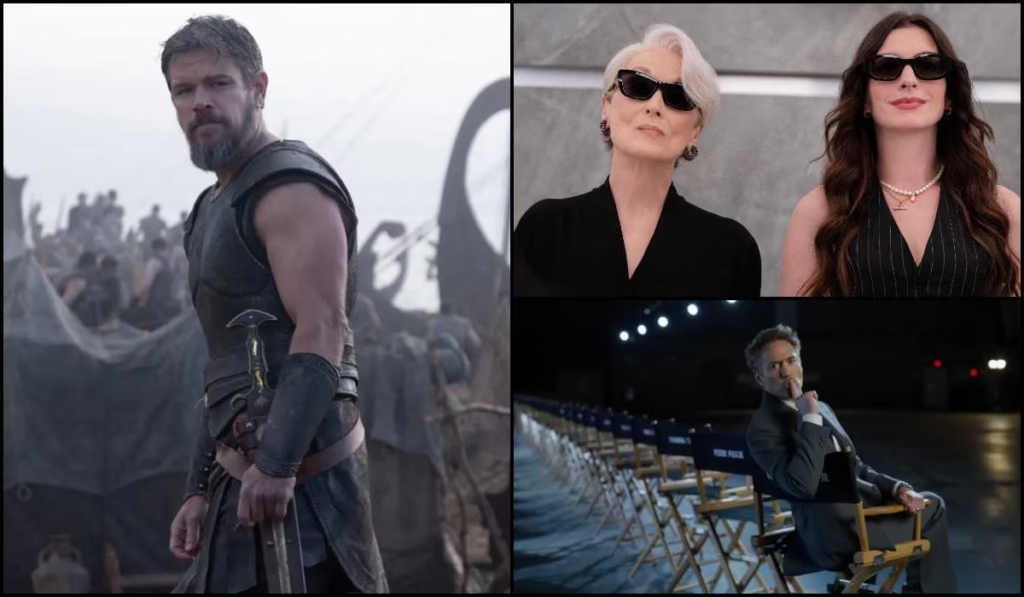
Few films have embedded themselves into pop culture quite like The Devil Wears Prada. Nearly two decades later, its sharp dialogue, iconic performances, and cutting portrayal of the fashion industry still resonate.
The planned sequel isn’t just trading on nostalgia. It arrives in a changed world — where social media, fast fashion, and influencer culture have rewritten the rules. Seeing these characters navigate modern power dynamics could turn a nostalgic return into one of 2026’s most talked-about adult dramas.
Magic Returns With Practical Magic
Another cult favourite stepping back into the spotlight is Practical Magic. Loved for its blend of romance, sisterhood, and supernatural charm, the sequel taps into a renewed appetite for comfort films with emotional warmth.
At a time when audiences crave stories about chosen family and resilience, Practical Magic feels less like a relic and more like perfect timing. Its return promises enchantment without irony — something Hollywood rarely attempts anymore.
The Directors Who Make 2026 Unmissable
Beyond franchises and sequels, what truly elevates 2026 is the lineup of auteurs stepping into the spotlight.
A new project from Christopher Nolan is always an event. Known for bending time, memory, and perception, Nolan’s upcoming film is already inspiring endless speculation. Will it be another cerebral epic or a quieter, character-driven surprise?
Meanwhile, Greta Gerwig, fresh from redefining mainstream storytelling, is expected to continue pushing boundaries — blending intelligence with emotional accessibility in a way few directors manage.
And then there’s Alejandro González Iñárritu, whose work often challenges audiences to sit with discomfort, beauty, and moral ambiguity. His return signals that 2026 won’t just be about escapism; it will also ask hard questions about identity, power, and humanity.
Why This Year Feels Different
What sets 2026 apart isn’t just the number of big releases — it’s the balance. Audiences are getting comfort and challenge, nostalgia and innovation, spectacle and intimacy. It’s a reminder that cinema works best when it speaks to different moods and generations at once.
For studios, it’s a gamble. For viewers, it’s a gift.
If even half of these projects deliver on their promise, 2026 won’t just be a good year for movies — it could be a defining one.
Entertainment
Enola Holmes 3 Gets Its First Look as Netflix Plans a Special Moment for Lewis Pullman Fans
From a fresh glimpse of Enola Holmes 3 to a long-awaited release update on Remarkably Bright Creatures, Netflix packs mystery comedy and animation into one reveal-filled moment

Netflix is clearly in a “show, don’t just tell” mood. In a single announcement that rippled quickly through film and streaming circles, Netflix unveiled a first look at Enola Holmes 3, confirmed a release window for Lewis Pullman’s Remarkably Bright Creatures, and teased two wildly different projects — a John Cena–Eric André comedy and a Michael B. Jordan–led animated feature.
It’s the kind of multi-genre flex that reminds audiences why Netflix still knows how to dominate the conversation when it wants to.
Enola Holmes 3 steps back into the spotlight
The biggest attention-grabber is undeniably Enola Holmes 3, the third chapter in the popular mystery franchise anchored by Millie Bobby Brown. The first-look image doesn’t give away plot secrets, but it reinforces what fans have loved from the start — Enola’s sharp confidence, period charm, and that playful defiance of expectations that sets her apart from her famous brother.
ALSO READ : Younghoe Koo Explains Botched Field Goal After Slip: “The Ball Was Moving So I Pulled Up”
Netflix hasn’t shared full story details yet, but expectations are already high after the previous installments blended clever detective work with coming-of-age warmth. There is also renewed curiosity around whether Henry Cavill will return as Sherlock Holmes in a more substantial way, a question that continues to buzz among fans online.
For Netflix, Enola Holmes has quietly become one of its most reliable franchise successes — appealing to younger viewers without alienating adults who appreciate a polished mystery.
Lewis Pullman and a story that leans into empathy
Away from intrigue and disguises, Netflix also confirmed the release timing for Remarkably Bright Creatures, starring Lewis Pullman. Adapted from a beloved novel, the film is expected to lean heavily into emotional storytelling rather than spectacle — a welcome contrast to the streamer’s blockbuster-heavy slate.
Pullman has been steadily carving out a reputation for grounded, quietly powerful performances, and this project looks tailor-made for that strength. Early buzz suggests the film will emphasize connection, grief, and healing — themes that often resonate strongly with streaming audiences looking for something more intimate.
Comedy chaos with John Cena and Eric André
Netflix also dropped sneak peeks of Little Brother, a comedy pairing John Cena with Eric André. On paper, the combination already promises chaos — Cena’s straight-faced physical comedy colliding with André’s unpredictable, boundary-pushing humor.
The brief preview hints at an offbeat sibling dynamic that could land somewhere between absurdist comedy and surprisingly heartfelt moments. If Netflix has learned anything from past comedy hits, it’s that unexpected pairings often generate the loudest laughs.

Animation gets a star-powered push
Rounding out the announcement is Swapped, an animated feature led by Michael B. Jordan. While details remain under wraps, the early tease suggests a body-swap–style premise with emotional and comedic layers — a formula that has worked well across generations when handled with care.
Jordan’s growing involvement in animation reflects a broader Netflix strategy: using star power not just for live-action tentpoles, but also to elevate family-friendly and crossover animated projects.
A carefully balanced slate
Taken together, the announcements paint a clear picture. Netflix isn’t betting on just one type of viewer. Mystery fans get Enola Holmes 3. Literary adaptation lovers get Remarkably Bright Creatures. Comedy audiences get Little Brother. Families and animation enthusiasts get Swapped.
It’s a reminder that while the streaming wars are louder than ever, Netflix still knows how to quietly line up projects that hit very different emotional notes — and keep subscribers curious about what’s coming next.
Entertainment
Hollywood Is Quietly Rewriting the Rules for 2026 and Beyond — The Shift Nobody Is Talking About
From AI-shaped blockbusters to streaming shakeups and surprise box-office kings, educated guesses reveal what the film industry will really be talking about next year

If you spend enough time around studio lots, talent agencies, and post-production houses, you start to notice a pattern: Hollywood rarely changes overnight—but when it does, it moves fast. As 2026 approaches, the entertainment industry is buzzing with cautious optimism, creative anxiety, and a renewed hunger for hits that feel human again.
This isn’t about crystal balls or hype cycles. These are educated guesses—built on insider chatter, financial math, and the subtle signals studios never announce publicly. Here’s what Hollywood insiders are already bracing for in the next 12 months.
The Box Office Isn’t Dead—But It’s Picky
The loudest myth of the past five years—that cinemas are finished—has quietly collapsed. What has changed is audience patience.
In 2026, theaters won’t reward “content.” They’ll reward events.
ALSO READ : He Predicted Trump’s Kennedy Center Move… Then Bought the Domain: Meet the TV Writer Turning Power Into Punchlines
Studios like Warner Bros. Pictures, Universal Pictures, and Disney are doubling down on fewer releases—but with bigger cultural footprints. Expect:
- Fewer mid-budget films in wide theatrical release
- Bigger opening weekends driven by fandoms
- Longer theatrical windows for proven franchises
Audiences in 2026 will show up—but only when the movie gives them a reason to leave their couches.
Streaming Will Finally Admit a Hard Truth
The “streaming wars” phase is over. The survival phase has begun.
Platforms like Netflix, Amazon Prime Video, and Apple TV Plus have learned an expensive lesson: endless content does not equal endless growth.
In 2026, expect:
- Fewer originals, higher quality thresholds
- Shorter episode orders (6–8 episodes, not 12–15)
- Aggressive cancellation of underperforming shows
- More theatrical-to-streaming hybrids
Executives won’t say it publicly, but the era of “greenlight first, think later” is over.
AI Won’t Replace Creators—but It Will Change Who Gets Hired
Artificial intelligence is no longer a sci-fi headline—it’s a line item in production budgets.
Studios are already using AI for previs, localization, VFX cleanup, and script analysis. In 2026, that use will expand—but not without pushback from talent guilds shaped by the influence of figures like Christopher Nolan, Greta Gerwig, and Jordan Peele.
What changes isn’t creativity—it’s efficiency.
Writers who can work with AI tools will be hired faster. Editors who adapt will stay booked. The fear isn’t replacement—it’s irrelevance.
Franchises Will Shrink—But Get Smarter
Hollywood isn’t done with franchises. It’s done with bloated ones.
In 2026, studios will:
Scale back shared universes- Focus on standalone stories within franchises
- Prioritize character-driven arcs over lore overload
Even superhero brands are shifting tone, influenced by audience fatigue and the selective success of recent releases.
The future franchise model looks less like homework—and more like storytelling again.
Movie Stars Are Making a Quiet Comeback
For years, Hollywood claimed stars didn’t matter anymore. Algorithms mattered. IP mattered.
Then ticket sales told a different story.
In 2026, recognizable faces will once again anchor marketing campaigns. Names like Leonardo DiCaprio, Margot Robbie, and Denzel Washington still move audiences—and studios are taking notes.
The difference? Stars won’t just sell films. They’ll help shape them creatively.
Award Season Will Tilt Toward Global Stories
Hollywood’s center of gravity is slowly shifting outward.
With global box office revenues playing a bigger role, films influenced by international storytelling styles—particularly from Asia, Europe, and Latin America—will dominate award conversations.
Festivals like Cannes and Venice are already shaping Oscar narratives months in advance, and 2026 will only deepen that trend.
The Real Prediction No One Is Saying Out Loud
Hollywood’s biggest challenge in 2026 isn’t technology, streaming, or box office math.
It’s trust.
Audiences want stories that feel honest. Artists want protection. Studios want sustainability. The industry is quietly trying to balance all three—and 2026 may be the year we finally see whether that balance is possible.

Player Power, Ownership Shake-Ups, and the Breakout Moments Defining Sports in 2026

Everyone Is Watching 2026—and the Movie Lineup Explains Why

The Man Who Predicted Trump’s Kennedy Center Takeover Bought the Domain That Mocked It
The Balance of Power Is Breaking How 2026 Could Redefine Sports Forever

Enola Holmes 3 Gets Its First Look as Netflix Plans a Special Moment for Lewis Pullman Fans

1-Iran Issues Dire Warning to Israel and Defies Trump on Nukes: “We’re Ready to Strike Deep Inside”

Donald Trump’s net worth reveals the fortune behind the former US President and business mogul

Caitlin Clark Sidelined with Quad Strain, Set to Miss Two Weeks of WNBA Action

Elon Musk Breaks Ranks with Trump Over ‘Big, Beautiful’ Tax Bill

“Tomás Rodríguez Net Worth 2025: Panama’s Gold Cup Goal‑Machine’s Surprising Fortune Revealed”

Miss Jamaica Suffers Terrifying Fall Off Miss Universe Stage; Rushed to Hospital on Stretcher in Viral Video

Moana Live-Action Teaser Sparks Outrage as Fans Call Disney’s Move a ‘Clear Money Grab’ — What Went Wrong?

Ryan Gosling’s Project Hail Mary Trailer Stuns Fans with a Mysterious Alien Ally and a Mission That Could Save Earth

Apple delays Jessica Chastain thriller The Savant about domestic extremism after recent US violence

Avatar 3, Fire and Ash trailer reveals Jake Sully’s family facing terrifying new Na’vi enemies with deadly fire powers
-
 Entertainment1 week ago
He-Man Wears a Suit Now… Nicholas Galitzine’s ‘Masters of the Universe’ Trailer Drops a Shock Fans Didn’t See Coming
-

 Entertainment1 week ago
“Comedy Needs Courage Again…”: Judd Apatow Opens Up on Mel Brooks, Talking to Rob Reiner, and Why Studio Laughs Have Vanished
-

 Entertainment1 week ago
Oscars Go Global in a Big Way as This Year’s Nominations Signal a New Era: ‘The Academy Is Finally Looking Beyond Hollywood…’
-
 Entertainment1 week ago
“Dangerously Kinky… and Darkly Funny”: Olivia Wilde and Cooper Hoffman Push Boundaries in ‘I Want Your Sex’
-
 Entertainment1 week ago
“She Did Bring It All on Herself…”: Sony Executives Break Silence on Blake Lively Fallout Around It Ends With Us
-
 Crime1 week ago
Man Accused in Tupac Shakur Killing Asks Judge to Exclude Critical Evidence
-

 Politics1 week ago
Why Bari Weiss Says Pulling a ‘60 Minutes’ Story Was the Right Call — Even If It Looked Radical
-
Entertainment1 week ago
Olivia Wilde and Cooper Hoffman Go Bold in I Want Your Sex—A Dark Comedy That Dares