
Entertainment
She Googled Her Boyfriend’s Ex — And What Happened Next Is the Funniest Thing Streaming Right Now: ‘Basic’ Review…
Ashley Park and Leighton Meester face off in a sharp, self-aware comedy that knows exactly how unhinged modern dating has made all of us — and leans into it gloriously.


There is a moment in almost every new relationship — usually somewhere around week three, when the dopamine is still flowing but the rational brain has quietly started asking questions — where a finger hovers over a search bar and a name gets typed in. The ex. The one who came before. The ghost in the algorithm. Everyone has done it. Nobody admits it. And nobody has made a film about it quite as sharply, as fizzy, or as genuinely funny as Basic.
The new comedy, now streaming and already generating the kind of enthusiastic word-of-mouth that studio marketing budgets cannot manufacture, takes that universal human weakness and builds an entire, delightful universe around it. The result is one of the most purely enjoyable comedies to land on screens in recent memory — and it arrives anchored by two lead performances that remind you, forcefully, why chemistry between actors remains the single most irreplaceable ingredient in this genre.
The Premise: Relatable to the Point of Pain
The setup is immediately, almost uncomfortably recognisable. A woman — newly in love, slightly insecure, armed with a smartphone and a dangerous amount of free time — falls into the rabbit hole of researching her boyfriend’s ex-girlfriend. What she finds is not the comfortably average person she was hoping for. She finds someone extraordinary. Accomplished. Beautiful. The kind of woman whose Instagram grid looks like a lifestyle brand and whose LinkedIn reads like a highlight reel of everything you have not yet achieved.
ALSO READ : “She Never Made It Out…” Albany House Fire Claims Woman’s Life as Family Pleads for Help to Bring Her Home
And then, because the universe has a sense of humour, she has to meet her.
It is a premise built on the specific anxiety of the digital age — the way the internet has made it possible to construct a hyper-curated, deeply incomplete picture of another person’s life and then spend entirely too long comparing yourself to it. Basic understands this pathology intimately, and more importantly, it finds the comedy in it without ever making its protagonist feel foolish for being human.
Ashley Park Reminds Everyone She Is a Star
Ashley Park — who built a devoted global fanbase through her role as Mindy Chen in Emily in Paris and has been steadily expanding her screen presence ever since — is the engine of Basic, and she runs it beautifully. Her comedic instincts are precise without ever feeling mechanical. She finds the absurdity in every situation without tipping into caricature, and crucially, she keeps the emotional core of her character intact even when the film is at its most gleefully ridiculous.
Park is a performer who has always operated at the intersection of warmth and wit — the kind of actor who makes you root for someone even when that someone is making a series of increasingly questionable decisions. In Basic, those decisions escalate with impressive creative ambition, and Park matches every escalation with exactly the right register. It is a star-making performance in the truest sense — not because she is unknown, but because this is the role that will make people who already liked her realise they have been significantly underestimating her.
Leighton Meester: The Return Everyone Needed
And then there is Leighton Meester.
For a generation of television viewers, Meester will always be Blair Waldorf — the imperious, razor-sharp queen of Gossip Girl who spent six seasons making scheming look like an art form. The years since Gossip Girl have seen Meester take quieter, more considered roles — building a career that values range over recognition. Basic is, in the best possible way, the film that lets her have it all at once.
Her character — the ex, the impossibly accomplished woman on the other side of the Google search — could have been a villain. The screenplay is smarter than that. Meester plays her with layers: confident without being cruel, self-aware without being saintly, and ultimately far more complicated than the curated version of her that Ashley Park‘s character has constructed from internet searches and spiralling imagination.
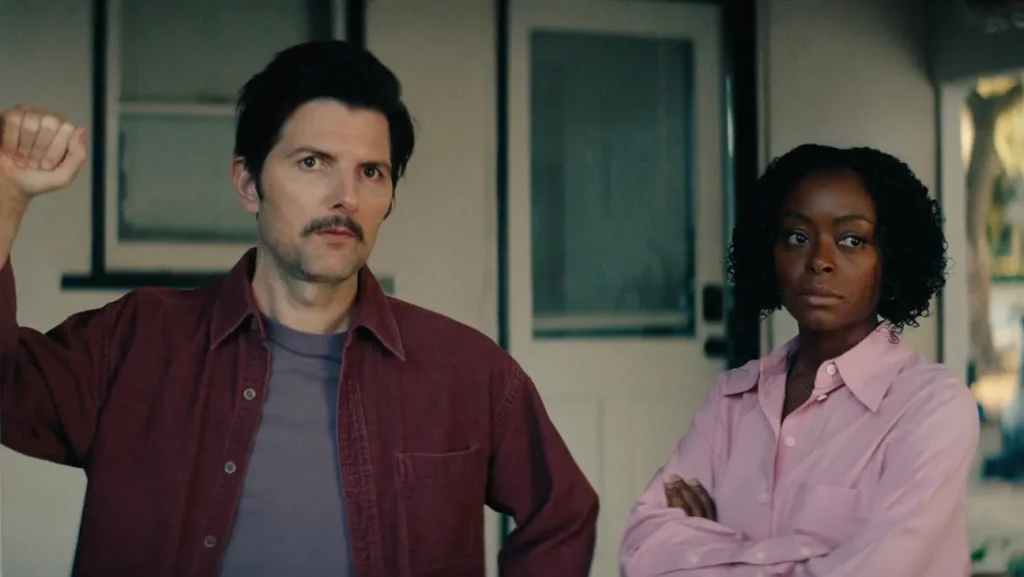
The dynamic between the two leads is the film’s greatest asset. They are funny together in the way that only actors who genuinely understand comic timing can be — the rhythms of their scenes together feel alive and slightly dangerous, as though either of them might say something unexpectedly true at any moment. It is the kind of chemistry that cannot be engineered in an edit suite. Either it is there or it is not. Here, it very much is.
The Comedy Knows What It Is
What separates Basic from the considerable heap of forgettable streaming comedies that arrive and disappear without trace is its self-awareness. The film knows it is operating in the territory of recognisable, relatable human anxiety. It knows its audience has lived some version of this story. And rather than hedging — rather than softening the premise into something safer and blander — it commits fully to the bit.
The escalation is well-managed, moving from cringeworthy to chaotic with a confident hand on the pacing. The screenplay finds jokes that land because they are grounded in genuine human behaviour rather than sitcom contrivance. And the direction keeps the energy high without sacrificing the character moments that give the comedy its emotional weight.
Comparisons to the best of the Nora Ephron era of romantic comedy — When Harry Met Sally, Sleepless in Seattle, the films that understood that the funniest moments in love stories are the ones rooted in genuine terror — are not entirely unwarranted. Basic is not quite in that company. But it is reaching for it, which is more than most films in this genre currently bother to do.
The Verdict
Basic is the kind of film that is very easy to undersell because its pleasures are immediate and unpretentious. It does not ask you to think hard. It asks you to laugh, to recognise yourself, and to be grateful that someone finally made the film about the thing everyone does but no one discusses in polite company.
Ashley Park is magnificent. Leighton Meester is a reminder that Blair Waldorf was always the least interesting thing about her. And the film they have made together is, for the duration of its runtime, exactly what a comedy is supposed to be: fun, fizzy, and just sharp enough to leave a mark.
Put the phone down. Stop Googling. Watch this instead.











Entertainment
Inde Navarrette Teases Marvel Future After X-Men and Heat 2 Talks
inde-navarrette-marvel-future-x-men-heat-2-meetings-obsession-success

LOS ANGELES — Hollywood’s newest breakout talent, Inde Navarrette, is already attracting attention from some of the industry’s biggest franchises and filmmakers following her acclaimed performance in Obsession.
After earning praise for her work in the hit project, Navarrette has revealed that she is actively exploring her next career move and remains open to stepping into the world of superheroes. The actress recently disclosed that she has held discussions with filmmakers connected to both the highly anticipated X-Men reboot and the upcoming sequel to Heat.
For many young actors, a successful breakout role can become both a blessing and a challenge. Navarrette appears fully aware of that reality. Speaking about her future ambitions, she emphasized her desire to prove that her success was not a one-time phenomenon.
“I really want to prove Obsession wasn’t just lightning in a bottle,” she said.
The statement reflects the mindset of an actress determined to build a long-lasting career rather than rely on a single breakthrough performance.
ALSO READ : Emmy Nominations Announcement Gets a Star Twist… Liza Colón-Zayas & Jeff Hiller Set to Reveal 2026 TV Nominees
Marvel Possibilities on the Horizon
The mention of conversations involving Marvel Studios immediately sparked speculation among fans. With Marvel continuing to expand its cinematic universe and actively developing a new chapter for the X-Men franchise, industry observers are already wondering whether Navarrette could become one of the next major additions to the superhero universe.
While no official casting announcements have been made, her openness to joining a Marvel project signals that she is interested in taking on larger-scale productions alongside more character-driven roles.
The X-Men reboot remains one of the most anticipated projects under Marvel Studios, with fans eagerly waiting to see which new generation of actors will inherit some of the franchise’s most iconic characters.
A Different Path With ‘Heat 2’
At the same time, Navarrette’s reported meetings related to Heat 2 suggest she is also considering opportunities outside the superhero genre.
The original Heat, directed by legendary filmmaker Michael Mann, is widely regarded as one of the greatest crime thrillers ever made. Any involvement in its sequel would place Navarrette alongside a project carrying enormous prestige and expectations.

For an actress seeking to demonstrate versatility, balancing franchise entertainment with serious dramatic work could prove to be a smart career strategy.
Building Momentum After ‘Obsession’
The success of Obsession has undoubtedly changed the trajectory of Navarrette’s career. Industry insiders have increasingly viewed her as one of Hollywood’s emerging talents capable of leading both streaming and theatrical projects.
As casting conversations continue across the entertainment industry, Navarrette appears focused on finding roles that challenge her creatively while also expanding her audience reach.
Whether that journey leads her into the world of mutants, crime dramas, or something entirely unexpected, one thing is clear: Hollywood is paying attention.
For now, fans will have to wait and see which opportunity she chooses next. But after the impact of Obsession, the actress seems determined to ensure her breakout moment becomes the foundation of a much larger story.
Entertainment
Can Disney’s Live-Action Moana Win Over Audiences? Dwayne Johnson Returns as Maui
With the beloved franchise back on the big screen less than two years after its animated sequel, Disney is betting on nostalgia, star power, and a fresh take to deliver another box office success.
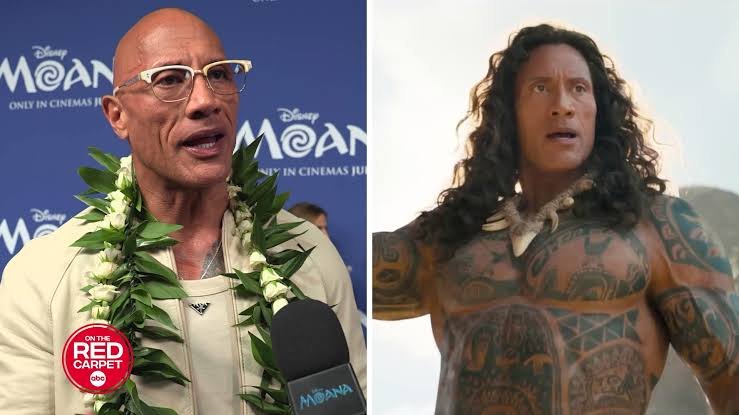
After the remarkable worldwide success of Moana 2, Disney is returning to one of its most cherished modern franchises—but this time with a live-action twist. The studio’s upcoming adaptation of the 2016 animated hit arrives with sky-high expectations and a simple yet difficult mission: prove that audiences are ready to revisit the Pacific adventure once again.
The film also marks the return of Dwayne Johnson as the larger-than-life demigod Maui, a character that helped redefine the original movie’s legacy. While Johnson’s comeback is expected to attract longtime fans, industry analysts believe the film faces a unique challenge. Unlike most franchise revivals, this release comes less than two years after Moana 2 enjoyed an exceptional run in cinemas, making it one of Disney’s biggest recent theatrical successes.
The timing has sparked debate across Hollywood. Can audiences embrace another version of the same beloved story so soon, or will franchise fatigue begin to surface?
ALSO READ : Sen. Elizabeth Warren Calls It a ‘Cesspool of Corruption’ — Here’s Why Senators Are Now Fighting Back Against the DOJ’s Live Nation Deal That Left Every Fan Betrayed…
Disney clearly believes the answer is yes.
The original Moana, released in 2016, gradually evolved into one of Disney’s most-watched films through streaming platforms and home entertainment. Its unforgettable soundtrack, rich Polynesian-inspired storytelling, and inspiring coming-of-age narrative transformed it into a cultural phenomenon that continues to resonate with families around the world.
Rather than creating a brand-new chapter, the live-action film revisits the original journey of Moana as she sets sail across the ocean to restore balance to her island, accompanied by Maui on another epic adventure. The combination of familiar storytelling with modern visual effects is expected to introduce the franchise to a new generation while offering longtime fans a fresh cinematic experience.
For Disney, the project represents more than another remake. It reflects the company’s ongoing strategy of reimagining animated classics as live-action blockbusters, following previous successes such as The Lion King, Beauty and the Beast, and Aladdin. However, recent adaptations have produced mixed box-office results, making the performance of Moana especially significant for the studio’s future plans.

Much of the spotlight naturally falls on Dwayne Johnson, whose portrayal of Maui remains one of the franchise’s defining elements. His charisma, larger-than-life screen presence, and deep association with the character are expected to be among the film’s biggest strengths.
The movie also carries heightened expectations because of the extraordinary momentum generated by Moana 2. Sequels often build anticipation for future installments, but launching a live-action retelling so soon after a successful sequel is relatively uncommon for a major Hollywood franchise. That makes this release an interesting test of audience demand rather than simply another remake.
Despite questions surrounding its commercial prospects, Disney remains optimistic. Family films continue to perform strongly in theaters when they offer spectacle, emotional storytelling, and recognizable characters—qualities that have always been central to the Moana brand.
Whether the live-action adaptation becomes another billion-dollar success or faces tougher competition at the global box office, one thing is certain: Disney is once again placing one of its most valuable modern franchises at the center of the cinematic conversation.
Entertainment
David Ellison Makes Surprise Washington Push as Hollywood Tax Credit Battle Heats Up… Will Congress Deliver a Lifeline for the Film Industry?
As legal battles over film incentives continue across the United States, Paramount Skydance CEO David Ellison personally lobbies lawmakers in Washington, seeking stronger federal tax support for Hollywood productions.
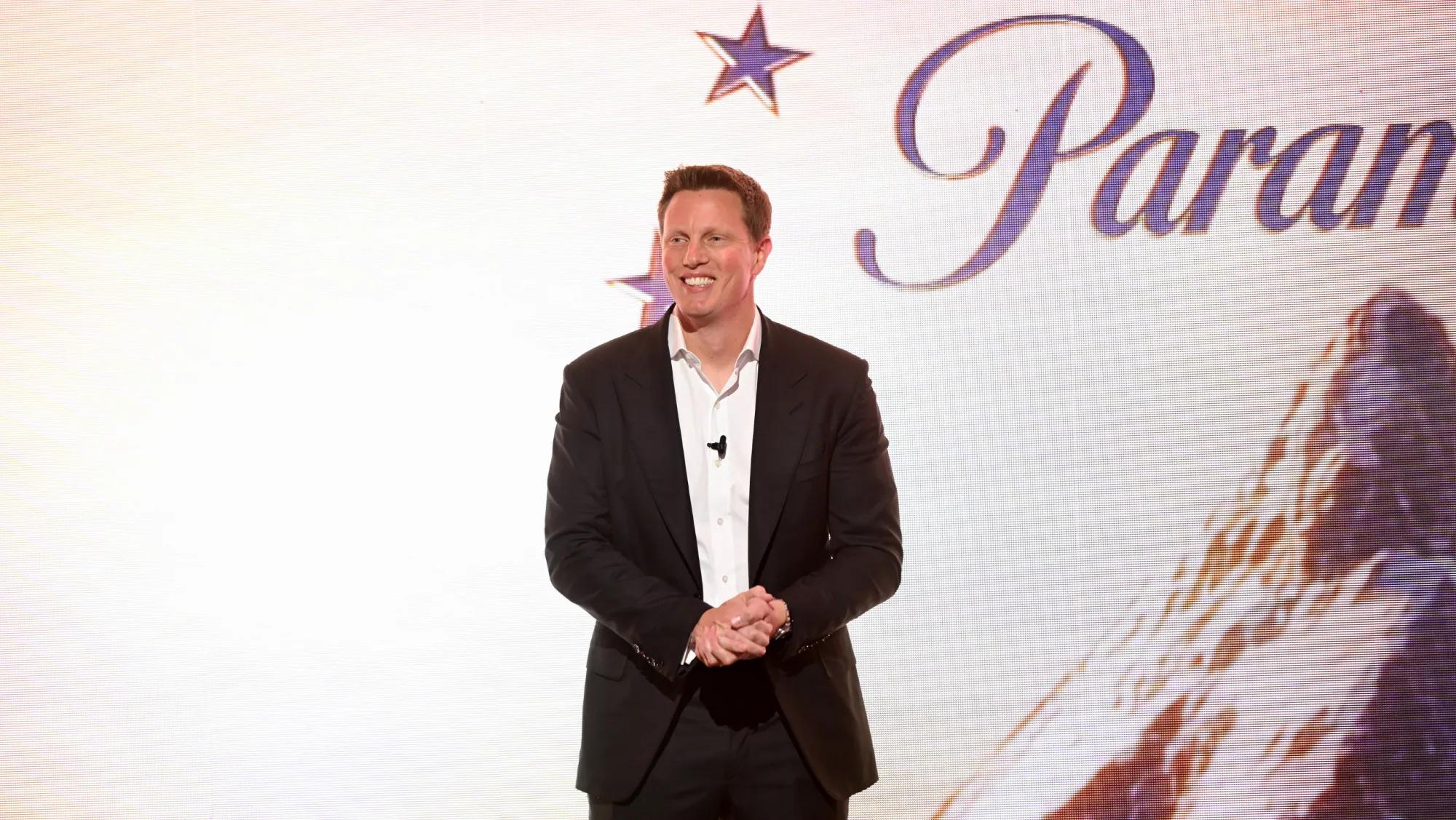
The fight over the future of film production incentives in the United States has entered a critical phase, with David Ellison taking his campaign directly to Washington, D.C.
The Paramount Skydance chief executive recently met with Republican members of the House Ways and Means Committee, urging lawmakers to consider a federal tax credit aimed at strengthening America’s entertainment industry. His visit comes at a time when the sector is navigating increasing production costs, fierce international competition, and a legal challenge backed by a coalition of 12 U.S. states.
The move signals that Hollywood’s biggest studios are becoming more actively involved in shaping policy rather than waiting for lawmakers to act.
A Federal Tax Credit Could Reshape Film Production
For years, individual U.S. states have competed to attract film and television productions by offering generous tax incentives. These programs have helped generate local jobs, boost tourism, and support thousands of businesses connected to filmmaking.
However, industry leaders argue that the current state-by-state approach is no longer enough.
Countries including the United Kingdom, Canada, Australia, and several European nations continue to expand attractive production incentives, encouraging major studios to film overseas. Executives believe a nationwide federal tax credit could help keep more productions—and the jobs they create—inside the United States.
ALSO READ : Sen. Elizabeth Warren Calls It a ‘Cesspool of Corruption’ — Here’s Why Senators Are Now Fighting Back Against the DOJ’s Live Nation Deal That Left Every Fan Betrayed…
David Ellison’s meetings with lawmakers focused on presenting this broader economic case, emphasizing that entertainment is not only a cultural export but also a major contributor to employment, technology, and local economies.
Legal Dispute Adds Pressure
The policy discussions are unfolding alongside a lawsuit backed by 12 states that has intensified debate around government support for the film industry.
Although the legal proceedings focus on broader questions surrounding production incentives, the dispute has increased pressure on policymakers to clarify how future film tax programs should operate.
Industry observers believe the combination of legal uncertainty and growing international competition makes this an important moment for Congress to examine whether federal incentives should complement existing state programs.
Why Studios Are Pushing for Reform
Hollywood has experienced significant disruption over the past several years.
The pandemic, labor strikes, inflation, changing audience habits, and the rapid expansion of streaming platforms have transformed how movies and television shows are financed and produced.
Major studios now face tougher decisions about where to shoot projects, often selecting locations based largely on available financial incentives rather than creative considerations alone.
Supporters of a federal tax credit argue that stronger incentives would help preserve skilled jobs, encourage infrastructure investment, and strengthen America’s position as a global filmmaking hub.

Critics, however, caution that any nationwide program would require careful oversight to ensure taxpayer funds generate measurable economic benefits.
David Ellison Takes a Public Leadership Role
As CEO of Paramount Skydance, David Ellison has become one of Hollywood’s most influential executives following the company’s high-profile merger activities and expansion plans.
Rather than leaving lobbying efforts to industry associations, Ellison’s direct engagement with congressional leaders demonstrates how seriously major studios view the current policy debate.
His visit also reflects growing cooperation between entertainment executives and lawmakers seeking ways to strengthen domestic investment while keeping the United States competitive in an increasingly global media landscape.
What’s Next?
No immediate legislative decision has been announced, but conversations surrounding a federal Hollywood tax credit are expected to continue in Congress over the coming months.
If lawmakers eventually approve such a measure, it could significantly influence where future blockbuster films, television series, and streaming productions are developed and produced.
For Hollywood, the outcome may shape investment decisions for years to come. For policymakers, it represents a broader debate about economic competitiveness, job creation, and America’s creative industries in an increasingly global market.

Inde Navarrette Teases Marvel Future After X-Men and Heat 2 Talks

Can Disney’s Live-Action Moana Win Over Audiences? Dwayne Johnson Returns as Maui

David Ellison Makes Surprise Washington Push as Hollywood Tax Credit Battle Heats Up… Will Congress Deliver a Lifeline for the Film Industry?

Venice Falls for ‘Possible Love’ as Lee Chang-dong Makes a Powerful Comeback

Space Force Uniforms Draw Warning From ‘Starship Troopers’ Director

1-Iran Issues Dire Warning to Israel and Defies Trump on Nukes: “We’re Ready to Strike Deep Inside”

Sen. Elizabeth Warren Calls It a ‘Cesspool of Corruption’ — Here’s Why Senators Are Now Fighting Back Against the DOJ’s Live Nation Deal That Left Every Fan Betrayed…

Donald Trump’s net worth reveals the fortune behind the former US President and business mogul

“Tomás Rodríguez Net Worth 2025: Panama’s Gold Cup Goal‑Machine’s Surprising Fortune Revealed”

“She Never Made It Out…” Albany House Fire Claims Woman’s Life as Family Pleads for Help to Bring Her Home

Miss Jamaica Suffers Terrifying Fall Off Miss Universe Stage; Rushed to Hospital on Stretcher in Viral Video

Moana Live-Action Teaser Sparks Outrage as Fans Call Disney’s Move a ‘Clear Money Grab’ — What Went Wrong?

Ryan Gosling’s Project Hail Mary Trailer Stuns Fans with a Mysterious Alien Ally and a Mission That Could Save Earth

Apple delays Jessica Chastain thriller The Savant about domestic extremism after recent US violence

Avatar 3, Fire and Ash trailer reveals Jake Sully’s family facing terrifying new Na’vi enemies with deadly fire powers
-

 Entertainment1 week ago
Telluride’s Mystery Screening Revealed as Nathan Fielder’s Elizabeth Holmes Documentary
-

 Entertainment7 days ago
‘They’re Still Telling People Not to Hire Me’: Susan Sarandon Opens Up About Hollywood Backlash
-
 Entertainment7 days ago
‘Freddy the 13th’ Is Bringing Horror and Laughs Together… Dan Trachtenberg’s Animated Surprise Finally Gets a 2028 Release Window
-

 Entertainment1 week ago
‘Love Island USA’ Continues Streaming Dominance as Week Two Viewership Soars
-
 Entertainment1 week ago
Netflix Q2 Earnings: Can Advertising Save the Streaming Giant, or Is a Bigger Challenge About to Surface…?
-

 Entertainment1 week ago
Telluride Surprise: Nathan Fielder Unveils Secret Elizabeth Holmes Documentary
-

 Entertainment1 week ago
Jon Bernthal Opens Up About Hollywood Struggles and His Spider-Man Return
-

 Entertainment7 days ago
‘Summer House’ Cast Left Speechless by Emmy Nomination… “It Feels Surreal” After a Decade of Reality TV