
Religion
Eid ul Adha 2025 Embraces the Spirit of Sacrifice and Solidarity Across the Globe
As millions of Muslims prepare to honor Prophet Ibrahim’s legacy, Eid ul Adha unfolds as a festival rooted in devotion, compassion, and community giving.

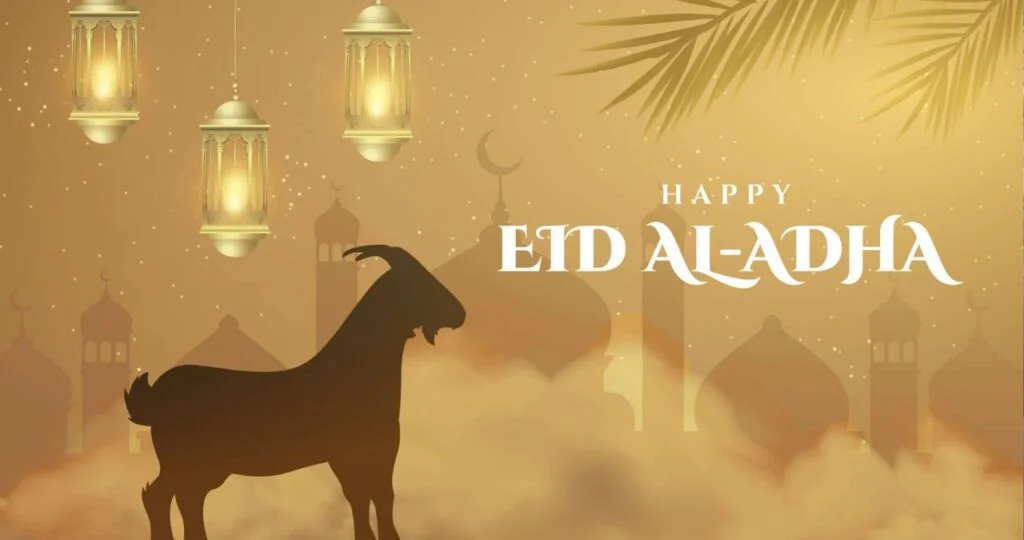
Eid ul Adha, also known as the Festival of Sacrifice, is once again uniting the global Muslim community in a shared act of devotion and gratitude. With preparations underway for the 10th day of Dhul-Hijjah, this sacred celebration reminds believers that beyond the rituals lies a story steeped in unwavering faith, humility, and the call to give selflessly.
At its heart is the profound tale of Prophet Ibrahim—a revered figure in Islam, Christianity, and Judaism—who was asked by Allah to sacrifice his beloved son as a supreme test of obedience. Just as Ibrahim was ready to comply, Allah, in an act of divine mercy, replaced his son with a ram. This moment of divine intervention is what Muslims honor during Eid ul Adha, a reminder that true faith lies in surrendering one’s will to the Creator.
This festival also marks the conclusion of Hajj, the holy pilgrimage to Mecca. For many, this connection reinforces the spiritual gravity of Eid, bringing together the act of personal sacrifice with the communal journey of devotion. Whether a pilgrim in Mecca or a family celebrating at home, the essence of Eid ul Adha is a call to reflect, to serve, and to remember.
Central to the observance is the Qurbani ritual—the humane sacrifice of animals such as sheep, goats, or cattle. Yet, this is no mere tradition of meat distribution. The act is symbolic: one-third is given to the needy, another third to family and friends, and the remainder kept by the household. It’s an embodiment of Islam’s deeply rooted principle of charity, empathy, and societal balance.
As Islamic scholars often remind us, the sacrifice isn’t measured by the animal but by the intention behind it. “The true value,” one scholar shared, “lies not in the act itself, but in the reminder it offers—to live ethically, to serve others, and to walk humbly before God.”
Across cities and villages alike, the celebration goes beyond the act of Qurbani. Communal prayers, heartfelt sermons, and food distribution drives light up the spirit of the day. Mosques host sermons focused on moral courage and selflessness, while families open their doors in generosity, embodying the values Eid seeks to uphold.
In a world often divided, Eid ul Adha offers a unifying narrative—one that speaks of devotion, sacrifice, and above all, compassion. It’s a moment for introspection, for reaching out to the less fortunate, and for renewing our bond with both Creator and community.
As 2025 brings another opportunity to honor this divine legacy, Eid ul Adha stands not just as a festival, but as a moral compass—reminding millions that faith is not just about prayer, but about the life we choose to lead in service to others.




Religion
No other public message from the Dalai Lama: His Holiness breaks silence on successor, stirs debate with bold spiritual vow
On his 90th birthday, the Dalai Lama affirms that the sacred institution will continue, but warns—“No one else has any such authority”… sparking global intrigue over his successor and China’s role.


In a monumental announcement on the occasion of his 90th birthday according to the Tibetan lunar calendar, His Holiness the 14th Dalai Lama has ended months of speculation and affirmed that the sacred institution of the Dalai Lama will continue after his passing. Delivered from his spiritual seat in Dharamshala, India, the revered Tibetan leader’s video message resonated far beyond the Himalayan town, with followers and observers across the world hanging onto every word.
In accordance with all these requests, I am affirming that the institution of the Dalai Lama will continue, His Holiness declared.
He added that the process of selecting his reincarnation—widely anticipated due to both religious tradition and geopolitical tensions—will be solely handled by the Gaden Phodrang Foundation, the spiritual body he established in 2015.
No one else has any such authority to interfere in this matter, he warned, sending a clear message to Beijing.
“No other public message from His Holiness”
At a press conference following the video, Samdhong Rinpoche, a close aide to the Dalai Lama, was asked by the BBC whether the world should expect more public messages on this deeply sensitive subject. His response was decisive:
Whenever the time comes, it will be internal and there will be no other public message from His Holiness on this matter.
This revelation, coupled with the Dalai Lama’s earlier comments in his book Voice for the Voiceless, has sparked worldwide interest. In the book, he hinted that his successor may be born outside China, a statement that appears to have now taken clearer shape.
“An earnest request” from Tibetans worldwide
Penpa Tsering, the Sikyong (President) of the Tibetan government-in-exile, shared that the global Tibetan community had made “an earnest request with single-minded devotion” for the continuation of the Dalai Lama’s spiritual leadership.
His Holiness has shown infinite compassion and finally agreed to accept our appeal on this special occasion, Tsering added, referencing the unanimous resolution passed by the 15th Tibetan Religious Conference.
Tradition vs. Politics: A Spiritual Line in the Sand
According to Tibetan Buddhist tradition, a Dalai Lama is reincarnated, and spiritual authorities recognize the new child by identifying signs that indicate he harbors the soul of his predecessor. The current Tenzin Gyatso, born Lhamo Dhondup in 1935, was recognized at the age of two.
Yet, China’s position on the matter remains tense. Ahead of the announcement, Chinese state media emphasized that reincarnations should be governed by historical procedures such as the “golden urn” lot-drawing system introduced in 1792, and accused the Dalai Lama of “politicizing” the process.
The Global Times claimed, His intention remains the same — to manipulate the reincarnation process for his own purposes.
Tibetans and their allies argue the opposite—that China seeks to politically control and install a compliant successor.
A Legacy of Exile and Nonviolence
The Dalai Lama fled Tibet in 1959, after a failed uprising against Chinese rule, disguising himself as a soldier and trekking across the Himalayas. He has lived in India ever since, where he was granted asylum and has continued his spiritual mission of nonviolence and compassion. In 1989, he received the Nobel Peace Prize for his peaceful efforts to preserve Tibetan identity.
Still describing himself humbly as “a simple Buddhist monk,” the Dalai Lama remains the most significant spiritual and political symbol of Tibetan Buddhism.
Religion
What makes Bohra Muslims in India different from other Muslim communities?
Unravelling the rich culture, faith, and global influence of the Dawoodi Bohra community in this immersive profile


The Bohra Muslims, particularly the Dawoodi Bohras, form a distinctive Shia Ismaili community with deep roots in Gujarat, India. Tracing their spiritual lineage to Egypt and Yemen, this tight-knit group spans a global diaspora of between one to two million individuals. Their name stems from the Gujarati word vohrvu (“to trade”), reflecting their heritage as prosperous merchants, professionals, and scholars.
At the heart of Bohra identity lies the Da’i al‑Mutlaq, the community’s spiritual leader. Since 2014, Mufaddal Saifuddin has served as the 53rd Da’i, guiding daily life, education, finance, and religious observances. According to sources, the Dawoodi Bohras are well‑educated and commit strongly to philanthropy—running community kitchens named Faiz al‑Mawaid al‑Burhaniyah that operate worldwide.

But beyond the statistics lies a vibrant cultural tapestry. Practicing a faith that stems from Fatimid Ismaili traditions, the community adheres to the Seven Pillars of Islam—including daily prayers, fasting, pilgrimage, and devotion to the Prophet’s lineage. Their beliefs are embodied in unique rituals—the mithaq oath of allegiance, communal meals from a large platter (thaal), and the wearing of Libas al‑Anwar: white robes and caps for men, colorful two‑piece rida dress for women.
Inside their global hubs—from Mumbai to Nairobi and beyond—faith meets modernity. Through their schools (Madrasah Saifiyah and international branches), entrepreneurship initiatives, and a zero‑waste ethos in religious gatherings, the community harmonizes tradition with innovation.According to accounts, their Dana Committee volunteers use AI and RSVP apps to track food waste and feed the needy—at times gathering hundreds of thousands for zero‑waste congregations.
Yet the Bohras are not without controversy. Female circumcision (khatna/khaffz) remains practiced amid criticism and debate over consent and health consequences, with some experts describing it as FGM.Despite this, the community maintains a reputation for unity, business acumen, and a strong sense of identity.
Entertainment
Asia Celebrates Eid al-Adha 2025: A Festival of Sacrifice and Unity
From Indonesia to India, Muslims commemorate Prophet Ibrahim’s devotion with prayers, feasts, and acts of charity
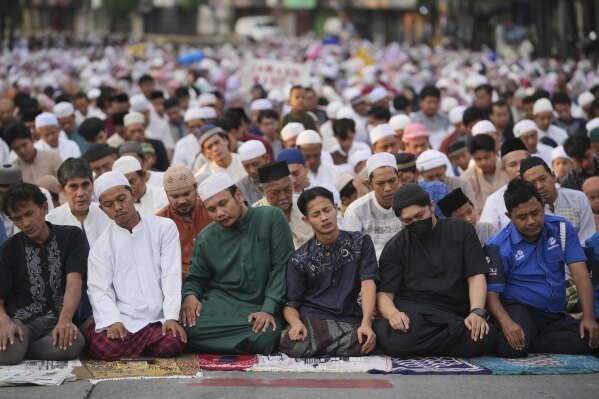
Today, Saturday, June 7, 2025, Muslims across Asia are celebrating Eid al-Adha, also known as Bakrid, one of the most significant festivals in the Islamic calendar. The date of the celebration varies globally due to differences in moon sightings; while countries like Saudi Arabia and Indonesia observed the festival on June 6, nations including India, Pakistan, and Bangladesh are marking it today.
Eid al-Adha commemorates the unwavering faith of Prophet Ibrahim (Abraham), who was willing to sacrifice his son in obedience to God’s command. In remembrance of this act of devotion, Muslims perform the ritual of Qurbani, the sacrifice of an animal, and distribute the meat among family, friends, and those in need.
In Indonesia, home to the world’s largest Muslim population, the celebrations began with congregational prayers at mosques and open fields. Communities gathered to perform the sacrificial rites, emphasizing the spirit of sharing and compassion.
In India, vibrant markets in cities like Hyderabad have been bustling with activity as families prepare for the festivities. The day commenced with special prayers at mosques and Eidgahs, followed by the Qurbani ritual. Traditional dishes such as biryani, kebabs, and sheer khurma are being prepared, and the meat from the sacrifices is shared with neighbors and the underprivileged, embodying the festival’s essence of generosity.
Prime Minister Narendra Modi extended his greetings to the nation, highlighting Eid al-Adha as a festival that inspires sacrifice and unity. He emphasized the importance of coming together in harmony and reflecting on the values that the festival promotes.
As the celebrations continue, the festival serves as a reminder of the virtues of faith, obedience, and charity, bringing communities together in a shared spirit of devotion and goodwill.

Hollywood Doors Remain Closed for Susan Sarandon, Actress Claims

Telluride’s Mystery Screening Revealed as Nathan Fielder’s Elizabeth Holmes Documentary

Emmys 2026: First Post-Nominations Forecast Reveals the New Front-Runners… But the Biggest Surprises May Still Be Ahead

Juliette Binoche Looks Back at Her Oscar Shock And Finally Reveals the Dream She’s Ready to Chase

‘Love Island USA’ Continues Streaming Dominance as Week Two Viewership Soars

1-Iran Issues Dire Warning to Israel and Defies Trump on Nukes: “We’re Ready to Strike Deep Inside”

Sen. Elizabeth Warren Calls It a ‘Cesspool of Corruption’ — Here’s Why Senators Are Now Fighting Back Against the DOJ’s Live Nation Deal That Left Every Fan Betrayed…

Donald Trump’s net worth reveals the fortune behind the former US President and business mogul

“Tomás Rodríguez Net Worth 2025: Panama’s Gold Cup Goal‑Machine’s Surprising Fortune Revealed”

“She Never Made It Out…” Albany House Fire Claims Woman’s Life as Family Pleads for Help to Bring Her Home

Miss Jamaica Suffers Terrifying Fall Off Miss Universe Stage; Rushed to Hospital on Stretcher in Viral Video

Moana Live-Action Teaser Sparks Outrage as Fans Call Disney’s Move a ‘Clear Money Grab’ — What Went Wrong?

Ryan Gosling’s Project Hail Mary Trailer Stuns Fans with a Mysterious Alien Ally and a Mission That Could Save Earth

Apple delays Jessica Chastain thriller The Savant about domestic extremism after recent US violence

Avatar 3, Fire and Ash trailer reveals Jake Sully’s family facing terrifying new Na’vi enemies with deadly fire powers
-

 Entertainment1 week ago
Hollywood’s New Box-Office Saviours Revealed: How Curry Barker Joined Guillermo del Toro’s Elite Circle
-

 Entertainment1 week ago
Why Is America Celebrating Dolly Parton Day on 9/25? The Sweet Meaning Revealed
-

 Tech6 days ago
Apple unveils iPhone 18 Pro series with a camera upgrade users have waited years for: Here’s what changed
-

 Entertainment7 days ago
Creative Arts Emmys Night Two Winners: ‘Widow’s Bay’ Dominates, but Rob Reiner’s Emotional Victory Steals the Spotlight
-

 Entertainment4 days ago
Summer House Cast Celebrates First Emmy Nomination, Calls It Surreal
-

 Entertainment1 week ago
Dan Trachtenberg’s Animated Horror-Comedy ‘Freddy the 13th’ Lands 2028 Release Date
-

 Entertainment1 week ago
Elizabeth Holmes Opens Her Home to Cameras Before Prison in New Documentary Trailer: ‘I’m Always Being Real’…
-

 Entertainment4 days ago
‘The Gentlemen’ Season 2 Ending Explained by Theo James