
Los Angeles
Why Is There a Curfew in Los Angeles as Protests and Political Tensions Explode
A wave of anti-ICE demonstrations and federal clashes has led Los Angeles officials to impose a city curfew—here’s what’s really happening

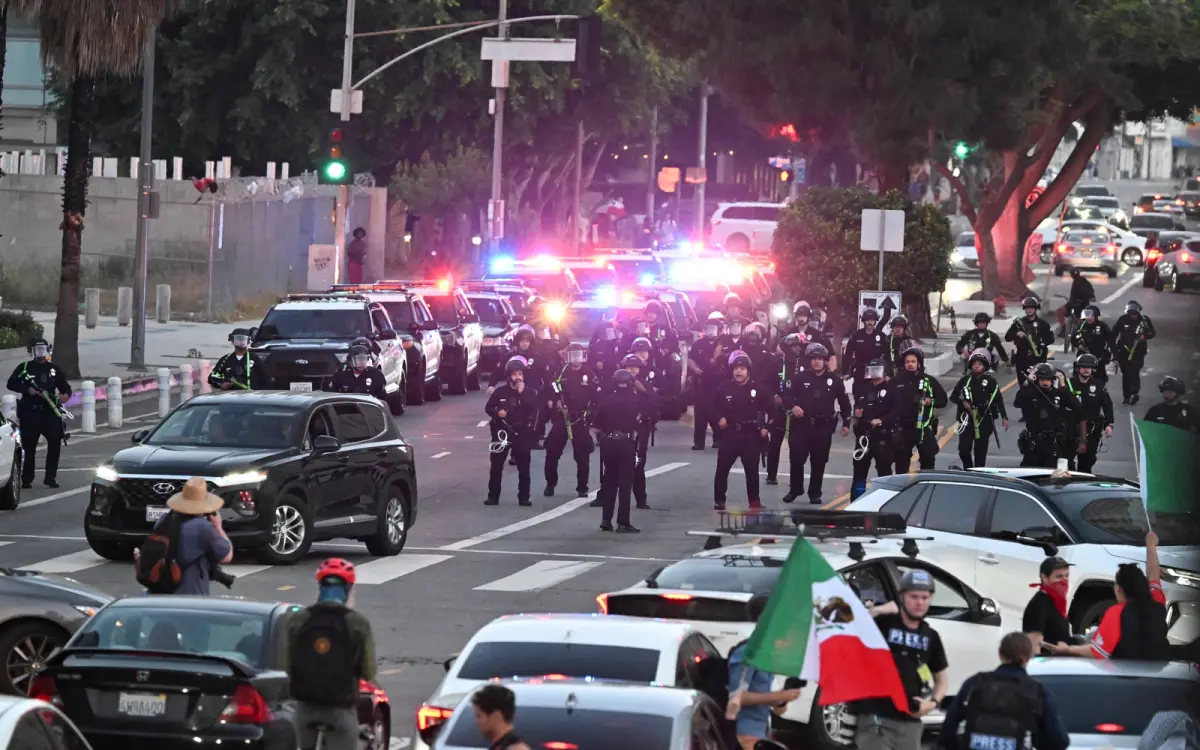
Downtown Los Angeles is now under official overnight curfew orders, as city officials scramble to contain mounting protests, property damage, and a deepening clash between local and federal authorities. But the real reason behind the curfew in Los Angeles goes far beyond a simple public disturbance—it’s a boiling point of immigration policy, political tension, and street-level unrest.
The unrest began after federal immigration enforcement operations sparked outrage earlier this week. According to local sources, ICE agents conducted multiple arrests across central L.A., igniting protests from immigration rights activists. Demonstrators quickly filled the streets, blocking major roads, storming near federal buildings, and demanding a halt to deportation proceedings.
Initially peaceful, the demonstrations escalated rapidly. By the third night, the city had seen looting of over 20 businesses, vandalism, and confrontations with police. Several viral videos showed clashes near City Hall and Grand Park, and law enforcement declared several of the assemblies unlawful.
Reacting to the violence and instability, Mayor Karen Bass declared a state of local emergency, immediately imposing a curfew from 8 p.m. to 6 a.m. within a designated one-square-mile section of downtown Los Angeles. “We are doing this to protect lives, property, and restore public safety,” Bass said in a press briefing.
As the curfew took effect, LAPD and county deputies began arresting violators in large numbers. Reports confirm that over 200 individuals have been detained for curfew violations and related disturbances. Law enforcement has since been backed up by National Guard units and U.S. Marines, deployed under federal orders—a move that has drawn intense criticism from California’s leadership.
Governor Gavin Newsom publicly denounced the military deployment, calling it an “assault on democracy” and threatening legal action against what he referred to as federal overreach. Meanwhile, President Donald Trump, who authorized the use of troops in L.A., claimed that the protests were “a coordinated foreign-influenced riot” and vowed to “restore order at any cost.”
Despite the heavy-handed measures, protests continue to smolder, with organizers calling for nonviolent resistance, prayer vigils, and civil disobedience. Faith leaders have urged calm while pushing back against what they call excessive militarization of the streets.
At present, the curfew remains confined to downtown, leaving the rest of Los Angeles unaffected. Still, the situation is volatile, and additional enforcement zones may be added if tensions escalate.
What began as a protest against immigration policy has now evolved into a multi-layered political showdown—between city leaders, state officials, federal agents, and a public increasingly uneasy with the direction of law enforcement strategy.








Justin Baldoni Opens Up About Blake Lively Lawsuit: ‘The Last Two Years Have Been Incredibly Painful’

‘Adults’ Star Malik Elassal Breaks Down That Surprise Finale Hookup

Fandango Eyes Streaming Shake-Up to Rival Tubi and Pluto TV

Paul Verhoeven Criticizes Space Force’s Sci-Fi-Inspired Uniforms

Prosecutors Rule Out Death Penalty for Nick Reiner

1-Iran Issues Dire Warning to Israel and Defies Trump on Nukes: “We’re Ready to Strike Deep Inside”

Sen. Elizabeth Warren Calls It a ‘Cesspool of Corruption’ — Here’s Why Senators Are Now Fighting Back Against the DOJ’s Live Nation Deal That Left Every Fan Betrayed…

Donald Trump’s net worth reveals the fortune behind the former US President and business mogul

“Tomás Rodríguez Net Worth 2025: Panama’s Gold Cup Goal‑Machine’s Surprising Fortune Revealed”

“She Never Made It Out…” Albany House Fire Claims Woman’s Life as Family Pleads for Help to Bring Her Home

Miss Jamaica Suffers Terrifying Fall Off Miss Universe Stage; Rushed to Hospital on Stretcher in Viral Video

Moana Live-Action Teaser Sparks Outrage as Fans Call Disney’s Move a ‘Clear Money Grab’ — What Went Wrong?

Ryan Gosling’s Project Hail Mary Trailer Stuns Fans with a Mysterious Alien Ally and a Mission That Could Save Earth

Apple delays Jessica Chastain thriller The Savant about domestic extremism after recent US violence

Avatar 3, Fire and Ash trailer reveals Jake Sully’s family facing terrifying new Na’vi enemies with deadly fire powers
-

 Entertainment5 days ago
Summer House Cast Celebrates First Emmy Nomination, Calls It Surreal
-

 Entertainment1 week ago
Creative Arts Emmys Night Two Winners: ‘Widow’s Bay’ Dominates, but Rob Reiner’s Emotional Victory Steals the Spotlight
-

 Tech1 week ago
Apple unveils iPhone 18 Pro series with a camera upgrade users have waited years for: Here’s what changed
-

 Entertainment5 days ago
Beyoncé Ends Two-Year Music Hiatus With ‘Morning Dew’… Fans Wonder If a Bigger Announcement Is Coming
-

 Entertainment5 days ago
‘The Gentlemen’ Season 2 Ending Explained by Theo James
-

 Entertainment5 days ago
Why Is America Turning 9/25 Into Dolly Parton Day? The Touching Meaning Behind the Date Revealed
-

 Entertainment5 days ago
Emmy Awards 2026 Predictions: First Post-Nominations Forecast Spotlights the Early Favorites
-

 Entertainment5 days ago
Stephen Colbert vs Jimmy Kimmel at the Emmys 2026… Late-Night Giants Face Off in a Battle for TV’s Top Honor
Pingback: Governor Gavin Newsom in 2025 Still One of America’s Most Polarizing Political Forces - Daily Global Diary
Pingback: Mayor Karen Bass Declares State of Local Emergency in Los Angeles as Unrest Escalates - Daily Global Diary