
Entertainment
Adam Sandler finally swings again in Happy Gilmore 2 after 29 years and fans say We’re crying laughing already…
From a kid hitting golf balls in New Hampshire to reviving one of the most beloved comedy characters ever, Adam Sandler returns with Happy Gilmore 2, bringing back the chaotic charm that made the original a cult classic.

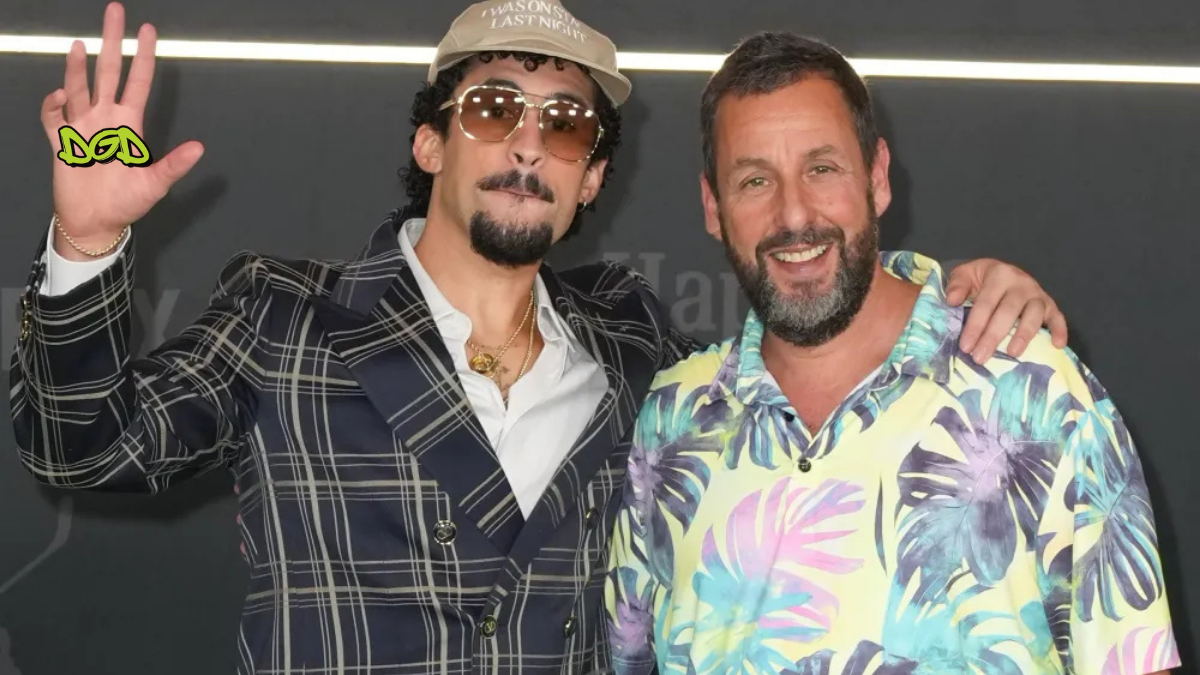
When Adam Sandler stepped onto the set of Happy Gilmore in 1996, few could have predicted the legacy he was about to launch. The wild-swinging, hockey-loving underdog golfer wasn’t just another comic character — he became an icon. And now, nearly three decades later, Sandler is dusting off the Bruins jersey and picking up the club once more in the long-awaited sequel: Happy Gilmore 2, premiering Friday on Netflix.
Back in his New Hampshire childhood, Sandler would tag along with his father, an avid golfer, to the driving range. He wasn’t particularly interested — until his hockey-playing friend Kyle McDonough joined and stunned everyone with his raw power. That little moment stuck with Sandler, eventually inspiring the story of a guy with a hockey mentality trying to master golf.
ALSO READ : 5 Times Chuck Mangione Made Jazz Soothing and Soulful Forever
“I started thinking about a guy who could hit it really big,” Sandler recalls. That thought, coupled with years of friendship and collaboration with Tim Herlihy — his NYU roommate turned writing partner — gave birth to Happy Gilmore.
Originally released in February 1996, Happy Gilmore followed Billy Madison as Sandler’s second major film and quickly embedded itself in pop culture. The absurdity, quotability, and unhinged charm made it unforgettable. “Are you too good for your home?” and “The price is wrong, b****!” became immortal comedy lines, as did cameos from Bob Barker, Carl Weathers, and Christopher McDonald.

But not everyone loved it at first. Roger Ebert called Happy a “violent sociopath” and mocked it as part of the “dumber and dumbest sweepstakes.” Yet audiences disagreed. The movie grossed $39 million domestically and, through cable reruns and DVD marathons, became a generational favorite. Director Benny Safdie — who worked with Sandler on Uncut Gems — even said, “I can close my eyes and see the movie end to end.”
For years, Sandler avoided doing a sequel. Comedy sequels — from Caddyshack II to Zoolander 2 — are notorious for failing to recapture the spark. “We were like, ‘Yeah, no, we’re not going to do that,’” Sandler said of earlier pitches.
But time changes everything.
Now 58, with kids of his own, Sandler — alongside Herlihy — decided it was the right moment. Happy Gilmore 2 finds Happy retired, father of five, struggling after a personal tragedy. When a circus-like golf tour called Maxi Golf (founded by Safdie’s character) threatens the soul of the game, Happy returns to protect the sport he once mocked.
And yes, Sandler’s real-life daughter Sunny Sandler plays his on-screen daughter.
“There’s nothing better than dropping a comedy and trying to make people laugh,” Sandler said. “It feels like why we originally got into this business.”
While broad comedies have nearly disappeared from modern film, Sandler and Herlihy are diving back in without hesitation. For them, this isn’t just a sequel — it’s a reunion with their past, a love letter to their early careers, and a gift to fans who never stopped quoting Happy’s antics.
“We should watch the first one again, man,” Sandler remembers telling Herlihy. And they did. From memories of Bob Barker to the “hop, skip, and a hit” golf swing, it all came flooding back. “We weren’t afraid to swing, swing, swing,” Herlihy added.
So, will Happy Gilmore 2 live up to its iconic predecessor?
If early fan reactions and the sheer joy Sandler brings are any indication, it just might. After all, in a cinematic world filled with superheroes and reboots, a golf club-swinging misfit who just wants to protect the game might be the hero we didn’t know we still needed.
And yes — rumor has it — someone’s going to ask a golf ball once again, “Are you too good for your home?”









Entertainment
Broadway Shake-Up: Samira Wiley Steps Away From ‘Proof’… Kara Young Steps In at the Last Moment
In a surprising casting twist, Samira Wiley exits the Broadway revival of Proof, with Tony-nominated Kara Young quickly stepping into the spotlight.


Broadway has always thrived on unpredictability, but even seasoned theatergoers were caught off guard this week. In a sudden development, acclaimed actress Samira Wiley has officially withdrawn from the highly anticipated Broadway production of Proof, leaving fans both surprised and curious about what comes next.
Stepping into her place is none other than Kara Young, a rising force in theater who has been steadily building a reputation for her commanding stage presence and emotionally layered performances.
A Sudden Exit That Raises Questions
Wiley, best known for her standout roles in Orange Is the New Black and The Handmaid’s Tale, was expected to bring a fresh intensity to Proof, the Pulitzer Prize-winning play by David Auburn. Her involvement had already generated buzz among Broadway enthusiasts eager to see her transition back to the stage.
ALSO READ : “She Never Made It Out…” Albany House Fire Claims Woman’s Life as Family Pleads for Help to Bring Her Home
While no detailed reason has been publicly disclosed for her departure, sources close to the production suggest the decision was made amicably, with the creative team moving quickly to ensure the show remains on track.
Kara Young: A Timely and Promising Replacement
Enter Kara Young—a performer who has quietly become one of Broadway’s most exciting talents. Known for her Tony-nominated work and critically praised performances, Young’s casting is being viewed less as a replacement and more as a bold reinterpretation of the role.
Her recent stage appearances have earned her recognition for bringing nuance and depth to complex characters. With Proof demanding emotional vulnerability and intellectual sharpness, Young seems well-positioned to take on the challenge.

Why ‘Proof’ Still Matters
First premiering in 2000, Proof remains one of the most compelling modern plays to grace the Broadway stage. Its exploration of genius, mental health, and familial bonds continues to resonate with audiences decades later.
The play’s enduring legacy, combined with this unexpected casting shift, has only heightened anticipation. Theater insiders believe that such last-minute changes often inject new energy into productions—sometimes leading to unforgettable performances.
Broadway’s Ability to Adapt
If there’s one constant in Broadway history, it’s resilience. From cast changes to production delays, the show must go on—and often, it thrives because of these challenges.
Wiley’s departure, while unexpected, opens the door for a fresh interpretation that could redefine the production. Meanwhile, Kara Young’s entry signals confidence from producers that the show remains in capable hands.
What Audiences Can Expect Now
With opening dates approaching, all eyes will be on Young as she steps into a role that carries both emotional weight and high expectations. For audiences, this shift may turn into a rare opportunity to witness a unique take on a beloved play.
As for Wiley, her exit from Proof is unlikely to slow her momentum. With a career spanning television, film, and stage, she remains one of the most respected performers of her generation.
In the end, Broadway’s magic lies in its unpredictability—and this latest twist is a reminder that sometimes, the unexpected becomes the most talked-about story of all.
Entertainment
Broadway Surprise: Samira Wiley Drops Out of ‘Proof’… Kara Young Takes Center Stage
In a surprising casting twist, Samira Wiley exits the Broadway revival of Proof, with Tony-nominated Kara Young quickly stepping into the spotlight.

Broadway has always thrived on unpredictability, but even seasoned theatergoers were caught off guard this week. In a sudden development, acclaimed actress Samira Wiley has officially withdrawn from the highly anticipated Broadway production of Proof, leaving fans both surprised and curious about what comes next.
Stepping into her place is none other than Kara Young, a rising force in theater who has been steadily building a reputation for her commanding stage presence and emotionally layered performances.
A Sudden Exit That Raises Questions
Wiley, best known for her standout roles in Orange Is the New Black and The Handmaid’s Tale, was expected to bring a fresh intensity to Proof, the Pulitzer Prize-winning play by David Auburn. Her involvement had already generated buzz among Broadway enthusiasts eager to see her transition back to the stage.
ALSO READ : “She Never Made It Out…” Albany House Fire Claims Woman’s Life as Family Pleads for Help to Bring Her Home
While no detailed reason has been publicly disclosed for her departure, sources close to the production suggest the decision was made amicably, with the creative team moving quickly to ensure the show remains on track.
Kara Young: A Timely and Promising Replacement
Enter Kara Young—a performer who has quietly become one of Broadway’s most exciting talents. Known for her Tony-nominated work and critically praised performances, Young’s casting is being viewed less as a replacement and more as a bold reinterpretation of the role.
Her recent stage appearances have earned her recognition for bringing nuance and depth to complex characters. With Proof demanding emotional vulnerability and intellectual sharpness, Young seems well-positioned to take on the challenge.

Why ‘Proof’ Still Matters
First premiering in 2000, Proof remains one of the most compelling modern plays to grace the Broadway stage. Its exploration of genius, mental health, and familial bonds continues to resonate with audiences decades later.
The play’s enduring legacy, combined with this unexpected casting shift, has only heightened anticipation. Theater insiders believe that such last-minute changes often inject new energy into productions—sometimes leading to unforgettable performances.
Broadway’s Ability to Adapt
If there’s one constant in Broadway history, it’s resilience. From cast changes to production delays, the show must go on—and often, it thrives because of these challenges.
Wiley’s departure, while unexpected, opens the door for a fresh interpretation that could redefine the production. Meanwhile, Kara Young’s entry signals confidence from producers that the show remains in capable hands.
What Audiences Can Expect Now
With opening dates approaching, all eyes will be on Young as she steps into a role that carries both emotional weight and high expectations. For audiences, this shift may turn into a rare opportunity to witness a unique take on a beloved play.
As for Wiley, her exit from Proof is unlikely to slow her momentum. With a career spanning television, film, and stage, she remains one of the most respected performers of her generation.
In the end, Broadway’s magic lies in its unpredictability—and this latest twist is a reminder that sometimes, the unexpected becomes the most talked-about story of all.
Entertainment
‘Dune 3’ Will Be a “Thriller”… Denis Villeneuve Drops a Big Hint as Zendaya & Robert Pattinson Join the Spotlight
The visionary director teases a darker, more intense chapter in the Dune saga as the first trailer arrives with a star-studded presence.

The sands of Arrakis are shifting once again—and this time, the tone is taking a dramatic turn. Acclaimed filmmaker Denis Villeneuve has revealed that Dune 3 won’t just continue the epic saga—it will transform it.
Describing the upcoming installment as a “thriller,” Villeneuve has sparked fresh excitement among fans and critics alike. The announcement came as the director unveiled the first glimpse of the film alongside global stars Zendaya and Robert Pattinson, signaling a bold new direction for the beloved franchise.
A Shift in Tone: From Epic to Intense
The earlier films in the Dune series, based on the iconic novel by Frank Herbert, were celebrated for their grand scale, philosophical depth, and breathtaking visuals. But Villeneuve’s latest remarks suggest that Dune 3 will lean more heavily into tension, suspense, and psychological drama.
ALSO READ : “She Never Made It Out…” Albany House Fire Claims Woman’s Life as Family Pleads for Help to Bring Her Home
Calling it a “thriller” hints at a tighter, more character-driven narrative—one that could explore the darker consequences of power, prophecy, and destiny. For longtime fans, this evolution feels both surprising and inevitable.
Zendaya’s Expanding Role
After playing a more mysterious and limited role in earlier chapters, Zendaya’s character, Chani, is expected to take center stage in the next film. Her growing prominence aligns perfectly with the shift toward a more emotional and intense storyline.
Zendaya, who has become one of Hollywood’s most influential young stars, brings both depth and global appeal to the franchise. Her presence at the trailer launch only reinforced her importance to the story moving forward.
Robert Pattinson Enters the Desert
Perhaps the most intriguing development is the involvement of Robert Pattinson. Known for his transformative performances in films like The Batman and Tenet, Pattinson’s addition adds a layer of unpredictability.

While details about his role remain tightly under wraps, fans are already speculating about how his character might influence the power dynamics of Arrakis. Villeneuve’s decision to bring him on board suggests a character with complexity—and possibly danger.
Denis Villeneuve’s Vision Continues to Evolve
Villeneuve has long been praised for his meticulous storytelling and ability to balance spectacle with substance. With Dune, he has created a cinematic universe that feels both vast and intimate.
This latest chapter appears to be his most daring yet. By shifting genres within the same narrative world, Villeneuve is challenging expectations and keeping the franchise fresh.
It’s a risky move—but one that could redefine what audiences expect from large-scale science fiction.
Why ‘Dune 3’ Could Be a Game-Changer
Franchises often struggle to maintain momentum by their third installment. But Dune 3 seems poised to do the opposite—by reinventing itself.
The combination of a darker tone, an expanded cast, and Villeneuve’s evolving vision could make this film one of the most talked-about releases in the coming years.
For fans, the message is clear: this isn’t just another sequel. It’s a transformation.
And as the first trailer begins to circulate, one thing is certain—the journey through Arrakis is far from over… but it’s about to get far more intense.

Trump Gives Iran 5 More Days — But Tehran Says There Were Never Any Talks to Begin With, as the World Braces for What Comes Next…

Colombian Military Plane With 110 Soldiers Crashes on Takeoff — As Another Airport Tragedy Strikes New York the Same Day…

Broadway Shake-Up: Samira Wiley Steps Away From ‘Proof’… Kara Young Steps In at the Last Moment

Broadway Surprise: Samira Wiley Drops Out of ‘Proof’… Kara Young Takes Center Stage

‘Dune 3’ Will Be a “Thriller”… Denis Villeneuve Drops a Big Hint as Zendaya & Robert Pattinson Join the Spotlight

1-Iran Issues Dire Warning to Israel and Defies Trump on Nukes: “We’re Ready to Strike Deep Inside”

Donald Trump’s net worth reveals the fortune behind the former US President and business mogul

“She Never Made It Out…” Albany House Fire Claims Woman’s Life as Family Pleads for Help to Bring Her Home

Caitlin Clark Sidelined with Quad Strain, Set to Miss Two Weeks of WNBA Action

“Tomás Rodríguez Net Worth 2025: Panama’s Gold Cup Goal‑Machine’s Surprising Fortune Revealed”

Miss Jamaica Suffers Terrifying Fall Off Miss Universe Stage; Rushed to Hospital on Stretcher in Viral Video

Moana Live-Action Teaser Sparks Outrage as Fans Call Disney’s Move a ‘Clear Money Grab’ — What Went Wrong?

Ryan Gosling’s Project Hail Mary Trailer Stuns Fans with a Mysterious Alien Ally and a Mission That Could Save Earth

Apple delays Jessica Chastain thriller The Savant about domestic extremism after recent US violence

Avatar 3, Fire and Ash trailer reveals Jake Sully’s family facing terrifying new Na’vi enemies with deadly fire powers
-
 Entertainment4 days ago
Cannes 2026 Hasn’t Announced a Single Film Yet — But the Whisper Network Is Already Pointing to These Names and It’s Exciting…
-

 Entertainment6 days ago
Oscars 2026 Red Carpet Shockers: Zendaya’s Late Arrival, Jessie Buckley’s Grace Kelly Tribute… and Chase Infiniti Owning the Night
-
 Entertainment5 days ago
Amy Poehler and Sterlin Harjo Are Getting One of Television’s Highest Honours — and the Reason Why Says Everything About Where Storytelling Is Headed…
-

 Politics1 week ago
“Trump Reveals ‘Early Stage Breast Cancer’ Diagnosis of Susie Wiles… But Says Her ‘Strength Says Everything’”
-

 Entertainment4 days ago
Almodóvar, Lars von Trier, Joel Coen and More — The Films That Could Own Cannes 2026 Are Already Generating Serious Buzz and the List Is…
-
 Entertainment1 week ago
The Oscars Are Already Being Called Before They Happen and Scott’s Final Feinberg Forecast Reveals a Shocking Front-Runner That Nobody Saw Coming…
-

 Entertainment4 days ago
Lollapalooza 2026 Just Dropped Its Most Surprising Lineup Yet — and the One Historic Thing Nobody Is Talking About Is the Real Story…
-

 Automobile1 week ago
“A Tragic Incident Changed Everything…”: Hyundai Halts Sales of Palisade SUVs and Recalls 60,000 Vehicles After Child’s Death