
Entertainment
A Filmmaker Spent 10 Years Chasing a Colossal Ship Laying Internet Cables in the Arctic and What He Captured Will Leave You Speechless…
Debut documentary Arctic Link premieres at CPH:DOX in Copenhagen, telling the jaw-dropping story of how the internet arrived in a remote Alaskan island — through thousands of kilometres of fibre optic cable sinking into the frozen dark sea.


Most of us complain when our Wi-Fi slows down. We have never once stopped to think about what it actually took to get that signal to us — the ships, the cables, the ocean depths, the years of quiet, enormous, invisible work happening in some of the most hostile environments on the planet.
Ian Purnell thought about it for ten years. And then he made a film about it.
Arctic Link, Purnell’s debut feature documentary, world premieres on Monday, March 16 in the main competition programme of CPH:DOX — the Copenhagen International Documentary Film Festival — whose 23rd edition runs through March 22 in the Danish capital. And based on everything that has emerged about the film ahead of its premiere, this is not a quiet, talking-heads documentary about telecommunications infrastructure. This is something far more visceral, far more cinematic, and frankly far more moving than that description would suggest.
What the Film Is Actually About
At its heart, Arctic Link is about a moment of connection — literally and humanly. The film documents the arrival of the internet to a remote corner of Alaska, a place where communities had been living largely cut off from the digital world that the rest of us take entirely for granted. That alone would be a compelling story. But Purnell, rather than simply documenting the social impact of that change on the islanders, chose to go much, much bigger.
ALSO READ : Younghoe Koo Explains Botched Field Goal After Slip: “The Ball Was Moving So I Pulled Up”
The film’s synopsis sets the scene with striking imagery: “In the Arctic Ocean, a colossal ship drifts along, while thousands of kilometers of fiber optic cable slide from the deck into the dark depths of the sea.” Read that again slowly. A colossal ship. Thousands of kilometres of cable. The dark depths. This is infrastructure filmmaking on a scale that feels more like an expedition film or a work of natural history cinema than a technology documentary.
The CPH:DOX festival website describes Arctic Link with a line that functions almost as a critical verdict in advance: “Everything is enormous — from the massive cables to the images and phenomenal sound design — but the human scale never disappears from view.” That balance — between the colossal and the intimate, between the technological and the deeply personal — is precisely what makes the project sound so extraordinary.
Ten Years in the Making
Let that number sink in for a moment. Ten years.
Purnell did not stumble onto this story and shoot it in a summer. He gave a decade of his professional life to understanding it, accessing it, and ultimately rendering it on screen in a way that does justice to its scale. That kind of commitment is vanishingly rare in documentary filmmaking — or in any filmmaking. It speaks to a director who was not interested in the quick version of this story, who understood that the only way to capture something this vast and this strange was to live inside it long enough to find its soul.
In discussing his approach, Purnell spoke about wanting to give the film a “sensual connection” — a phrase that is deliberately unexpected in the context of fibre optic cables and Arctic shipping lanes. He wanted audiences to feel the film physically, not just understand it intellectually. To that end, his creative process leaned into something almost animistic: “We were often talking about what kind of animal something could be,” he said of the conversations that shaped the film’s visual and sonic language. A cable isn’t just a cable. A ship isn’t just a ship. In Arctic Link, they become creatures. They breathe. They move. They mean something.
That is the difference between a documentary and a piece of cinema, and it sounds very much like Purnell has made the latter.

Sound as a Character
The mention of “phenomenal sound design” in the festival’s own description is not throwaway praise. For a film about connectivity — about signals travelling through darkness, about the physical act of linking one world to another — sound was always going to be central. The ocean. The machinery. The cable moving through water. The silence of the Arctic before the signal arrives, and whatever comes after.
Purnell has spoken about treating sound as a form of emotional truth in the film — a way of communicating what images alone cannot. In a documentary about a phenomenon that is, by its very nature, invisible (you cannot see the internet), the decision to make the audience hear the infrastructure that carries it is both creatively bold and thematically perfect.
The Human Story Inside the Epic
For all its ambition in scale, Arctic Link never loses sight of the people at the centre of it. The Alaskan islanders whose lives are about to change — whose relationship to information, to family communication, to healthcare, to education, to the wider world — are the reason any of this matters. The cables and the ships and the Arctic Ocean are the spectacle. The people are the point.
That is the film’s fundamental tension and its greatest strength: holding both truths at once. The internet is an abstract miracle we barely think about, and it is also a colossal physical undertaking that altered the daily lives of real human beings in profound and irreversible ways. Arctic Link apparently holds both of those realities in the same frame, without letting either one crowd out the other.
Why This Premiere Matters
CPH:DOX is one of the world’s most respected documentary festivals, and placement in its main competition programme is a significant statement of intent about where Arctic Link is headed. Debut features that premiere here often find their way to broader festival circuits, streaming platforms, and eventually to audiences far beyond the world of documentary enthusiasts.
For Ian Purnell, ten years of work is now, finally, being seen. For the rest of us, a story we never knew we needed is about to begin.







Entertainment
Hunter Biden vs Nick Fuentes: Behind the Scenes of the Interview That Almost Turned Into a Physical Confrontation…
Alien Mystery Goes Viral: James Franco’s TikTok Posts Have Fans Searching for Answers
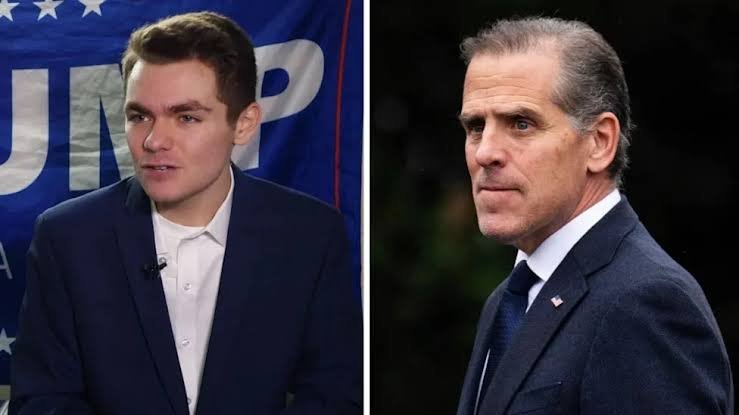
A highly anticipated and controversial conversation between Hunter Biden and Nick Fuentes reportedly took an unexpected turn when tensions escalated during the interview, with sources claiming the discussion nearly became physical.
The meeting was reportedly arranged by independent journalist Andrew Callaghan, known for his street interviews and documentary-style conversations. The sit-down was expected to create a headline-making discussion between two figures with sharply different public images and political viewpoints.
According to reports, the conversation grew increasingly heated as the two exchanged strong opinions on various controversial topics. The situation allegedly reached a point where the atmosphere became tense enough that those present had to step in before the confrontation went further.
ALSO READ : Sen. Elizabeth Warren Calls It a ‘Cesspool of Corruption’ — Here’s Why Senators Are Now Fighting Back Against the DOJ’s Live Nation Deal That Left Every Fan Betrayed…
A Conversation That Quickly Became Controversial
Both Hunter Biden and Nick Fuentes have attracted significant public attention for different reasons. Hunter Biden, the son of former U.S. President Joe Biden, has frequently been in the spotlight due to political controversies and media scrutiny surrounding his personal and professional life.
Meanwhile, Nick Fuentes has built a following through provocative political commentary and has been a highly debated figure in American media circles.

The interview immediately sparked discussions online, with viewers debating whether the intense exchange represented a genuine clash of personalities or a reflection of the broader political divisions in the United States.
Viral Moment Creates Online Debate
Andrew Callaghan’s interview style often focuses on bringing together people with opposing perspectives, creating unscripted conversations that can sometimes become unpredictable.
The reported tension between Biden and Fuentes has added further attention to the interview, with many waiting to see the full conversation and judge the exchange for themselves.
While the exact details of what happened during the discussion remain the subject of reports and reactions, the incident has already become one of the most talked-about political media moments online.
For now, the interview continues to fuel debate — with audiences asking whether it was a genuine confrontation, a heated exchange of ideas, or simply another viral moment in today’s attention-driven media landscape.
Entertainment
Christopher Nolan Rejects Matt Damon’s Claim That ‘The Odyssey’ Is Hollywood’s “Last of Its Kind”
The filmmaker says he disagrees with the idea that epic theatrical experiences like ‘The Odyssey’ are becoming a thing of the past.

Christopher Nolan has never been one to shy away from challenging conventional wisdom, and this time, the acclaimed filmmaker is responding to a surprising comment from one of his closest collaborators, Matt Damon.
During recent discussions surrounding their upcoming epic The Odyssey, Damon reportedly described the film as the “last of its kind,” suggesting that Hollywood may never again produce a project of such enormous scale and ambition. Nolan, however, made it clear that he doesn’t share that outlook.
“There’s a defeatist aspect of viewing it that way that I don’t agree with,” Nolan said, pushing back against the idea that The Odyssey marks the end of an era.
Rather than seeing the film as a farewell to grand cinematic storytelling, Nolan believes the future of filmmaking remains full of possibilities. According to the director, assuming that audiences or studios are no longer willing to embrace ambitious projects underestimates the industry’s ability to adapt and innovate.
ALSO READ : Sen. Elizabeth Warren Calls It a ‘Cesspool of Corruption’ — Here’s Why Senators Are Now Fighting Back Against the DOJ’s Live Nation Deal That Left Every Fan Betrayed…
The comments offer an interesting contrast between two longtime collaborators. Damon, who has worked with Nolan on major productions, appeared to frame The Odyssey as a rare achievement that may become increasingly difficult to replicate in today’s entertainment landscape. Nolan, meanwhile, sees no reason why bold filmmaking cannot continue to thrive.
The upcoming adaptation of The Odyssey, one of the most influential works of ancient literature, is already generating enormous anticipation among moviegoers. Known for his visually immersive storytelling and preference for practical filmmaking techniques, Nolan is expected to bring a fresh cinematic vision to the timeless tale.

The project also continues Nolan’s streak of high-profile productions following the massive critical and commercial success of Oppenheimer, which cemented his status as one of the most influential directors working today. His films have consistently demonstrated that audiences are still willing to support original, large-scale stories when they are backed by compelling storytelling and technical excellence.
Industry observers have frequently debated whether the rise of streaming platforms, changing audience habits, and soaring production costs have made ambitious theatrical releases increasingly risky. Nolan’s latest remarks suggest he rejects that narrative, arguing that believing epic filmmaking has reached its endpoint only limits the industry’s imagination.
For Nolan, the future of cinema is not defined by pessimism but by creative ambition. While The Odyssey may become one of the biggest cinematic events of its generation, the director insists it should inspire more filmmakers—not convince them that such achievements are no longer possible.
As excitement builds around the film, Nolan’s response serves as a reminder that great storytelling has continually reinvented itself across generations. If his vision proves correct, The Odyssey may not be the last of its kind at all—it could simply be the beginning of another chapter for epic filmmaking.
Entertainment
Comedy’s Biggest Stars Unite as New York Comedy Festival Unveils 2026 Lineup
Fans can expect a major showcase of humor and live performances as the New York Comedy Festival prepares for its next edition.

Comedy lovers in New York are preparing for a major week of laughter as the New York Comedy Festival returns with a star-studded lineup featuring some of the biggest voices in modern comedy.
The festival is set to feature performances from acclaimed comedians including Marc Maron, Ilana Glazer, Jordan Klepper, and Ms. Pat.
Running from November 6 to November 15, the festival will bring more than 200 comedians to venues across New York City, with over 100 shows planned throughout the event.
A Celebration of Comedy’s Biggest Voices
The New York Comedy Festival has become one of the most important comedy events in the United States, attracting established performers, rising talents, and fans from around the world.
ALSO READ : Sen. Elizabeth Warren Calls It a ‘Cesspool of Corruption’ — Here’s Why Senators Are Now Fighting Back Against the DOJ’s Live Nation Deal That Left Every Fan Betrayed…
The festival was launched by Caroline Hirsch, the founder of the legendary Carolines on Broadway comedy club, which played a major role in shaping New York’s stand-up comedy scene.
Over the years, the festival has hosted some of the biggest names in entertainment, making it a key event for comedians looking to connect with audiences on one of the world’s most competitive comedy stages.
From Stand-Up Legends to New Generation Talent
This year’s lineup highlights the wide range of comedy styles that continue to attract audiences. From political satire and storytelling to personal experiences and observational humor, the festival aims to showcase the diversity of modern stand-up.

Jordan Klepper, known for his political comedy and work on The Daily Show, brings a unique perspective, while Marc Maron’s long-running podcast and stand-up career have made him one of comedy’s most recognizable voices.
Meanwhile, Ilana Glazer and Ms. Pat represent a new generation of performers who have expanded comedy beyond traditional stages through television, podcasts, and digital platforms.
New York Becomes the Comedy Capital Once Again
With hundreds of performers and shows spread across the city, the festival is expected to transform New York into a hub for comedy fans.
Organizers believe the event will once again highlight why the city remains one of the most influential places for comedians and entertainers.
As anticipation builds, fans are looking forward to a festival filled with unforgettable performances, surprise appearances, and the unique energy that has made New York comedy famous worldwide.

Michigan State Beats Toledo 30-20, But Special Teams Steal the Spotlight in Spartans’ Season Opener

Malachi Toney Breaks Miami Record With 233 Yards, Hits Heisman Pose Three Times — And the Hype Is Already Exploding

Clay Matthews Sees Bizarre AI Photo of Himself and Fires Back With One Word: “Gigaclay”

Elon Musk’s Tesla Cybercab Hits the Road Without a Steering Wheel — But Regulators Are Already Asking Questions

Offers Employee Pricing to L87 V8 Recall Owners as Engine Failure Complaints Continue

1-Iran Issues Dire Warning to Israel and Defies Trump on Nukes: “We’re Ready to Strike Deep Inside”

Sen. Elizabeth Warren Calls It a ‘Cesspool of Corruption’ — Here’s Why Senators Are Now Fighting Back Against the DOJ’s Live Nation Deal That Left Every Fan Betrayed…

Donald Trump’s net worth reveals the fortune behind the former US President and business mogul

“Tomás Rodríguez Net Worth 2025: Panama’s Gold Cup Goal‑Machine’s Surprising Fortune Revealed”

“She Never Made It Out…” Albany House Fire Claims Woman’s Life as Family Pleads for Help to Bring Her Home

Miss Jamaica Suffers Terrifying Fall Off Miss Universe Stage; Rushed to Hospital on Stretcher in Viral Video

Moana Live-Action Teaser Sparks Outrage as Fans Call Disney’s Move a ‘Clear Money Grab’ — What Went Wrong?

Ryan Gosling’s Project Hail Mary Trailer Stuns Fans with a Mysterious Alien Ally and a Mission That Could Save Earth

Apple delays Jessica Chastain thriller The Savant about domestic extremism after recent US violence

Avatar 3, Fire and Ash trailer reveals Jake Sully’s family facing terrifying new Na’vi enemies with deadly fire powers
-

 Entertainment1 week ago
Venice Film Festival Picks ‘Dio Ride’ As Closing Film: Giovanni Veronesi’s Historical Drama Set To End Prestigious Event…
-

 Entertainment1 week ago
David Ellison Leads New Push for Federal Film Tax Credits in Washington
-

 Entertainment1 week ago
Made on a $10,000 Budget, ‘Toronto Apartment’ Turns Housing Crisis Into Dark Comedy Gold
-

 Entertainment1 week ago
PEN America Crisis Deepens… Jewish Writers Report Sparks Internal Fallout as President Resigns in Protest
-

 games1 week ago
Twitch Faces Major Outage After GTA 6 Trailer Drops: Did Gaming’s Biggest Hype Overload the Platform?
-
 Entertainment1 week ago
AI Meets Hollywood: ‘Sharknado’ and ‘Doctor Who’ Creatives Lead Promise AI’s New Film Slate
-

 Entertainment6 days ago
BBC Still Rules UK Media, But Its Latest Report Exposes a Growing Crisis That Can’t Be Ignored…
-

 Entertainment1 week ago
Stephen Chow’s Kung Fu Soccer Crosses $200 Million in China, Eyes Potential $450 Million Box Office Run