
Entertainment
They Gathered in Copenhagen to Talk About Documentary Film — and What They Said Behind Closed Doors Should Worry All of Us…
From funding cuts that are quietly killing the art form to the unexpected reason a film about a man standing up to Putin just won the Oscar — the industry’s most honest conversation of the year happened in Copenhagen. And it felt like group therapy.


There is a particular kind of honesty that only emerges when an industry is genuinely frightened. The polished talking points dissolve. The optimistic conference-speak fades. And what replaces it is something rawer, more useful, and considerably more uncomfortable to sit in.
That is what happened at CPH:DOX — the Copenhagen International Documentary Film Festival — during its industry conference panel that brought together some of the most significant voices in documentary filmmaking to discuss the state of their world. What followed was described by those present as less like a professional panel and more like group therapy.
Given what the documentary world is currently living through, that description makes complete sense.
Copenhagen as the Conscience of Documentary Film
CPH:DOX has, over the past two decades, grown into one of the most important gatherings in the global documentary calendar — not just as a festival that screens films, but as a place where the industry comes to take its own temperature.
Held annually in Copenhagen, Denmark, the festival attracts filmmakers, commissioners, broadcasters, streamers, and financiers from across Europe, North America, and beyond. Its industry conference — the space where the business of documentary gets discussed with unusual frankness — has developed a reputation for conversations that go places that more carefully managed industry events avoid.
This year, those conversations went somewhere particularly urgent.
The Funding Crisis Nobody Wants to Name — But Everyone Is Living
The central issue hanging over the panel — the thing that shaped every other conversation — was money. Specifically, the accelerating disappearance of it from the documentary ecosystem.
ALSO READ : “She Never Made It Out…” Albany House Fire Claims Woman’s Life as Family Pleads for Help to Bring Her Home
The crisis is not new, but it has reached a new level of acuity. The golden era of documentary commissioning — when Netflix, HBO, Amazon, and a wave of well-funded streaming platforms were investing heavily in non-fiction content, creating what felt like an unprecedented moment of opportunity for documentary filmmakers worldwide — has, by most honest assessments, passed.
The streamers have pulled back. Netflix, which transformed the documentary landscape with films like Making a Murderer, Icarus, and 13th, has significantly reduced its commissioning of standalone documentary features in favour of series and true crime content with demonstrably broad appeal. Other platforms have followed similar logic — chasing audience metrics and subscriber retention numbers rather than the kind of challenging, politically engaged, formally ambitious work that defines documentary filmmaking at its best.
Meanwhile, public broadcasting — the traditional backbone of documentary funding in Europe and beyond — is facing its own crisis. Arts Council budgets are being cut. National broadcasters are under political and financial pressure. The European funding infrastructure that has sustained independent documentary production for decades is being squeezed from multiple directions simultaneously.
The panellists at CPH:DOX did not dress this up. They named it — the specific, practical, daily reality of trying to make films that matter in an environment where the financial infrastructure for doing so is contracting in real time.
Politics: The Other Pressure Nobody Can Ignore
If the funding conversation was the economic dimension of the crisis, the political conversation was its ideological twin — and at this year’s CPH:DOX panel, the two were inseparable.
Documentary filmmaking has always existed in a complicated relationship with political power. By its nature, the form is drawn to the stories that those in power would prefer left untold — the investigations, the exposés, the portraits of people and communities whose existence complicates the official narrative. That is not a political bias. It is a structural consequence of what documentary filmmaking, at its most serious, actually does.
But the current political environment — in the United States, across Europe, and in numerous other countries where the space for critical journalism and independent culture is actively narrowing — has created pressures on the form that go beyond the usual tension between truth-tellers and the powerful.
Funding bodies are increasingly subject to political influence. Broadcasters operate in regulatory environments shaped by governments that may be hostile to the kind of content those broadcasters have traditionally championed. International co-productions — the financial model that allows ambitious documentary projects to exist at all — depend on relationships between countries whose political alignments are shifting in unpredictable ways.
The panellists discussed all of this with a directness that reflected both the severity of the situation and, perhaps, the specific permission that a Copenhagen room full of like-minded professionals provides. There are things you can say at CPH:DOX that you cannot say in a pitch meeting with a commissioning editor whose platform is sensitive to political controversy.
That gap — between what documentary filmmakers know and believe and what the market currently allows them to make — was one of the most palpable tensions in the room.
‘Mr. Nobody Against Putin’: Why This Oscar Win Meant More Than Most
Into this conversation about money and politics and the survival of an art form came the news from Hollywood that provided the panel with its most resonant talking point: the Academy Award for Best Documentary Feature had been won by Mr. Nobody Against Putin.
The film — which tells the story of an ordinary Russian citizen who dared to stand in public opposition to Vladimir Putin‘s regime, accepting the personal consequences of doing so with a combination of courage and almost unbearable dignity — was not the most heavily tipped documentary in the Oscar race. It did not have the marketing muscle of some of its competitors. It did not arrive with the platform or the promotional infrastructure that increasingly determines which documentaries reach Academy voters.

And yet it won. And the CPH:DOX panel spent time discussing exactly why — because the answer is both specific to this film and broadly instructive about what documentary filmmaking can still achieve when it gets everything right.
The key reason, according to the conversation in Copenhagen, comes down to something that no marketing budget can manufacture and no algorithm can optimise for: the film made people feel something true.
In a category and a moment saturated with important subjects and technically accomplished filmmaking, Mr. Nobody Against Putin apparently did the thing that separates the memorable from the merely commendable — it connected the specific story of one unremarkable, remarkable person to something universal about courage, about the relationship between individuals and authoritarian power, about what it costs to say no when silence is so much safer.
That is not a formula. It cannot be replicated by following instructions. It is the result of a filmmaker getting close enough to a subject to understand them fully, and then finding the cinematic language to transmit that understanding to an audience on the other side of the world.
The Group Therapy Dimension — and Why It Matters
The description of the panel as group therapy was not offered as a criticism. It was offered as a recognition.
Documentary filmmakers are, by professional disposition, the people who go toward the difficult stories — the ones that require time, money, personal risk, emotional exposure, and the willingness to spend years of a creative life on a project that may never find the audience it deserves. They operate, increasingly, in a financial and political environment that is actively hostile to the kind of work they feel called to make.
The ability to sit in a room — in Copenhagen, at CPH:DOX, surrounded by people who understand that specific combination of vocation and frustration — and speak honestly about what is happening, what is at stake, and what it feels like from the inside, is not a luxury. It is a necessity.
Industries under pressure need spaces where their practitioners can name the reality they are living without the professional performance of optimism that pitch meetings and press releases require. The CPH:DOX panel provided that space. The conversation that happened in it was, by all accounts, both painful and clarifying.
What Comes Next — and Why the Stakes Are Real
The documentary world’s crisis — funding, politics, platform, audience — is not an abstract industry problem. It has direct consequences for the public’s ability to understand the world it lives in.
Documentary film, at its best, does something that no other medium does quite so well: it takes real people, real events, and real consequences, and renders them in a form that is simultaneously informative and humanising. It is the form that gave us Citizenfour and Edward Snowden‘s story. That gave us 13th and a new framework for understanding American mass incarceration. That gave us Amy and a portrait of Amy Winehouse that her own life, lived publicly, could never have provided.
And now, with Mr. Nobody Against Putin, it has given us the story of a man who stood up to one of the most powerful authoritarian leaders in the world — not with an army or a political movement or a media platform — but with the simple, devastating act of refusing to pretend.
That story won the Oscar. It moved people. It reminded a room full of Academy voters — and, through them, a global audience — why this form of filmmaking matters.
The question that CPH:DOX was grappling with, in its funding panels and its political discussions and its moments of group therapy honesty, is whether the infrastructure that makes such films possible will still exist in five years — or ten — or twenty.
The answer is not guaranteed. But the conversation happening in Copenhagen is, at the very least, the right one to be having.







Entertainment
How ‘Avengers: Endgame’ Returned to Cinemas and Reclaimed Box Office Glory
Renewed ticket sales send Marvel’s 2019 finale past ‘Avatar’ to lead the all-time global chart again.
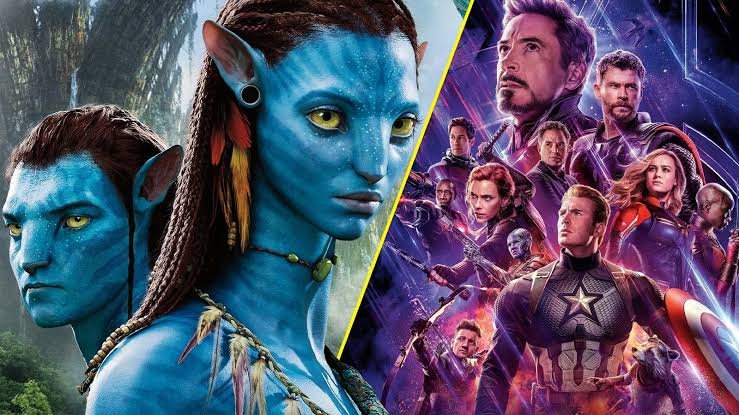
Seven years after its original release, Avengers: Endgame has unfinished business at the box office.
The Marvel Studios blockbuster has overtaken James Cameron’s Avatar to become the highest-grossing film worldwide once again. According to The Walt Disney Company’s October 4 announcement, Endgame now holds an estimated $2.9255 billion, narrowly ahead of Avatar’s $2.9237 billion. That puts just $1.8 million between two of cinema’s biggest hits.
The lead is small. The comeback, however, is substantial: a film released in 2019 has drawn enough fresh ticket sales to rewrite the all-time chart.
The ‘Encore’ release that tipped the balance
The latest theatrical run, titled Avengers Endgame: Encore, has earned $126 million worldwide, according to TheWrap. That includes $36.2 million in North America and $89.8 million from international markets—the extra business that pushed the film back into first place.
Audiences also had a reason to return beyond revisiting a familiar blockbuster. TheWrap reports that the reissue features a modified ending and three new scenes during and after the credits, connected to Avengers: Doomsday. The release therefore serves two purposes: bringing an established favourite back to cinemas and giving viewers a bridge to the next Avengers story.
ALSO READ : Emmy Nominations Announcement Gets a Star Twist… Liza Colón-Zayas & Jeff Hiller Set to Reveal 2026 TV Nominees
A rivalry with a history of reversals
This is another change of leadership in a box office contest that has lasted for years.
Endgame first displaced Avatar in 2019. Cameron’s science-fiction epic regained the crown following its Chinese re-release in 2021. Now, another theatrical return has swung the result in Marvel’s favour. Re-releases have become a decisive part of the competition, extending both films’ earning lives well beyond their original runs.
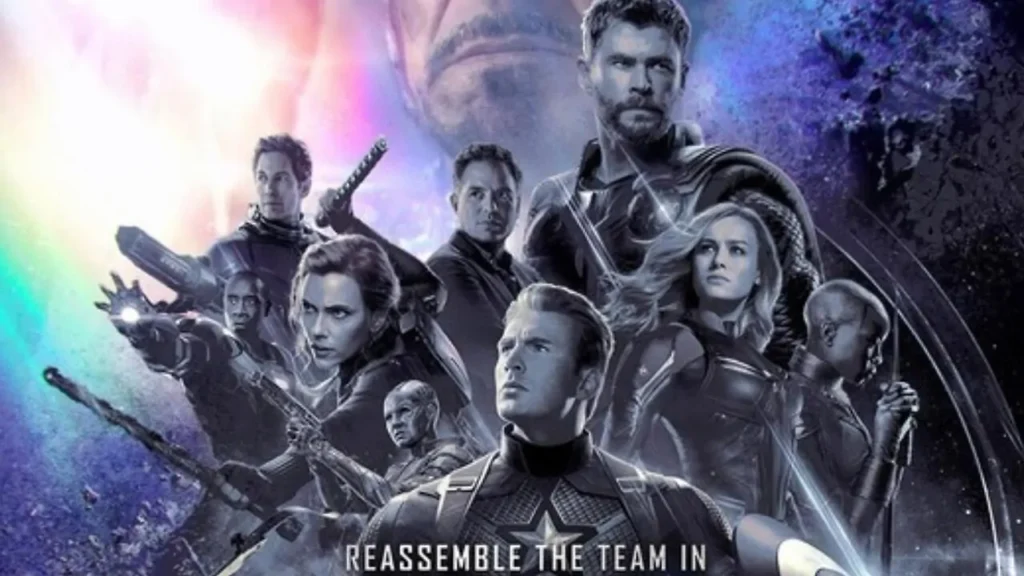
The distinction matters: this is the record for worldwide theatrical revenue without adjustment for inflation, including re-release earnings. It measures money collected rather than the number of tickets sold.
Why ‘Endgame’ matters to ‘Doomsday’
The timing gives Marvel’s comeback an added significance. Avengers: Doomsday is scheduled to reach cinemas on December 18, 2026, and Disney has positioned Endgame as an important foundation for that next chapter.
Explaining the connection, Anthony Russo said: “You really need to pick the story up from where you left it in Endgame.”
That makes this return more than a victory lap. A film remembered for closing a major chapter of Marvel’s story is now helping introduce the next one—and, along the way, has taken back Hollywood’s most closely watched box office title.
Entertainment
Tom Cruise’s ‘Digger’ Faces a Tough Opening: Could ‘Verity’ Take the Lead?
Cruise’s star power meets a fresh box office challenge as the Colleen Hoover adaptation emerges as a formidable rival.
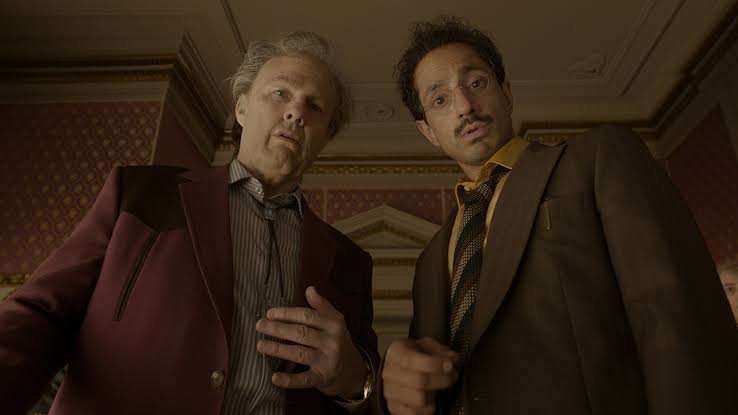
Tom Cruise has spent years persuading audiences to watch him attempt the impossible. With Digger, the challenge is different: convincing moviegoers to embrace an eccentric, darkly comic character who bears little resemblance to his familiar action heroes.
Directed by Alejandro González Iñárritu, the film arrives in US cinemas on October 2, 2026, carrying considerable expectations. Cruise plays Digger Rockwell, an oil tycoon confronting a catastrophe connected to his company’s actions. It is a conspicuous departure for an actor whose recent screen identity has been shaped by spectacular stunts and blockbuster franchises.
Yet the conversation before release has increasingly turned from Cruise’s transformation to a more uncomfortable question: how many people will buy a ticket?
ALSO READ : Emmy Nominations Announcement Gets a Star Twist… Liza Colón-Zayas & Jeff Hiller Set to Reveal 2026 TV Nominees
A costly film facing a modest opening
According to Koimoi’s September 30 report, Digger was tracking for a North American opening below $15 million, against a reported production cost of approximately $125 million. These are reported estimates, rather than confirmed earnings or a final accounting of the film’s costs.
That gap explains the concern surrounding Warner Bros.. An expensive production needs sustained attendance, and a subdued debut would place greater pressure on subsequent weekends and overseas markets.
An opening forecast cannot establish a film’s eventual profit or loss. It can, however, reveal how much work remains for the campaign.
Reviews have complicated the pitch
The critical response has been sharply divided. People reported reactions ranging from admiration for the film’s audacity and Cruise’s commitment to criticism of its scale, coherence and tone.
For potential ticket buyers, that creates an uncertain proposition. Cruise’s presence attracts attention, but attention does not automatically translate into enthusiasm for an unfamiliar kind of film.

The promotional campaign has leaned into that disagreement. The Guardian described advertising that places harsh reactions alongside praise, using the controversy itself to generate interest. Whether that approach encourages curiosity or deepens hesitation remains an open question.
Why ‘Verity’ makes the weekend more intriguing
The Hollywood Reporter expects Digger to open substantially behind Verity, the Amazon MGM Studios adaptation of Colleen Hoover’s novel. hollywoodreporter.com
Starring Anne Hathaway, Dakota Johnson and Josh Hartnett, Verity is also scheduled to open on October 2. Its psychological-thriller premise centres on a writer who discovers a disturbing manuscript while completing another author’s book series.
From a marketing perspective, an established novel and a recognisable thriller setup could offer a more immediate hook. Digger, by comparison, asks audiences to take a greater leap into unfamiliar territory.
The audience verdict is still ahead
Cruise has clearly committed to that leap. At the London premiere, Reuters reported that his transformation involved prosthetics and a padded bodysuit, alongside a demanding performance.
The commercial outcome remains unresolved. Strong audience recommendations could give Digger momentum beyond its initial forecasts. A weak response would make its financial challenge harder.
For now, the film’s biggest suspense lies beyond the screen: whether curiosity about Cruise’s unusual gamble becomes an opening-weekend ticket purchase.
Entertainment
‘Verity’ Could Outopen ‘Digger’: Why Tom Cruise Faces a Tough Contest
The competing releases raise a compelling question: which film will persuade more audiences to buy a ticket?

Tom Cruise has spent years persuading audiences to watch him attempt the impossible. With Digger, the challenge is different: convincing moviegoers to embrace an eccentric, darkly comic character who bears little resemblance to his familiar action heroes.
Directed by Alejandro González Iñárritu, the film arrives in US cinemas on October 2, 2026, carrying considerable expectations. Cruise plays Digger Rockwell, an oil tycoon confronting a catastrophe connected to his company’s actions. It is a conspicuous departure for an actor whose recent screen identity has been shaped by spectacular stunts and blockbuster franchises.
Yet the conversation before release has increasingly turned from Cruise’s transformation to a more uncomfortable question: how many people will buy a ticket?
ALSO READ : Emmy Nominations Announcement Gets a Star Twist… Liza Colón-Zayas & Jeff Hiller Set to Reveal 2026 TV Nominees
A costly film facing a modest opening
According to Koimoi’s September 30 report, Digger was tracking for a North American opening below $15 million, against a reported production cost of approximately $125 million. These are reported estimates, rather than confirmed earnings or a final accounting of the film’s costs.
That gap explains the concern surrounding Warner Bros.. An expensive production needs sustained attendance, and a subdued debut would place greater pressure on subsequent weekends and overseas markets.
An opening forecast cannot establish a film’s eventual profit or loss. It can, however, reveal how much work remains for the campaign.
Reviews have complicated the pitch
The critical response has been sharply divided. People reported reactions ranging from admiration for the film’s audacity and Cruise’s commitment to criticism of its scale, coherence and tone.
For potential ticket buyers, that creates an uncertain proposition. Cruise’s presence attracts attention, but attention does not automatically translate into enthusiasm for an unfamiliar kind of film.
The promotional campaign has leaned into that disagreement. The Guardian described advertising that places harsh reactions alongside praise, using the controversy itself to generate interest. Whether that approach encourages curiosity or deepens hesitation remains an open question.
Why ‘Verity’ makes the weekend more intriguing
The Hollywood Reporter expects Digger to open substantially behind Verity, the Amazon MGM Studios adaptation of Colleen Hoover’s novel. hollywoodreporter.com
Starring Anne Hathaway, Dakota Johnson and Josh Hartnett, Verity is also scheduled to open on October 2. Its psychological-thriller premise centres on a writer who discovers a disturbing manuscript while completing another author’s book series.
From a marketing perspective, an established novel and a recognisable thriller setup could offer a more immediate hook. Digger, by comparison, asks audiences to take a greater leap into unfamiliar territory.
The audience verdict is still ahead
Cruise has clearly committed to that leap. At the London premiere, Reuters reported that his transformation involved prosthetics and a padded bodysuit, alongside a demanding performance.
The commercial outcome remains unresolved. Strong audience recommendations could give Digger momentum beyond its initial forecasts. A weak response would make its financial challenge harder.
For now, the film’s biggest suspense lies beyond the screen: whether curiosity about Cruise’s unusual gamble becomes an opening-weekend ticket purchase.

How ‘Avengers: Endgame’ Returned to Cinemas and Reclaimed Box Office Glory

Tom Cruise’s ‘Digger’ Faces a Tough Opening: Could ‘Verity’ Take the Lead?

‘Verity’ Could Outopen ‘Digger’: Why Tom Cruise Faces a Tough Contest

‘Endgame’ Returns to No. 1 ‘Avatar’ Loses Its Box Office Throne

Mark Zuckerberg Faces a New Hollywood Reckoning Why Aaron Sorkin’s Film Hits Closer to Home

1-Iran Issues Dire Warning to Israel and Defies Trump on Nukes: “We’re Ready to Strike Deep Inside”

Sen. Elizabeth Warren Calls It a ‘Cesspool of Corruption’ — Here’s Why Senators Are Now Fighting Back Against the DOJ’s Live Nation Deal That Left Every Fan Betrayed…

Gucci bets on Demna to revive fading glamour as Milan fashion week opens with bold film surprise

Donald Trump’s net worth reveals the fortune behind the former US President and business mogul

“Tomás Rodríguez Net Worth 2025: Panama’s Gold Cup Goal‑Machine’s Surprising Fortune Revealed”

Miss Jamaica Suffers Terrifying Fall Off Miss Universe Stage; Rushed to Hospital on Stretcher in Viral Video

Moana Live-Action Teaser Sparks Outrage as Fans Call Disney’s Move a ‘Clear Money Grab’ — What Went Wrong?

Ryan Gosling’s Project Hail Mary Trailer Stuns Fans with a Mysterious Alien Ally and a Mission That Could Save Earth

Apple delays Jessica Chastain thriller The Savant about domestic extremism after recent US violence

Avatar 3, Fire and Ash trailer reveals Jake Sully’s family facing terrifying new Na’vi enemies with deadly fire powers
-
 Entertainment1 week ago
Mark Zuckerberg Faces a New Hollywood Reckoning Why Aaron Sorkin’s Film Hits Closer to Home
-
 Entertainment1 week ago
How ‘Avengers: Endgame’ Returned to Cinemas and Reclaimed Box Office Glory
-

 Entertainment1 week ago
‘Avengers: Endgame’ Makes Box Office History Again With Cinema Comeback
-

 Entertainment1 week ago
The Unexpected Dating Challenge Emmy Rossum Faced During Shameless
-
 Entertainment1 week ago
Sorkin’s return to the subject connects a familiar Hollywood story with the continuing debate over technology’s influence.
-

 Entertainment1 week ago
From Amazon to Neon: The Fight to Bring ‘Artificial’ to Audiences
-

 Entertainment1 week ago
Mike Flanagan’s ‘Carrie’ Takes on a Classic: Is Bigger Really Better?
-
 Entertainment1 week ago
‘Verity’ Could Outopen ‘Digger’: Why Tom Cruise Faces a Tough Contest