
World News
They Were Filming Tacos… Then a Car Came Flying Through the Wal
A casual culinary content day turned into real-life drama when a speeding car crashed into a restaurant where a food video was being filmed


What was supposed to be just another food-tasting video for social media turned into a viral nightmare when a car came crashing through the glass front of a local restaurant—while the cameras were rolling.
ALSO READ : Japan rocked by 1000+ quakes in 2 weeks as viral manga ‘prophecy’ fuels panic… Govt says “don’t believe comic books”
The shocking incident took place on Tuesday afternoon in downtown Los Angeles, where food influencer Lena Vasquez was filming a collaboration video at a popular eatery, known for its street-style tacos and neon-lit ambience.
As seen in a now-viral clip circulating online, the production team was setting up the final B-roll of a sizzling fajita plate when a silver sedan unexpectedly lost control and rammed into the front of the building, sending chairs, tables, and camera gear flying. The impact was so sudden, some crew members initially thought it was a special effect.
“I thought it was a prank” – Influencer shocked on scene
“I was tasting the food and talking to the camera, and suddenly there was this deafening crash,” said Lena Vasquez, who has over 1.2 million followers on Instagram. “At first, I thought someone was pulling a prank on me. But then I saw shattered glass everywhere and people screaming.”
Fortunately, no one was seriously injured. According to the Los Angeles Police Department (LAPD), the driver—an unnamed 28-year-old man—lost control due to a mechanical failure. He was taken into custody briefly but later released after passing all sobriety tests.

Restaurant owners speak out
The restaurant, El Barrio Cocina, co-owned by local chef Marco Herrera, is a hotspot for food influencers. Speaking to reporters, Herrera said the crash has caused thousands of dollars in damage and halted their operations for at least a week.
“We’re grateful no one was hurt,” he said. “But the timing couldn’t be worse. We had just signed a deal with a major delivery app and this shoot was part of the campaign.”
According to police, the driver claimed his brakes stopped responding while navigating a nearby turn. Vehicle experts from California Highway Patrol (CHP) are examining the car for confirmation.
Cameras were rolling — and now it’s everywhere
Interestingly, the entire incident was captured in full HD by at least two DSLR cameras and one GoPro, which were running at the time of the crash. One camera even caught Lena Vasquez’s stunned reaction in slow motion—a clip that has now racked up over 4 million views on X (formerly Twitter) and TikTok.
Media outlets like NBC Los Angeles, BuzzFeed, and TMZ have picked up the story, dubbing it “the most accidental viral moment of the year.”
I was filming food, not a Fast & Furious sequel,” Lena later joked in a tweet that garnered over 150,000 likes.
Social media erupts with reactions
The internet, unsurprisingly, had a field day.Plot twist: The car was DoorDash delivering more drama,” joked one user on.
Imagine biting into a taco and ending up in a car commercial,” another commented.
But not everyone was laughing. Some users questioned safety protocols and whether the shoot had appropriate insurance. A few even criticized the influencer culture that seems to blur the lines between real life and content.







World News
Trump Gives Iran 5 More Days — But Tehran Says There Were Never Any Talks to Begin With, as the World Braces for What Comes Next…
Oil prices are soaring, Gulf air defences are firing, Iranian missiles have struck Israel, and the death toll is climbing past 2,500 — yet Washington and Tehran cannot even agree on whether they are speaking to each other.

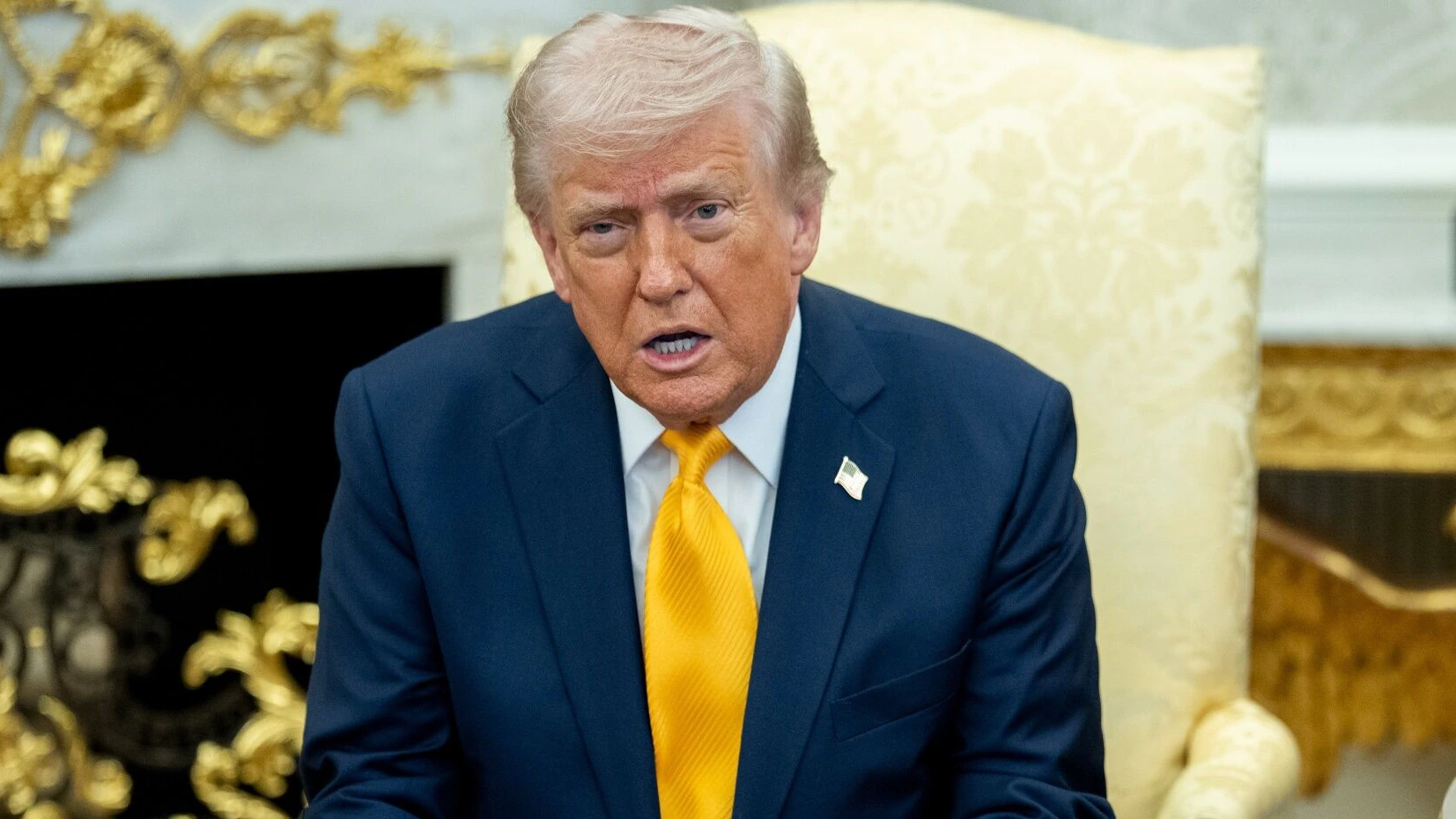
The fourth week of one of the most dangerous military confrontations the Middle East has seen in a generation began on Monday with a contradiction at its very centre — and the world’s energy markets, military planners, and civilian populations are all being asked to navigate the consequences in real time.
US President Donald Trump announced on Monday that he had instructed the US Department of Defense to postpone planned military strikes against Iranian power plants and energy infrastructure by five days, citing what he described as “very good and productive” talks held between Washington and Tehran over the preceding 48 hours. The “tenor and tone” of those discussions, Trump said, had given him reason to pause.
Iran responded within hours. State-linked media flatly denied that any such engagement had taken place — directly or indirectly. No talks. No back-channel. No discussions of any kind, productive or otherwise.
Two nuclear-armed-adjacent powers. One active war. And they cannot agree on whether they are even talking.
The Strait of Hormuz: The Chokepoint That Is Choking the World
At the physical centre of this crisis sits the Strait of Hormuz — the narrow waterway between Iran and Oman through which approximately 20 percent of the world’s oil supply passes every single day. Since the start of the conflict, Iran has effectively blocked the strait following a US-Israeli strike on the country — a move that has sent shockwaves through the global energy system and triggered the kind of supply disruption that the world has not seen since the oil crises of the 1970s.
Fatih Birol, the executive director of the International Energy Agency, did not soften his assessment when addressing the National Press Club of Australia. The situation in West Asia, he said, is “very severe” — and worse, by his calculation, than the two energy crises of the 1970s combined. The biggest and most immediate solution, Birol said, is the reopening of the Strait of Hormuz. Without it, the global economy faces consequences that extend far beyond the battlefield.
Trump — facing mounting domestic pressure as oil prices surge and American consumers feel the cost of the conflict at the gas pump — had issued a stark ultimatum over the weekend: open the Strait of Hormuz fully within 48 hours, or the United States will “obliterate” Iran‘s power plants. The post, published from his Florida residence, landed on global markets with the force of a thunderclap. Monday’s five-day extension is the result — though whether it represents genuine diplomatic progress or simply a delay of the inevitable remains, at this moment, entirely unclear.
Iranian Missiles Strike Southern Israel
While the diplomatic back-and-forth played out in social media posts and official denials, the war itself continued to move in directions that have alarmed military observers and civilian populations alike.
Late Saturday, Iranian missiles struck two communities in southern Israel — leaving buildings shattered and dozens of people injured in dual attacks. The strikes landed not far from Israel‘s main nuclear research centre at Dimona — a proximity that was not lost on anyone tracking the conflict’s escalating geography.
Tehran had been explicit about its response calculus: any US strike on Iranian energy infrastructure would be answered with attacks on American and Israeli energy and infrastructure assets. The strikes on southern Israel signal that Iran is prepared to act on that threat regardless of the diplomatic temperature in any given news cycle.
The Gulf Is Already Under Fire
The conflict has not remained contained to its principal combatants. On Monday morning, Kuwait announced that its air defences were actively intercepting hostile missile and drone attacks. The UAE confirmed its own air defences were dealing with incoming strikes from Iran. Air raid sirens sounded across Bahrain — a country that hosts the US Navy’s Fifth Fleet and whose strategic significance in any broader regional conflict is difficult to overstate.
The Gulf Cooperation Council states — Saudi Arabia, the UAE, Kuwait, Bahrain, Qatar, and Oman — are now directly experiencing the spillover of a conflict they have spent years trying to remain adjacent to rather than inside. That calculation is becoming increasingly difficult to maintain.
Macron Calls MBS as World Leaders Move
The diplomatic scramble around the crisis intensified Monday when French President Emmanuel Macron placed a direct call to Saudi Crown Prince Mohammed bin Salman. According to a statement from the Saudi Foreign Ministry, Macron expressed France‘s solidarity with Saudi Arabia, condemned what he described as repeated Iranian attacks targeting the kingdom, and reaffirmed Paris‘s support for measures taken by Riyadh to “safeguard its sovereignty, security and territorial integrity.”
The call is the latest signal that Europe‘s major powers are now actively positioning themselves within the crisis — not as passive observers, but as participants in whatever diplomatic architecture emerges, if any does.
Oil Markets in Freefall — Then Spike — Then Somewhere Painful
For anyone not directly in the conflict zone, the most immediate measure of the crisis’s global reach is arriving at the fuel pump and on energy bills. The oil market numbers being reported Monday tell their own unambiguous story.
West Texas Intermediate crude — the American benchmark — briefly spiked when trading resumed Sunday evening on the Chicago Mercantile Exchange before settling at $97.86 per barrel, just under its Friday close of $98.32. Brent crude, the international standard, was trading at just over $111 per barrel — down slightly from $112.19 on Friday, but a long way from the $119.50 it reached earlier last week.
To understand the scale of the disruption, consider where both benchmarks were when the war began: Brent was trading at roughly $70 per barrel. It has risen by more than $40 in four weeks. The human cost of that number — in heating bills, transport costs, food prices, and the downstream inflation that energy shocks reliably produce — will be felt by billions of people who have no stake in the geopolitical dispute driving it.

The Human Cost: A Death Toll Still Rising
Behind the diplomatic statements and the market figures and the missile intercept reports is a human catastrophe that is still very much in progress. The confirmed death toll from the war now stands at more than 1,500 people in Iran, more than 1,000 in Lebanon, 15 in Israel, and 13 US military members — along with an unspecified number of civilians lost on land and at sea across the Gulf region.
Millions of people in Lebanon and Iran have been displaced. The humanitarian infrastructure required to support that displacement is, in conflict zones that are simultaneously under active bombardment, not functioning as it needs to.
What the Next Five Days Mean
Trump‘s five-day extension is, depending on how you read it, either a genuine opening for diplomacy or a countdown clock with a very loud tick. The conditions have not changed. The Strait of Hormuz remains blocked. Iran continues to deny it is talking to anyone. The Gulf states are under active attack. Oil is approaching $120 a barrel. And the IEA is warning of an energy crisis worse than anything the modern world has previously experienced.
Five days is not very long. And the next five days — whatever they contain — will go a considerable distance toward determining whether this conflict finds a diplomatic exit or drives itself toward something that currently has no name.
World News
Colombian Military Plane With 110 Soldiers Crashes on Takeoff — As Another Airport Tragedy Strikes New York the Same Day…
A Colombian Air Force Hercules C-130 went down near the Ecuador border carrying over a hundred troops, while thousands of miles away at LaGuardia Airport, two pilots lost their lives in a collision that shut down one of America’s busiest airports.

It was a day that delivered two separate aviation disasters on two different continents — and by Monday evening, the world was watching both simultaneously, waiting for answers that had not yet come.
In the jungles of southern Colombia, a military transport plane carrying over a hundred soldiers crashed on takeoff. In New York City, a passenger jet collided with a fire truck on one of the country’s most heavily trafficked runways, killing both pilots and sending dozens to hospital. Two tragedies. Two countries. One deeply unsettling Monday.
Colombia: 110 Soldiers on Board When the Hercules Went Down
The first reports began emerging from Colombia‘s southern Putumayo region in the early hours of Monday, and the details that followed were grim. A Lockheed Martin C-130 Hercules aircraft — one of the most widely used military transport planes in the world — had crashed during takeoff from Puerto Leguízamo, a remote municipality located near Colombia‘s southern border with Ecuador.
According to local outlet BluRadio, approximately 110 soldiers were on board the aircraft at the time of the crash — a figure that, if confirmed, makes this one of the most significant military aviation accidents in the country’s recent history.
Colombia‘s Defence Minister Pedro Sánchez did not wait long to address the nation. In a post on X, he wrote with unmistakable gravity: “With deep sorrow, I report that a Hercules aircraft from our @FuerzaAereaCol suffered a tragic accident while taking off from Puerto Leguízamo (Putumayo), as it was transporting troops from our Public Force.”
The minister confirmed that military units had reached the crash site, but stressed that “the exact number of victims and the causes of the crash have not yet been determined” — a phrase that, given the number of soldiers reported on board, left an entire country holding its breath.
Lockheed Martin, the United States defence manufacturer that produces the C-130 Hercules, had not issued any immediate response regarding the incident at the time of publication.
A Troubling Pattern: The Second Hercules Crash in Weeks
What makes Monday’s crash in Colombia particularly chilling is its timing. Just weeks earlier, at the end of February, another C-130 Hercules — this one operated by the Bolivian Air Force — crashed in the densely populated city of El Alto, Bolivia. That disaster killed more than 20 people and left around 30 others injured.
The Bolivian crash generated its own grim spectacle — banknotes from the aircraft’s cargo scattered across the city in the aftermath, triggering chaotic clashes between residents and security forces as people scrambled to collect the money littering the streets around the wreckage. It was an image that captured something deeply disturbing about the collision between disaster and human instinct.
Two Hercules crashes. Two South American nations. Weeks apart. Aviation safety analysts will now face pointed questions about the age and maintenance status of C-130 fleets operating across the region — aircraft that, in many cases, have been in service for decades and are being asked to perform demanding military transport operations in challenging geographical conditions.
New York: LaGuardia Airport Shut Down After Deadly Collision
Thousands of miles north, LaGuardia Airport in New York City became the scene of a different kind of aviation catastrophe on the same day — one involving not a mechanical failure or a crash on takeoff, but a collision between a landing passenger jet and a fire truck that should not have been on the runway at that moment.
An Air Canada Express CRJ-900 aircraft, operated by regional partner Jazz Aviation, was arriving from Montreal carrying 72 passengers and four crew members when it struck a fire truck during its landing approach. Both pilots died. 32 passengers were injured in the collision and its immediate aftermath.
According to initial reports from Reuters, the fire truck had been deployed onto the runway in response to a separate, unrelated incident — and was still on the tarmac when the Air Canada Express jet came in to land. The sequence of events that led to both pieces of equipment occupying the same runway at the same moment is now the central focus of the investigation.
LaGuardia Airport suspended all operations immediately following the collision. In a statement posted to X, airport authorities confirmed: “The airport will remain closed until at least 2:00pm Monday 3/23/26 to allow for a thorough investigation.”
The National Transportation Safety Board — the independent federal agency responsible for investigating civil transportation accidents in the United States — confirmed it had personnel on site and had opened a full investigation into the incident.
Air Canada has not yet issued a detailed public statement beyond acknowledging the incident and extending condolences to the families of those killed.

Two Disasters, One Day — and Questions That Demand Answers
Aviation disasters rarely arrive in isolation, but the convergence of two significant incidents on the same Monday — in Colombia and New York simultaneously — is the kind of coincidence that leaves both the aviation industry and the travelling public with a deeply uncomfortable feeling.
In Puerto Leguízamo, military investigators are working to determine why a C-130 Hercules failed during one of the most routine phases of flight — takeoff — while carrying over a hundred of Colombia‘s armed forces personnel. The terrain is remote, the conditions are demanding, and the answers, when they come, will matter far beyond this single incident.
At LaGuardia, the NTSB faces a more immediately procedural question: how does a fire truck end up on an active runway at the precise moment a commercial aircraft is landing? The answer will have implications for runway safety protocols at airports across the country.
Both investigations are only beginning. For the families waiting for news from Putumayo, and for the passengers and crew of the Air Canada Express flight recovering from Monday’s collision, the wait for those answers will be the longest of their lives.
World News
Iran Bombs Qatar’s Ras Laffan and India Is Counting the Cost — ‘88% Import Dependent on Crude Oil, Half on Gas…’
The attack on the world’s largest LNG export facility isn’t just bad news for Qatar — it could hit Indian households, fuel prices, and some of the country’s biggest energy companies harder than anyone expected.

When Iran fired missiles at Qatar’s Ras Laffan Industrial City in retaliation for an Israeli strike on its South Pars gas facility, the shockwaves were felt immediately across global energy markets. But thousands of kilometres away, in New Delhi, Mumbai, and countless Indian households dependent on LPG cylinders and CNG vehicles, a quieter but equally serious crisis is now unfolding.
For India — a nation that imports over 88% of its crude oil and nearly 50% of its natural gas — the attack on Ras Laffan is not a distant geopolitical event. It is a direct hit on the country’s energy jugular.
Why Qatar Matters So Much to India
Let the numbers speak.
Qatar is India’s single largest supplier of LNG and its largest supplier of LPG. In 2024-25 alone, India imported energy from Qatar worth a staggering $11.08 billion — forming the backbone of a bilateral trade relationship worth $14.14 billion in total.
Three Indian companies sit at the heart of this energy dependence:
- Petronet LNG Ltd (PLL) — imports approximately 7.5 million tonnes per annum (MTPA) of LNG from Qatar
- GSPC — imports 1 MTPA of LNG from Qatar
- GAIL India — imports under 1 MMTPA of LNG from Qatar
Beyond LNG, Qatar also supplied approximately 5 million metric tonnes of LPG to Indian firms — including the country’s major oil marketing companies (OMCs). Add to that exports of ethylene, propylene, ammonia, urea, and polyethylene, and the full picture of India’s Qatar dependence becomes starkly clear.
Two Problems — and the Second One Is Far Worse
Before the Ras Laffan strike, India’s energy crisis from the Gulf war was painful but theoretically temporary. The Strait of Hormuz blockade had disrupted transportation — a logistical problem that would ease once the waters reopened.
Now, the calculus has changed entirely.
The damage to the Ras Laffan Gas-to-Liquids facility is a structural problem — not a logistical one. Even when the war ends, India’s gas imports from Qatar will depend on how long it takes to repair and restore the facility. That could take months, not weeks.
As one official put it plainly: “Even after the war ends or eases, problems for India will depend on the extent of damage done by the Iranian strike at Ras Laffan.”

The Domestic Crunch: CNG, PNG and Empty Industrial Pipelines
The impact is already being felt on Indian streets.
India produces about 90 Million Metric Standard Cubic Metres per day (MMSCMD) of natural gas domestically, but consumes approximately 189 MMSCMD. The import shortfall of roughly 30 MMSCMD — previously sourced from Gulf suppliers — has been directly affected by a force majeure declaration from a major Qatari processing facility.
The government has been diverting available natural gas to serve domestic consumers through PNG (Piped Natural Gas) and CNG (Compressed Natural Gas) for vehicles — leaving commercial and industrial consumers facing severe shortages.
Meanwhile, state-run oil marketing companies have already raised LPG rates, and despite the Indian crude oil basket crossing a punishing $146 per barrel, petrol and diesel pump prices are being held artificially — a situation that cannot last indefinitely.
Brent crude, which was already at $103.42 a barrel, surged a further 5.6% to $113.39 in a single afternoon following the Ras Laffan attack — a move that has further widened the gap between international benchmarks and India’s already elevated import costs.
India Scrambles for Alternatives
The government is not sitting still. Indian refiners and energy officials have been actively diversifying procurement away from the Gulf — securing LPG and LNG cargoes from:
United States, Norway, Canada, Algeria — and other non-Gulf sources.
Previously, approximately 60% of India’s LPG came from Gulf nations including Qatar, UAE, Saudi Arabia, and Kuwait, with 40% produced domestically. That ratio is now being urgently rebalanced.
But diversification takes time, involves higher costs, and longer shipping routes — all of which will ultimately be passed on, in some form, to the Indian consumer.
Beyond Energy: The Full Scale of the Qatar Trade Relationship
The damage goes beyond fuel. Qatar is also a significant source of organic chemicals ($369.86 million), plastics ($222.47 million), and fertilisers ($208.4 million) for India.
On the export side, India sends cereals, iron and steel products, machinery, gems and jewellery, vehicles, and electrical equipment to Qatar — a trade lane worth $1.68 billion annually that is now under serious threat.
Key Indian exports to Qatar in FY25 included cereals ($165.03 million), iron and steel articles ($154.04 million), nuclear reactors and boilers ($151.73 million), gems and jewellery ($113.76 million), and vehicles and parts ($95.49 million).
A prolonged war in the Gulf does not just raise petrol prices in Mumbai — it disrupts an entire web of trade, investment, and supply chains that millions of Indians depend on, often without realising it.
The Bottom Line
India finds itself caught in the crossfire of a war it had no hand in starting. The attack on Ras Laffan has transformed what was already a difficult energy situation into a potentially prolonged crisis — one that will test the government’s ability to secure alternative supplies, manage prices, and shield ordinary citizens from the full cost of a conflict raging thousands of kilometres away.
The war in the Gulf is no longer just someone else’s problem. For India, it arrived the moment those missiles hit Ras Laffan.

Trump Gives Iran 5 More Days — But Tehran Says There Were Never Any Talks to Begin With, as the World Braces for What Comes Next…

Colombian Military Plane With 110 Soldiers Crashes on Takeoff — As Another Airport Tragedy Strikes New York the Same Day…

Broadway Shake-Up: Samira Wiley Steps Away From ‘Proof’… Kara Young Steps In at the Last Moment

Broadway Surprise: Samira Wiley Drops Out of ‘Proof’… Kara Young Takes Center Stage

‘Dune 3’ Will Be a “Thriller”… Denis Villeneuve Drops a Big Hint as Zendaya & Robert Pattinson Join the Spotlight

1-Iran Issues Dire Warning to Israel and Defies Trump on Nukes: “We’re Ready to Strike Deep Inside”

Donald Trump’s net worth reveals the fortune behind the former US President and business mogul

“She Never Made It Out…” Albany House Fire Claims Woman’s Life as Family Pleads for Help to Bring Her Home

Caitlin Clark Sidelined with Quad Strain, Set to Miss Two Weeks of WNBA Action

“Tomás Rodríguez Net Worth 2025: Panama’s Gold Cup Goal‑Machine’s Surprising Fortune Revealed”

Miss Jamaica Suffers Terrifying Fall Off Miss Universe Stage; Rushed to Hospital on Stretcher in Viral Video

Moana Live-Action Teaser Sparks Outrage as Fans Call Disney’s Move a ‘Clear Money Grab’ — What Went Wrong?

Ryan Gosling’s Project Hail Mary Trailer Stuns Fans with a Mysterious Alien Ally and a Mission That Could Save Earth

Apple delays Jessica Chastain thriller The Savant about domestic extremism after recent US violence

Avatar 3, Fire and Ash trailer reveals Jake Sully’s family facing terrifying new Na’vi enemies with deadly fire powers
-

 Entertainment5 days ago
Cannes 2026 Hasn’t Announced a Single Film Yet — But the Whisper Network Is Already Pointing to These Names and It’s Exciting…
-

 Entertainment7 days ago
Oscars 2026 Red Carpet Shockers: Zendaya’s Late Arrival, Jessie Buckley’s Grace Kelly Tribute… and Chase Infiniti Owning the Night
-

 Entertainment6 days ago
Amy Poehler and Sterlin Harjo Are Getting One of Television’s Highest Honours — and the Reason Why Says Everything About Where Storytelling Is Headed…
-

 Politics1 week ago
“Trump Reveals ‘Early Stage Breast Cancer’ Diagnosis of Susie Wiles… But Says Her ‘Strength Says Everything’”
-

 Entertainment5 days ago
Almodóvar, Lars von Trier, Joel Coen and More — The Films That Could Own Cannes 2026 Are Already Generating Serious Buzz and the List Is…
-

 Entertainment1 week ago
The Oscars Are Already Being Called Before They Happen and Scott’s Final Feinberg Forecast Reveals a Shocking Front-Runner That Nobody Saw Coming…
-

 Entertainment5 days ago
Lollapalooza 2026 Just Dropped Its Most Surprising Lineup Yet — and the One Historic Thing Nobody Is Talking About Is the Real Story…
-

 Health1 week ago
“Kent Meningitis Tragedy: Second Student Dies as Outbreak Sparks Hospital Emergency…”