
Diseases and Disorders
China reports over 7,000 chikungunya virus cases and experts say “It’s just the beginning…”
A mosquito-borne virus once rare in China has now infected thousands—Is climate change unleashing a new epidemic era?


More than 7,000 people in southern China have been infected with the chikungunya virus, a mosquito-borne illness that has shocked global health officials and reignited concerns about how climate change and urbanization may be accelerating the spread of tropical diseases..
Table of Contents
The outbreak, which began in late July in the Shunde District of Foshan, is now drawing international attention. The World Health Organization (WHO) warned just last month that a major chikungunya epidemic could sweep the globe unless urgent action is taken.
So what exactly is chikungunya? Why has it suddenly exploded in China—a country not typically associated with large-scale mosquito-borne diseases? And should international travelers be worried?
Let’s break it down.
What is the chikungunya virus?
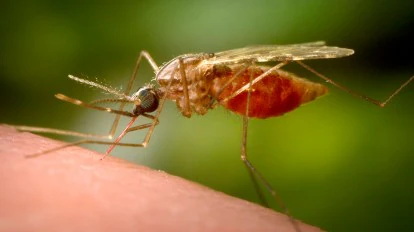
Chikungunya is a viral illness transmitted to humans through the bites of infected female mosquitoes, specifically the Aedes aegypti (also known as the dengue mosquito) and the Aedes albopictus (or Asian tiger mosquito).
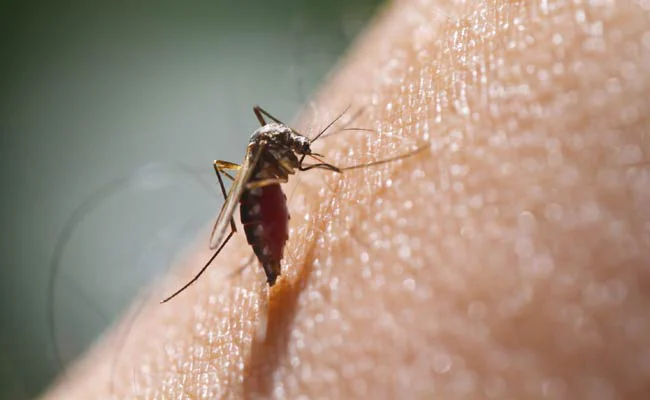
First identified in Tanzania in 1952, chikungunya (a word that means “to become contorted” in the Makonde language, describing the bent posture of sufferers due to joint pain) has since spread to over 110 countries, primarily in South-East Asia, Africa, and the Indian subcontinent.
Unlike COVID-19, chikungunya is not transmitted person to person. Instead, the virus must be passed from an infected individual to a mosquito, and then from that mosquito to another human host.
What are the symptoms?
The most common and debilitating symptoms appear 3 to 7 days after being bitten and include:
- Severe joint pain, stiffness, and swelling
- High fever
- Muscle aches
- Fatigue
- Nausea
- A rash on the limbs and torso
- Headache
While the virus rarely results in death, it can cause long-lasting complications—especially in people over 65 years, those with diabetes, hypertension, heart conditions, or newborns.
Why is this outbreak in China significant?
Until now, China hasn’t experienced widespread chikungunya transmission. But experts say the outbreak in Guangdong Province, which includes Foshan, is a wake-up call.
“This virus is not endemic to China,” said an official from the Chinese Center for Disease Control and Prevention (CDC). “We believe this epidemic was imported, though the origin is still being investigated.”
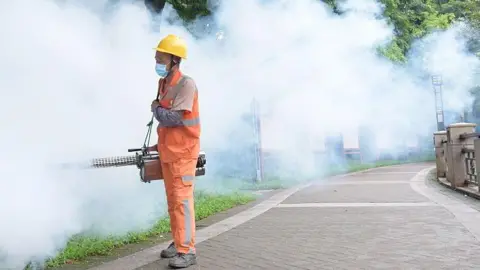
As of this week, the number of mosquito-proof isolation beds has nearly doubled to 7,220, and local authorities are scrambling to contain the virus. The Foshan Health Commission has even warned residents that fines of up to 10,000 yuan (approximately USD $2,160) could be imposed if homes are found with stagnant water, a prime breeding ground for mosquitoes.
Is climate change making it worse?
Yes, significantly. Researchers across the globe agree that climate change has increased both the range and survivability of mosquito species. Warmer temperatures and higher humidity are enabling mosquitoes to thrive in areas they previously couldn’t—like southern China.
Mosquitoes also reproduce faster and transmit viruses more effectively in warmer climates. As global temperatures rise, regions like China, Europe, and Australia may face new and emerging mosquito-borne threats.
How can people protect themselves?
There is no specific antiviral treatment for chikungunya. Most people recover within a few weeks using pain-relief medications, rest, and fluids. However, prevention remains the best strategy.
Protection tips include:
- Wearing long, light-colored clothing
- Using insect repellents with DEET or picaridin
- Sleeping under mosquito nets, especially in high-risk areas
- Keeping windows closed or using screens
- Removing standing water from around your home (flowerpots, unused containers, gutters)
Two chikungunya vaccines have been recently approved in the United States and United Kingdom. The CDC recommends vaccination for travelers heading to outbreak zones like Guangdong. However, neither vaccine is currently available in Australia.
Could it spread globally?
Absolutely. The US Centers for Disease Control and Prevention (CDC) is monitoring the situation and has stated it is preparing to issue a travel advisory for affected Chinese regions.
Pregnant people and those with pre-existing conditions are advised to reconsider travel to areas experiencing outbreaks.
As global travel resumes post-COVID, the risk of transporting viruses like chikungunya to new territories increases dramatically. Countries like India, Brazil, and Thailand—already accustomed to the virus—could see seasonal spikes. But the concern is more about new, unprepared regions like parts of Europe or East Asia.
Is Australia at risk?
The short answer: not yet—but it’s possible.
While northern Queensland and the Torres Strait do host mosquitoes capable of carrying chikungunya, the virus has not yet been detected in Australian mosquito populations. However, Australians traveling to Africa, South-East Asia, or the Pacific Islands should take precautions.
Final thoughts
The chikungunya outbreak in China may not be catastrophic—yet—but it serves as a clear warning. As global temperatures rise and travel rebounds, viruses once limited to tropical regions are now knocking on the doors of developed nations.
The best defense is awareness, personal protection, and pressure on governments to act early rather than react late.
For more news Visit www.DailyGlobalDiary.com


“He-Man Wears a Suit…”: Why Nicholas Galitzine’s Masters of the Universe Trailer Has Fans Talking

Camilla Läckberg Isn’t Done Yet… The Queen of Swedish Noir Eyes Film, TV and a Bold Plan to ‘Conquer America’

“Screaming, Crying, Almost Throwing Up”… Sundance Insiders Reveal the Untold Chaos Behind America’s Most Influential Film Festival
From Swedish Noir to Hollywood Dreams Camilla Läckberg Has a Bigger Plan in Motion
When Sundance Nearly Fell Apart Insiders Recall the Chaos Behind the World’s Most Influential Film Festival

1-Iran Issues Dire Warning to Israel and Defies Trump on Nukes: “We’re Ready to Strike Deep Inside”

Donald Trump’s net worth reveals the fortune behind the former US President and business mogul

Caitlin Clark Sidelined with Quad Strain, Set to Miss Two Weeks of WNBA Action

Elon Musk Breaks Ranks with Trump Over ‘Big, Beautiful’ Tax Bill

“Tomás Rodríguez Net Worth 2025: Panama’s Gold Cup Goal‑Machine’s Surprising Fortune Revealed”

Miss Jamaica Suffers Terrifying Fall Off Miss Universe Stage; Rushed to Hospital on Stretcher in Viral Video

Moana Live-Action Teaser Sparks Outrage as Fans Call Disney’s Move a ‘Clear Money Grab’ — What Went Wrong?

Ryan Gosling’s Project Hail Mary Trailer Stuns Fans with a Mysterious Alien Ally and a Mission That Could Save Earth

Apple delays Jessica Chastain thriller The Savant about domestic extremism after recent US violence

Avatar 3, Fire and Ash trailer reveals Jake Sully’s family facing terrifying new Na’vi enemies with deadly fire powers
-
 Entertainment1 week ago
He-Man Wears a Suit Now… Nicholas Galitzine’s ‘Masters of the Universe’ Trailer Drops a Shock Fans Didn’t See Coming
-
 Entertainment1 week ago
Brazil Eyes Oscar History Again… ‘The Secret Agent’ Scores Best Picture Nomination as Wagner Moura Stuns Hollywood
-

 Entertainment5 days ago
“Comedy Needs Courage Again…”: Judd Apatow Opens Up on Mel Brooks, Talking to Rob Reiner, and Why Studio Laughs Have Vanished
-

 Entertainment1 week ago
Oscars Go Global in a Big Way as This Year’s Nominations Signal a New Era: ‘The Academy Is Finally Looking Beyond Hollywood…’
-

 Entertainment1 week ago
“Dangerously Kinky… and Darkly Funny”: Olivia Wilde and Cooper Hoffman Push Boundaries in ‘I Want Your Sex’
-

 Sports1 week ago
A Strong Night for Caleb Williams Ends With Doubts About the Bears’ Late Decisions
-

 Crime5 days ago
Man Accused in Tupac Shakur Killing Asks Judge to Exclude Critical Evidence
-

 Politics1 week ago
Why Bari Weiss Says Pulling a ‘60 Minutes’ Story Was the Right Call — Even If It Looked Radical