
World Economy
“A Rare Split Inside the Fed… Why Top Officials Are Bracing for a Rate Cut Even as Inflation Clouds Loom”
A new FT–Chicago Booth survey reveals deep fractures inside the Federal Reserve as officials debate whether weakening jobs or stubborn inflation poses the bigger threat to Americans.


When the Federal Reserve — led by Chair Jerome Powell — gathers this week for its final policy meeting of 2025, global markets expect a familiar outcome: another quarter-point rate cut.
But behind the scenes, the Fed’s most influential policymakers are wrestling with an uncomfortable question: How much longer can they cut without losing control of inflation?
According to an exclusive survey conducted by the Chicago Booth Clark Center in collaboration with the Financial Times, a striking 85% of academic economists believe the Fed will lower the federal funds rate to the 3.5–3.75% range — the lowest level in more than three years. Yet nearly every respondent warned that the Federal Open Market Committee (FOMC) remains deeply divided over whether the US economy is slowing or merely recalibrating.
A Split Fed in a Volatile Economy
The FOMC’s internal rift has been widening as the labor market shows signs of fatigue.
While the latest Bureau of Labor Statistics report surprised analysts with stronger-than-expected job additions, unemployment has inched up and private-sector data shows increasing layoffs.
“This is a classic crossroads moment,” one economist in the survey noted. “Do you shield workers now or fight inflation more aggressively before it embeds permanently?”
Inflation has remained above the Fed’s 2% target since early 2021. Several regional Fed officials — including Boston Fed president Susan Collins and Chicago’s Austan Goolsbee — have signaled discomfort with more cuts, citing rising prices in the services sector.
A Shadow Over the Decision: Trump’s Tariffs
Adding to the complexity is the lingering effect of President Donald Trump’s sweeping tariffs. Economists say the full impact of import taxes on consumer prices has not yet filtered through the economy, making inflation forecasts more uncertain than usual.
Trump’s close ally on the Fed Board, Stephen Miran , is expected to push for an even larger 50 basis-point cut — a proposal that would deepen divisions within the committee.
Meanwhile, Fed governor Michael Barr has indicated that the “room for further easing is extremely narrow.”
Who Will Break from the Pack?
Survey respondents overwhelmingly believe the upcoming vote will produce multiple dissents, likely the most since 2019 — and possibly the most since 1992 if the disagreement turns sharp.
The economists predict that Kansas City Fed president Jeff Schmid, who dissented in October, will again oppose cutting rates. Collins and Goolsbee are viewed as likely dissenters as well.

“Disagreement is healthy,” said Stephen Cecchetti, professor at Brandeis University . “But large visible fractures can also create doubts about the Fed’s long-term policy credibility.”
Inflation Hawks vs. Labor-Market Doves
Survey data reveals that 48% of economists want the Fed to prioritize inflation control — even at the cost of short-term job losses — while only 5% believe employment should come first.
The remainder want equal weight on both sides of the Fed’s “dual mandate.”
MIT professor Deborah Lucas went even further, calling for an end to the dual mandate altogether:
“A direct link between monetary policy and employment has never been empirically well established. The Fed should focus on inflation alone.”
Is the US Economy Running on AI Fumes?
Some FOMC doves argue that the US economy’s resilience is being masked by massive investment in AI and AI-adjacent sectors — from cloud infrastructure to semiconductor manufacturing. Tech-driven capital spending has helped sustain growth and retail demand, inflated by soaring valuations in companies like Nvidia and Microsoft .
If those valuations falter, the economists warn, the broader economy could wobble quickly.
When asked what a 20% drop in the S&P 500 would mean for the country, one-third of experts predicted a recession.
The remaining two-thirds believe growth would slow significantly — but not collapse.
What Happens Next?
Despite the philosophical divide, the Fed appears poised to cut rates again — a move many analysts view as “insurance” against a deeper labor-market downturn.
But the cracks within the institution have become impossible to ignore.
The next few months may reveal whether the Fed’s internal divisions become a temporary policy disagreement — or a defining feature of America’s monetary future.
For more Update – DAILY GLOBAL DIARY








World News
Gold–Silver Price Crash: Japan in Turmoil, US Markets Plunge, and India Sees Sudden Shock in Precious Metals
Global markets fell sharply from Asia to Wall Street as AI stocks tumbled, SoftBank crashed 10 percent, and inflation fears spiked in Japan—triggering a dramatic fall in gold and silver prices in India.


Global financial markets witnessed a turbulent session today, with sharp declines across Asia, the United States, and Europe. The ripple effect of this widespread market panic directly impacted India’s precious metals, leading to one of the steepest single-day drops in gold and silver prices this quarter.
The selloff began in Japan, where the markets were rattled by a combination of rising inflation, a renewed fear of interest rate hikes, and a heavy crash in AI-linked stocks. The shockwaves quickly spread to the rest of Asia, pushing investor sentiment deep into negative territory.
Asian Markets in Chaos: SoftBank Falls 10 Percent
Asian indices opened in deep red, with several heavyweight technology and semiconductor companies facing aggressive selling pressure.

Key declines included:
- SoftBank down 10%
- Advantest down 9%
- Tokyo Electron nearly 6% lower
- Lasertec slipped 5%
- Renesas Electronics fell 1.95%
Japan’s core inflation rising at the fastest pace since July intensified concerns that the Bank of Japan may be forced to tighten its monetary policy. The fear of an interest rate hike added further stress to the market, driving indexes downward.
Markets in South Korea, Hong Kong, China, and Australia also witnessed similar selling pressure, creating a widespread risk-off environment across the continent.
US Markets Mirror the Decline
The US stock market followed the same trajectory, with major indices turning sharply lower from the opening bell.
- Dow Jones closed 400 points lower
- Nasdaq fell more than 2%
- S&P 500 dropped 0.8%
The primary trigger was a broad-based selloff in AI and tech stocks, coupled with diminishing hopes that the Federal Reserve would announce a rate cut soon.
This combination significantly weakened global investor confidence.
Gold and Silver Prices Drop Sharply in India
The intense global selling pressure spilled over into the commodity markets as well, pulling down gold and silver prices in India.
Gold Price (5 December Morning)
Price: ₹121,838 per 10 grams
Change: ₹900 decline per 10 grams
Silver Price (Today’s Rate)
Price: ₹150,812 per kilogram
Change: ₹3,340 decline per kilogram
This marks the second consecutive day of steep corrections in both precious metals.
Indian Stock Market Also Slips
Tracking global cues, Indian equities fell significantly:
- Sensex dropped 200 points
- Nifty plunged 60 points
- Bank Nifty lost 255 points
The selling pressure was uniform across sectors, reflecting broad-based weakness.

What Caused the Sudden Global Meltdown?
Analysts point to several interconnected factors:
- Crash in major AI and tech stocks
- Rising inflation concerns in Japan
- Reduced expectations of a US interest rate cut
- Weak global sentiment and risk-averse investor behavior
- Shift toward safer assets
Together, these factors triggered a sharp fall in equities and commodities worldwide.
Will Gold and Silver Prices Drop Further?
Market experts believe that:
- If the downturn on Wall Street continues
- And selling pressure persists in Japan and China
Gold and silver could see additional correction in the coming days.
However, India’s upcoming wedding and festival season may support retail demand later, helping stabilize prices.
Business & Economy
Trump’s Shocking New Tariff Threat Could Sink Aussie Dollar by 4¢: “Risk of Violent Reversal,” CBA Warns
The Reserve Bank’s surprise rate hold may not save the Australian dollar if Donald Trump delivers on his trade war threats targeting BRICS allies and Asian exports.

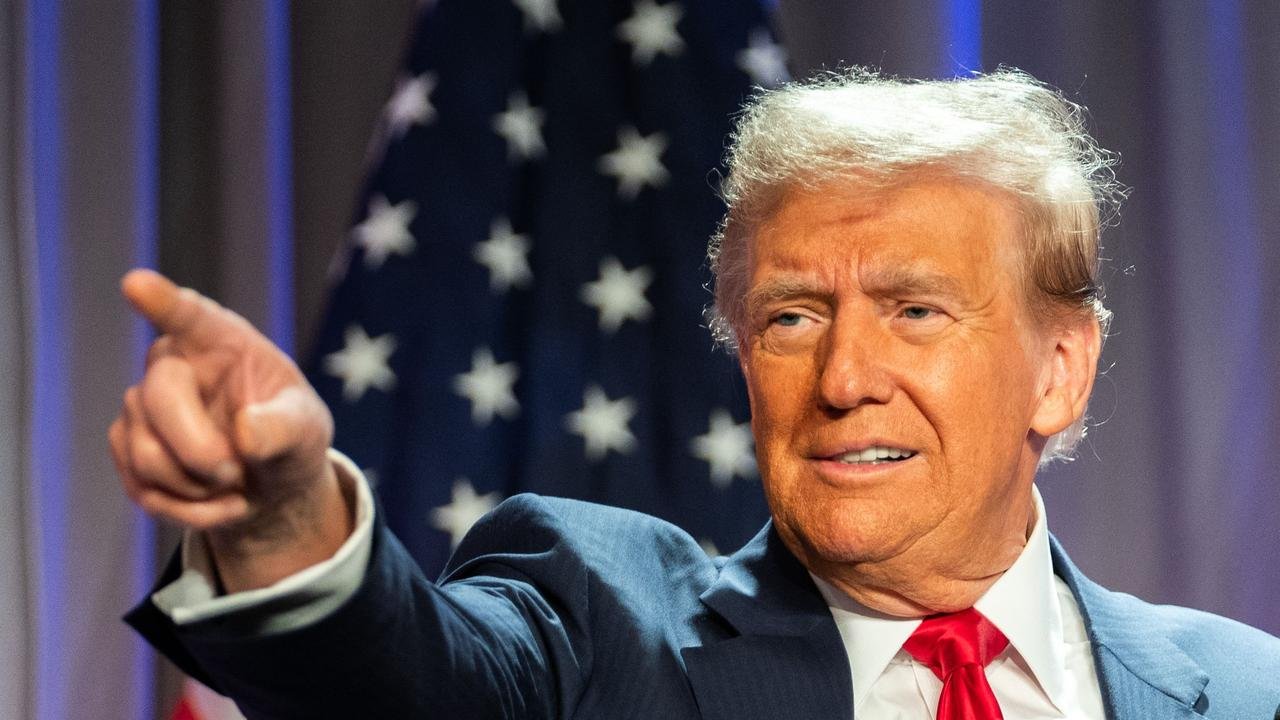
The Commonwealth Bank of Australia (CBA) has issued a stark warning: the Australian dollar could suffer a “violent reversal” if Donald Trump proceeds with a fresh wave of tariffs aimed at countries aligned with BRICS.
In a move that sent shockwaves across financial markets, Trump threatened on Monday to impose a 10% tariff on all countries “supporting anti-American BRICS policies,” which includes China, India, Brazil, South Africa, and Russia. The announcement triggered an immediate reaction in currency markets, with the Aussie falling 1% to US64.86¢.
Adding to the turbulence, Trump signed an executive order initiating 25% tariffs on Japanese and South Korean goods, although enforcement has been deferred until August 1, giving allies a short window to negotiate.
Meanwhile, the Reserve Bank of Australia (RBA) shocked economists by holding the cash rate at 3.85%, sparking a temporary rally that pushed the Aussie up 1% to US65.39¢ on Tuesday.
“The Aussie dollar is at risk of a sharp fall,” said Kristina Clifton, CBA’s currency strategist. “AUD could quickly drop by US2¢, US3¢, or even US4¢ if President Trump follows through on his tariff threats.”
Trump’s BRICS Ultimatum: Where Does Australia Stand?
While Australia has not been explicitly named, its economic ties to China, India, and the wider Asia-Pacific region make it dangerously exposed.
The Australian dollar is often seen as a proxy for Asian currencies, and therefore reacts sharply to any trade headlines involving the region. With BRICS nations in the crosshairs, Australia is “guilty by association” in the eyes of global investors.
“Concerns about an escalation in the U.S. trade war with Australia’s partners has cut short the Aussie’s recent rally,” Clifton warned.
What Happened in April: A Harsh Reminder
In early April 2025, Trump launched what his administration dubbed “Liberation Day Tariffs”, a sweeping measure that disrupted financial markets and sparked sell-offs across multiple currencies.
Back then, the U.S. dollar surged as a short-term safe haven, but the rally didn’t last. As fears of recession grew, the U.S. Dollar Index posted a historic 10.8% drop in the first half of 2025—the worst performance since 1973.
Ironically, this helped support the Australian dollar… until now.
August 1: Countdown to Currency Chaos
The new executive order defers tariffs until August 1, allowing a three-week grace period for negotiations. But analysts warn this could be the calm before another financial storm.
“FX markets were largely relaxed heading into July 9. But Monday’s mood was different—like a trauma flashback to Liberation Day,” said Richard Franulovich, Head of FX Strategy at Westpac.
Franulovich noted that implied volatility had been subdued but is now expected to spike as investors reassess risk.
A Glimmer of Hope: US-China Dialogue
There is cautious optimism about improving U.S.-China relations. Beijing recently took action to restrict exports of fentanyl precursors—substances blamed by Washington for fueling America’s opioid crisis.
This goodwill gesture has raised hopes that the “fentanyl tariffs”—20% levies imposed by Trump on Chinese goods—might be lifted. Franulovich believes such a move could “unlock a material reset for the Aussie.”
“The U.S.-China truce appears intact for now. That’s the silver lining,” he added.
But Vietnam Complicates the Equation
The recent interim trade deal between the U.S. and Vietnam, which slaps a 40% tariff on trans-shipped goods, may pose a new headache for China and, by extension, Australia. Many Chinese firms have rerouted goods through Vietnam to bypass existing U.S. tariffs—a loophole this new agreement aims to close.
The message is clear: even indirect trade routes are now under Trump’s scrutiny.
Australia’s Silent Tightrope
Although Australia has not publicly aligned with BRICS, its reliance on China for exports—particularly iron ore and agricultural products—makes it vulnerable. If Trump views Australia’s neutrality as complicity, tariffs or financial retaliation could follow.
“Even with stable interest rates, the Aussie can’t escape Trump’s trade war shadow,” Clifton emphasized.
Conclusion: Is the Rebound Just a Mirage?
The RBA’s surprise decision gave the Australian dollar a short-term boost, but experts believe the real driver will be Trump’s next move. Will the U.S. President follow through on his tariff threats or seek last-minute deals?
Until then, currency markets are jittery—and investors are watching every headline, every tweet, every diplomatic signal.
Because for the Aussie dollar, the worst may still be ahead.
World Economy
It’s Like a Nail in the Coffin Trump’s Tariffs Slam Indian Steel Exporters as Orders Crash by 30%
Trump’s doubling of steel and aluminium tariffs sends shockwaves through India’s metal export industry, triggering mass order cancellations payment delays, and rising panic among small manufacturers.


What began as a ripple in 2018 has now turned into a full-blown shockwave. With Donald Trump announcing an aggressive tariff hike on steel and aluminium imports—including finished products—Indian exporters are sounding the alarm bells.
The most recent blow came on February 10, 2025, when Trump removed all exemptions and enforced a 25% tariff on steel and aluminium derivatives, doubling down on the protectionist stance he adopted during his first term. For Indian manufacturers like Aditya Garodia, it was more than just a policy shift—it was a business nightmare.
It’s like a nail in the coffin said Garodia, director of Corona Steel Industry Pvt Ltd, whose unit exports fasteners and steel products from West Bengal. “Thirty percent of our orders were cancelled.
For years, the United States was a lucrative market for Indian steelmakers. In 2023 alone, India exported $4.56 billion worth of iron, steel, and aluminium products to the U.S. But since Trump’s return to office, rising tariffs have paralyzed that trade pipeline. Garodia notes that customers are delaying payment cycles by up to a month, and many are now in a “wait-and-watch” mode.
Small Factories, Big Losses
While larger steel corporations may have buffers, ancillary units and smaller foundries—which form the backbone of India’s manufacturing sector—are bleeding. These businesses, often with razor-thin margins, depend on volume exports and timely payments. The sudden drop in U.S. orders is proving catastrophic.
Domestic demand isn’t helping either Garodia added. “Cheaper Chinese products have flooded the Indian market, and our competitiveness is eroding.
This has led many exporters to urge the Indian government to renegotiate better terms with the U.S., possibly requesting lower tariff bands or country-specific exemptions.
“Tariffs Play Well in Politics” But Not in Economics
The policy traces back to Trump’s 2018 decision to invoke Section 232 of the Trade Expansion Act of 1962, citing national security concerns. Initially, tariffs of 25% on steel and 10% on aluminium were imposed. While some finished goods escaped scrutiny back then, the latest action removed all loopholes.
Yet the effectiveness of these measures is increasingly in question.
Since the tariffs were first implemented in 2018, U.S. steel imports have actually increased,” said Ajay Srivastava, founder of the Global Trade Research Initiative (GTRI).
They haven’t cut imports or boosted production… they’ve mostly stuck around because they play well in politics.
According to Srivastava, U.S. steel imports rose from $98.6 billion in 2018 to $114 billion in 2024, contradicting the administration’s stated objective of reviving domestic production.
The Road Ahead: Renegotiation or Ruin?
As things stand, Indian exporters are in limbo. There is hope that diplomacy could offer a reprieve—perhaps in the form of bilateral deals, tariff waivers, or World Trade Organization (WTO) mediation.
But for small business owners like Garodia, survival may depend on how quickly New Delhi can act—or how soon Washington rethinks its tariff crusade.
This isn’t just about trade numbers,” Garodia warned. “It’s about jobs, families, and the future of small Indian manufacturers.

“He-Man Wears a Suit…”: Why Nicholas Galitzine’s Masters of the Universe Trailer Has Fans Talking

Camilla Läckberg Isn’t Done Yet… The Queen of Swedish Noir Eyes Film, TV and a Bold Plan to ‘Conquer America’

“Screaming, Crying, Almost Throwing Up”… Sundance Insiders Reveal the Untold Chaos Behind America’s Most Influential Film Festival
From Swedish Noir to Hollywood Dreams Camilla Läckberg Has a Bigger Plan in Motion
When Sundance Nearly Fell Apart Insiders Recall the Chaos Behind the World’s Most Influential Film Festival

1-Iran Issues Dire Warning to Israel and Defies Trump on Nukes: “We’re Ready to Strike Deep Inside”

Donald Trump’s net worth reveals the fortune behind the former US President and business mogul

Caitlin Clark Sidelined with Quad Strain, Set to Miss Two Weeks of WNBA Action

Elon Musk Breaks Ranks with Trump Over ‘Big, Beautiful’ Tax Bill

“Tomás Rodríguez Net Worth 2025: Panama’s Gold Cup Goal‑Machine’s Surprising Fortune Revealed”

Miss Jamaica Suffers Terrifying Fall Off Miss Universe Stage; Rushed to Hospital on Stretcher in Viral Video

Moana Live-Action Teaser Sparks Outrage as Fans Call Disney’s Move a ‘Clear Money Grab’ — What Went Wrong?

Ryan Gosling’s Project Hail Mary Trailer Stuns Fans with a Mysterious Alien Ally and a Mission That Could Save Earth

Apple delays Jessica Chastain thriller The Savant about domestic extremism after recent US violence

Avatar 3, Fire and Ash trailer reveals Jake Sully’s family facing terrifying new Na’vi enemies with deadly fire powers
-
 Entertainment6 days ago
He-Man Wears a Suit Now… Nicholas Galitzine’s ‘Masters of the Universe’ Trailer Drops a Shock Fans Didn’t See Coming
-
 Entertainment1 week ago
Brazil Eyes Oscar History Again… ‘The Secret Agent’ Scores Best Picture Nomination as Wagner Moura Stuns Hollywood
-

 Entertainment4 days ago
“Comedy Needs Courage Again…”: Judd Apatow Opens Up on Mel Brooks, Talking to Rob Reiner, and Why Studio Laughs Have Vanished
-

 Entertainment1 week ago
Box Office Shocker as Chris Pratt’s ‘Mercy’ Knocks ‘Avatar 3’ Off the Top but Nature Had Other Plans…
-

 Entertainment6 days ago
Oscars Go Global in a Big Way as This Year’s Nominations Signal a New Era: ‘The Academy Is Finally Looking Beyond Hollywood…’
-

 Entertainment1 week ago
Michael Bay Makes a Power Move… Blockbuster Director Signs with CAA in a Deal That’s Turning Heads
-

 Entertainment6 days ago
“Dangerously Kinky… and Darkly Funny”: Olivia Wilde and Cooper Hoffman Push Boundaries in ‘I Want Your Sex’
-
Entertainment1 week ago
Fans Didn’t Expect This Look… Nicholas Galitzine’s Masters of the Universe Trailer Sparks Debate