
USA
H-1B overhaul explained: Who gets priority now — and who faces setbacks as US scraps visa lottery
Trump administration ends random H-1B selection, introduces salary- and skill-based system starting FY 2027


The United States is preparing for one of the biggest shake-ups in the H-1B visa program in decades — a change that could dramatically alter who gets selected and who gets left behind. Under a new rule announced this week, the long-criticised random lottery system will be replaced by a weighted, wage-based selection process, prioritising applicants with higher skills and higher salaries.
The reform is being rolled out by the administration of US President Donald Trump, marking another step in a broader push to tighten immigration controls, including legal work visas heavily used by the technology and engineering sectors.
What exactly is changing in the H-1B system?
Until now, H-1B visas were allocated through a lottery, regardless of salary level or seniority. Each applicant had an equal chance of selection once registered, even though demand far exceeded supply.

That system is now coming to an end.
On December 23, the Department of Homeland Security confirmed that it is revising the H-1B selection rules to favour higher-paid and higher-skilled workers, citing the need to protect American wages and reduce abuse of the program.
The US Citizenship and Immigration Services (USCIS) said the new rule will officially take effect on February 27, 2026, and will apply to the FY 2027 H-1B cap registration season.
How many H-1B visas are issued each year?
The United States currently issues:
- 65,000 H-1B visas under the regular cap
- 20,000 additional visas for applicants with advanced degrees from US institutions
Indian professionals continue to represent the largest share of H-1B holders, making the policy shift particularly significant for India-origin applicants.
How the new wage-based selection works
The revised system relies on government wage data from the Occupational Employment and Wage Statistics (OEWS) survey. Jobs are classified into four wage levels:
- Level I – Entry-level roles
- Level II – Early career professionals
- Level III – Experienced roles
- Level IV – Senior and fully specialised positions
Under the new rule, applications will enter the selection pool as follows:
- Level IV: 4 entries
- Level III: 3 entries
- Level II: 2 entries
- Level I: 1 entry
In simple terms, higher salary = higher probability of selection.
USCIS stated:
“The rule implements a weighted selection process that will favour allocating H-1B visas to higher-skilled and higher-paid aliens while maintaining opportunities at all wage levels.”
Who benefits — and who faces setbacks?
Who gets priority:

- Senior professionals
- High-paying tech and engineering roles
- Specialised positions that clearly require advanced skills
Who may struggle:
- Entry-level applicants
- Lower-paid roles often used for bulk hiring
- Employers relying on large volumes of low-wage H-1B filings
While entry-level applicants can still apply, the odds are no longer equal — a major departure from the lottery era.
Why the lottery system was scrapped
The H-1B lottery has long been criticised as arbitrary and outdated. Government officials argue it allowed companies to flood the system with low-wage applications, undermining the original purpose of the visa — to attract specialised talent.
The DHS says the new framework aims to:
- Encourage better pay
- Reduce misuse of visas for low-skilled roles
- Protect American workers’ wages and job opportunities
Part of a wider immigration crackdown
The H-1B overhaul is part of a broader immigration tightening strategy. One of the most controversial proposals currently under legal challenge includes a $100,000 fee for certain H-1B workers recruited from outside the US.
The timing is also crucial. The regulation takes effect just weeks before the annual spring H-1B registration window — a critical hiring cycle for US tech companies, startups, and multinational firms dependent on skilled foreign labour.
The bottom line
The era of equal chances in the H-1B lottery is over. In its place is a system that rewards pay, seniority and skill, fundamentally reshaping how foreign professionals access one of America’s most sought-after work visas.
For many applicants, especially from India, the message is clear: higher salary offers now matter more than ever.











USA
Jeffrey R. Holland’s Final Witness ‘My Total Responsibility Was to Testify of Christ’ The Apostle Who Taught a World
From a small-town boy in Utah to one of the most powerful voices of faith, President Jeffrey R. Holland’s life was a sermon of hope, learning, and unwavering devotion

The world of faith and education woke up to solemn news on Saturday morning as Jeffrey R. Holland, President of the Quorum of the Twelve Apostles of The Church of Jesus Christ of Latter-day Saints, passed away peacefully on December 27, 2025. He was 85. Surrounded by family, his life ended due to complications related to kidney disease, marking the close of an era defined by eloquence, empathy, and fearless testimony of Jesus Christ.
For millions across the globe, President Holland was more than a Church leader. He was a teacher who made faith feel personal, a scholar who blended intellect with belief, and a shepherd who spoke directly to wounded hearts during humanity’s darkest moments — from global conflict to the isolating fear of the COVID-19 pandemic.
A Calling That Defined His Life
When President Holland was ordained an Apostle on June 23, 1994, he described the call as overwhelming yet sacred. Standing before reporters at Temple Square, he uttered words that would later become the defining line of his ministry: “My total responsibility is to bear witness of the Lord Jesus Christ.” That witness shaped every sermon, decision, and conversation for more than three decades.

Before that sacred moment, Holland had already lived a remarkable academic and administrative life. He served as president of Brigham Young University from 1980 to 1989, guiding the institution through academic growth, cultural debates, and even athletic triumphs, including BYU’s historic 1984 national football championship. His leadership extended into global education as Commissioner of the Church Educational System and dean of BYU’s College of Religious Education.
A Scholar Who Chose the Classroom Over Comfort
Born on December 3, 1940, in St. George, Utah, Holland grew up in a tight-knit community where values mattered and everyone knew your name. His parents, Frank and Alice Holland, raised him in a home rich with humor, discipline, and unconditional love. Sports filled his early years, and he excelled in football, basketball, baseball, and track at Dixie High School.
Yet it was his mission to England at age 19 that altered the course of his life forever. That experience deepened his testimony and ignited his love for scripture, particularly the Book of Mormon. Although he later earned advanced degrees from Yale University, including a doctorate in American Studies, Holland turned away from lucrative opportunities to teach the gospel — a decision that defined him.
As Elder Quentin L. Cook, his former missionary companion, once said, Holland possessed an unmatched gift with words and spiritual depth. “There was nobody better in the Church at teaching,” Cook recalled.
A Marriage Built on Faith and Courage
At the center of Holland’s life was his wife, Patricia Terry Holland, who passed away in July 2023. Married in 1963, their partnership was one of mutual sacrifice and unwavering support. Patricia was an accomplished author, vocalist, and speaker, yet her greatest devotion remained her family.
Together, they raised three children — Matthew, Mary Alice, and David — while navigating the demands of Church service and academic leadership. Holland often credited Patricia for anchoring their home during the most demanding years, calling her courage and faith extraordinary.
A Global Voice of Compassion
As an Apostle, President Holland traveled extensively, carrying his message of hope to every corner of the world. One of his most emotional assignments came between 2002 and 2004, when he directed Church affairs in Chile. The experience left an indelible mark on him. “It’s the people,” he once said, reflecting on the bonds formed through service and sacrifice.
His influence also reached beyond religious boundaries. Holland engaged in interfaith dialogue, served on national educational boards, and earned recognition from the Anti-Defamation League for strengthening Christian-Jewish understanding. Conversations with global leaders, including humanitarian discussions at Windsor Castle in London, showcased his rare ability to blend doctrine with diplomacy.
A Voice for the Broken and the Searching
Perhaps President Holland’s most enduring legacy lies in his sermons — raw, poetic, and deeply human. He spoke openly about mental illness, despair, and personal struggle, reminding listeners that faith does not erase pain but provides strength to endure it. During the pandemic, his messages offered reassurance to millions feeling isolated and afraid.
One of his final public addresses to young adults in January 2023 emphasized hope as a living force. Quoting scripture, he urged them to “press forward with a perfect brightness of hope.” It was a message that encapsulated his life’s mission: lifting others, one soul at a time.
A Teacher Who Touched Eternity
President Holland often quoted Doctrine and Covenants 81:5, urging believers to “succor the weak” and “strengthen the feeble knees.” That scripture guided his interactions — whether at the pulpit, in private counseling, or through social media messages shared during moments of global anxiety.
He believed the greatest threat of modern times was spiritual apathy, and his answer was always the same: stay humble, stay prayerful, and keep moving toward the light — even when the path ahead feels uncertain.
As history reflects on his life, one truth stands firm. Jeffrey R. Holland was a teacher in the truest sense — someone whose influence will ripple far beyond his lifetime. As historian Henry Adams once wrote, “A teacher affects eternity; he can never tell where his influence stops.”
For President Holland, that eternity was anchored in Christ, and his witness now lives on in millions of hearts worldwide.
USA
United Airlines Passenger Earns Premier Platinum Status After Taking 6 Flights in One Day
California-based frequent flier completes 12-hour ‘status run’ across multiple airports to retain elite status
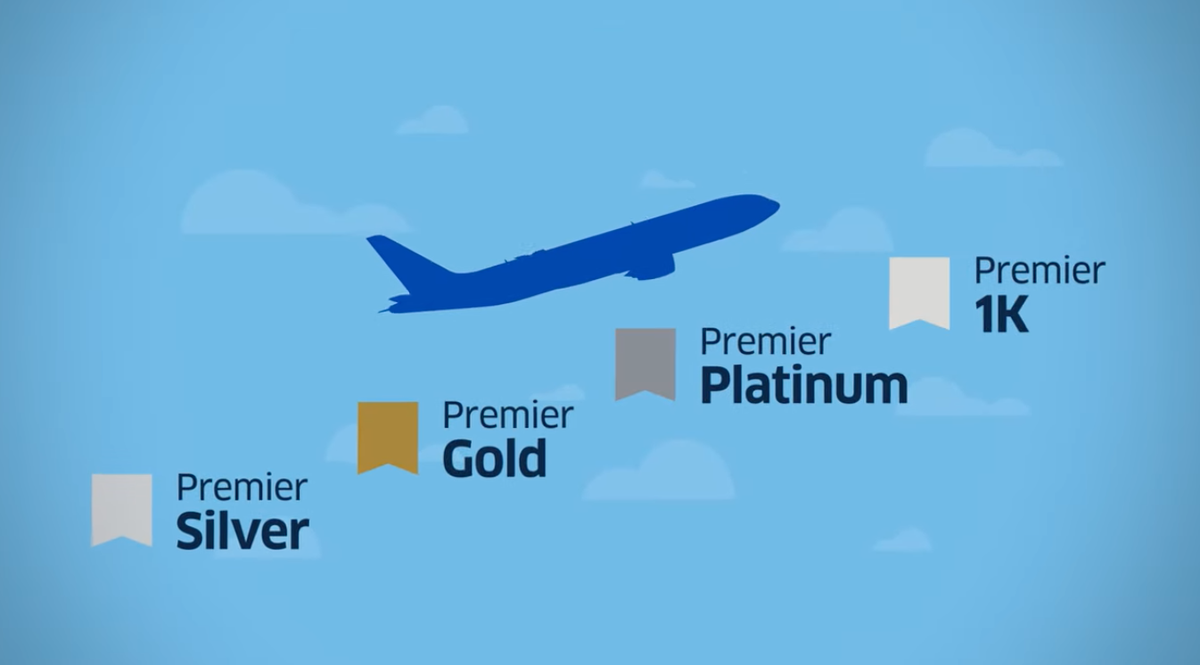
In a striking example of frequent-flyer dedication, a United Airlines passenger managed to earn MileagePlus Premier Platinum status by taking six flights in a single day, completing an ambitious “status run” that spanned California and Nevada.
The traveler, identified as Stephen, shared his experience on Reddit, a story later reported by the New York Post. A resident of California, Stephen carefully calculated the exact number of flights and miles he needed to requalify for Premier Platinum status before the end of the year.
To meet the requirement of 60,000 miles and approximately $500 in qualifying spend, Stephen flew multiple round trips from San Francisco International Airport to
- Reno Tahoe International Airport
- Sacramento International Airport
- Los Angeles International Airport
All six flights were completed on Wednesday, December 17, in what seasoned travelers refer to as a “status run”—a practice where frequent fliers take extra trips purely to maintain elite airline status.

Six Flights, One Day, 12 Hours
Stephen’s tightly planned itinerary began with a departure at 8:40 a.m. and concluded at 8:29 p.m., wrapping up the entire journey in just under 12 hours. Despite the ambitious schedule, he reported that all flights ran smoothly, with only minor delays and no major disruptions.
One particularly brief stop saw Stephen spend just 15 minutes in Reno before boarding his return flight back to San Francisco.
Reflecting on the experience, Stephen said he genuinely enjoyed the day-long journey:
“While many people see airports as a hassle, I genuinely love the experience — the logistics, the engineering and the perspective you only get from 30,000 feet.”
Why Premier Platinum Was Worth the Effort
Stephen explained that earlier in the year he had already accumulated a significant number of miles due to long-haul work trips and frequent flights to Florida. When he realized he was just six flights short of Premier Platinum, he decided not to let the opportunity slip away.
The timing also aligned with upcoming personal travel plans. Stephen and his wife are planning a trip to Europe next year, where the perks of Platinum status—especially complimentary upgrades and priority services—could more than justify the effort and cost of the status run.
Interestingly, Stephen also revealed that Google’s AI assistant Gemini helped him finalize the most efficient itinerary. His original plan involved flying via Palm Springs and Las Vegas, but Gemini instead recommended the Reno–Sacramento–Los Angeles loop as the fastest and most practical option.

What MileagePlus Premier Platinum Status Offers
According to United Airlines, MileagePlus Premier Platinum is one of the carrier’s most valuable elite tiers, offering a wide range of benefits, including:
- 9x award miles on United and United Express flights
- Complimentary Economy Plus seating at booking for the member and up to eight companions
- Complimentary Premier Upgrades beginning up to 72 hours before departure
- Group 1 priority boarding
- Priority check-in and security screening (where available)
- Up to three free checked bags on eligible fares
- Confirmed flight changes within 24 hours at no extra cost
- $100 discount on United Club All Access membership
Platinum members also receive a 75% Premier Bonus Miles on select partner airlines, including Air Canada, ANA, Lufthansa, Austrian Airlines, Brussels Airlines, Azul Brazilian Airlines, and others.
A Modern Take on Loyalty Travel
Stephen’s one-day, six-flight journey highlights how airline loyalty programs continue to inspire creative — and sometimes extreme — travel strategies. While not for everyone, his story underscores how, for frequent fliers, elite status can be worth a long day in the air.
USA
“This is a real check”: Pennsylvania quietly sends $22 million to 100,000 residents — here’s who gets one and why many didn’t even apply
Under the Money Match program, Pennsylvania is returning unclaimed cash automatically, but not everyone qualifies — and billions are still unclaimed

Thousands of Pennsylvania residents have been opening their mailboxes to an unexpected surprise — a legitimate government check, no application required. Under the state’s Money Match initiative, nearly 100,000 checks worth over $22 million have been mailed out, according to the Pennsylvania Treasury Department.
The program, launched in 2024, is designed to automatically return certain unclaimed assets to verified owners without forcing them through a lengthy claims process. For many recipients, the arrival of the check felt almost too good to be true — which is exactly why state officials are urging residents not to throw it away.
What is Money Match and where does this money come from?
Unclaimed property often builds up quietly over years. Dormant bank accounts, forgotten insurance payouts, uncashed payroll checks, abandoned stocks, unused rebates — when companies cannot locate the rightful owner, the funds are eventually transferred to the state for safekeeping.
Until recently, reclaiming this money required residents to actively search a state database, submit documents, and wait weeks or months for approval. Money Match flips that process — for simple cases, the state now does the work instead.
If the unclaimed property is valued at $500 or less and clearly tied to one individual, the Treasury verifies ownership and automatically issues a check. No forms. No online claim. No follow-ups.
“It is real money, and it belongs to them”
With scams common and trust in unsolicited checks low, State Treasurer Stacy Garrity addressed concerns head-on.
Calling the payments genuine, Garrity said in a public statement:
“This is a real check. It is real money, and it belongs to them.”
She encouraged residents to cash or deposit the checks promptly, warning that leaving them unopened defeats the very purpose of the program — returning earned money to the people it belongs to.
According to Garrity, the scale of the rollout has already exceeded expectations.
“The inaugural year of Pennsylvania Money Match has been a resounding success… we’ve already returned more than $50 million statewide.”
Who won’t receive a Money Match check — and why?
Despite the large number of automatic payments, Money Match is intentionally limited. Many residents who are owed money will not receive a check in the mail.

Cases that do not qualify include:
- Unclaimed amounts above $500
- Property tied to multiple owners
- Situations requiring additional documentation or proof
In these cases, residents must still file claims through the traditional unclaimed property system.
That matters because Pennsylvania is currently holding an estimated $5 billion in unclaimed property, and officials say more than 10% of residents are entitled to some form of funds.
In other words, even if no check arrives, there may still be money waiting.
Why this program matters
Money Match is quietly reshaping how governments return unclaimed assets — reducing red tape, speeding up payments, and ensuring smaller sums don’t sit untouched for decades.
But the initiative is also a reminder: automatic checks are the exception, not the rule. Billions remain unclaimed, and many residents will only recover their money if they actively search for it.
As Pennsylvania’s experience shows, sometimes the biggest financial surprises arrive without warning — and without paperwork.

“He-Man Wears a Suit…”: Why Nicholas Galitzine’s Masters of the Universe Trailer Has Fans Talking

Camilla Läckberg Isn’t Done Yet… The Queen of Swedish Noir Eyes Film, TV and a Bold Plan to ‘Conquer America’

“Screaming, Crying, Almost Throwing Up”… Sundance Insiders Reveal the Untold Chaos Behind America’s Most Influential Film Festival
From Swedish Noir to Hollywood Dreams Camilla Läckberg Has a Bigger Plan in Motion
When Sundance Nearly Fell Apart Insiders Recall the Chaos Behind the World’s Most Influential Film Festival

1-Iran Issues Dire Warning to Israel and Defies Trump on Nukes: “We’re Ready to Strike Deep Inside”

Donald Trump’s net worth reveals the fortune behind the former US President and business mogul

Caitlin Clark Sidelined with Quad Strain, Set to Miss Two Weeks of WNBA Action

Elon Musk Breaks Ranks with Trump Over ‘Big, Beautiful’ Tax Bill

“Tomás Rodríguez Net Worth 2025: Panama’s Gold Cup Goal‑Machine’s Surprising Fortune Revealed”

Miss Jamaica Suffers Terrifying Fall Off Miss Universe Stage; Rushed to Hospital on Stretcher in Viral Video

Moana Live-Action Teaser Sparks Outrage as Fans Call Disney’s Move a ‘Clear Money Grab’ — What Went Wrong?

Ryan Gosling’s Project Hail Mary Trailer Stuns Fans with a Mysterious Alien Ally and a Mission That Could Save Earth

Apple delays Jessica Chastain thriller The Savant about domestic extremism after recent US violence

Avatar 3, Fire and Ash trailer reveals Jake Sully’s family facing terrifying new Na’vi enemies with deadly fire powers
-
 Entertainment6 days ago
He-Man Wears a Suit Now… Nicholas Galitzine’s ‘Masters of the Universe’ Trailer Drops a Shock Fans Didn’t See Coming
-
 Entertainment1 week ago
Brazil Eyes Oscar History Again… ‘The Secret Agent’ Scores Best Picture Nomination as Wagner Moura Stuns Hollywood
-

 Entertainment4 days ago
“Comedy Needs Courage Again…”: Judd Apatow Opens Up on Mel Brooks, Talking to Rob Reiner, and Why Studio Laughs Have Vanished
-

 Entertainment1 week ago
Box Office Shocker as Chris Pratt’s ‘Mercy’ Knocks ‘Avatar 3’ Off the Top but Nature Had Other Plans…
-

 Entertainment6 days ago
Oscars Go Global in a Big Way as This Year’s Nominations Signal a New Era: ‘The Academy Is Finally Looking Beyond Hollywood…’
-

 Entertainment1 week ago
Michael Bay Makes a Power Move… Blockbuster Director Signs with CAA in a Deal That’s Turning Heads
-

 Entertainment6 days ago
“Dangerously Kinky… and Darkly Funny”: Olivia Wilde and Cooper Hoffman Push Boundaries in ‘I Want Your Sex’
-
Entertainment1 week ago
Fans Didn’t Expect This Look… Nicholas Galitzine’s Masters of the Universe Trailer Sparks Debate