
Technology News
HBM memory gamble that split Samsung AMD and SK hynix now reshapes the AI race
Once doubted, High Bandwidth Memory (HBM) is now the crown jewel of the AI era, rewriting fortunes for Samsung, AMD, and SK hynix.

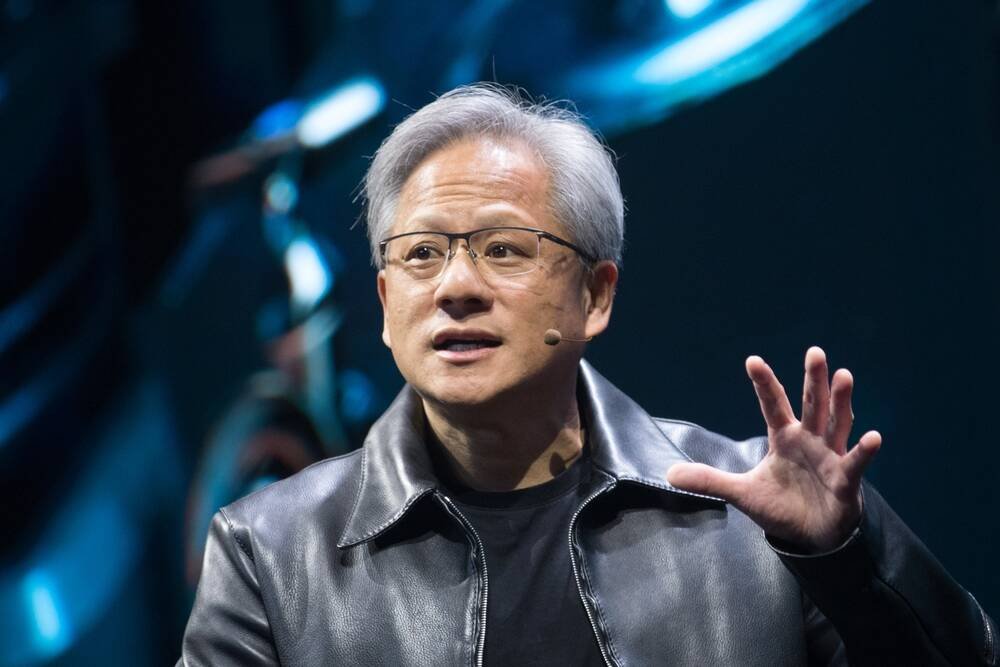
In 2016, at the Hot Chips symposium in California, few could have predicted that a niche memory technology quietly discussed on stage would soon become the backbone of the global artificial intelligence (AI) revolution. Back then, High Bandwidth Memory (HBM) was controversial, expensive, and even dismissed by engineers at Micron as inferior to its rival, the Hybrid Memory Cube (HMC).
ALSO READ : Elon Musk sues Apple and OpenAI claims shocking collusion to kill AI rivals
Yet less than a decade later, HBM has turned the semiconductor industry on its head. In 2024, SK hynix holds a commanding 55% of the HBM market, overtaking long-time powerhouse Samsung Electronics at 40%, while Micron is left trailing at just 5%, according to JPMorgan.
This shift has profound implications. HBM is no longer a niche technology; it is the lifeblood of Nvidia’s AI GPUs, which power everything from ChatGPT-style models to data centers driving the next wave of digital transformation. No wonder analysts now call it “the prince of memory.”
AMD’s unlikely bet
The roots of this story trace back to 2007, when AMD — struggling for relevance in the GPU market — began working on a project to equip graphics cards with a new type of stacked memory. At the time, AI acceleration was not even part of the conversation. AMD’s goal was simple: boost performance for gamers.
In 2010, AMD found an unlikely partner in Hynix, then a financially fragile company only just recovering from years of creditor management. Despite its struggles, Hynix agreed to help AMD push forward with HBM development. Their persistence eventually paid off: in 2015, Lisa Su, AMD’s new CEO, unveiled the Radeon R9 Fury X, the first GPU powered by HBM.
Although the card failed to disrupt the gaming market due to its high cost, it marked a turning point. For the first time, the world saw HBM in action — and it wasn’t made by Samsung.
Samsung’s big play
That triumph was short-lived. In 2016, Samsung Electronics began mass-producing HBM2, and Nvidia quickly embraced it. At the GPU Technology Conference (GTC) that year, Jensen Huang, Nvidia’s CEO, declared that his company had built the world’s first AI-accelerated GPU using Samsung’s memory. The Tesla P100 GPU became an instant landmark in the history of computing.
By 2017, Samsung’s HBM2 had been adopted by AMD’s rivals and even Intel’s high-performance processors. Meanwhile, SK hynix struggled with quality control and missed opportunities, leaving Samsung to dominate the early AI era.
SK hynix’s comeback
The underdog story didn’t end there. Learning from its failures, SK hynix restructured its approach. Instead of chasing raw performance, it focused on process efficiency, customization for each client, and close coordination across teams. By 2022, this strategy bore fruit with the mass production of HBM3, which went into Nvidia’s H100 GPU — the gold standard for AI training.
From being an afterthought in the memory race, SK hynix had become Nvidia’s key supplier. Its agility, willingness to customize, and smart packaging innovations allowed it to leapfrog Samsung in the very market Samsung once seemed destined to rule.
The lessons of HBM
The divergent paths of Samsung, AMD, and SK hynix reveal the messy but fascinating reality of the chip industry. Technologies dismissed today can dominate tomorrow. Partnerships that look desperate in the moment can later reshape global markets. And in an era when AI demand is skyrocketing, memory companies that once fought for gaming or mobile contracts are now at the center of trillion-dollar opportunities.
For AMD, betting on HBM was about survival in GPUs. For Samsung, it was about cementing dominance. For SK hynix, it was about proving a smaller player could not only compete, but lead. Today, as HBM fuels the AI race, those choices echo across boardrooms and data centers worldwide.
And the story isn’t over. The next battle — over HBM4, expected by 2026 — could once again reshuffle the hierarchy.











Technology News
Sam Altman Breaks Silence: Molotov Cocktail Scare, “Incendiary” Probe, and a Candid Reckoning With His Past…
The OpenAI chief addresses a shocking security incident and pushes back against a high-profile investigation, while reflecting on mistakes that shaped his leadership.
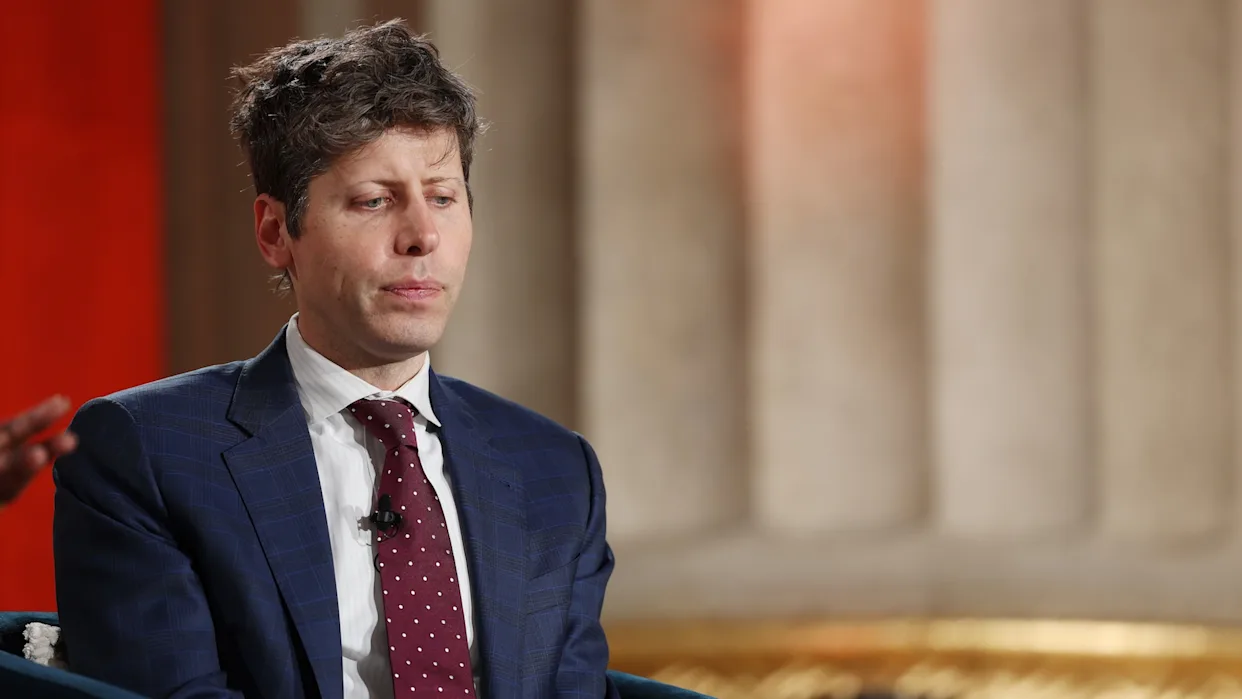
In a rare and deeply personal blog post published Friday, Sam Altman, CEO of OpenAI, pulled back the curtain on a troubling security incident involving a Molotov cocktail—while also responding to what he described as an “incendiary” investigation by The New Yorker.
Altman’s post, striking in both tone and transparency, covered far more than just headlines. It offered readers a glimpse into the pressures of leading one of the world’s most scrutinized AI companies, while confronting narratives he believes have misrepresented his character and decisions.
A Disturbing Incident Comes to Light
Altman confirmed that a Molotov cocktail incident had indeed taken place, raising concerns about the growing intensity of public sentiment surrounding artificial intelligence and its key figures. While details remain limited, the acknowledgment alone underscores the increasingly volatile environment in which tech leaders now operate.
ALSO READ : Younghoe Koo Explains Botched Field Goal After Slip: “The Ball Was Moving So I Pulled Up”
The incident serves as a stark reminder of how polarizing AI has become, particularly as companies like OpenAI continue to push the boundaries of innovation with tools such as ChatGPT.
Pushing Back Against The New Yorker
A significant portion of Altman’s post was dedicated to addressing an investigation by journalists Ronan Farrow and Andrew Marantz, published in The New Yorker. The piece reportedly examined Altman’s leadership style, past controversies, and internal dynamics at OpenAI.
Altman did not hold back, labeling the article as “incendiary” and suggesting it painted an incomplete and, at times, misleading picture. While acknowledging that scrutiny comes with the territory, he emphasized the importance of fairness and context in reporting.
“There are parts of my past I’m not proud of,” Altman admitted, “but they don’t define the work we’re doing today.”
A Rare Moment of Self-Reflection
Perhaps the most compelling aspect of the blog post was Altman’s willingness to revisit his own past mistakes. In an industry often marked by carefully curated public personas, his candid tone stood out.

He reflected on earlier decisions in his career—some of which have been criticized—and framed them as learning experiences that informed his leadership today. This introspection appeared to be both a defense against criticism and an attempt to humanize a figure often seen as emblematic of Big Tech ambition.
The Broader Context: AI Under the Spotlight
Altman’s remarks come at a time when artificial intelligence is facing unprecedented scrutiny from governments, media, and the public. From ethical concerns to job displacement fears, companies like OpenAI are navigating a complex web of expectations and criticisms.
The CEO’s decision to address both a security scare and a media investigation in one sweeping post suggests a deliberate effort to regain control of the narrative—and perhaps rebuild trust.
A Leader Under Pressure
For Altman, this moment is about more than just rebutting an article or confirming an incident. It reflects the reality of leading a transformative yet controversial field.
As AI continues to reshape industries, figures like Altman are finding themselves not just as innovators, but as lightning rods for debate.
Whether his candid approach will resonate with critics remains to be seen. But one thing is clear: Sam Altman is choosing to confront the storm head-on—on his own terms.
Technology News
Amazon’s AWS Cloud Went Dark Over Dubai and Iran’s Drones May Have Just Changed the Internet Forever…
2. SUBTITLE:
Iranian missile and drone strikes hit Amazon Web Services data centers in the UAE and Bahrain, taking down dozens of cloud services and raising terrifying questions about the future of global digital infrastructure in a war zone.
The Gulf had one simple promise for Silicon Valley: Bring your servers. We’ll keep them safe.
On Sunday, March 1, 2026, that promise burned — quite literally.
At around 4:30 AM PST, one of Amazon Web Services‘ availability zones — specifically the mec1-az2 cluster in its ME-CENTRAL-1 region — was hit by unidentified objects that struck the data center, triggering sparks and a fire. 404 Media What followed was not just a tech outage. It was a wake-up call for every business, government, and startup that had trusted the Middle East with their data.
What Exactly Happened?
Amazon confirmed that two of its data center facilities in the United Arab Emirates were directly struck, while in Bahrain, a drone strike in close proximity to one of its facilities caused physical damage to its infrastructure.
ALSO READ : Tanzyn Crawford Breaks Silence on Racial Backlash Over Her Role in A Knight of the Seven Kingdoms
Power to the UAE facility was cut by local authorities to contain the blaze. Amazon hasn’t officially specified what the “objects” were — but the data center appears to have been caught squarely in the crossfire between U.S. and Iranian forces operating in the region.
Amazon‘s popular EC2 virtual server service, its S3 storage platform, and its DynamoDB database service were among the roughly 60 applications experiencing elevated error rates and degraded availability. AWS confirmed that recovery would be prolonged “given the nature of the physical damage involved.”
And customers? They were told to pack up and leave — digitally speaking.
AWS advised customers with workloads in the region to consider backing up their data or migrating to other AWS regions entirely. CNBC That’s a remarkable admission from one of the world’s most powerful tech companies.
The Bigger Picture: How Did We Get Here?
On Saturday, the United States and Israel launched Operation Epic Fury, striking targets inside Iran and killing several political and military leaders — including Ayatollah Ali Khamenei, Iran’s Supreme Leader. In retaliation, Iran unleashed hundreds of drone and missile attacks against Israel and multiple U.S.-allied targets across the Middle East, including the UAE, Qatar, Kuwait, and Saudi Arabia. 404 Media
The UAE military intercepted 165 ballistic missiles, two cruise missiles, and 541 drones over two days. But 35 drones and 5 projectiles still got through — striking airports, Jebel Ali Port, and even the facade of the iconic Burj Al Arab hotel. Three migrant workers were killed. Rest of World
The Amazon data centers were not the only casualties. According to multiple reports, Iranian armaments struck the headquarters of the U.S. Navy’s Fifth Fleet in Manama, Bahrain. Google, Amazon, Microsoft, and Oracle all operate cloud facilities in nations now under Iranian bombardment. The Register Yet it is Amazon’s infrastructure that has suffered the most visible blow.
A Vulnerability Nobody Planned For
The uncomfortable truth is that nobody in Silicon Valley or the Gulf capitals ever seriously planned for this.
The January 2026 Pax Silica initiative had brought the UAE and Qatar into a U.S.-led effort to keep advanced chips away from China. The security frameworks were designed around geopolitics and supply chain control — not around protecting physical buildings during a missile and drone war. Rest of World

As Ali Bakir, an assistant professor of international affairs and defense at Qatar University, bluntly put it: the physical security of strategic digital infrastructure may have been assumed to fall under broader national defense — without ever being treated as a distinct vulnerability. Rest of World
Data management firm Snowflake attributed its own service disruptions in the region directly to the AWS outage in the UAE, showing just how far the knock-on effects spread through the cloud ecosystem. The Register
What Happens Next?
It remains unclear how long it will take for Amazon to fully restore services. The company’s dashboard warned of at least a day’s recovery time — but the war is far from over, and Iran continues to strike targets across the Middle East. 404 Media
Ryan Bohl, senior analyst for the Middle East and North Africa at RANE Network, noted that while the region’s core advantages remain intact for now, the trajectory depends heavily on how the conflict evolves. Companies are watching closely to see whether this was a contained episode or the start of a more sustained cycle of disruption. Rest of World
One thing, however, is already clear: the Gulf’s era as an unquestioned “safe harbor” for the world’s data may be over. And the next time a Silicon Valley executive signs a billion-dollar infrastructure deal in the Middle East, they’ll be asking a question nobody used to ask — what happens if the missiles come for the servers?
Technology News
Inside the Mind of the Man Who Trusts Dogs to Lead Movies
From AI labs to film sets, BARK innovation chief Mikkel Holm has a radical idea — what if dogs weren’t just stars, but storytellers?

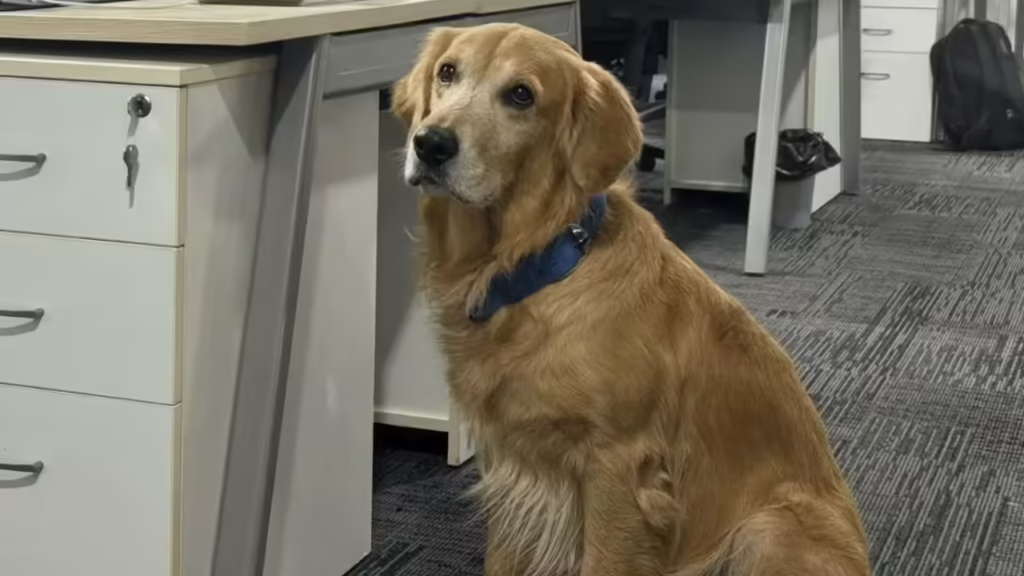
In an era where artificial intelligence is already writing scripts, composing music, and generating entire films, one creative mind is asking a question that feels equal parts absurd and oddly profound: Why shouldn’t dogs be directors?
That mind belongs to Mikkel Holm, the Chief AI & Innovation Officer at BARK, the pet brand best known for turning dog culture into a billion-dollar business. Holm isn’t pitching a gimmick. He’s questioning how creativity itself is defined — and who gets to own it.
From Fetch to Final Cut
Holm’s thinking sits at the crossroads of AI, storytelling, and animal behavior. With generative tools becoming more intuitive, he believes creativity no longer needs to start with a human idea. A dog’s reactions — what excites them, what scares them, what keeps their attention — could become the raw data that shapes narratives.
“Dogs already tell us what they like,” Holm has suggested in industry conversations. “We just haven’t been listening in a cinematic way.”
ALSO READ : Younghoe Koo Explains Botched Field Goal After Slip: “The Ball Was Moving So I Pulled Up”
Using sensors, computer vision, and behavioral AI models, a dog’s gaze, movement, or excitement could guide editing decisions, pacing, or even story arcs. The result wouldn’t be about dogs — it would be cinema filtered through a non-human perspective.
The Birth of the First Park Chan-Woof?
Holm jokingly refers to the possibility of minting the next Park Chan-wook — except this auteur would wag instead of walk the red carpet. The joke lands because it highlights something serious: great directors don’t just tell stories, they feel them. And dogs, arguably, are pure instinct.
Unlike human creators shaped by trends, algorithms, or box-office anxiety, dogs respond honestly. They don’t care about three-act structures or Rotten Tomatoes scores. They react in real time — and Holm believes that authenticity is something modern storytelling desperately needs.
Why BARK Is the Perfect Place for This Idea
At BARK, data about canine behavior isn’t abstract. It’s central to the business. Millions of interactions — toys chewed, treats rejected, boxes loved — already inform product design. Translating that behavioral intelligence into creative output feels like a natural extension.
Holm’s role isn’t about replacing human creators. Instead, it’s about collaboration — humans setting the framework, AI translating signals, and dogs influencing the final creative choices in ways we’ve never seen before.
Is This Art or Absurdity?
Skeptics, of course, will laugh. Dogs as directors sounds like a headline built for clicks. But then again, so did AI-written novels, virtual influencers, and fully synthetic pop stars — until they weren’t jokes anymore.
Holm’s idea taps into a deeper cultural shift: creativity is no longer exclusively human. As tools evolve, authorship becomes shared — between humans, machines, and perhaps, one day, animals.
And if the result is strange, emotional, or unexpectedly beautiful? That might be the point.
A Future Where Creativity Isn’t Just Human
Cinema has always evolved with technology — from silent films to sound, black-and-white to color, analog to digital. Holm’s vision suggests the next leap might not be technical, but philosophical.
What happens when we stop asking who is allowed to create?
If the first dog-directed short film ever premieres at a festival someday, don’t be surprised if it doesn’t explain itself. Dogs, after all, have never felt the need to justify their instincts. Maybe storytellers shouldn’t either.

Summer House Cast Celebrates First Emmy Nomination, Calls It Surreal

Beyoncé Ends Two-Year Music Hiatus With ‘Morning Dew’… Fans Wonder If a Bigger Announcement Is Coming

Stephen Colbert vs Jimmy Kimmel at the Emmys 2026… Late-Night Giants Face Off in a Battle for TV’s Top Honor

Emmy Awards 2026 Predictions: First Post-Nominations Forecast Spotlights the Early Favorites

Lorde Pushes Back Against Spotify’s AI Features

1-Iran Issues Dire Warning to Israel and Defies Trump on Nukes: “We’re Ready to Strike Deep Inside”

Sen. Elizabeth Warren Calls It a ‘Cesspool of Corruption’ — Here’s Why Senators Are Now Fighting Back Against the DOJ’s Live Nation Deal That Left Every Fan Betrayed…

Donald Trump’s net worth reveals the fortune behind the former US President and business mogul

“Tomás Rodríguez Net Worth 2025: Panama’s Gold Cup Goal‑Machine’s Surprising Fortune Revealed”

“She Never Made It Out…” Albany House Fire Claims Woman’s Life as Family Pleads for Help to Bring Her Home

Miss Jamaica Suffers Terrifying Fall Off Miss Universe Stage; Rushed to Hospital on Stretcher in Viral Video

Moana Live-Action Teaser Sparks Outrage as Fans Call Disney’s Move a ‘Clear Money Grab’ — What Went Wrong?

Ryan Gosling’s Project Hail Mary Trailer Stuns Fans with a Mysterious Alien Ally and a Mission That Could Save Earth

Apple delays Jessica Chastain thriller The Savant about domestic extremism after recent US violence

Avatar 3, Fire and Ash trailer reveals Jake Sully’s family facing terrifying new Na’vi enemies with deadly fire powers
-

 Entertainment1 week ago
Chris Hansen Praises Robert Pattinson’s ‘Primetime’ Portrayal, Calls It ‘Overly Dramatic’
-

 Entertainment6 days ago
Hollywood’s New Box-Office Saviours Revealed: How Curry Barker Joined Guillermo del Toro’s Elite Circle
-

 Entertainment4 days ago
Creative Arts Emmys Night Two Winners: ‘Widow’s Bay’ Dominates, but Rob Reiner’s Emotional Victory Steals the Spotlight
-

 Entertainment1 week ago
America Honors a Country Music Icon With Dolly Parton Day on September 25
-

 Entertainment1 week ago
Inside Christopher Nolan’s Ambitious ‘The Odyssey’ Shoot: 20 Actors and One Giant Trojan Horse
-

 Entertainment1 week ago
‘The Gentlemen’ Goes Dark: Theo James Unpacks Season 2’s Shocking End
-

 Entertainment6 days ago
Why Is America Celebrating Dolly Parton Day on 9/25? The Sweet Meaning Revealed
-

 Entertainment1 week ago
Chris Hansen Reacts to Robert Pattinson’s ‘Primetime’ Performance: ‘Pretty Good Imitation, but…’