
Food
Gen Z Is Buying Ice Cream Like It’s 1999 Again What’s Behind the Shocking Frozen Dessert Comeback in 2025
As inflation chills out, a surprising trend is heating up: the rise of premium frozen treats — and this time, it’s not just about scoopsit’s about status.


July 2025 has one message for America: ice cream is not just dessert it’s a lifestyle. With inflation finally easing, consumers are venturing back into scoop shops, sundae counters and frozen aisles with newfound enthusiasm. But there’s a twist. This isn’t your typical summer indulgence — it’s a reflection of how post-pandemic comfort culture, premiumization, and Gen Z’s influence are rewriting the frozen dessert playbook.
According to industry insiders, we’re witnessing what could be called the “Summer of Scoop Status a movement where ice cream is becoming both social currency and nostalgic therapy.
Why Ice Cream Now
Following years of price anxiety and cautious spending, Americans — especially younger generations — are reclaiming joy through sweet, icy treats. The return to away-from-home frozen treating (think ice cream parlors, gelato bars, food trucks) is now in full swing, with many citing the experience as equally important as the product.
Consumers are no longer just grabbing a tub of vanilla and heading home notes Mintel’s senior analyst on food trends. They’re chasing craft gelatos Instagrammable sundaes, and Japanese mochi balls — and they’re willing to pay more for it.

The Premiumization Wave: Not Just Ice Cream But Ice Cream 2.0
Enter the age of premium frozen desserts. Brands like Van Leeuwen, Jeni’s Splendid Ice Creams, and even Haagen-Dazs are reimagining the frozen aisle with ingredients like Ecuadorian dark chocolate California-grown pistachios, and vegan oat milk bases. Consumers want indulgence, yes—but they also want clean labels, sustainable sourcing, and gourmet craftsmanship.
Meanwhile, global influences are also making waves. From Korean bingsu and Taiwanese snow ice to Indian kulfi, international textures and flavors are entering American freezers, thanks in part to social media food influencers bringing the world’s desserts to U.S. screens.
What’s Changing at Home? Expectations. Big Time.
With the return of out-of-home treating, the bar for at-home indulgence has skyrocketed. Gone are the days when a basic pint of Neapolitan sufficed. Today’s consumer expects multi-layered parfaits, filled cones, and hand-packed pints with swirls, inclusions, and surprise cores.
Even classic grocery brands like Ben & Jerry’s and Blue Bell are upping their game, offering bold new limited-edition flavors and collaborations with musicians, movies, and creators.
What Gen Z Wants, the Market Delivers
Gen Z’s love affair with self-expression and sensory exploration is fueling the trend. They’re seeking unique formats — think rolled ice cream, freeze-dried ice cream bites, and plant-based frozen novelties — all served with a side of nostalgia and a dash of aesthetic.
According to NielsenIQ, frozen dessert sales surged 11% year-over-year in Q2 2025 with the 18–34 age group leading the charge. It’s not just about cooling off says one Gen Z TikToker in a viral post. It’s about treating yourself without guilt.
Scoop Shops Reimagined: Experience Is Everything
Small-format ice cream parlors are embracing the vibe of third-wave coffee shops, complete with mood lighting, artisanal touches, and live music. Cities like Austin Portland, and Brooklyn are witnessing a revival of late-night scoop sessions — and lines stretching around the block.


Technology News
Inside the Mind of the Man Who Trusts Dogs to Lead Movies
From AI labs to film sets, BARK innovation chief Mikkel Holm has a radical idea — what if dogs weren’t just stars, but storytellers?

In an era where artificial intelligence is already writing scripts, composing music, and generating entire films, one creative mind is asking a question that feels equal parts absurd and oddly profound: Why shouldn’t dogs be directors?
That mind belongs to Mikkel Holm, the Chief AI & Innovation Officer at BARK, the pet brand best known for turning dog culture into a billion-dollar business. Holm isn’t pitching a gimmick. He’s questioning how creativity itself is defined — and who gets to own it.
From Fetch to Final Cut
Holm’s thinking sits at the crossroads of AI, storytelling, and animal behavior. With generative tools becoming more intuitive, he believes creativity no longer needs to start with a human idea. A dog’s reactions — what excites them, what scares them, what keeps their attention — could become the raw data that shapes narratives.
“Dogs already tell us what they like,” Holm has suggested in industry conversations. “We just haven’t been listening in a cinematic way.”
ALSO READ : Younghoe Koo Explains Botched Field Goal After Slip: “The Ball Was Moving So I Pulled Up”
Using sensors, computer vision, and behavioral AI models, a dog’s gaze, movement, or excitement could guide editing decisions, pacing, or even story arcs. The result wouldn’t be about dogs — it would be cinema filtered through a non-human perspective.
The Birth of the First Park Chan-Woof?
Holm jokingly refers to the possibility of minting the next Park Chan-wook — except this auteur would wag instead of walk the red carpet. The joke lands because it highlights something serious: great directors don’t just tell stories, they feel them. And dogs, arguably, are pure instinct.
Unlike human creators shaped by trends, algorithms, or box-office anxiety, dogs respond honestly. They don’t care about three-act structures or Rotten Tomatoes scores. They react in real time — and Holm believes that authenticity is something modern storytelling desperately needs.
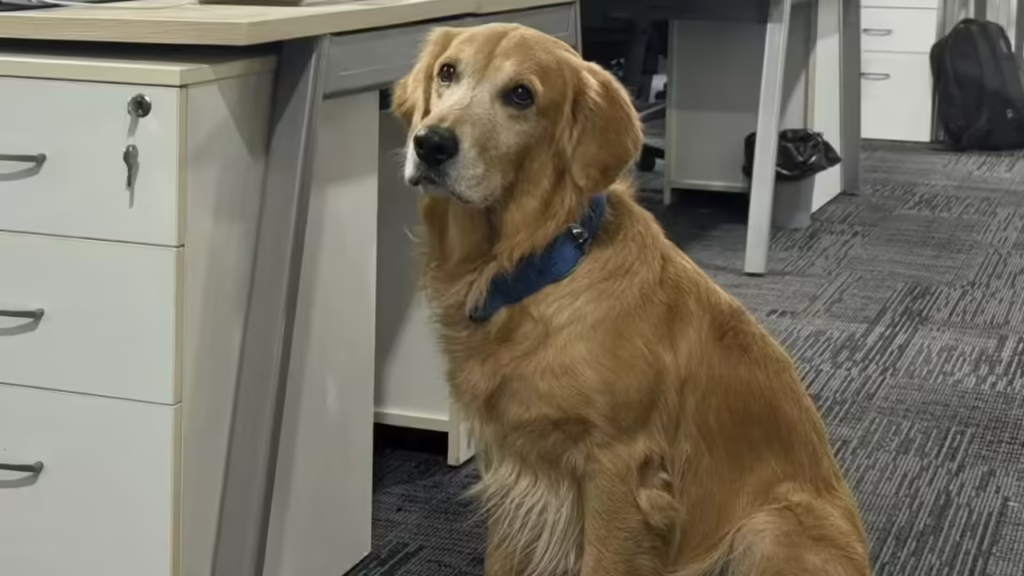
Why BARK Is the Perfect Place for This Idea
At BARK, data about canine behavior isn’t abstract. It’s central to the business. Millions of interactions — toys chewed, treats rejected, boxes loved — already inform product design. Translating that behavioral intelligence into creative output feels like a natural extension.
Holm’s role isn’t about replacing human creators. Instead, it’s about collaboration — humans setting the framework, AI translating signals, and dogs influencing the final creative choices in ways we’ve never seen before.
Is This Art or Absurdity?
Skeptics, of course, will laugh. Dogs as directors sounds like a headline built for clicks. But then again, so did AI-written novels, virtual influencers, and fully synthetic pop stars — until they weren’t jokes anymore.
Holm’s idea taps into a deeper cultural shift: creativity is no longer exclusively human. As tools evolve, authorship becomes shared — between humans, machines, and perhaps, one day, animals.
And if the result is strange, emotional, or unexpectedly beautiful? That might be the point.
A Future Where Creativity Isn’t Just Human
Cinema has always evolved with technology — from silent films to sound, black-and-white to color, analog to digital. Holm’s vision suggests the next leap might not be technical, but philosophical.
What happens when we stop asking who is allowed to create?
If the first dog-directed short film ever premieres at a festival someday, don’t be surprised if it doesn’t explain itself. Dogs, after all, have never felt the need to justify their instincts. Maybe storytellers shouldn’t either.
Technology News
Inside the Vision of the Man Who Trusts Dogs to Tell Stories on the Big Screen
From AI labs to film sets, BARK innovation chief Mikkel Holm has a radical idea — what if dogs weren’t just stars, but storytellers?
In an era where artificial intelligence is already writing scripts, composing music, and generating entire films, one creative mind is asking a question that feels equal parts absurd and oddly profound: Why shouldn’t dogs be directors?
That mind belongs to Mikkel Holm, the Chief AI & Innovation Officer at BARK, the pet brand best known for turning dog culture into a billion-dollar business. Holm isn’t pitching a gimmick. He’s questioning how creativity itself is defined — and who gets to own it.
From Fetch to Final Cut
Holm’s thinking sits at the crossroads of AI, storytelling, and animal behavior. With generative tools becoming more intuitive, he believes creativity no longer needs to start with a human idea. A dog’s reactions — what excites them, what scares them, what keeps their attention — could become the raw data that shapes narratives.
“Dogs already tell us what they like,” Holm has suggested in industry conversations. “We just haven’t been listening in a cinematic way.”
ALSO READ : Younghoe Koo Explains Botched Field Goal After Slip: “The Ball Was Moving So I Pulled Up”
Using sensors, computer vision, and behavioral AI models, a dog’s gaze, movement, or excitement could guide editing decisions, pacing, or even story arcs. The result wouldn’t be about dogs — it would be cinema filtered through a non-human perspective.
The Birth of the First Park Chan-Woof?
Holm jokingly refers to the possibility of minting the next Park Chan-wook — except this auteur would wag instead of walk the red carpet. The joke lands because it highlights something serious: great directors don’t just tell stories, they feel them. And dogs, arguably, are pure instinct.
Unlike human creators shaped by trends, algorithms, or box-office anxiety, dogs respond honestly. They don’t care about three-act structures or Rotten Tomatoes scores. They react in real time — and Holm believes that authenticity is something modern storytelling desperately needs.
Why BARK Is the Perfect Place for This Idea
At BARK, data about canine behavior isn’t abstract. It’s central to the business. Millions of interactions — toys chewed, treats rejected, boxes loved — already inform product design. Translating that behavioral intelligence into creative output feels like a natural extension.
Holm’s role isn’t about replacing human creators. Instead, it’s about collaboration — humans setting the framework, AI translating signals, and dogs influencing the final creative choices in ways we’ve never seen before.
Is This Art or Absurdity?
Skeptics, of course, will laugh. Dogs as directors sounds like a headline built for clicks. But then again, so did AI-written novels, virtual influencers, and fully synthetic pop stars — until they weren’t jokes anymore.
Holm’s idea taps into a deeper cultural shift: creativity is no longer exclusively human. As tools evolve, authorship becomes shared — between humans, machines, and perhaps, one day, animals.
And if the result is strange, emotional, or unexpectedly beautiful? That might be the point.
A Future Where Creativity Isn’t Just Human
Cinema has always evolved with technology — from silent films to sound, black-and-white to color, analog to digital. Holm’s vision suggests the next leap might not be technical, but philosophical.
What happens when we stop asking who is allowed to create?
If the first dog-directed short film ever premieres at a festival someday, don’t be surprised if it doesn’t explain itself. Dogs, after all, have never felt the need to justify their instincts. Maybe storytellers shouldn’t either.
Technology News
Meet the Man Who Wants Dogs in the Director’s Chair and Thinks Cinema Needs a Bark Side
From AI labs to film sets, BARK innovation chief Mikkel Holm has a radical idea — what if dogs weren’t just stars, but storytellers?
In an era where artificial intelligence is already writing scripts, composing music, and generating entire films, one creative mind is asking a question that feels equal parts absurd and oddly profound: Why shouldn’t dogs be directors?
That mind belongs to Mikkel Holm, the Chief AI & Innovation Officer at BARK, the pet brand best known for turning dog culture into a billion-dollar business. Holm isn’t pitching a gimmick. He’s questioning how creativity itself is defined — and who gets to own it.
From Fetch to Final Cut
Holm’s thinking sits at the crossroads of AI, storytelling, and animal behavior. With generative tools becoming more intuitive, he believes creativity no longer needs to start with a human idea. A dog’s reactions — what excites them, what scares them, what keeps their attention — could become the raw data that shapes narratives.
“Dogs already tell us what they like,” Holm has suggested in industry conversations. “We just haven’t been listening in a cinematic way.”
ALSO READ : Younghoe Koo Explains Botched Field Goal After Slip: “The Ball Was Moving So I Pulled Up”
Using sensors, computer vision, and behavioral AI models, a dog’s gaze, movement, or excitement could guide editing decisions, pacing, or even story arcs. The result wouldn’t be about dogs — it would be cinema filtered through a non-human perspective.
The Birth of the First Park Chan-Woof?
Holm jokingly refers to the possibility of minting the next Park Chan-wook — except this auteur would wag instead of walk the red carpet. The joke lands because it highlights something serious: great directors don’t just tell stories, they feel them. And dogs, arguably, are pure instinct.
Unlike human creators shaped by trends, algorithms, or box-office anxiety, dogs respond honestly. They don’t care about three-act structures or Rotten Tomatoes scores. They react in real time — and Holm believes that authenticity is something modern storytelling desperately needs.
Why BARK Is the Perfect Place for This Idea
At BARK, data about canine behavior isn’t abstract. It’s central to the business. Millions of interactions — toys chewed, treats rejected, boxes loved — already inform product design. Translating that behavioral intelligence into creative output feels like a natural extension.
Holm’s role isn’t about replacing human creators. Instead, it’s about collaboration — humans setting the framework, AI translating signals, and dogs influencing the final creative choices in ways we’ve never seen before.
Is This Art or Absurdity?
Skeptics, of course, will laugh. Dogs as directors sounds like a headline built for clicks. But then again, so did AI-written novels, virtual influencers, and fully synthetic pop stars — until they weren’t jokes anymore.
Holm’s idea taps into a deeper cultural shift: creativity is no longer exclusively human. As tools evolve, authorship becomes shared — between humans, machines, and perhaps, one day, animals.
And if the result is strange, emotional, or unexpectedly beautiful? That might be the point.
A Future Where Creativity Isn’t Just Human
Cinema has always evolved with technology — from silent films to sound, black-and-white to color, analog to digital. Holm’s vision suggests the next leap might not be technical, but philosophical.
What happens when we stop asking who is allowed to create?
If the first dog-directed short film ever premieres at a festival someday, don’t be surprised if it doesn’t explain itself. Dogs, after all, have never felt the need to justify their instincts. Maybe storytellers shouldn’t either.

“He-Man Wears a Suit…”: Why Nicholas Galitzine’s Masters of the Universe Trailer Has Fans Talking

Camilla Läckberg Isn’t Done Yet… The Queen of Swedish Noir Eyes Film, TV and a Bold Plan to ‘Conquer America’

“Screaming, Crying, Almost Throwing Up”… Sundance Insiders Reveal the Untold Chaos Behind America’s Most Influential Film Festival
From Swedish Noir to Hollywood Dreams Camilla Läckberg Has a Bigger Plan in Motion
When Sundance Nearly Fell Apart Insiders Recall the Chaos Behind the World’s Most Influential Film Festival

1-Iran Issues Dire Warning to Israel and Defies Trump on Nukes: “We’re Ready to Strike Deep Inside”

Donald Trump’s net worth reveals the fortune behind the former US President and business mogul

Caitlin Clark Sidelined with Quad Strain, Set to Miss Two Weeks of WNBA Action

Elon Musk Breaks Ranks with Trump Over ‘Big, Beautiful’ Tax Bill

“Tomás Rodríguez Net Worth 2025: Panama’s Gold Cup Goal‑Machine’s Surprising Fortune Revealed”

Miss Jamaica Suffers Terrifying Fall Off Miss Universe Stage; Rushed to Hospital on Stretcher in Viral Video

Moana Live-Action Teaser Sparks Outrage as Fans Call Disney’s Move a ‘Clear Money Grab’ — What Went Wrong?

Ryan Gosling’s Project Hail Mary Trailer Stuns Fans with a Mysterious Alien Ally and a Mission That Could Save Earth

Apple delays Jessica Chastain thriller The Savant about domestic extremism after recent US violence

Avatar 3, Fire and Ash trailer reveals Jake Sully’s family facing terrifying new Na’vi enemies with deadly fire powers
-
 Entertainment7 days ago
He-Man Wears a Suit Now… Nicholas Galitzine’s ‘Masters of the Universe’ Trailer Drops a Shock Fans Didn’t See Coming
-
 Entertainment1 week ago
Brazil Eyes Oscar History Again… ‘The Secret Agent’ Scores Best Picture Nomination as Wagner Moura Stuns Hollywood
-

 Entertainment5 days ago
“Comedy Needs Courage Again…”: Judd Apatow Opens Up on Mel Brooks, Talking to Rob Reiner, and Why Studio Laughs Have Vanished
-

 Entertainment1 week ago
Box Office Shocker as Chris Pratt’s ‘Mercy’ Knocks ‘Avatar 3’ Off the Top but Nature Had Other Plans…
-

 Entertainment7 days ago
Oscars Go Global in a Big Way as This Year’s Nominations Signal a New Era: ‘The Academy Is Finally Looking Beyond Hollywood…’
-
 Entertainment1 week ago
Michael Bay Makes a Power Move… Blockbuster Director Signs with CAA in a Deal That’s Turning Heads
-

 Entertainment7 days ago
“Dangerously Kinky… and Darkly Funny”: Olivia Wilde and Cooper Hoffman Push Boundaries in ‘I Want Your Sex’
-
Entertainment1 week ago
Fans Didn’t Expect This Look… Nicholas Galitzine’s Masters of the Universe Trailer Sparks Debate