
World
A Historic Gamble’: Israel Confirms Ceasefire Deal with Iran, But Vows ‘Forceful Response’ if Violated — Trump Claims Victory
After nearly two weeks of intense clashes, Israel accepts a US-brokered ceasefire with Iran — but fresh missile barrages cast doubt on lasting peace.


In a stunning diplomatic twist after twelve harrowing days of open warfare, the Israeli government has officially confirmed it has agreed to a ceasefire deal with Iran, negotiated under intense pressure and shuttle diplomacy by President Donald Trump.
In an official statement early Tuesday, Israel declared it had “achieved the objectives of Operation Rising Lion,” claiming the operation eliminated what it calls the “dual existential threat” from Iran’s nuclear and ballistic missile capabilities. “This is a tremendous success for the people of Israel and its fighters,” the government statement read, while firmly warning that it “will respond forcefully to any violation of the ceasefire.”
President Trump triumphantly announced on Truth Social that the “complete ceasefire is now in effect,” calling it a “huge win for global security” and crediting his administration’s “unwavering commitment” for the breakthrough.
However, within hours, the fragile peace appeared to fracture. According to Reuters, Israel’s military detected fresh Iranian missile launches barely three hours after the ceasefire’s official start, triggering air raid sirens and fresh explosions in northern Israel. Defence Minister Israel Katz ordered the army to prepare for “high-intensity operations” targeting sites in Tehran.
Meanwhile, Iran’s nuclear chief Mohammad Eslami confirmed damage to key facilities but vowed rapid recovery: “The plan is to prevent interruptions in production and services.”
The sudden accord, confirmed just as Israeli jets reportedly destroyed missile launchers deep inside western Iran, has rattled global markets. Global oil prices dropped to two-week lows on easing supply fears, while the US dollar extended declines amid signs of de-escalation.
In Gaza, however, the humanitarian crisis deepened. AFP reported that 21 civilians were killed by Israeli fire while waiting for aid near a distribution point — a tragedy that drew swift condemnation and calls for a parallel ceasefire with Hamas. Israel’s opposition leader Yair Lapid posted on X, “And now Gaza. It’s time to finish it there too. Bring back the hostages, end the war. Israel needs to start rebuilding.”
As diplomatic efforts intensify, China and Germany have urged restraint and offered to work with the NATO allies to stabilize the volatile region.
Former US ambassador James Jeffrey struck a note of cautious optimism, telling Al Jazeera: “Ceasefires are messy. But this is moving in a positive direction if both sides hold fire.”
Despite the declared ceasefire, Israel’s Home Front Command maintains emergency instructions for civilians, underlining Brigadier General Effie Defrin’s stark warning: “The danger persists.”
For the people of Israel, Iran, and the wider Middle East, the next few days will test whether the battlefield truly falls silent — or if, as many fear, the region teeters on the edge of a deeper conflict.





World
Press Freedom Group Revises Gaza Journalist Death List… “Obituaries Changed Everything,” Review Finds
A leading press watchdog says new evidence from militant group obituaries forced a reassessment of several names previously listed as journalists killed in Gaza.


A respected global press freedom organization has quietly but significantly revised its data on journalists killed in Gaza, highlighting the growing complexity of reporting casualties in an active conflict zone.
The Committee to Protect Journalists (CPJ) confirmed that it recently reviewed and updated its Gaza journalist casualty database after discovering that several individuals previously identified as reporters were later commemorated by Palestinian militant groups as fighters.
According to CPJ, the reassessment followed the publication of official obituaries by militant organizations that identified some of the deceased as combatants rather than independent media workers. As a result, the watchdog removed their names from its journalist casualty list.
The update underscores the difficulty of verifying professional roles during wartime—especially in Gaza, where access is restricted, documentation is limited, and information often emerges after significant delays.
ALSO READ : Emmy Nominations Announcement Gets a Star Twist… Liza Colón-Zayas & Jeff Hiller Set to Reveal 2026 TV Nominees
“Accuracy Is Our Obligation”
CPJ emphasized that its decision was not political, but methodological.
The organization stated that its mandate requires strict verification standards and ongoing review. When new, credible information becomes available, records are updated to reflect the most accurate classification possible.
“We document journalists killed in relation to their work,” CPJ has repeatedly said in past statements. “If evidence later shows someone was actively involved in hostilities, we revise our findings.”
This latest review, however, has drawn renewed attention to how casualty figures are used by governments, advocacy groups, and international media to frame narratives around the war.
Why the Review Matters
Casualty databases maintained by organizations like CPJ are often cited by global institutions, including the United Nations, human rights groups, and international newsrooms. Any revision—especially in a conflict as closely watched as Gaza—can have far-reaching implications.
Media analysts note that wartime reporting has increasingly become entangled with information warfare, making independent verification more challenging than ever.
The CPJ said its review process remains ongoing and that names could still be added or removed as new documentation emerges.
Press Freedom Under Fire
Despite the revisions, CPJ stressed that journalism in Gaza remains extraordinarily dangerous. Dozens of verified journalists have been killed while reporting, according to multiple press freedom groups, making the current conflict one of the deadliest for media workers in recent history.
Organizations such as Reporters Without Borders have also warned that misinformation—intentional or otherwise—can undermine legitimate concerns about press safety and accountability.
A Broader Debate
The updated database has already sparked debate online, with critics accusing watchdogs of inconsistency, while supporters argue that transparency and correction are signs of credibility—not weakness.
CPJ maintains that its responsibility is not to reinforce narratives, but to document facts as accurately as possible, even when those facts evolve.
As the conflict continues, the organization says it will keep reviewing its findings, acknowledging that in war zones, truth is often fragmented—and clarity comes slowly.
World
Brace Yourself! A Powerful Western Disturbance Is Coming — Rain, Hailstorms and Cold Blast to Hit North and West India This Week
Weather experts warn of ‘U-shaped’ jet streams driving a severe Western Disturbance across Northwest India from April 3, bringing hailstorms, heavy rain, and a sharp drop in temperatures — while summer may only begin after April 15.


Just when parts of India were beginning to feel the first hints of summer, nature has thrown a curveball. A powerful Western Disturbance is heading toward Northwest India, and weather experts say it could bring some of the most intense unseasonal weather the region has seen this season — with hailstorms, heavy rain, thunderstorms, and a significant drop in temperatures all on the cards.
What Is Coming and When?
According to the India Meteorological Department (IMD), the active Western Disturbance is expected to hit peak activity on April 3 and 4, with isolated heavy rainfall over the Kashmir Valley on April 3 being the primary concern. The wet spell — accompanied by thunderstorms and lightning — is likely to extend across central parts of the country until April 6, with day temperatures expected to remain near normal to below normal across Northwest India during this period.
This comes on the heels of an already colder-than-usual stretch for many parts of the country, where rare weather systems have been bringing unseasonal rain since the second half of March — including a previous Western Disturbance that brought down temperatures sharply across Delhi-NCR and northwest India.
‘Powerful’ System With ‘U-Shaped’ Jet Streams
Climate scientist Dr. Pradeep, who is widely followed on X for his weather updates, described this as a “powerful Severe Western Disturbance” that will track critically close to the Gujarat and Rajasthan border. He warned it would “trigger a significant spell of extreme weather across multiple states.”
According to Dr. Pradeep, the primary impact zones will be:
- Jammu & Kashmir and Ladakh — Intense rain and heavy mountain snowfall
- Punjab and Rajasthan — Widespread thunderstorms and gusty winds
- Gujarat — Significant impact along northern borders and interior regions
Beyond these primary zones, isolated to scattered thunderstorms are also expected across north and central Haryana, Delhi NCR, West Uttar Pradesh, Himachal Pradesh, and West Madhya Pradesh. Even central and south Maharashtra (Vidarbha and Marathwada), Chhattisgarh, Telangana, parts of Odisha and West Bengal may see rain and thunderstorm activity as the system moves through.
Amateur weatherman Navdeep Dahiya added on X that the “jet streams [are] perfectly U-Shaped for the upcoming Western Disturbance starting from 3rd April.” He called it “too much weather action for the third driest month of the year” and noted that the entire north and west India would face cold front rains, hailstorms, and storms, while states in central and southern India brace for intense evening storms.
Wheat Farmers on Alert

The timing of this weather system has raised serious concern among farmers — particularly wheat growers in Haryana and Punjab, where rain and hailstorms already lashed several places on Tuesday. The wheat crop in these states is ripe and ready for harvesting, making it extremely vulnerable to hailstorm damage at this critical stage.
Why Is This Happening?
Mahesh Palawat, Vice President of Climate and Meteorology at Skymet Weather, explained that when the westerly jet stream becomes particularly wavy, it tends to increase the impact of Western Disturbances at lower latitudes. He linked this unusual waviness to the rapid warming of the Arctic — a climate pattern that is becoming more common and more disruptive.
Western Disturbances are moisture-laden cyclonic systems that originate over the Mediterranean Sea and travel eastward along the jet stream — the narrow, high-altitude band of fast-moving winds that circles the globe at around 30,000 feet. This March alone saw eight Western Disturbances against a normal of five to six, and at least three more are expected through mid-April. January and February, by contrast, had seen far fewer than usual, resulting in low snowfall across the Himalayas.
When Will Summer Finally Arrive?
Despite all this cold and stormy weather, Dr. Pradeep and Navdeep Dahiya both agree that summer will eventually make its presence felt — but not before mid-April. Dahiya specifically said the delayed summer season is “likely to pick up after April 15 only.”
So if you were hoping to put away your jacket and pull out the summer clothes, you might want to wait just a little longer. For now, the forecast is clear — it is going to get cold, stormy, and dramatic before it gets warm.
India
‘Indoor air is most important’: US woman reveals how she protects her family from Delhi pollution
Living in India for four years, American expat Kristen Fischer explains why multiple air purifiers are her survival tool during Delhi’s worst pollution months
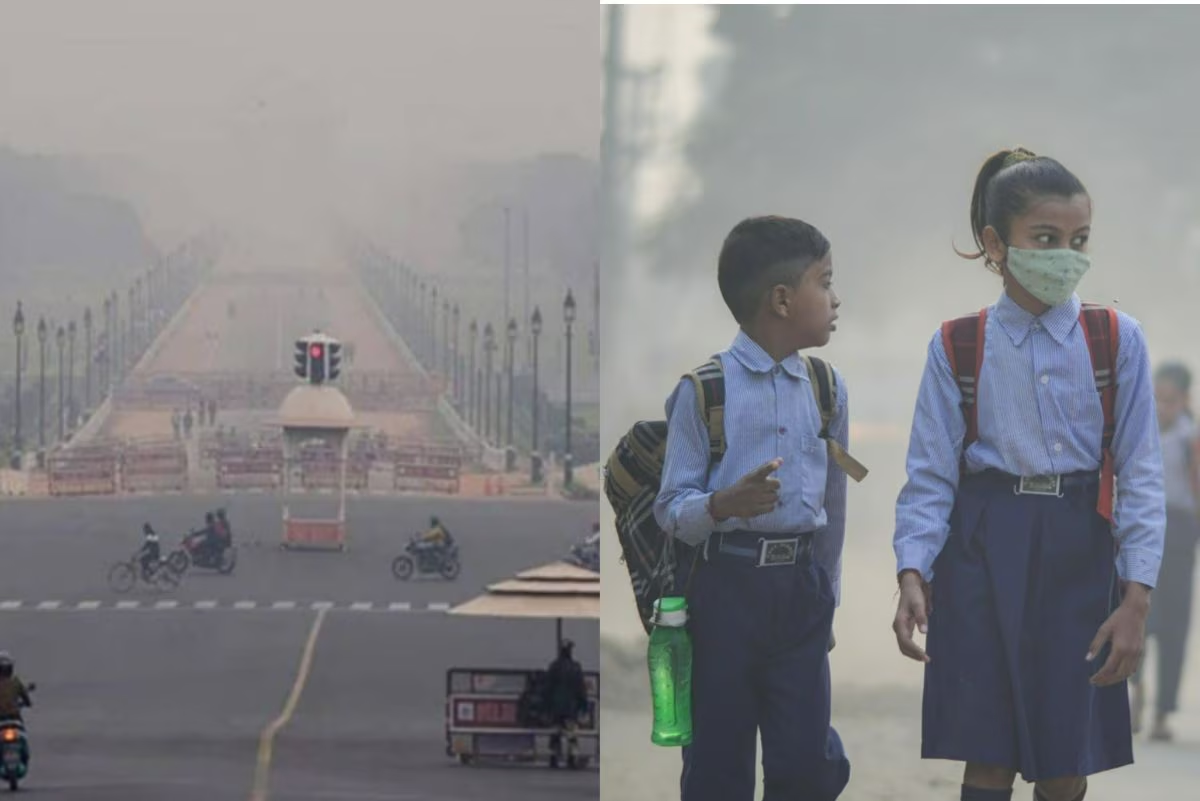
As Delhi grapples with its annual winter pollution crisis, an American woman living in the city has shared a practical and eye-opening account of how she keeps her family safe — by focusing on what she can control indoors.
US expat Kristen Fischer, who has been living in India for the past four years, recently took to Instagram to answer a question she says she is asked repeatedly: How do you manage Delhi’s air quality?
In her video, Fischer demonstrated the stark difference between outdoor and indoor air. Using an air quality monitor, she showed an outdoor AQI reading of 210, a level considered unhealthy. Moments later, she carried the same device inside her home, where the AQI dropped sharply to 48.
Explaining the reason, she said plainly, “This is because we have air purifiers in our house.”
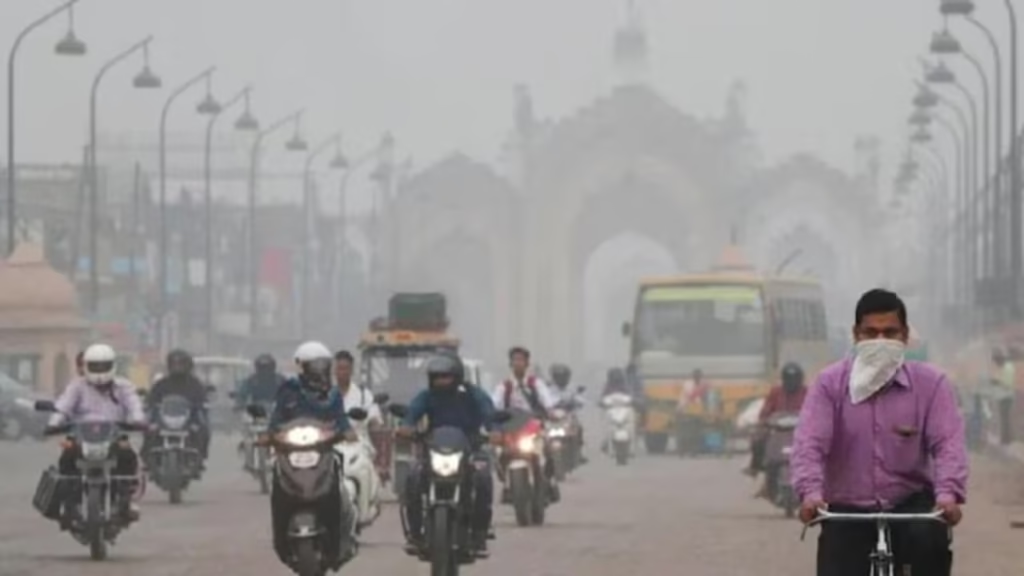
‘We run four air purifiers full time’
Fischer revealed that her family runs four air purifiers continuously, a decision she says has made a significant difference to their daily lives.
“They allow our indoor air quality to stay nice and clean,” she explained, adding that while Delhi’s outdoor pollution can be severe, especially in winter, controlling indoor air offers real protection.
“So we use air purifiers and our indoor air quality is usually quite good. This is how we handle the hard, high-pollution months living here in Delhi,” she said.
Her message struck a chord with many residents who struggle through the city’s smog season every year.
‘Indoor air is the most important’
In a detailed caption accompanying the post, Fischer emphasised that indoor air quality should be the top priority, especially for families.
“Indoor air is the most important,” she wrote. “While I can’t change the condition outside, I can maintain a safe indoor environment for my family.”
She noted that during winter months, her family spends more time indoors and ensures they sleep in what she described as “controlled and clean air.” According to Fischer, limiting outdoor exposure and keeping time outside brief helps manage the health risks associated with pollution.
Delhi pollution is seasonal, she says
Fischer also highlighted an important nuance often overlooked in discussions about Delhi’s air crisis — that the worst pollution is seasonal, not year-round.
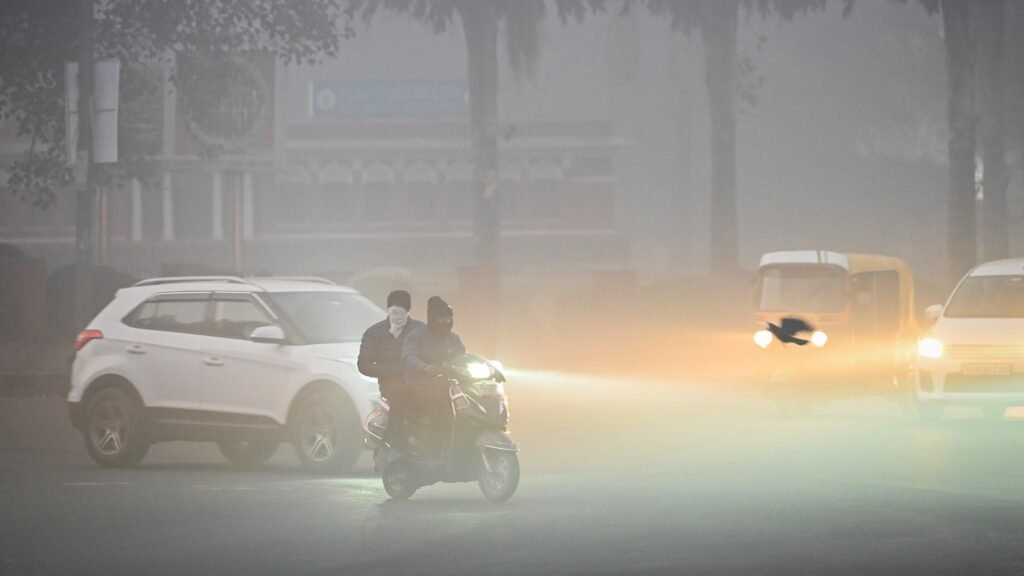
“The high pollution months are not all year,” she wrote. “Mostly just November through January is bad. Otherwise, the air is much better in Delhi the rest of the year.”
However, she was quick to caution that clean indoor air does not happen automatically.
“Indoor air quality is not always good like this,” Fischer explained. “It is only due to the air purifiers we run full time. Without those, the indoor air can be just as bad, or even worse than outside.”
She ended her post with a simple reminder to followers:
“Stay safe out there all.”
As Delhi residents continue to search for ways to cope with hazardous air during winter, Fischer’s experience adds a practical, lived-in perspective — one that underscores the importance of indoor air management when outdoor conditions remain beyond individual control.

Summer House Cast Celebrates First Emmy Nomination, Calls It Surreal

Beyoncé Ends Two-Year Music Hiatus With ‘Morning Dew’… Fans Wonder If a Bigger Announcement Is Coming

Stephen Colbert vs Jimmy Kimmel at the Emmys 2026… Late-Night Giants Face Off in a Battle for TV’s Top Honor

Emmy Awards 2026 Predictions: First Post-Nominations Forecast Spotlights the Early Favorites

Lorde Pushes Back Against Spotify’s AI Features

1-Iran Issues Dire Warning to Israel and Defies Trump on Nukes: “We’re Ready to Strike Deep Inside”

Sen. Elizabeth Warren Calls It a ‘Cesspool of Corruption’ — Here’s Why Senators Are Now Fighting Back Against the DOJ’s Live Nation Deal That Left Every Fan Betrayed…

Donald Trump’s net worth reveals the fortune behind the former US President and business mogul

“Tomás Rodríguez Net Worth 2025: Panama’s Gold Cup Goal‑Machine’s Surprising Fortune Revealed”

“She Never Made It Out…” Albany House Fire Claims Woman’s Life as Family Pleads for Help to Bring Her Home

Miss Jamaica Suffers Terrifying Fall Off Miss Universe Stage; Rushed to Hospital on Stretcher in Viral Video

Moana Live-Action Teaser Sparks Outrage as Fans Call Disney’s Move a ‘Clear Money Grab’ — What Went Wrong?

Ryan Gosling’s Project Hail Mary Trailer Stuns Fans with a Mysterious Alien Ally and a Mission That Could Save Earth

Apple delays Jessica Chastain thriller The Savant about domestic extremism after recent US violence

Avatar 3, Fire and Ash trailer reveals Jake Sully’s family facing terrifying new Na’vi enemies with deadly fire powers
-

 Entertainment1 week ago
Chris Hansen Praises Robert Pattinson’s ‘Primetime’ Portrayal, Calls It ‘Overly Dramatic’
-

 Entertainment1 week ago
Hollywood’s New Box-Office Saviours Revealed: How Curry Barker Joined Guillermo del Toro’s Elite Circle
-

 Entertainment1 week ago
Inside Christopher Nolan’s Ambitious ‘The Odyssey’ Shoot: 20 Actors and One Giant Trojan Horse
-

 Entertainment5 days ago
Creative Arts Emmys Night Two Winners: ‘Widow’s Bay’ Dominates, but Rob Reiner’s Emotional Victory Steals the Spotlight
-

 Entertainment1 week ago
‘The Gentlemen’ Goes Dark: Theo James Unpacks Season 2’s Shocking End
-

 Entertainment1 week ago
Hunter Biden vs Nick Fuentes: Behind the Scenes of the Interview That Almost Turned Into a Physical Confrontation…
-

 Entertainment1 week ago
America Honors a Country Music Icon With Dolly Parton Day on September 25
-

 Tech4 days ago
Apple unveils iPhone 18 Pro series with a camera upgrade users have waited years for: Here’s what changed