
Crime
I’ll Be All Right,” Diddy Tells His Mother as Jury Reaches Verdict on 4 Counts — But Remains Deadlocked on Top Racketeering Charge
Sean “Diddy” Combs faces life in prison as jury returns verdicts in federal sex trafficking case but stalls on the most serious accusation: racketeering conspiracy. Deliberations continue.


New York, July 2, 2025 — The high-stakes trial of Sean “Diddy” Combs took a dramatic turn on Tuesday as the jury announced it had reached a verdict on four out of five federal charges in his explosive sex trafficking case, but remained deadlocked on the most serious charge — racketeering conspiracy, which could carry a maximum sentence of life in prison.
After nearly 13 hours of deliberations over two days, the panel of eight men and four women returned partial verdicts on two counts of sex trafficking and two counts of transportation to engage in prostitution, both tied to allegations that Diddy used his private jets to fly women across state lines for sexual encounters, dubbed “freak-offs” or “hotel nights.”
However, the jury found itself divided and unable to agree on the racketeering conspiracy charge. In a note to Judge Arun Subramanian, jurors confessed they were stuck due to “unpersuadable” opinions on both sides. The judge declined to accept a partial verdict and ordered them to continue deliberating on Wednesday.
“It’s too soon to give up,” said Judge Subramanian, emphasizing the weight of the charges and the importance of a complete verdict.
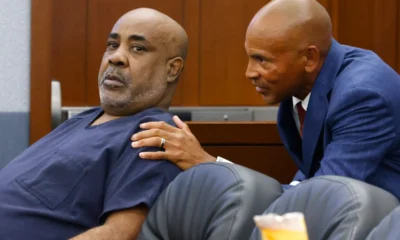
Inside the Manhattan courtroom, Combs, 55, appeared visibly shaken. Sitting quietly as his legal team whispered updates, he solemnly read a note passed by his attorney, Marc Agnifilo. Then, rising to leave, he turned toward his family in the gallery, placed his hand over his heart, and blew a kiss. “Love you,” he told his mother, Janice Combs. “I’ll be all right.”
Moments later, U.S. Marshals escorted him out of the courtroom.
The Charges That Could End Diddy’s Empire
The racketeering conspiracy charge is arguably the most complex and damning. To convict, jurors must agree not only that Diddy operated a criminal enterprise, but also that he committed specific predicate crimes such as drug distribution, kidnapping, or arson — all under the umbrella of a coordinated scheme.
The racketeering charge is built around the RICO Act, originally designed to dismantle organized crime families but now applied to a growing number of high-profile celebrities and executives accused of systemic abuse.
While the jury reached a consensus on the four other counts, a conviction for sex trafficking alone carries a minimum of 15 years and up to life in federal prison. The prostitution transportation charges could add another 10 years to his sentence.
Cassie’s Testimony Looms Large
Jurors requested to rewatch pivotal testimony from Diddy’s former girlfriend Cassie, born Casandra Ventura, whose accounts formed the emotional backbone of the prosecution’s case.
Cassie told the court that in 2016, Diddy beat, kicked, and dragged her through a Los Angeles hotel hallway, an assault allegedly captured on security footage. In another disturbing incident from 2013, she testified that Diddy threw her off a yacht in Cannes and later threatened to release explicit footage of her.
Another prosecution witness, stripper Daniel Phillip, described Cassie as “terrified” during a New York encounter, suggesting physical abuse had just occurred moments before. Phillip recalled warning her, “You’re in real danger,” but Cassie tried to reassure him: “I’m fine. I’ll be OK.”
Defense: “This Is About Lifestyle, Not Crime”
Xavier Donaldson, another lead defense attorney for Diddy, insists the case is an overreach — an attempt to criminalize Combs’ consensual swinger lifestyle rather than to prove actual federal felonies.
“This is not a racketeering enterprise. This is not the mob,” said Donaldson outside the courthouse. “What you have here is adult relationships, some painful moments, but not federal crimes.”
Notably, Combs chose not to take the stand, relying instead on aggressive cross-examination tactics to challenge the credibility of over 30 prosecution witnesses.
Jury Challenges and Internal Friction
From the start of deliberations, there were signs of tension inside the jury room. Just one hour in, the jury foreperson sent a note to the judge flagging concerns about a juror who allegedly “cannot follow the court’s instructions.”
Judge Subramanian responded by reminding the jury of their duties, emphasizing impartiality, and encouraging full engagement in the process.
Deliberations will continue Wednesday with pressure mounting from both the Department of Justice and a watching public eager for closure on a case that has captivated the music and entertainment world.
A Fall from Grace?
Once a titan of the hip-hop industry and founder of Bad Boy Records, Diddy has built an empire spanning fashion, vodka, television, and even political activism. But the trial now threatens to unravel his legacy — and potentially send him to prison for life.
Should the jury return a guilty verdict on the racketeering charge, Diddy would be one of the most prominent American entertainers ever convicted under federal RICO statutes, joining the likes of Suge Knight and others entangled in crime and controversy.
As deliberations resume, one question hangs in the air:
Will Sean “Diddy” Combs be remembered as a music mogul — or a criminal mastermind?




Crime
Man Accused in Tupac Shakur Killing Asks Judge to Exclude Critical Evidence
Duane “Keffe D” Davis’ legal team says prosecutors exaggerated his past to paint him as a dangerous figure, as the decades-old Tupac Shakur murder case takes a crucial legal turn.

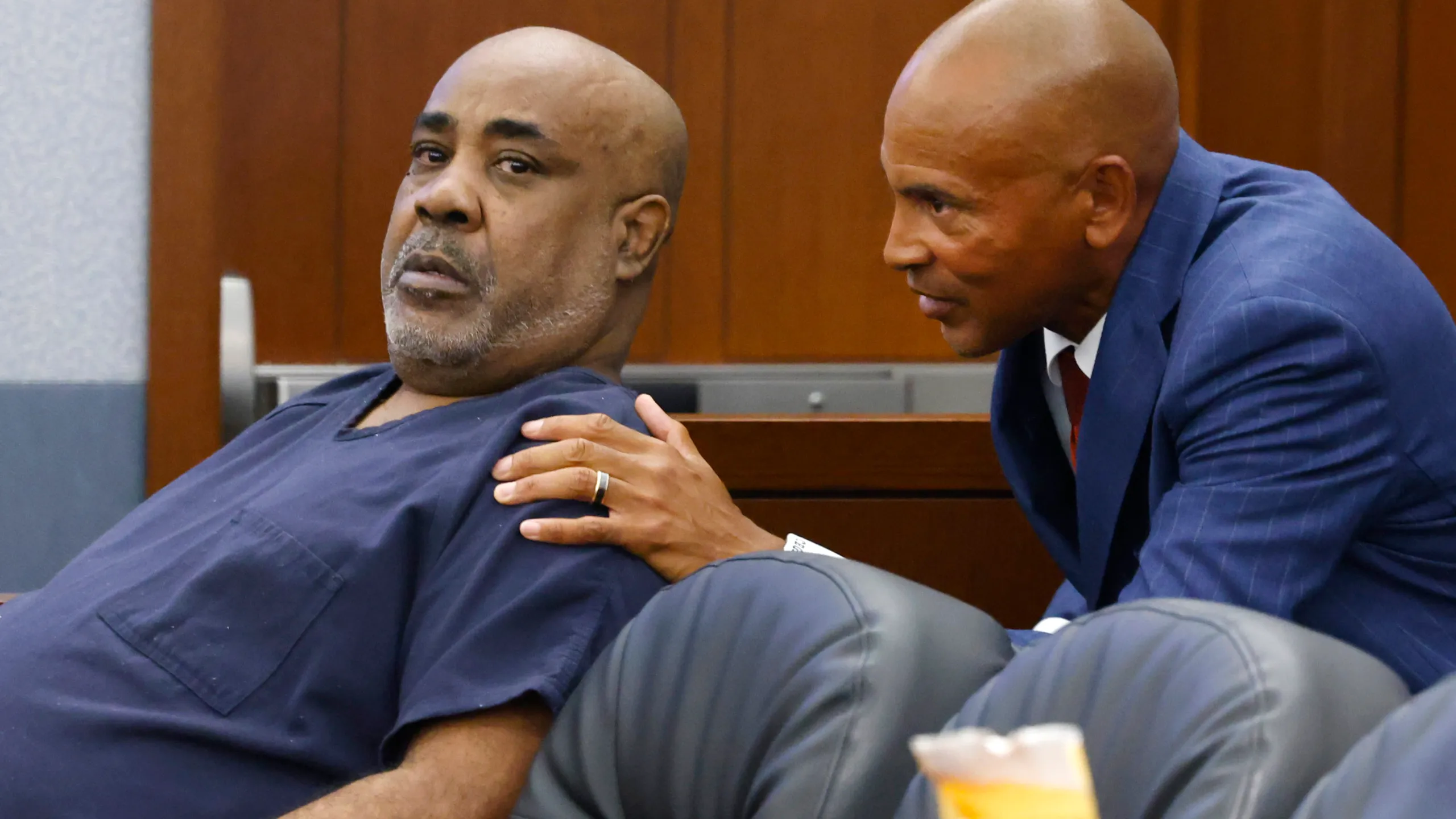
Nearly three decades after the fatal shooting of Tupac Shakur, the only man ever charged in connection with the iconic rapper’s death is now asking a court to slam the brakes on what prosecutors can show a jury.
Duane Davis, widely known as Keffe D, has filed a motion seeking to suppress key evidence in the high-profile case, arguing that the judge who allowed the prosecution to move forward relied on what his attorneys call a “misleading portrait” of Davis as a violent drug dealer.
The filing, according to court documents, claims that prosecutors leaned heavily on Davis’ past statements and alleged criminal associations to justify the charges—without sufficiently tying those claims to the 1996 drive-by shooting that killed Shakur. His defense insists this framing unfairly prejudices the court and any potential jury before the case even reaches trial.
ALSO READ : “She Never Made It Out…” Albany House Fire Claims Woman’s Life as Family Pleads for Help to Bring Her Home
A case frozen in time — until now
Shakur was shot multiple times while riding in a BMW in Las Vegas after attending a boxing match in September 1996. He died six days later, at just 25, leaving behind a musical legacy that still shapes hip-hop culture worldwide. For years, the killing fueled conspiracy theories, documentaries, and books, but no criminal charges were filed—until 2023, when Davis was arrested.
Prosecutors allege Davis orchestrated the shooting from the front passenger seat of the car involved, a claim largely built on his own past interviews and memoir-like statements. Davis, however, has pleaded not guilty.
Defense pushes back: “Character assassination”
In the latest motion, Davis’ lawyers argue that the state’s narrative leans too heavily on character evidence—painting him as a longtime gang-affiliated drug trafficker—to convince the court he was capable of murder. They say this approach crosses a legal line.
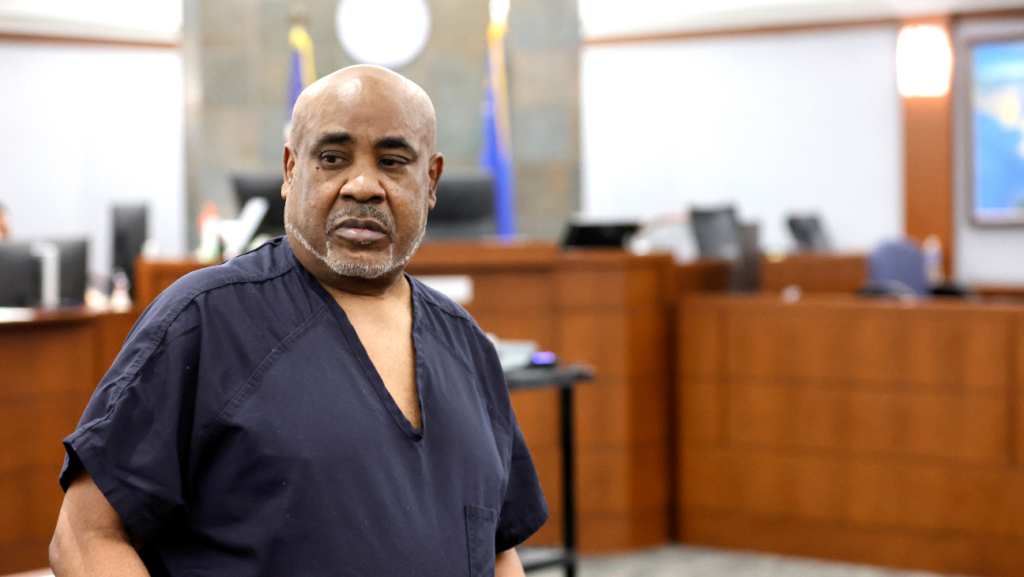
According to the defense, the judge who previously upheld the charges relied on a version of Davis’ life that was “inflated and selectively presented,” potentially violating his right to a fair trial. They want certain statements, recordings, and references to his alleged criminal past excluded, contending that they are more prejudicial than probative.
Legal experts note that if the court agrees, it could significantly narrow what prosecutors are allowed to present, forcing them to rely on a much tighter set of facts directly linked to Shakur’s killing.
Prosecutors stand firm
The state has countered that Davis’ own words—given voluntarily over many years—are central to understanding his alleged role. They argue that context matters and that his background helps explain motive, opportunity, and credibility.
This clash sets the stage for what could be one of the most consequential pretrial rulings in the case. A decision in Davis’ favor would not end the prosecution, but it could weaken a case that already hinges on events nearly 30 years old.
Why this moment matters
For fans of Tupac Shakur, the case represents the closest the justice system has come to addressing one of music’s most haunting unsolved murders. For the courts, it’s a reminder of how fragile cold cases can be—especially when built on memories, interviews, and reputations shaped long after the crime itself.
As the judge weighs whether the evidence crosses the line from context to character assassination, one thing is clear: the outcome of this motion may determine whether the Tupac Shakur murder trial unfolds before a jury—or quietly unravels before it ever begins.
Crime
“A Misleading Portrait”: Man Accused in Tupac Shakur Killing Moves Court to Block Key Evidence…
Duane “Keffe D” Davis’ legal team says prosecutors exaggerated his past to paint him as a dangerous figure, as the decades-old Tupac Shakur murder case takes a crucial legal turn.
Nearly three decades after the fatal shooting of Tupac Shakur, the only man ever charged in connection with the iconic rapper’s death is now asking a court to slam the brakes on what prosecutors can show a jury.
Duane Davis, widely known as Keffe D, has filed a motion seeking to suppress key evidence in the high-profile case, arguing that the judge who allowed the prosecution to move forward relied on what his attorneys call a “misleading portrait” of Davis as a violent drug dealer.
The filing, according to court documents, claims that prosecutors leaned heavily on Davis’ past statements and alleged criminal associations to justify the charges—without sufficiently tying those claims to the 1996 drive-by shooting that killed Shakur. His defense insists this framing unfairly prejudices the court and any potential jury before the case even reaches trial.
ALSO READ : “She Never Made It Out…” Albany House Fire Claims Woman’s Life as Family Pleads for Help to Bring Her Home
A case frozen in time — until now
Shakur was shot multiple times while riding in a BMW in Las Vegas after attending a boxing match in September 1996. He died six days later, at just 25, leaving behind a musical legacy that still shapes hip-hop culture worldwide. For years, the killing fueled conspiracy theories, documentaries, and books, but no criminal charges were filed—until 2023, when Davis was arrested.
Prosecutors allege Davis orchestrated the shooting from the front passenger seat of the car involved, a claim largely built on his own past interviews and memoir-like statements. Davis, however, has pleaded not guilty.
Defense pushes back: “Character assassination”
In the latest motion, Davis’ lawyers argue that the state’s narrative leans too heavily on character evidence—painting him as a longtime gang-affiliated drug trafficker—to convince the court he was capable of murder. They say this approach crosses a legal line.
According to the defense, the judge who previously upheld the charges relied on a version of Davis’ life that was “inflated and selectively presented,” potentially violating his right to a fair trial. They want certain statements, recordings, and references to his alleged criminal past excluded, contending that they are more prejudicial than probative.
Legal experts note that if the court agrees, it could significantly narrow what prosecutors are allowed to present, forcing them to rely on a much tighter set of facts directly linked to Shakur’s killing.
Prosecutors stand firm
The state has countered that Davis’ own words—given voluntarily over many years—are central to understanding his alleged role. They argue that context matters and that his background helps explain motive, opportunity, and credibility.
This clash sets the stage for what could be one of the most consequential pretrial rulings in the case. A decision in Davis’ favor would not end the prosecution, but it could weaken a case that already hinges on events nearly 30 years old.
Why this moment matters
For fans of Tupac Shakur, the case represents the closest the justice system has come to addressing one of music’s most haunting unsolved murders. For the courts, it’s a reminder of how fragile cold cases can be—especially when built on memories, interviews, and reputations shaped long after the crime itself.
As the judge weighs whether the evidence crosses the line from context to character assassination, one thing is clear: the outcome of this motion may determine whether the Tupac Shakur murder trial unfolds before a jury—or quietly unravels before it ever begins.
Crime
“Police Firearms Discharge Is Rare…” Man Shot Dead After Armed Confrontation Following Crash in Thetford
Norfolk Police confirm independent investigation after officers fatally shoot suspect believed to be holding a handgun


A late-night road collision in eastern England escalated into a fatal police shooting on Sunday, leaving a man dead and a community searching for answers. According to Norfolk Police, the incident unfolded after a two-vehicle crash in Thetford, when officers encountered a man believed to be armed with a handgun.
Police were first alerted to the crash on London Road at approximately 8:25 pm GMT, following reports of a collision involving two vehicles. Officers arriving at the scene were told that one of the drivers had fled on foot, carrying what witnesses described as a firearm.
Armed response officers were deployed shortly afterward. The suspect was located a short distance from the crash site and was shot by police. Despite emergency medical efforts, he was pronounced dead at the scene.
Independent watchdog steps in
In line with UK protocol for fatal police shootings, the case has been formally referred to the Independent Office for Police Conduct (IOPC), which will independently assess the actions taken by officers.
Assistant Chief Constable David Buckley acknowledged the seriousness of the incident and the concern it may cause locally.
“We understand this incident will cause concern in the community,” Buckley said. “While our highly trained armed officers respond to hundreds of firearms-related calls each year, incidents where police discharge firearms are thankfully incredibly rare.”
He added that Norfolk Police are fully cooperating with investigators and have already committed to handing over body-worn camera footage and 999 emergency call recordings to ensure transparency.

Roads closed, questions remain
Following the shooting, the A11 road was closed in both directions between the Thetford Ranges and Brandon Road roundabouts, causing significant disruption to traffic in the area. Authorities have not yet indicated when the road will fully reopen.
Police also confirmed that no other suspects are being sought, suggesting the incident was contained to a single individual.
A rare but serious moment
Fatal police shootings remain uncommon in the United Kingdom, where most officers do not routinely carry firearms. When such incidents occur, they often spark intense public scrutiny and debate over the use of force, accountability, and public safety.
As the IOPC investigation progresses, further details are expected to emerge about what led officers to open fire and whether the perceived threat justified lethal force. Until then, officials say patience and due process are essential.
For residents of Thetford, the incident has cast a heavy shadow over what began as an ordinary Sunday evening — turning a routine traffic collision into a case that will now be examined at the highest levels of police oversight.
For more Update- DAILY GLOBAL DIARY

“He-Man Wears a Suit…”: Why Nicholas Galitzine’s Masters of the Universe Trailer Has Fans Talking

Camilla Läckberg Isn’t Done Yet… The Queen of Swedish Noir Eyes Film, TV and a Bold Plan to ‘Conquer America’

“Screaming, Crying, Almost Throwing Up”… Sundance Insiders Reveal the Untold Chaos Behind America’s Most Influential Film Festival
From Swedish Noir to Hollywood Dreams Camilla Läckberg Has a Bigger Plan in Motion
When Sundance Nearly Fell Apart Insiders Recall the Chaos Behind the World’s Most Influential Film Festival

1-Iran Issues Dire Warning to Israel and Defies Trump on Nukes: “We’re Ready to Strike Deep Inside”

Donald Trump’s net worth reveals the fortune behind the former US President and business mogul

Caitlin Clark Sidelined with Quad Strain, Set to Miss Two Weeks of WNBA Action

Elon Musk Breaks Ranks with Trump Over ‘Big, Beautiful’ Tax Bill

“Tomás Rodríguez Net Worth 2025: Panama’s Gold Cup Goal‑Machine’s Surprising Fortune Revealed”

Miss Jamaica Suffers Terrifying Fall Off Miss Universe Stage; Rushed to Hospital on Stretcher in Viral Video

Moana Live-Action Teaser Sparks Outrage as Fans Call Disney’s Move a ‘Clear Money Grab’ — What Went Wrong?

Ryan Gosling’s Project Hail Mary Trailer Stuns Fans with a Mysterious Alien Ally and a Mission That Could Save Earth

Apple delays Jessica Chastain thriller The Savant about domestic extremism after recent US violence

Avatar 3, Fire and Ash trailer reveals Jake Sully’s family facing terrifying new Na’vi enemies with deadly fire powers
-
 Entertainment6 days ago
He-Man Wears a Suit Now… Nicholas Galitzine’s ‘Masters of the Universe’ Trailer Drops a Shock Fans Didn’t See Coming
-
 Entertainment1 week ago
Brazil Eyes Oscar History Again… ‘The Secret Agent’ Scores Best Picture Nomination as Wagner Moura Stuns Hollywood
-
 Entertainment4 days ago
“Comedy Needs Courage Again…”: Judd Apatow Opens Up on Mel Brooks, Talking to Rob Reiner, and Why Studio Laughs Have Vanished
-

 Entertainment1 week ago
Box Office Shocker as Chris Pratt’s ‘Mercy’ Knocks ‘Avatar 3’ Off the Top but Nature Had Other Plans…
-

 Entertainment6 days ago
Oscars Go Global in a Big Way as This Year’s Nominations Signal a New Era: ‘The Academy Is Finally Looking Beyond Hollywood…’
-

 Entertainment1 week ago
Michael Bay Makes a Power Move… Blockbuster Director Signs with CAA in a Deal That’s Turning Heads
-
 Entertainment6 days ago
“Dangerously Kinky… and Darkly Funny”: Olivia Wilde and Cooper Hoffman Push Boundaries in ‘I Want Your Sex’
-

 Entertainment1 week ago
“I Thought I’d Pass Out”… Sundance Veterans Reveal the Nerves, Breakdowns and Breakthroughs Behind Indie Cinema’s Biggest Stage