
Entertainment
Kennedy Center Closure Sparks Fresh Legal Battle
A sudden closure intensifies the dispute over Donald Trump’s name and the institution’s future.


A sudden decision to close most of Washington’s John F. Kennedy Center for the Performing Arts has opened a fresh and potentially explosive chapter in the legal battle surrounding one of America’s most prominent cultural institutions.
The Kennedy Center’s board voted on Tuesday to close most of the venue immediately, citing safety concerns and the need for extensive renovations. The vote came only hours after US District Judge Christopher Cooper issued an injunction preventing the board from putting President Donald Trump’s name on the building or its grounds without approval from Congress.
According to the court, the board does not have the authority to install a memorial honouring Trump—or any other person—at the Kennedy Center without congressional approval. The US Department of Justice has appealed the decision.
The timing of the closure vote immediately raised questions about whether renovations were the sole reason for the move or whether the decision was connected to the courtroom setback.
ALSO READ : Sen. Elizabeth Warren Calls It a ‘Cesspool of Corruption’ — Here’s Why Senators Are Now Fighting Back Against the DOJ’s Live Nation Deal That Left Every Fan Betrayed…
Joyce Beatty challenges the closure decision
Representative Joyce Beatty, an ex-officio member of the Kennedy Center’s board, strongly criticised the abrupt shutdown. The Ohio Democrat has been leading the legal challenge against attempts to rename or alter the identity of the institution.
Beatty suggested that the closure decision could now be brought before the court as part of the continuing dispute.
“For years, the Kennedy Center has planned to undergo phased renovations,” Beatty said, arguing that performances could have continued while repairs were carried out section by section.
She accused Trump of treating the institution as a personal branding project and described the board’s actions as a possible breach of its responsibility to protect the centre.
“Donald Trump only cares about the Kennedy Center for his vanity,” Beatty said. She added that Congress created the venue as a “living memorial” to President John F. Kennedy and vowed to continue defending it.
Trump’s name remains at the centre of the dispute
The board previously approved plans to recognise Trump on the Kennedy Center’s facade, including an inscription crediting him with restoring and renovating the building. It also proposed renaming the surrounding plaza in his honour.
However, Judge Cooper has repeatedly concluded that the institution’s legally established identity cannot be changed by its trustees acting alone. In an earlier ruling, the judge ordered Trump’s name removed after it had been placed on the building.
The latest court order again reinforced a simple but important point: because Congress named the centre, only Congress can authorise a change that memorialises another individual there.
Trump, who chairs the board, has maintained that the ageing building needs urgent repairs. He said the closure was required to address serious safety problems and claimed that he had contributed millions of dollars to an endowment supporting the institution.

The board has also pointed to a recent partial ceiling collapse as evidence that the building requires immediate attention. Congress has allocated approximately $257 million for renovation work, according to the Associated Press.
Why the shutdown could return to court
The legal issue is no longer limited to what name appears on the Kennedy Center’s facade. Lawyers may now examine whether the closure was approved through a lawful and independent process—and whether it was influenced by the ruling against Trump’s proposed recognition.
Renovating a major performing arts venue is not unusual. What makes this case different is the sequence of events: a judge blocked the naming plan, and the board approved an immediate shutdown only hours later.
Beatty’s side is likely to argue that the centre could be renovated in phases, allowing at least some performances and public programmes to continue. The board, meanwhile, is expected to maintain that closing most of the building is necessary to protect visitors, employees and performers.
The dispute leaves artists, workers, audiences and donors facing considerable uncertainty. Performances may be disrupted, renovation timelines remain unclear and another request for judicial intervention could arrive quickly.
For an institution created to honour a president and bring Americans together through the arts, the Kennedy Center has instead become the stage for a deeply political confrontation. Its next major performance may now take place not inside a concert hall, but inside a federal courtroom.











Entertainment
The Story Behind ‘Artificial’: Amazon’s Withdrawal and Neon’s Rescue
Andrew Garfield and Luca Guadagnino discuss the ambitious Sam Altman film and its unexpected journey from Amazon to Neon.

A film about powerful technology executives became caught up in the business relationships surrounding them.
Luca Guadagnino’s Artificial, starring Andrew Garfield as Sam Altman, was developed at Amazon MGM Studios. But when the studio decided against releasing it, the filmmakers faced an uncertain future. Neon eventually acquired worldwide theatrical distribution rights, giving the project a route to audiences.
The move attracted scrutiny because of Amazon’s financial relationship with OpenAI. TheWrap reported that Amazon’s withdrawal followed a $50 billion investment in the AI company through a cloud computing partnership.
That timing prompted questions about conflicting commercial interests. It does not, however, establish the reason for the studio’s decision. Amazon’s public explanation was that the film would benefit from another distributor, while expressing support for Guadagnino and helping the production find a new home.
ALSO READ : Emmy Nominations Announcement Gets a Star Twist… Liza Colón-Zayas & Jeff Hiller Set to Reveal 2026 TV Nominees
The people behind the technology
Artificial explores the relationship between Altman and OpenAI co-founder Ilya Sutskever, played by Yura Borisov. Its dramatic territory is the collision between idealism, ambition and the consequences of building increasingly powerful technology.
According to Vulture’s account, screenwriter Simon Rich developed the project with urgency, and filming took place largely in northern Italy. The production’s emphasis on personal relationships gives its technological subject a recognisably human centre: people making decisions whose consequences extend far beyond themselves.
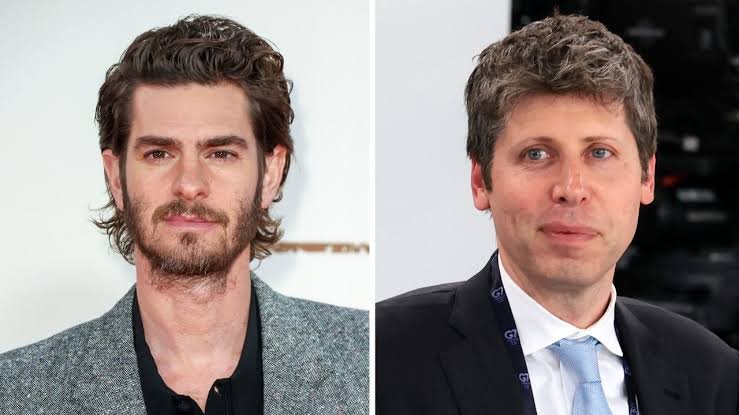
Garfield’s transformation went beyond appearances
In an interview with The Hollywood Reporter, Guadagnino described abandoning elaborate facial prosthetics after early tests. Garfield instead worked with Altman’s movements, posture and walk, supported by restrained makeup.
The director also chose to shoot on 35mm film, placing live performances at the centre of a story about artificial intelligence. Producer Jennifer Fox told the publication that the film’s assertions underwent extensive vetting. That remains the production’s account of its research process, rather than an independent endorsement of every dramatised scene.
A new home, and an unresolved question
Garfield welcomed the fact that Amazon allowed the film to move elsewhere. Fox, meanwhile, described the withdrawal as surprising after a collaborative production relationship.
Neon’s involvement resolved the immediate distribution problem. The wider question remains open: how freely can filmmakers examine influential companies when those companies also help finance and distribute entertainment? Artificial’s journey has made that question part of the conversation before audiences even enter the cinema.
Entertainment
Meet David Ellison’s Leadership Picks for Hollywood’s New Giant
The leadership announcement offers a first look at who will oversee the next chapter of Paramount–Warner Bros.

The next chapter for Paramount and Warner Bros. Discovery now has a leadership roster — and several familiar names will be taking on considerably bigger responsibilities.
David Ellison and Ynon Kreiz announced their senior executive team on October 5, ahead of the anticipated completion of Paramount’s acquisition of Warner Bros. Discovery. The combined company will be called Skydance, with executives from both businesses overseeing its film, television, streaming and news operations. The appointments are contingent on the transaction closing.
The approximately $110 billion deal is expected to close on October 6, according to TheWrap. The announcement offers a clearer picture of how Ellison intends to run the enlarged business: retain established creative leaders while placing them within a new corporate structure.
ALSO READ : Emmy Nominations Announcement Gets a Star Twist… Liza Colón-Zayas & Jeff Hiller Set to Reveal 2026 TV Nominees
Bigger responsibilities for film and streaming chiefs
Dana Goldberg and Josh Greenstein will become co-chairs of the Skydance Motion Picture Group, overseeing a film portfolio that brings together Paramount Pictures and Warner Bros..
Meanwhile, Casey Bloys will serve as co-chair and chief content officer of Skydance’s direct-to-consumer division. George Cheeks will hold the corresponding creative leadership position at Skydance TV.
JB Perrette will span both divisions as co-chair and chief business officer, pairing the content leaders with an executive responsible for the commercial side of television and streaming.
For audiences, these appointments matter because the executives will help shape what gets commissioned, produced and distributed. The announcement itself does not establish changes to subscription prices, release schedules or individual programmes.
CNN and CBS News keep separate leadership
One closely watched decision concerns the company’s newsrooms.
Mark Thompson will remain chairman and editor-in-chief of CNN Worldwide, while Bari Weiss stays editor-in-chief of CBS News. Both will report directly to Ellison and Kreiz.

Reuters reported that the arrangement addresses concerns about Weiss potentially overseeing CNN. Thompson also told employees that he expected to retain his existing editorial responsibilities. Questions remain about how the news operations will function within the combined business, including the practical authority of an editorial independence board agreed under an antitrust settlement.
DC leadership stays in place
For DC Studios, the announcement preserves the partnership of James Gunn and Peter Safran as co-chairmen.
At the corporate level, Ellison will concentrate on long-term strategy, creative direction and investment decisions. Kreiz will handle day-to-day management and integration, with Andy Gordon serving as president. Paramount said a fuller executive leadership list would follow after closing.
The roster provides continuity at several prominent brands. The harder work begins when those leaders must turn a combined organisation into a functioning business — balancing creative ambitions with the demands of integration.
Entertainment
Aaron Sorkin Takes On Mark Zuckerberg Again in ‘The Social Reckoning’
The film’s critique reaches beyond one executive to examine the wider implications of the business he built.
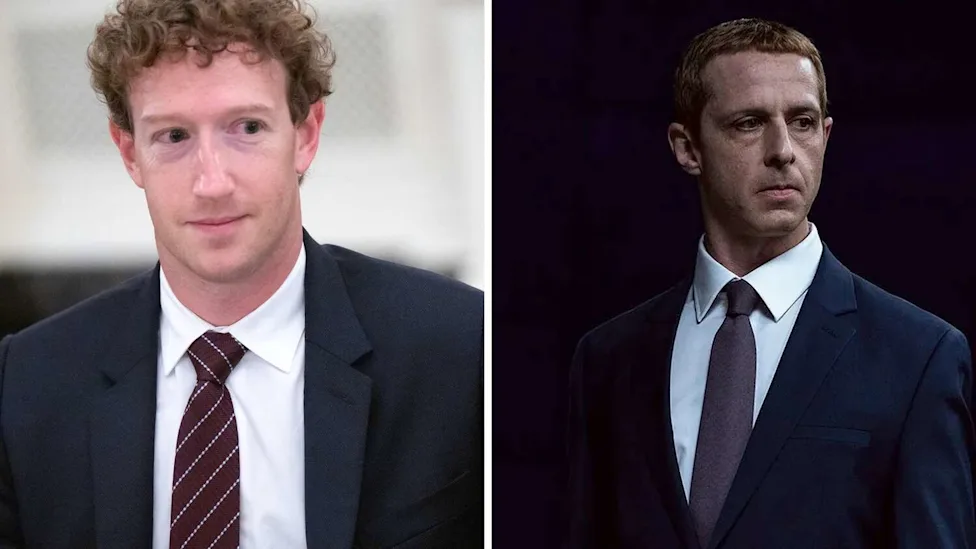
Sixteen years after The Social Network turned Facebook’s beginnings into gripping cinema, Aaron Sorkin is returning to the company with a different question: what happened after it became so powerful?
His new film, The Social Reckoning, centres on whistleblower Frances Haugen and journalist Jeff Horwitz. Sony Pictures describes it as a companion piece to the 2010 film, with a story built around an employee’s decision to expose closely guarded corporate information.
Jeremy Strong takes over the role of Mark Zuckerberg. The Hollywood Reporter characterises his portrayal as sharply villainous, particularly in its treatment of profit and responsibility.
ALSO READ : Emmy Nominations Announcement Gets a Star Twist… Liza Colón-Zayas & Jeff Hiller Set to Reveal 2026 TV Nominees
From Facebook’s beginnings to its public consequences
The film draws inspiration from The Facebook Files, the 2021 Wall Street Journal investigation based on internal documents disclosed by Haugen.
In an interview with Vanity Fair, Sorkin explained the distinction between his two films: “The Social Network was about how Facebook was invented, and The Social Reckoning is what it’s become.”
Mikey Madison plays Haugen, while Jeremy Allen White portrays Horwitz. Their characters bring the story’s attention to the people challenging the institution, rather than solely to the man who built it.
That change gives the premise its tension. An employee has information she believes the public should see. A reporter must investigate it. Across from them stands a company with the resources to defend itself.
A pointed screening location
The film’s first public preview also carried a striking connection to its predecessor.
The San Francisco Chronicle reported that Sorkin presented The Social Reckoning at the Cinemark Century Mountain View 16 on September 16, less than 10 miles from Meta’s headquarters. Current and former Facebook employees were among the audience.
It was the same theatre Zuckerberg had booked to watch The Social Network with friends and employees in 2010. The location brought Sorkin’s return to Facebook unusually close to the people and company behind the story.
A drama about the people who speak up
Sorkin both writes and directs the new film. Alongside its central trio, the cast includes Wunmi Mosaku, Betty Gilpin, Billy Magnussen and Bill Burr.
Sony’s synopsis places Haugen and Horwitz at the heart of a risky effort to reveal the social network’s secrets. It is a dramatisation inspired by real events; its characterisations should be understood as the filmmakers’ interpretation.
The premise makes accountability personal: who decides to speak, who listens, and what happens when challenging an employer becomes a public confrontation?
The Social Reckoning is scheduled to open in US theatres on October 9, 2026, according to Sony.

The Story Behind ‘Artificial’: Amazon’s Withdrawal and Neon’s Rescue

Meet David Ellison’s Leadership Picks for Hollywood’s New Giant

Aaron Sorkin Takes On Mark Zuckerberg Again in ‘The Social Reckoning’

Olivia Rodrigo’s Happiest Chapter Is Becoming Her Biggest Story

Years after ‘The Social Network,’ Zuckerberg’s story offers Hollywood a different set of questions about power.

1-Iran Issues Dire Warning to Israel and Defies Trump on Nukes: “We’re Ready to Strike Deep Inside”

Sen. Elizabeth Warren Calls It a ‘Cesspool of Corruption’ — Here’s Why Senators Are Now Fighting Back Against the DOJ’s Live Nation Deal That Left Every Fan Betrayed…

Gucci bets on Demna to revive fading glamour as Milan fashion week opens with bold film surprise

Donald Trump’s net worth reveals the fortune behind the former US President and business mogul

“Tomás Rodríguez Net Worth 2025: Panama’s Gold Cup Goal‑Machine’s Surprising Fortune Revealed”

Miss Jamaica Suffers Terrifying Fall Off Miss Universe Stage; Rushed to Hospital on Stretcher in Viral Video

Moana Live-Action Teaser Sparks Outrage as Fans Call Disney’s Move a ‘Clear Money Grab’ — What Went Wrong?

Ryan Gosling’s Project Hail Mary Trailer Stuns Fans with a Mysterious Alien Ally and a Mission That Could Save Earth

Apple delays Jessica Chastain thriller The Savant about domestic extremism after recent US violence

Avatar 3, Fire and Ash trailer reveals Jake Sully’s family facing terrifying new Na’vi enemies with deadly fire powers
-

 Entertainment1 week ago
One Big Win for Taylor Swift, Seven for Madonna: Inside the 2026 VMAs
-

 Entertainment1 week ago
Beyoncé Ends Two-Year Music Silence With ‘Morning Dew’ Is a New Album Next?
-

 Entertainment1 week ago
‘Spider-Man: Brand New Day’ Breaks All-Time Domestic Box Office Record
-

 Entertainment1 week ago
Rosalía Turned the Kia Forum Into a Movie Set… Inside the Stunning ‘Lux’ Tour Performance That Left Los Angeles Spellbound
-

 Entertainment1 week ago
From Amazon to Neon: The Fight to Bring ‘Artificial’ to Audiences
-
 Entertainment1 week ago
Ella Hunt’s Breakout Year: How the Rising Star Is Conquering TV and Music
-

 Entertainment1 week ago
Tom Cruise’s ‘Digger’ Has Awards Ambitions—But Can It Deliver at the Box Office?
-
 Entertainment1 week ago
‘The Social Reckoning’ takes aim at an influential tech mogul, entering territory Hollywood rarely explores so directly.