
News
Million year old skull found in China may rewrite human evolution timeline and challenge our origins
A newly analyzed skull named Yunxian 2 suggests Homo sapiens may have emerged half a million years earlier than previously believed.


A startling new discovery from China is shaking the foundations of what we thought we knew about human origins. Scientists analyzing a skull believed to be around one million years old claim it suggests Homo sapiens – our own species – may have begun to emerge at least 500,000 years earlier than established timelines. If proven correct, this finding would fundamentally rewrite human history.
The fossil, known as Yunxian 2, was unearthed in Hubei Province decades ago but had long been categorized as belonging to Homo erectus, an early human ancestor. However, advanced computer modeling and 3D reconstructions have revealed new insights. Researchers now believe the skull belongs to Homo longi, a sister species on the same evolutionary level as Neanderthals and Homo sapiens.

“Unbelievable” results
The research, published in the prestigious journal Science, was conducted by a team from Fudan University and the UK’s Natural History Museum. Professor Xijun Ni, who co-led the study, admitted that the team was initially skeptical.
“From the very beginning, when we got the result, we thought it was unbelievable. How could that be so deep into the past?” he said. “But we tested it again and again, and we are now confident about the result. We’re actually very excited.”
Professor Chris Stringer of the Natural History Museum added that the find “totally changes our understanding of human evolution.” He suggested that fossils of million-year-old Homo sapiens may already exist, waiting to be identified.

A longer coexistence of human species
If Yunxian 2 is indeed evidence of advanced human development a million years ago, it implies that Homo sapiens, Neanderthals, and Homo longi co-existed for as long as 800,000 years. This is far longer than previously thought, allowing for more interaction, cultural exchange, and even interbreeding.
This theory also helps resolve what scientists have called the “muddle in the middle” – a confusing gap where dozens of fossils dated between 800,000 and 100,000 years ago did not fit neatly into the human family tree. By pushing back the timeline, these fossils may now be grouped as sub-branches of the “big three” human species or their direct ancestors.
ALSO READ: Alyssa Milano removes breast implants says she finally feels free and authentic
Skepticism remains
Not all experts are fully convinced. Dr. Aylwyn Scally, an evolutionary geneticist at Cambridge University, warned that dating methods are notoriously difficult and that the findings, while plausible, remain uncertain.
“One has to be particularly tentative about the timing estimates,” Scally explained. “Even with the largest amount of genetic data, it is very difficult to place a time when these populations may have co-existed to within 100,000 years or more.”

A broader origin story
Traditionally, the earliest known fossils of Homo sapiens come from Africa, dating back around 300,000 years. But this Chinese discovery suggests Asia may have played a larger role in our evolutionary story than once believed. Still, scientists emphasize the need for more data before rewriting textbooks.
A new branch of the tree
Professor Ni compared human evolution to a tree with multiple branches: “There were three major branches – Homo sapiens, Neanderthals, and Homo longi. They may have interbred, and they coexisted for almost a million years. This is an unbelievable result.”
By using modern scanning techniques, his team restored Yunxian 2 and two other damaged skulls to their original shape, allowing for the groundbreaking reclassification.
For now, Yunxian 2 is being hailed as one of the most important fossil discoveries in decades. Whether it truly represents an earlier emergence of our species or a closely related branch of humanity, the debate it sparks is certain to reshape the future of human evolutionary research.


News
Total Lunar Eclipse Tonight: See the Blood Moon Across North America, Australia & Asia
The March 3, 2026 total lunar eclipse will turn the moon blood-red, with totality visible in multiple regions including North America, East Asia, and Australia.

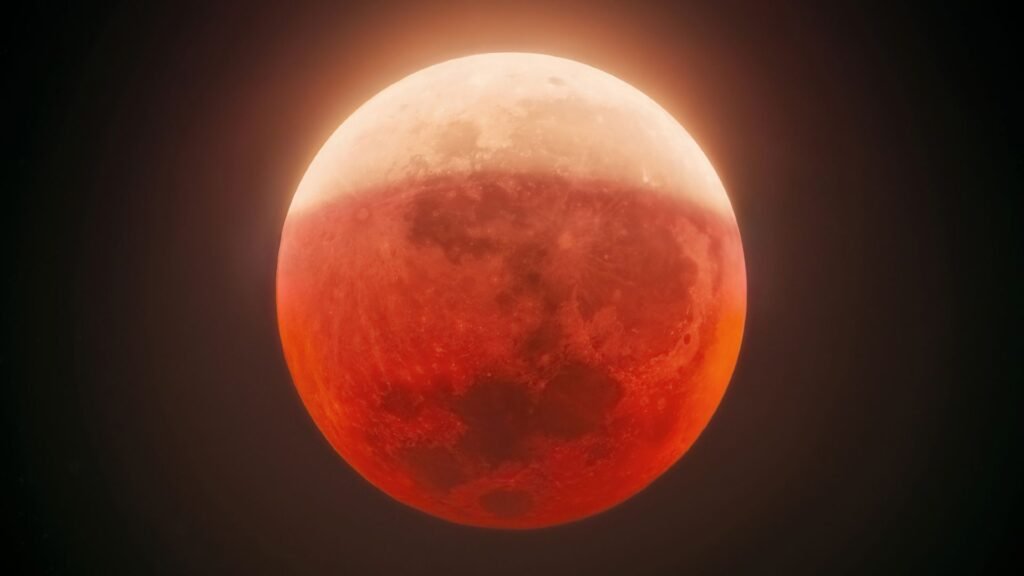
Astronomy enthusiasts and casual skywatchers alike are in for a celestial treat tonight as a total lunar eclipse — commonly referred to as a blood moon — will occur across North America, Australia, and East Asia.
During the eclipse, the moon will pass completely into Earth’s umbral shadow, turning a dramatic red as sunlight refracts through the planet’s atmosphere. The total phase of the eclipse — called totality — will begin at 6:04 a.m. EST (11:04 GMT) on March 3 and peak at 6:33 a.m. EST (11:33 GMT), lasting approximately 58 minutes.
Over 40% of the world’s population, more than three billion people, will be able to witness at least part of the total lunar eclipse, making it one of the most widely visible astronomical events of 2026. This eclipse is also the last total lunar eclipse until December 31, 2028 – January 1, 2029, giving skywatchers plenty of incentive to look up tonight.
Here are key totality viewing times for major regions and time zones:
- Eastern Time (U.S.): 6:04–7:02 a.m. EST – the moon will set during totality
- Central Time (U.S.): 5:04–6:02 a.m. CST
- Mountain Time (U.S.): 4:04–5:02 a.m. MST
- Pacific Time (U.S.): 3:04–4:02 a.m. PST
- Alaska: 2:04–3:02 a.m. AKST
- Hawaii: 1:04–2:02 a.m. HST
- Sydney, Australia: 10:04–11:02 p.m. AEDT (March 3)
- Brisbane, Australia: 9:04–10:02 p.m. AEST (March 3)
- Tokyo, Japan: 8:04–9:02 p.m. JST (March 3)
- Seoul, South Korea: 8:04–9:02 p.m. KST (March 3)
- Beijing, China: 7:04–8:02 p.m. CST (March 3)
- Hong Kong: 7:04–8:02 p.m. HKT (March 3)
Observers are encouraged to look toward the eastern sky before sunrise in North America and in the evening sky across Australia and East Asia. No telescope is required to enjoy the eclipse, though binoculars or a telescope can enhance the view of the moon’s surface and the gradual red shading during totality.
This blood moon is part of Saros cycle 133, a series of recurring lunar eclipses that span centuries, demonstrating the predictability and wonder of our solar system. Skywatchers are reminded to dress warmly in cooler regions and to bring a camera or smartphone if they want to capture this rare spectacle.
Whether you’re a casual stargazer or a dedicated astronomer, tonight’s total lunar eclipse promises a stunning display that connects billions of people worldwide under the same reddish moon.
News
Does the SNL Sketch Reveal a U.S.–U.K. Gap in Tourette’s Awareness?
After Saturday Night Live’s controversial sketch on Tourette’s, British advocates push back — highlighting stark differences in awareness, media portrayal and disability education between the United States and United Kingdom.
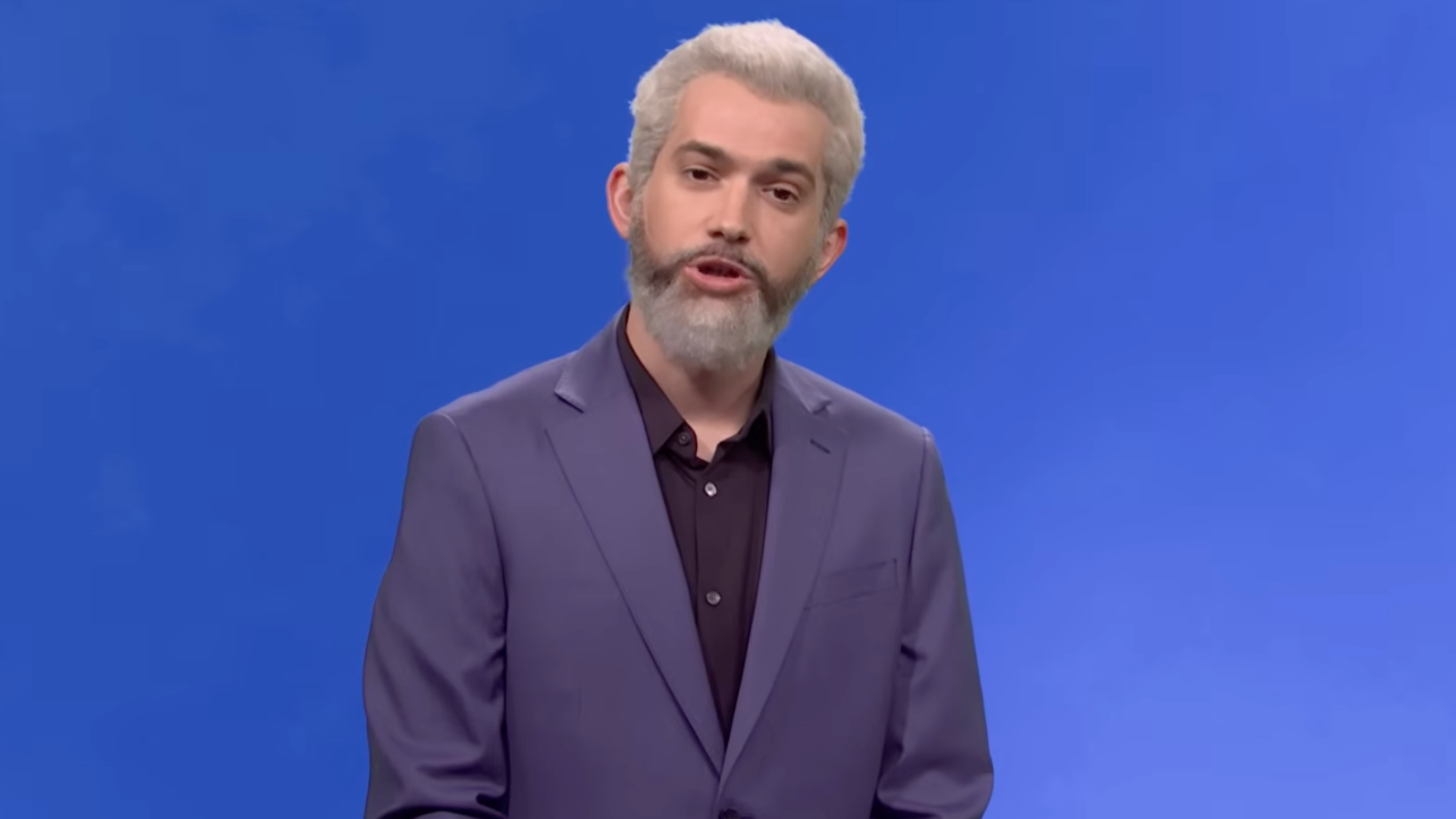
Last week’s Saturday Night Live (SNL) sketch mocking Tourette syndrome sparked intense backlash online — especially from disability advocates in the United Kingdom — and raised critical questions about transatlantic understanding of the neurological condition.
The sketch aired shortly after the deeply controversial moment at the BAFTA Film Awards, when Scottish campaigner John Davidson, who lives with Tourette’s, shouted a racial slur during the ceremony. While BAFTA issued an “unreserved apology” and Davidson expressed remorse if anyone took his tics as intentional, the incident renewed scrutiny on how society interprets involuntary neurological behavior.
Tourette’s syndrome is a neurological condition defined by sudden, involuntary movements or sounds called tics, which can include shouting and — occasionally — offensive words. The condition does not reflect the beliefs or character of those affected; rather, it is a complex and sometimes debilitating disability affecting many individuals worldwide.
The SNL segment, featuring cast members portraying controversial figures such as Mel Gibson, Bill Cosby and J.K. Rowling, suggested that Tourette’s was a convenient excuse for misconduct — a depiction that critics called insensitive, harmful and a misunderstanding of the condition. One line, delivered in character as Louis C.K., quipped that “Tourette’s sucks, especially if you get it in your penis,” eliciting thousands of comments and nearly one million YouTube views.
Up and down social media, reaction was swift. Many U.K. users lashed out, calling the joke “punching down” at a community still fighting stigma and misunderstanding. One widely shared post stated, “The difference between U.K. and U.S. responses has never been clearer,” referencing deep frustration over the sketch’s harmful portrayal and pointing to broader differences in disability education.
Reacting to the controversy, Tourette Scotland — a charity dedicated to destigmatizing the condition — posted an explanatory note tied to the sketch on X, clarifying that tics are involuntary and do not express a sufferer’s values or intentions. Supported by an influx of donations and website activity (many contributions made in Davidson’s name), the organization underscored its educational mission amid renewed public attention.
Similarly, Emma McNally, CEO of British charity Tourette’s Action, condemned SNL’s treatment of the issue as “never acceptable.” She emphasized that mocking a disability perpetuates harmful stereotypes and detracts from efforts to educate the public — a stance strongly echoed by disability advocates across the U.K. community.
These critical voices highlight that, although both countries share English‑language media environments, there exists a notable U.S.–U.K. gap in public understanding of Tourette’s syndrome. In Britain, Tourette’s has long been recognized and contextualized within media and cultural discourse, partly due to landmark works such as the 1989 BBC documentary John’s Not Mad, which followed the teenage Davidson growing up with Tourette’s. The documentary became a cultural touchstone, voted one of the best-ever BBC documentaries by public poll in 2005.
Davidson himself has been an outspoken advocate for awareness, including through projects like the BAFTA‑nominated film I Swear, released around this year’s ceremony. In a heartfelt message shared on Facebook, Davidson thanked supporters for solidarity, while acknowledging the painful week as a reminder that much work remains to improve understanding and empathy around Tourette’s — particularly in media portrayals that reach global audiences.
“The past week has reminded me that what I do raising awareness for such a misunderstood condition — there is still a long way to go,” Davidson wrote. “I will keep on keeping on until this is achieved.”
News
Donald Trump Confirms Attendance at 2026 White House Correspondents’ Dinner After Years of Boycott
The president says he will finally return to the high-profile gala, claiming journalists now “admit” he is one of the greatest presidents in U.S. history.

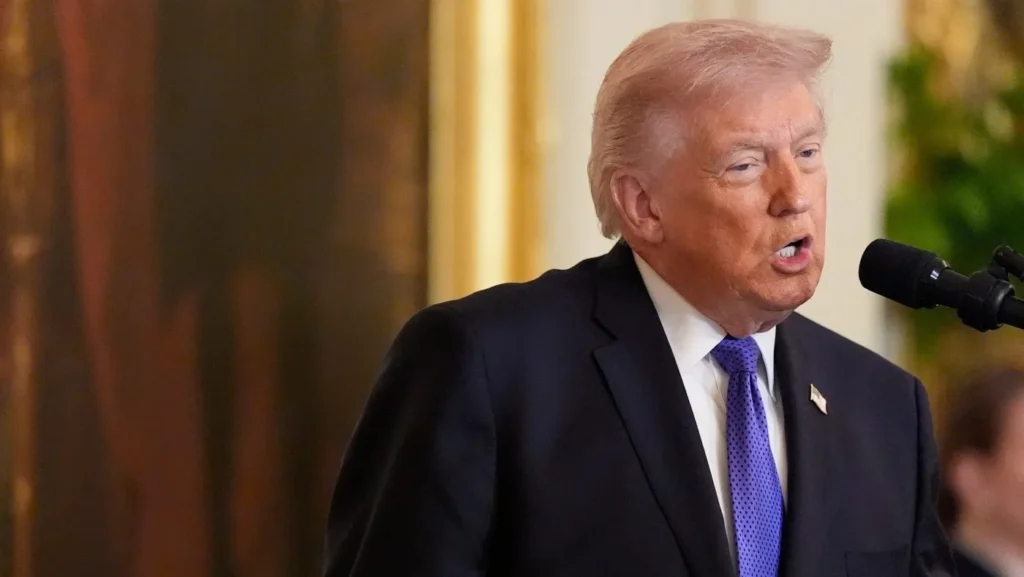
In a surprising shift, Donald Trump announced that he will attend the White House Correspondents’ Dinner for the first time as president, ending years of tension between his administration and the press corps.
Posting on Truth Social, Trump wrote that the White House Correspondents’ Association had asked him “very nicely” to be the honoree at the 2026 dinner. He emphasized that the tradition dates back to Calvin Coolidge and claimed journalists now recognize him as “one of the Greatest Presidents in the History of our Country.”
Trump asserted that he skipped the event during his first term due to what he described as “extraordinarily bad” and “FAKE NEWS” coverage. According to him, the animosity from the media began “from the beginning” of his presidency.
This year’s dinner will feature mentalist Oz Pearlman as the headliner — a break from the WHCD’s longstanding tradition of hiring comedians known for roasting sitting presidents. The WHCA’s decision follows last year’s controversy, when Amber Ruffin was initially selected to perform but was removed after criticism from the White House.
Before his presidency, Trump attended several WHCDs, including the widely discussed 2011 dinner. That night, then-President Barack Obama and comedian Seth Meyers delivered harsh jokes at Trump’s expense — an incident many believe fueled his decision to launch his presidential campaign in 2015.
The 2026 White House Correspondents’ Dinner is scheduled for April 25 in Washington, D.C., and Trump has promised it will be the “GREATEST, HOTTEST, and MOST SPECTACULAR DINNER OF ANY KIND, EVER.”

Trump Gives Iran 5 More Days — But Tehran Says There Were Never Any Talks to Begin With, as the World Braces for What Comes Next…

Colombian Military Plane With 110 Soldiers Crashes on Takeoff — As Another Airport Tragedy Strikes New York the Same Day…

Broadway Shake-Up: Samira Wiley Steps Away From ‘Proof’… Kara Young Steps In at the Last Moment

Broadway Surprise: Samira Wiley Drops Out of ‘Proof’… Kara Young Takes Center Stage

‘Dune 3’ Will Be a “Thriller”… Denis Villeneuve Drops a Big Hint as Zendaya & Robert Pattinson Join the Spotlight

1-Iran Issues Dire Warning to Israel and Defies Trump on Nukes: “We’re Ready to Strike Deep Inside”

Donald Trump’s net worth reveals the fortune behind the former US President and business mogul

“She Never Made It Out…” Albany House Fire Claims Woman’s Life as Family Pleads for Help to Bring Her Home

Caitlin Clark Sidelined with Quad Strain, Set to Miss Two Weeks of WNBA Action

“Tomás Rodríguez Net Worth 2025: Panama’s Gold Cup Goal‑Machine’s Surprising Fortune Revealed”

Miss Jamaica Suffers Terrifying Fall Off Miss Universe Stage; Rushed to Hospital on Stretcher in Viral Video

Moana Live-Action Teaser Sparks Outrage as Fans Call Disney’s Move a ‘Clear Money Grab’ — What Went Wrong?

Ryan Gosling’s Project Hail Mary Trailer Stuns Fans with a Mysterious Alien Ally and a Mission That Could Save Earth

Apple delays Jessica Chastain thriller The Savant about domestic extremism after recent US violence

Avatar 3, Fire and Ash trailer reveals Jake Sully’s family facing terrifying new Na’vi enemies with deadly fire powers
-

 Entertainment5 days ago
Cannes 2026 Hasn’t Announced a Single Film Yet — But the Whisper Network Is Already Pointing to These Names and It’s Exciting…
-

 Entertainment7 days ago
Oscars 2026 Red Carpet Shockers: Zendaya’s Late Arrival, Jessie Buckley’s Grace Kelly Tribute… and Chase Infiniti Owning the Night
-

 Entertainment6 days ago
Amy Poehler and Sterlin Harjo Are Getting One of Television’s Highest Honours — and the Reason Why Says Everything About Where Storytelling Is Headed…
-

 Politics1 week ago
“Trump Reveals ‘Early Stage Breast Cancer’ Diagnosis of Susie Wiles… But Says Her ‘Strength Says Everything’”
-

 Entertainment5 days ago
Almodóvar, Lars von Trier, Joel Coen and More — The Films That Could Own Cannes 2026 Are Already Generating Serious Buzz and the List Is…
-
 Entertainment1 week ago
The Oscars Are Already Being Called Before They Happen and Scott’s Final Feinberg Forecast Reveals a Shocking Front-Runner That Nobody Saw Coming…
-

 Entertainment5 days ago
Lollapalooza 2026 Just Dropped Its Most Surprising Lineup Yet — and the One Historic Thing Nobody Is Talking About Is the Real Story…
-

 Health1 week ago
“Kent Meningitis Tragedy: Second Student Dies as Outbreak Sparks Hospital Emergency…”