
Sports
Mitch Brown’s brave step makes history in AFL as Adam Simpson admits “there’s always improvement” in locker-room culture
After Mitch Brown revealed he is the first openly bisexual AFL player, his former coach Adam Simpson reflected on the “hyper-masculine” culture at West Coast Eagles, admitting past shortcomings while praising Brown’s courage.


Table of Contents
The AFL witnessed a groundbreaking moment this week when former West Coast Eagles defender Mitch Brown publicly came out as bisexual, becoming the league’s first player to do so. His announcement sparked a wave of reflection across the sport, especially from his former coach Adam Simpson, who admitted it forced him to look back at the locker-room environment during his tenure.
Speaking on SEN Radio, Simpson described Brown’s announcement as “brave” and acknowledged that the Eagles’ culture at the time was far from perfect. Brown himself described the club environment as “hyper-masculine,” a reality that made it difficult for him and, perhaps, others to truly be themselves.
“You start to reflect — and we all should do this — what was my leadership platform back then, and how were we as a club with a player who was obviously going through certain things that were uncomfortable?” Simpson said. “That probably just shows you that you think you’re going OK, but there’s always improvement.”

The brave voice of Mitch Brown
Brown, who played for West Coast until 2016, revealed that the highly masculine culture of AFL locker rooms had weighed heavily on him. His coming out is not just personal but also symbolic — a push for greater inclusivity in one of Australia’s most popular sports.
In AFL history, discussions of sexuality have been rare, with many players staying silent about their personal lives. Brown’s decision changes that, and experts believe it could pave the way for others.
Erik Denison, a behavioural scientist at Monash University, has studied homophobia in sports for over a decade. He called Brown’s comments “a landmark” because they openly connected a homophobic sporting environment with a player’s retirement. “We haven’t heard that kind of direct criticism before from other players who have come out,” Denison said. “So this is an important turning point.”
Adam Simpson’s reflection
For Simpson, who began coaching the Eagles in 2014, Brown’s honesty prompted him to reconsider his leadership at the time. He revealed that the club had attempted to change its culture around the mid-2010s by introducing the “accept and care” model, aimed at creating a more supportive environment.
“It’s generational as much as it’s education,” Simpson explained. “We’ll look back in another decade and say, ‘We were old-school in 2025.’ That’s the nature of evolving as people and as clubs.”
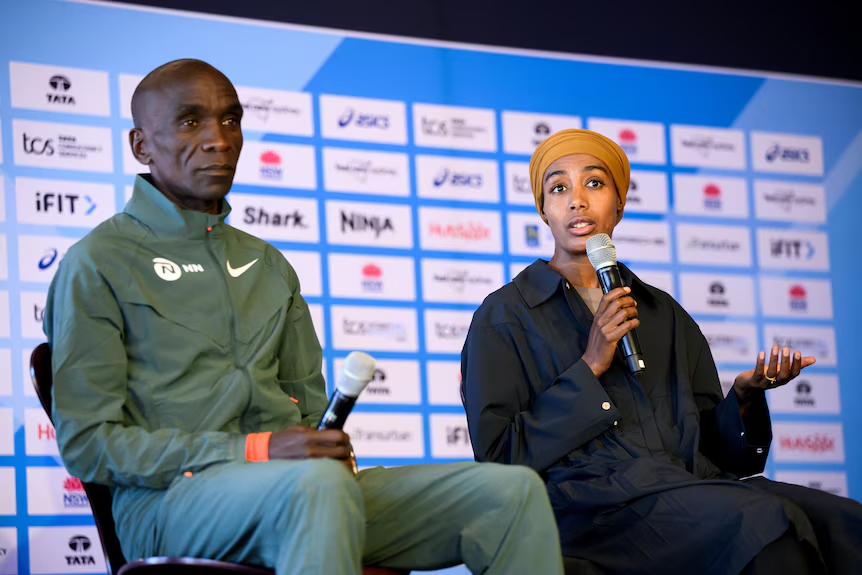
Simpson also linked Brown’s courage to the story of his former North Melbourne Kangaroos teammate Dani Laidley, a transgender woman who has spoken publicly about her struggles after being outed in 2020. “How brave — it’s fantastic … the ability to express yourself, a lot like Dani Laidley as well over the years,” Simpson said.
Other voices in AFL
Former Carlton Football Club and Brisbane Lions star Brendan Fevola also weighed in, saying AFL locker rooms were “very masculine” environments during his career between 1999 and 2010.
“I probably would have played with some players that were gay — and I don’t know because no one else has ever come out — but I’d have no problem with it,” Fevola said on The Fox’s Fifi, Fev & Nick show. “I think Mitch has started something that will encourage other people. He should be able to express himself. Hopefully, this encourages other players to say, ‘Well, if Mitch can do it, so can I.’”
For Fevola, the announcement shed light on what many players may have silently endured. “Imagine playing with that on your head and shoulders,” he added, pointing to the mental toll of hiding one’s identity in such an environment.
Why this matters
Sport has long been a reflection of broader society, and Brown’s declaration underscores how much progress is still needed. The AFL has made strides in addressing inclusivity, but cultural change is slow. Simpson’s honest admission — that even strong leaders might have missed the mark in creating safe spaces — shows that professional sport is beginning to recognize its responsibility.
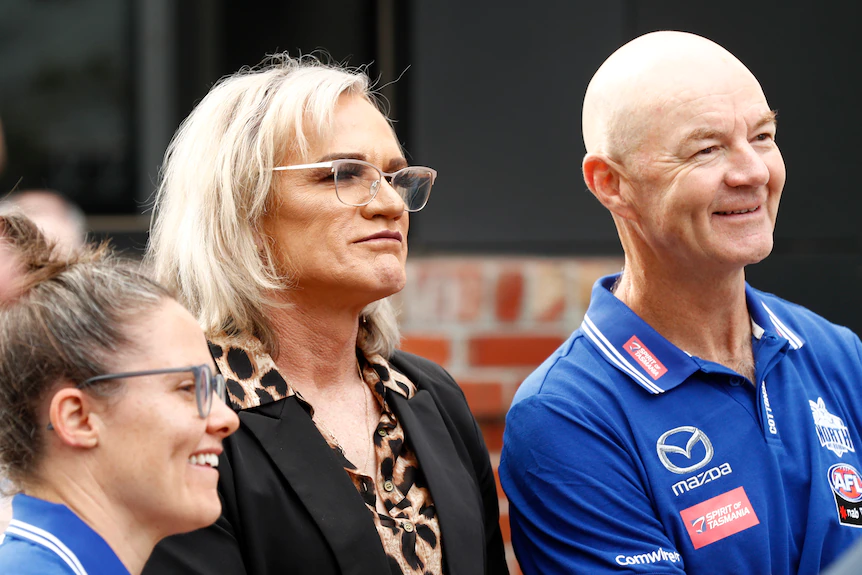
Brown’s step is likely to resonate not only with players but with fans who look up to AFL stars. For younger athletes questioning their own identity, his courage provides visibility and hope.
Denison believes the ripple effect could be significant: “What Brown has done is shine a light on the areas AFL needs to address. It’s not just about celebrating bravery; it’s about confronting the reasons players didn’t feel safe before.”
As more athletes share their truths, the “hyper-masculine” walls of professional locker rooms may continue to come down. And if the words of Simpson and Fevola are anything to go by, the AFL community appears ready to embrace change.
Brown’s journey may mark just the beginning of a new chapter in the AFL — one where players are truly free to be themselves, without fear of judgment or exclusion.
Visit our site for more news www.DailyGlobalDiary.com











Sports
Caleb Williams Impresses, but the Bears’ Late-Game Decisions Raise Eyebrows
One impossible touchdown changed everything — but Chicago’s season may have been decided by what happened next

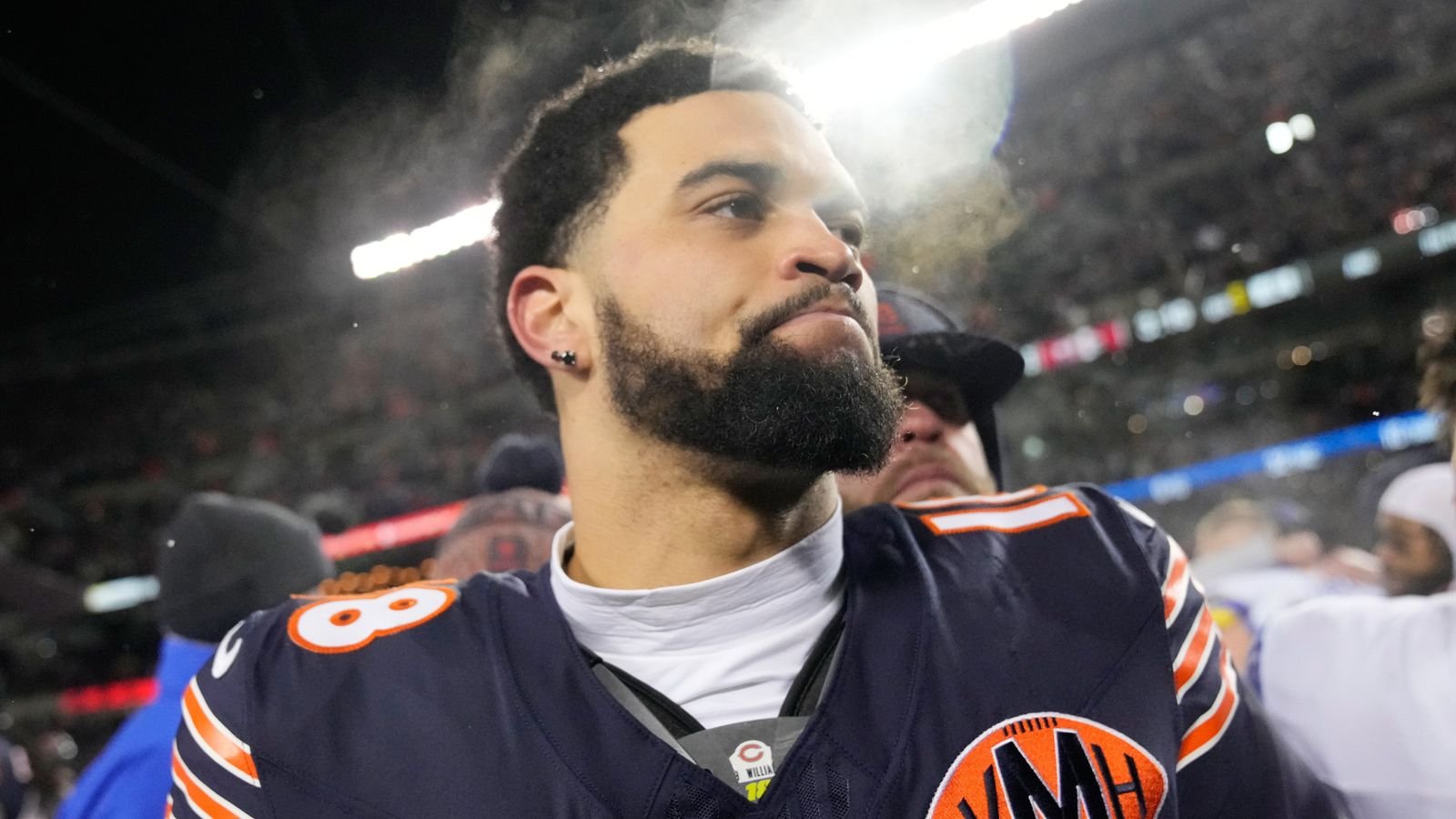
For one breathtaking moment, football stopped making sense.
With seconds left in a divisional-round playoff game, Caleb Williams launched a prayer — a 50-plus-yard, off-balance, back-foot moon shot — and somehow, impossibly, it found Cole Kmet in the end zone. It was the kind of touchdown that instantly joins NFL folklore, the sort of play fans remember for decades.
Suddenly, the Chicago Bears were one extra point away from tying the Los Angeles Rams — a scenario no one could have imagined just moments earlier.
And that’s when the question arrived, loud and unavoidable:
Why not go for two?
The dream-big argument
If Chicago converts the two-point try, the Rams are done. Season over. The Bears move one game away from the Super Bowl, potentially facing either a second-year quarterback or an injury replacement in the AFC. No matchup in the NFL is easy, but this was a window — and those windows don’t stay open long.
Ask Aaron Rodgers or Dan Marino how rare Super Bowl chances truly are. Between them, 38 seasons, one Super Bowl appearance each. Even greatness doesn’t guarantee multiple shots.
Momentum, belief, shock value — everything screamed end it now. One play. One decision. Push all the chips to the middle.
But football decisions aren’t made in the clouds. They’re made in film rooms.
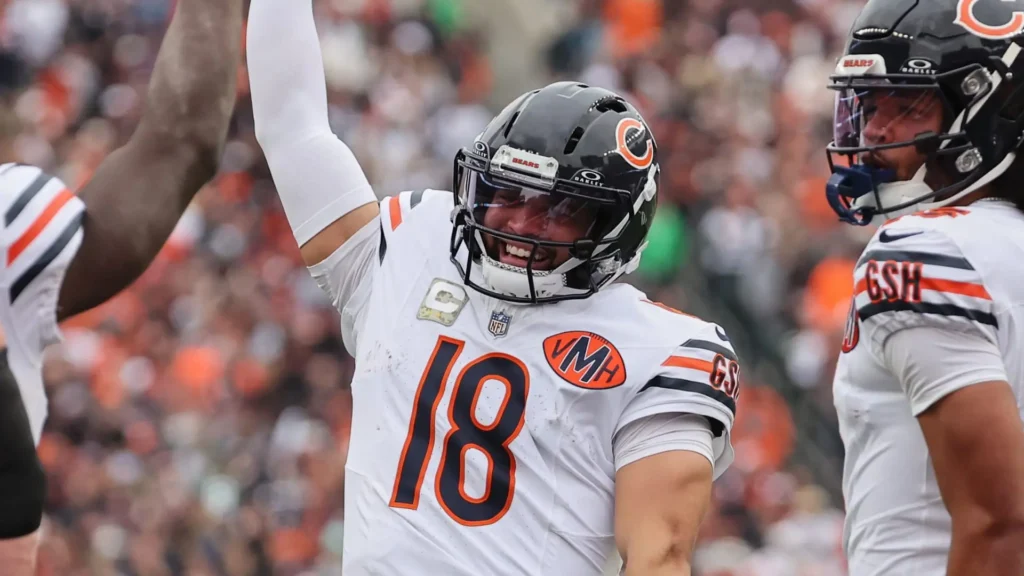
Why Chicago didn’t gamble
Offensive coordinator Ben Johnson didn’t flinch. Replays showed him calm, unmoved, almost indifferent to the miracle unfolding. He knew the touchdown created options — but also responsibility.
Because miracles don’t stack.
Just minutes earlier, Chicago had first-and-goal at the Rams’ 5-yard line. Three ineffective runs by De’Andre Swift and a failed fourth-down pass told Johnson everything he needed to know about his short-yardage confidence.
After the game, Johnson explained it plainly.
“Our goal-to-go situations hadn’t gone very cleanly,” he said. “Our inside-the-5 plan hadn’t worked out like we hoped. I just felt better about taking our chances in overtime.”
There was also time left — 13 seconds and two Rams timeouts. One explosive play, maybe a penalty, and Los Angeles could still have stolen it with a field goal even after a failed conversion.
So Chicago chose survival over glory.
How it unraveled anyway
The Bears lived to fight in overtime — and then watched their season collapse anyway. A brutal interception. A defensive breakdown. Game over.
And just like that, Williams-to-Kmet joined a heartbreaking fraternity: iconic plays that didn’t change the ending. Think Kurt Warner to Larry Fitzgerald in Super Bowl XLIII. Think Julio Jones and that impossible toe-tap in Super Bowl LI.
Legendary moments — frozen in time — attached to losses.
So… was it the wrong call?
Emotionally? Maybe.
Strategically? Probably not.
Coaches don’t get paid to chase vibes. They get paid to trust evidence. And Chicago’s evidence said a single, all-or-nothing snap wasn’t the best bet.
That doesn’t make it satisfying. It just makes it honest.

What this moment really means for Chicago
The Bears don’t leave this game empty-handed. They leave with something rarer than a win: belief.
You can’t build a franchise on miracle throws — but you can build a culture on refusing to quit. This team fought until the very last second, and that matters more than fans often admit.
Williams will be just 24 entering the 2026 season. Think about what he might look like at 27, 28, 29. There are no guarantees — Rodgers and Marino taught us that — but this is as good a foundation as any team could ask for.
Years from now, if Chicago is lucky, Williams-to-Kmet won’t be remembered as a cruel “what if.”
It will be remembered as the beginning.
Sports
A Strong Night for Caleb Williams Ends With Doubts About the Bears’ Late Decisions
One impossible touchdown changed everything — but Chicago’s season may have been decided by what happened next
For one breathtaking moment, football stopped making sense.
With seconds left in a divisional-round playoff game, Caleb Williams launched a prayer — a 50-plus-yard, off-balance, back-foot moon shot — and somehow, impossibly, it found Cole Kmet in the end zone. It was the kind of touchdown that instantly joins NFL folklore, the sort of play fans remember for decades.
Suddenly, the Chicago Bears were one extra point away from tying the Los Angeles Rams — a scenario no one could have imagined just moments earlier.
And that’s when the question arrived, loud and unavoidable:
Why not go for two?
The dream-big argument
If Chicago converts the two-point try, the Rams are done. Season over. The Bears move one game away from the Super Bowl, potentially facing either a second-year quarterback or an injury replacement in the AFC. No matchup in the NFL is easy, but this was a window — and those windows don’t stay open long.
Ask Aaron Rodgers or Dan Marino how rare Super Bowl chances truly are. Between them, 38 seasons, one Super Bowl appearance each. Even greatness doesn’t guarantee multiple shots.
Momentum, belief, shock value — everything screamed end it now. One play. One decision. Push all the chips to the middle.
But football decisions aren’t made in the clouds. They’re made in film rooms.
Why Chicago didn’t gamble
Offensive coordinator Ben Johnson didn’t flinch. Replays showed him calm, unmoved, almost indifferent to the miracle unfolding. He knew the touchdown created options — but also responsibility.
Because miracles don’t stack.
Just minutes earlier, Chicago had first-and-goal at the Rams’ 5-yard line. Three ineffective runs by De’Andre Swift and a failed fourth-down pass told Johnson everything he needed to know about his short-yardage confidence.
After the game, Johnson explained it plainly.
“Our goal-to-go situations hadn’t gone very cleanly,” he said. “Our inside-the-5 plan hadn’t worked out like we hoped. I just felt better about taking our chances in overtime.”
There was also time left — 13 seconds and two Rams timeouts. One explosive play, maybe a penalty, and Los Angeles could still have stolen it with a field goal even after a failed conversion.
So Chicago chose survival over glory.
How it unraveled anyway
The Bears lived to fight in overtime — and then watched their season collapse anyway. A brutal interception. A defensive breakdown. Game over.
And just like that, Williams-to-Kmet joined a heartbreaking fraternity: iconic plays that didn’t change the ending. Think Kurt Warner to Larry Fitzgerald in Super Bowl XLIII. Think Julio Jones and that impossible toe-tap in Super Bowl LI.
Legendary moments — frozen in time — attached to losses.
So… was it the wrong call?
Emotionally? Maybe.
Strategically? Probably not.
Coaches don’t get paid to chase vibes. They get paid to trust evidence. And Chicago’s evidence said a single, all-or-nothing snap wasn’t the best bet.
That doesn’t make it satisfying. It just makes it honest.
What this moment really means for Chicago
The Bears don’t leave this game empty-handed. They leave with something rarer than a win: belief.
You can’t build a franchise on miracle throws — but you can build a culture on refusing to quit. This team fought until the very last second, and that matters more than fans often admit.
Williams will be just 24 entering the 2026 season. Think about what he might look like at 27, 28, 29. There are no guarantees — Rodgers and Marino taught us that — but this is as good a foundation as any team could ask for.
Years from now, if Chicago is lucky, Williams-to-Kmet won’t be remembered as a cruel “what if.”
It will be remembered as the beginning.
Sports
Caleb Williams Did His Part But Did the Bears Overthink the Finish
One impossible touchdown changed everything — but Chicago’s season may have been decided by what happened next
For one breathtaking moment, football stopped making sense.
With seconds left in a divisional-round playoff game, Caleb Williams launched a prayer — a 50-plus-yard, off-balance, back-foot moon shot — and somehow, impossibly, it found Cole Kmet in the end zone. It was the kind of touchdown that instantly joins NFL folklore, the sort of play fans remember for decades.
Suddenly, the Chicago Bears were one extra point away from tying the Los Angeles Rams — a scenario no one could have imagined just moments earlier.
And that’s when the question arrived, loud and unavoidable:
Why not go for two?
The dream-big argument
If Chicago converts the two-point try, the Rams are done. Season over. The Bears move one game away from the Super Bowl, potentially facing either a second-year quarterback or an injury replacement in the AFC. No matchup in the NFL is easy, but this was a window — and those windows don’t stay open long.
Ask Aaron Rodgers or Dan Marino how rare Super Bowl chances truly are. Between them, 38 seasons, one Super Bowl appearance each. Even greatness doesn’t guarantee multiple shots.
Momentum, belief, shock value — everything screamed end it now. One play. One decision. Push all the chips to the middle.
But football decisions aren’t made in the clouds. They’re made in film rooms.
Why Chicago didn’t gamble
Offensive coordinator Ben Johnson didn’t flinch. Replays showed him calm, unmoved, almost indifferent to the miracle unfolding. He knew the touchdown created options — but also responsibility.
Because miracles don’t stack.
Just minutes earlier, Chicago had first-and-goal at the Rams’ 5-yard line. Three ineffective runs by De’Andre Swift and a failed fourth-down pass told Johnson everything he needed to know about his short-yardage confidence.
After the game, Johnson explained it plainly.
“Our goal-to-go situations hadn’t gone very cleanly,” he said. “Our inside-the-5 plan hadn’t worked out like we hoped. I just felt better about taking our chances in overtime.”
There was also time left — 13 seconds and two Rams timeouts. One explosive play, maybe a penalty, and Los Angeles could still have stolen it with a field goal even after a failed conversion.
So Chicago chose survival over glory.
How it unraveled anyway
The Bears lived to fight in overtime — and then watched their season collapse anyway. A brutal interception. A defensive breakdown. Game over.
And just like that, Williams-to-Kmet joined a heartbreaking fraternity: iconic plays that didn’t change the ending. Think Kurt Warner to Larry Fitzgerald in Super Bowl XLIII. Think Julio Jones and that impossible toe-tap in Super Bowl LI.
Legendary moments — frozen in time — attached to losses.
So… was it the wrong call?
Emotionally? Maybe.
Strategically? Probably not.
Coaches don’t get paid to chase vibes. They get paid to trust evidence. And Chicago’s evidence said a single, all-or-nothing snap wasn’t the best bet.
That doesn’t make it satisfying. It just makes it honest.
What this moment really means for Chicago
The Bears don’t leave this game empty-handed. They leave with something rarer than a win: belief.
You can’t build a franchise on miracle throws — but you can build a culture on refusing to quit. This team fought until the very last second, and that matters more than fans often admit.
Williams will be just 24 entering the 2026 season. Think about what he might look like at 27, 28, 29. There are no guarantees — Rodgers and Marino taught us that — but this is as good a foundation as any team could ask for.
Years from now, if Chicago is lucky, Williams-to-Kmet won’t be remembered as a cruel “what if.”
It will be remembered as the beginning.

“He-Man Wears a Suit…”: Why Nicholas Galitzine’s Masters of the Universe Trailer Has Fans Talking

Camilla Läckberg Isn’t Done Yet… The Queen of Swedish Noir Eyes Film, TV and a Bold Plan to ‘Conquer America’

“Screaming, Crying, Almost Throwing Up”… Sundance Insiders Reveal the Untold Chaos Behind America’s Most Influential Film Festival
From Swedish Noir to Hollywood Dreams Camilla Läckberg Has a Bigger Plan in Motion
When Sundance Nearly Fell Apart Insiders Recall the Chaos Behind the World’s Most Influential Film Festival

1-Iran Issues Dire Warning to Israel and Defies Trump on Nukes: “We’re Ready to Strike Deep Inside”

Donald Trump’s net worth reveals the fortune behind the former US President and business mogul

Caitlin Clark Sidelined with Quad Strain, Set to Miss Two Weeks of WNBA Action

Elon Musk Breaks Ranks with Trump Over ‘Big, Beautiful’ Tax Bill

“Tomás Rodríguez Net Worth 2025: Panama’s Gold Cup Goal‑Machine’s Surprising Fortune Revealed”

Miss Jamaica Suffers Terrifying Fall Off Miss Universe Stage; Rushed to Hospital on Stretcher in Viral Video

Moana Live-Action Teaser Sparks Outrage as Fans Call Disney’s Move a ‘Clear Money Grab’ — What Went Wrong?

Ryan Gosling’s Project Hail Mary Trailer Stuns Fans with a Mysterious Alien Ally and a Mission That Could Save Earth

Apple delays Jessica Chastain thriller The Savant about domestic extremism after recent US violence

Avatar 3, Fire and Ash trailer reveals Jake Sully’s family facing terrifying new Na’vi enemies with deadly fire powers
-
 Entertainment6 days ago
He-Man Wears a Suit Now… Nicholas Galitzine’s ‘Masters of the Universe’ Trailer Drops a Shock Fans Didn’t See Coming
-
 Entertainment1 week ago
Brazil Eyes Oscar History Again… ‘The Secret Agent’ Scores Best Picture Nomination as Wagner Moura Stuns Hollywood
-

 Entertainment4 days ago
“Comedy Needs Courage Again…”: Judd Apatow Opens Up on Mel Brooks, Talking to Rob Reiner, and Why Studio Laughs Have Vanished
-

 Entertainment1 week ago
Box Office Shocker as Chris Pratt’s ‘Mercy’ Knocks ‘Avatar 3’ Off the Top but Nature Had Other Plans…
-

 Entertainment6 days ago
Oscars Go Global in a Big Way as This Year’s Nominations Signal a New Era: ‘The Academy Is Finally Looking Beyond Hollywood…’
-

 Entertainment1 week ago
Michael Bay Makes a Power Move… Blockbuster Director Signs with CAA in a Deal That’s Turning Heads
-

 Entertainment6 days ago
“Dangerously Kinky… and Darkly Funny”: Olivia Wilde and Cooper Hoffman Push Boundaries in ‘I Want Your Sex’
-

 Entertainment1 week ago
“I Thought I’d Pass Out”… Sundance Veterans Reveal the Nerves, Breakdowns and Breakthroughs Behind Indie Cinema’s Biggest Stage