
music
An Ozzy Osbourne tribute a Mayhem Ball and a Mariah Carey medley wow fans at 2025 MTV VMAs
From Lady Gaga’s record-breaking wins to Ariana Grande’s emotional speech and a tear-filled Ozzy Osbourne tribute the MTV VMAs had it all

The 2025 MTV Video Music Awards were nothing short of unforgettable. A night usually defined by bold fashion, viral performances, and groundbreaking wins was this year wrapped in nostalgia, tributes, and moments that resonated far beyond music. Fans watched history unfold as Lady Gaga dominated the stage, Ariana Grande stole the night with “Video of the Year,” and a heartfelt tribute to the late Ozzy Osbourne left the audience teary-eyed.
But it wasn’t just the awards—it was the medleys, reunions, and activism that made this year’s VMAs one for the books.
“You very much deserve a stage to shine on, and I give you all my applause,” Gaga told the crowd before dashing off to Madison Square Garden for her sold-out Mayhem Ball tour stop.
Lady Gaga claims Artist of the Year with a whirlwind night
Opening the night in her signature dramatic style, Lady Gaga secured the coveted “Artist of the Year” award. Beating out megastars like Taylor Swift, Beyoncé, Kendrick Lamar, and Bad Bunny, Gaga thanked her fans—her “Little Monsters”—and dedicated the win to her partner, Michael.
Her album Mayhem led the nominations with 12 nods and brought home four trophies, adding to her impressive legacy.
Mariah Carey finally gets her first VMA and the Vanguard crown
It may be hard to believe, but Mariah Carey took home her first ever VMA this year for Best R&B Song, before being crowned with the prestigious Video Vanguard Award.
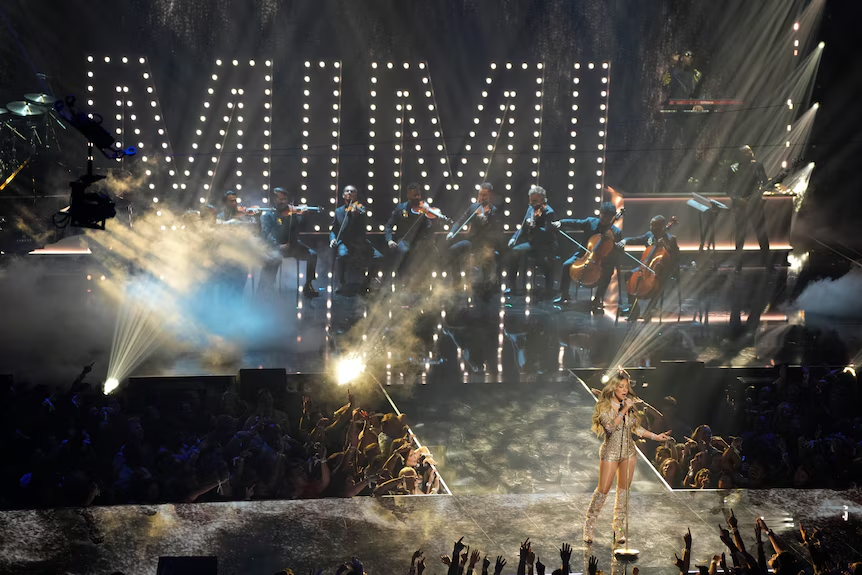
Introduced by Ariana Grande—whose powerhouse vocals have often drawn comparisons to Carey—Mariah performed a medley of timeless hits including Fantasy, We Belong Together, and Obsessed.
“As a songwriter and producer, she’s given us an anthem for every occasion,” Grande said. “As a vocalist, there’s only one queen, and that’s Mariah.”
Mariah, with trademark wit, joked: “I don’t know why it took so long. Just kidding. What in the Sam Hill are you waiting for?”
A tearful tribute to Ozzy Osbourne
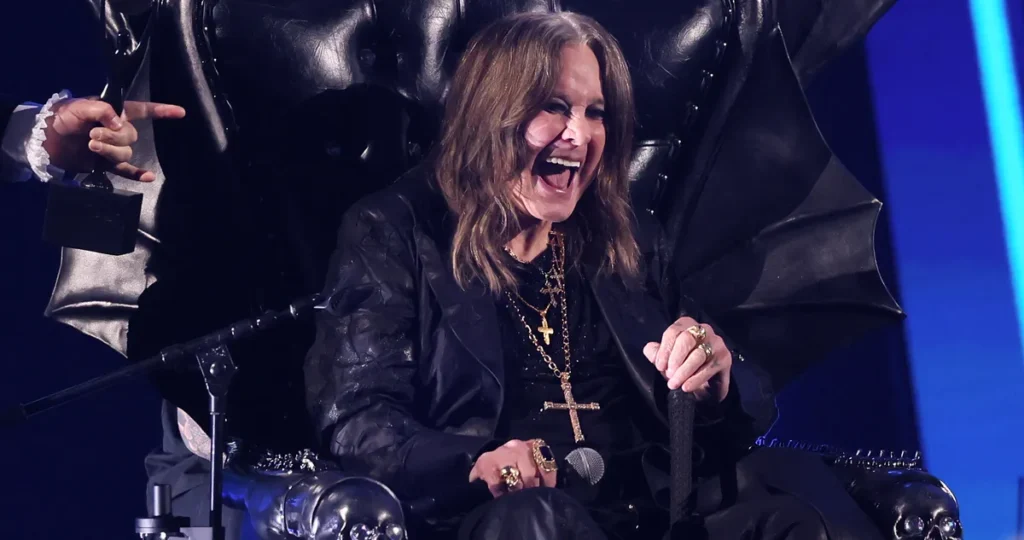
Perhaps the most emotional segment came with a tribute to Ozzy Osbourne, the legendary “Prince of Darkness” who passed away in July 2025.
The performance was introduced by his son Jack Osbourne and Ozzy’s grandchildren, who echoed his iconic catchphrase: “Let’s go Crazy!”
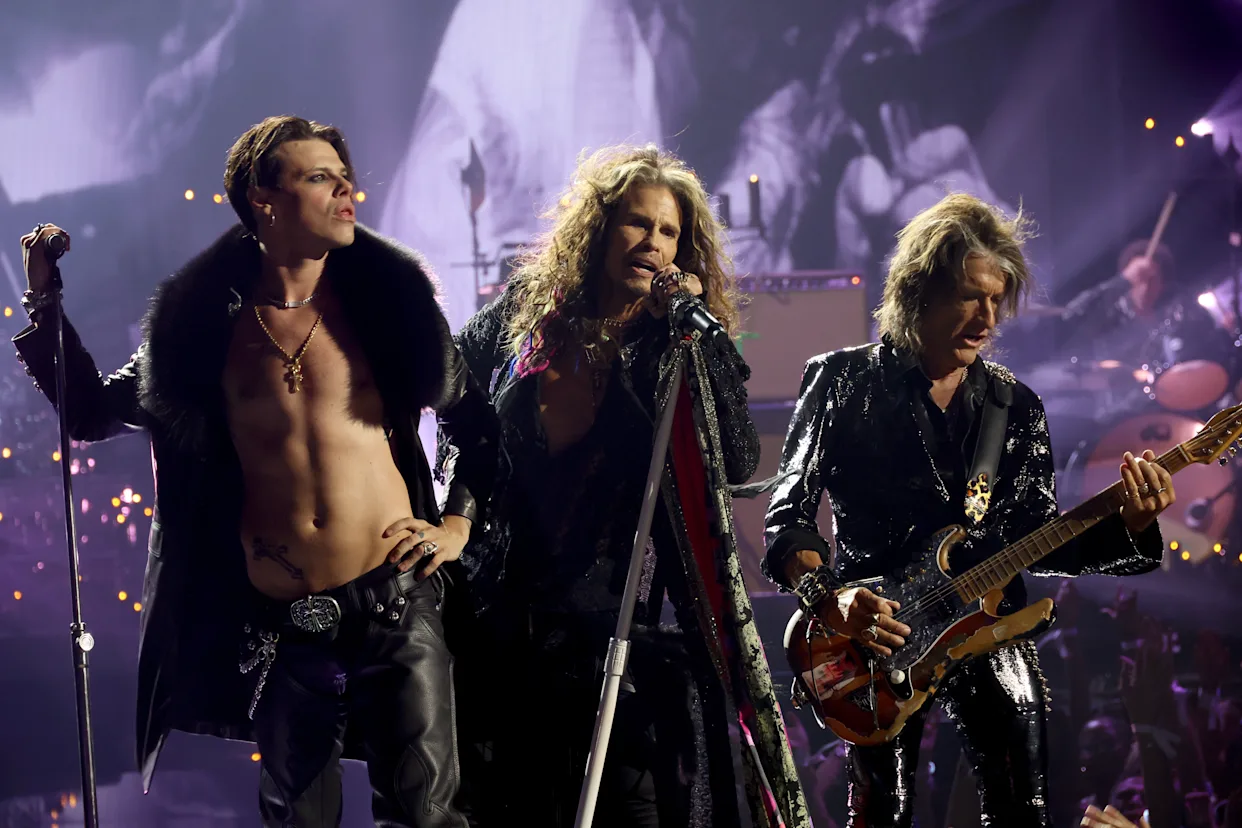
British rocker Yungblud kicked things off with Crazy Train and followed with a raw version of Changes. Visibly emotional, he honored his close relationship with the metal icon.
Joining him on stage were Steven Tyler and Joe Perry of Aerosmith, who delivered Mama, I’m Coming Home. The performance ended with Yungblud declaring: “Ozzy forever.”
Ariana Grande wins Video of the Year
The night’s biggest prize, Video of the Year, went to Ariana Grande for her song Brighter Days Ahead.
Wearing a delicate white gown, Grande reflected on her personal journey:
“Art has been a safe space for me since I was a kid… this song is about healing trauma and creating safety in our lives. If you’re on that journey, please continue onward because I promise there are brighter days ahead.”
Her heartfelt speech, combined with her triumph, solidified her status as one of today’s defining pop icons.
Busta Rhymes and Ricky Martin honored with new awards
Two icons received special recognition:
- Busta Rhymes with the Rock the Bells Visionary Award, honoring his decades-long impact.
- Ricky Martin with the Latin Icon Award, more than two decades after Livin’ la Vida Loca rocked the VMAs.
Martin, ever the showman, told fans: “Thank you so much for your applause. I am addicted to your applause. That’s why I keep coming back.”
Sabrina Carpenter makes a statement
Pop star Sabrina Carpenter turned her stage into a political moment with her performance of Tears. Accompanied by drag queens holding signs like “Protect Trans Rights”, Carpenter directly addressed President Donald Trump’s controversial executive order recognizing only two sexes.
In a show otherwise light on politics, her performance stood out as a bold statement of solidarity with the LGBTQIA+ community.
Red carpet fashion brings bold colors
From Conan Gray’s sailor-inspired outfit to Doja Cat’s glam red lip moment, the red carpet was alive with creativity. Tate McRae stunned in sheer white, while Carpenter’s old Hollywood red gown became a fan favorite.
Full winner’s highlights
- Video of the Year: Ariana Grande – Brighter Days Ahead
- Artist of the Year: Lady Gaga
- Best R&B: Mariah Carey – Type Dangerous
- Best Alternative: Sombr – Back to Friends
- Best AfroBeats: Tyla – Push 2 Start
- Song of the Year: Rosé & Bruno Mars – APT.
- Best Album: Sabrina Carpenter – Short n’ Sweet
- Best Rock: Coldplay – All My Love
- Best Latin: Shakira – Soltera
- Best Group: BLACKPINK
Final Thoughts
The 2025 MTV VMAs balanced nostalgia, activism, and artistry. From Gaga’s record wins to Carey’s long-awaited recognition, from Ozzy’s tribute to Carpenter’s bold message, the night was a powerful reminder that music doesn’t just entertain—it shapes culture.
For more breaking updates and music highlights, Visit our site for more news www.DailyGlobalDiary.com










music
Singer Chappell Roan Calls the Bardot Truth Very Disappointing
The Grammy-winning pop star quietly deletes a cultural reference after discovering the late French icon’s far-right political history—sparking a wider conversation about art, influence, and accountability.


Pop culture has a long memory—but the internet has an even longer one. That reality collided head-on this week when Chappell Roan confirmed she had deleted a tribute referencing Brigitte Bardot after learning more about the French star’s political views.
For Roan, the decision was swift—and deeply personal.
The singer, who rose to mainstream acclaim with her breakout album and a Grammy win, had previously name-checked Bardot in her song Red Wine Supernova, a playful pop anthem layered with cultural references. But after discovering Bardot’s long-documented alignment with far-right ideology in France, Roan chose to distance herself.
Her reaction was blunt.
“It was very disappointing,” she said, acknowledging that she hadn’t been fully aware of Bardot’s history at the time.
ALSO READ : Younghoe Koo Explains Botched Field Goal After Slip: “The Ball Was Moving So I Pulled Up”
When Inspiration Meets Reality
For decades, Brigitte Bardot has existed in pop culture as a symbol—of beauty, rebellion, and European cinema glamour. Her image has been recycled endlessly across fashion, film, and music. But beyond the screen persona lies a controversial political record that includes repeated convictions for hate speech and outspoken far-right commentary.
Roan’s move to delete the tribute reflects a growing shift among younger artists: re-examining idols, not just aesthetics.
In an era where references can be fact-checked in seconds, cultural borrowing now comes with an unspoken responsibility. For Roan, it wasn’t about public pressure—it was about alignment.

A Quiet Deletion, a Loud Message
Notably, the tribute wasn’t removed with a dramatic announcement. There was no apology tour, no notes-app essay. The reference was simply gone—followed later by Roan’s candid explanation.
That restraint is part of what resonated with fans.
Rather than framing herself as “canceled culture’s latest victim,” Roan positioned the moment as a learning curve. In doing so, she joined a broader conversation unfolding across music, fashion, and film: Can you separate art from the artist—and should you?
Why This Moment Matters
Roan’s career has been defined by emotional honesty and a refusal to sanitize her worldview. Her openness around identity, performance, and pop mythology has earned her a fiercely loyal audience—one that expects clarity as much as creativity.
This episode underscores how quickly cultural symbols can shift when new context is applied. What once felt like a harmless nod to cinematic history suddenly carried ideological weight Roan wasn’t willing to shoulder.
In today’s hyper-connected landscape, references aren’t neutral. They’re read, re-read, and debated in real time.
Pop Stars in the Age of Accountability
From lyrics to visuals, modern pop stars are navigating a tighter cultural space—where admiration is scrutinized and silence is interpreted. Roan’s decision reflects a generational instinct to course-correct rather than double down.
It’s not about erasing the past. It’s about choosing what—and who—you amplify going forward.
And for Roan, that line was clear.
music
Chappell Roan Removes Brigitte Bardot Tribute After Learning the Truth: “That Was Very Disappointing…”
The Grammy-winning pop star quietly deletes a cultural reference after discovering the late French icon’s far-right political history—sparking a wider conversation about art, influence, and accountability.
Pop culture has a long memory—but the internet has an even longer one. That reality collided head-on this week when Chappell Roan confirmed she had deleted a tribute referencing Brigitte Bardot after learning more about the French star’s political views.
For Roan, the decision was swift—and deeply personal.
The singer, who rose to mainstream acclaim with her breakout album and a Grammy win, had previously name-checked Bardot in her song Red Wine Supernova, a playful pop anthem layered with cultural references. But after discovering Bardot’s long-documented alignment with far-right ideology in France, Roan chose to distance herself.
Her reaction was blunt.
“It was very disappointing,” she said, acknowledging that she hadn’t been fully aware of Bardot’s history at the time.
ALSO READ : Younghoe Koo Explains Botched Field Goal After Slip: “The Ball Was Moving So I Pulled Up”
When Inspiration Meets Reality
For decades, Brigitte Bardot has existed in pop culture as a symbol—of beauty, rebellion, and European cinema glamour. Her image has been recycled endlessly across fashion, film, and music. But beyond the screen persona lies a controversial political record that includes repeated convictions for hate speech and outspoken far-right commentary.
Roan’s move to delete the tribute reflects a growing shift among younger artists: re-examining idols, not just aesthetics.
In an era where references can be fact-checked in seconds, cultural borrowing now comes with an unspoken responsibility. For Roan, it wasn’t about public pressure—it was about alignment.
A Quiet Deletion, a Loud Message
Notably, the tribute wasn’t removed with a dramatic announcement. There was no apology tour, no notes-app essay. The reference was simply gone—followed later by Roan’s candid explanation.
That restraint is part of what resonated with fans.
Rather than framing herself as “canceled culture’s latest victim,” Roan positioned the moment as a learning curve. In doing so, she joined a broader conversation unfolding across music, fashion, and film: Can you separate art from the artist—and should you?
Why This Moment Matters
Roan’s career has been defined by emotional honesty and a refusal to sanitize her worldview. Her openness around identity, performance, and pop mythology has earned her a fiercely loyal audience—one that expects clarity as much as creativity.
This episode underscores how quickly cultural symbols can shift when new context is applied. What once felt like a harmless nod to cinematic history suddenly carried ideological weight Roan wasn’t willing to shoulder.
In today’s hyper-connected landscape, references aren’t neutral. They’re read, re-read, and debated in real time.
Pop Stars in the Age of Accountability
From lyrics to visuals, modern pop stars are navigating a tighter cultural space—where admiration is scrutinized and silence is interpreted. Roan’s decision reflects a generational instinct to course-correct rather than double down.
It’s not about erasing the past. It’s about choosing what—and who—you amplify going forward.
And for Roan, that line was clear.
music
Chappell Roan Distances Herself From Brigitte Bardot After Discovering Her Far-Right Views
The Grammy-winning pop star quietly deletes a cultural reference after discovering the late French icon’s far-right political history—sparking a wider conversation about art, influence, and accountability.
Pop culture has a long memory—but the internet has an even longer one. That reality collided head-on this week when Chappell Roan confirmed she had deleted a tribute referencing Brigitte Bardot after learning more about the French star’s political views.
For Roan, the decision was swift—and deeply personal.
The singer, who rose to mainstream acclaim with her breakout album and a Grammy win, had previously name-checked Bardot in her song Red Wine Supernova, a playful pop anthem layered with cultural references. But after discovering Bardot’s long-documented alignment with far-right ideology in France, Roan chose to distance herself.
Her reaction was blunt.
“It was very disappointing,” she said, acknowledging that she hadn’t been fully aware of Bardot’s history at the time.
ALSO READ : Younghoe Koo Explains Botched Field Goal After Slip: “The Ball Was Moving So I Pulled Up”
When Inspiration Meets Reality
For decades, Brigitte Bardot has existed in pop culture as a symbol—of beauty, rebellion, and European cinema glamour. Her image has been recycled endlessly across fashion, film, and music. But beyond the screen persona lies a controversial political record that includes repeated convictions for hate speech and outspoken far-right commentary.
Roan’s move to delete the tribute reflects a growing shift among younger artists: re-examining idols, not just aesthetics.
In an era where references can be fact-checked in seconds, cultural borrowing now comes with an unspoken responsibility. For Roan, it wasn’t about public pressure—it was about alignment.
A Quiet Deletion, a Loud Message
Notably, the tribute wasn’t removed with a dramatic announcement. There was no apology tour, no notes-app essay. The reference was simply gone—followed later by Roan’s candid explanation.
That restraint is part of what resonated with fans.
Rather than framing herself as “canceled culture’s latest victim,” Roan positioned the moment as a learning curve. In doing so, she joined a broader conversation unfolding across music, fashion, and film: Can you separate art from the artist—and should you?
Why This Moment Matters
Roan’s career has been defined by emotional honesty and a refusal to sanitize her worldview. Her openness around identity, performance, and pop mythology has earned her a fiercely loyal audience—one that expects clarity as much as creativity.
This episode underscores how quickly cultural symbols can shift when new context is applied. What once felt like a harmless nod to cinematic history suddenly carried ideological weight Roan wasn’t willing to shoulder.
In today’s hyper-connected landscape, references aren’t neutral. They’re read, re-read, and debated in real time.
Pop Stars in the Age of Accountability
From lyrics to visuals, modern pop stars are navigating a tighter cultural space—where admiration is scrutinized and silence is interpreted. Roan’s decision reflects a generational instinct to course-correct rather than double down.
It’s not about erasing the past. It’s about choosing what—and who—you amplify going forward.
And for Roan, that line was clear.

“He-Man Wears a Suit…”: Why Nicholas Galitzine’s Masters of the Universe Trailer Has Fans Talking

Camilla Läckberg Isn’t Done Yet… The Queen of Swedish Noir Eyes Film, TV and a Bold Plan to ‘Conquer America’

“Screaming, Crying, Almost Throwing Up”… Sundance Insiders Reveal the Untold Chaos Behind America’s Most Influential Film Festival
From Swedish Noir to Hollywood Dreams Camilla Läckberg Has a Bigger Plan in Motion
When Sundance Nearly Fell Apart Insiders Recall the Chaos Behind the World’s Most Influential Film Festival

1-Iran Issues Dire Warning to Israel and Defies Trump on Nukes: “We’re Ready to Strike Deep Inside”

Donald Trump’s net worth reveals the fortune behind the former US President and business mogul

Caitlin Clark Sidelined with Quad Strain, Set to Miss Two Weeks of WNBA Action

Elon Musk Breaks Ranks with Trump Over ‘Big, Beautiful’ Tax Bill

“Tomás Rodríguez Net Worth 2025: Panama’s Gold Cup Goal‑Machine’s Surprising Fortune Revealed”

Miss Jamaica Suffers Terrifying Fall Off Miss Universe Stage; Rushed to Hospital on Stretcher in Viral Video

Moana Live-Action Teaser Sparks Outrage as Fans Call Disney’s Move a ‘Clear Money Grab’ — What Went Wrong?

Ryan Gosling’s Project Hail Mary Trailer Stuns Fans with a Mysterious Alien Ally and a Mission That Could Save Earth

Apple delays Jessica Chastain thriller The Savant about domestic extremism after recent US violence

Avatar 3, Fire and Ash trailer reveals Jake Sully’s family facing terrifying new Na’vi enemies with deadly fire powers
-
 Entertainment1 week ago
He-Man Wears a Suit Now… Nicholas Galitzine’s ‘Masters of the Universe’ Trailer Drops a Shock Fans Didn’t See Coming
-
 Entertainment1 week ago
Brazil Eyes Oscar History Again… ‘The Secret Agent’ Scores Best Picture Nomination as Wagner Moura Stuns Hollywood
-
 Entertainment5 days ago
“Comedy Needs Courage Again…”: Judd Apatow Opens Up on Mel Brooks, Talking to Rob Reiner, and Why Studio Laughs Have Vanished
-

 Entertainment1 week ago
Oscars Go Global in a Big Way as This Year’s Nominations Signal a New Era: ‘The Academy Is Finally Looking Beyond Hollywood…’
-
 Entertainment1 week ago
“Dangerously Kinky… and Darkly Funny”: Olivia Wilde and Cooper Hoffman Push Boundaries in ‘I Want Your Sex’
-

 Sports1 week ago
A Strong Night for Caleb Williams Ends With Doubts About the Bears’ Late Decisions
-
 Crime5 days ago
Man Accused in Tupac Shakur Killing Asks Judge to Exclude Critical Evidence
-

 Politics1 week ago
Why Bari Weiss Says Pulling a ‘60 Minutes’ Story Was the Right Call — Even If It Looked Radical