
Technology News
OpenAI sets up New Delhi office after ₹399 ChatGPT launch Sam Altman says India has all ingredients for AI leadership
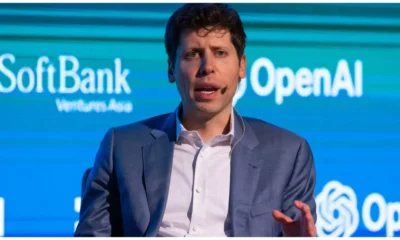
Sam Altman
confirms OpenAI
will open its first Indian office in New Delhi, just days after rolling out the ₹399 ChatGPT Go plan.


In a move that underlines India’s rising importance in the global artificial intelligence race, OpenAI has announced it will open its first corporate office in New Delhi. The decision comes just days after the company launched its first-ever India-specific subscription plan, ChatGPT Go, priced at 399 ($4.75) per month.
ALSO READ : Terence Stamp’s Final Curtain Call Leaves Fans in Tears as Secrets from His Past Resurface
“Opening our first office and building a local team is an important first step in our commitment to make advanced AI more accessible across the country and to build AI for India, and with India,” said Sam Altman, CEO of OpenAI, in a statement.
The new office will serve as a hub for expanding partnerships with governments, businesses, developers, and academic institutions while also gathering feedback from Indian users to create locally relevant features.
Building the India strategy
OpenAI has been laying the groundwork for months. In April 2024, it hired Pragya Mishra, a former Truecaller and Meta executive, as public policy and partnerships lead in India. Around the same time, former Twitter India head Rishi Jaitly joined as a senior advisor to strengthen government engagement on AI policy.
India, with over 850 million internet users and the world’s second-largest smartphone market after China, represents a massive opportunity. Yet, it also presents challenges: convincing users in a price-sensitive market to pay for subscriptions while navigating legal hurdles.
Competition heating up
OpenAI is not alone in this race. Rival Perplexity AI recently partnered with Indian telecom giant Bharti Airtel to offer 360 million Airtel subscribers a year-long free trial of Perplexity Pro. Meanwhile, big players like Google and Meta are pushing their own AI platforms tailored for Indian users.
OpenAI’s ChatGPT Go plan is designed to bridge this affordability gap, offering ten times more usage than the free tier at a price point suited to the Indian market.
Policy hurdles and lawsuits
Despite optimism, OpenAI faces regulatory and legal challenges. In November 2024, Asian News International (ANI) sued the company for allegedly using its copyrighted content without permission, and in January 2025, a group of Indian publishers joined the case.
Still, OpenAI appears committed to working with regulators. “India has all the ingredients to become a global AI leader — amazing tech talent, a world-class developer ecosystem, and strong government support through the IndiaAI Mission,” Altman noted.
Government welcomes the move
Ashwini Vaishnaw, India’s Minister for Electronics and Information Technology, hailed the development, saying:
OpenAI’s decision to establish a presence in India reflects the country’s growing leadership in digital innovation and AI adoption. We welcome OpenAI’s partnership in advancing this vision to ensure the benefits of AI reach every citizen.
The government’s IndiaAI Mission, launched to make India a global AI powerhouse, is already attracting interest from major tech players. OpenAI’s entry, analysts say, could accelerate collaborations between the state and private sector.
Education and Developer outreach
To deepen its local footprint, OpenAI will also host its first Education Summit in India this month and is planning its first Developer Day in the country later this year. Both events are aimed at fostering stronger ties with India’s vast developer community, considered one of the largest and most innovative in the world.
Asia expansion beyond India
Interestingly, India is not OpenAI’s first Asian bet. The company has already opened offices in Japan, Singapore, and South Korea. Rival Anthropic, meanwhile, has prioritized Japan, setting up its Asia office in Tokyo rather than New Delhi.
Some Silicon Valley investors suggest this reflects the difficulty of securing enterprise customers in India, compared to Japan’s higher-paying corporate base. But with India’s sheer scale, OpenAI appears willing to take the long-term view.
What’s next
With a New Delhi office, an affordable subscription plan, and backing from policymakers, OpenAI is positioning itself as a central player in India’s AI future. But it must solve the puzzle of monetization while ensuring compliance with local laws and maintaining user trust.
If it succeeds, Altman’s prediction that India has “all the ingredients to become a global AI leader” may not be far off.









Technology News
Inside the Mind of the Man Who Trusts Dogs to Lead Movies
From AI labs to film sets, BARK innovation chief Mikkel Holm has a radical idea — what if dogs weren’t just stars, but storytellers?

In an era where artificial intelligence is already writing scripts, composing music, and generating entire films, one creative mind is asking a question that feels equal parts absurd and oddly profound: Why shouldn’t dogs be directors?
That mind belongs to Mikkel Holm, the Chief AI & Innovation Officer at BARK, the pet brand best known for turning dog culture into a billion-dollar business. Holm isn’t pitching a gimmick. He’s questioning how creativity itself is defined — and who gets to own it.
From Fetch to Final Cut
Holm’s thinking sits at the crossroads of AI, storytelling, and animal behavior. With generative tools becoming more intuitive, he believes creativity no longer needs to start with a human idea. A dog’s reactions — what excites them, what scares them, what keeps their attention — could become the raw data that shapes narratives.
“Dogs already tell us what they like,” Holm has suggested in industry conversations. “We just haven’t been listening in a cinematic way.”
ALSO READ : Younghoe Koo Explains Botched Field Goal After Slip: “The Ball Was Moving So I Pulled Up”
Using sensors, computer vision, and behavioral AI models, a dog’s gaze, movement, or excitement could guide editing decisions, pacing, or even story arcs. The result wouldn’t be about dogs — it would be cinema filtered through a non-human perspective.
The Birth of the First Park Chan-Woof?
Holm jokingly refers to the possibility of minting the next Park Chan-wook — except this auteur would wag instead of walk the red carpet. The joke lands because it highlights something serious: great directors don’t just tell stories, they feel them. And dogs, arguably, are pure instinct.
Unlike human creators shaped by trends, algorithms, or box-office anxiety, dogs respond honestly. They don’t care about three-act structures or Rotten Tomatoes scores. They react in real time — and Holm believes that authenticity is something modern storytelling desperately needs.
Why BARK Is the Perfect Place for This Idea
At BARK, data about canine behavior isn’t abstract. It’s central to the business. Millions of interactions — toys chewed, treats rejected, boxes loved — already inform product design. Translating that behavioral intelligence into creative output feels like a natural extension.
Holm’s role isn’t about replacing human creators. Instead, it’s about collaboration — humans setting the framework, AI translating signals, and dogs influencing the final creative choices in ways we’ve never seen before.
Is This Art or Absurdity?
Skeptics, of course, will laugh. Dogs as directors sounds like a headline built for clicks. But then again, so did AI-written novels, virtual influencers, and fully synthetic pop stars — until they weren’t jokes anymore.
Holm’s idea taps into a deeper cultural shift: creativity is no longer exclusively human. As tools evolve, authorship becomes shared — between humans, machines, and perhaps, one day, animals.
And if the result is strange, emotional, or unexpectedly beautiful? That might be the point.
A Future Where Creativity Isn’t Just Human
Cinema has always evolved with technology — from silent films to sound, black-and-white to color, analog to digital. Holm’s vision suggests the next leap might not be technical, but philosophical.
What happens when we stop asking who is allowed to create?
If the first dog-directed short film ever premieres at a festival someday, don’t be surprised if it doesn’t explain itself. Dogs, after all, have never felt the need to justify their instincts. Maybe storytellers shouldn’t either.
Technology News
Inside the Vision of the Man Who Trusts Dogs to Tell Stories on the Big Screen
From AI labs to film sets, BARK innovation chief Mikkel Holm has a radical idea — what if dogs weren’t just stars, but storytellers?
In an era where artificial intelligence is already writing scripts, composing music, and generating entire films, one creative mind is asking a question that feels equal parts absurd and oddly profound: Why shouldn’t dogs be directors?
That mind belongs to Mikkel Holm, the Chief AI & Innovation Officer at BARK, the pet brand best known for turning dog culture into a billion-dollar business. Holm isn’t pitching a gimmick. He’s questioning how creativity itself is defined — and who gets to own it.
From Fetch to Final Cut
Holm’s thinking sits at the crossroads of AI, storytelling, and animal behavior. With generative tools becoming more intuitive, he believes creativity no longer needs to start with a human idea. A dog’s reactions — what excites them, what scares them, what keeps their attention — could become the raw data that shapes narratives.
“Dogs already tell us what they like,” Holm has suggested in industry conversations. “We just haven’t been listening in a cinematic way.”
ALSO READ : Younghoe Koo Explains Botched Field Goal After Slip: “The Ball Was Moving So I Pulled Up”
Using sensors, computer vision, and behavioral AI models, a dog’s gaze, movement, or excitement could guide editing decisions, pacing, or even story arcs. The result wouldn’t be about dogs — it would be cinema filtered through a non-human perspective.
The Birth of the First Park Chan-Woof?
Holm jokingly refers to the possibility of minting the next Park Chan-wook — except this auteur would wag instead of walk the red carpet. The joke lands because it highlights something serious: great directors don’t just tell stories, they feel them. And dogs, arguably, are pure instinct.
Unlike human creators shaped by trends, algorithms, or box-office anxiety, dogs respond honestly. They don’t care about three-act structures or Rotten Tomatoes scores. They react in real time — and Holm believes that authenticity is something modern storytelling desperately needs.
Why BARK Is the Perfect Place for This Idea
At BARK, data about canine behavior isn’t abstract. It’s central to the business. Millions of interactions — toys chewed, treats rejected, boxes loved — already inform product design. Translating that behavioral intelligence into creative output feels like a natural extension.
Holm’s role isn’t about replacing human creators. Instead, it’s about collaboration — humans setting the framework, AI translating signals, and dogs influencing the final creative choices in ways we’ve never seen before.
Is This Art or Absurdity?
Skeptics, of course, will laugh. Dogs as directors sounds like a headline built for clicks. But then again, so did AI-written novels, virtual influencers, and fully synthetic pop stars — until they weren’t jokes anymore.
Holm’s idea taps into a deeper cultural shift: creativity is no longer exclusively human. As tools evolve, authorship becomes shared — between humans, machines, and perhaps, one day, animals.
And if the result is strange, emotional, or unexpectedly beautiful? That might be the point.
A Future Where Creativity Isn’t Just Human
Cinema has always evolved with technology — from silent films to sound, black-and-white to color, analog to digital. Holm’s vision suggests the next leap might not be technical, but philosophical.
What happens when we stop asking who is allowed to create?
If the first dog-directed short film ever premieres at a festival someday, don’t be surprised if it doesn’t explain itself. Dogs, after all, have never felt the need to justify their instincts. Maybe storytellers shouldn’t either.
Technology News
Meet the Man Who Wants Dogs in the Director’s Chair and Thinks Cinema Needs a Bark Side
From AI labs to film sets, BARK innovation chief Mikkel Holm has a radical idea — what if dogs weren’t just stars, but storytellers?
In an era where artificial intelligence is already writing scripts, composing music, and generating entire films, one creative mind is asking a question that feels equal parts absurd and oddly profound: Why shouldn’t dogs be directors?
That mind belongs to Mikkel Holm, the Chief AI & Innovation Officer at BARK, the pet brand best known for turning dog culture into a billion-dollar business. Holm isn’t pitching a gimmick. He’s questioning how creativity itself is defined — and who gets to own it.
From Fetch to Final Cut
Holm’s thinking sits at the crossroads of AI, storytelling, and animal behavior. With generative tools becoming more intuitive, he believes creativity no longer needs to start with a human idea. A dog’s reactions — what excites them, what scares them, what keeps their attention — could become the raw data that shapes narratives.
“Dogs already tell us what they like,” Holm has suggested in industry conversations. “We just haven’t been listening in a cinematic way.”
ALSO READ : Younghoe Koo Explains Botched Field Goal After Slip: “The Ball Was Moving So I Pulled Up”
Using sensors, computer vision, and behavioral AI models, a dog’s gaze, movement, or excitement could guide editing decisions, pacing, or even story arcs. The result wouldn’t be about dogs — it would be cinema filtered through a non-human perspective.
The Birth of the First Park Chan-Woof?
Holm jokingly refers to the possibility of minting the next Park Chan-wook — except this auteur would wag instead of walk the red carpet. The joke lands because it highlights something serious: great directors don’t just tell stories, they feel them. And dogs, arguably, are pure instinct.
Unlike human creators shaped by trends, algorithms, or box-office anxiety, dogs respond honestly. They don’t care about three-act structures or Rotten Tomatoes scores. They react in real time — and Holm believes that authenticity is something modern storytelling desperately needs.
Why BARK Is the Perfect Place for This Idea
At BARK, data about canine behavior isn’t abstract. It’s central to the business. Millions of interactions — toys chewed, treats rejected, boxes loved — already inform product design. Translating that behavioral intelligence into creative output feels like a natural extension.
Holm’s role isn’t about replacing human creators. Instead, it’s about collaboration — humans setting the framework, AI translating signals, and dogs influencing the final creative choices in ways we’ve never seen before.
Is This Art or Absurdity?
Skeptics, of course, will laugh. Dogs as directors sounds like a headline built for clicks. But then again, so did AI-written novels, virtual influencers, and fully synthetic pop stars — until they weren’t jokes anymore.
Holm’s idea taps into a deeper cultural shift: creativity is no longer exclusively human. As tools evolve, authorship becomes shared — between humans, machines, and perhaps, one day, animals.
And if the result is strange, emotional, or unexpectedly beautiful? That might be the point.
A Future Where Creativity Isn’t Just Human
Cinema has always evolved with technology — from silent films to sound, black-and-white to color, analog to digital. Holm’s vision suggests the next leap might not be technical, but philosophical.
What happens when we stop asking who is allowed to create?
If the first dog-directed short film ever premieres at a festival someday, don’t be surprised if it doesn’t explain itself. Dogs, after all, have never felt the need to justify their instincts. Maybe storytellers shouldn’t either.

“He-Man Wears a Suit…”: Why Nicholas Galitzine’s Masters of the Universe Trailer Has Fans Talking

Camilla Läckberg Isn’t Done Yet… The Queen of Swedish Noir Eyes Film, TV and a Bold Plan to ‘Conquer America’

“Screaming, Crying, Almost Throwing Up”… Sundance Insiders Reveal the Untold Chaos Behind America’s Most Influential Film Festival
From Swedish Noir to Hollywood Dreams Camilla Läckberg Has a Bigger Plan in Motion
When Sundance Nearly Fell Apart Insiders Recall the Chaos Behind the World’s Most Influential Film Festival

1-Iran Issues Dire Warning to Israel and Defies Trump on Nukes: “We’re Ready to Strike Deep Inside”

Donald Trump’s net worth reveals the fortune behind the former US President and business mogul

Caitlin Clark Sidelined with Quad Strain, Set to Miss Two Weeks of WNBA Action

Elon Musk Breaks Ranks with Trump Over ‘Big, Beautiful’ Tax Bill

“Tomás Rodríguez Net Worth 2025: Panama’s Gold Cup Goal‑Machine’s Surprising Fortune Revealed”

Miss Jamaica Suffers Terrifying Fall Off Miss Universe Stage; Rushed to Hospital on Stretcher in Viral Video

Moana Live-Action Teaser Sparks Outrage as Fans Call Disney’s Move a ‘Clear Money Grab’ — What Went Wrong?

Ryan Gosling’s Project Hail Mary Trailer Stuns Fans with a Mysterious Alien Ally and a Mission That Could Save Earth

Apple delays Jessica Chastain thriller The Savant about domestic extremism after recent US violence

Avatar 3, Fire and Ash trailer reveals Jake Sully’s family facing terrifying new Na’vi enemies with deadly fire powers
-
 Entertainment6 days ago
He-Man Wears a Suit Now… Nicholas Galitzine’s ‘Masters of the Universe’ Trailer Drops a Shock Fans Didn’t See Coming
-
 Entertainment1 week ago
Brazil Eyes Oscar History Again… ‘The Secret Agent’ Scores Best Picture Nomination as Wagner Moura Stuns Hollywood
-

 Entertainment4 days ago
“Comedy Needs Courage Again…”: Judd Apatow Opens Up on Mel Brooks, Talking to Rob Reiner, and Why Studio Laughs Have Vanished
-

 Entertainment1 week ago
Box Office Shocker as Chris Pratt’s ‘Mercy’ Knocks ‘Avatar 3’ Off the Top but Nature Had Other Plans…
-

 Entertainment6 days ago
Oscars Go Global in a Big Way as This Year’s Nominations Signal a New Era: ‘The Academy Is Finally Looking Beyond Hollywood…’
-
 Entertainment1 week ago
Michael Bay Makes a Power Move… Blockbuster Director Signs with CAA in a Deal That’s Turning Heads
-

 Entertainment6 days ago
“Dangerously Kinky… and Darkly Funny”: Olivia Wilde and Cooper Hoffman Push Boundaries in ‘I Want Your Sex’
-
Entertainment1 week ago
Fans Didn’t Expect This Look… Nicholas Galitzine’s Masters of the Universe Trailer Sparks Debate