
Space
Panthers stun fans with “3 interceptions in one half”… yet still lose 20-9 to 49ers – what really went wrong?
Despite defensive brilliance from Krys Barnes and Jaycee Horn, the Carolina Panthers offense collapsed in a frustrating Week 12 defeat


SANTA CLARA, Calif. — Fans of the Carolina Panthers walked away from Monday night’s showdown against the San Francisco 49ers with a familiar feeling — hope sparked by flashes of brilliance, only to be crushed by offensive struggles that refused to go away.
The Panthers recorded three interceptions in the first half, the first time they’ve achieved that feat since 2019. Yet they still lost 20-9, raising uncomfortable questions about the direction of the offense under quarterback Bryce Young.
For a moment, it looked like the defense might single-handedly turn the tide. But the numbers tell a painful story: when an NFL team runs only 43 offensive plays, which is tied for the second-fewest in franchise history, winning becomes nearly impossible.
Krys Barnes shines in first start
Linebacker Krys Barnes made the most of his first start this season, delivering a game-high 10 tackles and playing 69 of 70 defensive snaps. His performance has sparked conversations about whether he now deserves a permanent spot on the 53-man roster.
Coaches reportedly see him as a necessary piece, especially with injuries piling up across the defensive lineup.
Jaycee Horn leads the charge
Cornerback Jaycee Horn was electric, grabbing two interceptions in the first half — the second multi-interception game of his career. He now leads the Panthers with five interceptions, proving again why he was considered one of the most promising defensive backs coming into the season.
A familiar problem: the offense disappears
While the defense created opportunity after opportunity, the offense failed to convert.
Quarterback Bryce Young finished with:
- 18-of-29 completions
- 169 yards
- 1 touchdown
- 2 interceptions
He did make history, becoming just the fourth Panthers quarterback after Steve Beuerlein , Jake Delhomme , and Cam Newton to throw 15+ touchdowns in consecutive seasons.
But according to Next Gen Stats, the 49ers defense exposed a major weakness:
Against man coverage:
Young completed just 2 of 7 passes for 11 yards
Both interceptions came under blitz pressure
The 49ers blitzed rarely — only 21.4% of early downs — yet still secured both turnovers from those situations.

Rookie Tetairoa McMillan makes history
Rookie receiver Tetairoa McMillan continued his impressive debut season with:
- 2 catches
- 35 yards
- 1 touchdown
He now ranks:
3rd in team history for rookie receptions (56)
3rd in rookie receiving yards (783)
Tied 2nd in rookie receiving touchdowns (5)
He becomes only the fifth rookie in Panthers history to reach five receiving TDs.
Rico Dowdle quietly dominates
Running back Rico Dowdle once again provided consistency, totaling:
- 38 rushing yards
- 36 receiving yards
- 74 scrimmage yards
He now has 1,104 scrimmage yards this season, joining legendary Panthers backs:
- Stephen Davis – 2003
- Christian McCaffrey – 2018, 2019
- DeAngelo Williams – 2009
However, the issue remains: with only nine total carries between running backs, the offense never established rhythm.
Snap counts reveal deeper concerns
The Panthers offense simply could not stay on the field:
- 1-of-7 on third downs
- 46 snaps for offensive starters
- Tight end rotation instability
- Decreasing run usage
Meanwhile, rookies like Bam Martin-Scott were forced into extended defensive roles due to injuries, playing 32 defensive snaps after Claudin Cherelus went down.

New example comparison (human analysis)
This game echoed the 2024 Chicago Bears vs Packers Week 4 matchup, where the Bears defense forced multiple turnovers early but still lost due to:
- poor third-down offense
- limited offensive snaps
- lack of run commitment
In both cases, defensive success could not overcome offensive inefficiency.
What happens next?
Head coach Dave Canales acknowledged “missed opportunities,” and fans are beginning to question whether schematic issues or execution are to blame.
If the Panthers can’t sustain drives, their defense — no matter how strong — will continue to be overwhelmed.
With injuries rising and pressure increasing, Week 13 may be a turning point.
FOR MORE UPDATE : DAILY GLOBAL DIARY






Technology
The world’s most powerful rocket is ready for its next test but experts warn it could end in disaster
SpaceX’s Starship prepares for Flight 10 after a year of fiery failures debris controversies and global scrutiny.

The most powerful rocket system ever built is about to attempt its most crucial test yet — but many experts believe the stakes have never been higher. SpaceX, founded by billionaire entrepreneur Elon Musk, has confirmed that its Starship megarocket could launch as early as Sunday evening, carrying out an ambitious hour-long flight from the company’s South Texas base.

A webcast of the test will begin roughly 30 minutes before liftoff. If successful, Flight 10 will prove that SpaceX’s bold “fail fast, fix fast” approach can survive a string of catastrophic explosions that have left regulators, governments, and even allies deeply concerned.
A rocky year for Starship
Since its debut in January 2025, the current Starship generation has struggled. One test vehicle exploded over the islands east of Florida, scattering debris on Turks and Caicos roads and Bahamian beaches. Another spun out of control in May before crashing into the Indian Ocean.
Then in June, a Starship prototype erupted during ground testing in Texas, showering SpaceX’s own infrastructure with shrapnel. These incidents have drawn criticism from governments worldwide. The Mexican government even threatened legal action over debris on its shores, while the UK government said it is working with Washington to protect its overseas territories.
Table of Contents
Why this test matters
Despite the setbacks, the Federal Aviation Administration (FAA) recently closed its investigation into the May failure and granted SpaceX approval to fly again. The company says it has corrected the nose-cone pressure issues that doomed the last flight.
If all goes as planned, Sunday’s mission will see the Super Heavy booster splash down off the Texas coast while the Starship spacecraft continues into orbit, deploying dummy satellites and attempting a crucial engine relight in space.
Former NASA astronaut and SpaceX consultant Garrett Reisman offered a blunt assessment:
“It could end up never working, or it could revolutionize our entire future in space — and geopolitics.”

Bigger ambitions ahead
Elon Musk has already teased larger, more powerful versions of Starship that could eclipse even NASA’s Apollo-era Saturn V rockets. The U.S. is betting big on this technology: NASA has a $2.9 billion contract with SpaceX to use Starship for its planned 2027 lunar mission, while Musk dreams of sending a vehicle to Mars by 2026.
In May, the FAA also expanded SpaceX’s license to allow up to 25 Starship launches per year from Texas. And earlier this month, Donald Trump signed an executive order cutting regulatory barriers for private-sector space operations, despite his public fallout with Musk just weeks earlier.
High risk, high reward
Critics argue that SpaceX is moving too fast, risking public safety and international relations. Supporters counter that the company’s rapid iterative development philosophy is exactly why it has become a leader in spaceflight.
“Every lesson, even from fiery mishaps, goes directly into the next design,” SpaceX said in its August 15 update. And history backs this up: while its Falcon 9 rockets suffered early failures, they now boast one of the safest records in human spaceflight.

If Starship eventually works, it could redefine what’s possible in space travel — slashing costs, enabling moon bases, Mars missions, and even intercontinental cargo delivery. But for now, experts remain divided.
As Reisman noted:
“They’re pouring a tremendous amount of money and resources into Starship … but at some point, the laws of financial physics still apply.”
The entire world will be watching this weekend’s test, wondering if Starship will rise as the future of space exploration — or fall back to Earth in flames once again.
For more Update http://www.dailyglobaldiary.com
Space
2 Meteor Showers to Light Up Australian Skies This Week and Why Experts Say “Leave Your Binoculars Behind”
Southern Delta Aquariids and Alpha Capricornids to peak this week over Australia with a free cosmic show—just don’t blink, 2 Meteor Showers to Light Up Australian Skies This Week and Why Experts Say “Leave Your Binoculars Behind”

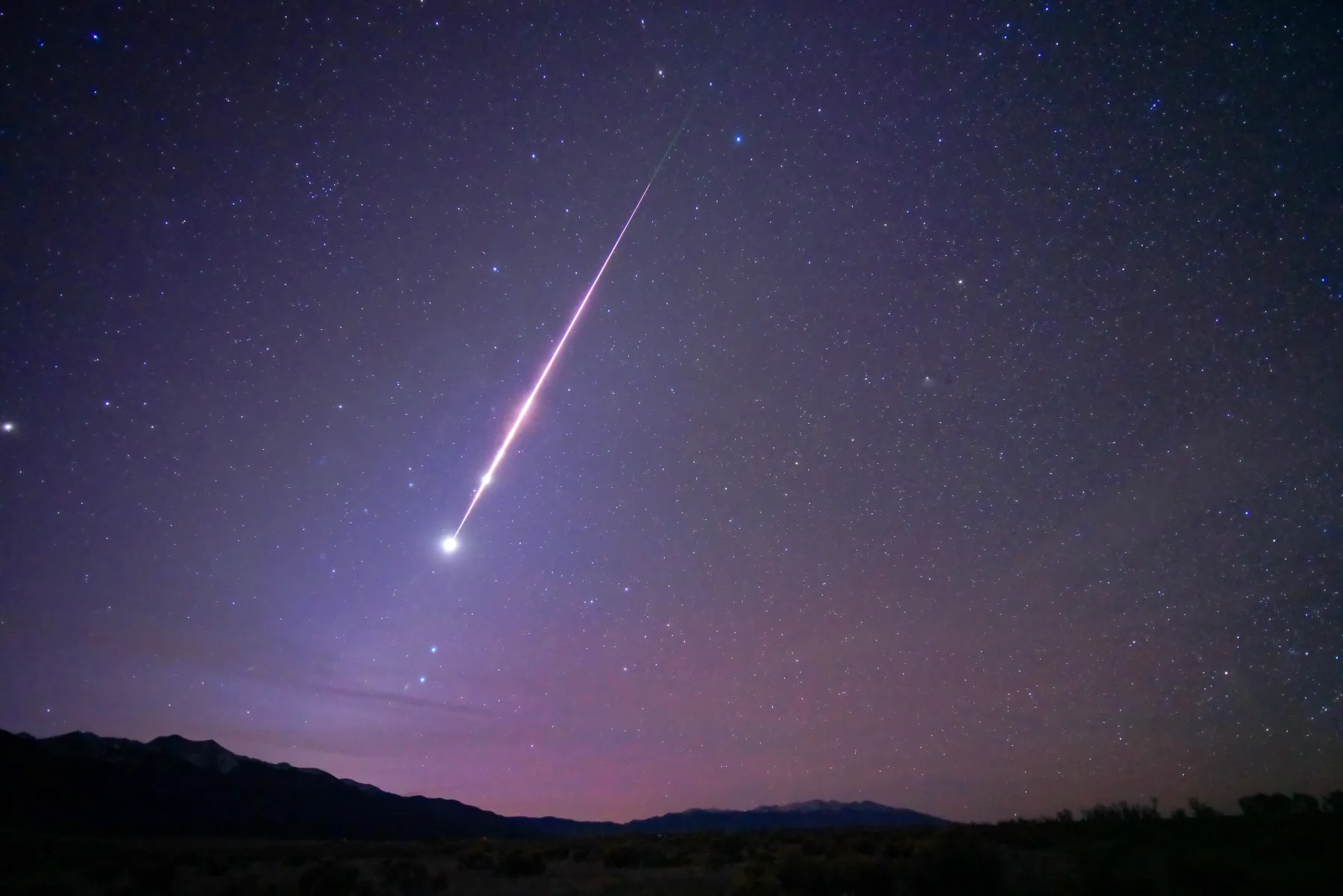
Stargazers across Australia are in for a breathtaking treat this week as two major meteor showers—the Southern Delta Aquariids and the Alpha Capricornids—will dazzle the night skies. Best viewed between 11pm and dawn on Tuesday and Wednesday, these celestial events require no special equipment—just your own two eyes and a bit of patience.
According to Jonti Horner, Professor of Astrophysics at the University of Southern Queensland, both meteor showers are best seen from the Southern Hemisphere, making Australia one of the prime viewing spots globally.
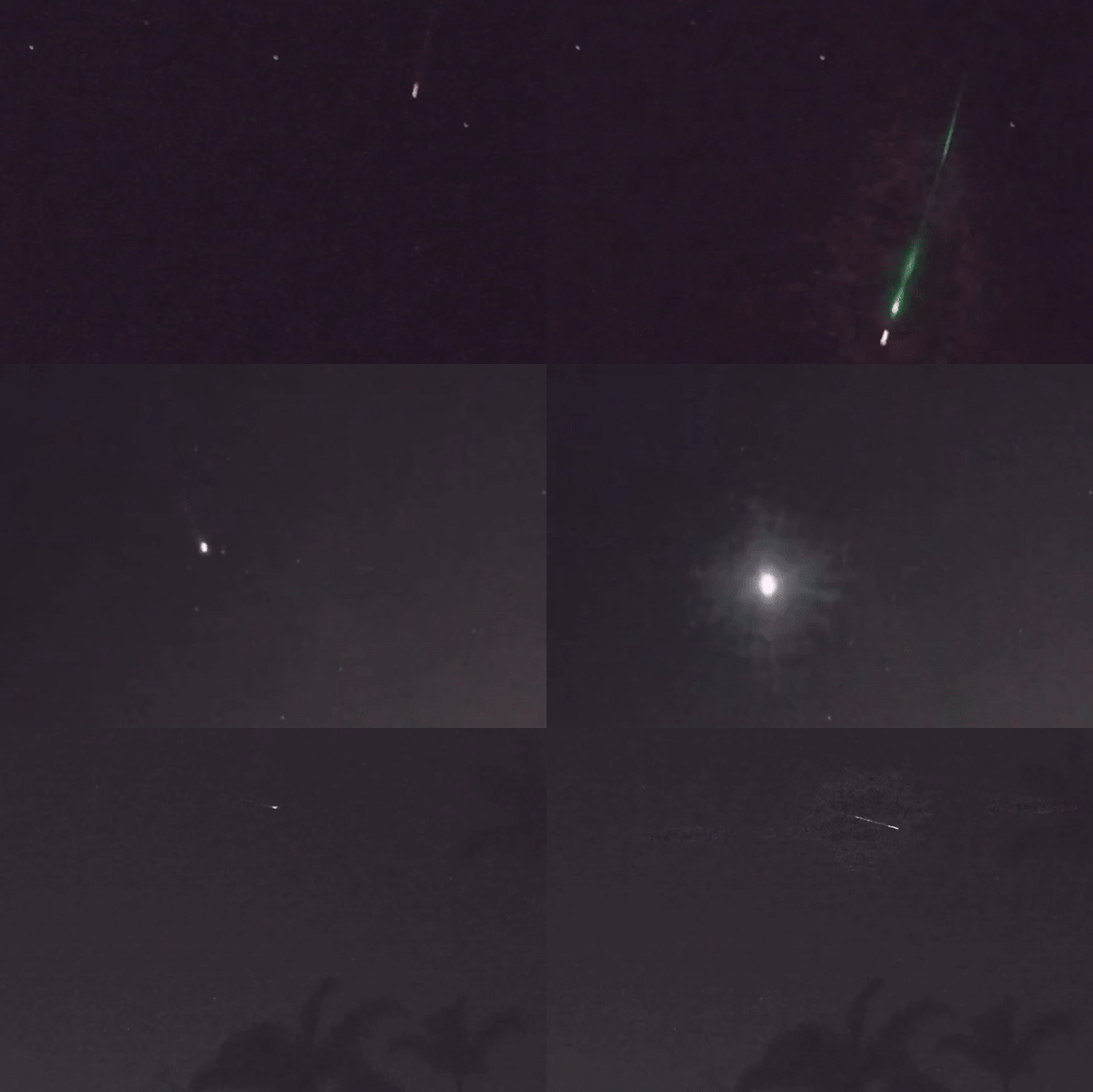
“The radiant of the Southern Delta Aquariids is highest at around 2.00am local time,” said Horner. “Which means anytime between 11pm and dawn would be the prime time.”
Why You Don’t Need a Telescope for This Show
It may seem counterintuitive, but Horner strongly advises leaving your binoculars and telescopes at home.
“The reason is simple,” he said. “You’ll want the widest possible field of view to see the greatest amount of sky. Binoculars give you a narrow tunnel; your eyes give you the universe.”
So, what’s the best gear? A blanket, a comfortable chair, a pillow, and a stargazing app to map the night sky. And one essential tip—avoid looking at your phone for a while beforehand.
“It takes about 45 minutes for your eyes to fully adapt to the dark,” Horner added. “But most adaptation happens within the first five minutes.”
What Are the Southern Delta Aquariids?
The Southern Delta Aquariids are known for their relatively steady output of meteors and are considered one of the stronger showers of the southern skies. The radiant, or point from which the meteors appear to originate, lies within the Aquarius constellation.

These meteors enter Earth’s atmosphere at a blistering speed of around 40 kilometers per second, leaving behind bright, long trails. The best views will come when the radiant reaches its highest point—around 2am.
What About the Alpha Capricornids?
Although the Alpha Capricornids are less intense, they’re still worth watching. Their radiant lies in the Capricornus constellation and they’re visible earlier in the evening—peaking just before midnight.
Traveling at about 22 kilometers per second, these meteors are slower but often brighter. In some cases, they can even produce fireballs, making them highly photogenic for those looking to snap a memorable night-sky shot.
Where to Watch the Show
For the best views, experts recommend escaping the glare of city lights. Find a dark-sky location, ideally far from street lamps, headlights, and buildings. Scouting out the perfect spot during the day will save you the hassle of fumbling around in the dark later.
Horner’s tips:
- Get away from urban light pollution
- Give your eyes time to adjust
- Use a night-sky app to find the radiant
- Bring layers and snacks—it’s winter in Australia!
Weather may play spoilsport, however. Rain is forecasted in Sydney, while clouds may hover over Melbourne and Brisbane. It’s best to check local weather updates before heading out.
Why Do Meteor Showers Happen?
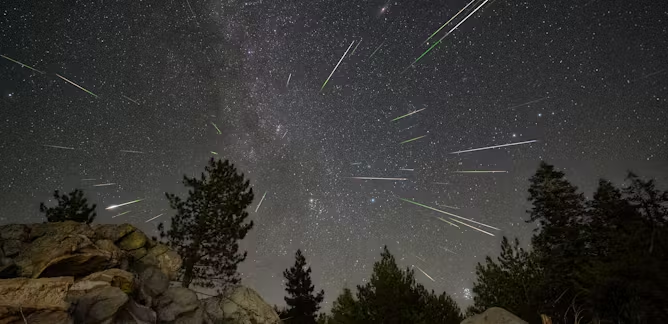
Meteor showers occur when Earth passes through a trail of debris left behind by a comet. These particles, often no larger than a grain of sand, burn up in the atmosphere, producing the streaks of light we see as meteors.
“It’s like driving through a swarm of insects,” Horner explained. “The bugs hit the windscreen and splatter. In our case, the Earth is the windscreen and the debris is the bugs.”
Each shower is named after the constellation from which it appears to radiate—hence Delta Aquariids and Alpha Capricornids.
What’s Next for Stargazers?
If you miss this week’s shows, don’t worry—there’s an even bigger spectacle on the horizon.
Horner points to The Geminids as the most impressive meteor shower of the year, peaking around December 14–15.
“Depending on your latitude, you’ll start seeing them around 9.30pm in Brisbane,” he said. “This year, the moon will be new, so there’ll be no light interference—perfect viewing conditions.”
Final Tips for the Perfect Night Under the Stars
- Dress warm—it’s winter!
- Avoid caffeine if you plan to nap
- Use a red-light flashlight to preserve night vision
- Be patient—meteors often come in bursts
And perhaps most importantly—look up, be present, and enjoy the humbling reminder that Earth is just a speck in a vast, mysterious universe.
As Carl Sagan once said:
“Somewhere, something incredible is waiting to be known.”
for more news visit www.DailyGlobalDiary.com
Space
Space Forge Just Raised 30 Million to Build Super Chips in Space and It Might Change Everything
With space-made materials poised to revolutionize semiconductors, UK-based Space Forge is rewriting the rules of advanced manufacturing


In what is being hailed as a historic leap for space-tech and semiconductor innovation, UK startup Space Forge has secured $30 million in Series A funding to accelerate its mission of manufacturing advanced chip materials in space. Headquartered in Cardiff, Wales, the company is turning science fiction into tangible innovation — producing high-performance semiconductors and materials in orbit where microgravity and temperature extremes enable breakthroughs that Earth simply can’t offer.
Demand for semiconductors is booming — from AI to EVs, every industry wants faster, more energy-efficient chips. But traditional silicon is reaching its limits. Space Forge’s answer? Take the manufacturing off-planet. According to CEO Joshua Western, space-based crystal production results in ultra-pure materials with far fewer defects — ideal for powering everything from 5G towers to quantum computing systems.
Space Forge’s most recent funding round, the largest Series A in UK space-tech history, was led by the NATO Innovation Fund with backing from prominent investors including the World Fund, British Business Bank, and Northrop Grumman. Their belief in Space Forge’s “carbon-negative” technology underlines how significant its innovation could be — not just for defense or computing, but for sustainability as well.
But what makes this all possible now? As Western puts it, “Physics has the answers, and engineering is how you actually get there.” And indeed, the engineering is impressive. Instead of using capsules for re-entry like in the Apollo era, Space Forge returns its payloads via umbrella-like heat shields — affectionately nicknamed “Mary Poppins from space.” Their next-gen satellite, ForgeStar-1, is readying for launch this year, followed by the even more ambitious ForgeStar-2.
Behind the scenes, geopolitical pressure is also playing a role. With Europe importing 80% of its chips — and 90% of advanced semiconductors sourced from Taiwan — the need for a resilient, localized supply chain has never been greater. Space Forge’s model could make Europe less dependent, more sustainable, and far more future-ready.
The road ahead is challenging. Their first mission in 2023 was lost due to a Virgin Orbit launch failure. But with new funding, a global support network, and strategic partnerships (including with Sierra Space and the UK Space Agency), Space Forge is preparing to return to orbit and prove that the future of chips lies above the clouds.

“He-Man Wears a Suit…”: Why Nicholas Galitzine’s Masters of the Universe Trailer Has Fans Talking

Camilla Läckberg Isn’t Done Yet… The Queen of Swedish Noir Eyes Film, TV and a Bold Plan to ‘Conquer America’

“Screaming, Crying, Almost Throwing Up”… Sundance Insiders Reveal the Untold Chaos Behind America’s Most Influential Film Festival
From Swedish Noir to Hollywood Dreams Camilla Läckberg Has a Bigger Plan in Motion
When Sundance Nearly Fell Apart Insiders Recall the Chaos Behind the World’s Most Influential Film Festival

1-Iran Issues Dire Warning to Israel and Defies Trump on Nukes: “We’re Ready to Strike Deep Inside”

Donald Trump’s net worth reveals the fortune behind the former US President and business mogul

Caitlin Clark Sidelined with Quad Strain, Set to Miss Two Weeks of WNBA Action

Elon Musk Breaks Ranks with Trump Over ‘Big, Beautiful’ Tax Bill

“Tomás Rodríguez Net Worth 2025: Panama’s Gold Cup Goal‑Machine’s Surprising Fortune Revealed”

Miss Jamaica Suffers Terrifying Fall Off Miss Universe Stage; Rushed to Hospital on Stretcher in Viral Video

Moana Live-Action Teaser Sparks Outrage as Fans Call Disney’s Move a ‘Clear Money Grab’ — What Went Wrong?

Ryan Gosling’s Project Hail Mary Trailer Stuns Fans with a Mysterious Alien Ally and a Mission That Could Save Earth

Apple delays Jessica Chastain thriller The Savant about domestic extremism after recent US violence

Avatar 3, Fire and Ash trailer reveals Jake Sully’s family facing terrifying new Na’vi enemies with deadly fire powers
-
 Entertainment6 days ago
He-Man Wears a Suit Now… Nicholas Galitzine’s ‘Masters of the Universe’ Trailer Drops a Shock Fans Didn’t See Coming
-
 Entertainment1 week ago
Brazil Eyes Oscar History Again… ‘The Secret Agent’ Scores Best Picture Nomination as Wagner Moura Stuns Hollywood
-

 Entertainment4 days ago
“Comedy Needs Courage Again…”: Judd Apatow Opens Up on Mel Brooks, Talking to Rob Reiner, and Why Studio Laughs Have Vanished
-
 Entertainment1 week ago
Box Office Shocker as Chris Pratt’s ‘Mercy’ Knocks ‘Avatar 3’ Off the Top but Nature Had Other Plans…
-

 Entertainment6 days ago
Oscars Go Global in a Big Way as This Year’s Nominations Signal a New Era: ‘The Academy Is Finally Looking Beyond Hollywood…’
-

 Entertainment1 week ago
Michael Bay Makes a Power Move… Blockbuster Director Signs with CAA in a Deal That’s Turning Heads
-

 Entertainment6 days ago
“Dangerously Kinky… and Darkly Funny”: Olivia Wilde and Cooper Hoffman Push Boundaries in ‘I Want Your Sex’
-
Entertainment1 week ago
Fans Didn’t Expect This Look… Nicholas Galitzine’s Masters of the Universe Trailer Sparks Debate