
Sports
Pat Cummins’ Comeback Countdown Begins – “Bowling at Full Pace” Fuels Hope for Ashes Test No.2
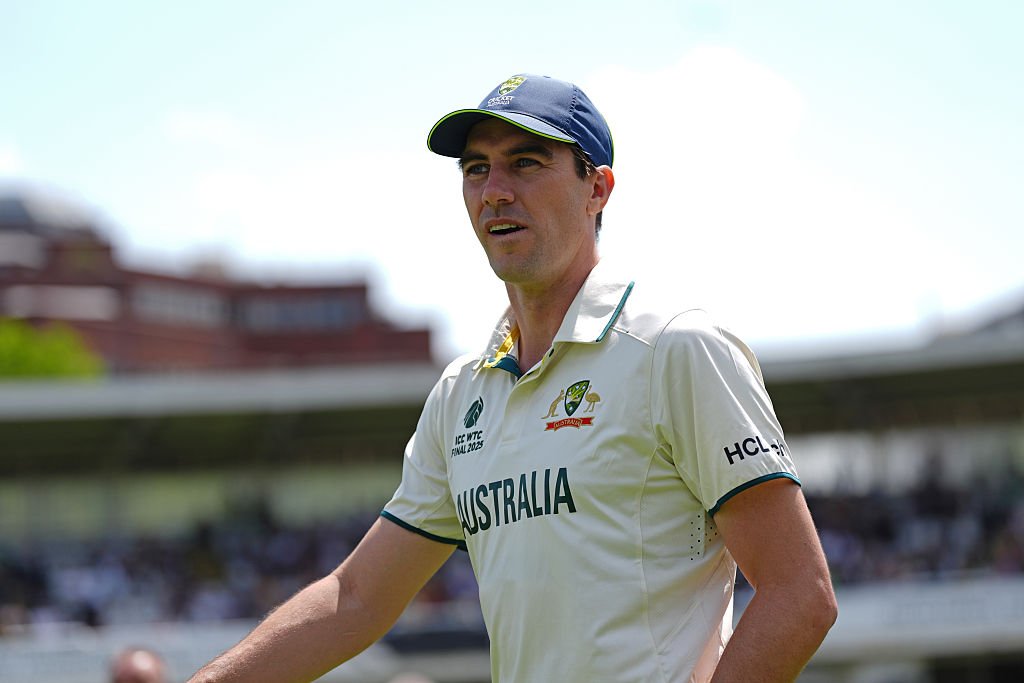
Australia’s Test captain Pat Cummins is back in rhythm, bowling at full throttle in Sydney nets, as he eyes a stunning return for the second Ashes Test at The Gabba.


Australia’s cricket fraternity is breathing easier again. After weeks of uncertainty surrounding Pat Cummins’ back injury, the national captain has returned to bowling at full pace in the New South Wales nets—sending down fiery deliveries that signal a potential comeback for the second Ashes Test at The Gabba.
The 32-year-old fast bowler, who was earlier ruled out of the opening Test in Perth Stadium starting November 21, has been recovering from a stress-related back issue. Now, after an intense training session at the Sydney Cricket Ground, his prospects look brighter than ever.
“Bowling at full speed felt really good. It’s all about managing the load and staying balanced,” Cummins was quoted as saying privately to his teammates, according to insiders close to the camp.
A Critical Return in the Making
The timing of Cummins’ progress couldn’t be better. Australia’s bowling unit—featuring Mitchell Starc, Josh Hazlewood, and Scott Boland—is set to lead the attack in the first Test. However, it’s Cummins’ leadership and control that the team has missed most since the 2023 Ashes Series in England.
While Scott Boland’s performances have dipped slightly after his brilliant debut series, Cummins’ ability to extract both bounce and discipline could prove decisive on Australian pitches. “He’s not just a fast bowler; he’s a strategist,” a former Aussie pacer told local media.
The Perth Setback and Brisbane Hope
Cummins’ absence from the opener in Perth is still a blow. But the star quick is now shaping as a “genuine chance” to feature in the second Test, the iconic day-night clash at The Gabba beginning December 4.
“I’ve learned that trying to play every Test back-to-back while coming off an injury isn’t smart,” Cummins admitted earlier this week. “The idea is to contribute meaningfully when I’m back, not just to be present.”
His honesty reflects a maturity that’s defined his captaincy since taking over from Tim Paine.
Hazlewood’s Perspective: “Experience Is Our Strength”
Meanwhile, fellow fast bowler Josh Hazlewood has brushed off criticism from the English press, who mockingly dubbed Australia’s squad “Dad’s Army.”
“We bounce off each other and know each other’s game so well,” Hazlewood said during a media interaction in Sydney. “There’ll come a time when age catches up, but not yet. Experience is our advantage.”
Hazlewood, sitting on 295 Test wickets, is just five away from joining the exclusive 300-club alongside Nathan Lyon, Starc, and Cummins. “I’m not counting wickets anymore,” he joked. “I’m just focusing on rhythm—and it’s coming out really nice.”

The Chemistry Behind Australia’s Bowling Quartet
The “big four” of Australian cricket—Cummins, Starc, Hazlewood, and Lyon—have become synonymous with resilience. Between them, they’ve taken over 1,200 Test wickets, forming one of the most successful bowling combinations in the modern era.
What makes this unit so effective isn’t just pace or spin—it’s trust. When one falters, another rises. “That’s what makes us unique,” Hazlewood explained. “We don’t compete internally; we complement each other.”
This cohesion was evident during the 2023 series in England, where despite tough conditions and relentless schedules, the bowlers kept Australia afloat, ultimately helping retain the Ashes.
Starc’s Subtle Warning to England
Veteran quick Mitchell Starc, known for his lethal swing with the pink ball, has also warned England’s pacers about the brutal nature of hard Australian wickets. “You can’t just rely on pace here; you need adaptability,” Starc said. His words carry weight—especially as England’s attack, led by Ben Stokes and Mark Wood, prepares for long days in the field.
England’s “Dad’s Army” Jibe Backfires
When Australia’s squad was announced earlier this week, British tabloids couldn’t resist poking fun, emphasizing that only Cameron Green was under 30 among the 15-man group. Yet, this “ageing” side boasts unmatched chemistry and experience—a combination that’s historically spelled trouble for England.
The English lineup, led by the fiery Ben Stokes, features young guns like Harry Brook, Zak Crawley, and Ollie Pope, but lacks the settled rhythm that Australia enjoys.
The Road to Redemption for Cummins
For Pat Cummins, this comeback is more than physical—it’s personal. After a gruelling 2023 that included the World Test Championship Final, Ashes, and ODI World Cup commitments, his body bore the brunt of Australia’s relentless schedule.
Now, with a few weeks of rest, rehab, and recalibration, the Sydney-born pacer seems ready to spearhead the attack once again.
“Every delivery he sent down in the nets had that trademark snap,” an observer from Cricket Australia noted. “If there are no setbacks, he’s on track for Brisbane.”
The Ashes 2025-26 Fixtures
- 1st Test: Nov 21–25, Perth Stadium
- 2nd Test: Dec 4–8, The Gabba, Brisbane (D/N)
- 3rd Test: Dec 17–21, Adelaide Oval
- 4th Test: Dec 26–30, Melbourne Cricket Ground
- 5th Test: Jan 4–8, Sydney Cricket Ground
As the countdown continues, Australian fans are hoping that their captain’s roar will once again echo through Brisbane’s summer air.
Visit our site for more news www.DailyGlobalDiary.com








Cricket
Rajasthan Royals Sold for Record $1.63 Billion — IPL’s First $1 Billion Franchise, Meet New Owner Kal Somani
A US-based consortium led by tech entrepreneur Kal Somani has acquired Rajasthan Royals in a landmark deal — with Rob Walton of the Walmart family and the Detroit Lions-linked Hamp family also on board. BCCI approval still pending.


Indian Premier League just got a whole lot bigger.
Rajasthan Royals — the franchise that was purchased for a mere $67 million back in 2008 — has now been acquired for a staggering $1.63 billion (approximately ₹15,290 crore). With this deal, the Royals have become the first IPL franchise to cross the $1 billion valuation mark — a milestone that underlines just how far the league has come since its inception.
The acquisition has been led by US-based entrepreneur Kal Somani, heading a powerful consortium of global investors. According to news agency PTI, the deal is pending approval from the BCCI and is expected to be formally signed in the coming days.
Walmart Family and Detroit Lions Join the Party
Somani does not stand alone in this landmark deal. His consortium includes two heavyweight names from the world of American sport and business.
Rob Walton — a member of the founding family of retail giant Walmart, one of the world’s most valuable companies — is part of the group. So is the Hamp family, which holds a majority stake in the NFL‘s Detroit Lions.
This is not just a business transaction. It is a declaration that global sports money has well and truly arrived in the IPL.
Who Exactly Is Kal Somani?
What makes this story even more interesting is that Somani was not a stranger to Rajasthan Royals. He was already associated with the franchise as a minority stakeholder before stepping up to lead the consortium that now owns it outright.
Based in Scottsdale, Arizona, Somani brings over 15 years of experience spanning education technology, artificial intelligence, data privacy, and sports technology.
He is the founder of several ventures, including IntraEdge — a global technology services firm — as well as Truyo and Truyo.AI, platforms focused on privacy compliance and AI governance. He is also the man behind Academian, an education technology platform.
Beyond the boardroom, Somani is the co-owner of Motor City Golf Club and an early investor in TMRW Sports and the TGL Golf League — co-founded by Tiger Woods and Rory McIlroy in partnership with the PGA Tour.
On his LinkedIn profile, Somani has described his mission simply — “My focus is on building companies that deliver high-impact tech solutions while staying true to a mission of empowering people.”
From $67 Million to $1.63 Billion — The IPL Miracle
The numbers tell the story better than anything else.

In 2008, under the captaincy of the legendary Shane Warne, Rajasthan Royals won the very first IPL title — and the franchise was purchased for just $67 million. Eighteen years later, the same franchise has changed hands for $1.63 billion — a rise of more than 24 times in valuation.
This comes just days after Royal Challengers Bengaluru (RCB) were acquired by an Aditya Birla Group-led consortium for $1.78 billion. Two franchise sales. Two record-breaking deals. Within days of each other.
IPL teams are no longer just cricket franchises. They are global sporting assets — and the world’s biggest investors are taking notice.
What Happens Next?
The deal is currently awaiting formal BCCI approval and is expected to be completed after the IPL 2026 season concludes. British-Indian businessman Manoj Badale, who currently holds a 65% stake in the franchise, will be exiting as part of this transaction.
Until then, Rajasthan Royals will take the field to defend their title — while the new ownership group waits in the wings, ready to write the next chapter of one of cricket’s most storied franchises.
Cricket
Spencer Johnson Ditches PSL, Joins CSK for IPL 2026 — PCB Threatens Legal Action as Player Exodus Continues
Australian left-arm pacer Spencer Johnson has signed with Chennai Super Kings as a replacement for injured Nathan Ellis — becoming the latest overseas star to choose IPL over PSL, as Pakistan’s cricket board vows consequences.

When two leagues clash on the calendar, the players always have to pick a side. And once again, the Indian Premier League has won.
Australian left-arm pacer Spencer Johnson has officially joined Chennai Super Kings (CSK) for the IPL 2026 season, just days after withdrawing from the Pakistan Super League (PSL) citing personal reasons. The five-time IPL champions confirmed the signing on Tuesday, with Johnson coming in as a replacement for injured Australian pacer Nathan Ellis.
Johnson will pocket INR 1.5 crore for his role in the CSK squad — a franchise known for making smart, calculated replacement signings.
From Quetta to Chennai
Johnson had been contracted to represent the Quetta Gladiators in PSL 2026. On March 15, he pulled out of the tournament, citing personal reasons — with no further explanation offered at the time.
Now, the reason seems clearer. A yellow jersey was waiting.
The 30-year-old brings solid T20 credentials to the CSK camp. He has represented Australia in 13 international matches — 5 ODIs and 8 T20Is — picking up 18 international wickets. IPL is also not new territory for him. Johnson has previously worn the colours of both Gujarat Titans (GT) and Kolkata Knight Riders (KKR) in the league.
The PSL Exodus — Johnson Is Not Alone
Johnson’s move is part of a growing pattern this season. Several overseas players have left their PSL commitments behind after securing IPL replacement spots.
Blessing Muzarabani and Dasun Shanaka had already pulled out of their respective PSL deals after being named replacement players by Kolkata Knight Riders and Rajasthan Royals respectively.
The message being sent — intentionally or not — is one that Pakistan cricket has been grappling with for years. When IPL calls, very few say no.
PCB Chief Mohsin Naqvi Issues Warning
Pakistan Cricket Board (PCB) chairman Mohsin Naqvi is not taking this lying down. Speaking to reporters on March 22, he made his position crystal clear.
“We will take action against those players according to the rules. There was a case last year too, and the same thing will happen this time,” Naqvi said firmly.
The precedent he referred to is South African pacer Corbin Bosch, who left PSL last year to join Mumbai Indians as a replacement player. PCB initiated legal proceedings against him, and he was subsequently banned from PSL for one year.

Johnson, Muzarabani, and Shanaka could now face similar consequences.
However, Naqvi also struck a pragmatic tone, acknowledging the reality of the situation. “Clashing with the IPL is not an issue because if players are going there, we’re getting excellent players coming here as well. We could not afford to postpone the PSL because we have no other window all year,” he added.
Two Leagues, One Winner
PSL 2026 is set to begin on March 26 — just two days before IPL 2026 kicks off on March 28. The near-simultaneous scheduling has always created a dilemma for overseas players, and this year is no different.
For CSK, however, this is simply good business. Losing Nathan Ellis to injury was a blow, but landing an experienced left-arm pacer with IPL pedigree for just INR 1.5 crore is the kind of smart squad management that MS Dhoni‘s franchise has always been known for.
For the PCB, the frustration is understandable — but the solution may lie not in legal battles, but in making PSL an offer that players simply cannot refuse.
Until then, the exodus continues.
Sports
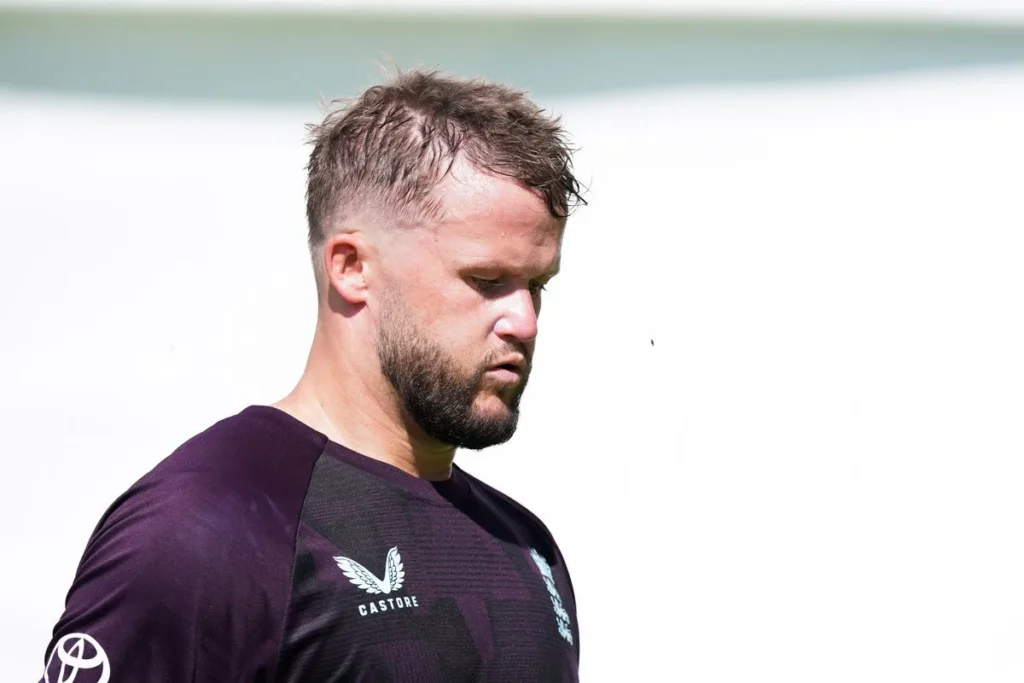
Ben Duckett Pulls Out of IPL 2026 to Save His England Career — Faces Two-Year Ban as Delhi Capitals Left Stranded Again
England opener Ben Duckett has withdrawn from IPL 2026 just days before the tournament begins, choosing county cricket over the cash-rich league — but the decision could cost him two years of IPL eligibility.

Some decisions are easy to understand, even when they are hard to make. And Ben Duckett’s choice to walk away from the IPL — days before it begins — is one of them.
England’s opening batter Ben Duckett has officially withdrawn from the IPL 2026 season, pulling out of his commitment to Delhi Capitals just ahead of the tournament’s March 28 start. The 31-year-old left-hander had been picked up by the franchise for INR 2 crore in last year’s mini auction. Now, Delhi Capitals are left searching for answers — and a replacement.
The reason? England. Family. Home. And the desire to get his cricket right.
In His Own Words — “I Need to Be in the Best Possible Place”
Duckett took to his Instagram Stories to break the news himself, and his message was personal and heartfelt.
“I have made the extremely difficult decision to withdraw from the IPL. I have given this a lot of thought, and it has not been an easy choice. Representing England is something I have dreamed of since I was a child, and I want to give everything I can to English cricket. To do that, I need to ensure I am in the best possible place physically and mentally ahead of the summer,” he wrote.
He also extended an apology to the Delhi Capitals franchise and its fans — acknowledging the disruption his late withdrawal would cause.
“I would like to sincerely apologise to everyone in Delhi. I was genuinely very excited about the opportunity to represent the franchise, and I fully appreciate the time and planning that goes into building a squad. I am sorry for any disruption my decision may cause,” he added.
The Ashes Shadow That Wouldn’t Go Away
Duckett’s decision does not come from nowhere. It comes from a difficult winter that left scars.
In the Ashes last year, England suffered a heavy 4-1 defeat. Duckett managed just 202 runs across five Tests — well below his usual standard. But the runs were only part of the story.
During England’s trip to Noosa, between the second and third Ashes Tests, Duckett was reportedly found in an inebriated state — an incident that drew significant attention and further put him under the spotlight.
Now, with a Test series against New Zealand on the horizon, Duckett wants to rebuild — quietly, away from the IPL circus.
The County Cricket Plan
Speaking to The Telegraph Sport, Duckett explained his thinking with refreshing honesty.
“I’ve spent a lot of time away from home in different places, and it felt like the best thing for me to do to be ready to play for England is to be here right now, at home, refreshing my mind and body. More importantly, play some four-day cricket for Notts, and try to find that form I had last summer,” he said.
He will represent Nottinghamshire in the County Championship, which begins on April 3 — just days after IPL would have started for him.
“I could have gone to the IPL, spent time on the sidelines, then rushed back into the Test summer. I wouldn’t have time to process the winter, learn from mistakes, and go back to the drawing board with Notts,” he added. It is the kind of self-awareness that is rare — and admirable.
The Price of Walking Away — A Possible Two-Year Ban
However, noble as his intentions may be, Duckett’s last-minute withdrawal carries a serious consequence.
The IPL Governing Council introduced a rule in 2024 that is unambiguous in its language — “Any overseas player who registers for an auction and, after getting picked at the auction, makes himself unavailable before the start of the season will get banned from participating in the IPL/IPL auction for two seasons.”
This is not a new situation for Delhi Capitals either. England’s white-ball captain Harry Brook was banned from the IPL for two seasons after pulling out of his IPL contract at the last minute. And — in a remarkable coincidence — Brook had also been signed by Delhi Capitals when that happened.
Two England players. Two last-minute withdrawals. Both from Delhi Capitals. The franchise will not be pleased.
England First — A Decision That Deserves Respect
There will be those who criticise Duckett for the timing of his decision. Franchises plan months in advance, and a last-minute withdrawal — whatever the reason — creates real headaches.
But step back for a moment, and the picture looks different.
Here is a cricketer who has chosen his country over a lucrative contract. Who has admitted he is not in the right headspace and needs time to reset. Who has been honest with himself, his franchise, and his fans — at a time when honesty in professional sport is not always the default setting.
Duckett is not running away from cricket. He is running toward it — the version of cricket that made him who he is. Four-day matches. County grounds. Nottinghamshire. England.
Whether the IPL Governing Council sees it that way remains to be seen.

Russell T Davies Says ‘You’re Queer in 2026, You’re a Political Act’ — and His New Show ‘Tip Toe’ Is His Most Furious, Personal Work Yet…

Netflix’s Ted Sarandos Turns to Europe After Warner Deal Collapse… and Sends a Subtle Message to Regulators

The Writers of ‘Paradise’ Debated Hard Before Giving You That Jaw-Dropping Moment Early — Here’s Why They Finally Said ‘Do It…’

Rajasthan Royals Sold for Record $1.63 Billion — IPL’s First $1 Billion Franchise, Meet New Owner Kal Somani

Spencer Johnson Ditches PSL, Joins CSK for IPL 2026 — PCB Threatens Legal Action as Player Exodus Continues

1-Iran Issues Dire Warning to Israel and Defies Trump on Nukes: “We’re Ready to Strike Deep Inside”

Donald Trump’s net worth reveals the fortune behind the former US President and business mogul

“She Never Made It Out…” Albany House Fire Claims Woman’s Life as Family Pleads for Help to Bring Her Home

Caitlin Clark Sidelined with Quad Strain, Set to Miss Two Weeks of WNBA Action

“Tomás Rodríguez Net Worth 2025: Panama’s Gold Cup Goal‑Machine’s Surprising Fortune Revealed”

Miss Jamaica Suffers Terrifying Fall Off Miss Universe Stage; Rushed to Hospital on Stretcher in Viral Video

Moana Live-Action Teaser Sparks Outrage as Fans Call Disney’s Move a ‘Clear Money Grab’ — What Went Wrong?

Ryan Gosling’s Project Hail Mary Trailer Stuns Fans with a Mysterious Alien Ally and a Mission That Could Save Earth

Apple delays Jessica Chastain thriller The Savant about domestic extremism after recent US violence

Avatar 3, Fire and Ash trailer reveals Jake Sully’s family facing terrifying new Na’vi enemies with deadly fire powers
-

 Entertainment6 days ago
Cannes 2026 Hasn’t Announced a Single Film Yet — But the Whisper Network Is Already Pointing to These Names and It’s Exciting…
-

 Entertainment7 days ago
Amy Poehler and Sterlin Harjo Are Getting One of Television’s Highest Honours — and the Reason Why Says Everything About Where Storytelling Is Headed…
-

 Entertainment6 days ago
Almodóvar, Lars von Trier, Joel Coen and More — The Films That Could Own Cannes 2026 Are Already Generating Serious Buzz and the List Is…
-

 Entertainment1 week ago
Oscars 2026 Red Carpet Shockers: Zendaya’s Late Arrival, Jessie Buckley’s Grace Kelly Tribute… and Chase Infiniti Owning the Night
-

 Entertainment1 week ago
The Oscars Are Already Being Called Before They Happen and Scott’s Final Feinberg Forecast Reveals a Shocking Front-Runner That Nobody Saw Coming…
-

 Politics1 week ago
“Trump Reveals ‘Early Stage Breast Cancer’ Diagnosis of Susie Wiles… But Says Her ‘Strength Says Everything’”
-

 Entertainment6 days ago
Lollapalooza 2026 Just Dropped Its Most Surprising Lineup Yet — and the One Historic Thing Nobody Is Talking About Is the Real Story…
-

 Health1 week ago
“Kent Meningitis Tragedy: Second Student Dies as Outbreak Sparks Hospital Emergency…”