
Sports
SEC Commissioner Greg Sankey Slams ACC, Big 12 Over Playoff Expansion Pushback
Sankey calls out “coordinated press releases” as College Football Playoff expansion talks spark tension among Power 5 conferences

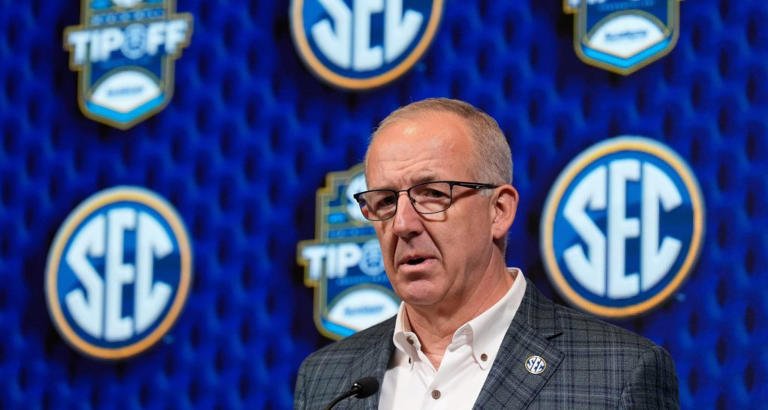
At the SEC spring meetings on Monday, Commissioner Greg Sankey didn’t hold back. With college football’s postseason undergoing transformative discussions, Sankey took direct aim at the ACC and Big 12, accusing them of posturing through “coordinated press releases” rather than offering constructive input.
The backdrop to Sankey’s criticism is the ongoing debate surrounding the College Football Playoff (CFP) expansion. Recently, FBS commissioners and Notre Dame’s athletic director approved a significant shift: moving to a straight-seeding model that no longer guarantees first-round byes to conference champions. Now, the focus is on potentially expanding the field to 14 or 16 teams and determining the distribution of automatic bids.
Sankey, alongside Big Ten commissioner Tony Petitti, plays a central role in shaping this future. But his frustrations on Monday were pointed—particularly at conferences who have vocally opposed aspects of the new structure.
“I don’t need lectures from others about the ‘good of the game,’” Sankey told reporters. “And coordinating press releases about it? You can issue a statement—but I’m looking for ideas to move us forward.”
His comments were a not-so-subtle jab at the ACC and Big 12, who have appeared unified in expressing concern over the evolving power dynamics in college football. With the SEC and Big Ten viewed as dominant forces, smaller conferences are seeking ways to retain influence. For many of them, strategic media messaging may be their last remaining leverage.
Critics argue that Sankey’s remarks reflect a dismissive attitude toward collaboration. While he claims to be open to ideas, the reality is that the SEC and Big Ten often control the narrative and direction of the sport. The coordinated messaging from the ACC and Big 12, however modest, is a sign of resistance—a rare pushback in a landscape largely defined by the will of the two super-conferences.
With billions in media rights and the future of the postseason on the line, every public statement—and counterstatement—matters. As the playoff picture continues to evolve, so too does the balance of power in college football.




Sports
Caleb Williams Impresses, but the Bears’ Late-Game Decisions Raise Eyebrows
One impossible touchdown changed everything — but Chicago’s season may have been decided by what happened next
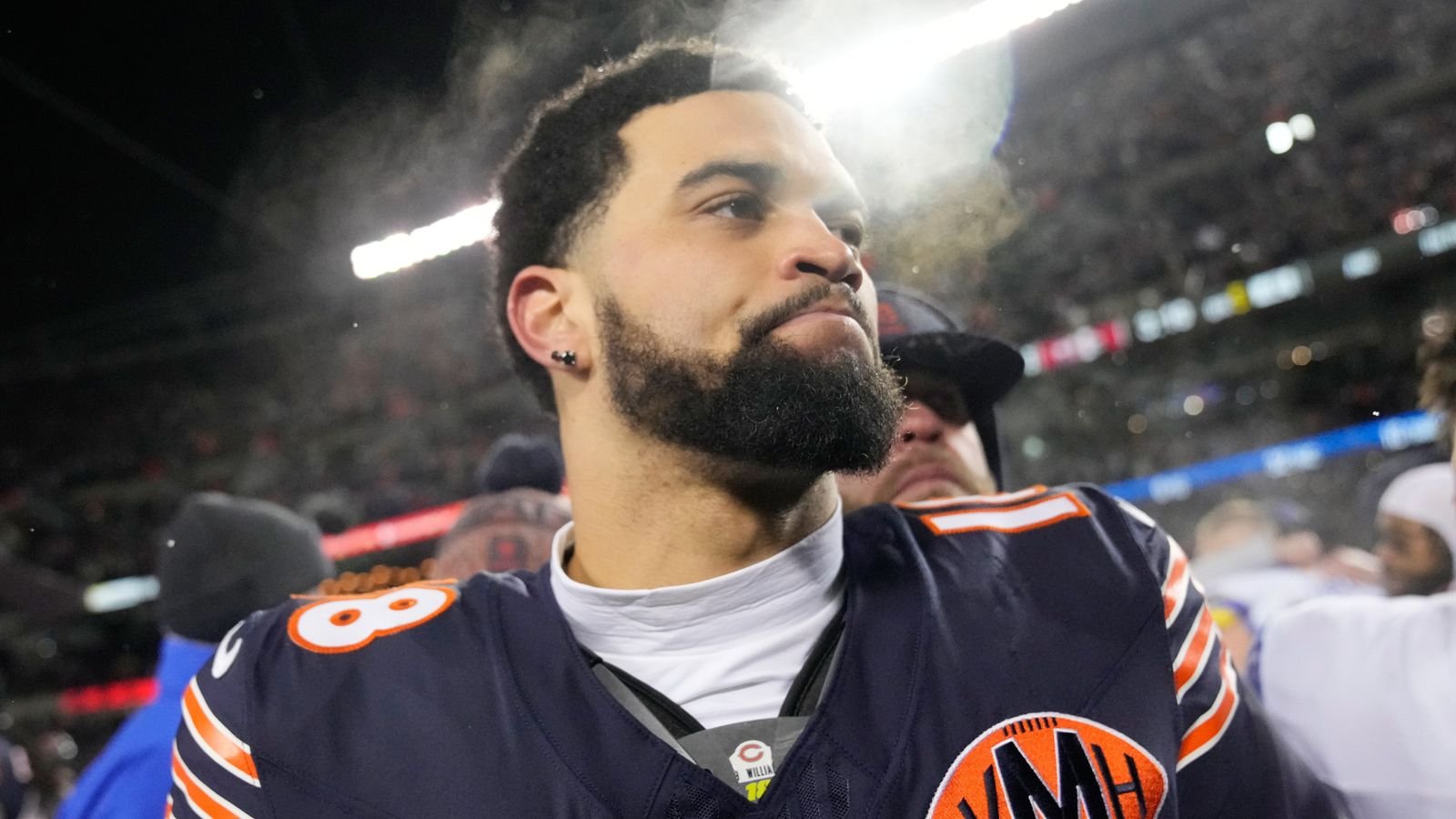
For one breathtaking moment, football stopped making sense.
With seconds left in a divisional-round playoff game, Caleb Williams launched a prayer — a 50-plus-yard, off-balance, back-foot moon shot — and somehow, impossibly, it found Cole Kmet in the end zone. It was the kind of touchdown that instantly joins NFL folklore, the sort of play fans remember for decades.
Suddenly, the Chicago Bears were one extra point away from tying the Los Angeles Rams — a scenario no one could have imagined just moments earlier.
And that’s when the question arrived, loud and unavoidable:
Why not go for two?
The dream-big argument
If Chicago converts the two-point try, the Rams are done. Season over. The Bears move one game away from the Super Bowl, potentially facing either a second-year quarterback or an injury replacement in the AFC. No matchup in the NFL is easy, but this was a window — and those windows don’t stay open long.
Ask Aaron Rodgers or Dan Marino how rare Super Bowl chances truly are. Between them, 38 seasons, one Super Bowl appearance each. Even greatness doesn’t guarantee multiple shots.
Momentum, belief, shock value — everything screamed end it now. One play. One decision. Push all the chips to the middle.
But football decisions aren’t made in the clouds. They’re made in film rooms.
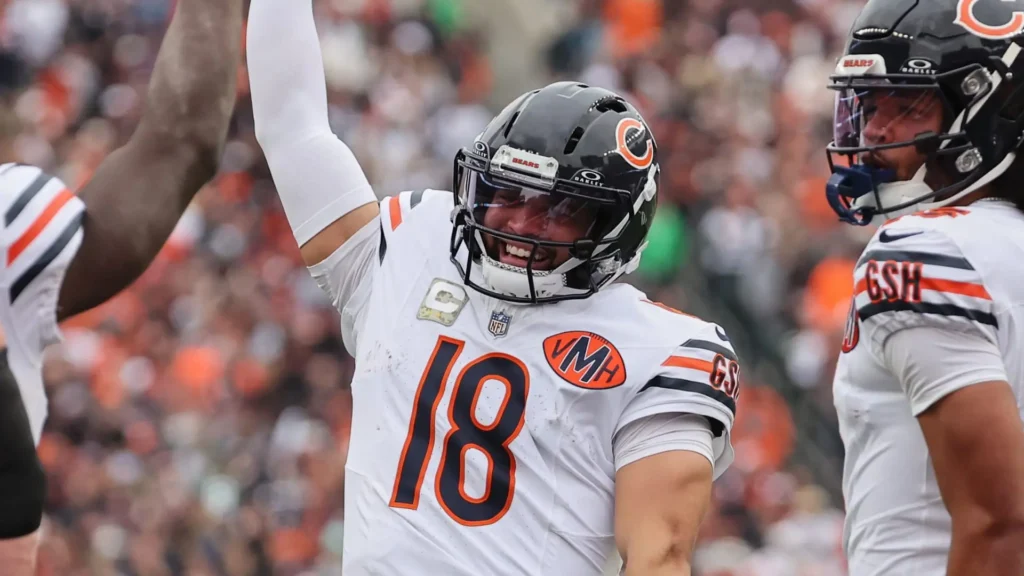
Why Chicago didn’t gamble
Offensive coordinator Ben Johnson didn’t flinch. Replays showed him calm, unmoved, almost indifferent to the miracle unfolding. He knew the touchdown created options — but also responsibility.
Because miracles don’t stack.
Just minutes earlier, Chicago had first-and-goal at the Rams’ 5-yard line. Three ineffective runs by De’Andre Swift and a failed fourth-down pass told Johnson everything he needed to know about his short-yardage confidence.
After the game, Johnson explained it plainly.
“Our goal-to-go situations hadn’t gone very cleanly,” he said. “Our inside-the-5 plan hadn’t worked out like we hoped. I just felt better about taking our chances in overtime.”
There was also time left — 13 seconds and two Rams timeouts. One explosive play, maybe a penalty, and Los Angeles could still have stolen it with a field goal even after a failed conversion.
So Chicago chose survival over glory.
How it unraveled anyway
The Bears lived to fight in overtime — and then watched their season collapse anyway. A brutal interception. A defensive breakdown. Game over.
And just like that, Williams-to-Kmet joined a heartbreaking fraternity: iconic plays that didn’t change the ending. Think Kurt Warner to Larry Fitzgerald in Super Bowl XLIII. Think Julio Jones and that impossible toe-tap in Super Bowl LI.
Legendary moments — frozen in time — attached to losses.
So… was it the wrong call?
Emotionally? Maybe.
Strategically? Probably not.
Coaches don’t get paid to chase vibes. They get paid to trust evidence. And Chicago’s evidence said a single, all-or-nothing snap wasn’t the best bet.
That doesn’t make it satisfying. It just makes it honest.

What this moment really means for Chicago
The Bears don’t leave this game empty-handed. They leave with something rarer than a win: belief.
You can’t build a franchise on miracle throws — but you can build a culture on refusing to quit. This team fought until the very last second, and that matters more than fans often admit.
Williams will be just 24 entering the 2026 season. Think about what he might look like at 27, 28, 29. There are no guarantees — Rodgers and Marino taught us that — but this is as good a foundation as any team could ask for.
Years from now, if Chicago is lucky, Williams-to-Kmet won’t be remembered as a cruel “what if.”
It will be remembered as the beginning.
Sports
A Strong Night for Caleb Williams Ends With Doubts About the Bears’ Late Decisions
One impossible touchdown changed everything — but Chicago’s season may have been decided by what happened next
For one breathtaking moment, football stopped making sense.
With seconds left in a divisional-round playoff game, Caleb Williams launched a prayer — a 50-plus-yard, off-balance, back-foot moon shot — and somehow, impossibly, it found Cole Kmet in the end zone. It was the kind of touchdown that instantly joins NFL folklore, the sort of play fans remember for decades.
Suddenly, the Chicago Bears were one extra point away from tying the Los Angeles Rams — a scenario no one could have imagined just moments earlier.
And that’s when the question arrived, loud and unavoidable:
Why not go for two?
The dream-big argument
If Chicago converts the two-point try, the Rams are done. Season over. The Bears move one game away from the Super Bowl, potentially facing either a second-year quarterback or an injury replacement in the AFC. No matchup in the NFL is easy, but this was a window — and those windows don’t stay open long.
Ask Aaron Rodgers or Dan Marino how rare Super Bowl chances truly are. Between them, 38 seasons, one Super Bowl appearance each. Even greatness doesn’t guarantee multiple shots.
Momentum, belief, shock value — everything screamed end it now. One play. One decision. Push all the chips to the middle.
But football decisions aren’t made in the clouds. They’re made in film rooms.
Why Chicago didn’t gamble
Offensive coordinator Ben Johnson didn’t flinch. Replays showed him calm, unmoved, almost indifferent to the miracle unfolding. He knew the touchdown created options — but also responsibility.
Because miracles don’t stack.
Just minutes earlier, Chicago had first-and-goal at the Rams’ 5-yard line. Three ineffective runs by De’Andre Swift and a failed fourth-down pass told Johnson everything he needed to know about his short-yardage confidence.
After the game, Johnson explained it plainly.
“Our goal-to-go situations hadn’t gone very cleanly,” he said. “Our inside-the-5 plan hadn’t worked out like we hoped. I just felt better about taking our chances in overtime.”
There was also time left — 13 seconds and two Rams timeouts. One explosive play, maybe a penalty, and Los Angeles could still have stolen it with a field goal even after a failed conversion.
So Chicago chose survival over glory.
How it unraveled anyway
The Bears lived to fight in overtime — and then watched their season collapse anyway. A brutal interception. A defensive breakdown. Game over.
And just like that, Williams-to-Kmet joined a heartbreaking fraternity: iconic plays that didn’t change the ending. Think Kurt Warner to Larry Fitzgerald in Super Bowl XLIII. Think Julio Jones and that impossible toe-tap in Super Bowl LI.
Legendary moments — frozen in time — attached to losses.
So… was it the wrong call?
Emotionally? Maybe.
Strategically? Probably not.
Coaches don’t get paid to chase vibes. They get paid to trust evidence. And Chicago’s evidence said a single, all-or-nothing snap wasn’t the best bet.
That doesn’t make it satisfying. It just makes it honest.
What this moment really means for Chicago
The Bears don’t leave this game empty-handed. They leave with something rarer than a win: belief.
You can’t build a franchise on miracle throws — but you can build a culture on refusing to quit. This team fought until the very last second, and that matters more than fans often admit.
Williams will be just 24 entering the 2026 season. Think about what he might look like at 27, 28, 29. There are no guarantees — Rodgers and Marino taught us that — but this is as good a foundation as any team could ask for.
Years from now, if Chicago is lucky, Williams-to-Kmet won’t be remembered as a cruel “what if.”
It will be remembered as the beginning.
Sports
Caleb Williams Did His Part But Did the Bears Overthink the Finish
One impossible touchdown changed everything — but Chicago’s season may have been decided by what happened next
For one breathtaking moment, football stopped making sense.
With seconds left in a divisional-round playoff game, Caleb Williams launched a prayer — a 50-plus-yard, off-balance, back-foot moon shot — and somehow, impossibly, it found Cole Kmet in the end zone. It was the kind of touchdown that instantly joins NFL folklore, the sort of play fans remember for decades.
Suddenly, the Chicago Bears were one extra point away from tying the Los Angeles Rams — a scenario no one could have imagined just moments earlier.
And that’s when the question arrived, loud and unavoidable:
Why not go for two?
The dream-big argument
If Chicago converts the two-point try, the Rams are done. Season over. The Bears move one game away from the Super Bowl, potentially facing either a second-year quarterback or an injury replacement in the AFC. No matchup in the NFL is easy, but this was a window — and those windows don’t stay open long.
Ask Aaron Rodgers or Dan Marino how rare Super Bowl chances truly are. Between them, 38 seasons, one Super Bowl appearance each. Even greatness doesn’t guarantee multiple shots.
Momentum, belief, shock value — everything screamed end it now. One play. One decision. Push all the chips to the middle.
But football decisions aren’t made in the clouds. They’re made in film rooms.
Why Chicago didn’t gamble
Offensive coordinator Ben Johnson didn’t flinch. Replays showed him calm, unmoved, almost indifferent to the miracle unfolding. He knew the touchdown created options — but also responsibility.
Because miracles don’t stack.
Just minutes earlier, Chicago had first-and-goal at the Rams’ 5-yard line. Three ineffective runs by De’Andre Swift and a failed fourth-down pass told Johnson everything he needed to know about his short-yardage confidence.
After the game, Johnson explained it plainly.
“Our goal-to-go situations hadn’t gone very cleanly,” he said. “Our inside-the-5 plan hadn’t worked out like we hoped. I just felt better about taking our chances in overtime.”
There was also time left — 13 seconds and two Rams timeouts. One explosive play, maybe a penalty, and Los Angeles could still have stolen it with a field goal even after a failed conversion.
So Chicago chose survival over glory.
How it unraveled anyway
The Bears lived to fight in overtime — and then watched their season collapse anyway. A brutal interception. A defensive breakdown. Game over.
And just like that, Williams-to-Kmet joined a heartbreaking fraternity: iconic plays that didn’t change the ending. Think Kurt Warner to Larry Fitzgerald in Super Bowl XLIII. Think Julio Jones and that impossible toe-tap in Super Bowl LI.
Legendary moments — frozen in time — attached to losses.
So… was it the wrong call?
Emotionally? Maybe.
Strategically? Probably not.
Coaches don’t get paid to chase vibes. They get paid to trust evidence. And Chicago’s evidence said a single, all-or-nothing snap wasn’t the best bet.
That doesn’t make it satisfying. It just makes it honest.
What this moment really means for Chicago
The Bears don’t leave this game empty-handed. They leave with something rarer than a win: belief.
You can’t build a franchise on miracle throws — but you can build a culture on refusing to quit. This team fought until the very last second, and that matters more than fans often admit.
Williams will be just 24 entering the 2026 season. Think about what he might look like at 27, 28, 29. There are no guarantees — Rodgers and Marino taught us that — but this is as good a foundation as any team could ask for.
Years from now, if Chicago is lucky, Williams-to-Kmet won’t be remembered as a cruel “what if.”
It will be remembered as the beginning.

“He-Man Wears a Suit…”: Why Nicholas Galitzine’s Masters of the Universe Trailer Has Fans Talking

Camilla Läckberg Isn’t Done Yet… The Queen of Swedish Noir Eyes Film, TV and a Bold Plan to ‘Conquer America’

“Screaming, Crying, Almost Throwing Up”… Sundance Insiders Reveal the Untold Chaos Behind America’s Most Influential Film Festival
From Swedish Noir to Hollywood Dreams Camilla Läckberg Has a Bigger Plan in Motion
When Sundance Nearly Fell Apart Insiders Recall the Chaos Behind the World’s Most Influential Film Festival

1-Iran Issues Dire Warning to Israel and Defies Trump on Nukes: “We’re Ready to Strike Deep Inside”

Donald Trump’s net worth reveals the fortune behind the former US President and business mogul

Caitlin Clark Sidelined with Quad Strain, Set to Miss Two Weeks of WNBA Action

Elon Musk Breaks Ranks with Trump Over ‘Big, Beautiful’ Tax Bill

“Tomás Rodríguez Net Worth 2025: Panama’s Gold Cup Goal‑Machine’s Surprising Fortune Revealed”

Miss Jamaica Suffers Terrifying Fall Off Miss Universe Stage; Rushed to Hospital on Stretcher in Viral Video

Moana Live-Action Teaser Sparks Outrage as Fans Call Disney’s Move a ‘Clear Money Grab’ — What Went Wrong?

Ryan Gosling’s Project Hail Mary Trailer Stuns Fans with a Mysterious Alien Ally and a Mission That Could Save Earth

Apple delays Jessica Chastain thriller The Savant about domestic extremism after recent US violence

Avatar 3, Fire and Ash trailer reveals Jake Sully’s family facing terrifying new Na’vi enemies with deadly fire powers
-
 Entertainment5 days ago
He-Man Wears a Suit Now… Nicholas Galitzine’s ‘Masters of the Universe’ Trailer Drops a Shock Fans Didn’t See Coming
-
 Entertainment1 week ago
Brazil Eyes Oscar History Again… ‘The Secret Agent’ Scores Best Picture Nomination as Wagner Moura Stuns Hollywood
-
 Entertainment3 days ago
“Comedy Needs Courage Again…”: Judd Apatow Opens Up on Mel Brooks, Talking to Rob Reiner, and Why Studio Laughs Have Vanished
-

 Entertainment1 week ago
Box Office Shocker as Chris Pratt’s ‘Mercy’ Knocks ‘Avatar 3’ Off the Top but Nature Had Other Plans…
-

 Entertainment5 days ago
Oscars Go Global in a Big Way as This Year’s Nominations Signal a New Era: ‘The Academy Is Finally Looking Beyond Hollywood…’
-

 Entertainment1 week ago
Michael Bay Makes a Power Move… Blockbuster Director Signs with CAA in a Deal That’s Turning Heads
-

 Entertainment5 days ago
“Dangerously Kinky… and Darkly Funny”: Olivia Wilde and Cooper Hoffman Push Boundaries in ‘I Want Your Sex’
-
Entertainment1 week ago
Fans Didn’t Expect This Look… Nicholas Galitzine’s Masters of the Universe Trailer Sparks Debate