
Fashion & Culture
Men Are So BACK — How Slogan Tees Became Fashion’s Loudest Protest Again
From Berlin runways to TikTok feeds, designers and activists are reviving the slogan T-shirt as the ultimate statement piece.


Once dismissed as a souvenir shop cliché or a college kid’s lazy day outfit, the slogan T-shirt is storming the runways again — louder, bolder, and more political than ever.
At Berlin Fashion Week, designer Marie Lueder lit up headlines with a simple tank top that read: “Men are so BACK.” Equal parts meme and manifesto, Lueder’s phrase riffed on a TikTok trend but also took a jab at Germany’s far-right surge and Trump’s lingering shadow in Western politics. “Humor is important as a weapon when you feel powerless,” Lueder explained after her show — and the internet ate it up.
Lueder wasn’t canceled (as she half-joked she would be); instead, her viral top proved an old truth: when the world gets messy, we wear our beliefs on our chests.
Fashion historians will tell you this is nothing new. Back in the ’60s, slogan tees were protest banners for the streets — anti-war, pro-feminist, gay rights, civil rights. Katharine Hamnett’s giant anti-nuclear tees in the ’80s, Dior’s “We Should All Be Feminists” in the 2010s — each wave born from cultural friction.
Now, with social feeds fueling micro-activism, designers are doubling down on shirts that shout. Take Willy Chavarria’s Paris finale look: a black tee stating “How we love is who we are,” a message crafted with Tinder and the Human Rights Campaign amid a flood of anti-LGBTQ legislation in the US. Meanwhile, Conner Ives dropped a “Protect the Dolls” tee, channeling proceeds to Trans Lifeline — a simple gesture echoing bigger calls for trans safety and dignity.

For Mexican designer Patricio Campillo, the slogan tee is also pure satire. He strutted out in his own “El Golfo De México” shirt, mocking a surreal Trump-era idea of renaming the Gulf of Mexico “Gulf of America.” “Mexicans have this way of laughing at the complicated stuff,” he says. What began as a tongue-in-cheek nod to street souvenir stalls turned into a viral talking point across Mexico and the US. The backlash? He calls it humbling. The pride it sparked in Mexican American communities? Priceless. Campillo now donates part of the profits to charities for trans youth and unaccompanied migrant minors.
Why does it matter?
Because in an age of infinite scrolling and fleeting hashtags, a bold tee remains a real-world billboard for what you stand for — or what you want to poke fun at. It’s a wearable headline. A micro-rebellion on cotton.
As Valerie Steele, director at New York’s Museum at FIT, sums up: “It comes out of a protest tradition… it’s a billboard that you’re wearing.”
So, next time you pull on a tee that says something — anything — know this: you’re not just dressing casual. You’re part of fashion’s oldest, most defiant tradition: saying it with your chest.


Culture
She Lied About Being Homeless, Salt Path Author Raynor Winn Faces Explosive Accusations That Could Derail Her Legacy
She Lied About Being Homeless, Salt Path Author Raynor Winn Faces Explosive Accusations That Could Derail Her Legacy.
Beloved memoirist Raynor Winn accused of stealing £64,000, faking homelessness, and exaggerating her husband’s medical diagnosis — “We are taking legal advice,” she says.

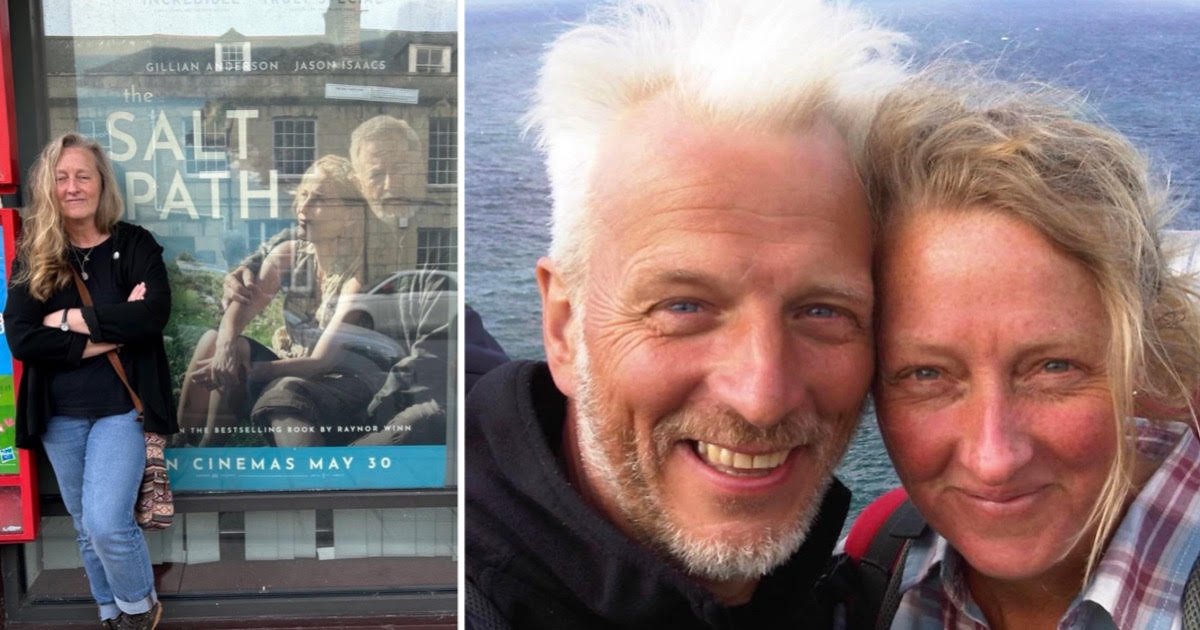
It’s a story that touched millions — the emotional and inspiring journey of Raynor Winn and her husband Moth, as chronicled in The Salt Path. After allegedly losing everything — their home and a future — and receiving a devastating medical diagnosis, the couple embarked on a 630-mile trek along the South West Coast Path in England.
The 2018 memoir became an instant bestseller, earning critical acclaim for its raw honesty and spiritual depth. It has sold over two million copies and was recently adapted into a film starring Gillian Anderson and Jason Isaacs. But now, the book’s legacy is being shaken to its core by allegations that threaten to rewrite the very story readers fell in love with.
On July 7, The Observer published a report claiming Winn — whose real name is Sally Walker — embezzled around £64,000 from a former employer and lied about the circumstances that led to her homelessness. The report further questions the medical condition of her husband Moth — whose real name is reportedly Tim Walker — raising doubts over the legitimacy of the entire memoir.
Speaking to The Guardian, Winn said the report was “highly misleading.”
“The Salt Path lays bare the physical and spiritual journey Moth and I shared… This is the true story of our journey,” she said, adding that they were seeking legal advice and would not comment further.
The Alleged Truth Behind the Memoir
In The Salt Path, Winn writes that the couple was rendered homeless after investing in the failed business of a childhood friend. The friend allegedly blamed them for the failure and dragged them through a legal battle that culminated in the repossession of their home.
But according to The Observer, the actual story may be more complicated — and damning.
The report states that Sally Walker (Winn) worked as a bookkeeper for a property agency, from which she allegedly took £64,000. To repay the money, the couple borrowed £100,000 from a distant relative of Tim’s, securing the loan against their home. That loan went unpaid, resulting in the home’s repossession in 2013.
Despite the portrayal of having “nowhere to go,” The Observer uncovered property records indicating that the couple owned a house in France, purchased in 2007, which they still own today.
This directly contradicts the central premise of homelessness that formed the emotional bedrock of The Salt Path.
Is Moth Really Terminally Ill?
Even more controversially, the report casts doubt on Moth’s medical diagnosis of Corticobasal Degeneration (CBD) — a rare and progressive neurological disease with an average life expectancy of six to eight years.
Yet, according to the book, Moth has survived 18 years with the illness — while undertaking strenuous physical activities that seem to counter the expected degeneration.
Michele Hu, professor of clinical neuroscience at the University of Oxford, told The Observer,
“I would be very sceptical that it is CBD. I’ve never looked after anyone who has lived that long with it.”
Each of Winn’s subsequent books — The Wild Silence and Landlines — follow a similar formula: a deterioration in Moth’s condition followed by an uplifting physical journey where his health appears to improve. While fans found it deeply moving, critics are now beginning to ask whether it was too good to be true.
Fallout from the Revelations
The backlash has already begun.
PSPA, a leading charity that supports individuals with CBD and had previously collaborated with the Winns, confirmed it has ended its relationship with the couple following the report.
Winn has also withdrawn from the upcoming Saltlines Tour, where she was scheduled to appear alongside The Gigspanner Big Band at various UK venues.
Meanwhile, the film adaptation continues its theatrical run. In a joint statement, production companies Number 9 Films and Shadowplay Features distanced themselves from the controversy:
“The allegations made in The Observer relate to the book and are a matter for the author Raynor Winn. There were no known claims against the book at the time of optioning or producing the film, and we undertook all necessary due diligence.”
What Happens to Her Next Book?
A fourth memoir, On Winter Hill, is scheduled for release this October under Michael Joseph, an imprint of Penguin Books. The publisher has declined to comment on whether the release will still go ahead in light of the controversy.
The Winn saga raises complex questions about truth in memoir, the fine line between storytelling and fabrication, and the responsibility of publishers and producers to fact-check deeply personal narratives that are marketed as non-fiction.
While Winn insists that every word in The Salt Path is true, readers and supporters are left to grapple with one daunting question:
What if the story that made millions believe… was never entirely real?

“He-Man Wears a Suit…”: Why Nicholas Galitzine’s Masters of the Universe Trailer Has Fans Talking

Camilla Läckberg Isn’t Done Yet… The Queen of Swedish Noir Eyes Film, TV and a Bold Plan to ‘Conquer America’

“Screaming, Crying, Almost Throwing Up”… Sundance Insiders Reveal the Untold Chaos Behind America’s Most Influential Film Festival
From Swedish Noir to Hollywood Dreams Camilla Läckberg Has a Bigger Plan in Motion
When Sundance Nearly Fell Apart Insiders Recall the Chaos Behind the World’s Most Influential Film Festival

1-Iran Issues Dire Warning to Israel and Defies Trump on Nukes: “We’re Ready to Strike Deep Inside”

Donald Trump’s net worth reveals the fortune behind the former US President and business mogul

Caitlin Clark Sidelined with Quad Strain, Set to Miss Two Weeks of WNBA Action

Elon Musk Breaks Ranks with Trump Over ‘Big, Beautiful’ Tax Bill

“Tomás Rodríguez Net Worth 2025: Panama’s Gold Cup Goal‑Machine’s Surprising Fortune Revealed”

Miss Jamaica Suffers Terrifying Fall Off Miss Universe Stage; Rushed to Hospital on Stretcher in Viral Video

Moana Live-Action Teaser Sparks Outrage as Fans Call Disney’s Move a ‘Clear Money Grab’ — What Went Wrong?

Ryan Gosling’s Project Hail Mary Trailer Stuns Fans with a Mysterious Alien Ally and a Mission That Could Save Earth

Apple delays Jessica Chastain thriller The Savant about domestic extremism after recent US violence

Avatar 3, Fire and Ash trailer reveals Jake Sully’s family facing terrifying new Na’vi enemies with deadly fire powers
-
 Entertainment1 week ago
He-Man Wears a Suit Now… Nicholas Galitzine’s ‘Masters of the Universe’ Trailer Drops a Shock Fans Didn’t See Coming
-
 Entertainment1 week ago
Brazil Eyes Oscar History Again… ‘The Secret Agent’ Scores Best Picture Nomination as Wagner Moura Stuns Hollywood
-

 Entertainment5 days ago
“Comedy Needs Courage Again…”: Judd Apatow Opens Up on Mel Brooks, Talking to Rob Reiner, and Why Studio Laughs Have Vanished
-

 Entertainment1 week ago
Oscars Go Global in a Big Way as This Year’s Nominations Signal a New Era: ‘The Academy Is Finally Looking Beyond Hollywood…’
-

 Entertainment1 week ago
“Dangerously Kinky… and Darkly Funny”: Olivia Wilde and Cooper Hoffman Push Boundaries in ‘I Want Your Sex’
-

 Sports1 week ago
A Strong Night for Caleb Williams Ends With Doubts About the Bears’ Late Decisions
-

 Crime5 days ago
Man Accused in Tupac Shakur Killing Asks Judge to Exclude Critical Evidence
-

 Politics1 week ago
Why Bari Weiss Says Pulling a ‘60 Minutes’ Story Was the Right Call — Even If It Looked Radical