Susie Wiles Phone Hacked with AI Voice Spoofing Exposes National Security Flaws
Trump’s chief of staff was using a personal iPhone when hackers accessed her contacts and used AI to impersonate her, prompting FBI investigation and major concerns over smartphone security
In a chilling reminder of just how vulnerable even the highest-ranking officials can be, White House Chief of Staff Susie Wiles became the latest target in a sophisticated cyberattack that weaponized AI-generated voice impersonation and messaging fraud. The incident, now under active FBI investigation, reportedly involved Wiles’ personal iPhone, which has raised serious questions about the security of consumer smartphones in an age of AI-driven espionage.
Someone hacked the personal cellphone of White House chief of staff Susie Wiles and impersonated her in texts and calls (possibly with an AI voice clone) to leading Republicans and corporate executives: https://t.co/Pqd9dpyOVopic.twitter.com/odTbAXdtFG
According to sources cited by The Wall Street Journal and CBS News, Wiles’ phone was not her government-issued device but her private iPhone, likely synced to a cloud account. It’s believed that hackers gained access to her contacts list, allowing them to impersonate her and reach out to top-level officials including U.S. senators, state governors, and major business executives.
But the most alarming detail isn’t just that the hackers had access to names and numbers. They allegedly used AI to clone Wiles’ voice, making phone calls that sounded eerily real. Others received text messages from an unfamiliar number, also pretending to be Wiles—some of which urged recipients to shift conversations to platforms like Telegram.
Though Apple’s iPhone is widely regarded as one of the most secure consumer smartphones on the market, no device is invulnerable, especially when used outside of stringent enterprise-level protections. It remains unclear whether the breach occurred through cloud account phishing, spyware, or a more advanced zero-click exploit, but the fact that it happened at all to someone so high-profile is raising red flags throughout Washington.
The White House has not disclosed specific technical details, nor has it confirmed whether end-to-end encryption on Wiles’ apps was bypassed. In a brief statement, spokesperson Anna Kelly said:
“The White House takes the cybersecurity of all staff very seriously, and this matter continues to be investigated.”
"The White House takes the cybersecurity of all staff very seriously, and this matter continues to be investigated," a White House official notedhttps://t.co/ABiMF6QoRA
What’s clear, however, is that the attack did not happen in isolation. Just last year, Wiles was also the subject of a successful Iranian cyberattack that reportedly gave hackers access to internal campaign emails and even a detailed dossier on then–Vice Presidential candidate JD Vance.
Cybersecurity analysts are now warning that personal smartphones used by top officials may represent the weakest link in government security frameworks. While government phones often include layers of hardened encryption, remote device management, and real-time threat monitoring, personal phones rely heavily on individual settings and user behavior—which even the most cautious professional may overlook.
FBI Director Kash Patel acknowledged the growing threat landscape in a statement to CBS:
“The FBI takes all threats against the President, his staff, and our cybersecurity with the utmost seriousness. Safeguarding our administration officials’ ability to securely communicate is a top priority.”
The FBI is now reportedly exploring whether AI impersonation tools and voice cloning software were part of a state-sponsored operation or the work of sophisticated private threat actors. The agency is also reviewing whether this breach was part of a broader pattern of cyber-espionage tied to vulnerabilities in cloud-synced smartphones.
The latest breach comes on the heels of another major security blunder in March, when former National Security Adviser Michael Waltz accidentally included a journalist in a Signal group discussing a U.S. military airstrike. That group was using TeleMessage, a Signal-clone designed for record-keeping, which itself had been hacked multiple times.
🚨FBI Probes White House Imposter
One or more unknown people accessed White House chief of staff Susie Wiles' personal cellphone and used her contacts file to reach out to other top officials and impersonate her, sources told CBS News Thursday. pic.twitter.com/8d0q3ie0H1
— America Out Loud News (@OutLoudNews) May 30, 2025
These repeated lapses suggest that America’s cyber defenses may not be evolving fast enough to keep up with the tools of modern digital warfare—especially when AI now makes it possible to forge identities with frightening realism.
As the investigation continues, the question now haunting national security circles is simple but sobering: If even the White House’s top aide can be spoofed using an iPhone, who’s safe anymore?
ServiceNow’s acquisition of Armis marks the company’s biggest deal to date as cybersecurity consolidation accelerates.
ServiceNow has agreed to acquire cybersecurity startup Armis for $7.75 billion, marking the largest acquisition in ServiceNow’s history as it accelerates its expansion into security and artificial intelligence.
The Santa Clara, California–based company will pay all cash for the San Francisco–based firm, according to a statement released Tuesday, confirming an earlier report by Bloomberg News. The transaction is expected to close in the second half of 2026, subject to regulatory approvals and customary closing conditions.
Market reaction and deal financing
ServiceNow shares slipped about 1.3% in early premarket trading in New York following the announcement. The stock had closed up roughly 0.9% on Monday, valuing the company at approximately $163 billion.
ServiceNow said it plans to fund the acquisition through a combination of cash on hand and debt, underscoring its confidence in Armis’ long-term growth and strategic value.
What Armis brings to ServiceNow
Founded by veterans of Israeli military cyber intelligence, Armis specializes in identifying, monitoring and securing connected devices across complex digital environments. Its platform is widely used in sectors including healthcare, financial services, manufacturing, and defense, where visibility into unmanaged or vulnerable devices is critical.
Earlier this month, Armis CEO Yevgeny Dibrov said the company had reached $300 million in annual recurring revenue, up from $200 million a year earlier. Despite the rapid growth, Armis had been planning a public listing in 2026, a goal now superseded by the ServiceNow deal.
ServiceNow’s broader AI and security push
ServiceNow has been steadily transforming itself into a dominant enterprise workflow and automation platform. In March, the company agreed to acquire AI startup Moveworks for $2.85 billion, a move aimed at building autonomous AI tools capable of completing workplace tasks without human intervention.
“ServiceNow is building the security platform of tomorrow,” said Amit Zavery, the company’s president, chief operating officer, and chief product officer.
“Together with Armis, we will deliver an industry-defining cybersecurity shield that provides real-time, end-to-end proactive protection across all technology estates,” Zavery said.
Cybersecurity dealmaking accelerates
The Armis acquisition comes amid a surge in large cybersecurity transactions, driven by growing enterprise demand and the rising use of AI to detect and counter hacking threats.
In recent months:
Alphabet agreed to buy cloud security firm Wiz for $32 billion
Palo Alto Networks struck a deal to acquire CyberArk for about $25 billion
Armis itself was acquired in 2020 by Insight Partners in a deal valued at $1.1 billion, alongside investors including CapitalG. Private equity firm Thoma Bravo had also explored a potential investment, with Armis executives previously saying they were evaluating multiple offers.
What’s next
Once completed, the acquisition is expected to significantly strengthen ServiceNow’s security portfolio, positioning the company as a key player in AI-powered enterprise cybersecurity at a time when digital infrastructure risks are multiplying.
Disney’s partnership with OpenAI signals how major studios may integrate AI into content, merchandising, and fan engagement
When Disney announced a three-year alliance with OpenAI, including a reported $1 billion investment and licensing its iconic characters for use in AI-generated images and short videos, the deal left many observers puzzled. After all, recent content partnerships between OpenAI and platforms like Reddit have raised uncomfortable questions about whether the money is worth the long-term competitive and brand risks.
But Disney’s deal makes far more sense when viewed through a lens the company understands better than almost anyone: merchandising.
For decades, Disney has mastered the art of turning intellectual property into obsession, engagement, and spending. Toys, backpacks, lunchboxes, theme parks, movies, cruise lines — all are part of a tightly controlled ecosystem designed to keep fans immersed. With OpenAI, Disney isn’t abandoning that playbook. It’s updating it.
Instead of plastic figurines, the new merchandise is synthetic content — AI-generated images and videos created by fans themselves using ChatGPT and Sora, OpenAI’s text-to-video generator. Anyone can now generate Disney-adjacent creative output, but under rules that Disney helps define.
AI as the Next Merchandising Channel
At first glance, allowing fans to generate content featuring Disney characters may appear risky, especially for a company long known as a highly curated, “predator-free” brand sanctuary in an internet dominated by chaotic user-generated content — or what critics increasingly call “AI slop.”
Yet this is precisely why Disney’s approach stands out.
Rather than fighting AI outright, Disney is licensing its characters under controlled conditions, positioning itself inside the technology rather than outside it. In doing so, it gains something arguably more valuable than licensing fees: influence over how its IP is used.
OpenAI has publicly committed to “responsible use” of Disney’s content, reducing the risk of beloved characters being placed in offensive, bizarre, or legally risky scenarios — or interacting with rival corporate IPs in ways Disney cannot control.
At the same time, Disney has made it clear it will aggressively defend its characters elsewhere. The company recently sent a letter to Google demanding it stop using Disney characters in AI-generated content without permission. The message is clear: AI use is allowed — but only on Disney’s terms.
Strategic Upside Beyond Licensing
Beyond brand protection, the OpenAI alliance offers Disney several strategic advantages.
First, by taking an equity stake, Disney is effectively hitching its future to the first major AI mover in consumer-facing generative technology. If OpenAI becomes as foundational as search or social media, Disney isn’t just a customer — it’s a stakeholder.
Second, Disney gains access to OpenAI’s tools, opening new creative and operational possibilities across film, television, marketing, and theme park experiences. In an industry under constant pressure to produce more content faster, AI-assisted workflows could become a competitive necessity.
There is also a discovery angle. If fans create something genuinely magical using Disney IP, the company can surface that work on its streaming platforms or internal creative pipelines. Just as YouTube became a feeder system for Hollywood talent, AI could quietly become a testing ground for future Pixar, Marvel, or animation concepts.
Engagement Over Everything
Critics will argue that Disney is aligning itself with what many still see as the entertainment industry’s newest villain. And history suggests that user-generated ecosystems inevitably produce strange, uncomfortable, or downright bizarre content.
But Disney’s calculus is simple: engagement beats purity.
Even if some brand dilution occurs, the upside of keeping millions of users actively interacting with Disney characters — thinking about them, remixing them, and emotionally investing in them — far outweighs the risks. Every AI-generated image or short video becomes another touchpoint in the Disney funnel, nudging users toward movies, merchandise, theme parks, and subscriptions.
As the company has proven time and again, Disney doesn’t need to control every moment — it just needs to own the ecosystem those moments live in.
A Template for Future AI Deals
Ultimately, Disney’s OpenAI alliance may become the template for how major IP holders navigate the AI era. Rather than blocking generative tools outright or selling content libraries cheaply, Disney is treating AI as the next distribution and merchandising layer.
The pipeline that once ran from movies to toys to theme parks now runs through algorithms, prompts, and synthetic media. AI is no longer outside the business. It is part of the machine.
And if Disney’s history is any guide, once the House of Mouse embraces a platform, it rarely lets go.
After Losing Over $70 Billion, Mark Zuckerberg Finally Admits His Biggest Bet Is “Not Working” – Meta Plans Massive Cuts to Metaverse Budget
Meta’s multibillion-dollar Metaverse dream faces a harsh reset as Zuckerberg prepares to slash Reality Labs spending by 30% and shift focus toward AI superintelligence
After years of mounting losses, Meta prepares to slash Metaverse spending as Zuckerberg pivots the company toward AI superintelligence.
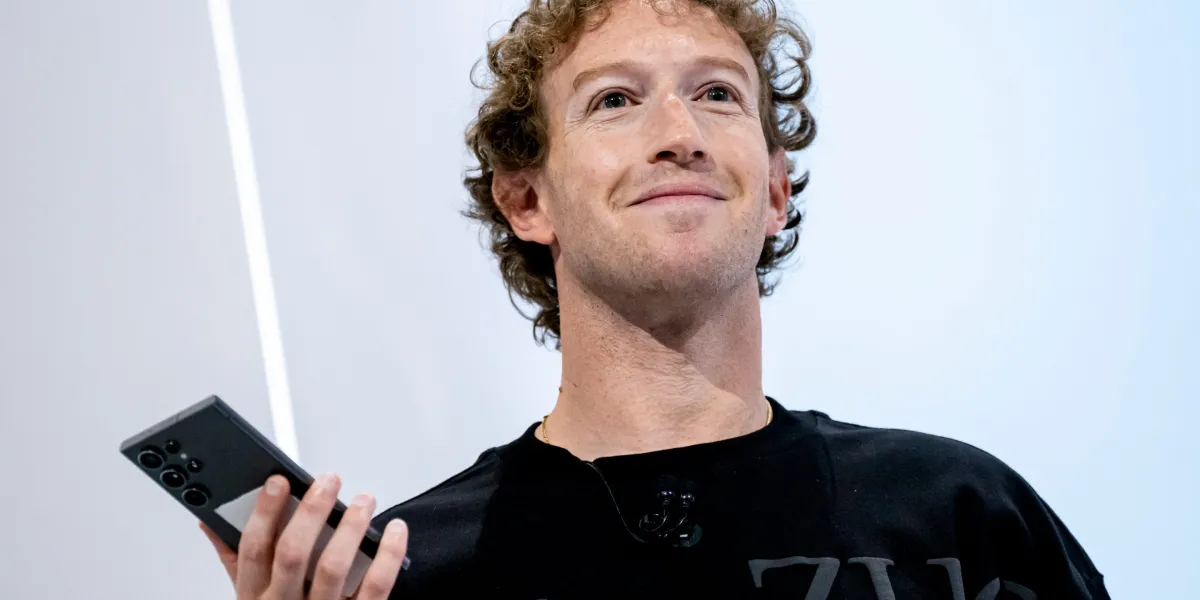
It has taken more than $70 billion in losses, multiple years of market skepticism, slow hardware adoption, and declining enthusiasm from consumers — but Mark Zuckerberg finally seems to be acknowledging what analysts have been predicting for months: Meta’s Metaverse gamble is not working as expected.
A new report from Bloomberg reveals that Meta is preparing to cut Reality Labs’ budget by nearly 30%, marking the most significant shift in strategy since the company rebranded from Facebook to Meta in 2021. These cuts are part of Meta’s 2026 annual budget plans, discussed at a series of executive meetings held last month at Zuckerberg’s Hawaii compound.
The move represents a dramatic retreat from the vision that defined Zuckerberg’s ambitions for the future — a world of interconnected virtual experiences accessed through VR headsets, smart glasses, and immersive environments.
Reality Labs: A Costly Dream That Failed to Take Off
Reality Labs, the division responsible for Meta’s Metaverse ambitions, includes:
VR hardware such as the Quest headsets
Ray-Ban smart glasses developed with EssilorLuxottica
Horizon Worlds, Meta’s VR social platform
Upcoming AR glasses
Despite years of R&D and aggressive marketing, the Metaverse never reached mainstream adoption. Sales remained modest, interest faded, and Horizon Worlds failed to retain users beyond niche gaming communities.
Industry analysts say the lack of traction is undeniable. The Metaverse that Zuckerberg promised — a bustling, interconnected digital universe — simply hasn’t materialized.
The financial impact has been staggering: $70+ billion in operating losses across four years, making it one of the most expensive product bets in tech history.
Not surprisingly, Meta’s stock jumped 4% after news of the possible budget cuts, signaling investor relief. As analyst Craig Huber put it: “Smart move, just late… This is a major shift to align costs with a revenue outlook that never matched management’s expectations.”
With cuts as deep as 30%, layoffs are expected as soon as January, especially within the VR division.
A Company Pivoting Hard Toward AI Superintelligence
Meta’s Metaverse retreat isn’t happening in isolation — it comes at a time when the company is fighting to stay competitive in the global AI arms race.
After its Llama 4 model received a lukewarm response, Meta has ramped up spending and reorganized its AI divisions under the new Superintelligence Labs.
Key highlights of Meta’s AI pivot:
Up to $72 billion committed in capital spending for AI initiatives this year
Aggressive hiring across Silicon Valley, with multimillion-dollar offers made directly by Zuckerberg
Plans to invest $600 billion in U.S. infrastructure and jobs over the next three years, largely for AI data centers
A renewed push to build the compute infrastructure needed for future superintelligent systems
Zuckerberg openly stated during an earnings call that Meta is “front-loading capacity” to prepare for an AI-driven future.
Even Reality Labs is being reimagined through the AI lens — especially after Zuckerberg hired Alan Dye, a longtime Apple design executive, to lead a new creative studio within the division.
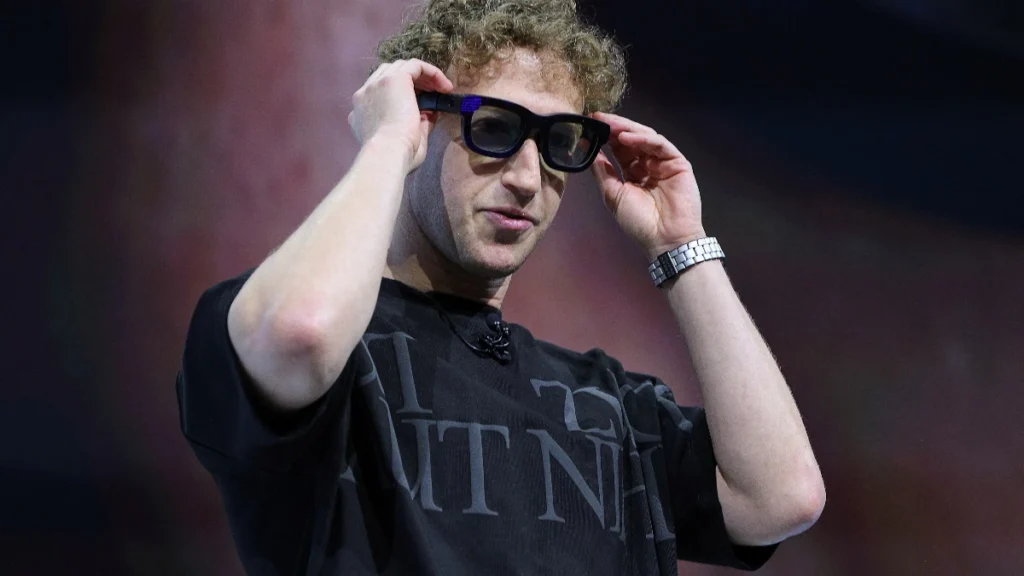
In a post on Threads, Zuckerberg said: “We’re entering a new era where AI glasses and other devices will change how we connect with technology and each other.”
This statement alone signals how deeply AI will shape Meta’s hardware roadmap beyond the Metaverse.
The Irony: Meta Was Renamed for a Vision That Is Now Shrinking
When Facebook became Meta in October 2021, the reasoning was clear: the company wanted to symbolize its commitment to building the Metaverse.
Three years later, that same division is facing massive cuts.
The rebranding — once touted as the gateway to the “next chapter of the internet” — now represents one of the most expensive strategic misfires in tech history.
What Comes Next for Meta?
If the proposed budget cuts go through:
VR development may significantly slow down
Horizon Worlds could receive limited investment
AR glasses may remain in early stages
Meta will prioritize AI innovation over virtual reality
This shift doesn’t necessarily mean Meta is abandoning the Metaverse entirely — but it is no longer the company’s primary bet.
Zuckerberg’s new focus is clear: AI superintelligence, compute hardware, and next-generation devices powered by AI.
And while the Metaverse may have faded from the spotlight, Meta’s aggressive push into AI signals a new chapter — one where Zuckerberg hopes the investment will pay off sooner rather than later.
To provide the best experiences, Daily Global Diary uses technologies like cookies to store and/or access device information. Consenting to these technologies will allow us to process data such as browsing behavior or unique IDs on this site. Not consenting or withdrawing consent, may adversely affect certain features and functions.
Functional
Always active
The technical storage or access is strictly necessary for the legitimate purpose of enabling the use of a specific service explicitly requested by the subscriber or user, or for the sole purpose of carrying out the transmission of a communication over an electronic communications network.
Preferences
The technical storage or access is necessary for the legitimate purpose of storing preferences that are not requested by the subscriber or user.
Statistics
The technical storage or access that is used exclusively for statistical purposes.The technical storage or access that is used exclusively for anonymous statistical purposes. Without a subpoena, voluntary compliance on the part of your Internet Service Provider, or additional records from a third party, information stored or retrieved for this purpose alone cannot usually be used to identify you.
Marketing
The technical storage or access is required to create user profiles to send advertising, or to track the user on a website or across several websites for similar marketing purposes.






















 Entertainment4 days ago
 Entertainment1 week ago
 Entertainment6 days ago
 Entertainment1 week ago
 Entertainment6 days ago