
U.S. News
Rising Again: Texas Hit by New Flooding Wave This is not entertainment this is life-threatening say officials


Central Texas is once again under siege. On Sunday, July 13, severe weather triggered another wave of devastating floods, hampering search efforts for earlier victims and pushing rescue teams into action in multiple counties already reeling from destruction.
The situation has turned grim in Kerrville, San Saba, Lampasas, and Schleicher Counties, as residents faced an all-too-familiar sight — raging floodwaters, submerged roads, and blaring emergency alerts.
According to Texas Governor Greg Abbott, “Swift water rescues are ongoing in several counties. Texas Task Force 1 has already rescued dozens of Texans in the Lampasas area.” The Texas Task Force 1, a specialized urban search and rescue team, is now operating at full scale to respond to flash flood emergencies across the region.
Rivers Rise, Roads Disappear
One of the most urgent threats Sunday came from the San Saba River, which surged past 30 feet in a matter of hours. San Saba County Judge Jody Fauley issued a mandatory evacuation for several neighborhoods near the river, warning that the water was “rising faster than it did on July 4.” That earlier flood claimed 132 lives, 106 of them in Kerr County alone.
In the nearby city of Ingram, just six miles from Kerrville, the Ingram Fire Department issued a stark warning:
We are seeing the same weather pattern today that we experienced on July 4th – and we know how quickly that turned deadly. This is not entertainment. This is a life-threatening situation.
Videos posted by the City of Kerrville showed water roaring over roadways, as stunned residents watched from higher ground.
Code Red and the Fear of Repeat Tragedy
The Kerr County Sheriff’s Office activated a “Code Red” notification system, urging communities along the Guadalupe River to prepare for evacuation. “This is not an evacuation, but a preparation notification,” officials clarified, emphasizing that the danger could escalate at any moment depending on rainfall.
And the rain kept falling.
The National Weather Service (NWS) extended a flood watch for the Hill Country, I-35 corridor, and Southern Edwards Plateau through Monday morning, forecasting 1–2 inches of additional rain, with isolated pockets up to 3 inches.
We Are Expanding Operations — Governor Abbott
Governor Abbott confirmed that rescue and emergency operations are scaling up across the affected counties. “We continue to monitor all counties with a focus on saving lives,” he said, praising first responders for their “heroic work” in impossible conditions.
Residents in areas like San Saba, especially those living north of the railroad tracks, were urged to remain alert and be ready to evacuate on short notice.
A Deadly Pattern: Why This Is Different
While flooding is not new to Texas, the frequency and severity of these events have intensified. Meteorologists and local officials alike are noting a troubling trend — extreme rainfall events occurring within days or weeks of each other, leaving communities with no time to recover.
“We’re seeing more than just saturated soil — we’re seeing trauma,” said a spokesperson from the Ingram Fire Department, referencing the psychological toll on families who have now faced two floods in ten days.
What’s Next for Texas?
With more rain expected, the hope is that rivers stabilize and new deaths are avoided. But as search teams continue to work through debris fields and damaged properties from the July 4 floods, this fresh disaster adds a cruel layer of urgency and chaos.
In the meantime, emergency shelters have been set up across Kerr, San Saba, and Lampasas Counties, and residents are encouraged to stay off the roads unless absolutely necessary.


U.S. News
“‘We Smelled Gas Days Ago’”… Deadly Explosion Rips Through Pennsylvania Nursing Home, Leaving 2 Dead and 20 Hospitalized
A suspected gas explosion collapses part of a Bucks County nursing home as investigators probe warnings, accountability, and safety lapses


A quiet winter afternoon in suburban Pennsylvania turned tragic when a powerful explosion tore through a nursing home in Bristol Township, killing two people and sending at least 20 others to hospitals across the region.
The blast occurred around 2:15 p.m. on Tuesday at the Bristol Health and Rehab Center, also known locally as Silver Lake Nursing Home, located on Tower Road. Part of the building collapsed following what authorities believe was a gas-related explosion, triggering a massive emergency response.
Pennsylvania Governor Josh Shapiro confirmed the fatalities during an evening news conference, calling the incident “deeply disturbing” and promising a full investigation.
What We Know So Far
Police said all residents and employees have now been accounted for, and the search-and-rescue phase has officially ended. Early confusion over the death toll was clarified when officials confirmed that one victim initially believed dead was successfully resuscitated at a hospital. However, a female employee was later found deceased during the final sweep of the building.
Emergency responders transported 20 people — residents and staff — to multiple hospitals. Their conditions have not yet been disclosed.
The explosion happened while crews from PECO were already on-site responding to reports of a gas odor. PECO said it is still unclear whether natural gas or company equipment played a role in the blast.
“I Flagged the Smell”
Adding to the shock are emerging accounts suggesting warning signs may have preceded the tragedy. One employee told local media that she reported a gas smell at the facility over the weekend.

Video footage from the scene showed flames bursting through the structure, debris scattered across the property, and fire engines and ambulances arriving from neighboring Montgomery County, Philadelphia, and New Jersey.
State Representative Tina Davis, whose district includes the nursing home, described the scale of the response. “I saw car after car after car — fire trucks and ambulances from all over,” she said. “It’s that hopeful time of year, and this is just heartbreaking.”
Facility Operator Responds
The nursing home is operated by Saber Healthcare Group, an Ohio-based company. In a statement posted on Facebook Tuesday night, the company said it is cooperating fully with authorities.
“We are working closely with local officials, and our primary focus remains on the well-being of residents, staff, and their families,” the statement read.
Families Search for Answers
As investigations begin, families have been left scrambling for information. The American Red Cross of Southeastern Pennsylvania has set up assistance services for those trying to locate loved ones affected by the explosion. Officials directed families to Lower Bucks Hospital or to call a dedicated helpline for updates.
For many in the community, the tragedy raises painful questions — not just about what caused the explosion, but whether it could have been prevented.
“It’s just so sad,” Davis said. “For the families, for the workers — everyone deserves answers.”
As state and local investigators sift through debris and records in the coming days, one thing is certain: for Bristol Township, this holiday season will be forever marked by loss.
For more Update- DAILY GLOBAL DIARY
U.S. News
“She Was Wearing a Wig”… How a Road Trip Turned Deadly in the Melodee Buzzard Case
California mother arrested for first-degree murder after body of missing 9-year-old Melodee Buzzard is found in rural Utah

What began as a troubling school absence in Southern California has ended in one of the most disturbing child murder cases the region has seen in years. Authorities have arrested Ashlee Buzzard, 40, on suspicion of murdering her 9-year-old daughter, Melodee Buzzard, after the girl’s body was discovered more than 700 miles away in rural Utah.
According to officials, Melodee’s remains were found on December 6 in Wayne County by a couple who were taking photographs in a remote area. An investigation later confirmed that the child had died from gunshot wounds to the head — a revelation that stunned both law enforcement and the community that had spent weeks wondering where she was.
Santa Barbara County Sheriff Bill Brown described the case in stark terms while announcing the arrest. “Maternal filicide is rare and always difficult to comprehend,” Brown said. “This level of criminal activity is particularly shocking given the calculated, cold-blooded and criminally sophisticated premeditation and heartlessness that went into planning it.”
A Missing Child No One Saw for Weeks
Melodee, who lived with her mother in Lompoc, was first flagged as missing in early October — not by family, but by school officials. The Lompoc Unified School District reported her “prolonged absence” after she failed to attend an independent study program she had been enrolled in weeks earlier.
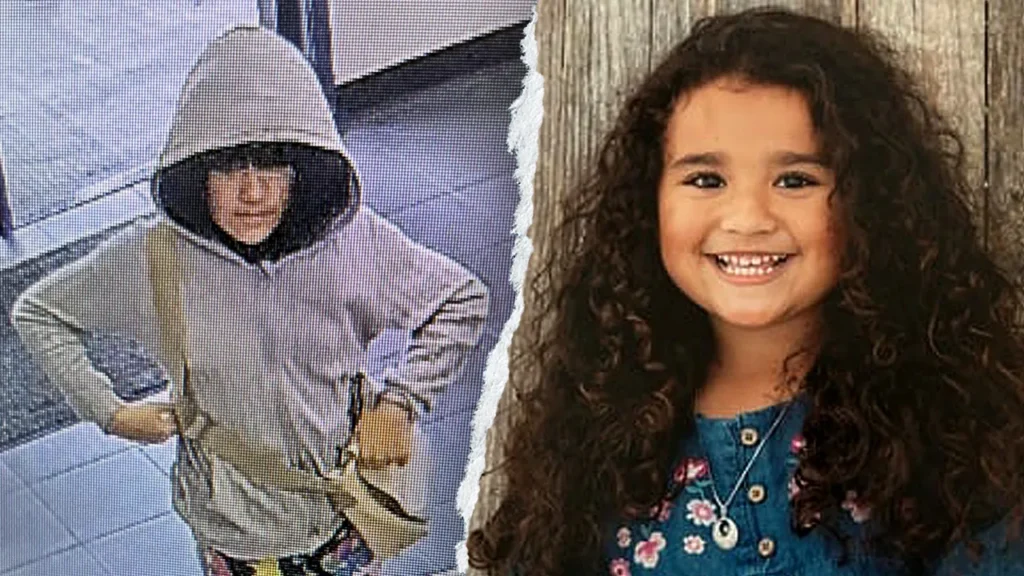
That absence triggered truancy procedures, which eventually led authorities to notify law enforcement. By the time police began actively searching, Melodee had already vanished.
The Road Trip That Raised Red Flags
Investigators soon focused on a multi-state road trip taken by mother and daughter between October 7 and October 10. Security footage from a rental car agency showed Melodee wearing a wig while picking up a Chevrolet Malibu — a detail detectives believe was meant to disguise her identity. Authorities later alleged that the vehicle’s license plate was temporarily swapped with a New York plate, an apparent attempt to avoid detection.
Melodee was last seen on October 9 near the Utah–Colorado border. When Ashlee Buzzard returned to California on October 10, her daughter was no longer with her.
Sheriff Brown said investigators believe Melodee was killed shortly after that final stop.
Evidence Mounts, FBI Confirms Identity
Law enforcement searched Buzzard’s home, a rented storage unit, and the rental car. Inside, they found spent shell casings and live ammunition matching the same caliber. The murder weapon itself has not yet been recovered.
DNA testing conducted with assistance from the FBI confirmed that the body discovered in Utah was Melodee’s.
Investigators also revealed that Ashlee Buzzard had been largely uncooperative throughout the search. Neighbors in Vandenberg Village reported seeing sheriff’s deputies escort her from her home during the early hours of Tuesday morning.
She is currently being held without bail on suspicion of first-degree murder.
A Community Searching for Answers
Melodee’s disappearance deeply unsettled her community. Residents gathered outside her home in the weeks after she vanished, shouting questions and demanding answers.
Her half-sister, Corinna Meza, told local media the family is still struggling to understand what happened. “We’re all looking for answers,” she said, noting that Melodee’s father had died when the child was an infant and that the girl was rarely seen, even by relatives.
Adding another troubling layer, Buzzard had previously been arrested in November on suspicion of felony false imprisonment in an unrelated case. That charge was later dismissed due to insufficient evidence.
An Ongoing Investigation
Authorities say the investigation remains active as prosecutors prepare their case. “Our investigators worked around the clock,” Sheriff Brown said, citing physical, digital, and forensic evidence gathered over weeks.
For now, one question continues to haunt this case: how a child could disappear for weeks before alarms were fully raised — and how a mother allegedly carried out such a carefully planned crime.
As the legal process unfolds, Melodee Buzzard’s name has become a grim reminder of how easily vulnerable children can slip through the cracks — and how devastating the consequences can be.
For more Update- DAILY GLOBAL DIARY
U.S. News
Thanksgiving Chaos or Convenience? Here’s What’s Actually Open Today — And What Isn’t…
From grocery runs to fast-food cravings and Black Friday madness — your complete Thanksgiving 2025 guide to what stays open, what shuts down, and where Americans can still grab a last-minute lifeline.

Thanksgiving morning in the United States often begins with the aroma of roasting turkey — and sudden panic when someone realizes they’re missing cranberries, stuffing mix, or that one essential ingredient grandparents swear by. But before Americans get in the car to hunt down an open store, 2025’s holiday schedules may surprise them.
A number of major retailers, including giants like Target and Costco, have opted to keep their doors firmly shut this Thanksgiving, continuing a trend that began during the pandemic years. Others, however, are offering limited hours — just enough for those last-minute grocery emergencies.
Here’s the complete breakdown of what’s open, what’s closed, and what Americans can expect before Black Friday officially kicks off tomorrow.
Major Retailers Staying Closed Today
If you’re planning a big-box last-minute run, these stores won’t be an option:
- Target – Fully closed nationwide
- Costco – Entire chain closed
- Home Depot – Closed
- IKEA – Closed
- TJ Maxx, Marshalls, HomeGoods, Sierra, Homesense – All closed
- Petco – Closed
- Hy-Vee – Closed
- Aldi and Trader Joe’s – Closed
The nationwide shutdown of these brands reflects a growing cultural shift: Americans want employees to spend Thanksgiving with their families — a sentiment echoed across social media.
Grocery Stores Open — But With Short Hours
Some grocery chains are throwing consumers a lifeline — but only for a few hours:
- Food Lion – Most stores open until 3 p.m. (some Virginia stores until 4 p.m.)
- H-E-B – 6 a.m. to noon
- Kroger – Open until 12 p.m.
- Wegmans – Open until 4 p.m., reopening at 6 a.m. Friday
- Whole Foods – Most stores 7 a.m. to 1 p.m., except those in Massachusetts, Maine, Rhode Island (closed)
- Stop & Shop – CT, NY, NJ locations open until 3 p.m. (MA & RI stores closed)
Anyone needing a last-minute pumpkin pie? Better set an alarm.
Pharmacies & Retail Chains: Mixed Status
Some essential services remain partially available:
- CVS – Open, but with reduced hours depending on location
- Dollar General – Mostly regular hours
- Walgreens – Most stores closed; 24-hour branches remain open for emergencies
If you need medication, calling ahead could save you a disappointing trip.

Fast-Food & Restaurants: Hungry? Here’s Where You CAN Go
For those skipping the cooking — or grabbing a quick breakfast while the turkey thaws:
Open
- Burger King
- Dunkin’ – Many open
- KFC – Varies by location
- Starbucks – Some stores open, hours vary
Closed
- Chick-fil-A
- Most Subway stores
Pro tip: Starbucks’ holiday drinks may be available — if your nearest store didn’t adjust its hours.
Stock Market & Deliveries: No Movement Today
The U.S. financial system takes a breather:
- NYSE & Nasdaq – Closed
- Black Friday schedule: close early at 1 p.m. EST
Mail & parcel services also take a break:
- USPS – Closed (only Priority Mail Express delivered)
- UPS – Closed
- FedEx – Closed (except FedEx Custom Critical)
Black Friday: Which Stores Are Opening Early Tomorrow?
With holiday shopping season officially beginning Friday, many retailers are gearing up to open their doors before sunrise:
- JC Penney – 5 a.m.
- Kohl’s – 5 a.m.
- Best Buy – 6 a.m.
- Macy’s – 6 a.m.
- Target – 6 a.m.
- Walmart – 6 a.m.
- Michaels – 7 a.m.
- TJ Maxx/Marshalls/HomeGoods – 7 a.m. to 10 p.m.
Retail experts predict some of the heaviest Black Friday foot traffic in recent years, especially as inflation has pushed consumers to hunt aggressively for deals.
A Thanksgiving of Changing Traditions
Once upon a time, Thanksgiving meant crowded malls and early-bird deals. Today, the shift toward family time — and away from Thanksgiving Day shopping — has become more pronounced.
Still, whether Americans choose family, football, feasting, or deal-hunting, knowing what’s open today might save them a lot of frustration… and maybe even their holiday dinner.
For more Update DAILY GLOBAL DIARY

“He-Man Wears a Suit…”: Why Nicholas Galitzine’s Masters of the Universe Trailer Has Fans Talking

Camilla Läckberg Isn’t Done Yet… The Queen of Swedish Noir Eyes Film, TV and a Bold Plan to ‘Conquer America’

“Screaming, Crying, Almost Throwing Up”… Sundance Insiders Reveal the Untold Chaos Behind America’s Most Influential Film Festival
From Swedish Noir to Hollywood Dreams Camilla Läckberg Has a Bigger Plan in Motion
When Sundance Nearly Fell Apart Insiders Recall the Chaos Behind the World’s Most Influential Film Festival

1-Iran Issues Dire Warning to Israel and Defies Trump on Nukes: “We’re Ready to Strike Deep Inside”

Donald Trump’s net worth reveals the fortune behind the former US President and business mogul

Caitlin Clark Sidelined with Quad Strain, Set to Miss Two Weeks of WNBA Action

Elon Musk Breaks Ranks with Trump Over ‘Big, Beautiful’ Tax Bill

“Tomás Rodríguez Net Worth 2025: Panama’s Gold Cup Goal‑Machine’s Surprising Fortune Revealed”

Miss Jamaica Suffers Terrifying Fall Off Miss Universe Stage; Rushed to Hospital on Stretcher in Viral Video

Moana Live-Action Teaser Sparks Outrage as Fans Call Disney’s Move a ‘Clear Money Grab’ — What Went Wrong?

Ryan Gosling’s Project Hail Mary Trailer Stuns Fans with a Mysterious Alien Ally and a Mission That Could Save Earth

Apple delays Jessica Chastain thriller The Savant about domestic extremism after recent US violence

Avatar 3, Fire and Ash trailer reveals Jake Sully’s family facing terrifying new Na’vi enemies with deadly fire powers
-
 Entertainment1 week ago
He-Man Wears a Suit Now… Nicholas Galitzine’s ‘Masters of the Universe’ Trailer Drops a Shock Fans Didn’t See Coming
-
 Entertainment1 week ago
Brazil Eyes Oscar History Again… ‘The Secret Agent’ Scores Best Picture Nomination as Wagner Moura Stuns Hollywood
-

 Entertainment5 days ago
“Comedy Needs Courage Again…”: Judd Apatow Opens Up on Mel Brooks, Talking to Rob Reiner, and Why Studio Laughs Have Vanished
-

 Entertainment1 week ago
Oscars Go Global in a Big Way as This Year’s Nominations Signal a New Era: ‘The Academy Is Finally Looking Beyond Hollywood…’
-

 Entertainment1 week ago
“Dangerously Kinky… and Darkly Funny”: Olivia Wilde and Cooper Hoffman Push Boundaries in ‘I Want Your Sex’
-

 Sports1 week ago
A Strong Night for Caleb Williams Ends With Doubts About the Bears’ Late Decisions
-
 Crime5 days ago
Man Accused in Tupac Shakur Killing Asks Judge to Exclude Critical Evidence
-

 Politics1 week ago
Why Bari Weiss Says Pulling a ‘60 Minutes’ Story Was the Right Call — Even If It Looked Radical