
Business & Finance
Top 5 Jobs That Are Quietly Disappearing and No One’s Talking About It
As automation and AI rise, these 5 recessive jobs are vanishing fast — is your profession on the list?


As automation and AI rise, these 5 recessive jobs are vanishing fast — is your profession on the list?

n today’s fast-paced, tech-driven economy, entire professions are fading into obscurity — not with a bang, but a whisper. While we talk endlessly about job creation in tech, green energy, or AI, there’s a silent retreat happening in industries that once thrived.
These are the top 5 recessive jobs that are quietly disappearing from the modern workforce — and the reasons may surprise you.
1. Travel Agents
In the age of Google Flights, Airbnb, and apps like Hopper, traditional travel agents have become nearly obsolete. Once essential for booking complex trips, many consumers now plan and book their own itineraries online.

The convenience and cost-saving of doing it yourself are driving this change, leaving only a niche demand for luxury or corporate travel planners.
2. Cashiers
With self-checkout kiosks, online payment apps, and the growing presence of Amazon-style cashier-less stores, the need for cashiers is rapidly fading.
Major retailers like Walmart, Kroger, and Target are heavily investing in automation to speed up transactions and reduce overhead.

While cashier jobs once served as an entry-level lifeline, they’re now being replaced by touchscreens and RFID sensors. According to projections, more than 700,000 cashier jobs could vanish by the early 2030s.
3. Mail Sorters and Postal Clerks
With the surge in email, digital billing, and online communication, traditional mail is at an all-time low. This shift has hit postal clerks and mail sorters the hardest.
The United States Postal Service (USPS) has seen a consistent decline in first-class mail volume for over a decade.

Private carriers like FedEx and UPS now dominate shipping, and automation is also being used to sort parcels faster and more accurately than humans. The decline in physical mail equals a shrinking demand for human hands behind the scenes.
4. Telemarketers
Let’s face it: no one likes telemarketing calls anymore — and now, robots are doing the job faster, cheaper, and with fewer hang-ups (literally). Automated systems and AI chatbots have largely replaced the need for a human telemarketer.
The BLS reports that employment in telemarketing is expected to shrink by 18% in the next few years.

Robocalls now dominate the scene, and with stronger Do Not Call regulations and AI voice recognition tech, this field is in irreversible decline.
5. Data Entry Clerks
With the advent of AI-powered OCR (Optical Character Recognition) tools, the manual job of entering data into spreadsheets or databases is almost gone.
Tools like UiPath, Automation Anywhere, and ChatGPT-based solutions are doing in seconds what clerks used to spend hours on.

Not only are machines faster, but they’re less prone to human error. As more companies digitize, the demand for human data entry has dropped significantly.


Local News
Un-certified for the Top Job: 5 Revealing Facts About Why the Town of Watertown’s Fire Chief Was Removed
After nearly a decade leading, David Johnston is out as chief of the Town of Watertown Fire District — and it all boiled down to a piece of paper.


Why Watertown Fire Chief David Johnston Was Removed: Certification Issue Explained
In a move that has stirred strong emotions within the firefighting community of the Town of Watertown (NY), the long-serving chief of the local fire district has been removed from his leadership post — not because of misconduct or negligence, but simply because the paperwork required for the role wasn’t in place. Visit our site for more news www.DailyGlobalDiary.com.
For almost ten years, Chief David Johnston guided the Town of Watertown Fire District with dedication and commitment. According to the district’s Public Information Officer, Warren Day, the decision was “emotional” and “has caused some strife within the department right now.”
1. A decade-of-service interrupted
Johnston was in his role after years of service; colleagues say he earned respect and rapport within the ranks. But this week, the district announced his removal as fire chief, effective immediately. The reason? A certification gap.
2. What triggered the removal?
The issue is straightforward but critical. Johnston holds a “Fire Officer 2” certification. However, when a fire district employs paid, full-time staff, the law demands that the chief hold a higher “Fire Officer 3” certification. That regulation comes from the New York State Office of Fire Prevention and Control (OFPC).

When the Town of Watertown Fire District brought on paid firefighters early last year, that shift triggered the requirement. Once the state agency “caught wind” of the certification shortfall, it ordered the chief’s immediate removal. The local district says they had no choice.
3. The reaction: mixed emotions
“You can’t help how you feel,” Day told media, acknowledging that the decision was hard for many. “There is a lot of mixed emotions. This was a decision that was hard. We didn’t have a choice in this.”
Johnston himself told 7News he understands the rules, but the suddenness still stings. “I understand the law, the rules, and the regulations, but at the same time, I am hurt. This came out of nowhere. I was totally blindsided by it,” he said.
4. What happens next?
Although Johnston is removed from the role of chief, he will remain employed as a paid firefighter within the district. Meanwhile, the duties of fire chief have been temporarily assigned to the district’s three assistant chiefs as the search for a permanently certified replacement begins.
For the community of Watertown, it raises questions: How did a long-time leader end up in a crucial role without the required certification? Who was responsible for oversight? While nothing in the reports indicates any discipline or wrongdoing, the gap in certification underscores how regulations remain enforceable — and how institutions must stay ahead of them.
5. A broader look at fire-service certification
Certification levels such as Fire Officer 2 and Fire Officer 3 exist to ensure that those leading life-saving organizations are trained to meet evolving demands. As fire departments grow and evolve — shifting from volunteer to mixed or full-time paid operations — the regulatory requirements often change. Jurisdictions that fail to align may face mandates from oversight bodies like the NY OFPC. (While not specific to this case, the concept of training and certification in fire prevention is widely discussed. (Wikipedia))

Human side of a regulatory decision
It’s rare to see a leader of nearly ten years removed solely on procedural grounds. For Johnston, the wrench wasn’t a failing in performance — his colleagues appear to have supported his work — but a technicality: the right certification at the right time. His blindsided reaction underscores just how unsettling it is to be removed for something outside of your day-to-day performance.
The district’s public face is two-fold: on one hand, they must comply with state mandates; on the other, they must support morale and cohesion within the department. The vacated fire chief role may prompt more than just an administrative change — it may signal a culture check within the department.
What the Town and community might ask
- How did the oversight happen? Why wasn’t the certification gap discovered earlier, especially as the department transitioned to paid staffing?
- What safeguards will the district implement to prevent a similar situation in future promotions or leadership appointments?
- For the firefighters, what does this mean for morale? When a valued leader is removed, even if legally justified, the ripple effect on team culture can matter.
- Lastly, for residents trusting their fire district in emergencies: how will these changes affect operational readiness and leadership stability?
For the time being, the Town of Watertown Fire District is pushing ahead: the search for a new certified chief is underway, while the assistant chiefs hold the reins. How long the transition lasts and how smooth the change is will speak volumes about the district’s resilience.
If you’re following this story or are interested in how local government, regulatory compliance and public safety intersect — keep an eye on this one.
Visit our site for more news www.DailyGlobalDiary.com
Sports
Lou Holtz confirms return to Fayetteville for Notre Dame vs Arkansas fans say history is repeating itself
Legendary coach Lou Holtz, who once led both Arkansas and Notre Dame, will attend the Week 5 clash between the Fighting Irish and Razorbacks in Fayetteville.


College football is about more than just touchdowns and rivalries — it’s about history, legacy, and the legends who shaped the game. Few names embody that spirit like Lou Holtz.
The 88-year-old coaching icon confirmed through a video message posted by the Notre Dame Club of Arkansas that he will be in attendance at Donald W. Reynolds Razorback Stadium on Saturday, September 27, when Notre Dame takes on Arkansas in a much-anticipated Week 5 non-conference matchup.
ALSO READ : Rockets Guard Fred VanVleet Tears ACL and Likely to Miss 2025-26 Season
A coach who belongs to both schools
Holtz’s connection to both programs is deep. After brief stints at William & Mary and NC State, he took the reins at Arkansas in 1977. His very first season set the tone — an 11-1 record capped off with an Orange Bowl victory. Over seven seasons, he delivered a 60-21-2 record, establishing the Razorbacks as national contenders.
But it was his decade at Notre Dame that turned him into a household name. From 1986 to 1996, Holtz rebuilt the Irish into a powerhouse, culminating in the 1988 national championship season. That undefeated 12-0 run remains one of the proudest chapters in Notre Dame history. To this day, Holtz is one of only three coaches to win at least 100 games with the Irish.

A rivalry inside a friendship
Holtz has also remained in headlines for his fiery back-and-forth with Ryan Day, the head coach of Ohio State. Their exchanges, sometimes testy, have become a quirky subplot in the broader college football world — a reminder that Holtz’s passion for the game hasn’t dimmed even at 88.
The series years in the making
Saturday’s matchup marks the beginning of a long-awaited home-and-home series between Notre Dame and Arkansas. Originally announced back in 2017, the series was set to begin in 2020 at Notre Dame Stadium in South Bend. However, the COVID-19 pandemic forced a reshuffling, pushing that leg of the matchup to 2028.
For fans, that makes this Fayetteville showdown even more meaningful. It’s more than just a football game — it’s the merging of two programs Holtz once guided, with the man himself watching from the stands.
Why it matters
For Arkansas fans, Holtz’s return is a chance to celebrate a golden era when he turned the Razorbacks into a national force. For Notre Dame, his presence recalls the last time the Irish reached the pinnacle of college football. And for the sport as a whole, it’s a reminder that legends never really leave — they simply return at the right time.
As Holtz makes the trip back to Fayetteville, fans from both sides will feel a sense of history in the air. Whether you wear the gold and blue of Notre Dame or the cardinal red of Arkansas, Saturday promises to be more than a game. It’s a reunion with one of college football’s greatest storytellers.
Business & Finance
Dutch firm Amdax raises $23M to chase 1% of Bitcoin supply what it means for global markets
Crypto service provider Amdax launches AMBTS with bold plans to secure 210,000 BTC and list on Amsterdam’s Euronext exchange.
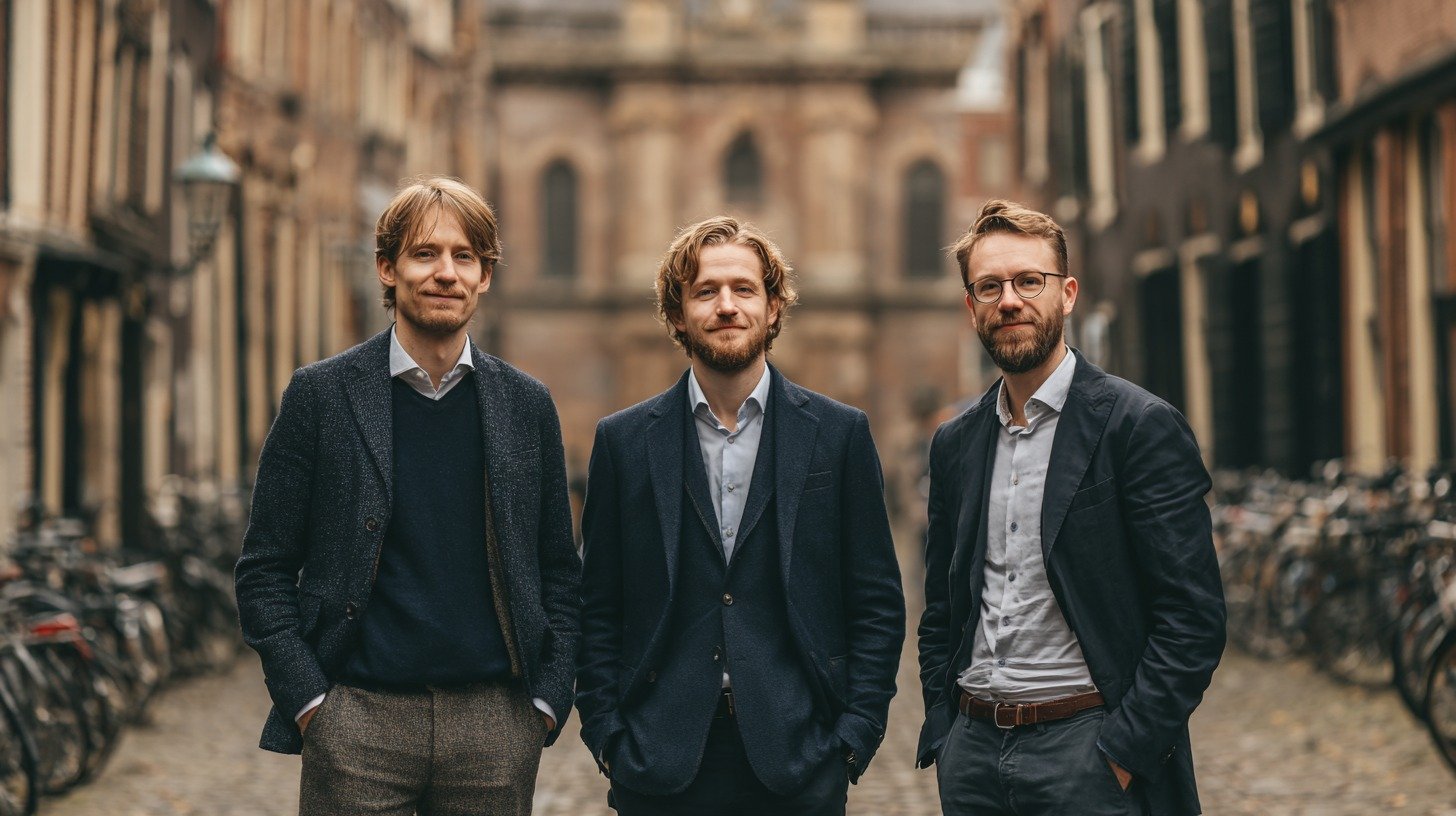
A new player has entered the global race for Bitcoin dominance. Dutch cryptocurrency service provider Amdax has raised €20 million ($23.3 million) to launch a new Bitcoin treasury company, AMBTS, with an audacious goal — to accumulate 1% of all Bitcoin that will ever exist.
ALSO READ : Trump family linked American Bitcoin seals Nasdaq debut after merger with Gryphon shareholders say yes
The announcement, made on Friday, confirmed that multiple investors participated in the initial funding round. AMBTS will operate as an independent, privately held firm with its own governance structure, aiming for a listing on Euronext Amsterdam.
If successful, AMBTS would eventually hold 210,000 BTC, currently valued at over $23 billion, cementing its place among the largest Bitcoin treasuries in the world.
AMBTS intends to leverage the capital markets to increase its Bitcoin holdings and sequentially generate equity appreciation and grow Bitcoin per share for its shareholders,” the company said in its announcement.
Corporate Bitcoin treasuries on the rise
The move by Amdax is part of a wider trend in which corporations have increasingly adopted Bitcoin as a strategic reserve asset. The strategy gained global attention in 2020 when Michael Saylor’s company MicroStrategy (then Strategy) pioneered the corporate Bitcoin treasury model.
Since then, the list of companies holding Bitcoin has expanded far beyond crypto-native firms. Electric vehicle giant Tesla, e-commerce powerhouse MercadoLibre, Brazilian fintech Méliuz, and even Canadian video platform Rumble have disclosed Bitcoin on their balance sheets.
Other notable adopters include Norway’s Aker ASA, Thai telecom Jasmine, U.S. coal producer Alliance, and investment manager Samara based in Malta. Each of these firms has contributed to a shrinking supply of Bitcoin available in circulation, reinforcing the narrative of scarcity that underpins Bitcoin’s market value.
International momentum builds
Amdax’s move comes on the heels of several other ambitious treasury strategies worldwide.
Earlier this week, Metaplanet, a Japanese Bitcoin treasury firm, approved plans to raise nearly $880 million, with most of the capital earmarked for Bitcoin purchases. Meanwhile, French semiconductor company Sequans Communications filed for a $200 million equity offering aimed at expanding its own Bitcoin treasury strategy.
At the same time, MicroStrategy continues to dominate the space. The company currently holds 632,457 BTC, worth more than $69.5 billion, representing more than 3% of all Bitcoin that will ever exist. In August alone, co-founder Michael Saylor hinted at three separate Bitcoin acquisitions, underscoring the company’s relentless pace.
A bold bet from Amsterdam
While $23 million is only a small step compared to MicroStrategy’s multibillion-dollar holdings, Amdax’s vision is clear — establish AMBTS as a European counterpart in the Bitcoin treasury race. Its decision to pursue a listing on Euronext Amsterdam reflects growing institutional demand for Bitcoin exposure in regulated financial markets.
As the firm sets out to acquire 210,000 BTC, one question looms large: can Amdax’s AMBTS secure its place among the titans of Bitcoin accumulation, or will the challenge of competing against giants like MicroStrategy prove too steep?
For now, the launch represents another signal that Bitcoin’s role as a corporate reserve asset is far from slowing down. The fight for who controls the world’s Bitcoin supply has just intensified — and Amdax wants a full 1% stake in it.

Trump Gives Iran 5 More Days — But Tehran Says There Were Never Any Talks to Begin With, as the World Braces for What Comes Next…

Colombian Military Plane With 110 Soldiers Crashes on Takeoff — As Another Airport Tragedy Strikes New York the Same Day…

Broadway Shake-Up: Samira Wiley Steps Away From ‘Proof’… Kara Young Steps In at the Last Moment

Broadway Surprise: Samira Wiley Drops Out of ‘Proof’… Kara Young Takes Center Stage

‘Dune 3’ Will Be a “Thriller”… Denis Villeneuve Drops a Big Hint as Zendaya & Robert Pattinson Join the Spotlight

1-Iran Issues Dire Warning to Israel and Defies Trump on Nukes: “We’re Ready to Strike Deep Inside”

Donald Trump’s net worth reveals the fortune behind the former US President and business mogul

“She Never Made It Out…” Albany House Fire Claims Woman’s Life as Family Pleads for Help to Bring Her Home

Caitlin Clark Sidelined with Quad Strain, Set to Miss Two Weeks of WNBA Action

“Tomás Rodríguez Net Worth 2025: Panama’s Gold Cup Goal‑Machine’s Surprising Fortune Revealed”

Miss Jamaica Suffers Terrifying Fall Off Miss Universe Stage; Rushed to Hospital on Stretcher in Viral Video

Moana Live-Action Teaser Sparks Outrage as Fans Call Disney’s Move a ‘Clear Money Grab’ — What Went Wrong?

Ryan Gosling’s Project Hail Mary Trailer Stuns Fans with a Mysterious Alien Ally and a Mission That Could Save Earth

Apple delays Jessica Chastain thriller The Savant about domestic extremism after recent US violence

Avatar 3, Fire and Ash trailer reveals Jake Sully’s family facing terrifying new Na’vi enemies with deadly fire powers
-

 Entertainment5 days ago
Cannes 2026 Hasn’t Announced a Single Film Yet — But the Whisper Network Is Already Pointing to These Names and It’s Exciting…
-

 Entertainment7 days ago
Oscars 2026 Red Carpet Shockers: Zendaya’s Late Arrival, Jessie Buckley’s Grace Kelly Tribute… and Chase Infiniti Owning the Night
-

 Entertainment6 days ago
Amy Poehler and Sterlin Harjo Are Getting One of Television’s Highest Honours — and the Reason Why Says Everything About Where Storytelling Is Headed…
-

 Politics1 week ago
“Trump Reveals ‘Early Stage Breast Cancer’ Diagnosis of Susie Wiles… But Says Her ‘Strength Says Everything’”
-

 Entertainment5 days ago
Almodóvar, Lars von Trier, Joel Coen and More — The Films That Could Own Cannes 2026 Are Already Generating Serious Buzz and the List Is…
-

 Entertainment1 week ago
The Oscars Are Already Being Called Before They Happen and Scott’s Final Feinberg Forecast Reveals a Shocking Front-Runner That Nobody Saw Coming…
-

 Entertainment5 days ago
Lollapalooza 2026 Just Dropped Its Most Surprising Lineup Yet — and the One Historic Thing Nobody Is Talking About Is the Real Story…
-

 Automobile1 week ago
“A Tragic Incident Changed Everything…”: Hyundai Halts Sales of Palisade SUVs and Recalls 60,000 Vehicles After Child’s Death