
World News
Why Trump Fired Attorney General Pam Bondi — And Why Tulsi Gabbard Could Be Next
From the Epstein Files Controversy to a Failure to Execute Trump’s Vision — Inside the White House Frustration That Cost Bondi Her Job


Washington D.C. In a move that has sent shockwaves through Washington’s political circles, US President Donald Trump has fired Attorney General Pam Bondi, a White House official confirmed on Thursday, according to Reuters. The dismissal marks one of the most significant shake-ups in Trump’s current administration — and it may not be the last. Whispers inside the White House suggest that Director of National Intelligence Tulsi Gabbard could also be on the chopping block.
Why Was Pam Bondi Fired?
The short answer — Trump was frustrated. But the longer story is more layered and politically charged.
According to a person familiar with White House deliberations who spoke to NBC News, Trump had grown “more and more frustrated” with Bondi over time. The source was careful to note that Trump personally likes Bondi as an individual, but felt she had not “executed on his vision” in the manner he expected from the nation’s top law enforcement officer.
One of the key flashpoints was Bondi’s handling of investigative files related to the late financier and convicted sex offender Jeffrey Epstein. The Epstein case remains one of the most politically explosive and public-interest-driven matters in recent American history, with millions of Americans and political figures across the spectrum demanding transparency over who was connected to Epstein and how deeply. Trump apparently felt that Bondi had not moved aggressively or decisively enough on this front — a misstep that proved costly.
Beyond the Epstein files, sources suggest a broader sense inside the White House that Bondi was not aggressive enough in pushing Trump’s legal and political agenda at the Department of Justice — an institution Trump has long viewed as a tool for advancing his policy goals and settling political scores.
Who Is Pam Bondi?
Pam Bondi served as Florida’s Attorney General from 2011 to 2019 and was a loyal Trump ally and defender during his first impeachment trial. She was seen as a safe, familiar choice when Trump nominated her for the top legal post. However, loyalty and execution are two different things in Trump’s world — and Bondi apparently delivered the former without sufficiently delivering the latter.
Is Tulsi Gabbard Next?
Perhaps even more striking than the Bondi firing is what it signals about the broader mood inside the Trump White House. Reports suggest that Tulsi Gabbard, the Director of National Intelligence, has also come under scrutiny. Trump has reportedly spoken about “getting rid of” Gabbard as well, though no official action has been taken yet.
Gabbard, a former Democratic congresswoman who dramatically shifted her political allegiance and became one of Trump’s more unconventional Cabinet picks, has had a turbulent tenure. Her confirmation itself was contentious, and she has faced questions about her competence in managing the sprawling US intelligence community. Whether Trump ultimately pulls the trigger on removing her remains to be seen — but the fact that her name is being discussed in the same breath as Bondi’s firing is a significant warning signal.

What Does This Mean for Trump’s Cabinet?
Trump has never been shy about firing people — it is, after all, the phrase most associated with his public persona. But the back-to-back frustrations with Bondi and the reported dissatisfaction with Gabbard suggest a White House that is growing increasingly impatient with Cabinet members who are seen as not fully committed to Trump’s agenda.
For Trump, loyalty has always been a one-way street — he demands total commitment to his vision, and those who fall short, regardless of their personal relationships with him, are ultimately expendable.
Political analysts in Washington are now watching closely to see who Trump nominates to replace Bondi at the Department of Justice — a choice that will speak volumes about the direction Trump intends to take the country’s legal and law enforcement apparatus in the months ahead.






World News
‘Uncontested Airspace?’ Downed US Jets Over Iran Raise Tough Questions for Trump and Pentagon
As two American aircraft are hit, claims of total air dominance by Donald Trump and Pete Hegseth face growing scrutiny


For weeks, the narrative coming out of Washington was clear and confident: the United States had achieved near-total control of Iranian airspace. President Donald Trump repeatedly described Iran as militarily crippled, claiming it had “no air force” and “no anti-aircraft systems.”
But recent developments in the ongoing conflict with Iran are beginning to complicate that narrative.
Two Incidents That Changed the Conversation
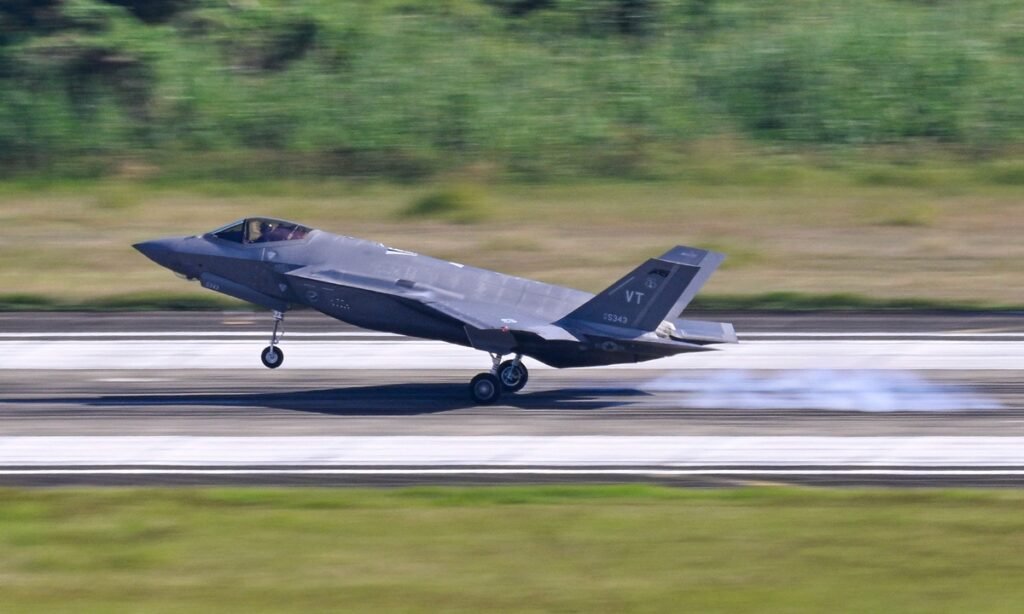
In a span of just days, two US combat aircraft were struck over Iranian territory. While one crew member has reportedly been rescued and is receiving treatment, the status of the other remains unclear. In the second incident, a pilot managed to steer the aircraft out of hostile airspace before ejecting safely.
Individually, these incidents might be seen as isolated setbacks. But together, they challenge the sweeping claims of “uncontested airspace” made by US officials.
The ‘Air Superiority’ Claim Under Pressure
At a March briefing, Defense Secretary Pete Hegseth had confidently declared that the US and its allies would soon have “complete control” over Iranian skies.
Similarly, President Trump had stated that American aircraft could fly freely over Tehran and strike targets without resistance.
However, the downing of jets suggests a more complex reality—one where Iran retains at least some capacity to respond, even if asymmetrically.

Asymmetric Warfare: A Different Battlefield
Military experts have long warned that conflicts with nations like Iran are rarely straightforward. While the US enjoys overwhelming technological superiority, asymmetric tactics—such as mobile missile systems and decentralized defenses—can still inflict damage.
This is not about parity. Iran is not matching the US in conventional strength. But these incidents highlight that dominance does not equal invulnerability.
A Pattern of Overstatement?
The recent घटनाएँ also bring renewed attention to earlier claims made by the administration.
After strikes on Iran’s nuclear facilities, Trump had described the program as “obliterated.” Yet intelligence assessments later suggested otherwise. Similarly, reports indicated that Iran’s missile capabilities were reduced—but not eliminated.
Even now, officials acknowledge that key elements of Iran’s military infrastructure remain operational.
Public Opinion: A Growing Concern
Beyond the battlefield, there is a political dimension that cannot be ignored.
The American public has shown increasing skepticism about the conflict. Rising fuel prices—partly linked to disruptions in the Strait of Hormuz—and unclear war objectives have fueled economic anxiety.
For many Americans, the question is no longer about military capability but about cost and purpose.
The Narrative vs Reality Gap
The Trump administration has often emphasized success and control, while critics argue that the messaging has been overly absolute.
Phrases like “unstoppable force” and “complete dominance” leave little room for setbacks—making incidents like downed aircraft more politically damaging than they might otherwise be.
What Comes Next?
Despite these developments, it’s important to note that US military strength remains formidable. Two downed jets do not redefine the balance of power.
However, they do serve as a reminder: even the most advanced military cannot operate without risk, especially in a volatile and unpredictable conflict zone.
As the situation evolves, the gap between rhetoric and reality may become one of the defining challenges for Washington.
For More Update- DAILY GLOBAL DIARY
World News
‘High Chances of Casualties’ After US-Israeli Strikes Hit Iran’s Petrochemical Zone — Second US Jet Down, Oracle Building in Dubai Targeted…
Explosions rocked Iran’s Mahshahr Petrochemical Zone as the conflict enters a devastating new phase — with a second US aircraft lost near the Strait of Hormuz, Israeli strikes hitting Tehran, and the war now reaching corporate towers in Dubai.

The US-Iran war crossed several alarming new thresholds on Friday and Saturday, as strikes, shootdowns, and retaliatory attacks unfolded across multiple fronts simultaneously — from the petrochemical heartland of southwestern Iran to the gleaming skyline of Dubai.
This conflict, which began over a month ago following US-Israeli strikes that killed former Iranian Supreme Leader Ali Khamenei, is no longer a regional flashpoint. It is a full-scale war with consequences being felt across the global economy — and this weekend, those consequences became impossible to ignore.
Mahshahr Petrochemical Zone — ‘High Chances of Casualties’
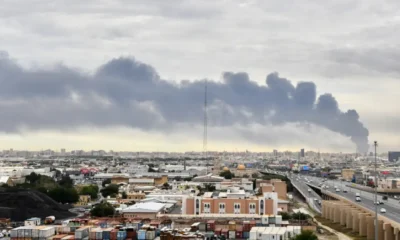
Several explosions rocked the Mahshahr Special Petrochemical Zone in Iran’s southwestern Khuzestan province following what appears to be a US-Israeli strike on the critical industrial hub.
The Iranian Students’ News Agency (ISNA) reported that there are “high chances of casualties” in the aftermath of the attack. The Mahshahr petrochemical complex is one of Iran’s most strategically significant industrial sites — a major contributor to the country’s energy and chemical exports, and a target whose destruction carries both military and massive economic implications.
The full scale of the damage and the casualty count remain unclear as of the time of writing.
Second US Aircraft Lost — A-10 Warthog Down Near Strait of Hormuz
In a development that signals just how intense the aerial warfare has become, a second US Air Force aircraft has gone down in the Persian Gulf region.
The New York Times reported, citing US officials, that an A-10 Warthog crashed near the Strait of Hormuz around the same time Iran shot down a US F-15E Strike Eagle. The A-10’s pilot was rescued safely.
However, the situation remains more precarious for the F-15E — a US official confirmed that one of the two crew members has been recovered, while the search for the second continues under extraordinarily dangerous conditions inside Iranian territory.
Two US jets lost. One crew member still missing. The operational and human stakes of this conflict have never been higher.
Trump: ‘No, It’s War. We’re In War.’
US President Donald Trump addressed the losses directly in comments to NBC News — and his response was characteristically unambiguous.
Asked whether the shootdown of a US military aircraft would affect ongoing diplomatic negotiations with Iran, Trump dismissed the suggestion entirely. “No, not at all. No, it’s war. We’re in war.”
These were his first public comments on the loss of a US aircraft during the conflict — made even as diplomatic back-channels reportedly remain open. The combination of active warfare and simultaneous negotiations represents one of the most complex and dangerous diplomatic situations the United States has navigated in decades.
Israeli Military Strikes Tehran — Missile Sites and Research Facilities Hit
The Israeli military confirmed on Saturday that its air force carried out strikes on ballistic and anti-aircraft missile storage sites in Tehran the previous day.
The strikes also targeted weapons manufacturing sites and military research and development facilities in the Iranian capital. The IDF stated that the operations are part of an ongoing campaign designed to increase damage to Iran’s “core systems and foundations” — language that suggests this phase of the conflict is far from over.
Striking the capital of a sovereign nation’s military infrastructure is not a minor escalation. It is a statement.
Oracle Building in Dubai Hit — Corporate War Arrives
Perhaps the most striking image of this weekend’s developments — in every sense — came from Dubai, where authorities confirmed that the facades of two buildings were damaged by debris from intercepted drones. One of those buildings belongs to Oracle, the US tech giant.
No injuries were reported. But the symbolism is impossible to miss.

Iran’s Revolutionary Guard had previously threatened to attack Oracle and 17 other US companies, accusing them of involvement in “terrorist espionage” operations inside Iran. This appears to be the beginning of that threat being acted upon.
It is not the first time US corporate infrastructure in the region has been targeted. Previous Iranian drone strikes caused damage to three Amazon Web Services (AWS) facilities across the United Arab Emirates and Bahrain.
The war has arrived in the boardroom. American tech companies with a physical presence in the Gulf region are now active targets — and that changes the calculus for every multinational with operations in the area.
The Wider Picture — A War With No Clear End
What this weekend’s developments make abundantly clear is that this conflict has evolved well beyond anything that can be contained or de-escalated quickly. Petrochemical zones, fighter jets, capital cities, and corporate skyscrapers are all now part of the same battlefield.
The Strait of Hormuz remains under severe pressure. Global energy markets are watching every development with growing alarm. And the human cost — from the crew members still missing over Iranian territory to the workers at the Mahshahr petrochemical complex — continues to mount.
Trump says it’s war. The evidence on the ground this weekend suggests he is right.
World News
It’s Not Just Oil — The US-Iran War Is Now Hitting Your Plastic Bottles and Glass Jars Too, and Here’s Why That Should Worry You…
As the Strait of Hormuz teeters on near-closure, the ripple effects of the US-Iran war are quietly creeping into everyday household products — from the plastic packaging on your groceries to the glass jar of your morning jam.

When people think about the consequences of a war in West Asia, they think oil prices. They think fuel at the pump. They think airline tickets going up.
What they don’t think about is their shampoo bottle. Or the glass jar sitting on their kitchen shelf.
But they should — because the US-Iran war is now reaching far deeper into daily life than most people realize, and the global plastics and glass industries are quietly feeling the pressure in ways that will eventually show up in your shopping cart.
The Strait of Hormuz — The Chokepoint That Changes Everything
At the heart of this crisis is the Strait of Hormuz — one of the most strategically vital waterways on the planet. Since the conflict erupted in late February following US-Israeli strikes on Iran, maritime traffic through the Strait has been severely disrupted, pushing global oil and gas markets into a state of sustained anxiety.
Oil prices have climbed by over 40% since the war began. And that number doesn’t just affect what you pay at the petrol station — it runs straight through the veins of the global manufacturing economy.
Why Plastic Gets More Expensive When Oil Does
Here is something most consumers never think about — plastic is made from oil.
Not entirely, but significantly. The petrochemical feedstocks derived from crude oil and natural gas — ethylene, propylene, benzene — are the raw building blocks of virtually every plastic product on the market. When oil prices spike by 40%, the cost of producing plastic rises sharply with it.
Think about what that means in practice. Plastic packaging. Plastic bottles. Plastic containers for food, medicine, cleaning products, and cosmetics. The global plastics market has been unsettled by the disruption in oil supply flowing through and around the Strait of Hormuz, and manufacturers are already feeling the squeeze on their margins.
Those costs, inevitably, get passed down the chain — and eventually land on the consumer.
Glass Isn’t Safe Either — And the Reason Is Gas
If plastic’s problem is oil, glass has a different but equally serious issue — commercial gas supply.
Glass container manufacturers depend heavily on gas-fired furnaces to melt raw materials at the extraordinarily high temperatures required to produce glass. These furnaces cannot simply be switched off and on — they run continuously, and the gas supply feeding them needs to be consistent, affordable, and reliable.

The US-Iran war and the resulting disruption around the Strait of Hormuz has put commercial gas supplies under significant pressure. For glass makers — who operate on notoriously thin margins — even a moderate spike in gas costs can threaten the viability of production runs.
The result? Glass container availability is being affected worldwide, from food and beverage packaging to pharmaceutical glass — industries that have very few alternatives to fall back on quickly.
A Supply Chain Problem the World Wasn’t Ready For
What makes this situation particularly concerning is how interconnected these supply chains are — and how poorly understood that interconnection is by the general public.
The US-Iran conflict is often framed as a geopolitical and military story. And it is. But it is simultaneously an economic story — one being written in the price of resin pellets sold to plastic manufacturers in Southeast Asia, in the gas invoices landing on the desks of glass factory managers in Europe, and in the procurement headaches of consumer goods companies trying to keep their products on shelves.
West Asia sits at the center of global energy flows. When that center becomes unstable, the shockwaves don’t stop at the region’s borders — they travel through pipelines, shipping lanes, commodity exchanges, and factory floors to reach virtually every corner of the global economy.
What Comes Next
With no clear end to the conflict in sight, and the Strait of Hormuz remaining under severe pressure, manufacturers in both the plastics and glass sectors are now being forced to make difficult decisions — about stockpiling raw materials, raising prices, reducing output, or searching for alternative suppliers in markets that may not be able to absorb sudden surges in demand.
None of those options are clean. None of them are fast.
The next time you pick up a plastic bottle or a glass jar at the supermarket and notice the price has quietly crept up — you’ll know exactly which war to think about.

“Can This Old-School Beast Outsmart Rivian R2?” Toyota 4Runner Throws a Bold Challenge to the Electric Future

‘Uncontested Airspace?’ Downed US Jets Over Iran Raise Tough Questions for Trump and Pentagon

‘High Chances of Casualties’ After US-Israeli Strikes Hit Iran’s Petrochemical Zone — Second US Jet Down, Oracle Building in Dubai Targeted…

Kevin Pietersen Is Flying Between Delhi, Bengaluru and Kolkata on Consecutive Days for IPL 2026 — and His Reaction to ‘Don’t You Get Tired?’ Is Pure KP…

‘Bro, That’s Not My Fault!’ — IShowSpeed Almost Crashed His Car Live in Front of Millions, and His Reaction Made It So Much Worse…

1-Iran Issues Dire Warning to Israel and Defies Trump on Nukes: “We’re Ready to Strike Deep Inside”

Donald Trump’s net worth reveals the fortune behind the former US President and business mogul

“She Never Made It Out…” Albany House Fire Claims Woman’s Life as Family Pleads for Help to Bring Her Home

“Tomás Rodríguez Net Worth 2025: Panama’s Gold Cup Goal‑Machine’s Surprising Fortune Revealed”

Caitlin Clark Sidelined with Quad Strain, Set to Miss Two Weeks of WNBA Action

Miss Jamaica Suffers Terrifying Fall Off Miss Universe Stage; Rushed to Hospital on Stretcher in Viral Video

Moana Live-Action Teaser Sparks Outrage as Fans Call Disney’s Move a ‘Clear Money Grab’ — What Went Wrong?

Ryan Gosling’s Project Hail Mary Trailer Stuns Fans with a Mysterious Alien Ally and a Mission That Could Save Earth

Apple delays Jessica Chastain thriller The Savant about domestic extremism after recent US violence

Avatar 3, Fire and Ash trailer reveals Jake Sully’s family facing terrifying new Na’vi enemies with deadly fire powers
-

 Entertainment6 days ago
Stranger Things Is Back And the New Show Coming to Netflix in April Has a Twist Nobody Saw Coming…
-

 Entertainment6 days ago
Netflix Boss Ted Sarandos Quietly Pivots to Europe After Warner Deal Falls Apart — and His Message to Regulators Is Hard to Miss…
-

 Entertainment6 days ago
‘Love Story’ Finale Leaves the World in Tears The Last Words Carolyn Said to JFK Jr. Before the Plane Went Dark Will Break Your Heart…
-

 Cricket6 days ago
Fakhar Zaman’s Ball Tampering Is No Accident — Pakistan’s Dark Secret Behind Their ‘Superior’ Head-to-Head Record Against India Finally Exposed…
-

 Entertainment3 days ago
Larry David Told Barack Obama to Back Off on His Own HBO Show — and Obama’s Response Is the Funniest Thing You’ll Hear All Week…
-

 World News6 days ago
Air Canada CEO Michael Rousseau Says ‘I Sincerely Apologize’ After Crash Condolence Video Sparked Outrage But Politicians Are Calling It…
-

 Entertainment6 days ago
Steven Knight Admits He Nearly Brought Tom Hardy Back as a Ghost in ‘Peaky Blinders: The Immortal Man’ — and the Reason He Didn’t Will Surprise You…
-

 Cricket6 days ago
Caught on Camera, Denied in the Hearing Room: Fakhar Zaman’s Ball Tampering Saga That Flipped a PSL Match in the Final Over…