
Entertainment
‘Love Story’ Finale Leaves the World in Tears The Last Words Carolyn Said to JFK Jr. Before the Plane Went Dark Will Break Your Heart…
FX’s blockbuster limited series finally reached its inevitable, devastating conclusion — and how it handled the final moments of John F. Kennedy Jr. and Carolyn Bessette-Kennedy left millions of viewers absolutely shattered.


There are some stories you already know the ending to, and yet, when you watch them unfold on screen, something inside you still hopes — just for a second — that maybe this time, it’ll be different. That’s exactly the cruel, beautiful trap that Ryan Murphy and creator Connor Hines set for audiences with FX’s Love Story: John F. Kennedy Jr. & Carolyn Bessette. And on Thursday night, March 26, 2026, the nine-episode run came to its heartbreaking close, leaving no dry eyes and no question unanswered — except the one that has haunted America for over two decades: what if they had made it?
A Marriage Hanging by a Thread
As the finale opens, John and Carolyn are still recovering from the nasty fight they had the previous week, where John had packed up to stay at a hotel. TVLine Their marriage — once the envy of an entire generation — had crumbled under the weight of fame, paparazzi, and the impossible pressure of being a Kennedy. They bicker at couples therapy, where Carolyn confesses she’s been having nightmares about being Jackie O. in a JFK-style assassination. But when the therapist suggests a trial separation, both of them recoil at the very idea.
Carolyn had told John, “I cannot be the third person in my marriage,” behind the spectre of the media and the Kennedy mythos. Variety Yet the very thought of a month apart was enough to shock them both back into each other’s arms. They couldn’t live with the chaos — but they couldn’t live without each other either.
ALSO READ : “She Never Made It Out…” Albany House Fire Claims Woman’s Life as Family Pleads for Help to Bring Her Home
Sarah Pidgeon as Carolyn and Paul Anthony Kelly as John carry the weight of the entire episode on their shoulders, and they do it with a grace that is genuinely hard to watch. At a bar after their therapy session, they talk and remember the early days of their relationship, before headlines and cameras turned their lives upside down. Carolyn reflects, “If only we knew then how good we had it.”
Fighting for What’s Left
Both turn to family for support — John confides in his sister Caroline Kennedy (played by Grace Gummer), while Carolyn leans on her sister Lauren Bessette (played by Sydney Lemmon) — and each is encouraged to fight for the relationship. The Hollywood Reporter
And fight they do. Carolyn even makes a rare public appearance to support John at an event for George magazine. The two also recreate their first date at an Indian restaurant, where Carolyn finally explains what her “sign above her head” means, which she had referenced in the pilot: “Please handle with care, not as tough as she looks.” It’s one of the most quietly devastating scenes of the entire series — a woman finally letting her guard down, just when time is running out.
John and Carolyn reclaim a bit of their old spark while sharing a cigarette at a dive bar, setting the stage for steamy make-up scenes. But the next morning, John heads off to yet another meeting and invites her to yet another party, and Carolyn is left wondering if anything’s really changed.
July 16, 1999 — The Day Everything Stopped
About 20 minutes into the episode, the timeline shifts. The date appears on screen: July 16, 1999 — and everything starts to feel tighter. That’s the day the real-life tragedy occurred, when John, Carolyn, and Lauren boarded a plane bound for Martha’s Vineyard to attend a Kennedy family wedding.
The show circles back to where it began in the season premiere, with the two having a tense encounter on the tarmac before taking off with Carolyn’s sister Lauren also onboard. Gold Derby Carolyn wasn’t sure about going — she almost didn’t. But in the end, she chose to be there with her husband.
Inside the cockpit, John pilots toward what he thinks is the horizon — and then suddenly loses his sense of it. He urges Carolyn to go back to her seat, but she refuses, staying by his side as dials spin and light his face red. “It’s OK, just breathe. John, just breathe. Just breathe.” As he looks confounded by the moment, she looks serene.
Those were the last words. The screen goes black.
A Nation’s Grief, Reborn on Screen
What follows is the world’s reaction. Police officers show up to Caroline’s home to tell her and her husband Edwin Schlossberg (Ben Shenkman) that John’s plane has been reported missing. A call in the middle of the night wakes up Carolyn and Lauren’s mother, Ann Messina Freeman (Constance Zimmer). Newsstands across New York City show a meticulously replicated New York Daily News cover that reads: “LOST.” The Hollywood Reporter

As the Kennedys gather, former President Bill Clinton calls Senator Ted Kennedy (Donal Logue) — and it’s clear what the conversation means without it being said: they’ve been found, but not alive. The Hollywood Reporter
Grace Gummer then delivers what may be the single most devastating performance in the entire series. She cries and screams at Ed, unable to rationalize that John is gone. “Please don’t do this to me, I can’t do it again,” she sobs into his arms. She has already lost her mother, Jackie Kennedy Onassis (played by Naomi Watts), to cancer, along with her father, former President John F. Kennedy, who was assassinated. The Hollywood Reporter
Lauren Was on That Plane Too
One of the most powerful and often overlooked dimensions of the finale is its insistence on remembering Lauren Bessette — Carolyn’s older sister — who also perished that night and is too often reduced to a footnote in the larger Kennedy story.
When Ann and Ed meet to discuss burial plans, he repeatedly names only John and Carolyn, prompting her to respond: “You keep saying ‘Carolyn.’ May I remind you that I had not one, but two daughters on board that plane that he crashed.”
Ann and Caroline later have a tense sit-down, where Ann rants about Carolyn being blamed for the crash by the media, and Lauren being reduced to “practically a footnote.” She breaks down, asking: “How do you live in a world that doesn’t make sense?”
A Final Goodbye, and a Glimpse of What Could Have Been
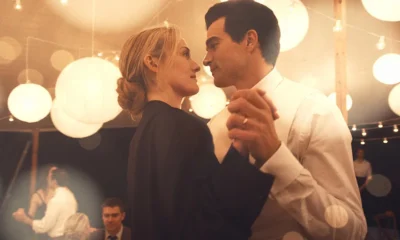
They spread the ashes of John, Carolyn, and Lauren at sea. The camera pans over the peaceful New England coast — and then we see John and Carolyn cuddling on the beach one last time.
We hear Ann reading Henry Scott-Holland’s “Death Is Nothing At All” and Clare Harner’s “Do Not Stand at My Grave and Weep” at a negotiated funeral service. The final image is of John and Carolyn, entirely alone, embracing on a sand dune — happy, in the company of no one but each other.
It’s the ending they deserved and never got. And that’s exactly why it hurts so much.
A Cultural Phenomenon That Reignited a Generation’s Memory
Love Story has become FX’s most-watched limited series of all time, accumulating more than 25 million hours of viewing across Hulu and Disney+ in just its first five episodes. Searches for John F. Kennedy Jr. and Carolyn Bessette-Kennedy reportedly increased by more than 9,100% in the month after the premiere, while the hashtag #lovestory generated more than 21 million posts globally.
Love Story has proven to be a ’90s nostalgia gateway drug for younger audiences, who have flocked to the real New York locations that the couple visited and modeled themselves after Bessette’s look. Gold Derby
The series was not without controversy. In June 2025, Jack Schlossberg, nephew of John F. Kennedy Jr., criticized the series for not consulting the Kennedy family during development and accused the production of “profiting off” his uncle’s life “in a grotesque way.” Murphy later indicated he intended to donate to the John F. Kennedy Library.
None of that controversy could blunt the emotional impact of what Ryan Murphy, Connor Hines, Sarah Pidgeon, and Paul Anthony Kelly built together. This was television doing what it does best — reminding us that behind every headline, there were real people who laughed, fought, loved, and lost. And in the case of John and Carolyn, they did all of it in front of the entire world.
Just breathe. Two words. And yet, somehow, the most complete love story ever told.






Entertainment
Did James Franco Discover Something Strange? Actor’s Viral Videos Fuel Alien Speculation
The viral videos have left fans curious, but the truth behind the mysterious recordings remains unclear.

Hollywood actor James Franco has once again become the center of internet attention, but this time the conversation is not about a movie role. The actor has been sharing a series of mysterious videos on TikTok that appear to tease what he describes as possible footage of an alien encounter.
Since the beginning of June, Franco has posted cryptic clips suggesting that he has something unusual to reveal. In one of the videos, the actor claimed, “I need to get this out for that very reason that people are trying to stop me,” creating a wave of speculation among viewers.
The posts quickly went viral, with fans questioning whether Franco had discovered something extraordinary or whether the entire situation was a carefully planned piece of entertainment.
ALSO READ : Sen. Elizabeth Warren Calls It a ‘Cesspool of Corruption’ — Here’s Why Senators Are Now Fighting Back Against the DOJ’s Live Nation Deal That Left Every Fan Betrayed…
A Mystery That Has the Internet Talking
The videos have not provided clear evidence of extraterrestrial life, leaving viewers searching for answers. While some social media users believe the actor may be hinting at a genuine discovery, others suspect it could be a creative project, performance art, or a promotional campaign.
Franco is known for experimenting with unconventional projects throughout his career. From acting and directing to writing and producing, the actor has often explored unusual storytelling methods, making some fans wonder if the alien footage claim is another artistic experiment.

The lack of confirmed details has only increased curiosity. Franco has not publicly released verified proof or independent confirmation of any extraterrestrial footage.
Real Discovery or Viral Strategy?
Claims involving UFOs and alien encounters have always attracted massive public interest. In recent years, discussions around unidentified aerial phenomena (UAP) have gained attention after governments and researchers began examining unexplained sightings.
However, experts have repeatedly emphasized that extraordinary claims require strong evidence. Without additional proof, Franco’s videos remain an internet mystery rather than a confirmed discovery.
For now, fans are waiting to see whether the actor will reveal more details or explain the true meaning behind the mysterious clips.
Whether it turns out to be a groundbreaking revelation or a clever internet stunt, one thing is clear — James Franco has once again managed to capture global attention.
Entertainment
PEN America Crisis Deepens… Jewish Writers Report Sparks Internal Fallout as President Resigns in Protest
A heated debate over Israel, Palestine and free expression has created a major divide inside PEN America, reflecting wider cultural conflicts across the global arts community.

A growing dispute inside PEN America has shaken the literary community after a report examining the experiences of Jewish writers triggered internal criticism and led to the resignation of the organization’s president in protest.
The controversy centers around ongoing debates related to the Israel-Palestine conflict, free speech, and how cultural institutions address political issues affecting writers and artists.
The situation at PEN America reflects a broader conversation taking place across the entertainment and creative industries, where organizations and individuals have faced difficult questions about activism, representation, and the role of art during periods of international conflict.
A Report That Sparked Debate
PEN America, which advocates for literature and freedom of expression, has long positioned itself as a defender of writers facing censorship and political pressure around the world.
ALSO READ : Sen. Elizabeth Warren Calls It a ‘Cesspool of Corruption’ — Here’s Why Senators Are Now Fighting Back Against the DOJ’s Live Nation Deal That Left Every Fan Betrayed…
However, the organization has faced internal disagreements over how it has approached discussions surrounding Israel and Palestine. Critics and supporters have debated whether cultural institutions should take stronger political positions or remain focused primarily on protecting free expression.
The report on Jewish writers became a focal point in those discussions, with reactions divided among members of the literary community.
Leadership Shake-Up Adds to Tensions
The controversy intensified after Jennifer Finney Boylan, who served as president of PEN America, resigned from the position in protest.

The leadership change highlighted the depth of disagreement within the organization and raised questions about how literary groups navigate complex political issues while maintaining trust among diverse communities.
The debate has also attracted attention beyond the literary world, as similar discussions have emerged throughout Hollywood, publishing, universities, and other cultural spaces.
A Larger Debate Across the Arts Industry
The conflict surrounding PEN America is part of a wider global discussion about the responsibilities of artists and cultural institutions during times of political crisis.
Many writers and performers argue that creative communities should speak out on human rights issues, while others believe organizations must be careful to avoid creating divisions among their members.
As conversations continue, PEN America faces the challenge of balancing its historic mission of defending writers with the increasingly complex political realities influencing the modern cultural landscape.
The controversy has become another example of how global conflicts are reshaping debates inside creative industries — where questions of identity, politics, and freedom of expression continue to collide.
Entertainment
David Ellison Leads New Push for Federal Film Tax Credits in Washington
Hollywood executives are urging lawmakers to boost incentives aimed at keeping film and TV production in the United States.

The fight over the future of film production incentives in the United States has entered a critical phase, with David Ellison taking his campaign directly to Washington, D.C.
The Paramount Skydance chief executive recently met with Republican members of the House Ways and Means Committee, urging lawmakers to consider a federal tax credit aimed at strengthening America’s entertainment industry. His visit comes at a time when the sector is navigating increasing production costs, fierce international competition, and a legal challenge backed by a coalition of 12 U.S. states.
The move signals that Hollywood’s biggest studios are becoming more actively involved in shaping policy rather than waiting for lawmakers to act.
A Federal Tax Credit Could Reshape Film Production
For years, individual U.S. states have competed to attract film and television productions by offering generous tax incentives. These programs have helped generate local jobs, boost tourism, and support thousands of businesses connected to filmmaking.
However, industry leaders argue that the current state-by-state approach is no longer enough.
Countries including the United Kingdom, Canada, Australia, and several European nations continue to expand attractive production incentives, encouraging major studios to film overseas. Executives believe a nationwide federal tax credit could help keep more productions—and the jobs they create—inside the United States.
ALSO READ : Sen. Elizabeth Warren Calls It a ‘Cesspool of Corruption’ — Here’s Why Senators Are Now Fighting Back Against the DOJ’s Live Nation Deal That Left Every Fan Betrayed…
David Ellison’s meetings with lawmakers focused on presenting this broader economic case, emphasizing that entertainment is not only a cultural export but also a major contributor to employment, technology, and local economies.
Legal Dispute Adds Pressure
The policy discussions are unfolding alongside a lawsuit backed by 12 states that has intensified debate around government support for the film industry.
Although the legal proceedings focus on broader questions surrounding production incentives, the dispute has increased pressure on policymakers to clarify how future film tax programs should operate.
Industry observers believe the combination of legal uncertainty and growing international competition makes this an important moment for Congress to examine whether federal incentives should complement existing state programs.
Why Studios Are Pushing for Reform
Hollywood has experienced significant disruption over the past several years.
The pandemic, labor strikes, inflation, changing audience habits, and the rapid expansion of streaming platforms have transformed how movies and television shows are financed and produced.
Major studios now face tougher decisions about where to shoot projects, often selecting locations based largely on available financial incentives rather than creative considerations alone.
Supporters of a federal tax credit argue that stronger incentives would help preserve skilled jobs, encourage infrastructure investment, and strengthen America’s position as a global filmmaking hub.

Critics, however, caution that any nationwide program would require careful oversight to ensure taxpayer funds generate measurable economic benefits.
David Ellison Takes a Public Leadership Role
As CEO of Paramount Skydance, David Ellison has become one of Hollywood’s most influential executives following the company’s high-profile merger activities and expansion plans.
Rather than leaving lobbying efforts to industry associations, Ellison’s direct engagement with congressional leaders demonstrates how seriously major studios view the current policy debate.
His visit also reflects growing cooperation between entertainment executives and lawmakers seeking ways to strengthen domestic investment while keeping the United States competitive in an increasingly global media landscape.
What’s Next?
No immediate legislative decision has been announced, but conversations surrounding a federal Hollywood tax credit are expected to continue in Congress over the coming months.
If lawmakers eventually approve such a measure, it could significantly influence where future blockbuster films, television series, and streaming productions are developed and produced.
For Hollywood, the outcome may shape investment decisions for years to come. For policymakers, it represents a broader debate about economic competitiveness, job creation, and America’s creative industries in an increasingly global market.

Did James Franco Discover Something Strange? Actor’s Viral Videos Fuel Alien Speculation

PEN America Crisis Deepens… Jewish Writers Report Sparks Internal Fallout as President Resigns in Protest

David Ellison Leads New Push for Federal Film Tax Credits in Washington

Wes Anderson Celebrated at Hollywood Bowl as Jackson Browne and Beck Deliver Moving Tribute

From Michelle Obama’s White House Team to Sundance Leadership: Ebs Burnough’s Hollywood Journey Took a Remarkable Turn…

1-Iran Issues Dire Warning to Israel and Defies Trump on Nukes: “We’re Ready to Strike Deep Inside”

Sen. Elizabeth Warren Calls It a ‘Cesspool of Corruption’ — Here’s Why Senators Are Now Fighting Back Against the DOJ’s Live Nation Deal That Left Every Fan Betrayed…

Donald Trump’s net worth reveals the fortune behind the former US President and business mogul

“Tomás Rodríguez Net Worth 2025: Panama’s Gold Cup Goal‑Machine’s Surprising Fortune Revealed”

“She Never Made It Out…” Albany House Fire Claims Woman’s Life as Family Pleads for Help to Bring Her Home

Miss Jamaica Suffers Terrifying Fall Off Miss Universe Stage; Rushed to Hospital on Stretcher in Viral Video

Moana Live-Action Teaser Sparks Outrage as Fans Call Disney’s Move a ‘Clear Money Grab’ — What Went Wrong?

Ryan Gosling’s Project Hail Mary Trailer Stuns Fans with a Mysterious Alien Ally and a Mission That Could Save Earth

Apple delays Jessica Chastain thriller The Savant about domestic extremism after recent US violence

Avatar 3, Fire and Ash trailer reveals Jake Sully’s family facing terrifying new Na’vi enemies with deadly fire powers
-

 Entertainment1 week ago
‘Reacher’ Star Alan Ritchson Sparks Debate With Bold Remarks on Epstein Files Controversy
-

 Entertainment1 week ago
Disney+ Officially Orders ‘Afterlife With Archie’ Series From ‘Riverdale’ Creators
-

 Entertainment1 week ago
Michael J. Fox Confirms ‘Shrinking’ Return, Says Acting “Prolonged My Life” Amid Parkinson’s Battle
-

 Entertainment1 week ago
Apple TV+ One Tony Away From Historic EGOT Achievement With Schmigadoon!
-

 Entertainment1 week ago
Locarno to Honor James Gray With Career Leopard: Why the Festival Calls Him ‘The Last Great Novelist of American Cinema’…
-

 Sports5 days ago
Nick Chubb Retires at 30: Browns Star Walks Away After Injuries Cut Short a Career That Looked Hall of Fame-Bound
-
 Entertainment6 days ago
Ben Folds Says Trump-Era Kennedy Center Changes Led to His Exit
-

 Entertainment1 week ago
‘It’s Become a Tradition’: Kevin Feige Reveals Adam Driver Has Turned Down Multiple Marvel Roles…