
USA
Trump’s tariffs could add nearly $2,000 to your next car… experts reveal who really pays the price
Consultants warn American drivers will feel the brunt of a $30 billion cost wall as auto giants pass along most of the hit.

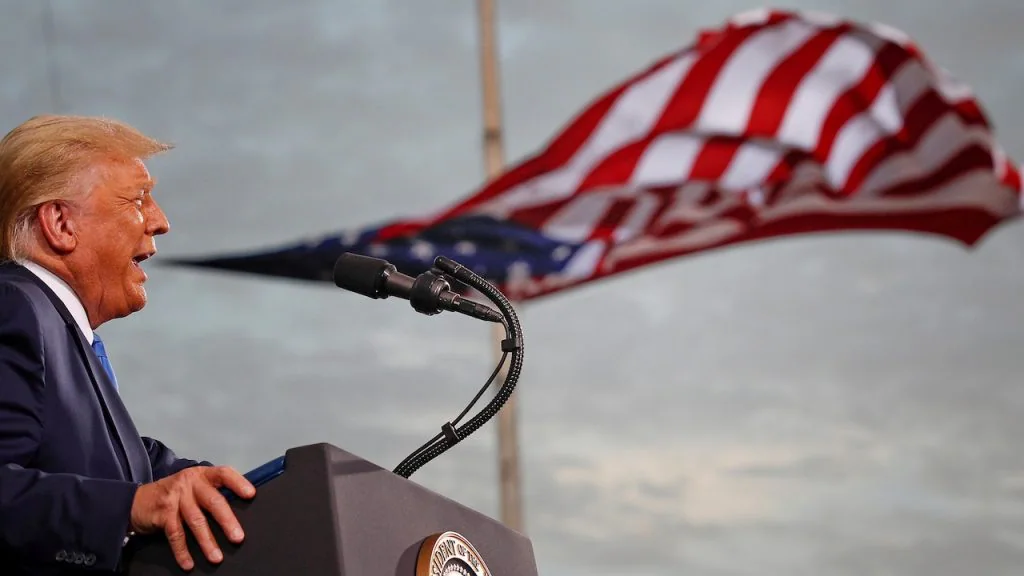
Thinking about buying a new car soon? Brace your wallet — it might cost you almost $2,000 more thanks to President Donald Trump’s tariffs.
That’s the blunt warning from global consulting firm AlixPartners, which says American car buyers, not big automakers, will shoulder most of the pain.
In a new report, the firm estimates Trump’s tariffs will slam the U.S. auto industry with an eye-watering $30 billion in extra costs — and predicts companies will pass along 80% of that cost to buyers. The math? That’s an average of $1,760 more per vehicle.
“These tariffs bring a big wall of cost,” said Mark Wakefield, AlixPartners’ global auto lead, in an online briefing. “Consumers [are] taking the majority of the hit.”
Who’s feeling the squeeze?
Major automakers have already sounded the alarm. General Motors says tariffs will cost it $5 billion this year alone; Ford pegs the damage at $2.5 billion. Both companies have hinted they’ll cover some of it by raising sticker prices.
For cash-strapped buyers already navigating record interest rates and inflated used car prices, that’s more bad news on the showroom floor.
AlixPartners predicts the higher prices will push down new car sales by about 1 million vehicles over the next three years. But the pain may not last forever: the firm expects tariffs to ease as the U.S. strikes new trade deals, forecasting the 25% auto tariff could drop to just 7.5% on assembled cars and even less on parts.
“This tariff wall is not likely to last forever,” Wakefield said.
But the bigger worry? America’s place in the global EV race.
While tariffs may fade, Wakefield warns Trump’s rollback of federal incentives for electric cars will stick — and could sideline U.S. carmakers in the booming EV market.
Killing the popular $7,500 consumer tax credit for buying a battery-powered car will steer buyers back to traditional gas guzzlers, AlixPartners says. As a result, the firm just slashed its 2030 EV sales forecast nearly in half: battery electrics are now projected to be just 17% of U.S. sales by then, down from a previous estimate of 31%.
Gasoline engines, meanwhile, will cling to half the market — far more than analysts once expected. Hybrid sales will inch up, but plug-in hybrids and extended-range EVs will shrink.
The bottom line?
“It makes it much more likely that [U.S. automakers] end up licensing or joint venturing or otherwise using platforms and EV technologies from China,” Wakefield said, pointing out that global rivals — especially China — are surging ahead in affordable EV tech.
“They’ll have the world’s best V8 engines by 2028,” he quipped. “They’ll probably also have the world’s only V8 engines by 2028.”
In other words: if you love muscle cars, enjoy them while they last — and maybe budget a bit more for that new ride under Trump’s tariffs.










USA
10 Skiers Missing After Massive Lake Tahoe Avalanche 6 Rescued as Storm Triggers High Danger Warning

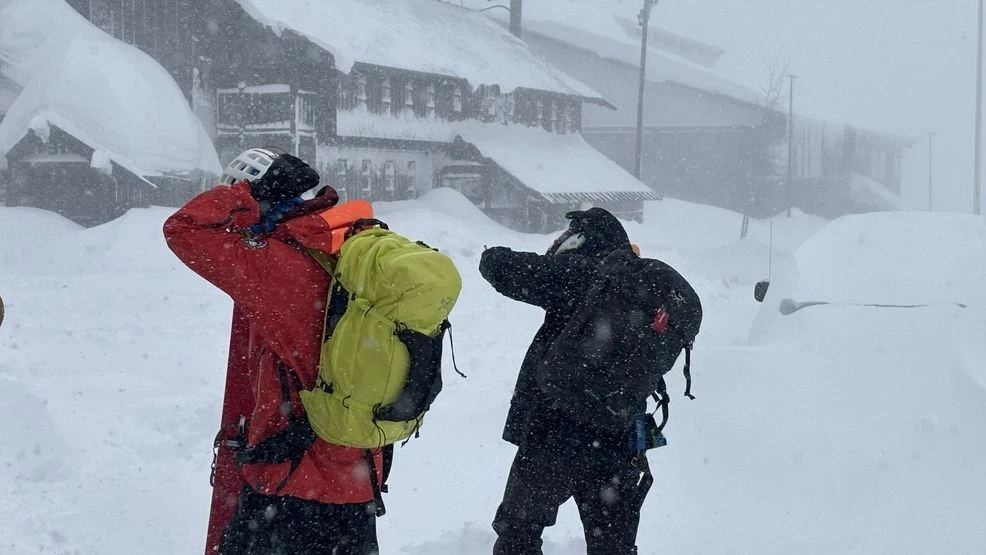
Rescue teams race against time near Castle Peak as a powerful winter storm fuels treacherous avalanche conditions in Northern California.
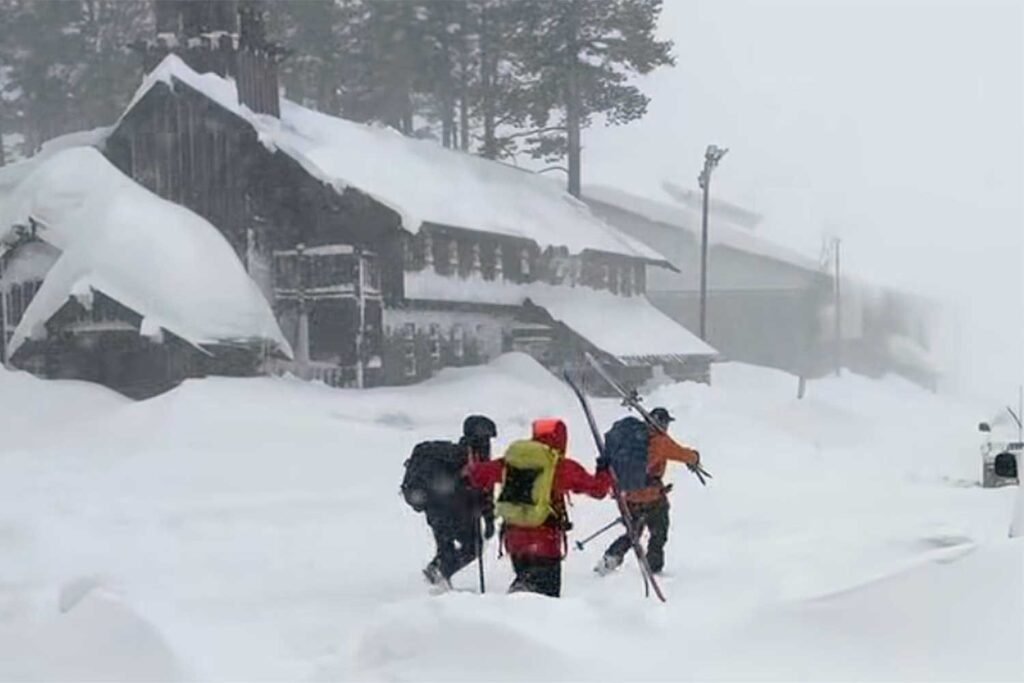
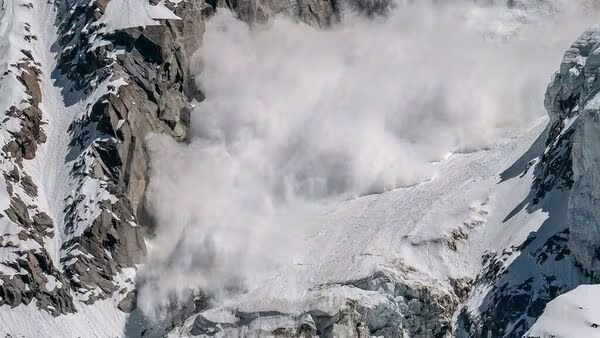
A terrifying avalanche near Lake Tahoe has left 10 backcountry skiers missing while six others have been rescued in what officials are calling a rapidly evolving emergency.
The massive slide struck Tuesday morning near Castle Peak, a popular backcountry skiing destination northwest of Lake Tahoe, as a group was wrapping up a guided three-day trip. Authorities say the avalanche hit around 11:30 a.m. local time, prompting an urgent 911 call to the Nevada County Sheriff’s Office.
What Happened on the Mountain
According to officials and tour organizers, the group consisted of four ski guides and 12 clients. The skiers were reportedly in the process of returning to the trailhead when the avalanche roared through the area.
In a statement, Blackbird Mountain Guides confirmed:
“The group was in the process of returning to the trailhead at the conclusion of a three-day trip when the incident occurred.”
So far, six individuals who were stranded have been rescued. However, search efforts continue for the remaining missing skiers as heavy snowfall and dangerous conditions complicate operations.
Massive Multi-Agency Rescue Effort
Authorities described the situation as “fluid,” warning that details could change rapidly.
Captain Russell Greene of the sheriff’s office told reporters that rescue teams are actively contacting families of those involved.
The response has been extensive, involving:
- Nevada County Search and Rescue
- California Department of Forestry and Fire Protection
- Placer County Sheriff’s Office
- Tahoe Nordic Search and Rescue
- Washoe County Sheriff’s Office
- Washoe County Search and Rescue
- Truckee Fire
Trained ski patrol rescue teams from nearby resorts have also joined the mission, navigating treacherous terrain and severe weather to locate survivors.
Storm Conditions Fueling Avalanche Danger
The avalanche occurred as Northern California is being battered by a powerful winter storm bringing heavy snowfall, gale-force winds, and dangerous thunderstorms.
The Sierra Avalanche Center, based in Truckee, had already issued warnings about high avalanche danger across the Central Sierra Nevada and the Greater Lake Tahoe region.
Officials warned that:
- Rapidly accumulating snowfall
- Fragile snowpack layers
- Gale-force winds
were creating ideal conditions for large, destructive avalanches.
Brandon Schwartz, the Tahoe National Forest’s lead avalanche forecaster, said:
“It’s particularly dangerous in the backcountry right now just because we’re at the height of the storm.”
Unlike ski resorts along major highways — which use avalanche mitigation programs to control slides — backcountry areas like Castle Peak do not have those protections. Authorities had strongly discouraged travel in or below avalanche-prone terrain.
Resorts Closed, Warnings Ignored
Several ski resorts around Lake Tahoe were partially or fully closed due to extreme weather conditions. While controlled resort areas are generally monitored and stabilized, the backcountry remains unpredictable.
Experts note that backcountry skiing, while increasingly popular, carries inherent risks — especially during active storm cycles. Avalanche conditions can shift within hours, making even experienced groups vulnerable.
Families Waiting, Search Continues
Officials have not yet released the identities of those missing. Rescue teams are racing against time as snow continues to fall and temperatures remain low.
Authorities stress that this remains an active and developing emergency.
For now, the focus remains on locating the missing skiers and safely navigating a mountainside that experts say is among the most dangerous it has been all season
Politics & Government
Make Japan Strong Again Sanae Takaichi’s Bold Military Gamble That Could Redefine Asia.
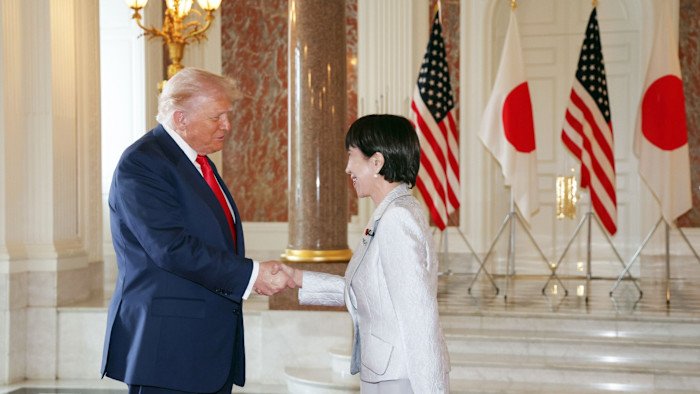
With a historic supermajority behind her, Prime Minister Sanae Takaichi is accelerating defense spending, challenging China, and testing the limits of Japan’s pacifist constitution.
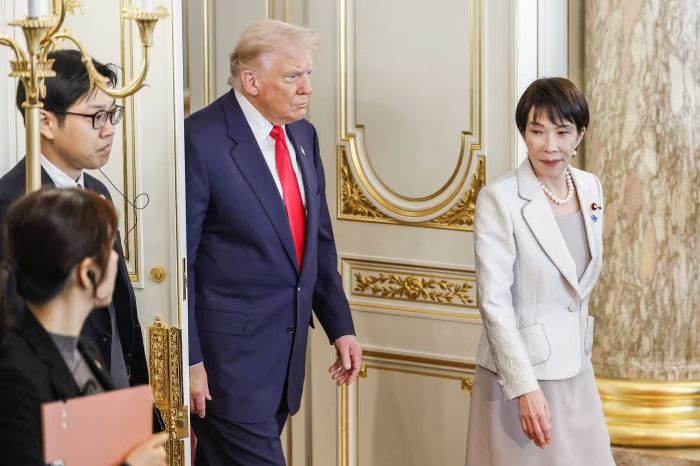
Japan has entered a new political era. Prime Minister Sanae Takaichi and her ruling Liberal Democratic Party (LDP) have secured a landslide parliamentary victory — one powerful enough to reshape the country’s postwar security identity.
For the first time since its founding in 1955, the LDP now controls a two-thirds supermajority in Japan’s lower house. That margin is not symbolic — it is transformative. It gives Takaichi the political muscle to override opposition resistance and pursue constitutional revisions that once seemed politically impossible.
The question echoing across Asia now is simple but profound: Is Japan about to shed its pacifist skin and become a more assertive military power?
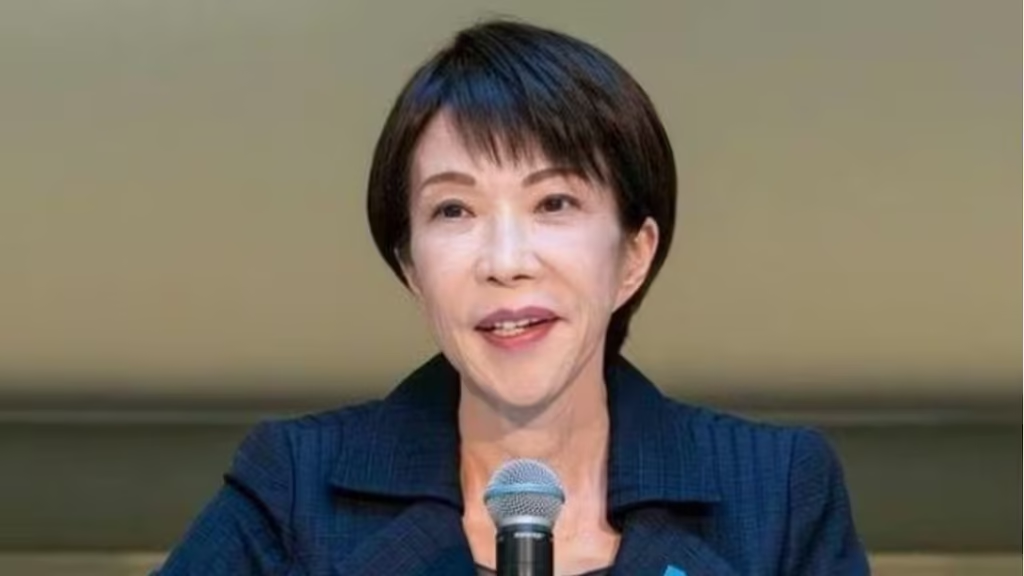
Continuing Shinzo Abe’s Vision of a “Strong Japan”
akaichi has openly positioned herself as the political heir to former Prime Minister Shinzo Abe, who famously pledged to “restore a strong Japan.”
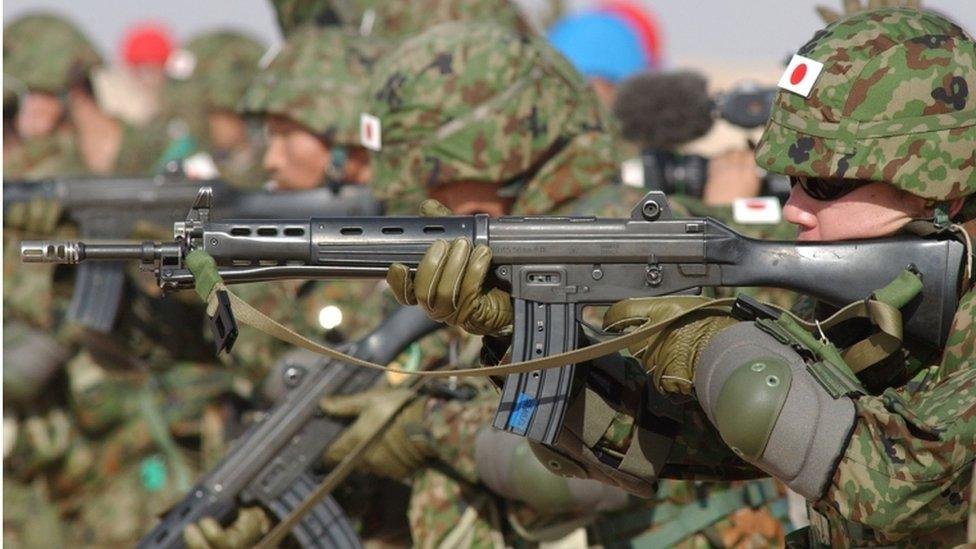
During Abe’s eight-year tenure, Japan adopted what he called “proactive pacifism.” That phrase marked a subtle but significant shift. Under his leadership, Japan:
- Strengthened the Self-Defense Forces
- Lifted long-standing bans on arms exports
- Deepened ties with NATO and the European Union
- Expanded the Quad partnership with Australia, India, and the United States
- Reinterpreted the constitution in 2014 to allow “collective self-defense”
That reinterpretation meant Japan could aid an ally under attack — a dramatic departure from decades of rigid pacifism.
Takaichi now wants to take those reforms even further.
Confronting China and the Taiwan Question:
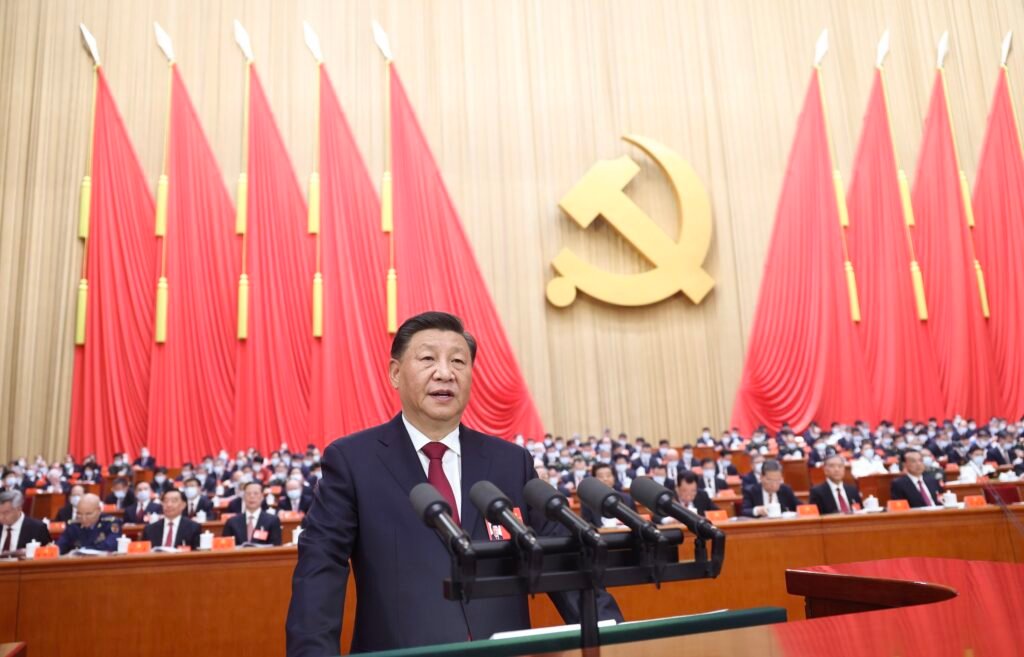
Shortly after becoming prime minister, Takaichi triggered diplomatic friction with Xi Jinping’s government by suggesting Japan would come to Taiwan’s defense if China launched an attack.
Beijing reacted swiftly.
China issued sharp warnings, applied economic pressure, and discouraged Chinese tourism to Japan. Officials accused Takaichi of destabilizing the region and threatening the international order.
But the prime minister did not retreat.
Instead, she appears to be using China’s assertiveness as political leverage at home. Public sentiment in Japan has shifted significantly in recent years amid rising concerns about Chinese military activity in the East China Sea and around Taiwan.
Following the election, 69% of voters expressed approval of Takaichi’s cabinet performance — a sign that the electorate may be more open to defense expansion than at any point since World War II.
A Military Expansion at Record Speed
Takaichi’s government is preparing to revise Japan’s 2022 National Security Strategy. Her approach blends national security with economic and industrial policy — what she calls “crisis management.”
Despite Japan’s mounting public debt, she has already increased defense spending to 2% of GDP ahead of schedule, aligning with NATO benchmarks. And she has pledged to go further.
Key proposals include:
- Acquiring nuclear-powered submarines
- Further deregulating arms exports
- Allowing the transfer of lethal weapons
- Expanding intelligence capabilities
- Establishing a National Intelligence Bureau modeled after the CIA
- Passing a new anti-spy law
Japan has already taken bold steps. It permitted exports of Patriot PAC-3 air defense systems to the United States to replenish stocks sent to Ukraine and Israel. It agreed to sell Mogami-class frigates to Australia and is co-developing a next-generation fighter jet with Italy and the United Kingdom.
While Japan’s military aid to Ukraine remains non-lethal, participation in NATO-led initiatives signals a widening security role far beyond East Asia.
A Turning Point for Asia
Ten years ago, Angela Merkel was described as the “leader of the free world.” Today, some commentators are calling Takaichi the “world’s most powerful woman.”
Whether that title proves accurate will depend on how she balances assertiveness with diplomacy.
If Japan rewrites its pacifist constitution, expands arms exports, and deepens security ties with NATO, it could alter the balance of power across the Indo-Pacific.
Yet the risks are equally significant. A more militarized Japan could provoke stronger reactions from China and heighten regional tensions.
For now, one thing is certain:
Japan is no longer quietly sitting on the sidelines of global security politics. Under Sanae Takaichi, it is preparing to step forward — boldly and unapologetically.
USA
Why Is America Sliding Toward Recession Again? Experts Reveal What’s Really Happening
Rising interest rates, job market shocks, and global tension in America — what’s dragging the US economy into recession now?
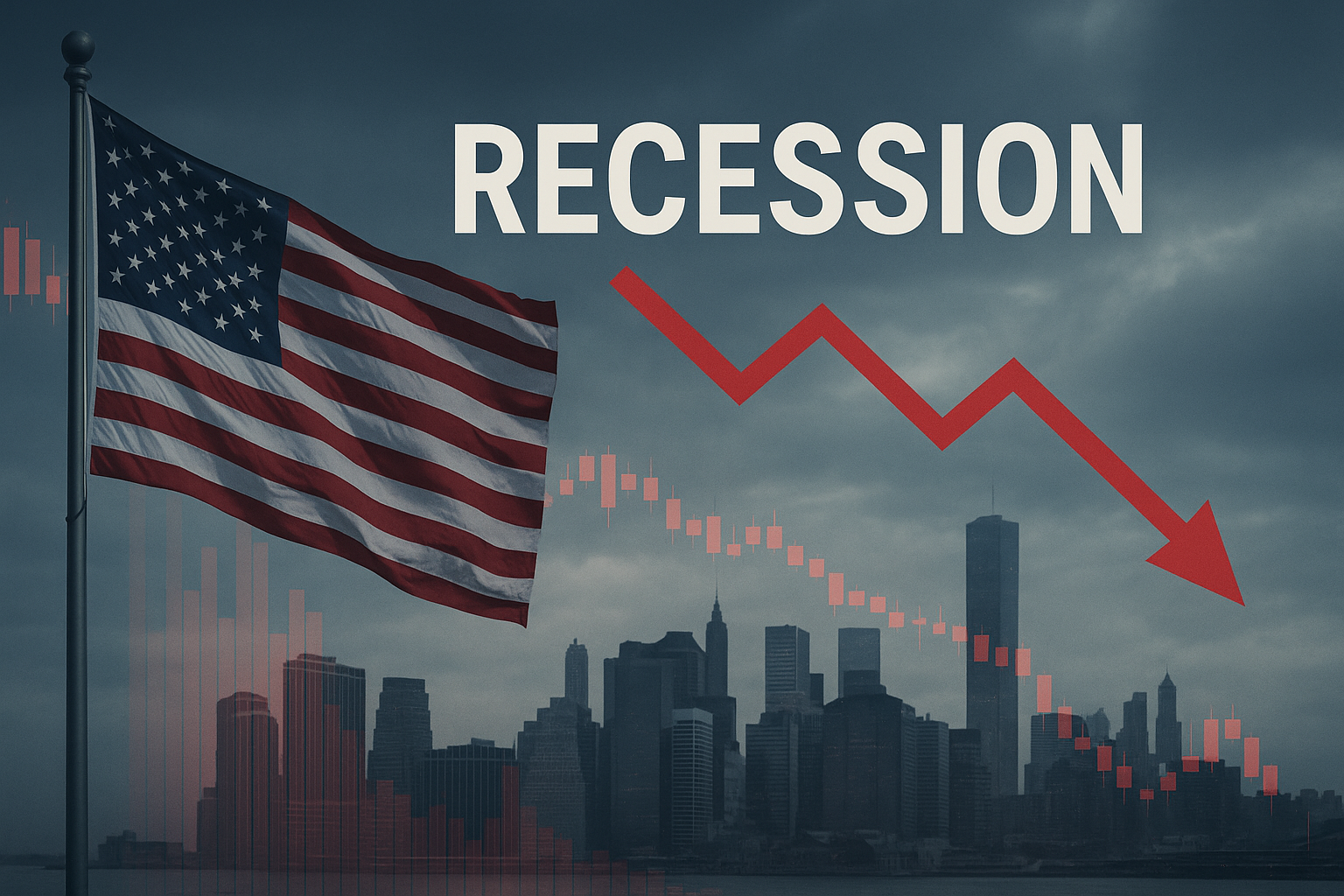
Rising interest rates, job market shocks, and global tension — what’s dragging the US economy into recession now?

The word recession is back in headlines in America — and for good reason. From Wall Street to Washington, fears are rising that the United States may be on the brink of an economic downturn once again in 2025. But what’s really driving this potential collapse? And more importantly — how did we get here?
Here’s a breakdown of why America is facing recession and what this means for everyday citizens.
1. Aggressive Interest Rate Hikes by the Federal Reserve
The Federal Reserve, led by Chair Jerome Powell (Wikipedia), has been increasing interest rates since 2022 in a bid to tame runaway inflation. But in doing so, they’ve made borrowing costlier — for everything from homes and cars to business loans.

- Mortgage rates have topped 7%, pricing many buyers out of the housing market.
- Credit card interest is now above 20% for most Americans.
- Small businesses are pausing expansion due to high lending costs.
While the Fed’s intent was to slow inflation, the collateral damage may be a full-blown economic slowdown.
2. The Housing Market Is Cooling Fast
After the post-pandemic housing boom, the market is starting to freeze. Home sales have dropped, new construction is slowing, and foreclosures are on the rise.
According to the National Association of Realtors, pending home sales are at a 10-year low.
For many middle-class families, a weak housing market affects both net worth and consumer confidence — two key drivers of recessionary behavior.
3. Job Market Is Starting to Crack
Though the U.S. unemployment rate still appears low on the surface (~3.9% as of July 2025), cracks are forming:
- Tech layoffs have returned, with companies like Google, Meta, and Salesforce slashing thousands of roles.
- Retail and logistics are cutting seasonal jobs amid weak demand.
- Gig workers and part-timers report lower earnings month-over-month.\

Wages have also stagnated while inflation eats into purchasing power — a toxic combo that hurts lower-income households the most.
4. Global Uncertainty and Trade Tensions
The global stage isn’t helping either. The Ukraine war rages on. Tensions between the U.S. and China remain high over Taiwan and trade tariffs. Oil prices are spiking again due to instability in the Middle East.
A report by Bloomberg Economics estimates global trade has contracted by nearly 6% compared to last year.
As a result, American exporters are hurting, and global supply chains remain fragile. The U.S. is deeply linked to international trade, and global unrest always echoes back at home.
5. Consumers Are Finally Pulling Back
For months, U.S. consumers were propping up the economy with spending — but that might be ending. Americans are now:
- Slashing discretionary purchases
- Using up their pandemic-era savings
- Relying more on Buy Now, Pay Later schemes and credit cards
- Delaying travel, upgrades, and luxury buys
When consumer confidence dips, recessions become self-fulfilling prophecies. And right now, surveys show optimism is at a 3-year low.
6. Corporate Earnings Are Missing Targets
Big companies like Walmart, Apple, and Amazon are warning shareholders of lower-than-expected profits. That’s a big sign of shrinking economic momentum.
- S&P 500 earnings growth has turned negative for the last two quarters.
- Companies are freezing hiring, bonuses, and travel budgets.
- Stock market volatility is rising, making investors nervous.
If corporate America is nervous — we all should be.
7. Yield Curve Inversion — A Classic Recession Signal
One of the most reliable predictors of a U.S. recession is a phenomenon known as yield curve inversion — when long-term interest rates fall below short-term ones. This has now occurred and stayed inverted for over 12 months, something not seen since just before the 2008 financial crash.
Historically, when this happens, a recession follows within 12–18 months.
So… Is America Already in a Recession?
That depends on who you ask.
The government has not officially declared a recession, as GDP remains positive — barely. But to millions of families living paycheck-to-paycheck, it already feels like one.
Prices are high. Bills are mounting. Layoffs are creeping in. Confidence is falling.
“Whether or not the NBER calls it, this is a rolling recession — different sectors are falling one by one,” says economist Diane Swonk.
Read More: Daily Global Diary

Russell T Davies Says ‘You’re Queer in 2026, You’re a Political Act’ — and His New Show ‘Tip Toe’ Is His Most Furious, Personal Work Yet…

Netflix’s Ted Sarandos Turns to Europe After Warner Deal Collapse… and Sends a Subtle Message to Regulators

The Writers of ‘Paradise’ Debated Hard Before Giving You That Jaw-Dropping Moment Early — Here’s Why They Finally Said ‘Do It…’

Rajasthan Royals Sold for Record $1.63 Billion — IPL’s First $1 Billion Franchise, Meet New Owner Kal Somani

Spencer Johnson Ditches PSL, Joins CSK for IPL 2026 — PCB Threatens Legal Action as Player Exodus Continues

1-Iran Issues Dire Warning to Israel and Defies Trump on Nukes: “We’re Ready to Strike Deep Inside”

Donald Trump’s net worth reveals the fortune behind the former US President and business mogul

“She Never Made It Out…” Albany House Fire Claims Woman’s Life as Family Pleads for Help to Bring Her Home

Caitlin Clark Sidelined with Quad Strain, Set to Miss Two Weeks of WNBA Action

“Tomás Rodríguez Net Worth 2025: Panama’s Gold Cup Goal‑Machine’s Surprising Fortune Revealed”

Miss Jamaica Suffers Terrifying Fall Off Miss Universe Stage; Rushed to Hospital on Stretcher in Viral Video

Moana Live-Action Teaser Sparks Outrage as Fans Call Disney’s Move a ‘Clear Money Grab’ — What Went Wrong?

Ryan Gosling’s Project Hail Mary Trailer Stuns Fans with a Mysterious Alien Ally and a Mission That Could Save Earth

Apple delays Jessica Chastain thriller The Savant about domestic extremism after recent US violence

Avatar 3, Fire and Ash trailer reveals Jake Sully’s family facing terrifying new Na’vi enemies with deadly fire powers
-

 Entertainment6 days ago
Cannes 2026 Hasn’t Announced a Single Film Yet — But the Whisper Network Is Already Pointing to These Names and It’s Exciting…
-

 Entertainment7 days ago
Amy Poehler and Sterlin Harjo Are Getting One of Television’s Highest Honours — and the Reason Why Says Everything About Where Storytelling Is Headed…
-

 Entertainment6 days ago
Almodóvar, Lars von Trier, Joel Coen and More — The Films That Could Own Cannes 2026 Are Already Generating Serious Buzz and the List Is…
-

 Entertainment1 week ago
Oscars 2026 Red Carpet Shockers: Zendaya’s Late Arrival, Jessie Buckley’s Grace Kelly Tribute… and Chase Infiniti Owning the Night
-

 Entertainment1 week ago
The Oscars Are Already Being Called Before They Happen and Scott’s Final Feinberg Forecast Reveals a Shocking Front-Runner That Nobody Saw Coming…
-

 Politics1 week ago
“Trump Reveals ‘Early Stage Breast Cancer’ Diagnosis of Susie Wiles… But Says Her ‘Strength Says Everything’”
-

 Entertainment6 days ago
Lollapalooza 2026 Just Dropped Its Most Surprising Lineup Yet — and the One Historic Thing Nobody Is Talking About Is the Real Story…
-

 Health1 week ago
“Kent Meningitis Tragedy: Second Student Dies as Outbreak Sparks Hospital Emergency…”