
Entertainment
“Manoj sir has been my acting school…”: What Vedant Sinha Reveals About His Journey Into ‘The Family Man 3’
Young actor Vedant Sinha opens up about growing under the mentorship of Manoj Bajpayee and how Season 3 of The Family Man pushed him to redefine his craft.


For Vedant Sinha, returning to The Family Man 3 feels less like a job and more like stepping inside the classroom that shaped him. And at the centre of that transformation stands the one man he calls his biggest teacher — Manoj Bajpayee.
“Manoj sir has been my acting school,” Vedant says, his voice reflecting both gratitude and admiration. For a 12-year-old who entered Season 1 with innocence and excitement, working alongside one of India’s finest performers was a privilege he didn’t fully understand at the time. But with age came perspective — and along with it, a deeper appreciation of what he had absorbed over the years.
A Bond Beyond the Script: Vedant & Manoj Bajpayee
Vedant recalls his first interaction with Manoj Bajpayee, admitting that he was too young then to fully comprehend the magnitude of sharing screen space with a three-time National Award–winning actor.
“He never sits me down to teach,” Vedant explains. “But I learn just by watching him — his patience, his respect for every person on set, his commitment… it inspires me every day.”
The way Bajpayee prepares for a role, the way he listens during scenes, and his signature stillness before a take — these are the lessons Vedant carries with him into every performance.
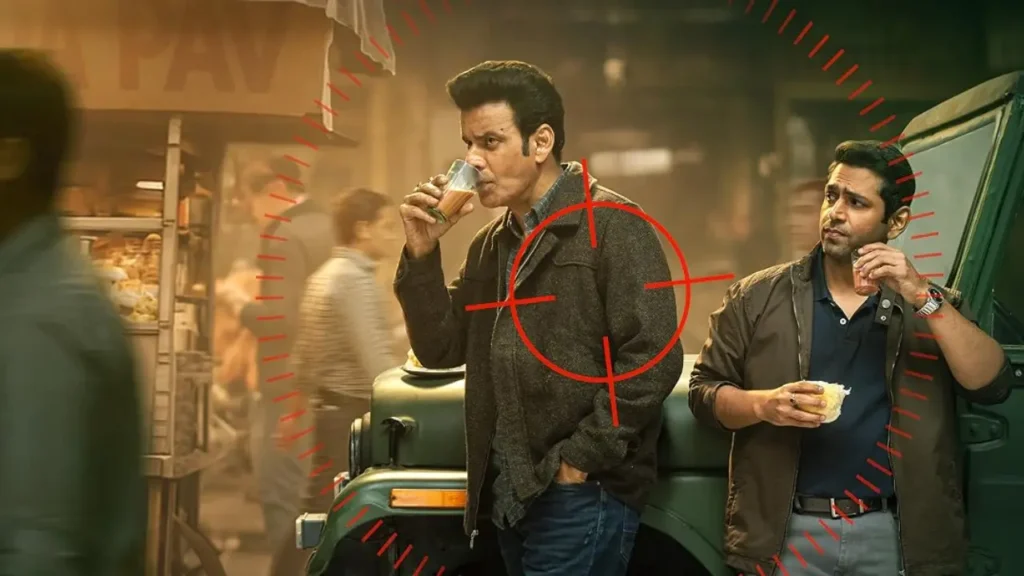
Season 3: A New Emotional Terrain
Talking about The Family Man 3, Vedant reveals that the emotional weight of the season demanded a maturity he had to grow into.
“Sometimes I’d struggle with how intense a scene felt,” he says. “But then I’d watch how Manoj sir internalises emotions — he listens between the lines. Those little things… they teach you more than any workshop ever could.”
Vedant insists that his deepest growth happened not through rehearsals, but through observation. “This season pushed me, challenged me, and made me better,” he shares.
Off-Camera Lessons: Trusting His Instincts
Beyond the camera, Bajpayee has been a guiding force. Vedant says Manoj encourages him to trust his instincts — an essential quality for young actors.
“Whenever I’m confused about a scene, he tells me, ‘Be honest. Be natural.’ That advice has stayed with me,” Vedant adds.
Fans have often praised the charming and relatable chemistry of the Tiwari family. According to Vedant, that’s because “people see their own homes in us,” and he considers that the ultimate compliment.
Three Seasons of Growth: From Child Actor to Young Performer
Reflecting on his journey since Season 1, Vedant acknowledges how the show shaped his identity.
“I joined as a kid who just loved being on set,” he says. “Today, I understand character arcs, emotions, and storytelling.”
He credits a majority of that growth to Manoj Bajpayee’s quiet guidance and influence.
Season 3, he hints, will showcase a more layered, more grounded Atharv — one who reflects Vedant’s own artistic evolution.
As anticipation builds for The Family Man 3, Vedant promises that fans will witness something special. “This season made me better,” he says with a smile. “And I hope that shines through.”
READ MORE ; DAILY GLOBAL DIARY


Entertainment
“He-Man Wears a Suit…”: Why Nicholas Galitzine’s Masters of the Universe Trailer Has Fans Talking
The iconic hero swaps Eternia for office cubicles as the first trailer teases a bold, corporate-era reinvention


The power of Grayskull has officially entered the corporate grind.
The first trailer for Masters of the Universe has landed — and it delivers a twist that few lifelong fans of the franchise expected. Instead of roaring into battle with sword raised, Nicholas Galitzine’s He-Man is introduced navigating the fluorescent lights and soul-crushing routines of corporate America.
Yes, that He-Man.
The footage suggests a radical reimagining: Prince Adam, stripped of memory and purpose, appears trapped in a modern-day office job — far removed from the fantasy world of Eternia that once defined him.
“This isn’t the He-Man you grew up with,” the trailer seems to whisper. “This is the one who forgot who he was.”
A Fish-Out-of-Water Origin Story for a New Generation
Rather than relying on pure nostalgia, the new Masters of the Universe appears to lean into contrast — mythic strength versus modern monotony.
ALSO READ : He Predicted Trump’s Kennedy Center Move… Then Bought the Domain: Meet the TV Writer Turning Power Into Punchlines
Sources close to the production say the film explores identity, purpose, and power in a world that doesn’t believe in heroes anymore. It’s a familiar Hollywood theme, but placing He-Man inside a cubicle rather than a battlefield gives it a sharp, self-aware edge.
Galitzine, best known for his dramatic and romantic roles, brings a restrained intensity to the character — suggesting a version of He-Man who must rediscover strength rather than simply wield it.
A Franchise Reborn for the Live-Action Era
The Masters of the Universe franchise, originally created by Mattel, has lived many lives — from animated classics to reboots and streaming revivals. But this live-action adaptation signals a clear desire to modernize the mythology for audiences raised on superhero origin stories with emotional weight.

Hollywood insiders note that grounding legendary characters in familiar, everyday environments has become a reliable way to expand franchises without alienating new viewers.
“It’s less about muscles now,” one executive joked, “and more about meaning.”
Why This Trailer Has Fans Divided — and Talking
Predictably, the internet reacted fast — and loudly.
Longtime fans expressed shock at seeing He-Man in business attire, while others praised the creative risk, calling it “unexpected,” “bold,” and “surprisingly smart.”
Whether embraced or rejected, one thing is certain:
The trailer has succeeded in doing what studios crave most — starting a conversation.
What Comes Next for He-Man
The footage hints that Eternia hasn’t been erased — only forgotten. As Prince Adam’s past begins to resurface, the transformation into He-Man looks set to be earned rather than automatic.
For a franchise built on raw power, this version seems more interested in asking why power matters at all.
And that, perhaps, is the most modern update of all.
Entertainment
Camilla Läckberg Isn’t Done Yet… The Queen of Swedish Noir Eyes Film, TV and a Bold Plan to ‘Conquer America’
From bestselling crime novels to international TV screens, Camilla Läckberg opens up about adapting her stories, experimenting with reality television, and why breaking into the U.S. market feels like her most thrilling mystery yet.

For decades, Camilla Läckberg has been a defining voice of Scandinavian crime fiction — a genre often labeled Nordic Noir but powered by something far more intimate than icy landscapes and clever murders. Her stories, rooted in psychology, family tensions, and the quiet menace of small-town life, have sold millions of copies worldwide. Now, the author widely known as the Queen of Swedish Noir is charting a new chapter: film, television, and an ambitious push into the American market.
Läckberg’s latest moment in the global spotlight comes as Camilla Läckberg’s Erica lands on MHz Choice, shortly after audiences discovered The Glass Dome on Netflix. For fans of her work, this feels less like a debut and more like a long-overdue expansion. For Läckberg herself, it is the result of years of creative curiosity — and a willingness to step outside the safety of the written page.
From Page to Screen: Letting Go of Control
Adapting bestselling novels for television can be a delicate process, especially for an author whose readership spans continents. Läckberg has been candid about how difficult — and necessary — it was to loosen her grip on her characters when they entered the world of screenwriting.
ALSO READ : “She Never Made It Out…” Albany House Fire Claims Woman’s Life as Family Pleads for Help to Bring Her Home
Unlike novels, where every thought and detail can be spelled out, television demands collaboration. Directors, actors, producers, and editors all bring their own interpretations. Läckberg has embraced this shift, seeing it not as a loss of authorship but as an evolution of storytelling. The emotional truth, she says, matters more than strict fidelity to the page.
That mindset is visible in Camilla Läckberg’s Erica, which draws from her iconic Fjällbacka series while allowing room for reinvention. The show keeps her signature tension intact but updates pacing and tone for modern audiences who binge rather than browse.
Why Crime Stories Still Matter
Despite her growing presence in entertainment formats, Läckberg remains deeply connected to crime fiction’s core purpose. Her stories are rarely just about who committed the crime; they are about why. Abuse, generational trauma, jealousy, and power dynamics frequently sit at the heart of her narratives.
This emotional grounding is one reason her work travels so well internationally. Whether set in Sweden or adapted for global screens, the conflicts feel universal. Viewers may not recognize the snowy coastal towns, but they recognize broken families, hidden secrets, and moral ambiguity.
In an era dominated by fast-paced thrillers, Läckberg’s work stands out for its patience. She trusts audiences to sit with discomfort — and that trust has paid off.
Reality TV and Reinvention
Perhaps the most surprising twist in Läckberg’s career is her openness to reality television. Alongside scripted dramas, she has appeared on competition shows and, more recently, in a reality series centered on her family life.
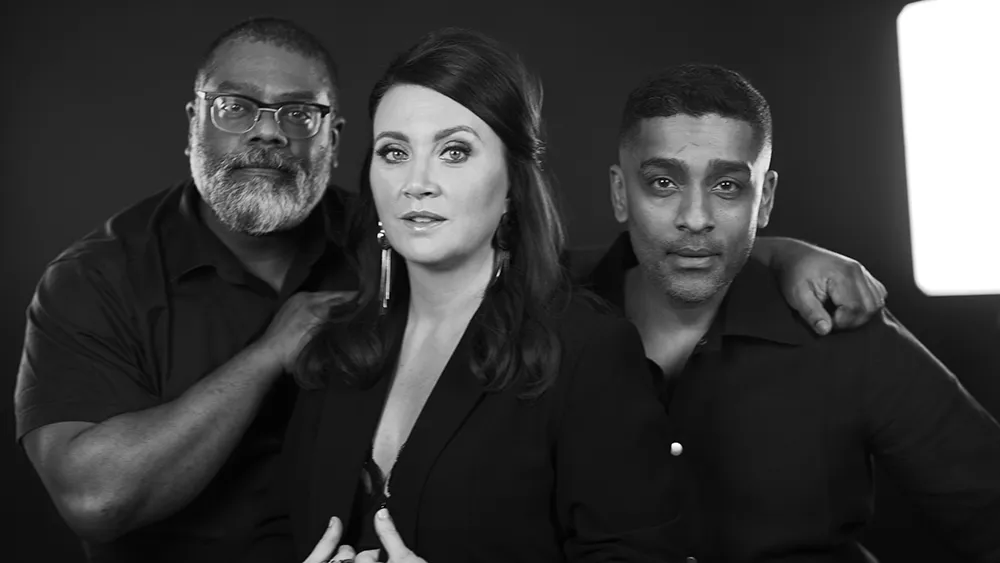
For a writer known for dark, carefully structured narratives, this move raised eyebrows. But Läckberg views it as another form of storytelling — one grounded in authenticity rather than suspense. Sharing her everyday life, she has said, helped humanize her public image and challenged the stereotype of the reclusive crime author.
It also reflects a broader trend in modern media: audiences crave connection as much as content. Läckberg’s willingness to show vulnerability, humor, and imperfection has earned her a new kind of following — one that extends beyond bookshops and streaming platforms.
“Conquering America”: A Calculated Dream
Läckberg doesn’t hide her ambition. Breaking into the U.S. market, she admits, feels like one of the last great challenges of her career. While Nordic Noir has enjoyed success in America, truly crossing over as a household name remains rare for non-English-language authors.
Yet the timing may finally be right. Streaming platforms have erased borders, and American audiences are more open than ever to international stories — provided they feel authentic. With adaptations airing globally and her name increasingly attached to high-quality productions, Läckberg believes her moment is approaching.
This isn’t about fame alone. For her, the U.S. represents creative validation: proof that stories born in a small Swedish town can resonate anywhere.
What Comes Next
As Läckberg balances writing, producing, and on-screen appearances, one thing remains clear: she is not slowing down. New projects are already in development, and discussions around future adaptations continue quietly behind the scenes.
What sets her apart isn’t just productivity, but fearlessness. Few authors are willing to reimagine themselves so completely after achieving literary success. Fewer still do it with such self-awareness.
For fans old and new, Camilla Läckberg’s evolving career offers a reminder that good stories don’t belong to a single format — and that even the most familiar voices can still surprise us.
Entertainment
“Screaming, Crying, Almost Throwing Up”… Sundance Insiders Reveal the Untold Chaos Behind America’s Most Influential Film Festival
As the Sundance Film Festival prepares for a historic relocation to Boulder, Colorado, filmmakers, actors, and insiders look back at the nerves, breakthroughs, and life-changing moments that reshaped independent cinema forever.

For generations of filmmakers, three words have carried equal parts magic and terror: Sundance Film Festival. It is where careers are born, confidence is tested, and raw storytelling collides with unforgiving audiences. Now, as the iconic festival prepares to take its final bow in Utah before relocating to Boulder, those who lived through its defining moments are finally opening up.
The memories are visceral. Alumni describe shaking hands before premieres, nausea during packed screenings, and the unmistakable sound of silence — or applause — that decided their futures in seconds. “I was screaming, crying, almost throwing up,” one filmmaker recalls, echoing a shared sentiment that Sundance is less a festival and more an emotional trial by fire.
Where Independent Cinema Found Its Voice
Founded under the vision of Robert Redford, Sundance wasn’t designed to be comfortable. It was built to challenge Hollywood norms, giving space to films that didn’t fit studio formulas. Over time, that rebellious spirit became its identity.
ALSO READ : “She Never Made It Out…” Albany House Fire Claims Woman’s Life as Family Pleads for Help to Bring Her Home
From its earliest days, Sundance rewrote the rules of who gets to be seen — and heard. Low-budget films, first-time directors, and unconventional stories found audiences hungry for authenticity. Many of today’s most respected filmmakers trace their breakthroughs back to a snowy screening room and a roomful of strangers willing to take a risk.
The festival didn’t just showcase films; it created a marketplace of ideas. Deals were struck in coffee shops, reputations were built overnight, and rejection was as common as discovery. That unpredictability is exactly what made Sundance matter.
“You Never Forget Your First Screening”
Ask any Sundance alum about their first screening, and the response is rarely polished. Words like panic, terror, and relief surface again and again. One director remembers gripping their seat, convinced the audience hated every frame — until the credits rolled and applause erupted. Another recalls leaving mid-screening, unable to bear the tension.
This emotional intensity became a rite of passage. Sundance audiences are famously discerning, sometimes brutally honest. But when they connect with a film, the reaction can be transformative. Careers have launched from a single standing ovation, while others learned harsh lessons about resilience and reinvention.

The Festival That Changed Hollywood’s Math
Sundance’s influence stretches far beyond awards or premieres. It altered how films are financed, distributed, and valued. Long before streaming platforms dominated the industry, Sundance proved that independent stories could attract mainstream attention — and profit.
Distributors scouted aggressively, critics shaped narratives overnight, and word of mouth became currency. Films that arrived without expectations often left with global buzz. The festival turned risk into reward and showed Hollywood that originality had a market.
A Bittersweet Goodbye to an Era
The decision to relocate the festival marks the end of a deeply emotional chapter. For many, Utah’s mountains are inseparable from Sundance’s soul — the late-night debates, snow-covered sidewalks, and chance encounters that felt cinematic themselves.
Moving to Boulder, Colorado, signals evolution rather than erasure. Organizers insist the festival’s mission remains unchanged: championing bold voices and challenging storytelling conventions. Still, the farewell has prompted reflection — and gratitude — from those whose lives were forever altered by a Sundance screening.
Why Sundance Still Matters
In an age of algorithms and instant content, Sundance remains stubbornly human. It thrives on risk, discomfort, and emotional honesty. Filmmakers don’t just present movies; they present themselves, vulnerable and exposed.
As the festival enters its next phase, its legacy is already secure. Sundance didn’t just launch films — it launched belief. Belief that stories from the margins deserve the spotlight, and that cinema, at its best, should make you feel something intensely… even if that feeling is terror.
And for those who survived their Sundance debut, one truth remains universal: you never forget the moment the lights go down — and everything changes.

“He-Man Wears a Suit…”: Why Nicholas Galitzine’s Masters of the Universe Trailer Has Fans Talking

Camilla Läckberg Isn’t Done Yet… The Queen of Swedish Noir Eyes Film, TV and a Bold Plan to ‘Conquer America’

“Screaming, Crying, Almost Throwing Up”… Sundance Insiders Reveal the Untold Chaos Behind America’s Most Influential Film Festival
From Swedish Noir to Hollywood Dreams Camilla Läckberg Has a Bigger Plan in Motion
When Sundance Nearly Fell Apart Insiders Recall the Chaos Behind the World’s Most Influential Film Festival

1-Iran Issues Dire Warning to Israel and Defies Trump on Nukes: “We’re Ready to Strike Deep Inside”

Donald Trump’s net worth reveals the fortune behind the former US President and business mogul

Caitlin Clark Sidelined with Quad Strain, Set to Miss Two Weeks of WNBA Action

Elon Musk Breaks Ranks with Trump Over ‘Big, Beautiful’ Tax Bill

“Tomás Rodríguez Net Worth 2025: Panama’s Gold Cup Goal‑Machine’s Surprising Fortune Revealed”

Miss Jamaica Suffers Terrifying Fall Off Miss Universe Stage; Rushed to Hospital on Stretcher in Viral Video

Moana Live-Action Teaser Sparks Outrage as Fans Call Disney’s Move a ‘Clear Money Grab’ — What Went Wrong?

Ryan Gosling’s Project Hail Mary Trailer Stuns Fans with a Mysterious Alien Ally and a Mission That Could Save Earth

Apple delays Jessica Chastain thriller The Savant about domestic extremism after recent US violence

Avatar 3, Fire and Ash trailer reveals Jake Sully’s family facing terrifying new Na’vi enemies with deadly fire powers
-
 Entertainment6 days ago
He-Man Wears a Suit Now… Nicholas Galitzine’s ‘Masters of the Universe’ Trailer Drops a Shock Fans Didn’t See Coming
-
 Entertainment1 week ago
Brazil Eyes Oscar History Again… ‘The Secret Agent’ Scores Best Picture Nomination as Wagner Moura Stuns Hollywood
-

 Entertainment4 days ago
“Comedy Needs Courage Again…”: Judd Apatow Opens Up on Mel Brooks, Talking to Rob Reiner, and Why Studio Laughs Have Vanished
-

 Entertainment1 week ago
Box Office Shocker as Chris Pratt’s ‘Mercy’ Knocks ‘Avatar 3’ Off the Top but Nature Had Other Plans…
-

 Entertainment6 days ago
Oscars Go Global in a Big Way as This Year’s Nominations Signal a New Era: ‘The Academy Is Finally Looking Beyond Hollywood…’
-

 Entertainment1 week ago
Michael Bay Makes a Power Move… Blockbuster Director Signs with CAA in a Deal That’s Turning Heads
-

 Entertainment6 days ago
“Dangerously Kinky… and Darkly Funny”: Olivia Wilde and Cooper Hoffman Push Boundaries in ‘I Want Your Sex’
-
Entertainment1 week ago
Fans Didn’t Expect This Look… Nicholas Galitzine’s Masters of the Universe Trailer Sparks Debate